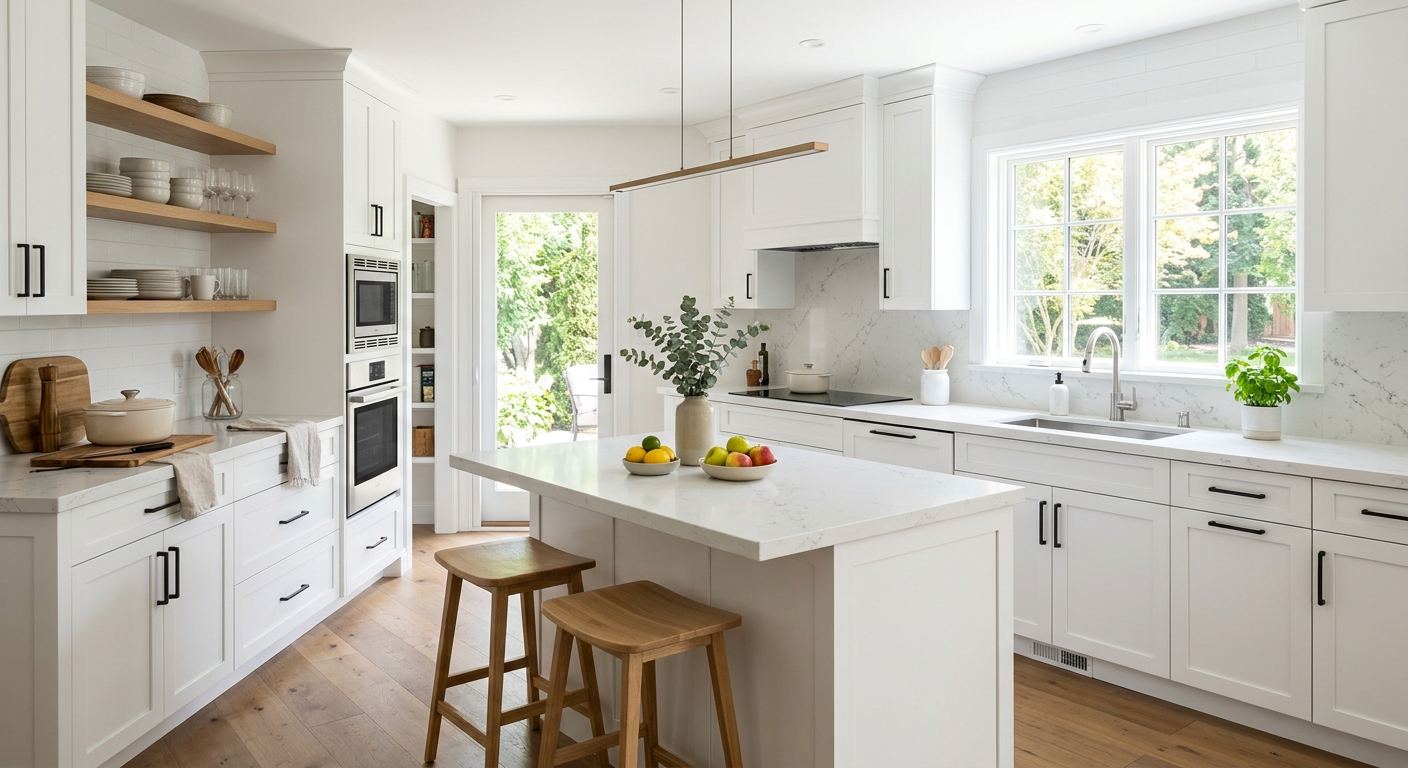
Kitchen renovation options and costs in Southwood
In Southwood, Ontario, kitchen renovations usually start with how the homeowner wants the space to feel—bright and modern for daily living, or more “buyer-ready” for resale. With a 2021 population of 4,751 in the local area (Statistics Canada, 2021 Census), projects here are often handled by the same GTA trade partners, so scheduling is predictable when you book early. Cost expectations are also shaped by the broader Toronto economic region—homeowners in higher-value neighbourhood pockets tend to allocate more of their property value to finishes, while others focus on smart upgrades that still photograph well for resale. As a reference point, kitchen investment in higher-value parts of the Toronto region often lands around 8–15% of home value, which is why you’ll see more quartz, natural stone, and upgraded appliances in these segments.
Toronto’s market—not the local weather—mostly drives pricing. Kitchen renovation bids in the GTA move more with finish tier and demand for skilled crews than with climate exposure. Still, the city’s housing stock matters: many older homes have older plumbing/electrical runs that can require upgrades when cabinets come out, and that can add labour and inspection steps even if the visible finishes stay mid-range. Trade availability can also tighten mid-year, which may affect turnaround time for cabinet and countertop fabrication.
Demand is especially steady for cabinetry and countertop work around established families’ pockets in the Southwood area and nearby commuter corridors where renovations are timed with school-year moves. Below is a practical comparison of common options and budgets, so you can align your plan with a realistic range.
| Renovation Tier |
What's Included |
Typical Duration |
Price Range |
| Cosmetic refresh (paint, hardware, new appliances only) |
Fresh paint, new hardware/pulls, appliance swap, minor caulking/trim touch-ups; no cabinet box changes |
3–7 days |
$5,000–$12,000 |
| Mid-range full renovation (new cabinets, counters, sink, tile) |
Semi-custom or quality stock cabinets, quartz or good laminate counters, sink and taps, backsplash tile, basic flooring/trim tie-ins |
3–6 weeks |
$25,000–$55,000 |
| High-end full renovation (custom cabinets, stone counters, island) |
Custom millwork, premium quartz or natural stone, island with enhanced finishes, upgraded appliance package, feature backsplash, more extensive demo/finishing |
6–12 weeks |
$70,000–$90,000 |
| Cabinet refacing only (new doors + drawer fronts, same boxes) |
Door/drawer replacement, new hardware, new veneer where needed, updated toe-kicks and trims; counters often optional |
1–3 weeks |
$8,000–$25,000 |
| Countertop swap only (laminate to quartz or stone) |
Remove/replace existing top, new quartz/stone install, sink cut-out and reseal, backsplash caulking tie-in (tile may be separate) |
5–12 days |
$3,000–$15,000 |
| Backsplash tile installation only |
Tile removal (if replacing), prep, tile install, grout/seal, countertop edge finishing at change points |
3–10 days |
$2,000–$10,000 |
Prices are estimates only and vary by project scope, site access and material selection.
What affects the price of kitchen renovation in Southwood
In Southwood and across the broader Ontario market, quotes for what looks like the same kitchen can differ by 30–50% because the “hidden” scope changes: what’s behind the walls, how much electrical and plumbing is touched, and how premium the millwork and surfaces are. Even when layout drawings are similar, one contractor may price for higher-grade cabinet construction, different substrate prep, or allowances for disposal and trade coordination. In Toronto’s economic region, the biggest driver is finish tier and the demand it creates—especially for quartz, natural stone, and custom cabinetry in higher-value pockets.
Local home values and household income patterns matter far more than climate. In higher-value areas around the Toronto region, homeowners more often choose quartz or stone counters and semi-custom cabinetry because those upgrades help the renovation cost feel recoverable on resale—often lining up with that common 8–15% of home value budgeting mindset. In more price-sensitive segments, laminate tops and stock/refaced cabinets still offer strong ROI and a cleaner path to resale readiness without moving budgets into high-end territory. That’s why you’ll see realistic full-kitchen budgets swing from the mid-$20k range up into $80k+ when clients add structural work and premium surfaces.
In Southwood specifically, older home plumbing routes can push costs upward when cabinets are removed, especially if shutoffs, supply lines, or under-sink drains need upgrading. Another cost swing is island planning: a “simple” island can require electrical for under-cabinet lighting and additional circuits, plus plumbing/gas routing if you’re relocating a sink or range. Finally, stone installation can reveal uneven sub-surfaces—tile and counter prep may increase labour even when the countertop price looks straightforward. These differences are why it’s best to compare quotes line-by-line and tie decisions to the cabinet/stone tiers you want to land in.
| Price Factor |
Why It Matters |
Cost Impact |
| Cabinet tier — stock vs. semi-custom vs. fully custom millwork |
Construction quality, soft-close hardware, door thickness, interior options, and fit/finish tolerance |
~+$5,000 to +$30,000 depending on scope |
| Countertop material — laminate vs. quartz vs. granite vs. stone |
Material cost, edging, fabrication complexity, and how substrates are prepared for install |
~+$1,500 to +$10,000+ |
| Layout change — wall removal, island add, plumbing/gas move |
Structural work, new framing, and relocating mechanical systems adds trades and inspections |
~+$7,000 to +$25,000+ |
| Appliance package tier — builder vs. mid-range vs. pro-grade |
Electrical requirements, ventilation details, finish matching, and availability lead times |
~+$1,500 to +$12,000+ |
| Flooring — refinish existing vs. full replacement |
Subfloor condition, damage from demo, and how much area must be lifted/leveled |
~+$500 to +$8,000 |
| Backsplash — ceramic tile vs. marble vs. full-height slab |
Material fragility, pattern matching, and whether it needs grout sealing or slab alignment |
~+$1,000 to +$7,000 |
| Electrical — new circuits for island, under-cabinet lighting |
Licensed work, panel capacity, and line runs through cabinets/walls |
~+$1,000 to +$6,000+ |
| Permit fees and licensed trade requirements |
Inspections, administration, and coordination of gas/electrical/structural steps |
~+$500 to +$3,500+ |
Permits & regulations in Ontario
In Ontario, many kitchen upgrades do not require a permit—while several common changes absolutely do. Cabinet and countertop swaps typically fall under “no permit needed” because you’re replacing finishes without altering the plumbing, gas, structural supports, or electrical system. Likewise, replacing a backsplash tile within the same footprint usually doesn’t require a permit.
Permits and licensed trades are typically required when you move or add building services. Examples that usually do require a permit include: moving plumbing supply lines or drains (for a new sink location or dishwasher hookup changes), relocating a gas appliance (stove/range) or changing the connection route, removing or modifying a load-bearing wall, adding or relocating circuits for island outlets or new under-cabinet lighting, and any work that triggers code-required inspections. Gas work must be done by a licensed gas fitter, and electrical work must be completed by a licensed electrician—each requiring inspections.
For Southwood homeowners, verify three things before signing: (1) the contractor’s Ontario business details and licensing where applicable, (2) liability insurance certificate, and (3) WSIB/WCB clearance or coverage documentation for workers. Start with the contractor’s online registry listing (and confirm the company name matches the insurance), then request a current certificate of insurance and a letter or proof of WSIB/WCB clearance. Your contract should clearly state who pulls permits and who pays for inspections—don’t assume the contractor “takes care of it” unless it’s written.
Cabinets, countertops and layout decisions in Southwood
Your three biggest decisions in a Southwood kitchen renovation are the cabinet tier, the countertop material, and whether you’ll change the layout. Together, they determine not only your budget but also how smoothly the project runs and how well the finished kitchen “holds up” for Toronto buyers. Cabinet tier sets the pace: stock cabinets are usually fastest and cheapest, semi-custom is the most popular mid-range option for fit and storage, and custom millwork costs more but delivers the best dimensions and look for irregular rooms.
For countertops, laminate is usually the lowest-cost route, while quartz is the common sweet spot in the Toronto resale market for durability and low maintenance. Granite/natural stone can look premium and unique, but it often needs more care and sealing habits. Butcher block adds warmth and repairs differently than stone; it can be great in family homes if you’re comfortable with maintenance. Marble is visually striking but is typically the most sensitive choice for staining, so it’s usually better suited to homeowners who understand upkeep.
Layout changes are where “cost predictability” drops. Removing a wall, adding an island, or relocating plumbing/gas can require licensed trades, permits, and more labour—often pushing budgets toward the higher ends of the local bands. For instance, moving a sink to an island and adding new plumbing/electrical can cost several thousand dollars more than staying put, and that’s justified when the space gain improves flow or creates real seating and storage.
Climate is less about outdoor exposure and more about indoor material performance. In older GTA homes, tighter indoor humidity cycles and existing subfloor unevenness can influence install prep, especially for stone slabs and tile alignment—so getting the base right is worth it.
| Option |
Durability |
Maintenance |
Best For |
Price Range |
| Stock cabinets (big-box) |
Good day-to-day durability; fit can be less tailored in older spaces |
Low maintenance; hinges/hardware service if you choose basic components |
Fast turnarounds and budget-controlled refreshes |
$8,000–$18,000 |
| Semi-custom cabinets (local dealer) |
Very durable construction with better storage options and smoother operation |
Low maintenance; upgrade to soft-close for quieter, longer life |
Most Southwood homeowners aiming for resale-ready quality |
$18,000–$35,000 |
| Custom cabinets (local millwork shop) |
Excellent durability with precise fit for awkward angles and full-height designs |
Low maintenance; craftsmanship supports longevity if built with quality hardware |
When you want a perfect layout and premium look |
$35,000–$60,000+ |
| Laminate countertop |
Decent for everyday use; seams/edges can be more vulnerable over time |
Easy wipe-down; avoid prolonged heat and heavy impact at seams |
Cost-effective upgrades and keeping budgets in the low–mid ranges |
$3,000–$7,000 |
| Quartz engineered countertop |
High durability and strong stain resistance; consistent look |
Very low maintenance; use standard cleaners and protect from extreme heat |
Busy households and Toronto resale expectations |
$7,000–$15,000 |
| Granite / natural stone countertop |
Very durable and heat-tolerant; unique patterns |
Typically needs periodic sealing; wipe spills promptly |
Homeowners who want natural variation and a premium statement |
$8,000–$18,000 |
| Butcher block countertop |
Strong but can dent/scratch; ages beautifully if cared for |
Oil maintenance and routine sealing; best when treated like a countertop-tool surface |
Warm, traditional style kitchens and light-to-moderate use |
$5,000–$12,000 |
| Marble countertop |
Premium look; softer and more prone to etching/staining than quartz |
Needs attentive cleaning and careful spill management; sealing schedule matters |
Statement kitchens where aesthetics outweigh low-maintenance goals |
$10,000–$22,000+ |
How to choose a kitchen renovation contractor in Southwood
Choosing the right contractor is how you keep a Southwood kitchen project on budget and on schedule. Start with Ontario licensing and proof of coverage. Ask for the contractor’s insurance certificate showing liability limits, and verify WSIB/WCB coverage for their workers (or confirm clearance). If the job includes gas or electrical changes, confirm the right licensed trades are engaged—gas fitter licensing for any gas work, and a licensed electrician for electrical circuits. You can also request the trade certificates and ensure the names match the companies actually doing the work.
Next, get 2–3 itemised written quotes. Not lump sum: you want a line-by-line breakdown for demo, framing/substrate prep, cabinetry, countertops, tile, plumbing/electrical allowances, disposal, and finish labour. Ask whether permits are included and who is responsible for permit pulling, inspection scheduling, and any follow-up corrections. Confirm what’s excluded—flooring replacement, drywall patching level, appliance installation, removing existing cabinets and hauling away debris, and whether light fixtures are included or re-used.
Look for warranty clarity: a workmanship warranty (often tied to labour) and separate manufacturer/product warranties for cabinetry and countertops. Also ask if warranties are transferable to a future owner—important for Toronto resale. For payments, keep it safe: never pay more than 10–15% upfront. Hold a final holdback until the job is fully complete and punch-list items are addressed. Finally, get a written start date and a realistic completion estimate, including countertop/cabinet fabrication lead times.
- License and coverage documentation provided before signing (liability insurance + WSIB/WCB proof).
- 2–3 itemised quotes with labour and materials separated.
- Clear scope: demo, disposal, patching, leveling, and appliance install responsibility listed.
- Permit responsibility in writing (who pulls, who pays, and inspection scheduling).
- Countertop templating and lead times explained upfront.
- Cabinet delivery dates and change-order process described.
- Warranty terms in writing for workmanship and manufacturer coverage.
- Payment schedule capped at 10–15% upfront with a final holdback.
- Site protection plan (dust control, floor protection, door masking) included.
- Accessibility plan for kitchens with tight staging (stairs, parking, loading restrictions).
- Communication rhythm specified (progress updates, daily/weekly check-ins).
- Final walkthrough (“punch list”) documented with timelines.
Red flags in Southwood include: vague quotes with no line items, promises like “no permits needed” when plumbing/electrical/gas is moving, missing proof of insurance/WSIB/WCB coverage, payment schedules that request large upfront deposits, and a warranty that’s only verbal or doesn’t distinguish workmanship from product coverage.
Frequently asked questions — kitchen renovation in Southwood
How long does a kitchen renovation take in Southwood?
A typical kitchen in Southwood takes about 3–6 weeks for a mid-range full renovation and 6–12 weeks for high-end builds, mainly because cabinetry and countertops need fabrication time. If you’re doing a “cosmetic refresh,” you can often finish in 3–7 days since you’re not waiting on cabinets or stone. Where delays happen most often in Ontario projects is when layout decisions change late (especially moving plumbing or electrical for an island) or when permit/inspection steps aren’t scheduled early. If you’re aiming for a budget around $25,000–$55,000, plan for the busiest period of the contractor’s calendar and request confirmed cabinet and countertop lead times as soon as you sign.
Quartz vs granite countertops — which is better?
For most Southwood homeowners, quartz is the “better all-rounder” because it’s very consistent in look and low maintenance compared with many natural stones. Granite is durable and heat-tolerant, but it typically needs periodic sealing and can show more variation, which some buyers love and others may not. In Toronto-area resale expectations, quartz is commonly chosen for its stain resistance and simple care routine. If you want the cleanest maintenance story while staying in a realistic price band, quartz often fits well—many installations land around $7,000–$15,000 depending on slab size and edge details. Granite can be a great premium choice, but factor in care and that some installs can push higher if edge profiles or slab availability add cost.
Should I reface or replace my cabinets?
Refacing is usually best when your existing cabinet boxes are solid, plumb, and well-attached—so you get a refreshed look without the heavy demo. Replacement is better if boxes are damaged, poorly aligned, you want to redesign storage layouts, or you need to address underlying issues like water damage near sinks. In practice, refacing can keep you in a mid-range budget—cabinet refacing often falls around $8,000–$25,000, while a full mid-range renovation can move into $25,000–$55,000 once you include new counters, sink, and backsplash. A contractor should measure and assess box condition before recommending a path, because “reface anyway” projects can cost more if hidden problems need fixes after doors are removed.
Do I need a permit for a kitchen renovation in Ontario?
In Ontario, cabinet and countertop swaps typically do not require permits because you’re not moving major building systems. However, permits are generally required when you move or change plumbing supply/drain lines, relocate gas appliances or connections, remove a load-bearing wall, or add/modify electrical circuits (for example, powering island outlets or adding under-cabinet lighting circuits). Gas work must be completed by a licensed gas fitter and electrical by a licensed electrician, each needing inspections when required. For Southwood homeowners, verify permit responsibility in writing: ask the contractor who will pull permits, how inspections are handled, and which trades are responsible. It’s also smart to request proof of Ontario coverage (liability insurance and WSIB/WCB) before work begins.
What's the ROI on a kitchen renovation?
ROI depends heavily on how much of your budget you put into the kitchen versus the overall home value and buyer expectations in the Toronto region. You’ll often see homeowners in higher-value pockets lean toward quartz/stone and better millwork because those finishes can align with what buyers look for—commonly around 8–15% of home value when projects are designed to be resale-focused. In more price-sensitive areas, the best ROI tends to come from targeted upgrades: durable counters, clean tile/backsplash, good lighting, and a layout that improves flow without overspending on structural changes. As a practical guide, if your goal is resale readiness and you’re keeping finishes smart, you can plan within $25,000–$55,000 for many mid-range projects, while bigger custom builds may run into $70,000–$90,000 where the added cost must be matched to home value and buyer appetite. A contractor should help you design for “future neutral” finishes and avoid over-customizing for resale.
How do I budget for a kitchen renovation?
Start by deciding which tier you’re targeting—cosmetic, mid-range, or high-end—and then budget for the trades and lead times, not just the visible finishes. For example, if you want a full renovation with new cabinets and counters, many Southwood projects realistically fall between $25,000–$55,000 (mid-range) and can reach $70,000–$90,000 when you add custom millwork, stone counters, and islands or more structural work. Build your budget using clear line items: cabinets, countertops, backsplash/tile, sink/faucet, electrical and plumbing allowances, disposal, and any permit and inspection items. Add a contingency for surprises, especially if you’re in an older GTA home where hidden wiring or plumbing upgrades can appear once cabinets come off. Finally, get itemised quotes and keep your upfront payment capped at 10–15% so you can verify scope before committing further.