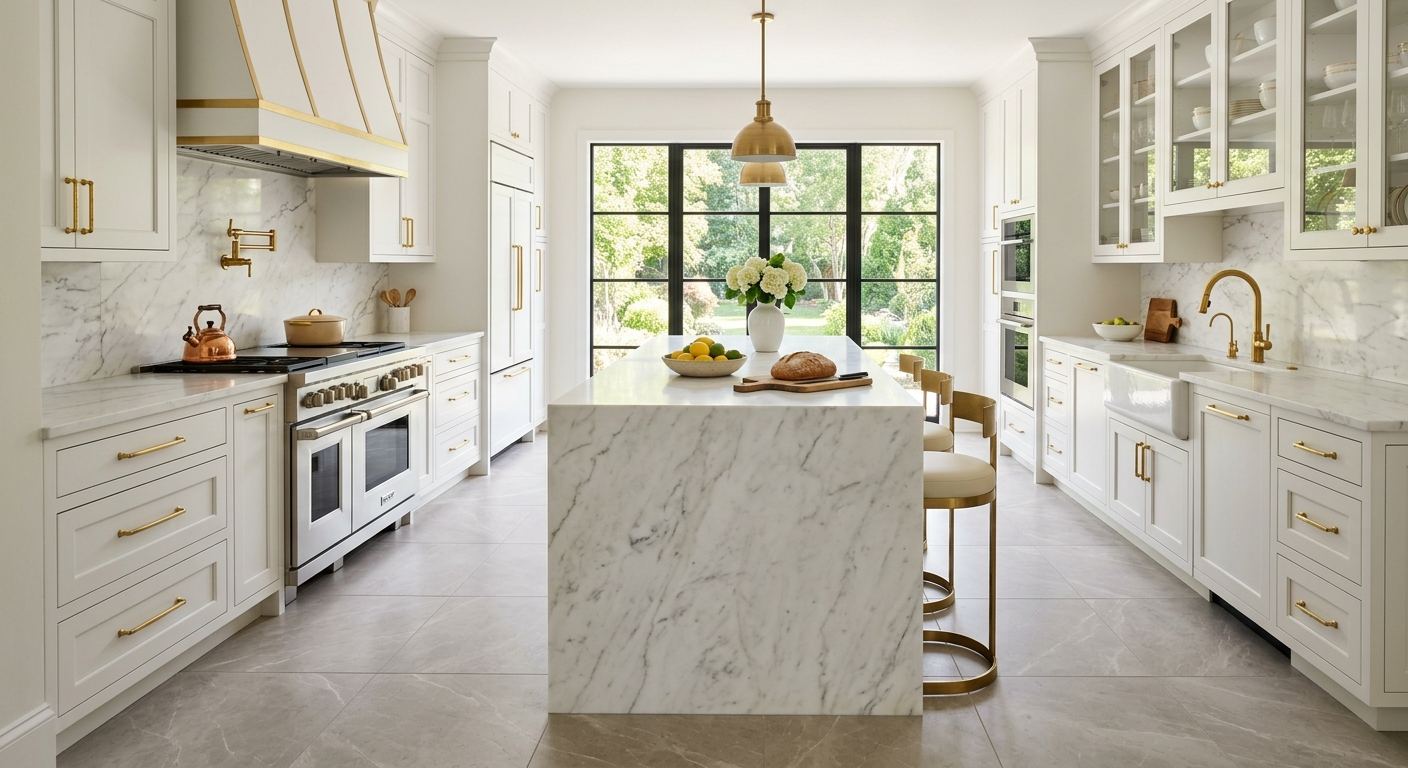
Kitchen renovation options and costs in Kingston
Kitchen renovations in Kingston, Ontario typically start with a realistic question: what level of finish fits your home and your budget. With a median household income of about $79,000 (Statistics Canada, 2021 Census), many homeowners target a renovation they can enjoy now without overbuilding. At the same time, Kingston’s mix of neighbourhoods and older housing stock—about 52.7% of homes built before 1981 (Statistics Canada, 2021 Census)—means kitchens often come with dated layouts and service runs, so “simple refresh” projects are less common than people expect.
In the Kingston–Pembroke economic region, costs track more closely with buyer expectations and resale value than with weather. Kingston’s cold winters and humid shoulder seasons can push contractors to be careful with material acclimation (especially cabinets and sheet goods) and to plan for drying time when floors are removed and sub-surfaces are exposed. Availability also matters: in peak summer and early fall, labour demand tightens around renovation-heavy areas such as Downtown Kingston and the near-Queen’s corridor, where turnarounds for occupied homes are more frequent.
As a planning rule, Ontario guides often see full kitchen renovations in the mid-range band of roughly $25,000–$55,000, while premium, custom work can push higher. Budgeting with a finish tier in mind is usually the most cost-effective approach, because cabinetry and counters typically represent the biggest swings in total project price. Below is a practical side-by-side of common options and what they usually include, so you can compare quotes apples-to-apples before you speak to a contractor.
| Renovation Tier |
What's Included |
Typical Duration |
Price Range |
| Cosmetic refresh (paint, hardware, new appliances only) |
Cabinet paint or repaint (if scope allows), new hardware, paint/trim touch-ups, appliance swap (same cut-outs where possible), basic caulking and alignment |
1–2 weeks |
$6,000–$18,000 |
| Mid-range full renovation (new cabinets, counters, sink, tile) |
Semi-custom or quality stock cabinetry install, new countertop (quartz or mid-range stone-style), sink and tap, backsplash tile, updated cabinet lighting wiring as required, removal and disposal |
3–6 weeks |
$25,000–$55,000 |
| High-end full renovation (custom cabinets, stone counters, island) |
Fully custom cabinetry, premium stone countertop, island build and details, upgraded backsplash (often more labour-intensive), integrated appliances, floor prep, enhanced electrical plan (island lighting, extra outlets) |
6–10 weeks |
$55,000–$65,000 |
| Cabinet refacing only (new doors + drawer fronts, same boxes) |
Door/drawer-front replacement, new trim profiles, hardware upgrade, face-frame/box refinishing if needed, labour for install and adjustments |
2–4 weeks |
$6,000–$25,000 |
| Countertop swap only (laminate to quartz or stone) |
Template and install, new sink cut-out adjustments if required, edge profile update, basic sealant and backsplash tie-in as needed |
3–10 days (plus lead time) |
$2,500–$12,000 |
| Backsplash tile installation only |
Tile supply and install (ceramic/porcelain), surface prep, waterproofing where required, grouting and finishing, caulk at transitions |
3–7 days |
$1,500–$8,000 |
Prices are estimates only and vary by project scope, site access and material selection.
What affects the price of kitchen renovation in Kingston
Two Kingston homeowners can receive quotes that look wildly different for what sounds like the same kitchen—sometimes by 30–50%—because the biggest variables are product choices and whether the project includes “hidden” construction work. Across Ontario, the cost gap usually comes from labour rates, contractor overhead, and how much of the existing kitchen needs to be repaired or upgraded once walls come down. Even in the Kingston–Pembroke region where budgets often align to local incomes (median household income is around $79,000) and the reality that many homes are older (52.7% built before 1981), the decision to move beyond $25,000–$55,000 and into upper full-renovation territory typically happens when cabinetry tier, countertops, and layout changes escalate.
Climate affects schedule more than finish pricing. Kingston’s seasonal swings mean contractors plan for material acclimation and careful drying after floor removals or patching. But the finish tier drives dollars: in higher-value Kingston neighbourhood pockets, quartz or stone counters and semi-custom cabinetry are common because homeowners expect longer-term value and buyer appeal. In more modest areas, laminate and stock cabinets still dominate because they deliver strong ROI without forcing the project into the $55,000–$65,000 bracket.
Concrete Kingston examples I see often: (1) older pre-1981 homes may have out-of-square walls and older subfloor conditions—fixing that can turn a “swap-only” plan into a full install prep; (2) service runs can be undersized or poorly located, so moving a sink or adding an island can trigger rework even when countertops are budget-friendly; (3) if the backsplash wall has uneven plaster or tile remnants, tile installation labour rises quickly. Regardless of finish level, layout changes are the most unpredictable cost—removing a wall, adding an island, or moving a gas line is where estimates diverge.
| Price Factor |
Why It Matters |
Cost Impact |
| Cabinet tier — stock vs. semi-custom vs. fully custom millwork |
Different build quality, interior options (pantries, roll-outs), and fit/finish tolerances |
Largest driver; can shift many projects by tens of thousands |
| Countertop material — laminate vs. quartz vs. granite vs. stone |
Material cost, edging, thickness, and how much the installer needs to modify cut-outs |
Often moves the project between mid-range and premium bands |
| Layout change — wall removal, island add, plumbing/gas move |
Creates demolition, framing, re-routing, potential permit steps, and extra finishing work |
High variance; commonly the difference between a steady plan and a costly surprise |
| Appliance package tier — builder vs. mid-range vs. pro-grade |
Electrical/gas requirements, cut-out standards, and the need for upgrade accessories |
Moderate impact; can add meaningful costs depending on installation needs |
| Flooring — refinish existing vs. full replacement |
Whether you protect and reuse flooring or replace it after cabinets move |
Can be a mid-project budget swing, especially in older homes |
| Backsplash — ceramic tile vs. marble vs. full-height slab |
Labour hours, substrate prep, and material fragility/weight |
Low to moderate variability, but labour-heavy installs add up |
| Electrical — new circuits for island, under-cabinet lighting |
New outlets, lighting runs, and load considerations |
Often adds cost even when the rest of the kitchen stays in-budget |
| Permit fees and licensed trade requirements |
Some work triggers permitting, inspections, and licensed trade scheduling |
Usually manageable, but delays and rework risk can increase total cost |
Permits & regulations in Ontario
In Ontario, many kitchen updates are permit-free, but several common changes do require permits and licensed trades. Cabinet and countertop swaps typically do not require a permit, because you’re replacing finished elements without altering the building systems. Also usually straightforward: hardware changes, paint, and backsplash installation—so long as you’re not cutting into new electrical/plumbing pathways.
However, you do need permits (and the associated inspections) when you move plumbing supply or drain lines, relocate gas connections (stove/range and some range hood setups), remove a load-bearing wall, or add new electrical circuits and outlets—especially for island outlets, dedicated appliance circuits, and under-cabinet lighting where wiring is expanded. Gas work must be performed by a licensed gas fitter, and electrical work by a licensed electrician; both require inspections after installation.
How to verify in Kingston before you sign: first, ask for the contractor’s Ontario licence number (where applicable) and confirm the correct licence category for the trade scope. Second, request a Certificate of Insurance for liability coverage and ensure the project is specifically covered. Third, ask for proof of WSIB/WCB coverage (or a clearance letter/coverage documentation, depending on the contractor’s status). Finally, ensure the contractor clearly states in the written contract who is pulling permits and scheduling inspections—responsibility should be explicit, not assumed.
Cabinets, countertops and layout decisions in Kingston
In Kingston kitchens, three decisions usually determine whether you land comfortably in the $25,000–$55,000 mid-range renovation band or creep toward the upper end: (1) cabinet tier, (2) countertop material, and (3) whether you change the layout. Start with cabinetry because it’s the largest build component, and it also affects lead times and how precisely installers can make everything sit on older walls. For the Kingston–Pembroke market, buyers generally respond to clean lines, durable finishes, and storage efficiency—so semi-custom cabinets are often the sweet spot.
Countertops matter next. Laminate can be an economical option and suits lighter-use households, but it’s less forgiving for heavy daily impacts and moisture at seams. Quartz is a strong Kingston choice because it’s consistent, low-porosity, and doesn’t demand sealing; it also aligns well with what many homeowners expect at the mid-range price point. Granite/natural stone looks premium and can last decades, but it can cost more and requires more maintenance planning (sealing schedules and stain management). Butcher block is warm and repairable, yet it needs regular care to handle everyday spills.
Layout changes should only be justified when the space gain truly improves function. Adding an island or moving plumbing/gas lines can be worth it if it improves traffic flow and creates real workstation value. For a dollar example: if your base plan is a mid-range renovation around $35,000, upgrading from laminate to quartz might add several thousand dollars—often justified because it improves longevity and resale appeal without the disruption of a full layout rebuild. By contrast, changing plumbing for a moved sink can quickly multiply labour and trade costs even if you keep laminate counters.
| Option |
Durability |
Maintenance |
Best For |
Price Range |
| Stock cabinets (big-box) |
Good everyday durability, but limited sizing and fewer interior options |
Low; clean and maintain as you would any painted/laminated finish |
Fast timelines and budget-controlled renovations |
$6,000–$20,000 |
| Semi-custom cabinets (local dealer) |
Excellent durability with better fit, more interior storage options, and improved hardware compatibility |
Low to moderate; keep hinges adjusted and clean surfaces regularly |
Most Kingston homeowners aiming for strong resale appeal in the mid-range |
$15,000–$35,000 |
| Custom cabinets (local millwork shop) |
Highest build quality and perfect fit to off-standard rooms; best for unique layouts |
Low; quality hinges and finishes typically hold up well for years |
High-end finishes and difficult spaces (older homes, odd angles, built-ins) |
$30,000–$45,000 |
| Laminate countertop |
Solid for normal use; can be less impact-resistant and vulnerable around seams |
Wipe spills quickly; avoid standing water at edges/cut-outs |
Cost-sensitive kitchens where you still want a clean, updated look |
$2,500–$6,500 |
| Quartz engineered countertop |
High durability; resistant to staining and everyday impacts |
Low; generally no sealing required, just standard countertop care |
Busy family kitchens and homeowners targeting mid-range to premium value |
$6,000–$12,000 |
| Granite / natural stone countertop |
Very durable and heat-tolerant; variation adds uniqueness |
Moderate; sealing and stain management are part of ownership |
Premium looks for higher-budget renovations |
$7,500–$14,500 |
| Butcher block countertop |
Repairable and resilient; best when maintained properly |
Moderate; periodic oiling/sanding to protect from moisture and wear |
Entertaining-friendly kitchens and those who like a lived-in style |
$3,500–$9,500 |
| Marble countertop |
Premium appearance but softer; more prone to etching/staining |
Higher maintenance; protect from acids and manage sealing |
Low-to-moderate use kitchens where aesthetics are the priority |
$10,000–$18,000 |
How to choose a kitchen renovation contractor in Kingston
Choosing a kitchen contractor in Kingston is mostly about reducing risk. Start with Ontario compliance: verify the contractor’s relevant licence/registration for the trades they handle, and confirm they carry liability insurance. Then check WSIB/WCB coverage: ask for proof of coverage or a clearance letter so you know you won’t be stuck covering work-related issues if something goes wrong. If they can’t produce documentation promptly, that’s a major warning sign.
Next, require 2–3 itemised written quotes rather than one lump sum. You want line items for labour and materials, including what’s excluded—especially demolition, disposal, flooring protection, drywall patching, countertop templating, and whether permit pulling and inspections are included. A detailed quote prevents “scope creep” later when you discover that certain tasks aren’t in the base price.
Warranty matters too: ask for workmanship warranty length (how long the contractor stands behind install quality) and product/manufacturer warranties, plus whether those are transferable if you sell your home. For payment schedule, avoid heavy upfront payments—never more than about 10–15% upfront in a typical renovation—and hold back a portion until the job is fully complete and the punch list is done. Finally, insist on timeline clarity: a written start date and realistic completion estimate that accounts for material lead times.
- Ask for Ontario trade documentation and match it to the work in the scope.
- Request a Certificate of Insurance and confirm the project address is covered.
- Get WSIB/WCB proof (or clearance letter) before work begins.
- Use itemised quotes with labour + materials breakdown, not just totals.
- Confirm who pulls permits, who schedules inspections, and who pays permit fees if applicable.
- Ensure disposal/rubbish removal is included (demolition debris vs general waste).
- Clarify what’s included in countertop templating and if sink cut-outs are extra.
- Confirm electrical scope: outlets, island circuits, and lighting are either included or excluded—no vague wording.
- Ask about site protection for floors, staircases, and doorways (especially in older Kingston homes).
- Get a workmanship warranty in writing, including how punch-list items are handled.
- Review payment milestones and keep at least a small holdback until completion.
- Ask for a schedule that shows when cabinets arrive, when installation starts, and when inspections occur.
Red flags in Kingston kitchen projects include: (1) quotes that are not itemised and rely on allowances that can’t be explained; (2) a contractor who won’t provide insurance/WSIB documentation; (3) vague scope language like “as needed” for plumbing/gas/electrical without pricing; (4) asking for large upfront payments beyond 10–15% without a clear schedule; and (5) skipping written timeline commitments while promising “guaranteed” dates despite known material lead times.
Frequently asked questions — kitchen renovation in Kingston
Should I renovate my kitchen before selling in Kingston?
In Kingston, a kitchen renovation can help resale—but the timing and scope matter. Many homeowners do best with a mid-range refresh that targets appearance and functionality, because buyers often judge kitchens quickly and want modern, durable finishes. If your current kitchen is dated but structurally sound, cosmetic updates plus a reasonable countertop upgrade can be enough to support value without overspending. If you’re aiming for the more common full renovation band of about $25,000–$55,000, focus on cabinetry quality and countertops first, since those are the elements buyers notice during showings.
Because about 52.7% of homes in the Kingston area were built before 1981 (Statistics Canada, 2021 Census), some kitchens have wiring/plumbing quirks; resolving these before sale can prevent inspection surprises. The best approach is to renovate only what you can recoup and that won’t create additional permit/licensing complexity right before listing. A contractor can also advise based on your neighbourhood and the typical buyer profile.
What's the most popular kitchen style in Kingston right now?
Right now, many Kingston homeowners lean toward a clean, bright “modern classic” look: simple shaker-style cabinet fronts, neutral colour palettes, and quartz countertops. This style aligns with the way local buyers compare homes—especially in neighbourhoods with heritage character where overly trendy finishes can feel out of place. Semi-custom cabinetry is particularly popular because it balances cost and fit, especially in older homes where walls aren’t perfectly square.
In budgeting terms, the most common route is usually a mid-range full renovation around $25,000–$55,000, with quartz counters and a durable backsplash design that reads well in photos. For higher-end projects, custom cabinetry and premium stone can push the project toward the upper band ($55,000–$65,000). If you’re trying to keep risk low for resale, stick to timeless finishes and invest in storage (pantries, pull-outs, better drawer hardware) rather than ultra-specific colours.
How do I know if I need to update my kitchen plumbing in Kingston?
You may need plumbing updates if you see slow drains, frequent leaks under the sink, corrosion, low water pressure, or water hammer. In Kingston’s older housing stock—52.7% built before 1981 (Statistics Canada, 2021 Census)—it’s also common to find aging shut-offs, dated supply lines, or drain piping that doesn’t align well with modern dishwasher and sink configurations. If you’re moving a sink, adding an island, or changing the dishwasher location, plan on at least a plumbing review because re-routing supply/drain lines often changes the scope and schedule.
When the plumbing is simply being replaced “in place,” it’s usually more contained. But if you’re moving drain lines or relocating the water/gas connections, it can trigger permitting and licensed trade requirements. The right step is a pre-renovation inspection: ask your contractor to confirm existing shut-off condition, venting strategy, and drain slope before demolition begins.
What is the difference between a galley and open-concept kitchen?
A galley kitchen is a narrow layout with counters along two parallel walls. It’s efficient for smaller spaces and often works well in older homes, but it can feel enclosed. An open-concept kitchen removes or changes the barriers between kitchen, dining, and living areas, typically improving light flow and sightlines—something many Kingston buyers prefer for day-to-day living and entertaining.
Cost-wise, the difference is less about the “style” and more about what must change. Converting to open concept can mean removing a wall, adjusting beams/structural elements if needed, and dealing with electrical, plumbing, and ventilation changes. Those steps can move the project beyond a straightforward mid-range renovation. In contrast, staying in a galley layout often makes it easier to stay in the $25,000–$55,000 range because cabinetry and countertop swaps don’t require major building-system rerouting.
How do I get accurate kitchen renovation quotes in Kingston?
Accurate quotes start with a detailed scope and clear product selections. In Kingston, the biggest quote gaps usually come from finish tier uncertainty and whether layout changes include plumbing/gas/electrical moves. Before you request quotes, collect measurements, photos, and your “must-haves” list (cabinet type, countertop material, appliance tier, backsplash plan). Then ask contractors to provide itemised labour and materials—not lump sums—so you can compare apples-to-apples.
Also confirm what each quote includes: demolition and disposal, subfloor/drywall repairs, countertop templating, and whether permits are included. If you’re targeting a mid-range full renovation budget like $25,000–$55,000, the quote should explicitly state whether it includes cabinet installation, countertop install, sink/tap, tile, and any required electrical work. Finally, ask for a timeline that lists material lead times and expected start/completion dates, since delays can add labour costs even when the original price is “fixed.”
What's the best countertop material for a busy Kingston kitchen?
For most busy households in Kingston, quartz is the best all-around choice. It’s durable for everyday impact, resistant to staining, and doesn’t require the regular sealing routine that natural stone can demand. That makes it practical for weeknight cooking, hosting, and cleaning—especially in homes where the kitchen is heavily used. Quartz also tends to fit nicely into mid-range renovation plans, commonly aligned with the $25,000–$55,000 full renovation band when paired with semi-custom cabinets.
If you’re cost-conscious, laminate can still be a good step for appearance and budget control, but it’s more vulnerable around seams and heavy wear. Granite/natural stone can be excellent for durability and heat tolerance, yet it typically requires more maintenance planning. If you have kids or frequent cooking messes, quartz usually offers the simplest ownership experience. In any case, make sure you discuss edge profiles, seam placement, and sink cut-outs to reduce future maintenance issues.