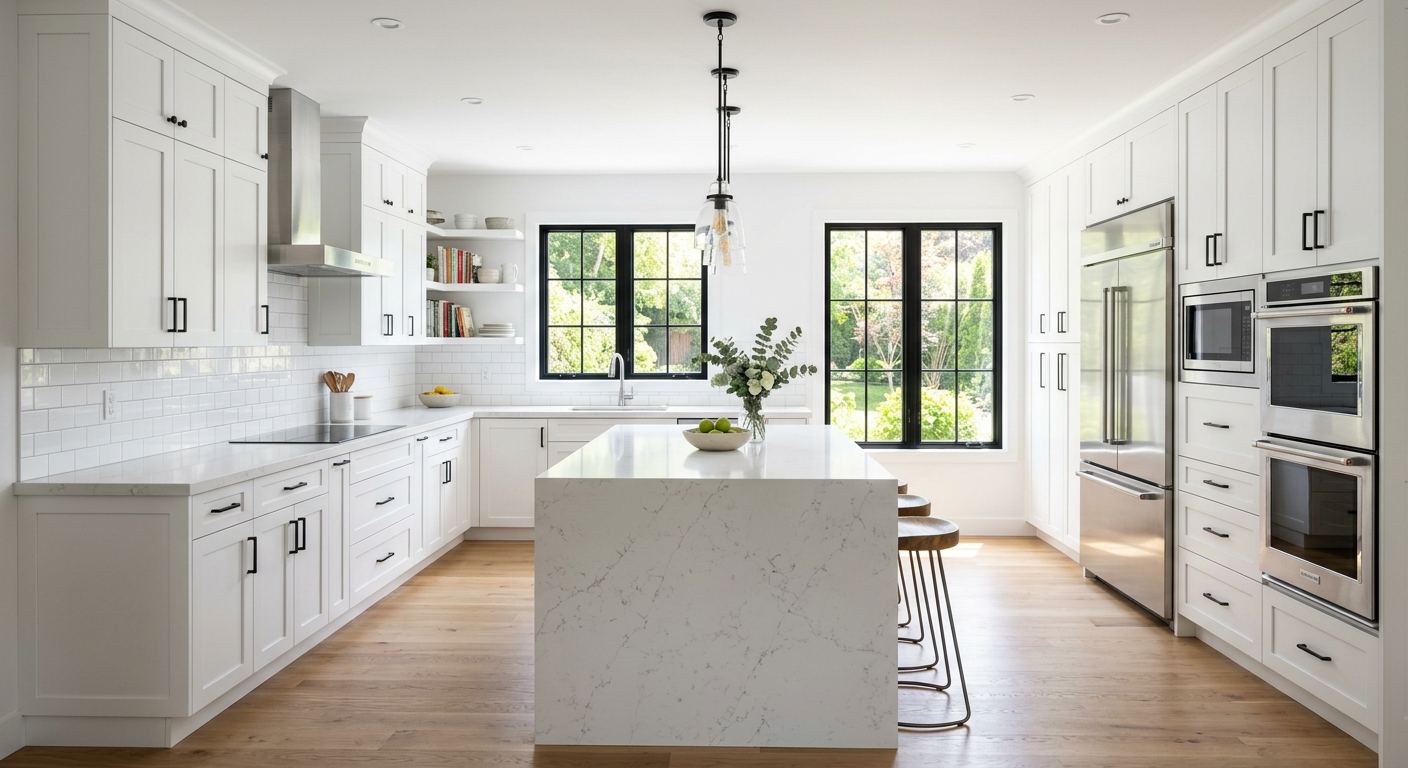
Kitchen renovation options and costs in Uptown
In Uptown, British Columbia, the kitchen renovation path you choose—from a quick refresh to a full rebuild—drives pricing more than any other single factor. With a population of 9,273 in the area (Statistics Canada, 2021 Census), there’s enough local demand that contractors can usually schedule installs efficiently, but the finish level you want will still determine the final total. Lower Mainland–Southwest home values and household incomes tend to be higher than many other parts of BC, which means homeowners in Uptown often expect a more “showroom-ready” look and durable surfaces. That expectation is a big reason custom or semi-custom cabinetry and quartz/stone counters show up more often in full renovations than in basic updates (Statistics Canada, 2021 Census).
Climate plays a supporting role. In the Lower Mainland–Southwest, humidity swings and wet-season moisture mean ventilation and material selection matter—especially around sink walls, under-cabinet spaces, and any areas with previous water exposure. However, actual project costs are more influenced by contractor availability, material lead times, and labour demand in the Lower Mainland–Southwest than by the weather alone. For Uptown, trades are often busiest around the Guildford/Fraser Highway corridor where many homeowners plan updates alongside broader home upgrades. Next, use the tiers below as a practical way to compare what your budget can realistically buy.
| Renovation Tier |
What's Included |
Typical Duration |
Price Range |
| Cosmetic refresh (paint, hardware, new appliances only) |
Cabinet paint or re-finish (no box changes), new pulls/knobs, caulking/trim touch-ups, appliance swap only (swap-in/out), minor sink faucet refresh |
1–3 weeks |
$8,000–$25,000 |
| Mid-range full renovation (new cabinets, counters, sink, tile) |
New semi-custom or quality stock cabinets, new countertop, sink + faucet, backsplash tile, new flooring prep (minor), basic electrical allowance, plumbing hook-ups |
6–10 weeks |
$40,000–$85,000 |
| High-end full renovation (custom cabinets, stone counters, island) |
Fully custom cabinetry, stone counters (quartz/stone), island build-out, upgraded hardware, detailed backsplash (often full-height), upgraded lighting, more complex layout and trade coordination |
10–16 weeks |
$85,000–$120,000 |
| Cabinet refacing only (new doors + drawer fronts, same boxes) |
Refacing panels/doors/drawer fronts, new hardware, re-surfacing selected areas, new toe-kicks where needed, backsplash option not included unless added separately |
3–6 weeks |
$8,000–$35,000 |
| Countertop swap only (laminate to quartz or stone) |
Remove laminate/old tops, install quartz/stone, sink cut-outs, basic caulking/sealing, haul-away (if arranged) |
1–3 weeks |
$3,000–$12,000 |
| Backsplash tile installation only |
Demo (limited), tile supply + install, prep and waterproofing membrane where required, finishing trims and caulking |
1–2 weeks |
$1,500–$6,000 |
Prices are estimates only and vary by project scope, site access and material selection.
What affects the price of kitchen renovation in Uptown
In the Lower Mainland–Southwest, quotes for what looks like the “same” kitchen can swing by roughly 30–50% across British Columbia because the biggest drivers aren’t the weather—they’re resale expectations, the finish tier, and how much hidden work is triggered once walls and old cabinets come out. In higher-value areas within the Lower Mainland–Southwest, homeowners more often opt for quartz or stone counters and semi-custom cabinetry because the renovation cost is easier to recoup on resale. In more modest markets, laminate and stock cabinets tend to dominate because they deliver a cleaner look for less risk. Either way, layout changes usually break budgets: removing a wall, adding an island, or moving a gas line can force extra framing, electrical/plumbing work, and inspections regardless of finish level.
In Uptown specifically, two examples show how local conditions raise costs. First, older homes and earlier-renovation kitchens sometimes have undersized electrical runs or outdated subflooring near the sink and dishwasher; fixing that can push you from a mid-range full renovation into higher-end pricing even if you keep materials simple. Second, kitchens with past moisture issues behind toe-kicks and around exterior-facing walls may require drywall replacement and sub-surface repairs before tile or new cabinets go in—often adding time and labour even when the visible surfaces look the same.
On the flip side, you can lower cost by keeping the layout where possible and choosing a controlled upgrade path: for example, a countertop swap only can land around $3,000–$12,000, while a mid-range full renovation typically starts closer to $40,000–$85,000. Finish tier and layout are what move the needle most in the Lower Mainland–Southwest.
| Price Factor |
Why It Matters |
Cost Impact |
| Cabinet tier — stock vs. semi-custom vs. fully custom millwork |
Higher tiers use better materials, tighter tolerances, and more flexible sizing—especially important for awkward corners and venting clearances. |
Often the largest lever; upgrading can add significant cost inside any total renovation. |
| Countertop material — laminate vs. quartz vs. granite vs. stone |
Material and fabrication complexity change labour and risk; stone also increases edge-work and transport costs. |
Countertop upgrades can swing several thousand dollars, with stone at the top end. |
| Layout change — wall removal, island add, plumbing/gas move |
Layout changes trigger framing, permits/inspections, and trade coordination (plumbing, electrical, sometimes gas). |
Unpredictable; this is where budgets commonly jump most. |
| Appliance package tier — builder vs. mid-range vs. pro-grade |
Pro-grade units can require different cut-outs, ventilation, and sometimes higher electrical supply/venting. |
May add moderate-to-high cost depending on electrical/venting requirements. |
| Flooring — refinish existing vs. full replacement |
Refinishing limits demo and disruption; full replacement can require subfloor assessment and underlayment upgrades. |
Typically a mid-sized contributor when cabinets are replaced and floor is opened. |
| Backsplash — ceramic tile vs. marble vs. full-height slab |
Harder stone and full-height coverage increase labour, prep, and material waste. |
Can add noticeable cost, especially when reaching full-height features. |
| Electrical — new circuits for island, under-cabinet lighting |
New circuits and lighting add licensed labour and inspection steps. |
Often increases total modestly, but can rise quickly with added islands and outlets. |
| Permit fees and licensed trade requirements |
Work that touches plumbing, gas, load-bearing structures, or electrical circuits may require permits and inspections. |
Adds direct permit/inspection costs and coordination time. |
Permits & regulations in British Columbia
In British Columbia, cabinet and countertop swaps typically do not require a permit when you’re not changing the existing plumbing, gas, electrical, or structural elements. If you’re replacing like-for-like—new cabinet boxes, new countertops, or swapping a sink faucet without moving the supply/drain—most homeowners can avoid permit delays. Similarly, a backsplash installation alone usually doesn’t trigger permitting.
Where permits do come in is when you change systems. In Uptown, work that commonly does require a permit includes moving plumbing supply or drain lines, relocating a gas stove/range or altering venting associated with gas appliances, removing a load-bearing wall, and adding new electrical circuits (for example, island power or new under-cabinet lighting tied into a circuit). Gas work must be completed by a licensed gas fitter, and electrical work must be performed by a licensed electrician—each with required inspections.
Step-by-step verification is straightforward:
- Ask the contractor for their licence details for the relevant trades (gas fitter, electrician) and confirm the individuals are licensed for the specific scope.
- Request a certificate of liability insurance and check it covers renovation work (and verify the policy dates align with your project timeline).
- Confirm their coverage for workers via the appropriate provincial coverage documentation for payroll labour (and ask for proof).
- For permits: ensure the contract states who pulls permits, what scope triggers them, and that inspection scheduling is included.
- Get everything in writing before work starts, including which items are excluded.
Cabinets, countertops and layout decisions in Uptown
When homeowners in Uptown plan a renovation, there are three decisions that most strongly shape both cost and resale appeal in the Lower Mainland–Southwest: (1) cabinet tier, (2) countertop material, and (3) layout changes. First, cabinet tier controls your timeline and fit. Stock cabinets are the fastest and usually the cheapest, while semi-custom is the most popular mid-range choice because it balances better sizing and style options with predictable lead times. Custom cabinets deliver the best fit for older homes with out-of-square walls, but they’re the biggest cost and can extend lead times.
Second, countertops should match daily use. Quartz and stone are strong performers for stain resistance and durability, but they also require careful installation and solid support. Laminate is a practical upgrade when budgets are tight and the goal is an updated look. As for marble, it can be stunning, but it needs sealing and careful maintenance because it’s more reactive than quartz or engineered stone.
Third—and most expensive when done wrong—layout changes. In this region, adding an island or opening the kitchen can be worth it when it improves flow and adds seating storage. But the justification depends on trade impacts. As a practical example, upgrading to quartz vs. laminate can be a smart value shift, yet moving plumbing and gas lines usually costs far more than the countertop difference. If your layout stays put, a controlled upgrade path often keeps you closer to a mid-range renovation budget; if you move the sink or add power to a new island, you should expect your total to climb quickly.
Lower Mainland–Southwest buyers generally expect clean, modern lines: durable counters, updated hardware, and cabinetry that looks intentional—not “patched.” Planning those choices together is how you get the look without paying for rework.
| Option |
Durability |
Maintenance |
Best For |
Price Range |
| Stock cabinets (big-box) |
Solid for everyday use; durability depends on door/drawer construction and finishing. |
Low; keep hinges aligned and manage moisture near sinks. |
Fast timelines and budget-focused renovations with a simpler layout. |
$8,000–$25,000 |
| Semi-custom cabinets (local dealer) |
Better fit, more door/drawer styles, and more options for corners and offsets. |
Low; similar care to stock with better hardware and longevity. |
Most Uptown mid-range projects aiming for a “custom” look without custom pricing. |
$20,000–$55,000 |
| Custom cabinets (local millwork shop) |
Highest build quality and best fit for irregular spaces and premium detailing. |
Low-to-moderate; depends on finish and door style, but generally straightforward. |
Homes that need tailored sizing, premium detailing, or unusual storage layouts. |
$45,000–$90,000 |
| Laminate countertop |
Good for basic use; seams and edges are the weak points if not installed carefully. |
Low; avoid prolonged standing water and use care around hot pans. |
Budget upgrades that prioritize appearance and quick turnaround. |
$3,000–$6,000 |
| Quartz engineered countertop |
Excellent stain and scratch resistance; consistent thickness for clean detailing. |
Low; wipe clean, periodic routine care, and avoid extreme heat directly. |
Busy households wanting low maintenance and a modern look. |
$6,000–$12,000 |
| Granite / natural stone countertop |
Very durable; can handle heat better than many engineered surfaces but varies by stone. |
Moderate; may require periodic sealing and gentle handling at seams. |
Owners who want unique veining and a more natural, high-end aesthetic. |
$8,000–$15,000 |
| Butcher block countertop |
Durable but can dent or scratch; sensitive to moisture unless properly finished. |
Higher; requires oiling and careful drying near sinks. |
Warm, traditional kitchens and homeowners willing to maintain the surface. |
$5,000–$10,000 |
| Marble countertop |
Beautiful but softer; more prone to etching and staining than quartz. |
High; sealing and careful cleaning habits are essential. |
Design-led kitchens where appearance is the priority and maintenance is accepted. |
$10,000–$18,000 |
How to choose a kitchen renovation contractor in Uptown
Choosing the right contractor in Uptown, British Columbia, starts with verifying the right licensing and coverage for the specific trades involved. Ask for proof that the company can legally perform the scope they’re proposing, and confirm subcontractors are properly licensed for their portions: gas work (licensed gas fitter), electrical (licensed electrician), and any other trade-specific requirements. You should also request liability insurance and workers’ coverage documentation for employees. Practically, you’ll want to see:
- Liability insurance certificate with renovation work coverage and dates matching your project.
- Evidence of provincial workers’ coverage for payroll labour (or confirmation that their subcontractors carry their own coverage).
- Trade licence details for anyone doing gas or electrical work, and that their work aligns with permits/inspections.
- Recent project photos that match your planned cabinet tier and countertop type, not just generic “before/after” shots.
Then, get 2–3 itemised written quotes, not lump sums. The best quotes break out labour and materials so you can compare apples to apples: demolition, cabinet install, countertop fabrication/handling, plumbing hook-ups, electrical allowance, tile/backer prep, and disposal. Carefully read exclusions—things like permitting, disposal, drywall patching, appliance delivery/haul-away, and floor repairs can be omitted or treated as “allowances.”
Warranty matters for both workmanship and products. Ask how long the contractor covers labour, whether the manufacturer warranties are separate, and whether warranties are transferable to you. For payment scheduling, never pay more than 10–15% upfront; hold a completion holdback until punch-list items are finished. Finally, require a start date and a realistic completion estimate in writing, accounting for common Lower Mainland–Southwest material lead times.
- Use an itemised scope sheet with line-by-line costs for labour and materials.
- Confirm whether the quote includes permit pulling and inspections for triggered scopes.
- Ask who disposes of construction debris and what’s included in the haul-away.
- Confirm countertop template, fabrication, and install dates (and what happens if the slab is delayed).
- Require a written demolition-to-install timeline (cabinet install, countertop install, final trim).
- Check that plumbing/electrical tie-ins are included or clearly allowed for.
- Verify warranty terms in writing: workmanship length and exclusions.
- Confirm whether cabinet makers provide product warranties directly or through the contractor.
- Ask for a site-protection plan (floor covering, dust control) for the work area.
- Ensure the quote states what “selections” are included (hardware finish, backsplash tile grade).
- Confirm change-order process: written approval before extra work.
- Use a payment schedule tied to milestones, with a meaningful holdback.
Red flags I commonly see in Uptown include: vague scopes with no allowances, quotes that refuse to identify the trade contractor for gas/electrical work, too much upfront payment (beyond 10–15%), missing warranty details, and schedules that ignore material lead times—especially for quartz/stone and semi-custom cabinet production.
Frequently asked questions — kitchen renovation in Uptown
What's the most cost-effective kitchen upgrade?
In Uptown and across the Lower Mainland–Southwest, the most cost-effective upgrades are usually the ones that refresh the look without forcing major demo or system moves. For many homeowners, that’s either a cosmetic refresh (paint, new hardware, and a clean appliance update) or a targeted countertop upgrade. A countertop swap only often fits well when your layout and cabinetry are structurally sound—especially since countertop installation alone commonly lands around $3,000–$12,000. If your cabinets still function but look dated, refacing can also be a smart “high impact, low disruption” option. The biggest savings come from avoiding plumbing/gas/electrical relocations and choosing finishes that won’t require excessive rework of tile or flooring.
Custom vs stock cabinets — is custom worth it?
Custom cabinets can be worth it when your kitchen has challenges: out-of-square walls, unusual corners, awkward pantry layouts, or you want a highly tailored storage system that stock can’t match. In Uptown, many homes built earlier (or previously reno’d) have small size irregularities that make semi-custom or custom feel “cleaner” once installed. If your goal is speed and budget, stock cabinets are usually the better fit—especially because they reduce ordering and install complexity. But if you’re planning a mid-range full renovation (commonly $40,000–$85,000) and want a cohesive, premium look, semi-custom often hits the best balance. Custom is typically where you start paying for fit, detailing, and long lead times—so it’s best when the kitchen is a long-term home and resale polish matters to you.
How do I choose a kitchen contractor in Uptown?
Start by verifying the contractor can legally deliver the scope and that the right licensed trades are involved. In British Columbia, electrical and gas-related work must be done by licensed professionals, and you should see evidence of their licensing and liability coverage. Request an itemised written quote (labour and materials breakdown—not a single lump sum), so you can compare disposal, prep work, permit pull responsibility, and inclusions. Confirm warranty terms: workmanship duration, product/manufacturer coverage, and whether warranties are transferable. For payment, keep it conservative: never pay more than about 10–15% upfront and use a holdback until the job is complete. Finally, insist on a start date and completion estimate in writing. If the quote is unclear about what triggers permits or who handles inspections, that’s a sign to ask more or walk away.
What order do kitchen renovation steps happen in?
The sequence typically starts with measurements and design confirmation, then demolition, rough-ins, and permitting (only if the scope requires it). Cabinets go in after framing/rough work is done, because installers need firm surfaces and correct plumbing/electrical locations. Countertops follow cabinet installation, after seams and cut-outs are templated and the base cabinets are level and secure. Tile and backsplash usually come after cabinets are set so the tile line and trim match cleanly; in many projects, flooring work is coordinated either before cabinets (if re-laying) or after careful protection if only minor refinishing is needed. Appliances and final hardware are done near the end. This order matters in the Lower Mainland–Southwest due to humidity management and curing times—especially for sealants, grout, and any backer prep around sinks and wet areas.
Can I live at home during a kitchen renovation in Uptown?
Often yes, but it depends on the scope and how disruptive the demo is. With a cosmetic refresh, cabinet refacing, or a countertop swap only, many homeowners stay in the home comfortably because the kitchen is partially usable and the timeline is shorter. For a mid-range full renovation—commonly around $40,000–$85,000—you may still stay home, but expect periods when the sink, stove, and main work surfaces are out of service, and you’ll need a temporary setup. For high-end full renovations with layout changes and an island, staging may be harder and you might plan for short “functional downtime” while rough-ins and inspections are completed. Contractors in Uptown typically set up dust control and protect flooring, but agree in advance on how you’ll access the home, where debris will be stored, and how daily cleanup will be handled.
Should I renovate my kitchen before selling in Uptown?
In Uptown, renovating before selling can help—if you focus on upgrades that buyers notice immediately and that improve perceived quality. But you don’t want to over-invest in highly premium finishes if your market and listing strategy doesn’t support it. Many sellers choose a refresh path: new hardware, fresh paint, a backsplash upgrade, or a countertop replacement, because these changes are easier to execute without major layout costs. If you’re considering a full renovation, keep ROI in mind and prioritize durability: quartz/stone counters, solid cabinet hardware, and practical storage. A mid-range full renovation often sits in the $40,000–$85,000 range; if your budget stretches toward a high-end rebuild (up to $85,000–$120,000), that usually aligns with buyers expecting premium finishes. A local realtor’s input on the neighbourhood’s typical buyer expectations is the best reality check before signing.