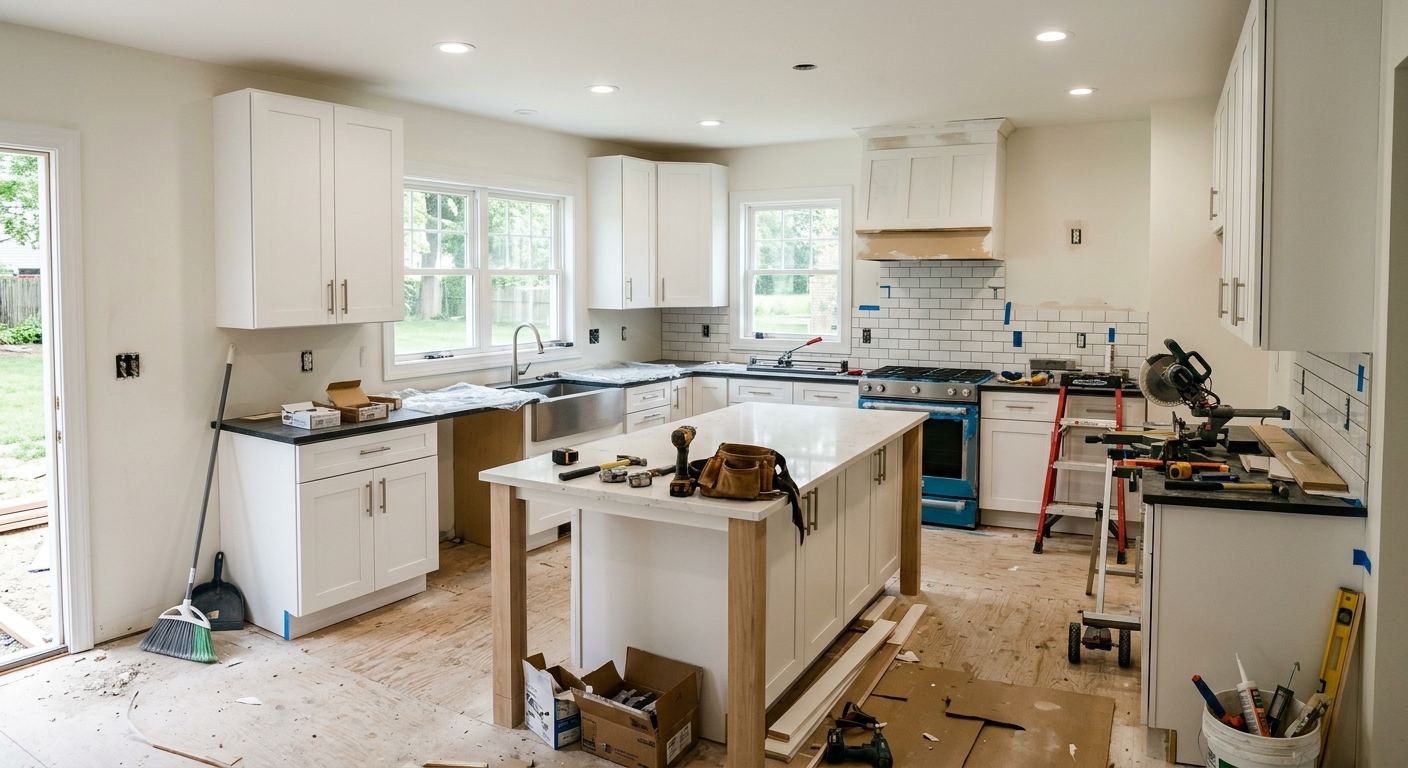
Kitchen renovation options and costs in British Properties
In British Properties, British Columbia, kitchen renovation costs tend to track the home’s value and the expected finish level more than the weather. With a local population of about 3,800 (Statistics Canada, 2021 Census), the area is small enough that reputable trades can be booked quickly during peak renovation seasons, which can tighten labour schedules. And because many homeowners live in a high-equity market, buyers commonly expect durable, design-forward upgrades—especially in kitchens that are visible from dining and living areas. That’s why, in Lower Mainland–Southwest pricing, the same kitchen can land very differently depending on whether it’s a practical refresh or a full rebuild. The region’s cost drivers are dominated by materials (cabinet and countertop tier), cabinetry complexity, and how much the layout changes.
Climate plays a smaller role than homeowners expect: the Lower Mainland’s moderate, coastal conditions still create a lot of kitchen humidity and temperature swings, but the real budget impacts come from sealing details, ventilation improvements, and protecting adjacent finishes. In higher-value pockets of the Lower Mainland–Southwest, cabinets are often semi-custom or fully custom, and quartz/stone counters are more common than laminate. That also reflects contractor availability: design-led work is typically staffed with carpentry crews and cabinet installers who can handle made-to-fit millwork.
In British Properties, trade demand is especially steady for kitchen rebuilds in older, larger homes along the North Shore/West Vancouver-adjacent corridors where layouts are being opened up and reconfigured for today’s entertaining flow. Next, here’s how typical renovation tiers compare so you can sanity-check quotes against realistic ranges.
| Renovation Tier |
What's Included |
Typical Duration |
Price Range |
| Cosmetic refresh (paint, hardware, new appliances only) |
Cabinet paint or repaint, new pulls/hinges, appliance swap (no plumbing/gas moves), minor trim touch-ups |
1–2 weeks |
$8,000–$20,000 |
| Mid-range full renovation (new cabinets, counters, sink, tile) |
Semi-custom or mid-range cabinets, new counters, sink and faucet, backsplash tile, laminate/vinyl/engineered flooring repairs as needed, disposal and basic carpentry |
4–8 weeks |
$40,000–$80,000 |
| High-end full renovation (custom cabinets, stone counters, island) |
Fully custom cabinetry, premium stone/quartz, larger island with integrated storage, upgraded backsplash (often slab-look), higher-end hardware, deeper electrical scope (undercabinet lighting) |
8–14 weeks |
$90,000–$120,000 |
| Cabinet refacing only (new doors + drawer fronts, same boxes) |
Refacing veneer or replacement fronts, new hardware, alignment/soft-close upgrades, backsplash spot changes if needed |
2–5 weeks |
$8,000–$30,000 |
| Countertop swap only (laminate to quartz or stone) |
Removal and reinstall of counters, new quartz/stone surface, faucet disconnect/reconnect as required, countertop seam planning |
3–7 days |
$3,000–$12,000 |
| Backsplash tile installation only |
Surface prep, waterproofing and backer where required, tile setting and grouting, trim/caulking, clean-up |
3–10 days |
$1,500–$6,000 |
Prices are estimates only and vary by project scope, site access and material selection.
What affects the price of kitchen renovation in British Properties
For the same kitchen work in British Properties, British Columbia, quotes can swing by about 30–50% across the Lower Mainland–Southwest and other parts of the province. Most of that variation isn’t “climate pricing”—it’s finish expectations tied to local home values and household income. In higher-value areas of the Lower Mainland–Southwest, homeowners often prioritize quartz or stone counters and semi-custom cabinetry because the cost is more easily recovered on resale. In more modest markets, laminate counters and stock cabinets dominate because they deliver a stronger ROI per dollar spent.
In Lower Mainland–Southwest, layout changes are the wildcard regardless of finish tier. Removing a wall, adding an island, or moving a gas line/plumbing drain can drive the most unpredictable costs because it involves trades coordination, inspections, and sometimes structural or venting considerations. Even when finishes stay “mid-range,” the scope behind the walls can still push you toward the higher renovation band. That’s why a kitchen that looks like a “$40,000–$80,000” refresh on paper can end up closer to the “$90,000–$120,000” range once electrical and plumbing moves are added.
Concrete local examples we commonly see in British Properties: (1) upgrading from laminate to quartz often adds cost mainly through fabrication complexity and edge/seam decisions, not just slab price; (2) adding under-cabinet lighting frequently increases electrical labour because it requires new circuits and cleaner wire routing; and (3) replacing damaged subflooring near sinks—usually from older homes handling moisture over decades—can turn a countertop-only job into a broader floor-and-waterproofing effort. When you’re working in older housing stock, plan for hidden conditions: it’s where budgets rise quickly (and where good pre-demolition inspection protects you).
| Price Factor |
Why It Matters |
Cost Impact |
| Cabinet tier — stock vs. semi-custom vs. fully custom millwork |
Material quality, fit and finish, internal storage options, and lead times vary significantly by tier |
Typically adds a mid-to-large portion of the total; moving from semi-custom to full custom can shift you from mid-range toward high-end bands |
| Countertop material — laminate vs. quartz vs. granite vs. stone |
Slab cost, fabrication complexity, and seam planning affect both labour and material |
Laminate can keep counters near the lower end of the $3,000–$12,000 band; quartz/stone commonly pushes higher |
| Layout change — wall removal, island add, plumbing/gas move |
Creates structural, mechanical and scheduling complexity behind walls |
Often the biggest swing factor for price, regardless of finish level |
| Appliance package tier — builder vs. mid-range vs. pro-grade |
Dimensions, power requirements, ventilation and trim kits can change installation labour |
Can move total project cost materially, especially with venting and electrical updates |
| Flooring — refinish existing vs. full replacement |
Subfloor condition and moisture protection requirements change the work |
Refinish is usually cheaper; full replacement adds demo, prep, and install time |
| Backsplash — ceramic tile vs. marble vs. full-height slab |
Material weight, cutting, and finish requirements drive labour and waste |
Tile-only can stay near the $1,500–$6,000 range; premium stone/slab can exceed it |
| Electrical — new circuits for island, under-cabinet lighting |
More fixtures and receptacles require circuit planning and inspection |
Can add noticeable cost; also delays the schedule if rough-in is missed |
| Permit fees and licensed trade requirements |
Permits and inspection timelines can require licensed trades for specific tasks |
Usually increases cost and timeline, especially when plumbing/gas or electrical upgrades are involved |
Permits & regulations in British Columbia
In British Columbia, many “swap-only” kitchen upgrades do not need a permit. Cabinet and countertop replacements typically fall under replacement work. However, permits and licensed trade involvement generally kick in when you change the kitchen’s systems or structure—especially in British Properties where older homes often require careful coordination. The work that typically does require a permit includes: moving plumbing supply or drain lines (for example, relocating a sink), relocating or adding gas components (including a stove/range hood with gas), removing a load-bearing wall, and adding electrical circuits or major electrical work (like new island receptacles or changes that involve panel/circuit alterations). Electrical and gas work must be done by the appropriate licensed trades, with inspections as required.
Step-by-step, here’s how a homeowner in British Properties can verify a contractor is properly set up before work starts:
- Ask for the contractor’s licence references (and for subtrades, ask separately for their trade licences).
- Request a current certificate of liability insurance and confirm the coverage period aligns with your project dates.
- Ask how they handle provincial workplace coverage (WSIB/WCB coverage) and request proof/clearance documentation.
- For gas work, confirm the gas fitter is licensed and will obtain/coordinate any required inspections.
- For electrical, confirm a licensed electrician will handle rough-in and the final inspection.
- Confirm in writing who is pulling permits for your specific scope—contractors should specify this in the contract, not in a text message.
Always verify permit responsibility in your written scope: it’s one of the simplest ways to avoid cost surprises later.
Cabinets, countertops and layout decisions in British Properties
In British Properties, your three highest-impact decisions for kitchen renovation cost and long-term satisfaction are: (1) cabinet tier (stock, semi-custom, or custom), (2) countertop material (laminate, quartz, granite, butcher block, or marble), and (3) layout changes (open-concept wall removal, island addition, and plumbing/gas relocation). Because resale matters in the Lower Mainland–Southwest, buyers typically expect clean, durable surfaces and storage that feels “built-in,” not just fitted. Also, coastal British Columbia homes can experience higher indoor humidity swings, so good ventilation and sealed transitions around sinks and dishwasher areas are more important than people expect.
Cabinet tier: stock cabinets are fastest and usually the best entry price; semi-custom tends to be the sweet spot for most mid-range renovations; custom is where you pay for perfect fit, integrated storage, and design details. Countertops: laminate can look great with the right colour and edge detail, but it generally won’t match stone’s heat and scratch performance. Quartz is popular because it’s low maintenance and suits everyday cooking, often fitting within the typical “mid-range” renovation budgets like the $40,000–$80,000 band when paired with semi-custom cabinetry. Natural stone (granite/stone) and marble elevate appearance but can require more care and budgeting.
Layout: justify layout changes only when you gain meaningful function—more seating at an island, better pantry flow, or clearer circulation for entertaining. A dollar example: if moving a sink or stove pushes the plumbing/gas scope into a more complex build, that work can add several thousand dollars and scheduling time; if you’re not gaining usable storage or traffic flow, it’s often better to keep the “plumbing footprint” and redirect budget to counters or an island. That’s how many British Properties homeowners keep a project closer to the mid-range band instead of slipping into high-end rebuild pricing.
| Option |
Durability |
Maintenance |
Best For |
Price Range |
| Stock cabinets (big-box) |
Good for everyday use; hinges/frames quality depends on brand |
Low; keep runners and hardware tightened |
Budget-first refreshes where speed matters |
$12,000–$25,000 |
| Semi-custom cabinets (local dealer) |
Very durable with better storage configurations |
Low to moderate; wipe and tighten hardware periodically |
Most British Properties mid-range renovations |
$25,000–$45,000 |
| Custom cabinets (local millwork shop) |
Excellent; designed to your space and loading needs |
Low; built with longevity-focused materials |
When you want a precise fit and premium storage |
$45,000–$75,000 |
| Laminate countertop |
Moderate; can be more vulnerable to heat/impact at seams |
Low; avoid prolonged heat exposure and heavy scraping |
Cost-controlled updates that still look clean |
$3,000–$6,000 |
| Quartz engineered countertop |
High; resistant to staining and daily wear |
Low; routine cleaner and gentle care |
Families and resale buyers who want “set and forget” |
$6,000–$12,000 |
| Granite / natural stone countertop |
High; durable but varies by slab and sealing needs |
Moderate; sealing and careful spill management |
Design-led looks with premium character |
$8,000–$15,000 |
| Butcher block countertop |
Good; can scratch but withstands repairs better than some surfaces |
Moderate; oiling and sealing routine |
Warm, casual kitchens and light daily wear |
$5,000–$10,000 |
| Marble countertop |
Moderate to high; can etch or stain without careful use |
Higher; sealing and cautious cleaning required |
Statement kitchens with a more “showpiece” approach |
$10,000–$18,000 |
How to choose a kitchen renovation contractor in British Properties
Choosing the right contractor in British Properties is less about the fastest sales pitch and more about verification, scope clarity, and how they manage scheduling. Start with British Columbia licensing and proof of coverage. Ask for the contractor’s business licence/registration as applicable, and confirm that key subcontractors are properly licensed (especially electrical and gas-related work). For liability, request a current certificate of insurance and ensure the coverage is valid for the entire project window. For workplace coverage, ask for proof of WSIB/WCB coverage (or clearance documentation) and confirm it’s in place before any demolition begins. If they can’t provide paperwork promptly, that’s a major warning sign.
Next, insist on 2–3 itemised written quotes, not a single lump sum. Your quote should break down labour and materials separately: demo/disposal, framing/carpentry, plumbing/gas (if applicable), electrical, cabinet supply/installation, countertop fabrication, tile/backsplash, and flooring transition details. Read the scope for what’s excluded: permit pulling, disposal, tile backer/waterproofing, protection of floors and countertops during install, and whether drywall patching/paint is included or “allowance-based.”
Warranty matters too. Confirm workmanship warranty length and whether product warranties are direct from the manufacturer (and if they transfer to you). For payments, avoid paying more than 10–15% upfront; hold back a final portion until the punch list is complete. Finally, get a start date and a completion estimate in writing—kitchen projects in the Lower Mainland–Southwest often hinge on cabinet and countertop lead times, so timelines should be tied to supply dates.
- Verify licensed trades for electrical and gas scopes before signing.
- Request certificates of insurance and read the expiry dates.
- Confirm WSIB/WCB clearance documentation is provided for the project.
- Compare quotes line-by-line for demo, disposal, and site protection.
- Ensure permits responsibility is clearly stated in your contract.
- Ask what happens if cabinet or countertop lead times slip.
- Check who provides countertop templates and seam layout decisions.
- Confirm backsplash scope includes waterproofing/backer where needed.
- Confirm disposal and recycling are included (or listed as an allowance).
- Ask about drywall, primer, and paint exclusions or inclusions.
- Review warranty terms: workmanship vs. product and transferability.
- Use a payment schedule with a holdback for completion/punch list.
Red flags in British Properties include: vague scopes that don’t list permits/disposal, refusing to provide insurance/coverage documentation, only offering lump-sum pricing, requiring large upfront deposits beyond 10–15%, and promising exact completion dates without acknowledging cabinet/countertop lead times.
Frequently asked questions — kitchen renovation in British Properties
Do I need a permit for a kitchen renovation in British Columbia?
In British Columbia, not every kitchen renovation needs a permit. Typically, replacing cabinets and countertops (without changing plumbing, gas lines, or structure) is usually permit-light. Where permits generally come in is when you move plumbing supply/drain lines (for relocating a sink), relocate gas appliances (including stove and certain range hood setups), remove a load-bearing wall, or add new electrical circuits (for example, extra island receptacles or under-cabinet lighting tied into new circuits). A contractor should clearly state in the written contract who pulls permits for your scope. In practice, British Properties homeowners can verify this by asking for the permit plan before work begins and ensuring licensed trades are named for electrical and gas work. That helps avoid surprises when inspections are required.
What's the ROI on a kitchen renovation?
ROI in British Properties depends heavily on finish tier and how much of your budget goes to “systems” vs. visible upgrades. Renovations that align with what Lower Mainland buyers expect—clean cabinetry lines, durable quartz/stone counters, and functional layout flow—tend to be easier to recoup than purely cosmetic changes. That said, if your renovation is priced like a high-end build (for example, pushing toward the $90,000–$120,000 band) but your home doesn’t support that level in resale comps, ROI can soften. Many homeowners find better value by targeting mid-range upgrades (often in the $40,000–$80,000 range) while keeping the plumbing footprint and focusing spend on cabinets, countertops, and a well-designed backsplash. The key is matching your project scope to your neighbourhood’s price expectations, not just your personal preferences.
How do I budget for a kitchen renovation?
Budgeting well in British Columbia starts with deciding your tier and protecting yourself from layout-driven surprises. Start with the backbone numbers: a full kitchen renovation often ranges from $40,000–$120,000 depending on cabinet and countertop tier and complexity. Then add “risk allowance” for common Lower Mainland issues like hidden floor moisture near sinks in older homes or electrical/plumbing coordination when an island is added. If you’re only upgrading surfaces, you can budget much lower—countertop-only projects often fit around $3,000–$12,000, and backsplash tile installation is commonly $1,500–$6,000 when the scope is straightforward. For best results, request itemised quotes so you can separate labour from materials, understand what’s excluded, and set a contingency that matches your scope (layout changes usually need more buffer than cosmetic refreshes).
Can I move my kitchen sink or stove?
Yes, you can move a sink or stove in British Properties, but it’s usually where budgets and timelines change the most. Moving a sink typically means relocating plumbing supply and drain lines, which generally requires permits and licensed plumbing work. Moving a stove (especially with gas) may also involve gas line relocation and licensed gas fitting, plus ventilation considerations. Even when the layout change feels minor, openings in drywall, subfloor protection, rerouting ducts, and inspection scheduling can add several days to weeks. If you want a cost-controlled approach, consider keeping the “plumbing footprint” and investing instead in cabinet configuration, countertop upgrades, and lighting. That strategy often helps keep projects closer to the $40,000–$80,000 mid-range band rather than drifting upward.
What's the most cost-effective kitchen upgrade?
The most cost-effective upgrade in British Properties is usually the one that gives the biggest visual and usability change without forcing costly hidden work. For many homeowners, that’s upgrading cabinets and hardware combined with a durable countertop surface, or doing a cabinet refacing + high-impact finishing touches. A backsplash can also be a strong value option, particularly if your walls are already sound; backsplash tile installation typically lands around $1,500–$6,000 for a standard scope. If your existing cabinetry is structurally fine, refacing can be an efficient route instead of full replacement, commonly priced in the $8,000–$50,000 range depending on complexity. If you’re thinking of counter-only changes, moving from laminate to quartz/stone is often an affordable “wow” upgrade and can fall around $3,000–$12,000 depending on size and edges. The key is avoiding layout moves unless the space gains are clear.
Custom vs stock cabinets — is custom worth it?
Custom cabinets can be worth it in British Properties when you need a precise fit, want upgraded storage solutions, or are designing around an island, unusual ceiling heights, or tight spaces. Stock cabinets are the most cost-effective and fastest option, and they’re often suitable for homeowners doing a cosmetic refresh or keeping a very contained scope. Semi-custom is commonly the “best value” middle ground in the Lower Mainland–Southwest because it balances cost, options, and lead times. If you compare costs, a full high-end renovation tends to be priced closer to the $90,000–$120,000 range when custom cabinetry is paired with stone counters and island work. Meanwhile, mid-range projects often sit around $40,000–$80,000 when semi-custom cabinets and quartz are the focus. In most kitchens, custom only becomes truly “worth it” when it solves a real layout problem or noticeably improves function for how you live, not just for aesthetics.