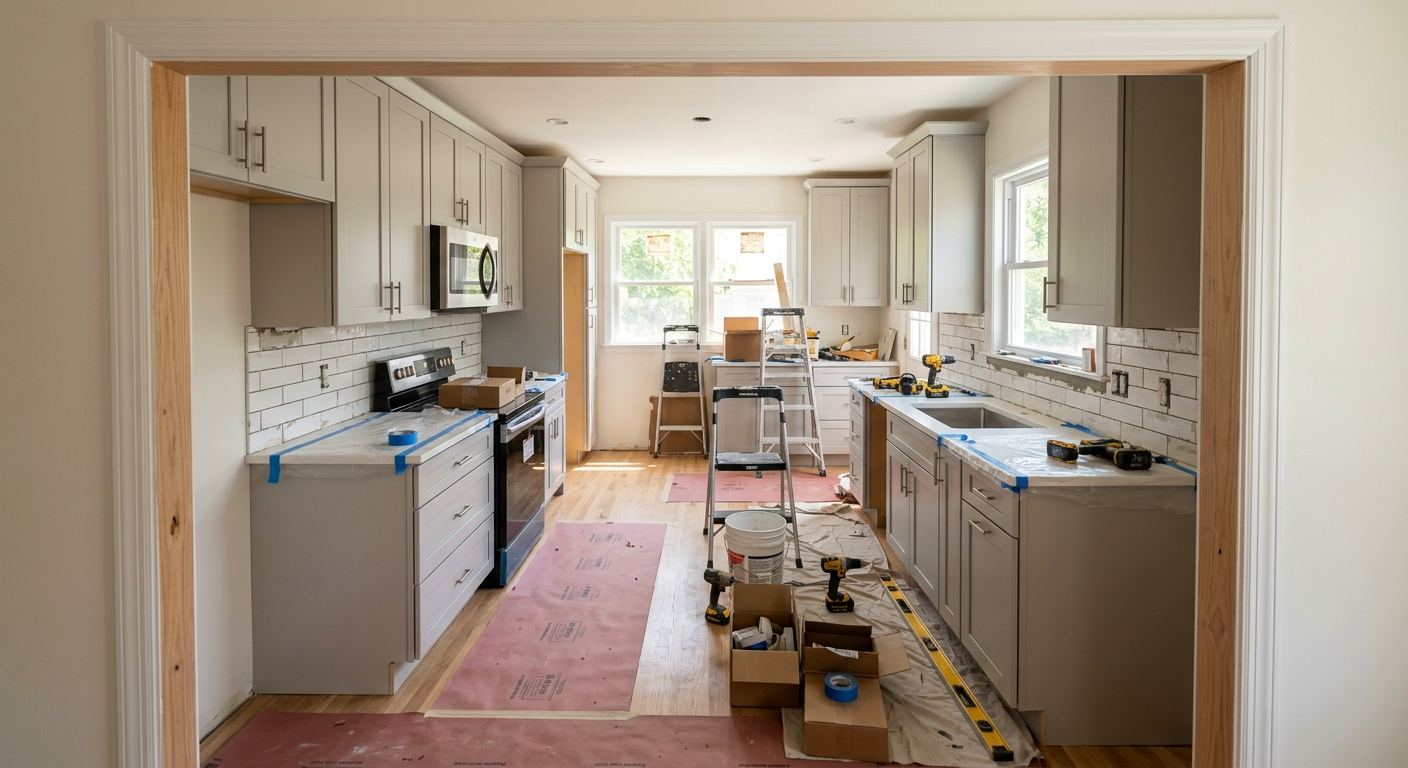
Kitchen renovation options and costs in Queens Park
In Queens Park, kitchen renovation pricing is less about winter rain or summer humidity and more about what homeowners expect to see when they open their doors—finish level, cabinet quality, and how “design-led” the layout feels. With Queens Park’s small population of 2,781 residents (Statistics Canada, 2021 Census), projects often depend on a tight, reliable crew schedule rather than a large pool of competing contractors, so booking early can keep your labour costs steadier.
Across the Lower Mainland–Southwest, local purchasing power tends to support better materials as homes change hands. In practical terms, the market often rewards upgrades buyers can clearly recognize—think quartz or stone counters, upgraded hardware, and semi-custom cabinetry. Because of that, the same kitchen size can land in very different totals depending on whether it’s a refresh with laminate and stock cabinets or a full rebuild with stone counters and made-to-fit millwork. Even if climate isn’t the main cost driver, coastal B.C. moisture swings mean good ventilation and correct under-cabinet sealing are part of a “done right” renovation, not an optional extra.
Trade demand is especially strong around the commercial and service-heavy corridors people use for showrooms and material runs—so kitchen installs can move faster when you’re flexible on timing. Many owners in the Queens Park area also find the installers who do well in Surrey and Burnaby-style layouts are in demand, because those jobs commonly include islands, updated plumbing paths, and upgraded appliance packages.
Below is a realistic tier-by-tier way to compare quotes before you dive into materials and layout details.
| Renovation Tier |
What's Included |
Typical Duration |
Price Range |
| Cosmetic refresh (paint, hardware, new appliances only) |
Cabinet paint or re-finish, new pulls/knobs, new range/hood/fridge/dishwasher, minor trim touch-ups; no cabinet box changes |
1–2 weeks |
$8,000–$25,000 |
| Mid-range full renovation (new cabinets, counters, sink, tile) |
New semi-custom or quality stock cabinets, quartz or stone-style counters, new sink/faucet, backsplash tile, new under-cabinet lighting (typical), flooring/tile refresh as needed |
3–6 weeks |
$40,000–$80,000 |
| High-end full renovation (custom cabinets, stone counters, island) |
Custom cabinetry, premium stone counters, island build-out (or reconfigured island), upgraded plumbing/electrical, full-height or advanced backsplash, integrated storage, higher-end appliances |
6–12 weeks |
$85,000–$120,000 |
| Cabinet refacing only (new doors + drawer fronts, same boxes) |
Remove/replace doors and drawer fronts, reface cabinet surfaces, new hardware; keep existing cabinet boxes and layout |
2–4 weeks |
$8,000–$35,000 |
| Countertop swap only (laminate to quartz or stone) |
Templating and install of new counters, cut-outs for sink/cooktop, new caulking and basic finishing; usually no cabinet replacement |
5–10 days |
$12,000–$28,000 |
| Backsplash tile installation only |
Tile supply and install, prep and waterproofing where required, grout/seal, allowance for around outlets and edges |
3–7 days |
$1,500–$6,000 |
Prices are estimates only and vary by project scope, site access and material selection.
What affects the price of kitchen renovation in Queens Park
Two bids can differ by 30–50% for what looks like the “same” Queens Park kitchen because the Lower Mainland–Southwest market doesn’t price purely by temperature—it prices by expected finish level, resale value, and how complex the tradescope becomes. In higher-value Metro Vancouver areas, many homeowners default to quartz or stone counters and semi-custom cabinetry because the upfront spend can be recovered more easily on resale. In more modest areas, laminate and stock cabinets dominate, offering a better return when you’re staying practical.
Climate still plays a role, but it’s indirect: kitchens see moisture from cooking, and Queens Park’s coastal conditions can keep humidity higher for longer. That means ventilation, proper sealing at countertops, and correct caulking details matter. Where contractors cut corners on moisture control, you may see faster deterioration around sinks, window surrounds, and backsplash transitions—turning what should be a mid-range job into costly “rework.”
Layout changes are usually the biggest unpredictable variable regardless of finish tier. Moving a gas line, relocating a sink, adding an island, or removing a wall changes plumbing runs, electrical circuits, and sometimes permit requirements. For example, staying in a mid-range full renovation band around $40,000–$80,000 can rise quickly if you add an island and relocate plumbing; it’s common to see total project costs push toward a higher-end full renovation range near $85,000–$120,000 when cabinetry becomes truly made-to-fit and stone work expands.
Concrete Queens Park examples we see often: (1) older housing stock may have outdated electrical panels or limited circuit capacity, adding electrician time; (2) tight room layouts can increase labour because trades have to work in confined bays and protect floors during countertop templating; (3) when homeowners choose full-height backsplash or premium tile, material waste allowances can raise the effective per-square-foot cost.
| Price Factor |
Why It Matters |
Cost Impact |
| Cabinet tier — stock vs. semi-custom vs. fully custom millwork |
Higher tiers typically mean better fit, more custom storage options, and more complex installation and finishing |
Can shift your cabinet portion by roughly 20–80% depending on how much is custom |
| Countertop material — laminate vs. quartz vs. granite vs. stone |
Material cost, edge profiles, and templating complexity drive labour and offcut/waste |
Laminate is lowest; quartz/stone often increases countertop spend significantly |
| Layout change — wall removal, island add, plumbing/gas move |
Layout changes trigger longer schedules, trade coordination, and sometimes permits and inspections |
Often the single biggest cost swing—commonly 10–40% on top of a “like-for-like” plan |
| Appliance package tier — builder vs. mid-range vs. pro-grade |
Pro-grade models can require different clearances, electrical specs, and ventilation |
Can add thousands quickly even when cabinetry stays the same |
| Flooring — refinish existing vs. full replacement |
If you change traffic patterns (island, new sink location), subfloor prep and matching becomes more complex |
Replacement adds both materials and labour; refinishing is usually cheaper but only works if surfaces are sound |
| Backsplash — ceramic tile vs. marble vs. full-height slab |
Premium tile/slab increases cutting time, requires more careful alignment, and may need extra waterproofing |
Mid-range tile may be modest; marble/slab can double backsplash costs |
| Electrical — new circuits for island, under-cabinet lighting |
Lighting, receptacle density, and appliance power requirements can require new runs |
Often adds measurable electrician time and materials; can be several thousand depending on complexity |
| Permit fees and licensed trade requirements |
Work involving plumbing/gas/electrical can require permits and inspections |
Direct permit/admin costs plus scheduling time impacts the budget |
Permits & regulations in British Columbia
In British Columbia, many “swap-in” kitchen tasks do not require permits—especially cabinet and countertop replacements done without changing services. Generally, cabinet and countertop swaps (including replacing like-for-like in most typical layouts) are usually handled as renovations rather than permitted structural work.
However, permits and licensed trades come into play when you change the building systems. Moving plumbing supply or drain lines typically requires a permit and must be completed by qualified licensed plumbing professionals. Relocating gas (for example, moving a stove/range or changing where the range hood vents gas) also requires the appropriate permits and must be done by a licensed gas fitter. Removing a load-bearing wall, changing structural elements, or adding/altering significant electrical capacity (new circuits for an island, additional countertop receptacles, or under-cabinet lighting tied into new wiring) also typically triggers permits and inspection requirements.
For a Queens Park homeowner, the verification process should be step-by-step and documented. First, ask the contractor for their licence details and confirm they’re authorized for the specific trade scope (not just “general contracting”). Second, request a current certificate of insurance and ensure it matches the work type and is active during your project period. Third, confirm workers’ coverage—commonly reflected through WSIB/WCB documentation depending on the contractor’s setup—so you’re not left holding risk if a worker is injured on site. Finally, get clarity in writing about who pulls each permit, who schedules inspections, and what the contractor’s responsibility includes.
Always confirm permit responsibility with the contractor before signing—this belongs in the written contract.
Cabinets, countertops and layout decisions in Queens Park
When you’re planning a kitchen renovation in Queens Park, the three decisions that most affect both cost and resale appeal are: (1) cabinet tier, (2) countertop material, and (3) whether you change the layout. The Lower Mainland–Southwest resale market often rewards kitchens that look “complete” rather than patched—buyers typically notice cabinetry finish quality and countertop appearance first, even more than they notice the behind-the-wall work. That’s why semi-custom cabinets are the most popular mid-range choice here: they balance a faster timeline than full custom with more built-in storage and better sizing than basic stock.
For countertops, laminate is the budget-friendly option and can be durable for light-to-moderate daily use, but it’s more sensitive to heat and can show wear sooner along edges and seams. Quartz engineered counters are a common upgrade because they resist staining and are easier to maintain with routine cleaning. Granite and other natural stones offer unique patterning and prestige, while butcher block can work beautifully in B.C. homes when you’re good about sealing and drying routines—especially around sinks.
Layout changes are justified when they solve a real pain point: adding an island for gathering space, opening up a wall for sightlines, or relocating plumbing/gas to create efficient work zones. But if the room’s footprint won’t truly benefit, the layout spend may not return what you expect. For example, choosing quartz counters (often a mid-range uplift) may be the smarter “where dollars go” move; jumping straight from a like-for-like refresh into major plumbing relocation can add thousands quickly and shift you toward the higher-end totals.
Also, even though climate isn’t the main driver of cost, Queens Park’s coastal moisture means you’ll want good ventilation and careful sealing at seams, especially where counters meet sinks and backsplash corners.
| Option |
Durability |
Maintenance |
Best For |
Price Range |
| Stock cabinets (big-box) |
Durable for everyday use; limited custom fit can create awkward gaps |
Low; keep doors aligned and wipe surfaces regularly |
Budget refreshes and faster timelines |
$8,000–$20,000 |
| Semi-custom cabinets (local dealer) |
High durability with better internal options and improved sizing flexibility |
Low to moderate; adjust hinges and keep hardware clean |
Most Queens Park renovations aiming for resale-ready finishes |
$18,000–$45,000 |
| Custom cabinets (local millwork shop) |
Excellent fit and long-term build quality; tailored storage supports daily durability |
Low; depends on finish type, but typically straightforward care |
Challenging layouts, premium storage, and design-led kitchens |
$35,000–$75,000 |
| Laminate countertop |
Good for casual use; can be less forgiving with heat and impact at seams |
Easy daily cleaning; use trivets and avoid harsh abrasion |
Refreshing visuals without major spend |
$3,000–$7,000 |
| Quartz engineered countertop |
Very durable and consistent; resists many stains and daily wear patterns |
Low; normal cleaners are usually sufficient |
Popular balance of look, durability, and maintenance for B.C. homes |
$7,000–$12,000 |
| Granite / natural stone countertop |
Durable and heat tolerant; natural variations and sealing needs |
Moderate; periodic sealing is typically required |
Natural look seekers who want a premium statement |
$9,000–$14,000 |
| Butcher block countertop |
Durable when maintained; surface can scratch and dent but is repairable |
Higher than stone/quartz; needs sealing/re-oiling and careful drying |
Warm, casual kitchens with disciplined care routines |
$6,000–$10,000 |
| Marble countertop |
Beautiful but softer; can etch and stain more easily without careful use |
Higher; needs attentive cleaning and sealing |
Design-forward kitchens where maintenance expectations are realistic |
$10,000–$18,000 |
How to choose a kitchen renovation contractor in Queens Park
Choosing the right contractor in Queens Park is mostly about verification and clarity. Start with British Columbia licensing: ask for the contractor’s and subcontractors’ licence numbers relevant to your project—electrician, plumber, and gas fitter where applicable. Then confirm liability insurance with a current certificate and check that it covers the work being performed (and the contract period). For workers’ coverage, look for current WSIB/WCB coverage documentation; it’s your protection if a worker is injured on site. Don’t accept “we’re covered” as a statement—get the paperwork and confirm dates.
Next, get 2–3 itemised written quotes rather than one lump sum. You want a labour + materials breakdown that shows cabinet supply, countertop install, tile prep, electrical and plumbing allowances, demolition, disposal, and any permit pulling. Read the scope carefully: what’s excluded (old appliance haul-away, electrical rough-in changes, patching drywall, subfloor repair)? Is permit pull included? Is disposal included for cabinets, tile, and packaging? A good contractor will list allowances and assumptions clearly so you’re not surprised by change orders.
Warranty matters too. Ask for the workmanship warranty length (how long the contractor stands behind install quality), the product/manufacturer warranty terms, and whether coverage is transferable to future owners if you sell. For payment scheduling, don’t pay more than about 10–15% upfront—hold back until the job is complete and you’ve confirmed punch-list items. Finally, insist on a written timeline with a start date and completion estimate, plus how delays are communicated.
- Confirm licence details for each regulated trade involved (gas/electrical/plumbing where applicable).
- Request certificates of liability insurance and ensure they’re active during your project dates.
- Verify workers’ coverage documentation (WSIB/WCB) before demolition starts.
- Get 2–3 itemised quotes with labour and materials separated (not lump sums).
- Ask whether permits are included and who is responsible for pulling them.
- Confirm disposal/removal is included (old cabinets, tile debris, packaging).
- Review inclusions for counters: templating, cut-outs, sink/cooktop fit, and edge finish.
- Check cabinet scope: are you getting new boxes, or refacing only, and how is alignment handled?
- Ask about backsplash prep and waterproofing approach in wet zones.
- Request start date, schedule milestones (demo, rough-in, install, finishing), and completion target.
- Clarify warranty: workmanship length, manufacturer coverage, and whether it transfers.
- Use a payment schedule with a holdback until final sign-off and punch-list completion.
Concrete red flags I see in Queens Park: (1) quotes that don’t list labour vs. materials or omit electrical/plumbing allowances; (2) “permit-free” claims when you’re moving plumbing/gas/electrical; (3) no certificate of insurance or vague proof of coverage; (4) large upfront payments beyond 10–15% without a clear contract schedule; (5) no written timeline or no process for change orders.
Frequently asked questions — kitchen renovation in Queens Park
Custom vs stock cabinets — is custom worth it?
If your Queens Park kitchen has tight dimensions, an odd corner, or you want fully optimized storage (pantries, appliance garages, deep drawers), custom can be worth it because the fit and layout integration improve day-to-day usability. If your goal is a practical refresh that looks updated quickly, stock cabinets often deliver the best speed-to-cost ratio. In the Lower Mainland–Southwest, many homeowners land on semi-custom because it’s the sweet spot: more sizing flexibility than stock and typically a simpler timeline than full custom millwork. Budget-wise, semi-custom cabinet packages commonly fall around $18,000–$45,000 depending on door styles and hardware, while custom can climb substantially. If resale is the priority, buyers usually notice clean lines, good hardware, and consistent finishes—achievable without going fully custom.
How do I choose a kitchen contractor in Queens Park?
Choose by proof and process, not by the lowest number on the page. In Queens Park (British Columbia), ask for itemised quotes that separate labour and materials and specify who is pulling permits. Verify the regulated trades involved: gas work must be done by a licensed gas fitter, electrical by a licensed electrician, and plumbing by the appropriate licensed professional if you’re changing supply/drain runs. Confirm liability insurance and workers’ coverage documentation before demolition. Then check the scope details: disposal included or not, permit responsibility, what’s excluded (drywall patching, subfloor repairs, old appliance removal). A reliable contractor also provides a written start date, a realistic completion estimate, and a clear warranty for workmanship. If you’re comparing bands, even a “mid-range” renovation around $40,000–$80,000 should come with transparent allowances so you can judge what drives the differences.
What order do kitchen renovation steps happen in?
For most Queens Park renovations, the sequence is consistent even when materials change. Typically, demolition goes first, followed by rough-ins (electrical, plumbing, and gas work where required). Next is subfloor/drywall repair, insulation or ventilation updates, then cabinet installation once the base is level. After cabinets are set, countertops are templated (in most cases) and installed, followed by sink/cooktop cut-outs. Then the backsplash goes in, followed by final trim, paint touch-ups, hardware install, and appliance set-up. Flooring usually happens around the mid-to-late stage depending on whether cabinets are sitting on new flooring or existing subfloor is preserved. Because coastal moisture can affect finishing timelines, contractors often insist on proper curing and drying time before sealing and caulking.
Can I live at home during a kitchen renovation in Queens Park?
Often yes, but it depends on how extensive the work is. In Queens Park, a cosmetic refresh or a countertop-only project can usually be done while you stay home with minimal disruption. For a mid-range full renovation, you may be able to live in the home if there’s a workable temporary kitchen setup (microwave, kettle, small fridge) and the contractor can protect floors and contain dust. For a full rebuild that includes layout changes and new electrical/plumbing runs, expect more dust and noise, longer timelines, and less ability to use the kitchen normally. Safety is key—ask about dust containment, debris management, and when work areas will be accessible. The contractor should also plan delivery and scheduling of cabinets and stone so you aren’t without essential storage longer than necessary. If your project is closer to a full renovation band such as $85,000–$120,000, consider whether a temporary workspace or alternate eating setup is realistic.
Should I renovate my kitchen before selling in Queens Park?
Renovating before selling can make sense in Queens Park, especially if your cabinets and counters look dated or if the layout doesn’t function well. The Lower Mainland–Southwest resale market tends to reward visible upgrades—clean cabinet finishes, modern hardware, and durable counters—more consistently than minor cosmetic tweaks. A cosmetic refresh can help if structure and services are sound, but it rarely “solves” foundational pain points like poor storage or inconvenient appliance placement. If you’re considering a mid-range full renovation around $40,000–$80,000, focus the spend on what buyers notice first: cabinetry condition and appearance, countertop surface durability, and a coherent backsplash. If you plan major layout changes or plumbing/gas relocations, get professional advice on return-on-cost because those changes can extend timelines and increase unpredictability. Most importantly, confirm permit requirements and ensure everything is installed and inspected correctly—real buyers and inspectors will notice.
What's the most popular kitchen style in Queens Park right now?
In Queens Park and across the Lower Mainland–Southwest, the most requested look is typically a modern transitional style: simple, clean cabinet lines (often shaker-style doors), warm neutral colours, and a practical island or peninsula for daily flow. Homeowners frequently pair semi-custom or quality stock cabinetry with quartz counters for a consistent, low-maintenance surface that holds up to real cooking routines. Backsplashes are commonly understated but intentional—ceramic or upgraded tile work, sometimes with a more continuous visual line to the countertop. Because kitchens here are often used year-round (rainy season doesn’t reduce cooking), durability and easy cleaning drive style choices as much as trends do. If you’re choosing within the common renovation tiers, the look most often shows up in mid-range projects near $40,000–$80,000, where buyers want premium finishes without going fully custom millwork.