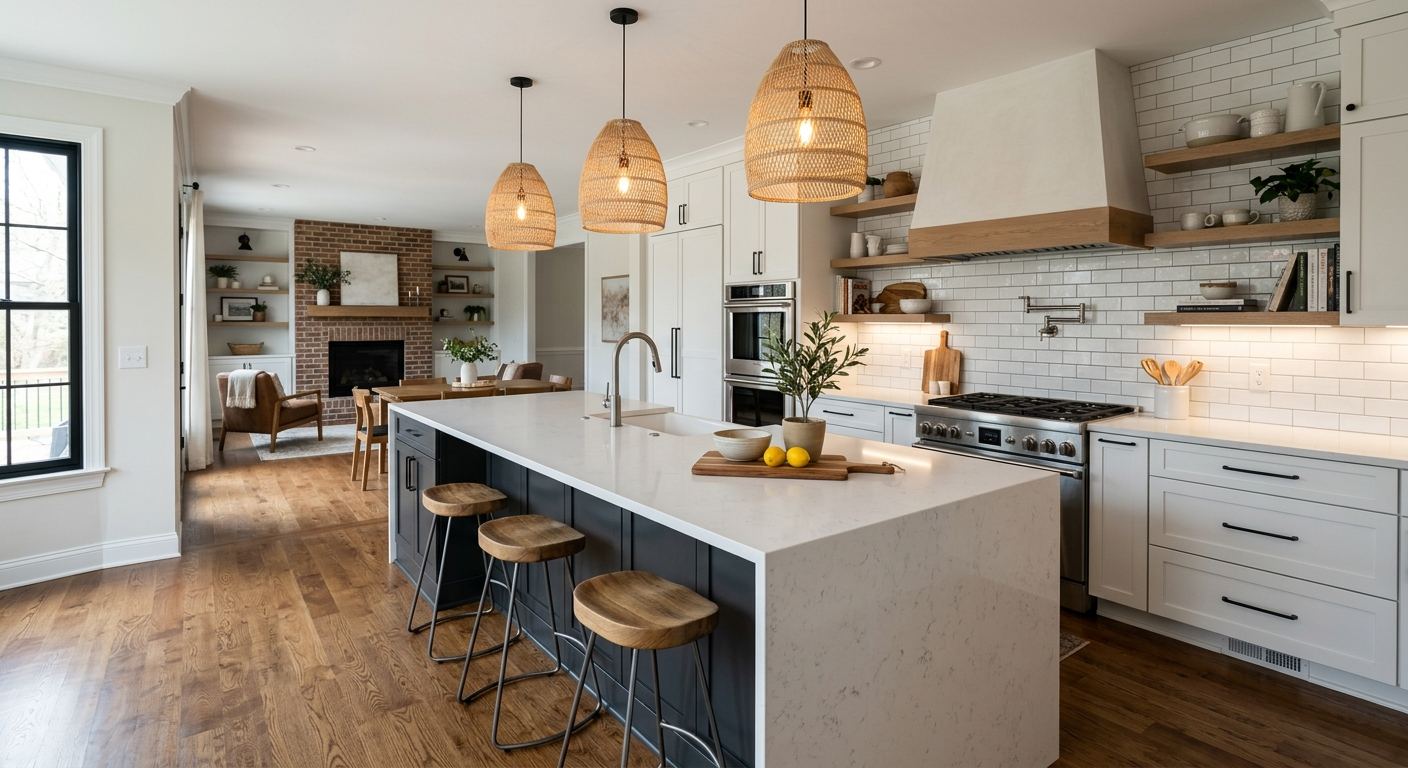
Kitchen renovation options and costs in Moodyville
Moodyville homeowners usually start their kitchen planning with a simple question: “What does it cost here?” In a small community like Moodyville (population 1,000, Statistics Canada, 2021 Census), the contractor pool is leaner than in larger centres, so scheduling and material availability can influence turnaround time. In the Lower Mainland–Southwest, pricing is also tightly linked to the value and buyer expectations around the broader market: where households have more purchasing power (Statistics Canada, 2021 Census), projects tend to move up a finish tier faster—quicker adoption of semi-custom cabinetry and stone or quartz counters—because the renovation cost is more likely to be recouped on resale.
Climate has less to do with the sticker price than many people assume. Coastal British Columbia winters mean a steadier humidity profile than freeze–thaw regions, so cabinets and stone don’t face the same extreme cycling that can drive extra prep in other provinces. Where climate matters most is condensation management and ventilation—especially if you’re changing ducting for range hoods or installing a tighter, more energy-efficient home envelope. In practice, Lower Mainland–Southwest costs are driven more by home value, income, and the expected finish level than by seasonal weather shocks.
In Moodyville, trades demand is typically strongest for full-reno crews and cabinet installers working in older housing pockets—often the kind of homes where kitchens were last updated decades ago and need electrical, plumbing refreshes, and careful layout tuning. With that in mind, here’s a practical comparison of renovation tiers to help you budget before you call for quotes.
| Renovation Tier |
What's Included |
Typical Duration |
Price Range |
| Cosmetic refresh (paint, hardware, new appliances only) |
Cabinet paint or touch-ups, new pulls/hinges, appliance swap, caulking, basic minor trim work |
1–3 weeks |
$8,000–$25,000 |
| Mid-range full renovation (new cabinets, counters, sink, tile) |
New semi-custom or upgraded stock cabinets, new counters (quartz or granite), sink + faucet, backsplash tile, flooring tie-ins, electrical refresh as needed |
4–8 weeks |
$40,000–$85,000 |
| High-end full renovation (custom cabinets, stone counters, island) |
Custom cabinetry/millwork, premium stone (granite/marble) or upgraded quartz, island with seating, upgraded lighting, full backsplash feature, expanded plumbing/electrical |
8–14 weeks |
$85,000–$120,000 |
| Cabinet refacing only (new doors + drawer fronts, same boxes) |
Refacing system, new doors/drawers, new hardware, sanding/finish of boxes, backsplash allowance (if included in scope) |
2–5 weeks |
$8,000–$35,000 |
| Countertop swap only (laminate to quartz or stone) |
Remove old surface, new quartz/stone install, new sink cutout coordination, caulk + seam sealing, edge profile changes |
1–2 weeks |
$3,000–$12,000 |
| Backsplash tile installation only |
Tile supply/setting (varies by tile tier), grout/seal, detail trimming, caulk transitions, minor wall prep |
3–7 days |
$1,500–$6,000 |
Prices are estimates only and vary by project scope, site access and material selection.
What affects the price of kitchen renovation in Moodyville
In the Lower Mainland–Southwest, it’s common to see quotes for the “same” kitchen land 30–50% apart once you compare materials, cabinetry complexity, and whether the layout requires plumbing or electrical changes. Across British Columbia, the gap widens further because labour availability and finish expectations vary by neighbourhood and buyer segment—premium areas often default to quartz or stone and semi-custom cabinetry, while lower-cost scopes keep laminate and stock components. In practice, the finish tier usually decides the ceiling, but layout and trades scope decide the volatility.
Local home values and typical household income shape the most common renovation tier. In higher-value parts of the region, owners often choose semi-custom or custom cabinetry because millwork upgrades help the kitchen look “built-in” and camera-ready. That pushes typical totals toward the mid-to-high bands—where a full renovation commonly sits in the $40,000–$85,000 range, and premium island work can push toward $85,000–$120,000. In more modest scopes, laminate surfaces and stock cabinets dominate because they keep costs predictable and still deliver a noticeable refresh.
Even when you hold the finish tier steady, layout changes are the biggest wildcard regardless of whether you pick laminate or quartz. Examples from Moodyville jobs include: moving a sink from an exterior wall to an interior run (requires drain slope planning and time); adding an island that triggers new electrical circuits and lighting; and rerouting a gas line where applicable for cooktops—often adding both permit work and coordination time. Finally, older housing stock can require more time for drywall patching, subfloor evaluation, and careful cabinet leveling—especially when homeowners choose a thicker stone slab edge profile.
| Price Factor |
Why It Matters |
Cost Impact |
| Cabinet tier — stock vs. semi-custom vs. fully custom millwork |
Different lead times, build quality, internal configuration, and fit/finish |
Can swing labour + materials by ~20–60% depending on complexity |
| Countertop material — laminate vs. quartz vs. granite vs. stone |
Material price, fabrication complexity, and handling requirements |
Often the largest “materials” driver after cabinets; laminate lowest, natural stone highest |
| Layout change — wall removal, island add, plumbing/gas move |
Unpredictable framing, venting, structural coordination, and service re-routing |
Frequent source of 30–50% quote differences for “the same” look |
| Appliance package tier — builder vs. mid-range vs. pro-grade |
Installation requirements, trim kits, and higher-end venting/specs |
Mid-range vs builder can add several thousand; pro-grade can add more |
| Flooring — refinish existing vs. full replacement |
Prep time, matching transitions, and subfloor readiness |
Refinishing keeps cost controlled; full replacement adds labour and materials |
| Backsplash — ceramic tile vs. marble vs. full-height slab |
Cutting complexity, pattern alignment, and weight/installation requirements |
Upgrades can add 10–30% versus basic ceramic, depending on coverage |
| Electrical — new circuits for island, under-cabinet lighting |
Licensed work, additional boxes/wiring runs, and inspections |
Can add a few thousand or more if walls need opening |
| Permit fees and licensed trade requirements |
Required approvals add administrative time and schedule coordination |
Usually modest line-item cost, but can increase total duration |
Permits & regulations in British Columbia
In British Columbia, a straight swap of cabinets or countertops typically does not require a permit. For example, replacing existing countertops with quartz or exchanging cabinet doors/boxes without changing plumbing or electrical locations is usually a non-permit scope. However, permit and inspections can be required when your kitchen renovation crosses into building services and structural changes.
Work that commonly does require permits and licensed trades includes: relocating plumbing supply or drain lines (sink relocation, dishwasher drain re-route, moving a refrigerator water line); relocating gas connections for a cooktop or any change involving a gas line; removing a load-bearing wall or making structural alterations; and adding new electrical circuits (such as for an island receptacle or new under-cabinet lighting circuits). Gas work must be performed by a licensed gas fitter, and electrical work by a licensed electrician—both typically require inspections after the rough and final stages.
To verify contractor credentials in Moodyville, start with the written contract, then check three things: (1) the contractor’s licence category (and the individual licence for trades, where applicable) through the relevant provincial online registries; (2) a current certificate of insurance (liability) and confirm your named status if required; and (3) worker coverage documentation for the trade workers—ask for proof and keep a copy. For clearance letters where applicable, request documentation directly before the work starts so you’re not troubleshooting mid-renovation.
Cabinets, countertops and layout decisions in Moodyville
The three most consequential decisions in a Moodyville kitchen renovation are the cabinet tier, the countertop material, and whether you change the layout. Each decision affects your daily usability and the resale look buyers expect across the Lower Mainland–Southwest market.
(1) Cabinet tier. Stock cabinets are usually fastest and cheapest because they’re produced in common sizes and often fit with fewer custom cuts. Semi-custom cabinets are the most popular mid-range choice because they balance lead time, design flexibility, and price; they’re a strong match for kitchens targeting a clean, “renovated” look around the $40,000–$85,000 band. Custom cabinets deliver the best fit and storage tailoring, but they’re where you typically move toward $85,000–$120,000—especially if you add an island, special corner solutions, or ceiling-height millwork.
(2) Countertops. Laminate is the budget-friendly option and can be surprisingly durable for light-use kitchens, but seams and heat exposure can show wear faster. Quartz is the practical upgrade: it resists staining and handles everyday spills well, with a more modern, maintenance-friendly surface. Natural stone like granite or marble is premium in appearance; marble also needs more care to avoid etching. In humid coastal conditions, quartz and sealed stone are commonly preferred because they’re consistent and don’t require the same ongoing maintenance as more porous surfaces.
(3) Layout changes. Opening up for an open concept wall removal or adding an island can be justified if it improves flow and seating. But it’s the cost driver: moving a sink or gas line changes plumbing and coordination, while new island outlets add electrical work.
A concrete example: if you upgrade countertops only, moving from laminate (lower band) to quartz is often a relatively contained decision compared with a layout change. By contrast, adding an island and relocating plumbing to support a new sink can push you from a controlled $40,000–$85,000 scope into the higher end due to service re-routing and finishing complexity—regardless of whether you picked mid-range quartz or premium stone.
| Option |
Durability |
Maintenance |
Best For |
Price Range |
| Stock cabinets (big-box) |
Good everyday durability; fewer custom stress points |
Basic cleaning; hardware upgrades recommended for longevity |
Fast remodels and budget-conscious refreshes |
$8,000–$25,000 |
| Semi-custom cabinets (local dealer) |
Excellent durability with better internal options and fit |
Easy upkeep; occasional hardware tightening |
Most Moodyville mid-range renovations aiming for a built-in look |
$20,000–$55,000 |
| Custom cabinets (local millwork shop) |
Highest durability with tailored joinery and configurations |
Low maintenance; finish quality holds up well with proper care |
Design-led kitchens, unusual layouts, and ceiling-height storage |
$45,000–$90,000 |
| Laminate countertop |
Moderate; sensitive to heat and aggressive cutting at seams |
Wipe clean; protect from hot pans and sharp impacts |
Budget upgrades where you want a refreshed look quickly |
$3,000–$6,000 |
| Quartz engineered countertop |
High durability; strong resistance to staining and daily wear |
Simple wipe-down; avoid harsh abrasive pads |
Families and everyday cooking with minimal upkeep |
$5,000–$10,000 |
| Granite / natural stone countertop |
High durability; heat tolerant depending on finish |
Sealing and gentle cleaning recommended; wipe spills promptly |
Owners wanting natural variation and a premium look |
$7,000–$12,000 |
| Butcher block countertop |
Good durability; can dent if abused |
Oil/condition regularly; protect from standing water |
Warm, “craft” kitchens and lighter-use areas |
$4,000–$9,000 |
| Marble countertop |
Premium look; softer surface and higher risk of etching |
More maintenance—avoid acids and etching risks |
Low-traffic show kitchens or homeowners comfortable maintaining stone |
$9,000–$15,000 |
How to choose a kitchen renovation contractor in Moodyville
Choosing the right kitchen renovation contractor in Moodyville is mostly about proof and clarity. Start by verifying British Columbia licensing and insurance. Ask for the contractor’s proof of general liability and confirm the certificate of insurance is current; request the document number and expiry date. For coverage related to workers, ask for proof of worker coverage documentation for the trade team and keep copies. For licensing, request the relevant trade licence details for the electrician and gas fitter (where gas/plumbing/electrical work applies), and verify their standing in the provincial online registry. If a contractor can’t clearly explain who holds which licence and when inspections will happen, treat that as a warning sign.
Next, get 2–3 itemised written quotes. You want labour and materials broken out—cabinet supply, countertop fabrication/install, backsplash materials, demolition, drywall patching, electrical scope, and disposal. Avoid lump-sum quotes that don’t specify whether permits are included, who applies for them, and whether old materials are hauled away.
Read the scope line by line: what’s excluded (flooring replacement? subfloor repairs? mould remediation?), whether backsplash includes waterproofing prep, and whether electrical includes new circuits or only tie-ins. For warranty, confirm the workmanship warranty length in writing, the manufacturer warranty for cabinets/counters, and whether warranties are transferable if you sell your home.
Payment scheduling matters: never pay more than about 10–15% upfront, and use holdback until key milestones are complete (for example, cabinets installed and counters sealed, with punch-list items addressed). Then lock in a timeline with a start date and completion estimate in writing—lead times for cabinets and countertops should be discussed before you sign.
- Ask for licence numbers and confirm they match the trades named in the scope.
- Verify liability insurance and keep a copy for your records.
- Request proof of worker coverage documentation for the crews working in your home.
- Get itemised quotes (labour + materials) rather than a single “total” number.
- Confirm whether demolition and debris disposal/hauling are included.
- Confirm permit pull responsibility and inspection scheduling in the contract.
- Ask who handles wall prep and whether drywall patching is included.
- Confirm countertop install includes seam/sealant work and sink cutout coordination.
- Specify backsplash coverage height and whether waterproofing prep is included.
- Check warranty: workmanship length, manufacturer warranty, and transferability.
- Use milestone-based payments; keep holdback until punch-list completion.
- Request a written start date, lead-time assumptions, and a completion target.
In Moodyville, red flags I’ve seen include: contractors quoting without a detailed scope (especially skipping disposal and permit responsibility), refusing to provide insurance/coverage proof, offering very low “all-in” prices that don’t match the cabinet and countertop tiers, and pressuring for large upfront deposits. Another common issue is schedule vagueness—no cabinet lead-time plan—followed by rushed installation and incomplete punch lists.
Frequently asked questions — kitchen renovation in Moodyville
What's the most cost-effective kitchen upgrade?
For most Moodyville homes, the best value per dollar is often a focused upgrade that changes the “face” of the kitchen without triggering full layout work. If your cabinets are structurally sound, cabinet refacing (doors and drawer fronts) is frequently the sweet spot, typically landing in the $8,000–$35,000 range depending on the door style, hardware, and any necessary preparation. If you want a quick visual impact and your base cabinets are fine, a countertop swap (laminate to quartz or stone) can also be cost-effective—often within the $3,000–$12,000 band. The biggest cost savings usually come from avoiding plumbing or gas moves; in British Columbia, those are the areas that add permits, inspections, and coordination time.
Custom vs stock cabinets — is custom worth it?
Custom cabinets are worth it when your kitchen layout is unusual, you need storage solutions that stock options can’t match, or you want ceiling-height millwork with precise fit. In the Lower Mainland–Southwest, many homeowners choose semi-custom for that reason because it delivers a strong “built-in” look without the same lead-time and pricing extremes as full custom. If you’re aiming for a mid-range full renovation, staying semi-custom usually supports a realistic budget around $40,000–$85,000, while full custom often contributes to totals in the $85,000–$120,000 range. If your goal is ROI and you have a standard layout, stock cabinets plus upgraded hardware and good-quality countertops can be the smarter financial choice. In Moodyville, where kitchens can be older, sometimes “custom worth it” depends on whether your walls and floors are truly straight—custom can hide or correct imperfections more cleanly.
How do I choose a kitchen contractor in Moodyville?
Start with verification and written scope. In British Columbia, ask the contractor for proof of current liability insurance and documentation for the workers on site, then confirm the trade-specific licences for any electrical or gas/plumbing work that applies to your renovation. Next, request 2–3 itemised written quotes with labour and materials broken down (not just a lump sum). Make sure the scope spells out what’s included for permits, inspections, and disposal/hauling. For example, if your plan includes new under-cabinet lighting or moving outlets to support an island, electrical scope should be itemised. Finally, confirm warranty details: workmanship warranty length and manufacturer warranty terms for cabinets and countertops, including whether warranties transfer if you sell. A good contractor won’t rush you—especially in a smaller community like Moodyville where scheduling depends on reliable lead-time planning.
What order do kitchen renovation steps happen in?
A typical kitchen renovation sequence is: (1) measure and confirm layout, (2) demolition and assessment (including checking subfloor and any hidden wiring/plumbing), (3) rough work trades (electrical and plumbing/gas changes if needed, along with any framing/structural steps), (4) inspections if permits apply, (5) drywall/patching and surface prep, (6) cabinet install, (7) countertop template/fabrication coordination, (8) countertop installation and sealing, (9) backsplash installation, then (10) flooring tie-ins, trim, and final appliance hook-ups. In British Columbia, you want permits/inspections coordinated before cabinets go in so the contractor can open walls where required. Also, if you’re targeting a budget band like $40,000–$85,000 for a mid-range full renovation, keeping the steps tight helps prevent delays caused by countertop lead times and missing electrical rough-ins.
Can I live at home during a kitchen renovation in Moodyville?
Often yes, but it depends on scope. A cosmetic refresh (paint, hardware, and appliance swap only) is usually the easiest to manage at home because it’s typically completed in about 1–3 weeks and doesn’t require major demolition. Mid-range and high-end renovations can still be livable if the contractor sets up a temporary workable kitchen area and you agree on dust control and access routes. The biggest disruption comes when you’re moving plumbing or installing new electrical circuits—those steps involve wall openings and longer work cycles. Also, plan for how you’ll handle meals if your sink or primary cooking area is out of service. In Moodyville and across British Columbia, good contractors stage the work and protect floors and ventilation; if your project includes stone countertops (common in quartz/stone installs), your schedule for sealing/curing and final sealing is also a factor.
Should I renovate my kitchen before selling in Moodyville?
Usually, you renovate before selling only when the scope matches what buyers expect and when you can avoid overspending on niche upgrades. In the Lower Mainland–Southwest, renovations often track to finish tiers that buyers recognize quickly—clean cabinetry, durable counters, and a consistent backsplash. If your kitchen needs a full rebuild, a mid-range renovation supports a lot of sale-readiness while staying within a more common budget band (for many projects, $40,000–$85,000). If your cabinets and layout are already solid, upgrading countertops or doing a backsplash/touch-up refresh can deliver noticeable improvements with less risk. Just be careful: layout changes like moving plumbing or adding an island are the areas that can inflate costs quickly and delay resale timelines due to permits, inspections, and trade coordination. In Moodyville, older housing stock sometimes needs extra prep; ask your contractor to identify which issues will truly impact buyer perception versus which are “nice-to-haves.”