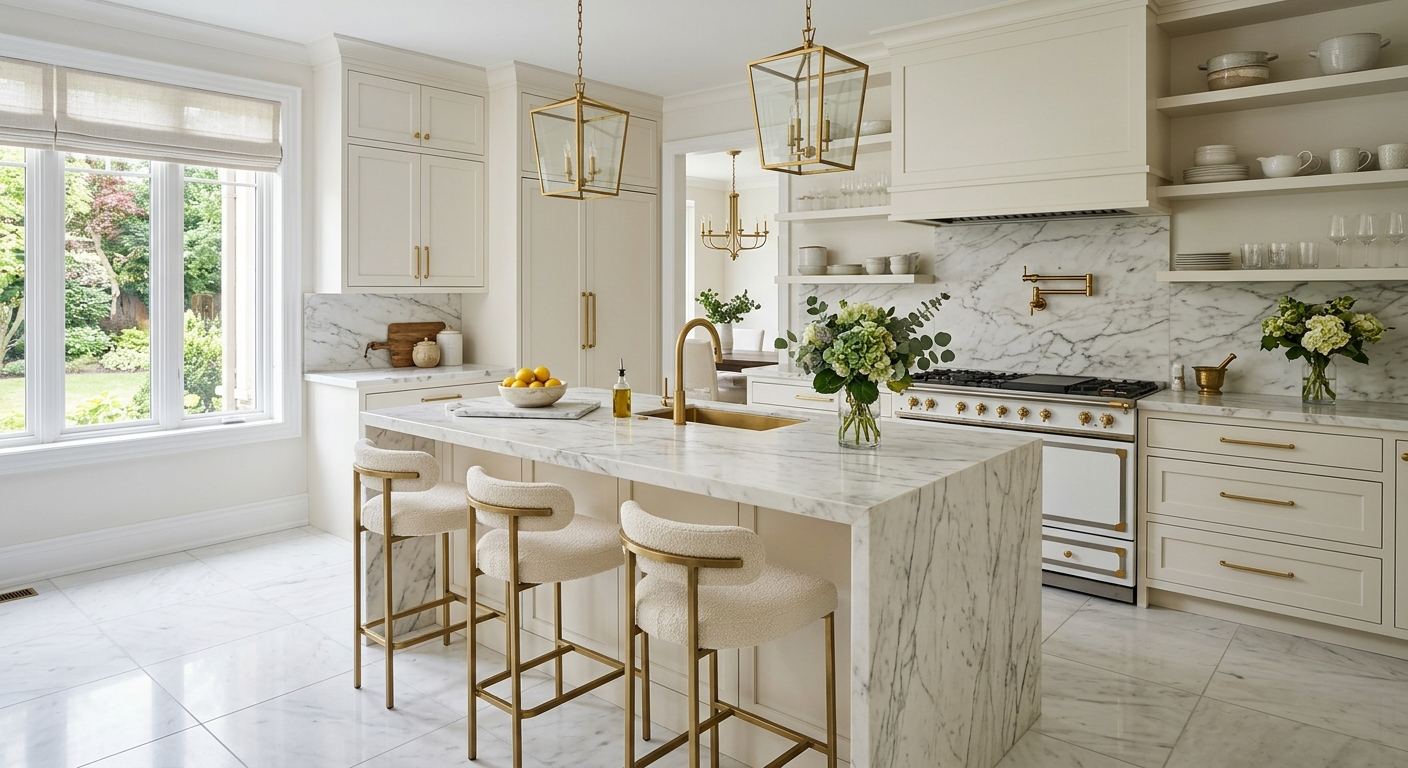
Kitchen renovation options and costs in Edgemont Village
Kitchen renovation in Edgemont Village, British Columbia, usually starts with choosing how “deep” you want to go—because that decision drives cabinet selection, countertop type, and the number of trades needed. With a local population of 1,213 (Statistics Canada, 2021 Census), Edgemont Village is small, so crews often get booked through the broader Lower Mainland–Southwest demand cycle rather than as one-off jobs. Also, Lower Mainland–Southwest pricing is influenced more by household buying expectations than by winter severity; in many higher-value Metro Vancouver-adjacent pockets, renovations commonly align with premium finishes buyers expect at resale.
In practice, the region’s pricing pattern is less about climate damage and more about design-led scope. Moisture and temperature swings in British Columbia can still affect cabinet longevity and flooring transitions, but most kitchen cost movement comes from market-driven finish tiers (stock versus semi-custom versus fully custom) and whether you’re changing the layout. Availability can be tighter during peak spring and summer renovation schedules, so a “cosmetic refresh” can be priced and booked faster than a full rebuild that needs plumbing/electrical work, countertop templates, and longer cabinet lead times. For homeowners near Edgemont Village Plaza / the Quarry-area approach (the cluster many neighbours use for retail and services), contractors often see extra demand because renovations are frequently paired with modernization and resale preparation.
To compare realistic options, use the tiers below as a starting point—then confirm your scope (what’s staying, what’s moving) so estimates don’t get distorted later.
| Renovation Tier |
What's Included |
Typical Duration |
Price Range |
| Cosmetic refresh (paint, hardware, new appliances only) |
Cabinet paint or refinish, new hardware, appliance swap (no plumbing/gas moves), touch-up flooring/trim as needed |
1–2 weeks |
$12,000–$25,000 |
| Mid-range full renovation (new cabinets, counters, sink, tile) |
Semi-custom cabinetry, countertop (often quartz), new sink/faucet, backsplash tile, flooring repairs or replacement in key zones, electrical accessories (e.g., under-cabinet lights) |
4–7 weeks |
$40,000–$80,000 |
| High-end full renovation (custom cabinets, stone counters, island) |
Fully custom millwork, premium stone counters, island build with electrical, expanded tile/backsplash, improved storage, layout tweaks (as needed) |
8–14 weeks |
$85,000–$120,000 |
| Cabinet refacing only (new doors + drawer fronts, same boxes) |
Door/drawer front replacement, new veneer surfaces, upgraded hardware, paint touch-ups, optional new pulls/roll-outs |
2–4 weeks |
$20,000–$45,000 |
| Countertop swap only (laminate to quartz or stone) |
Remove existing top, new quartz/stone install, sink cut-in as required (no cabinet movement), seal/finish details |
1–3 weeks |
$8,000–$20,000 |
| Backsplash tile installation only |
Surface prep, tile supply and install, grout/seal, edge finishing at counters/cabinets |
3–7 days |
$1,500–$6,000 |
Prices are estimates only and vary by project scope, site access and material selection.
What affects the price of kitchen renovation in Edgemont Village
In the Lower Mainland–Southwest, it’s common to see quotes for the “same” kitchen vary by 30–50% once you compare what’s actually included. The reason is that this region’s costs are driven more by local home values and household expectations for finish level than by day-to-day weather. In higher-value Metro Vancouver neighbourhood patterns, homeowners often choose quartz or stone counters and semi-custom cabinetry because the upgrade cost is easier to recover on resale. In more modest markets, laminate and stock cabinets dominate because they deliver a strong ROI at a lower price point.
Climate does play a secondary role in Edgemont Village. The Lower Mainland’s relatively mild, wetter winters can amplify issues like under-cabinet moisture exposure, grout breakdown, and flooring edge movement—so installers may factor in more careful sealing and transition detailing. That’s usually not the main reason a budget jumps, but it can add hours to protect adjacent surfaces and meet long-term durability goals.
Here are the local “why this costs more” examples I see in Edgemont Village: (1) older homes often have smaller, outdated electrical provisions—adding an island with under-cabinet lighting can require new circuits; (2) relocating a sink or adding a dishwasher intake sometimes means opening walls for plumbing access; and (3) Vancouver-area resale expectations push many buyers to quartz upgrades, typically in the $3,000–$12,000 countertop band, even when the layout stays the same. Meanwhile, a full renovation that stays practical can still land in the $40,000–$120,000 range, but once you add layout changes (like an island or moving a gas line), costs can jump regardless of whether you start with stock or semi-custom cabinetry.
| Price Factor |
Why It Matters |
Cost Impact |
| Cabinet tier — stock vs. semi-custom vs. fully custom millwork |
Material quality, fit-and-finish, internal storage (soft-close, pull-outs), and custom sizing |
$8,000–$65,000 |
| Countertop material — laminate vs. quartz vs. granite vs. stone |
Edge profiles, thickness, fabrication complexity, and installation requirements |
$3,000–$12,000 |
| Layout change — wall removal, island add, plumbing/gas move |
Unpredictable framing, venting, rough-in, and inspection needs |
$5,000–$40,000 |
| Appliance package tier — builder vs. mid-range vs. pro-grade |
Electrical/gas requirements, finish consistency, and availability |
$2,500–$20,000 |
| Flooring — refinish existing vs. full replacement |
Subfloor condition, transitions, and matching to adjacent rooms |
$1,500–$10,000 |
| Backsplash — ceramic tile vs. marble vs. full-height slab |
Complex cuts, waterjet fabrication, and labour time for installs |
$1,500–$6,000 |
| Electrical — new circuits for island, under-cabinet lighting |
Licensed electrical work, panel capacity, and rough-in labour |
$800–$7,000 |
| Permit fees and licensed trade requirements |
Permits/inspections add overhead; licensed trades add project-management time |
$500–$6,000 |
Permits & regulations in British Columbia
In British Columbia, some kitchen updates are straightforward and typically do not trigger permit requirements, while others require permits and licensed trades. Generally, cabinet and countertop swaps (replacing finished surfaces without changing plumbing, gas, or structural conditions) typically do not require permits. Most backsplash tile work also falls under normal renovation scope when it’s not tied to electrical alterations.
Where permits often come into play is when you change the systems: moving plumbing supply or drain lines, relocating a gas stove or gas components (including certain range hood arrangements), removing or altering a load-bearing wall, and adding electrical circuits (for example, new island receptacles or dedicated under-cabinet lighting circuits). Gas work must be performed by a licensed gas fitter, and electrical work must be done by a licensed electrician—both require inspections.
Step-by-step for Edgemont Village homeowners: (1) ask your contractor for their licence numbers and confirm they match the job scope; (2) request a certificate of insurance before work starts and ensure it covers the relevant trade activities; (3) verify worker coverage through the contractor’s proof of registration for workplace insurance (commonly referred to as WCB); (4) confirm who pulls permits in writing; and (5) get your clearance/approval steps documented before closing walls or concealing rough-ins. Always confirm permit responsibility in the contract—assumptions are where delays and unexpected costs happen.
Cabinets, countertops and layout decisions in Edgemont Village
The three most consequential decisions in an Edgemont Village kitchen renovation are: (1) cabinet tier (stock, semi-custom, or custom), (2) countertop material (laminate, quartz, granite, butcher block or marble), and (3) layout changes (open-concept wall removal, island addition, or plumbing/gas relocation). In the Lower Mainland–Southwest, buyers often expect clean, durable, “move-in ready” finishes—especially in homes targeted for resale—so the resale-driven upgrade path tends to prioritize counters and cabinetry fit over purely cosmetic swaps.
For cabinets, stock is the fastest and usually the cheapest, but semi-custom is often the sweet spot in this region: better internal storage and more flexible sizing with lead times that still work for typical renovation windows. Custom cabinets can be worth it when you have tricky angles, ceilings, or want a fully integrated look—but they raise labour and planning time.
For counters, laminate can be budget-friendly, but if you want a long-lived surface for daily cooking, quartz is frequently chosen because it offers a consistent look and practical maintenance. Quartz typically sits in the $3,000–$12,000 countertop band depending on thickness, edge style, and complexity. Marble looks premium but can be more sensitive to staining; granite is naturally resilient but still varies by slab choice. Butcher block works well in some lifestyles, but it’s more maintenance-oriented.
Layout is where costs get unpredictable. Adding an island can be justified when you gain real function—more prep space, better traffic flow, and room for seating—but it can also trigger electrical and potentially plumbing changes. A practical example: if you upgrade to quartz only (say an increase within the countertop band) but keep the sink and cooktop locations, you may stay closer to a mid-range renovation. If you move plumbing/gas for the island, the project can jump even with the same countertop choice, pushing the total toward the higher full-renovation tier.
| Option |
Durability |
Maintenance |
Best For |
Price Range |
| Stock cabinets (big-box) |
Good for standard uses; durability depends on door/box material |
Low; wipe-and-clean surfaces |
Time-sensitive refreshes and tighter budgets |
$8,000–$20,000 |
| Semi-custom cabinets (local dealer) |
Very good; stronger build options and better storage hardware |
Low to moderate; keep hinges hardware adjusted |
Most Edgemont Village resale-oriented renovations |
$20,000–$45,000 |
| Custom cabinets (local millwork shop) |
Excellent; best fit for odd spaces and built-ins |
Low; designed for long-term use |
Premium layouts and tailored storage |
$45,000–$65,000+ |
| Laminate countertop |
Moderate; can chip at edges depending on quality |
Low; avoid cutting directly and standing water at seams |
Budget-focused makeovers |
$3,000–$6,000 |
| Quartz engineered countertop |
High; consistent, scratch-resistant surface for daily cooking |
Low; routine cleaning, keep seal lines clean |
Busy households that want a premium look with easy upkeep |
$6,000–$12,000 |
| Granite / natural stone countertop |
High; naturally durable with proper sealing |
Moderate; periodic sealing may be needed depending on slab |
Homeowners who want unique stone character |
$7,000–$14,000 |
| Butcher block countertop |
Moderate to high if maintained; sensitive to water at seams |
Moderate; oiling and careful drying |
Warm, casual styles and frequent prepping |
$4,000–$10,000 |
| Marble countertop |
Moderate; can etch or stain if not cared for |
Higher; use pH-neutral cleaners and protect from spills |
Design-led kitchens where the look is the priority |
$8,000–$18,000 |
How to choose a kitchen renovation contractor in Edgemont Village
Choosing a contractor in Edgemont Village (and the wider Lower Mainland–Southwest) comes down to three things: verified licensing/coverage, a clear written scope, and realistic scheduling. In British Columbia, confirm the contractor is properly licensed for the work they’re offering, and that the specific licensed trades (gas fitter/electrician) match the permit-required tasks. For coverage, request certificate of insurance and confirm it’s active and aligned to the project start date. For workplace insurance, ask for proof of WCB coverage and confirm workers are covered for the duration of the job.
Get 2–3 itemised written quotes with a labour + materials breakdown—avoid lump-sum numbers that don’t explain what’s in or out. Read the scope carefully: is permit pulling included, who handles municipal/inspection scheduling, and is disposal/haul-away included? You should also see line items for demo, debris removal, electrical rough-in allowances, and any contingencies for hidden conditions. On warranty, ask for the workmanship warranty length and whether product warranties transfer to you if you sell your home (manufacturer coverage can differ from contractor coverage).
For payments, keep it controlled: never pay more than 10–15% upfront. Hold back the remainder until the job is complete and defects are addressed. Demand a timeline in writing with a start date and a completion estimate, including lead times for cabinets and countertops. If a quote is vague about lead times or skips details like cut-outs, edge profiles, or backsplash prep, that’s usually where delays appear.
- Request licence numbers and confirm the scope matches their permitted activities.
- Ask for certificate of insurance; verify expiry dates and project coverage.
- Confirm WCB coverage for workers assigned to your project.
- Get itemised quotes: demo, rough-in, finish trades, materials, and allowances.
- Confirm whether permits are pulled by the contractor and what’s included.
- Ensure electrical/gas tasks list the licensed trades by name.
- Verify disposal/haul-away is included (or priced separately, clearly).
- Ask about protected start/stop dates tied to inspections and countertop templating.
- Confirm cabinet delivery lead times and the plan for delays.
- Request a written workmanship warranty and the process for service calls.
- Clarify payment schedule and keep holdback until punch list completion.
- Get a detailed change-order process (how increases are quoted and approved).
Red flags I see with kitchen contractors in Edgemont Village: (1) only providing a single lump-sum price without line items; (2) promising “permit-free” work when you’re moving plumbing, gas, load-bearing walls, or adding electrical circuits; (3) refusing to provide insurance/WCB proof; (4) asking for large upfront payments beyond 10–15%; and (5) giving no written timeline or skipping cabinet/countertop templating dates.
Frequently asked questions — kitchen renovation in Edgemont Village
How do I get accurate kitchen renovation quotes in Edgemont Village?
Start by standardizing your scope so contractors price the same job. In Edgemont Village, that usually means deciding whether cabinets/counters are being replaced or refaced, and whether any plumbing or gas locations will move. Ask for 2–3 itemised quotes with labour and materials line items (demo, electrical, tile prep, countertop template/install, disposal). If you’re changing layout—like adding an island—provide a sketch and confirm where receptacles, lighting, sink, and cooktop will land. For budgeting, use the local bands as guardrails: a full renovation often sits in the $40,000–$120,000 range, and countertop-only work commonly lands in the $3,000–$12,000 range depending on material and complexity. Finally, request a clear schedule including cabinet lead times so quotes aren’t based on optimistic availability.
What's the best countertop material for a busy Edgemont Village kitchen?
For a busy household in British Columbia, quartz is often the safest “best overall” choice because it balances durability with low maintenance. It’s designed for everyday cooking—resists scratches better than many laminate surfaces—and it keeps a consistent appearance that matches what buyers expect in higher-finish Lower Mainland–Southwest renovations. If you’re comparing within the local price bands, quartz typically fits the $6,000–$12,000 countertop range once you include fabrication and installation details like edges and seams. Granite is also durable and unique, but it may require periodic sealing depending on the slab. Laminate can work for budget refreshes, but it’s more sensitive at seams and edges. Marble looks high-end but needs more care to avoid etching and staining, so it’s better when you’re willing to maintain it.
How do I add an island to my Edgemont Village kitchen?
Adding an island is mostly a layout-and-systems project. First, confirm the space for clearances and traffic flow; then decide whether the island is purely cabinetry (no plumbing/gas moved) or whether you want an island sink and/or cooktop. If you’re only adding the island footprint and keeping plumbing/gas where it is, costs are usually easier to control and you may stay closer to a mid-range plan. If you need plumbing supply/drain relocations or gas relocation, permits and licensed trades are typically required in British Columbia, and that’s where budgets can jump quickly. You’ll also likely need new electrical circuits for island receptacles or under-cabinet lighting. A practical approach is to start with an island that matches your current sink/cooktop zones, then upgrade electrical and countertops to the tier you want. Plan for countertop templating timing so the install doesn’t slip into the next phase.
How much does a kitchen renovation cost in Edgemont Village?
In Edgemont Village and the broader Lower Mainland–Southwest, total kitchen renovation pricing usually depends on cabinet tier, countertop material, and whether you change the layout. A cosmetic refresh (paint, hardware, and new appliances only) often stays in a narrower band around $12,000–$25,000. If you move into a mid-range full renovation with new cabinets and counters, many projects land roughly in the $40,000–$80,000 area, while a high-end scope with custom millwork, stone counters, and an island commonly moves toward $85,000–$120,000. Cabinet installation/refacing alone can be a major driver, so it helps to get quotes that separate cabinet pricing from countertop and tile. Also, many quotes vary because layout changes (like moving plumbing or adding electrical circuits) add labour and inspection steps regardless of finish tier.
How long does a kitchen renovation take in Edgemont Village?
Timelines in British Columbia usually hinge on lead times for cabinets and countertops, plus inspection scheduling when permits apply. A cosmetic refresh can be as quick as 1–2 weeks if appliances and surfaces are straightforward. A mid-range full renovation typically takes about 4–7 weeks, assuming materials arrive on time and there are no hidden issues behind older drywall. If you choose custom cabinets, premium stone, and add a layout change (especially electrical and plumbing rough-ins), many high-end projects take 8–14 weeks. In Edgemont Village specifically, contractors often schedule through the broader Lower Mainland cycle, so spring and early summer can book faster. To avoid delays, ask your contractor for a written schedule that includes countertop templating dates, cabinet delivery windows, and the order of trades.
Quartz vs granite countertops — which is better?
“Better” depends on your priorities. Quartz is often the best fit for busy kitchens because it’s typically lower maintenance: it doesn’t usually require sealing like many natural stones, and it delivers a consistent look that works well with modern cabinetry. In Edgemont Village, quartz commonly falls within the local countertop band of $6,000–$12,000 depending on edge profiles and install complexity. Granite can be extremely durable and adds natural character, and it may be ideal if you want a distinct, one-of-a-kind pattern. The trade-off is maintenance—granite often benefits from periodic sealing and careful spill management. Laminate remains a budget alternative, but for most homeowners seeking resale-friendly durability, quartz is the practical default; granite is the premium choice when the unique veining is the main goal.