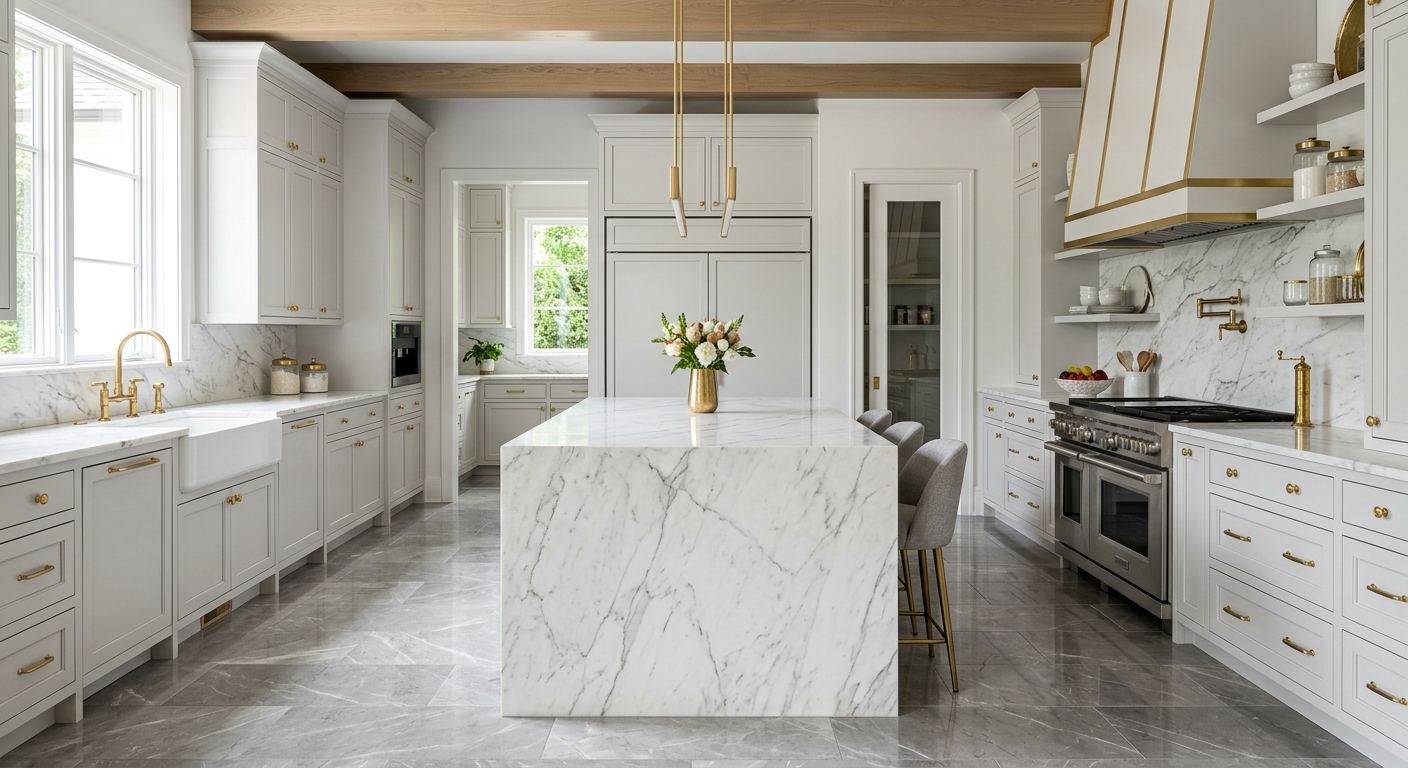
Kitchen renovation options and costs in Chetwynd
Chetwynd homeowners typically renovate with one eye on today’s comfort and the other on what will hold value at resale. With a median household income of $104,000 (Statistics Canada, 2021 Census) and a homeowner rate of 63.6% of households, many families budget for durable mid-range finishes, while others go higher when they’re improving the whole kitchen layout. In Chetwynd—part of the Northeast market—kitchen budgets also track closely to local home affordability and household financing capacity, which is why finish tier often lands at “hybrid” scopes rather than purely cosmetic makeovers.
Northeast BC’s weather affects scheduling more than it dictates material choices: colder, wetter shoulder seasons can slow delivery and finishing work, and trades may consolidate trips from Fort St. John and Dawson Creek. Labour availability can also shift with resource-sector demand across the Peace River regional districts, which is one reason early booking matters. In Chetwynd, kitchens in the older housing stock (56.1% of homes built before 1981) often need more preparation—subfloor patching, wiring assessment, and plumbing corrections—before cabinets and countertops can be installed cleanly.
If you’re updating a kitchen around the Chetwynd townsite area, you’ll often see faster turnaround because local contractors can access the worksite with fewer transport delays compared with more rural properties. From there, the biggest decision is how far you want to go—because the cost jump from appliances-only refreshes to cabinet-and-counter packages is significant. Use the table below to compare realistic project tiers and durations, then we’ll break down what drives pricing in Section 2.
| Renovation Tier |
What's Included |
Typical Duration |
Price Range |
| Cosmetic refresh (paint, hardware, new appliances only) |
Paint/trim touch-ups, new hardware, appliance swap (in-place), minor caulking, basic cleanup |
1–3 days |
$6,000–$18,000 |
| Mid-range full renovation (new cabinets, counters, sink, tile) |
Stock or semi-custom cabinets, quartz or good laminate counters, new sink/faucet, backsplash tile, updated lighting |
2–4 weeks |
$35,000–$60,000 |
| High-end full renovation (custom cabinets, stone counters, island) |
Fully custom millwork, premium stone counters (quartz/stone), island design, upgraded backsplash (higher-end tile or slab), appliance package tier upgrade |
4–7 weeks |
$65,000–$90,000 |
| Cabinet refacing only (new doors + drawer fronts, same boxes) |
New door/drawer fronts, new hardware, refinishing/repair of existing boxes, optional backsplash refresh |
1–2 weeks |
$8,000–$22,000 |
| Countertop swap only (laminate to quartz or stone) |
Remove/install countertops, reconnect sink, seal if required, basic edging and backsplash allowance (if included) |
3–7 days |
$4,000–$14,000 |
| Backsplash tile installation only |
Tile supply and install, surface prep, grout/seal, trims and outlets detailing (as scoped) |
2–5 days |
$2,500–$10,500 |
Prices are estimates only and vary by project scope, site access and material selection.
What affects the price of kitchen renovation in Chetwynd
In the Northeast of British Columbia, it’s common to see quotes for the “same” kitchen vary by 30–50%. The big reason isn’t climate—it’s the homeowner’s targeted finish tier and how local contractors price risk and logistics across the Peace River region. Kitchens in higher-value homes more often justify quartz or premium stone and semi-custom cabinetry, because owners can recover a larger portion of the upgrade on resale. In more modest scopes, laminate tops and stock cabinets stay popular because they deliver a noticeable refresh without stretching budgets too far.
Here’s how the Northeast market and local economics shape cost: many Chetwynd households are in the $104,000 median-income bracket (Statistics Canada, 2021 Census), which supports a typical mid-range band where full renovations often land around $35,000–$60,000. If you’re pushing toward $65,000–$90,000, you’ll usually see custom millwork, an island redesign, upgraded electrical/lighting, and higher-ticket finishes that buyers expect in a more “complete” kitchen.
Layout changes are the most unpredictable cost regardless of finish level. Removing a wall, adding an island, or moving plumbing/gas lines adds labour, material waste, inspection steps, and scheduling coordination. In Chetwynd, homes built before 1981 (56.1% of dwellings) can also bring surprises like older wiring paths, smaller drain sizing, or uneven framing that requires more subfloor prep before cabinets go in. Those issues can raise the baseline even if you selected a mid-range countertop—think extra hours, patching materials, and longer timelines. Conversely, if your plumbing locations are staying put and your existing base structure is solid, you can keep costs closer to a countertop-only or partial cabinet tier.
| Price Factor |
Why It Matters |
Cost Impact |
| Cabinet tier — stock vs. semi-custom vs. fully custom millwork |
Higher tiers improve fit, finishes, storage options and layout flexibility |
Approx. $6,000–$35,000 difference across tiers |
| Countertop material — laminate vs. quartz vs. granite vs. stone |
Material cost, fabrication complexity, and installation labour change significantly |
Approx. $3,500–$15,000 depending on choice |
| Layout change — wall removal, island add, plumbing/gas move |
Drives trades coordination, framing, venting, and inspection steps |
Often $8,000–$25,000 or more |
| Appliance package tier — builder vs. mid-range vs. pro-grade |
Impacts electrical needs, finish matching, and delivery lead times |
Approx. $1,500–$12,000 range |
| Flooring — refinish existing vs. full replacement |
Matching subfloor/levelling and removal adds labour and disposal costs |
Approx. $2,000–$10,000 |
| Backsplash — ceramic tile vs. marble vs. full-height slab |
Higher-end materials require more precision and sometimes full-wall handling |
Approx. $2,500–$12,000 |
| Electrical — new circuits for island, under-cabinet lighting |
New circuits increase licensed work and inspection complexity |
Approx. $1,000–$6,500 |
| Permit fees and licensed trade requirements |
Permits and inspections add documentation, scheduling, and coordination |
Can shift budget by $500–$3,500 |
Permits & regulations in British Columbia
In British Columbia, swapping cabinets or replacing countertops typically does not require a permit because you’re not changing the building’s core systems. However, once your renovation touches plumbing supply/drain lines, gas appliances, structural walls, or adds electrical circuits, the work can require permits and licensed trades. For Chetwynd homeowners, that usually shows up during “upgrade” scopes: moving a sink location means plumbing permits and work by a licensed plumbing contractor; relocating a stove or adjusting the connection for a range hood that vents with gas elements means involving a licensed gas fitter; removing a load-bearing wall or altering structural support typically triggers permits and engineering/inspection steps; and adding outlets or a new circuit for island lighting or cooking appliances requires licensed electrical work and inspection.
Step-by-step, verify your contractor the right way before signing: (1) ask for their BC licence/registration details and confirm they match the trade that will perform the work; (2) request a certificate of insurance showing general liability coverage (and, where applicable, coverage tied to the trades engaged); (3) confirm they carry worker coverage appropriate for their workforce (commonly referenced as WCB/WorkSafe coverage); and (4) ask who is pulling permits—your contract should state responsibility in writing. If you have a contractor who says “we’ll handle it” but can’t point to the permit responsibility section, that’s a problem. Gas work and electrical must be inspected; don’t assume “DIY knowledge” or informal sign-offs will satisfy BC requirements.
Cabinets, countertops and layout decisions in Chetwynd
For most Chetwynd renovations, the biggest money decisions come down to three choices: cabinet tier, countertop material, and whether you change the layout. Start with cabinet tier. Stock cabinets are the fastest and usually cheapest, but they can be tighter on storage and less forgiving if your walls aren’t perfectly square—older homes (56.1% built before 1981) often benefit from semi-custom or custom to improve fit. Semi-custom is the “most popular mid-range” option in the Northeast because you get better door/drawer options and interior storage without paying fully custom prices. Fully custom millwork is best when you’re also changing the layout (like adding an island) or want a very specific design style.
Countertops should follow your lifestyle. Laminate is the budget-friendly choice and can look very modern, but seams and edges are more vulnerable to chipping and water infiltration over time. Quartz is a strong all-around selection for Chetwynd families because it’s durable for daily cleaning and handles temperature swings well; that’s why mid-range full renovations often sit around $35,000–$60,000 with quartz included. Granite and other natural stones can be stunning and highly heat-tolerant, but they may require sealing and careful maintenance, and installation takes more precision. If you’re considering marble, treat it as a premium maintenance commitment—marble is prone to etching from acidic cleaners.
Layout changes are where you either spend for space or you save for ROI. If you can add an island without moving plumbing/gas lines, it’s often a worthwhile upgrade for function and resale appeal. But if you’re moving a sink or stove, the trade coordination and inspection steps can push you away from a simple countertop-only plan and toward the full renovation band near $65,000–$90,000. A concrete example: in many Chetwynd projects, upgrading from laminate to quartz might add only a portion of your cabinet budget, while adding an island with plumbing relocation can raise the total far more than a countertop change—so decide layout first, then choose your surface tier.
| Option |
Durability |
Maintenance |
Best For |
Price Range |
| Stock cabinets (big-box) |
Good structural durability; less custom fit |
Low—keep hardware tight and address water exposure early |
Quick refreshes, tighter budgets, in-place layouts |
$6,000–$16,000 |
| Semi-custom cabinets (local dealer) |
Very durable; better storage configuration |
Low to moderate—finish care and routine hardware checks |
Most homeowners aiming for mid-range resale appeal |
$14,000–$30,000 |
| Custom cabinets (local millwork shop) |
Highest fit and build quality potential |
Low when installed properly; care follows finish type |
Complex layouts, older-home irregularities, premium design |
$25,000–$55,000 |
| Laminate countertop |
Moderate; can chip at seams/edges over time |
Easy daily care; avoid standing water at edges |
Entry-level renovations, strong value per dollar |
$3,500–$7,500 |
| Quartz engineered countertop |
High—impact and stain resistant |
Low—typical household cleaning; no sealing |
Busy households wanting “set it and forget it” durability |
$7,500–$12,500 |
| Granite / natural stone countertop |
High heat tolerance; durability varies by stone type |
Moderate—typically periodic sealing and careful cleaners |
Premium look with natural character |
$10,000–$15,000 |
| Butcher block countertop |
Good for cutting; can wear with moisture exposure |
Moderate—oil and regular upkeep to prevent drying/warping |
Cabin-style kitchens and homeowners who maintain surfaces |
$8,000–$14,000 |
| Marble countertop |
Medium—softer surface can scratch/etch |
Moderate to high—avoid acidic spills and use gentle cleaners |
Low-traffic “showpiece” kitchens and premium aesthetics |
$12,000–$20,000 |
How to choose a kitchen renovation contractor in Chetwynd
Choosing the right contractor is the fastest way to protect your budget in Chetwynd, especially when older homes may hide wiring or plumbing issues behind existing finishes. Start with British Columbia licensing and insurance checks. Ask for (1) proof of the contractor’s relevant BC registration/licence for the trade(s) they perform directly; (2) a current certificate of insurance for liability; and (3) proof they have worker coverage appropriate for their workforce (commonly referenced as WCB/WorkSafe coverage). If they’re a general contractor coordinating trades, you should still receive documentation that the subcontractors are properly licensed—don’t accept “they’re covered” without paperwork.
Next, get 2–3 itemised written quotes, not lump sums. You want a labour and materials breakdown: cabinet supply and install, countertop fabrication/installation, tile/backsplash scope, disposal, and any electrical/plumbing line items. Read what’s excluded—common exclusions include permit fees, haul-away/disposal, appliance connections, and patching/paint touch-ups after flooring and electrical are done. Warranty matters too: ask for workmanship warranty length (and whether it covers cabinets, installs, and tile), product/manufacturer warranty details, and whether warranties are transferable if you sell your home.
For payment scheduling, follow a practical rule: never pay more than 10–15% upfront. Use progress payments tied to stages, and hold back a portion until the job is complete and deficiencies are corrected. Finally, insist on a written start date and a realistic completion estimate; winter logistics in Northeast BC can shift sequencing if your materials arrive late.
- Confirm BC licensing/registration matches the work they will perform.
- Request current certificate of insurance (and verify coverage is active for the project term).
- Verify worker coverage (WCB/WorkSafe) where applicable to their workforce.
- Insist on 2–3 itemised quotes (labour + materials) with the same scope.
- Check whether permits are included and who is responsible for pulling them in writing.
- Ask what’s included for demolition and disposal/haul-away.
- Confirm countertop templates, fabrication lead times, and install scheduling method.
- Review allowances: paint, flooring patching, trim, under-cabinet lighting, and backsplash details.
- Ask who reconnects appliances and whether electrical/plumbing disconnect/reconnect is included.
- Get warranty terms in writing: workmanship duration and product/manufacturer warranty specifics.
- Use a payment schedule that includes a holdback until punch list completion.
- Require a start date and completion target in the contract, plus conditions that trigger schedule changes.
Red flags in Chetwynd: (1) a quote that’s only a single lump sum with no line items for cabinets, counters, and tile; (2) “permit not needed” statements for work that moves plumbing, gas, structural walls, or adds electrical circuits; (3) refusal to provide insurance or proof of coverage; (4) pushing for large upfront payments beyond 10–15%; and (5) vague timelines with no delivery lead-time planning for countertops and cabinet fabrication.
Frequently asked questions — kitchen renovation in Chetwynd
Should I reface or replace my cabinets?
In Chetwynd, refacing is often the best choice when the cabinet boxes are solid, level, and not water-damaged—especially in homes built before 1981 where you may want to preserve what’s structurally good and only upgrade doors, drawer fronts, and hardware. Refacing also tends to cost less than a full tear-out and can keep you closer to a mid-range budget without sacrificing the look. If your boxes are warped, sagging, or you need major internal storage changes, replacement is usually the better ROI because it corrects deeper issues. A typical cabinet refacing-only project commonly falls around $8,000–$22,000, while a mid-range full renovation with new cabinets and counters often runs $35,000–$60,000.
Do I need a permit for a kitchen renovation in British Columbia?
In British Columbia, cabinet and countertop swaps typically do not require permits when you’re keeping plumbing, gas, and the electrical layout unchanged. However, permits and licensed trade involvement are commonly required when you move plumbing supply or drain lines, relocate a gas stove or make changes related to gas connections, remove a load-bearing wall, or add new electrical circuits (for example, new island lighting or additional outlets). In Chetwynd, the most common “surprise” is that homeowners think they’re doing a cosmetic refresh when the plan actually includes sink/stove relocation or electrical upgrades. Always confirm permit responsibility in your written contract. Your contractor should also be able to explain which trades will be licensed for the work and how inspections will be handled before you start closing up walls.
What's the ROI on a kitchen renovation?
Kitchen ROI in Chetwynd isn’t one-size-fits-all, but it’s closely tied to what buyers expect at resale and how much of your renovation matches a durable, mainstream finish tier. With a homeowner-heavy market (63.6% of households own) and a median household income of $104,000 (Statistics Canada, 2021 Census), renovations that emphasize functional upgrades—good lighting, practical storage, durable countertops like quartz, and clean tile work—generally translate better than purely trendy cosmetic changes. If you’re aiming for a mid-range full renovation around $35,000–$60,000, that’s typically easier for homeowners to recoup than a fully custom scope unless the layout changes are genuinely compelling (like better flow, more counter space, or a sensible island placement). High-end renovations can perform well when the finishes are durable and the layout is improved, but they carry a higher upfront spend.
How do I budget for a kitchen renovation?
Budgeting in Chetwynd starts with deciding which tier you’re buying into: cosmetic, mid-range full, high-end full, or targeted upgrades. Then add a realistic contingency because older homes may need extra prep. For example, a countertop swap only can be around $4,000–$14,000, while a mid-range full renovation with new cabinets, counters, sink, and tile is commonly $35,000–$60,000. If you’re planning an island or moving plumbing/gas, plan for the layout-change cost to be the most unpredictable part. Site access and sequencing also matter in Northeast BC—cold/wet periods can delay certain trades, and contractor scheduling across the Peace River region may affect timelines. A good rule is to request an itemised quote, then ask your contractor what could trigger change orders (subfloor issues, wiring updates, or countertop lead times).
Can I move my kitchen sink or stove?
Yes, you can move a sink or stove in Chetwynd, but it’s often where the renovation cost and complexity rise quickly. Moving a sink typically means changes to plumbing supply and drain lines, which must be handled by licensed plumbing work and commonly triggers permit steps. Moving a stove is even more sensitive if there’s gas involved; gas work requires a licensed gas fitter and proper inspection. The practical question is whether the move creates a better working triangle and whether your floors/walls can handle the new lines without excessive framing or patching. If your goal is functional improvement, it can sometimes be more cost-effective to keep the plumbing locations and instead upgrade cabinets, counters, and lighting. If you do relocate, plan for a longer schedule and coordination across trades—especially in Northeast BC where availability may be shaped by broader Fort St. John and Dawson Creek workload swings.
What's the most cost-effective kitchen upgrade?
For many Chetwynd homeowners, the most cost-effective upgrade is the one that delivers the “new kitchen” look without triggering expensive layout work. In practice, that’s often either a backsplash update plus new lighting, or upgrading countertops (especially moving from laminate to quartz) while keeping the cabinet layout. Countertop installation commonly falls around $3,500–$15,000, and a backsplash tile installation only is often $2,500–$10,500 depending on tile type and height. These upgrades also tend to be less disruptive than full cabinet replacement, which matters when you want to minimize timeline and demolition. If your cabinets are in good shape but look dated, refacing can be a strong middle ground at about $8,000–$22,000. The best answer depends on what’s actually worn—doors, countertops, lighting, or water damage—and a good contractor can help you spot that early.