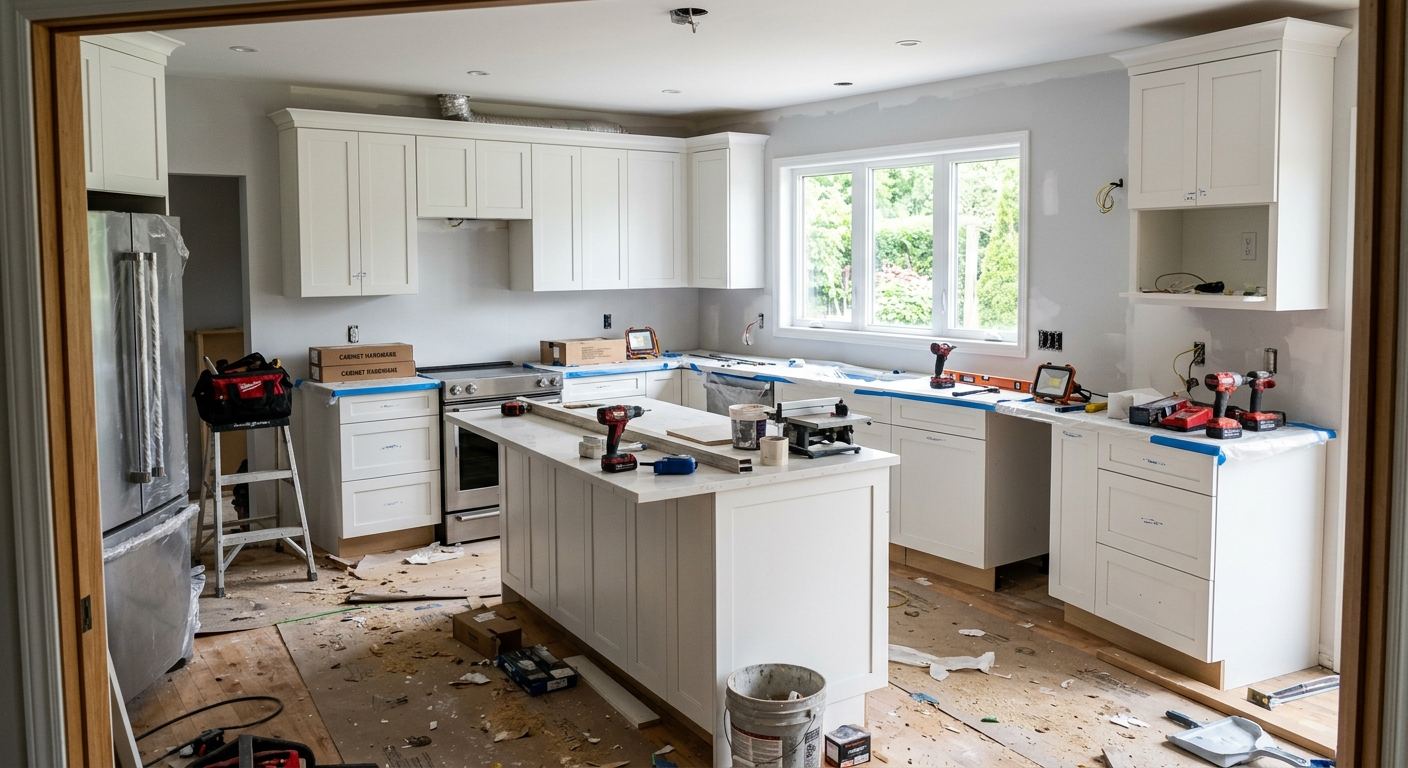
Kitchen renovation options and costs in Kensington-Cedar Cottage
Kensington-Cedar Cottage, British Columbia is a neighbourhood where kitchen renovations tend to be driven by how the finished space will look day-to-day and how it will screen well for future buyers. With a population of 49,235 in 2021 (Statistics Canada, 2021 Census), the Lower Mainland–Southwest market has steady demand for trades, but pricing still swings mainly with project scope and finish expectations—not because of the kitchen “weather.” In this region, local purchasing power and home economics matter: higher-value pockets typically push homeowners toward semi-custom cabinetry, quartz or other stone counters, and upgraded hardware because those choices are easier to justify on resale.
In the Lower Mainland–Southwest, the climate can influence the practical side of materials—humidity swings and seasonal dampness mean good ventilation and proper installation details matter—but it’s the market tier that most strongly shapes cost. Contractors are available year-round, yet timing can affect labour pricing when installers are booked for concurrent projects. Also, older housing stock in the area can mean you may uncover dated wiring, patchy drywall, or plumbing runs that need attention once cabinets come off, which can add labour even when you keep the footprint.
Because projects can land anywhere from a restrained refresh to a full rebuild, it’s helpful to compare tiers side-by-side before you request quotes—especially if you’re targeting a mid-range look or a premium, design-led kitchen. For Kensington-Cedar Cottage homeowners, this trade is especially in demand around Hastings Street and nearby side streets where many interiors are being modernized while keeping layouts workable. Below is a practical comparison table to anchor your budget.
| Renovation Tier |
What's Included |
Typical Duration |
Price Range |
| Cosmetic refresh (paint, hardware, new appliances only) |
Prep and paint, new cabinet hardware, appliance swap (like-for-like), minor caulking, basic trim touch-ups |
1–3 weeks |
$8,000–$20,000 |
| Mid-range full renovation (new cabinets, counters, sink, tile) |
New semi-custom or quality stock cabinets, countertop (often quartz), sink and faucet, backsplash tile, flooring refinishing or replacement allowance, plumbing connections |
4–8 weeks |
$40,000–$85,000 |
| High-end full renovation (custom cabinets, stone counters, island) |
Fully custom millwork, premium stone or slab counters, island build-out, upgraded hardware and lighting, designer backsplash, revised layout allowances (where feasible) |
8–14 weeks |
$85,000–$120,000 |
| Cabinet refacing only (new doors + drawer fronts, same boxes) |
Refacing materials and labour, new drawer fronts, upgraded hinges/soft-close where applicable, paint/finish matching, careful trim detailing |
2–5 weeks |
$8,000–$28,000 |
| Countertop swap only (laminate to quartz or stone) |
Remove old surface, install new countertop, new sink cut-out allowance, reseal and caulk, basic backsplash touch-up if required |
1–2 weeks |
$6,000–$12,000 |
| Backsplash tile installation only |
Surface prep, tile supply and labour (typical ceramic/porcelain), grout/seal, cut-outs for outlets, clean-up |
3–7 days |
$1,500–$6,000 |
Prices are estimates only and vary by project scope, site access and material selection.
What affects the price of kitchen renovation in Kensington-Cedar Cottage
In the Lower Mainland–Southwest and across British Columbia, the same “kitchen size” can quote 30–50% differently because homeowners aren’t buying just labour; they’re buying finish tier, cabinetry complexity, and how much the trades must adjust for what’s already behind the walls. In higher-value Metro Vancouver-style projects, the typical default is quartz or stone counters and semi-custom cabinetry with more detailed millwork, upgraded drawer systems, and refined layouts. That pushes total budgets toward the full renovation bands (for example, mid-range work around $40,000–$85,000 and higher-end projects that approach $85,000–$120,000).
In more modest scopes, laminate or simpler stock cabinets dominate because the return is stronger and timelines are shorter. Climate itself is rarely the main cost driver, but it affects installation quality: kitchens in British Columbia need resilient sealing and strong ventilation details because damp seasons can show up later as adhesive failures, grout staining, or cabinet edge swelling if materials are installed loosely or too quickly. Layout changes are the wildcard regardless of finish tier—removing a wall, adding an island, or moving a gas line can add labour and scheduling complexity.
Two common Kensington-Cedar Cottage realities that raise costs are older electrical runs and plumbing that doesn’t align neatly with updated cabinet boxes. In practice, upgrading outlets and adding under-cabinet lighting can require new circuits, and if the sink plumbing lands in a different spot than the new cabinet plan, you may need to open walls and adjust drain lines. Conversely, costs can stay lower when you reuse the existing cabinet footprint and keep the stove location unchanged. When that’s possible, many homeowners can control spend within the cabinet-and-counter focused ranges instead of drifting into a full rebuild.
| Price Factor |
Why It Matters |
Cost Impact |
| Cabinet tier — stock vs. semi-custom vs. fully custom millwork |
Controls how well the kitchen fits odd dimensions, drawer systems, and the amount of on-site fitting |
Largest variance; can shift a project by tens of thousands depending on tier choice |
| Countertop material — laminate vs. quartz vs. granite vs. stone |
Material cost, fabrication time, and seam complexity (especially around islands) |
Often one of the most visible budget swings; quartz/stone typically raises totals sharply |
| Layout change — wall removal, island add, plumbing/gas move |
More demolition, re-framing, and trades coordination; higher risk of hidden surprises |
Most unpredictable factor; can add major labour even if finishes stay mid-range |
| Appliance package tier — builder vs. mid-range vs. pro-grade |
Pricing and installation requirements differ (venting, clearances, electrical needs) |
Can add several thousand; pro-grade packages often require more specialized installation |
| Flooring — refinish existing vs. full replacement |
Controls demo extent and subfloor repairs after removal |
Refinishing keeps cost controlled; replacement increases scope and labour |
| Backsplash — ceramic tile vs. marble vs. full-height slab |
Sheet sizing, cutting around outlets, and higher-end materials’ handling requirements |
Full-height or marble increases both material and installation time |
| Electrical — new circuits for island, under-cabinet lighting |
New lighting, dedicated circuits, and rework of older wiring add licensed labour |
Can be a noticeable add-on; often required when changing outlet layout |
| Permit fees and licensed trade requirements |
Certain changes trigger permits, inspections, and higher overhead scheduling |
Usually moderate on top of labour, but delays and coordination can increase total |
Permits & regulations in British Columbia
In British Columbia, a straightforward cabinet and countertop swap typically does not require a permit. That usually includes replacing doors and drawer fronts, installing new cabinets in the same location, and swapping countertops when plumbing and electrical points stay where they are. Where projects commonly change the cost and timeline is when homeowners want functional upgrades that affect services.
Work that does require permits and licensed trades includes moving plumbing supply or drain lines, relocating a gas appliance (including changing the stove/range location or adjustments tied to gas supply), removing a load-bearing wall, and adding new electrical circuits (for example, a dedicated island circuit, under-cabinet lighting that needs wiring changes, or outlet relocation). Gas work must be completed by a licensed gas fitter, and electrical work by a licensed electrician; both require inspections as required by the local process. Always confirm in writing which party (homeowner vs. contractor) pulls permits and schedules inspections.
For Kensington-Cedar Cottage homeowners, a simple step-by-step verification goes like this: (1) ask for the contractor’s licence details (and any relevant subcontractor names), (2) request a certificate of insurance and confirm it’s active and covers renovation risks, (3) ask how WSIB/WCB coverage is handled—then request proof of coverage documentation, (4) verify the electrician and gas fitter are licensed through the appropriate online registry sources they provide, and (5) request a clearance letter where applicable and ensure it matches the job scope. If any of that can’t be produced promptly, treat it as a red flag before you sign.
Cabinets, countertops and layout decisions in Kensington-Cedar Cottage
The three most consequential decisions in a Kensington-Cedar Cottage kitchen renovation are cabinet tier, countertop material, and whether you change the layout. Cabinet tier matters because it controls the amount of custom fitting around walls, ceilings, and older framing irregularities—common in older neighbourhood homes. Stock cabinets are the fastest and typically the cheapest, while semi-custom is the most popular mid-range choice in the Lower Mainland–Southwest. Custom millwork costs more, but it can deliver the best fit for sloped ceilings, alcoves, and tight pull-out configurations—details that buyers notice even when they can’t name them.
Countertops are the second big lever. Laminate is budget-friendly and durable for everyday use, but it’s less forgiving if you want a “premium” look. Quartz is the common upgrade because it offers strong stain resistance and a cleaner, modern appearance. Granite/natural stone brings upscale character but needs more attention to sealing and edge detailing. For British Columbia’s seasonal humidity, the real win is pairing excellent installation and ventilation with the right material choice—not just picking the most expensive slab.
Layout changes—open-concept wall removal, island addition, or plumbing/gas relocation—should only be pursued when the space gain is genuinely valuable. For example, adding an island can justify higher spend if it improves circulation and creates real seating, but moving plumbing simply to “look nicer” is rarely worth it. A realistic dollar example: upgrading from laminate to quartz might add a few thousand, often staying within countertop-focused scope (while a full layout change with plumbing relocation can push you into a mid-range full renovation band such as $40,000–$85,000 even if the cabinets remain semi-custom). Aim for the most visible, functional upgrades first, because that’s what Lower Mainland–Southwest buyers consistently expect at each price point.
| Option |
Durability |
Maintenance |
Best For |
Price Range |
| Stock cabinets (big-box) |
Good daily durability; relies on standard sizes and straightforward hardware |
Low; routine cleaning and careful moisture control around sink and dishwasher |
Quick refreshes and tighter budgets |
$8,000–$25,000 |
| Semi-custom cabinets (local dealer) |
Very strong for everyday cooking; better drawer systems and fit options |
Low; expect minor touch-ups after install, then straightforward care |
Most renovations aiming for a modern look |
$20,000–$55,000 |
| Custom cabinets (local millwork shop) |
Excellent durability; tailored joinery and consistent finishing |
Low to moderate; keep seams dry and address any hardware adjustments early |
Hard-to-fit spaces and top-tier resale presentation |
$40,000–$90,000 |
| Laminate countertop |
Resists stains reasonably; can be vulnerable at seams and edges with heavy impact |
Low; avoid prolonged standing water at seams |
Budget-conscious upgrades that still look clean |
$3,000–$6,500 |
| Quartz engineered countertop |
Very durable surface; strong resistance to staining and everyday wear |
Low; occasional cleaning only, minimal sealing needs |
Best balance of look and long-term practicality in the Lower Mainland |
$6,000–$11,000 |
| Granite / natural stone countertop |
Highly durable; natural variation and edge detailing elevate the look |
Moderate; typically requires periodic sealing and careful seam care |
Premium style with timeless appeal |
$8,000–$12,000 |
| Butcher block countertop |
Durable when maintained; can show wear without regular oiling |
Moderate; oil/condition on a schedule and manage moisture |
Warm, traditional or farmhouse-style kitchens |
$5,000–$9,000 |
| Marble countertop |
Beautiful but softer than quartz; can etch with acids and high-heat exposure |
Higher care; sealing and prompt cleanup are important |
Statement kitchens where texture and pattern matter most |
$9,000–$14,000 |
How to choose a kitchen renovation contractor in Kensington-Cedar Cottage
Choosing the right contractor in Kensington-Cedar Cottage starts with verification, not polish. In British Columbia, make sure the people quoting your job can legally and responsibly perform the work: request their proof of licence (and confirm the subcontractors they plan to use—especially electricians and gas fitters—are properly licensed), then ask for an active certificate of liability insurance. For coverage assurance, ask how WSIB/WCB is managed and request evidence of coverage or related clearance documentation before work starts.
Get 2–3 itemised written quotes that break out labour and materials rather than one lump sum. A good quote will show line items like demolition, cabinet install, countertop template/fabrication allowance, backsplash labour, plumbing connection labour, electrical scope, drywall/paint patching, and site protection. Read the scope for exclusions: is drywall repair included, is dust control included, is permit pulling included when required, and is disposal/hauling included? Many disputes come from missing “boring” items.
Warranty matters: ask for the workmanship warranty length, and separately confirm the product/manufacturer warranty terms and whether it transfers to future owners. For payment, never provide more than about 10–15% upfront; keep a holdback until key milestones are complete and defects are addressed. Finally, insist on a written start date and an end-date estimate (with a realistic contingency window for lead times on cabinets and stone).
- Confirm licence details and verify electrician/gas fitter licensing for any service changes.
- Request certificate of liability insurance showing renovation coverage.
- Ask for WSIB/WCB (or clearance documentation where applicable) and keep copies.
- Use itemised quotes with labour vs. material breakdowns.
- Check what’s excluded: permits, disposal, drywall patching, painting, and backsplash scope.
- Verify countertop fabrication allowances and seam locations are discussed.
- Confirm cabinet installation includes shimming/levelling and trim finishing.
- Ask who coordinates scheduling for stone template, delivery, and installation.
- Get a written timeline that includes lead times for cabinets and counters.
- Require a clear warranty in writing for both workmanship and materials.
- Keep payment schedule milestone-based; hold back until completion.
- Ask about dust control plan for occupied homes.
Concrete red flags I see around Kensington-Cedar Cottage include: vague or non-itemised estimates, refusal to provide insurance/coverage proof, “we’ll handle permits later” without contract language, pressure to pay large upfront deposits, and missing a detailed lead-time plan for cabinets and countertops.
Frequently asked questions — kitchen renovation in Kensington-Cedar Cottage
How do I choose a kitchen contractor in Kensington-Cedar Cottage?
Start by verifying the contractor’s ability to legally perform the work in British Columbia. Ask for their proof of licence (if applicable to their scope), active liability insurance, and evidence of WSIB/WCB coverage or related clearance documentation. Then compare quotes that are itemised—labour and materials separately—so you can see what you’re actually paying for (cabinet install, countertop fabrication allowance, drywall patching, disposal, and electrical scope). For Kensington-Cedar Cottage projects, insist that any electrician or gas fitter used for lighting circuits or gas range changes is properly licensed and listed in the plan. Finally, match the contractor’s finish tier to your target: if you’re budgeting a mid-range renovation around $40,000–$85,000, you shouldn’t end up with a quote that omits critical items like countertop template, backsplash details, or permit coordination.
What order do kitchen renovation steps happen in?
A practical order keeps rework down. Typically you begin with measurement and planning, then demolition, rough-in trades (electrical, plumbing, ventilation) if changes are planned, and permitting/inspections where required. After rough-ins, drywall/patching and any subfloor repairs come next, followed by cabinet installation (shimming/levelling), countertop templating and fabrication, and finally countertop installation. Backsplash tile goes after counters are set so tile lines land cleanly at the edges. Appliances are last, with final caulking and trim. In British Columbia’s damp seasons, controlling dust and protecting cabinet interiors matters—good contractors stage materials and manage drying time so moisture doesn’t get trapped during paint or caulking.
Can I live at home during a kitchen renovation in Kensington-Cedar Cottage?
Often yes, but it depends on the scope. A cosmetic refresh and hardware/appliance swaps can usually be done with minimal disruption. For mid-range full renovations around $40,000–$85,000, many homeowners stay in place for the first part—especially if you can keep a temporary sink and microwave station. For high-end rebuilds, especially with an island, you’ll likely face longer disruptions because demolition and rough-ins take time and kitchens become unusable during countertop and cabinet stages. To live at home safely, ask the contractor for dust control plans, a secure path to the bathroom/living areas, and a clear “daily access” plan. Also confirm how they handle disposal and whether you’ll need a temporary cooking setup.
Should I renovate my kitchen before selling in Kensington-Cedar Cottage?
If you plan to sell, focus on improvements that buyers can see and that reduce risk. In the Lower Mainland–Southwest, many buyers expect modern lighting, clean finishes, and countertops that feel current. A targeted update—like refacing plus a new backsplash or a countertop swap—can be more cost-efficient than a full redesign if you’re not changing the layout. However, if your kitchen has functional problems (outdated wiring, leaking plumbing, or poor ventilation), addressing those issues first can prevent inspection surprises. Pricing choices matter: premium upgrades may push costs into the higher bands near $85,000–$120,000, so make sure your layout and material choices align with your neighbourhood’s resale expectations rather than only your personal taste. A realtor-informed budget range and a staged “must-fix vs nice-to-have” list helps keep ROI grounded.
What's the most popular kitchen style in Kensington-Cedar Cottage right now?
In Kensington-Cedar Cottage and across the Lower Mainland–Southwest, the most requested look is a clean, modern transition style: simple shaker-style cabinetry (often semi-custom), warmer neutrals, and quartz countertops in light-to-mid tones with a straightforward backsplash. Hardware is usually understated—matte black or brushed finishes—paired with functional drawer layouts and integrated lighting. Islands are common when the space allows circulation, because they read well in photos and improve everyday workflow. Climate-wise, homeowners also tend to prioritize ventilation and moisture-aware installation around sink and dishwasher areas, since British Columbia’s seasonal dampness can highlight poor sealing over time. That style choice typically aligns with mid-range renovation budgets (often $40,000–$85,000), while fully custom millwork moves you closer to the higher-end band.
How do I know if I need to update my kitchen plumbing in Kensington-Cedar Cottage?
You may not need a full plumbing replacement, but you should plan to assess it once cabinets come down. Signs you likely need changes include frequent leaks under the sink, slow drainage, recurring odours, old shutoff valves, or water staining that points to fittings failing behind toe-kicks. If you’re moving the sink, dishwasher, or stove position, plumbing supply/drain relocation is usually required and must be done by a licensed tradesperson, which can also trigger permit requirements. Even without moving fixtures, you might choose to update at least critical components—shutoff valves, supply hoses, or the drain connection—to reduce risk. A good contractor will inspect before finalising the cabinet layout and explain what’s staying, what’s replacing, and what it costs—so your budget doesn’t get surprised mid-project.