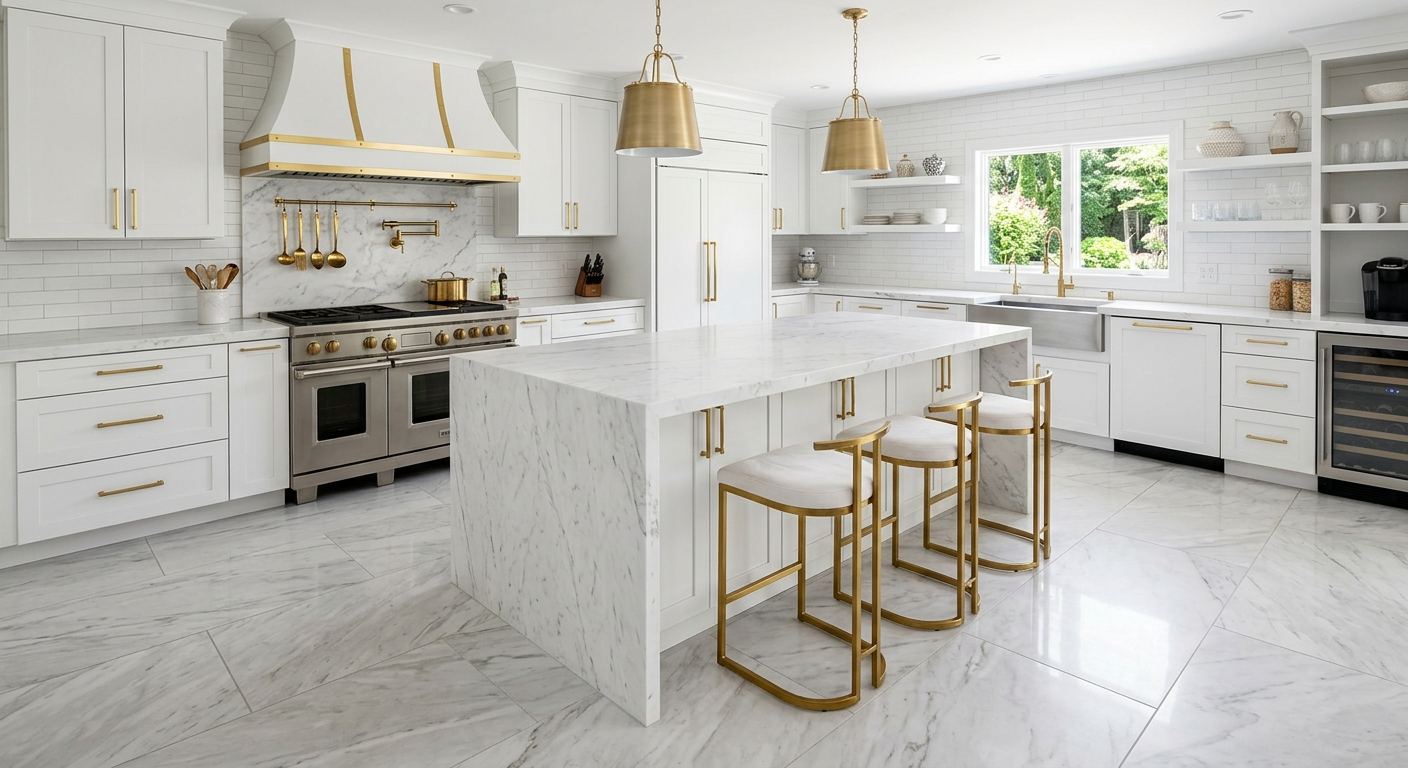
Kitchen renovation options and costs in Coronation Park
Kitchen renovation options in Coronation Park generally start with a simple question: are you refreshing what’s already there, or rebuilding the kitchen around a new cabinet-and-counter layout? With a local population of 1,468 (Statistics Canada, 2021 Census), homeowners in this pocket tend to plan fewer, more focused projects—yet they still feel the same Lower Mainland–Southwest pricing pressure that comes with British Columbia’s demand for skilled trades and in-demand finishes. In the Lower Mainland–Southwest, renovation expectations often track the region’s higher-value housing market, where many buyers gravitate toward quartz or stone counters and semi-custom cabinetry because the upgrade is easier to justify on resale. In that context, contractor availability and finish selection can matter as much as the square footage.
Climate in Coronation Park doesn’t usually drive the biggest cost swings—your budget is shaped more by material and labour demand than by extreme weather. Still, humid coastal conditions and temperature swings can affect how materials are sealed and installed (especially around sinks, dishwashers, and exterior-wall cabinetry). Trade demand is strongest in built-up residential pockets like Port Moody–adjacent areas where many homeowners are targeting family-friendly, open layouts—so scheduling and lead times for cabinetry and stone are common cost influencers.
Below is a practical way to compare kitchen renovation tiers so you can line up bids against the same scope, then move into the detailed cost drivers.
| Renovation Tier |
What's Included |
Typical Duration |
Price Range |
| Cosmetic refresh (paint, hardware, new appliances only) |
Cabinet paint or refinishing (no cabinet box changes), new pulls/hinges, appliance swap, basic caulking |
3–7 days |
$8,000–$18,000 |
| Mid-range full renovation (new cabinets, counters, sink, tile) |
New semi-custom or stock cabinets, countertop install, sink + faucet, backsplash tile, new flooring patch/trim as needed |
3–6 weeks |
$40,000–$75,000 |
| High-end full renovation (custom cabinets, stone counters, island) |
Custom millwork, quartz/stone counters, island build, upgraded hardware, extended backsplash, lighting upgrades |
6–12 weeks |
$85,000–$120,000 |
| Cabinet refacing only (new doors + drawer fronts, same boxes) |
Door/drawer front replacement, new hardware, refinishing of existing frames if sound |
2–4 weeks |
$15,000–$40,000 |
| Countertop swap only (laminate to quartz or stone) |
Remove existing top, install new countertop, seam work, reconnect sink/faucet as needed |
1–3 weeks |
$5,000–$12,000 |
| Backsplash tile installation only |
Tile install, basic prep/leveling, grout and caulking, allowance for small edge trims |
3–7 days |
$1,500–$6,000 |
Prices are estimates only and vary by project scope, site access and material selection.
What affects the price of kitchen renovation in Coronation Park
For the same kitchen footprint, you can see quotes vary by 30–50% across the Lower Mainland–Southwest and other parts of British Columbia because pricing is driven more by expected finish level and trade demand than by climate alone. Local home values and the typical income profile in the region influence what homeowners consider “standard”—in higher-value Metro Vancouver-adjacent pockets, it’s common to default to quartz or stone counters and semi-custom cabinetry. Those materials and the more complex cabinetry packages carry higher upfront costs, but they’re also easier to recover on resale. In more modest scopes, laminate and stock cabinets still dominate because they deliver a faster refresh and a cleaner return-on-spend.
Layout changes are the most unpredictable costs regardless of finish tier. Removing a wall, adding an island, or moving a gas line/plumbing run can trigger structural, electrical, and permit-driven work that bids treat differently. In Coronation Park specifically, older housing stock often means unknown conditions behind existing cabinets—older subfloors, outdated electrical runs, or uneven walls can add hours of carpentry and patching even before materials arrive.
Two concrete examples we see often: (1) if you expand a kitchen by converting a narrow peninsula into an island, budget for not only cabinetry and tops but also new electrical for outlets/under-cabinet lighting—this can shift you from a mid-range band into higher-end territory. (2) if you keep boxes but upgrade to quartz, you may land closer to a countertop-only price band, whereas adding a tile-to-ceiling backsplash and new lighting can push the whole project toward a full renovation total such as the $40,000–$75,000 range.
Bottom line: in Coronation Park, the biggest swings usually come from how much you change (plumbing/gas/layout), not how the weather behaves.
| Price Factor |
Why It Matters |
Cost Impact |
| Cabinet tier — stock vs. semi-custom vs. fully custom millwork |
Different build methods, fitting precision, and options for internal organizers |
Can swing several tens of thousands depending on how “custom” the layout becomes |
| Countertop material — laminate vs. quartz vs. granite vs. stone |
Material cost, thickness options, edge profiles, and seam/installation complexity |
Laminate stays lowest; quartz/stone can move a job from refresh territory toward full renovation totals |
| Layout change — wall removal, island add, plumbing/gas move |
Triggers structural checks, new lines, and often permits and additional trades |
Highest variability; may be the difference between mid-range and high-end quotes |
| Appliance package tier — builder vs. mid-range vs. pro-grade |
Installation complexity, power requirements, and ventilation upgrades |
Can add meaningful labour and electrical/vent work, especially with pro-grade ranges |
| Flooring — refinish existing vs. full replacement |
Access for cabinet installs and how much subfloor repair is needed |
Refinish/reuse typically keeps costs contained; full replacement adds labour and new materials |
| Backsplash — ceramic tile vs. marble vs. full-height slab |
Prep/leveling, specialty stone handling, and grout/transition detailing |
Small areas can stay near the lower end; full-height or stone jumps quickly |
| Electrical — new circuits for island, under-cabinet lighting |
Code-driven circuit work and inspection requirements |
Often modest if kept simple, but can grow when you add an island or relocate outlets |
| Permit fees and licensed trade requirements |
Permits, inspections, and scheduling licensed trades |
Not usually the biggest line item, but they can increase both cost and timeline risk |
Permits & regulations in British Columbia
In British Columbia, many kitchen “swap” projects do not require permits, but several high-impact changes do. Generally, cabinet and countertop swaps (replacing existing surfaces without altering the plumbing, gas, structural walls, or electrical layout) typically do not require permits. On the other hand, you should expect permits and licensed trade involvement if you’re moving plumbing supply or drain lines, relocating gas (for a stove/range and any related venting like a gas range hood setup), removing a load-bearing wall, or adding new electrical circuits (for example, new island outlets or significant lighting changes). Gas work must be performed by a licensed gas fitter, and electrical work by a licensed electrician—both must be inspected per the applicable process.
For a homeowner in Coronation Park, the best verification method is straightforward and written-contract-based. Step 1: ask your contractor which items are permit-triggering and confirm who will pull permits. Step 2: request proof of contractor liability insurance (certificate of insurance) before work starts. Step 3: verify the licensed trades directly—ask for their licence numbers and confirm status through their provincial online registry pages. Step 4: obtain documentation showing WCB/WCB-equivalent coverage where applicable; ask for clearance letters if the contractor uses subcontractors.
Always confirm permit responsibility in the contract so you’re not surprised by inspection delays or additional costs after you’ve already committed.
Cabinets, countertops and layout decisions in Coronation Park
When you plan a Coronation Park kitchen renovation, three decisions typically determine 80% of the outcome: (1) cabinet tier, (2) countertop material, and (3) layout changes. Cabinet tier comes down to how much you want built around your space. Stock cabinets are the fastest and cheapest because they’re produced in standard sizes. Semi-custom cabinets are the popular mid-range choice in the Lower Mainland–Southwest because they allow better storage options and improved fit without the lead times of full custom. Custom cabinets cost the most but give you the tightest fit around ceilings, windows, and awkward corners.
Countertops are where homeowners often “feel” the price change first. Laminate is budget-friendly and easy to replace, but it’s more prone to edge damage and can stain with prolonged exposure to moisture. Quartz is a strong balance of durability and low maintenance and is widely chosen by buyers expecting a modern finish. If you’re considering natural stone like granite or marble, remember sealing and care matter—especially near sinks where coastal humidity can increase maintenance habits.
Layout changes are justified when the space gains are real. If you add an island to open flow and create seating, you may decide the extra electrical/plumbing and cabinet adjustments are worth it. As a dollar example, switching from laminate to quartz may fit a countertop-focused budget, often around the lower end of the $3,000–$12,000 countertop installation band; but adding an island plus new lighting and modified utility runs can push you into full renovation totals such as the $40,000–$75,000 mid-range band.
Overall, for resale-minded choices in the Lower Mainland–Southwest, quartz plus semi-custom cabinets is often the sweet spot—provided you keep plumbing and gas moves minimal unless you truly need the layout change.
| Option |
Durability |
Maintenance |
Best For |
Price Range |
| Stock cabinets (big-box) |
Good for standard layouts; durability depends on build quality and installation |
Low day-to-day care; focus on proper sealing around moisture zones |
Fast timelines, budget-first refreshes |
$8,000–$18,000 |
| Semi-custom cabinets (local dealer) |
Very good; better sizing options and upgraded internal hardware |
Low care; benefits from careful shimming and caulking at the countertop line |
Most renovations aiming for a modern, resale-friendly look |
$18,000–$35,000 |
| Custom cabinets (local millwork shop) |
Excellent; tight tolerances and durable build choices |
Low routine care; custom detailing reduces drafts and moisture transfer |
Complex spaces, statement kitchens, or full layout redesigns |
$35,000–$60,000 |
| Laminate countertop |
Good for everyday use; edges are the weak point if bumped |
Easy cleaning; avoid prolonged standing water at seams |
Budget upgrades or rental-style refreshes |
$3,000–$6,000 |
| Quartz engineered countertop |
Excellent stain and scratch resistance for typical family kitchens |
Low maintenance; wipe clean and keep caulk lines maintained |
Resale-minded owners wanting premium look with practical upkeep |
$6,000–$12,000 |
| Granite / natural stone countertop |
Very durable and heat resistant; performance varies by stone selection |
Periodic sealing may be required; careful cleaning near sinks |
Owners prioritizing unique veining and natural look |
$8,000–$14,000 |
| Butcher block countertop |
Durable but can dent; sensitive to sustained moisture and heat |
Needs oiling/maintenance and prompt drying near sink areas |
Warm, casual style kitchens where maintenance is acceptable |
$5,000–$10,000 |
| Marble countertop |
Beautiful but softer; susceptible to etching and staining |
Higher maintenance (sealing and careful cleaning); treat like fine stone |
Statement kitchens with a more careful-use lifestyle |
$10,000–$18,000 |
How to choose a kitchen renovation contractor in Coronation Park
Choosing the right contractor in Coronation Park starts with verification. In British Columbia, you want proof of licencing for the trades involved (gas fitter for gas work, electrician for electrical, and the appropriate licences for any work that triggers them) plus current liability insurance. Ask for a certificate of insurance and check that the policy is active and reflects the kind of work being done. For coverage, request documentation that shows workers’ compensation coverage (WCB or equivalent clearance letter where applicable). If a contractor can’t provide these documents promptly, that’s a practical red flag.
Next, get 2–3 itemised written quotes that separate labour and materials. A good quote lists cabinet supply, countertop supply and install, demolition/disposal, plumbing/electrical allowances, backsplash prep, and any permit fees if applicable. Avoid bids that lump everything together without explaining what’s excluded—especially demo, waste disposal, patch-and-paint allowances, and whether the contractor is responsible for permits.
Warranty matters too. Confirm the workmanship warranty length, what it covers, and whether it transfers if you sell your home. Also check product/manufacturer warranties on cabinets, countertops, and hardware. For payments, never pay more than about 10–15% upfront; hold back a portion until the finish work and punch list are complete. Finally, insist on a written timeline with a start date and completion estimate that reflects countertop/cabinet lead times.
- Ask for licence numbers for each licensed trade involved and verify them online where possible.
- Request a certificate of insurance showing liability coverage and effective dates.
- Confirm workers’ compensation coverage via clearance letter/documentation.
- Use an itemised quote (labour vs. materials) rather than a lump sum.
- Clarify what’s included for demolition, disposal, and protection of flooring/adjacent rooms.
- Confirm whether permits are included and who pulls them if required.
- Check what electrical/plumbing allowances are assumed if you add an island or relocate lines.
- Get cabinet specs in writing (tier, door style, internal layout options, warranty).
- Confirm countertop template and install process, including seam locations and edge profiles.
- Review backsplash scope: grout type, substrate prep, caulking details, and transition trims.
- Ask for a project schedule showing when ordering occurs and when inspections happen (if needed).
- Ensure warranty terms are in writing, including transferability on resale.
Red flags we commonly see in Coronation Park kitchen jobs: quotes with no line items (or no exclusions listed), unwillingness to provide insurance/WCB documentation, “we’ll handle permits” with no written confirmation, starting work before measuring/template stages are complete, and payment schedules that ask for most funds upfront.
Frequently asked questions — kitchen renovation in Coronation Park
What's the ROI on a kitchen renovation?
In Coronation Park and across British Columbia, kitchen ROI is strongly tied to buyer expectations at resale rather than to renovation cost alone. If you target a modern, durable finish—typically semi-custom cabinetry and quartz or stone counters—you’re more likely to match what future buyers look for in the Lower Mainland–Southwest. A cosmetic refresh can feel high impact, but it won’t usually carry the same resale influence as a full kitchen change where counters, layout, and storage are improved. Many homeowners compare scopes using the renovation bands: for example, a mid-range full renovation commonly lands around $40,000–$75,000, while a full custom rebuild can approach $85,000–$120,000. ROI tends to be strongest when you avoid major layout surprises (like extensive plumbing/gas relocation) and when the upgrades are consistent and complete rather than partially upgraded.
How do I budget for a kitchen renovation?
Start by choosing a tier that matches both your current kitchen condition and the resale finish level you want. In Coronation Park, a practical approach is to budget first for the “backbone” items: cabinets and counters, then add backsplash/tile, sink/faucet, and floor refinishing or replacement. Use the local price bands to create a realistic envelope: for instance, a countertop-only upgrade (like laminate to quartz) may fall around the $3,000–$12,000 installation band, while a full mid-range renovation often sits closer to $40,000–$75,000. Then add contingency for common surprises in older housing stock—uneven walls, outdated electrical, or subfloor patching. If you’re moving plumbing or gas, budget more for labour coordination and inspection timelines, because that’s where cost uncertainty increases most.
Can I move my kitchen sink or stove?
Yes, you can move a kitchen sink or stove in British Columbia, but you need to treat it as a plumbing and/or gas scope—not just a cabinet move. Moving a sink generally means rerouting drain and supply lines, which requires coordination with licensed plumbing trades and can trigger permit requirements depending on the extent of the work. Moving a stove that involves gas means you must involve a licensed gas fitter, and the work should be planned around ventilation and code requirements. In Coronation Park, the most cost-effective option is often to keep utilities in the same “zone” and adjust the cabinet layout around them. When you relocate utilities, expect more labour hours, inspection scheduling, and potential demolition/patching—costs that can push you from a mid-range plan toward high-end totals.
What's the most cost-effective kitchen upgrade?
The most cost-effective upgrade is usually one that delivers visible change without triggering permits or major rerouting. In Coronation Park, many homeowners find that either (1) a cabinet refacing or paint/hardware refresh, or (2) a countertop upgrade offers the best balance of impact and cost control. If your cabinet boxes are solid, cabinet refacing can be a strong value, typically within the $8,000–$50,000 cabinet installation/refacing band depending on scope and size. If your cabinets are dated but structurally fine, upgrading counters—often quartz—can sit near the $3,000–$12,000 countertop installation range. Avoid “expensive surprises” by limiting electrical and plumbing moves unless the layout gain is clearly worth it. Even a well-done backsplash tile installation can refresh the look for relatively less work when the substrate and measurements are handled properly.
Custom vs stock cabinets — is custom worth it?
Custom cabinets can be worth it if your Coronation Park kitchen has challenging dimensions, a layout that needs precise fit, or you want a specific internal organization (like pull-outs, specialized corner units, or integrated storage that’s not achievable with standard sizes). Stock cabinets are usually the best choice when your goal is to refresh quickly and keep costs predictable. Semi-custom is often the “most popular mid-range” option in the Lower Mainland–Southwest because it improves fit and storage without the highest custom millwork prices. As a practical budgeting reference, cabinetry scopes typically range widely (cabinet installation/refacing often falls in the $8,000–$50,000 range), and the more you deviate from standard sizes or add complex doors and drawers, the more you should expect the total to climb. If you’re selling soon, aim for a durable, buyer-friendly look rather than over-customizing for one very specific lifestyle.
How do I choose a kitchen contractor in Coronation Park?
Choose a contractor the same way you’d choose a critical trade partner: verify, compare scopes, and insist on documentation. In British Columbia, confirm the contractor can provide liability insurance and workers’ compensation coverage documentation, and verify licences for the trades they plan to use—especially for gas and electrical work. Then request 2–3 itemised written quotes (labour and materials separated), and read what’s excluded: disposal, drywall patching, permit responsibility, and allowances for electrical/plumbing changes. Confirm the start date and completion estimate in writing, and lock down warranty terms for workmanship and products. Keep payments sensible: generally never more than 10–15% upfront, with a holdback until completion/punch list is done. Finally, compare bids using your tier expectations—e.g., ensure a “mid-range” job actually includes the cabinet/counter/backsplash scope that matches the $40,000–$75,000 band.