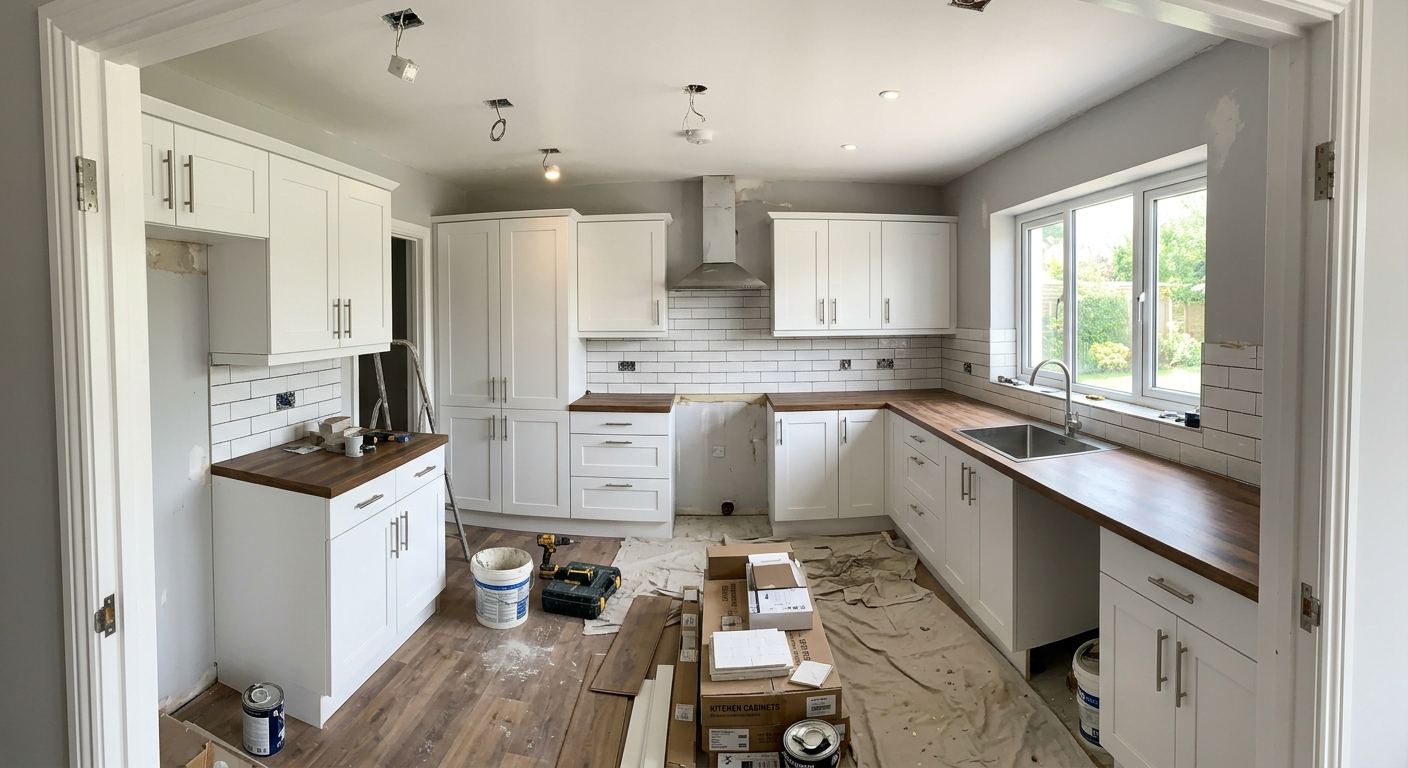
Kitchen renovation options and costs in Union Bay
Union Bay homeowners typically start their search by asking what “kitchen renovation” really means, and the answer is that costs swing widely even when the kitchen footprint is similar. In a community of about 1,200 people (Statistics Canada, 2021 Census), contractor capacity is limited compared with the larger Lower Mainland hubs, so schedules and site logistics can influence pricing. At the same time, the broader Lower Mainland–Southwest market is shaped by home values and buyer expectations—many projects are priced as if the finish level must hold up on resale, particularly for higher-value properties.
In the Lower Mainland–Southwest, kitchen pricing is driven more by expected finish tier than by climate. British Columbia’s damp coastal conditions can be harder on poorly detailed cabinets and water-exposed seams, but most cost differences show up because of materials and cabinetry complexity: quartz and stone counters, upgraded hardware, and made-to-fit layouts are common where homeowners are planning a long-term stay or resale. Labour and material availability are usually strongest for “refresh” work and mid-range installs, while custom millwork and premium stone can require longer lead times.
A good local example is demand around the waterfront and older housing pockets in Union Bay where basements or limited service clearances often complicate plumbing access. From there, you can compare the most common project types below.
| Renovation Tier |
What's Included |
Typical Duration |
Price Range |
| Cosmetic refresh (paint, hardware, new appliances only) |
Cabinet paint or refinish, new pulls/handles, appliance swap (dishwasher/range/hood/fridge), countertop touch-ups only if applicable, caulking, basic lighting adjustments |
1–3 weeks |
$10,000–$25,000 |
| Mid-range full renovation (new cabinets, counters, sink, tile) |
New cabinets (semi-custom or good-quality stock), new counters, new sink and faucet, backsplash tile, under-cabinet lighting (typical), plumbing refresh as needed, flooring repair/replacement to match |
4–8 weeks |
$40,000–$75,000 |
| High-end full renovation (custom cabinets, stone counters, island) |
Custom cabinetry, stone counters (quartz or natural stone), island build-out, integrated storage, full backsplash (often tile-to-ceiling or feature slab), upgraded hardware, premium lighting package, more complex plumbing/electrical runs |
8–14 weeks |
$80,000–$120,000 |
| Cabinet refacing only (new doors + drawer fronts, same boxes) |
Refacing panels, new door/drawer fronts, new hardware, careful prep and alignment, optional internal organizer add-ons, limited cabinet adjustments |
2–5 weeks |
$8,000–$30,000 |
| Countertop swap only (laminate to quartz or stone) |
Remove existing tops, install new quartz/stone with new sink cut-out where applicable, seal and finish, disposal of old material (typical), basic countertop backsplash trim (if requested) |
1–2 weeks |
$3,000–$12,000 |
| Backsplash tile installation only |
Surface prep, tile install (ceramic/porcelain), grout/seal, finish trim at ends, allow for outlet cut-ins, clean-up and caulking |
3–7 days |
$1,500–$6,000 |
Prices are estimates only and vary by project scope, site access and material selection.
What affects the price of kitchen renovation in Union Bay
In the Lower Mainland–Southwest, it’s common to see quotes for the “same” kitchen come in 30–50% apart once you compare finish expectations, cabinetry complexity, and what changes are planned to plumbing and electrical. In higher-value parts of Metro Vancouver, homeowners more often default to semi-custom or custom cabinetry and quartz/stone counters, and that pushes average totals higher than in lower-cost markets. Even in British Columbia towns outside the biggest centres, the pricing tends to follow the same ladder: once you move beyond stock cabinets and laminate countertops, material and shop-built millwork costs rise quickly.
Climate plays a smaller role than many people expect. Union Bay experiences coastal humidity and regular rain, so the real cost risk is detail-related: improper sealing around sinks, weak caulking lines, and unsealed wood edges can shorten cabinet life. Contractors plan around this with better prep, moisture-tolerant materials, and proper flashing/sealing where needed, but that usually doesn’t change the labour model the way layout changes do.
Here’s what tends to raise or lower cost in Union Bay specifically. First, older homes may have awkward service runs through crawlspaces or basements, so relocating a sink or adding a dishwasher can add labour and new rough-ins—sometimes pushing a mid-range scope toward full renovation pricing (depending on cabinet changes). Second, kitchens with limited clearance often benefit from built-in organizers, which increases cabinetry time but improves usability. Third, if you’re aiming to land near the $40,000–$75,000 band, staying with a practical layout and keeping major plumbing locations reduces the “hidden” trade hours. If you want an island and premium stone, totals commonly move into the $80,000–$120,000 band because custom cabinetry and additional electrical/plumbing moves aren’t optional.
| Price Factor |
Why It Matters |
Cost Impact |
| Cabinet tier — stock vs. semi-custom vs. fully custom millwork |
Higher tiers require more shop labour, more precise fit, and often more complex internal storage |
Can swing the total by roughly 15–45% depending on the kitchen size |
| Countertop material — laminate vs. quartz vs. granite vs. stone |
Material cost and installation complexity increase with stone slabs, edges, and sink cut-outs |
Counter swaps typically fall into $3,000–$12,000, with premium stone at the top end |
| Layout change — wall removal, island add, plumbing/gas move |
Structural, venting, and rough-in work adds unpredictable labour even if finishes stay mid-range |
Often the single biggest variable; it can push a refresh into full renovation territory |
| Appliance package tier — builder vs. mid-range vs. pro-grade |
Pro-grade units can require different clearances, electrical capacity, and ventilation upgrades |
Upgrading appliances can add several thousand dollars and change the electrical plan |
| Flooring — refinish existing vs. full replacement |
If cabinets must come out, flooring damage and height transitions can force replacement |
Refinish can keep costs restrained; full replacement adds materials plus labour |
| Backsplash — ceramic tile vs. marble vs. full-height slab |
Premium materials require more precision, more waste, and more time at outlets/edges |
Backsplash tile installation commonly ranges from $1,500–$6,000 |
| Electrical — new circuits for island, under-cabinet lighting |
Electrical work is trades-managed and tied to inspections for certain additions |
Can add “lump” costs that aren’t obvious until the detailed electrical scope is priced |
| Permit fees and licensed trade requirements |
Permits and licensed trades add both administrative steps and regulated inspection schedules |
Typically a modest line item, but compliance can affect total timeline and labour coordination |
Permits & regulations in British Columbia
For most homeowners in British Columbia, the key is separating “like-for-like swaps” from changes that affect plumbing, gas, structure, or electrical capacity. In general, cabinet and countertop swaps do not require permits when you’re not changing the location of plumbing or services. That means if you’re replacing your countertops, installing new cabinets at the same footprint, or adding a backsplash in place, you can usually proceed without a permit—your contractor will still confirm details based on your exact scope.
Permits are typically required when you move or create regulated work such as relocating plumbing supply or drain lines, relocating a gas stove or making changes that affect gas venting, removing a load-bearing wall, or adding new electrical circuits (for example, powering an island with additional outlets, adding under-cabinet lighting that requires circuit changes, or upgrading service capacity). Gas work must be done by a licensed gas fitter, and electrical work must be done by a licensed electrician. Both trades require appropriate inspections when regulated work is involved.
In Union Bay, the easiest verification process is to do three checks before signing: (1) ask for your contractor’s certificate of liability insurance and confirm the work address is covered; (2) verify licensed trade credentials separately (gas fitter/electrician) through their online registry or the licence number on their paperwork; and (3) request proof of coverage for workers through WCB/WSIB-style clearance documentation where applicable. Always confirm who pulls permits in the written contract—do not assume responsibility.
Cabinets, countertops and layout decisions in Union Bay
When you’re planning a kitchen renovation in Union Bay, three decisions usually drive the majority of cost and long-term satisfaction: (1) cabinet tier, (2) countertop material, and (3) whether you change the layout. Cabinet tier affects fit, speed, and storage options. Stock cabinets are the fastest path and usually the lowest cost, but semi-custom is often the sweet spot for Lower Mainland–Southwest resale expectations because it allows better sizing and nicer finishes without the long custom lead times. Custom cabinets offer the best fit—especially for older, slightly out-of-square rooms—but they cost more and require more shop fabrication.
Countertops are where resale buyers tend to notice the difference immediately. Laminate is budget-friendly and practical, but it’s less resistant to heavy wear and heat exposure than quartz or natural stone. Quartz engineered countertops are a common mid-to-high choice because they’re durable, low maintenance, and pair well with modern hardware and lighting. Natural stone like granite is also durable and premium, while marble adds a classic look but needs more care with staining and sealing. Butcher block can be gorgeous for warmth, but it demands regular maintenance and careful sealing—important in coastal humidity to prevent swelling at seams.
Layout changes are the cost wildcard. Removing a wall or adding an island may be worth it if it improves flow, creates seating, and adds real usable storage. But moving a sink or stove (especially if gas or plumbing locations must change) can add trades time and regulated work. For example, if you upgrade from laminate to quartz while keeping plumbing where it is, you can often stay within a controlled scope near $40,000–$75,000. If you add an island and relocate services, your project often moves toward the $80,000–$120,000 band because cabinetry build-outs and additional electrical/plumbing work stack up quickly.
| Option |
Durability |
Maintenance |
Best For |
Price Range |
| Stock cabinets (big-box) |
Solid for everyday use; limited sizing can mean more compromises in imperfect rooms |
Low; keep up with hardware tightening and routine sealants at wet areas |
Faster timelines and lean budgets |
$8,000–$20,000 |
| Semi-custom cabinets (local dealer) |
Good build quality with better fit and more options for internal storage |
Low to moderate; protect edges and seams in humid coastal conditions |
Most Union Bay homeowners aiming for a modern, resale-friendly look |
$20,000–$45,000 |
| Custom cabinets (local millwork shop) |
Excellent fit and longevity; built for your exact dimensions and layouts |
Low if properly sealed; follow manufacturer care for finishes |
Unusual room shapes, premium finishes, and maximum storage planning |
$45,000–$80,000 |
| Laminate countertop |
Decent for normal kitchen use; edge damage can be an issue over time |
Low; avoid standing water at seams and use hot pads |
Cost-controlled refreshes and quick turnarounds |
$3,000–$6,500 |
| Quartz engineered countertop |
High durability; resists staining and everyday wear |
Low; wipe clean and protect seams around sinks |
Busy households wanting a premium look with minimal upkeep |
$6,500–$10,500 |
| Granite / natural stone countertop |
Very durable and heat resistant |
Moderate; sealing schedule matters to prevent staining |
Premium projects and homeowners who want natural variation |
$8,000–$12,000 |
| Butcher block countertop |
Durable if maintained; can show wear and requires regular care |
Moderate to high; periodic oiling and seam protection is important in coastal humidity |
Farmhouse or warm, functional prep-kitchen designs |
$5,500–$9,000 |
| Marble countertop |
Beautiful but more sensitive to etching and staining than quartz |
Higher care; sealing and quick cleanup reduce damage |
Design-led premium kitchens where appearance is the priority |
$9,000–$14,000 |
How to choose a kitchen renovation contractor in Union Bay
Choosing the right contractor matters as much as your materials—because the quality of prep, alignment, sealing, and trade coordination is what keeps a kitchen performing in Union Bay’s damp coastal environment. Start by verifying British Columbia licensing where required: ask for the contractor’s business information and confirm they’re properly registered to do contracting work. For trades, request proof for the licensed electrician and licensed gas fitter when your scope includes electrical circuit additions or any gas relocation/venting changes. For coverage, ask for your contractor’s liability insurance certificate (confirm it lists the correct project address) and request workers’ coverage clearance documentation where applicable (WCB/WSIB-style clearance, depending on the contractor structure). If they can’t provide documents quickly, that’s a warning sign.
Then get 2–3 itemised written quotes. You want a labour and materials breakdown (cabinet install, countertop install, demolition, disposal, tile setting, electrical rough-ins, plumbing rough-ins), not a single lump sum that hides scope. Read the exclusions: is old material disposal included? Is permit pulling included where needed? Are appliances part of the allowance? Warranty details should be clear too—workmanship warranty length, what product/manufacturer warranty covers, and whether warranty terms are transferable if you sell your home.
For payments, don’t front-load the project. A reasonable approach is keeping upfront payments to about 10–15% and using holdbacks until key milestones are complete. Finally, lock in your timeline: require a written start date and a completion estimate based on material lead times, especially for cabinets and stone.
- Verify contractor identity and documents before any work starts.
- Confirm licensed trade credentials for electrical/gas work in writing.
- Ask for liability insurance certificate and check the jobsite address is listed.
- Request workers’ coverage clearance documentation (WCB/WSIB-style as applicable).
- Get 2–3 itemised quotes with labour + materials, not lump sums.
- Ensure demolition scope and disposal are explicitly included.
- Check whether permit fees and permit pulling responsibility are stated.
- Confirm what’s included in plumbing/electrical rough-in changes (if any).
- Ask for a cabinet layout plan and allowance details for overages.
- Review warranty: workmanship duration, product warranty, and transferability.
- Set a payment schedule with maximum 10–15% upfront and milestone holdback.
- Require a written start date, completion estimate, and lead-time assumptions.
Red flags to watch in Union Bay: vague scope language that shifts costs mid-project, quotes that don’t list disposal and protection of floors/doorways, contractors who dismiss permit responsibility, unclear warranty terms (or “we’ll figure it out later”), and payment demands that exceed 10–15% upfront without a signed milestone plan.
Frequently asked questions — kitchen renovation in Union Bay
Should I reface or replace my cabinets?
In Union Bay, refacing is usually the right move when the existing cabinet boxes are solid, straight, and well sealed against moisture. If your boxes are warped, poorly installed, or the layout is dated, replacement is often the better long-term value. Refacing can also be attractive when you want to control budget while still upgrading the look—many homeowners keep the project within a cabinet-focused band such as $8,000–$30,000 for refacing scopes. However, if you’re already planning to move plumbing, change the layout, or add an island, it often becomes more cost-effective to replace rather than reface because the work becomes more invasive around the service locations.
Do I need a permit for a kitchen renovation in British Columbia?
In British Columbia, cabinet and countertop swaps that keep plumbing, gas lines, and electrical locations the same typically do not require permits. Where permits usually come into play is when you relocate plumbing supply or drain lines, relocate or modify gas equipment (and related venting), remove a load-bearing wall, or add new electrical circuits (for example, new island outlets or significant under-cabinet lighting that changes wiring plans). In Union Bay, the safest approach is to have your contractor confirm permit responsibility in the contract and then list what’s included in the permit scope—so you’re not surprised later. Gas work must be done by a licensed gas fitter, and electrical work must be done by a licensed electrician, with inspections where required.
What's the ROI on a kitchen renovation?
ROI depends more on finish tier and buyer expectations in the Lower Mainland–Southwest than on small design tweaks. Kitchens with durable, modern surfaces (often quartz/stone), clean cabinetry lines, and a layout that improves flow tend to hold value better than “surface-only” upgrades when buyers are comparing homes. In higher-value Metro Vancouver areas, homeowners commonly recoup more when they invest in semi-custom or custom cabinetry and premium countertops because those materials signal quality. For a practical Union Bay example: if you stay in a mid-range renovation budget around $40,000–$75,000 with a sensible layout and upgraded counters, you’re more likely to land on features that resale buyers want. If you pursue full custom, stone, and service relocations that push toward $80,000–$120,000, ROI can still be strong, but only if the design and workmanship match the expectations for your eventual buyer pool.
How do I budget for a kitchen renovation?
Budgeting is about choosing a renovation tier first, then protecting the top cost drivers. Start by deciding whether you’re doing a refresh, a full mid-range renovation, or a high-end custom rebuild. Next, build a realistic allowance for cabinetry tier and countertops, because those dominate material spend. If you’re planning a mid-range full renovation, many projects land around $40,000–$75,000, while high-end builds with island work and premium stone commonly reach $80,000–$120,000. Then add contingency for the “unknowns” in older homes: out-of-square walls, hidden damage behind cabinets, and service access through basements or crawlspaces. In Union Bay’s coastal climate, also budget for proper sealing and moisture-resilient detailing at sink and wet-wall edges—cheap shortcuts can cost more later.
Can I move my kitchen sink or stove?
Yes, but moving a sink or stove often changes the scope more than homeowners expect because it can require rough-in plumbing changes, potential ventilation adjustments, and sometimes permits with licensed trades. In British Columbia, relocating plumbing supply/drain lines typically involves permit steps and inspection requirements, and gas relocation also must be handled by a licensed gas fitter. The cost impact is usually less about the fixtures themselves and more about access to services, the number of connections, and how much cabinetry and subfloor work gets disturbed. If you can keep the existing plumbing “footprint” and only adjust the cabinet placement slightly, you can usually control costs and avoid pushing into higher bands. If you need major moves, plan for escalation—especially if you’re also doing custom cabinetry or an island.
What's the most cost-effective kitchen upgrade?
For many Union Bay homeowners, the most cost-effective upgrade is upgrading the most visible surfaces while keeping the layout and major services unchanged. Common best-value moves are a countertop swap (especially from laminate to quartz) or a backsplash upgrade that refreshes the whole look quickly. Countertop swaps alone often fall around $3,000–$12,000, and backsplash tile installations typically land around $1,500–$6,000, depending on material choice and coverage. If your cabinet boxes are in good shape, cabinet refacing can also be a smart mid-cost option, often within $8,000–$30,000. The key is to avoid paying for layout changes when you’re not gaining storage or functional flow—especially in a renovation market where labour and coordinated trades can move your total quickly.