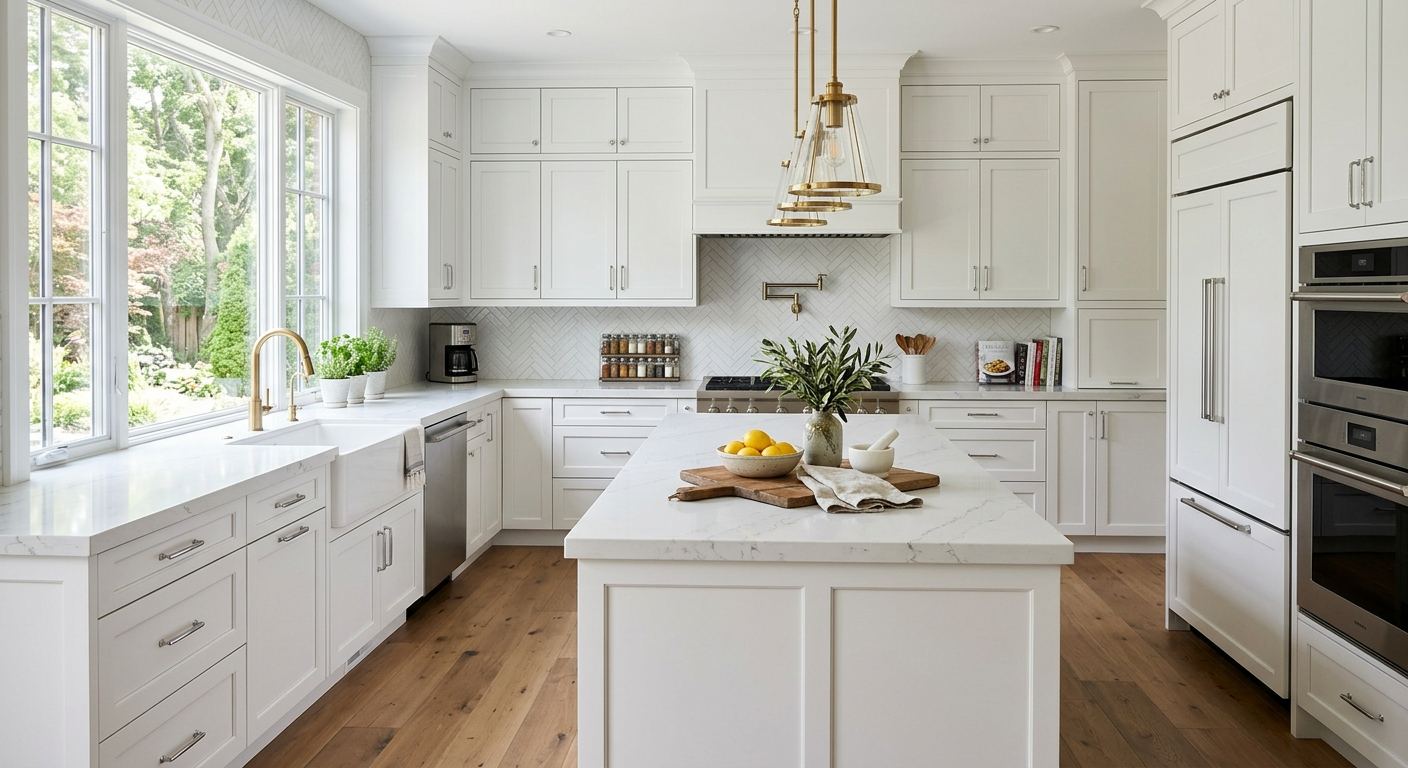
Kitchen renovation options and costs in Harewood
Harewood, British Columbia is a smaller community within the Lower Mainland–Southwest, but kitchen renovations here still follow the same market logic as the broader region. With a 2021 population of 8,769 (Statistics Canada, 2021 Census), demand is steady rather than frantic, which helps keep contractor schedules somewhat more predictable than in the busiest Vancouver pockets. That said, local owner expectations are strongly influenced by Lower Mainland housing economics—finish level is chosen with resale value in mind, not just daily convenience. In higher-value Metro Vancouver areas, homeowners more often step up to semi-custom or custom cabinetry, quartz or stone counters, and design-led layouts, and that same “upgrade mindset” can spill into nearby neighbourhoods like Harewood.
Lower Mainland–Southwest pricing is driven more by home value, income, and the expected finish level than by weather. British Columbia’s coastal climate does mean moisture and salt-air exposure can be a factor near exterior openings, but kitchen cost differences are still usually dominated by labour availability and material selections. For Harewood, the trade demand is especially noticeable around Surrey–Abbotsford service routes, where cabinet installers, countertop fabricators, and tilers are frequently booked for mid-range to high-end work.
Below is a practical way to compare scopes. Use it as a planning baseline, then tighten your quote by deciding your cabinet tier, countertop type, and whether you’re changing layout (moving plumbing/gas is what most often spikes totals).
| Renovation Tier |
What's Included |
Typical Duration |
Price Range |
| Cosmetic refresh (paint, hardware, new appliances only) |
Cabinet paint or refinish where feasible, new hardware, appliance swap (fridge/range/dishwasher), new outlet covers; no cabinet box changes |
3–7 days (plus appliance delivery time) |
$8,000–$22,000 |
| Mid-range full renovation (new cabinets, counters, sink, tile) |
New stock or semi-custom cabinets, new countertops, sink + faucet, backsplash tile, new flooring (or refinishing if appropriate), basic electrical refresh |
3–6 weeks |
$40,000–$85,000 |
| High-end full renovation (custom cabinets, stone counters, island) |
Fully custom cabinetry (built to fit), premium stone counters, island build, enhanced lighting, upgraded tile, higher-spec appliances, refined layout changes |
6–12 weeks |
$85,000–$120,000 |
| Cabinet refacing only (new doors + drawer fronts, same boxes) |
Door/drawer front replacement, new hardware, repaint/upgrade of exposed surfaces; reuse cabinet boxes |
1–2 weeks |
$12,000–$35,000 |
| Countertop swap only (laminate to quartz or stone) |
Remove old surfaces, fabricate/install new countertops, cutouts for sink/cooktop, edge finishing; no cabinet changes |
5–10 business days |
$7,000–$18,000 |
| Backsplash tile installation only |
Demo and prep, install ceramic tile/stone backsplash, grout/seal where required, caulking and cleanup |
3–7 days |
$1,500–$6,000 |
Prices are estimates only and vary by project scope, site access and material selection.
What affects the price of kitchen renovation in Harewood
In Harewood and across the Lower Mainland–Southwest, you can see the same “kitchen reno” quoted 30–50% apart by two different contractors, even when the footprint looks identical. The biggest drivers aren’t usually climate—they’re economics (home value and expected resale finish level), trade scheduling, and how “complex” the layout is. In higher-value Lower Mainland areas, owners often default to quartz or stone counters and semi-custom cabinetry because the cost is easier to recover at sale time; in more modest markets, laminate surfaces and stock cabinets can deliver better ROI for the same functional upgrades.
On top of that, layout changes add unpredictability regardless of finish tier. Removing a wall, adding an island, or moving a gas line typically changes the work scope more than switching from mid-grade to premium hardware. That’s where labour and permit timing start to matter, and where budgets tend to drift.
Here are concrete Harewood-style examples that commonly raise or lower cost: (1) A kitchen with older, non-standard plumbing rough-ins often needs extra framing and drywall patching—commonly adding material and labour even before cabinets go in. (2) If your home has worn subflooring or uneven floors, installers may need additional underlayment and levelling for tile and cabinet alignment, which can add several thousand dollars. (3) If you want under-cabinet LED lighting, electrical add-ons can increase scope even when cabinets and countertops stay the same.
To anchor planning: if you’re choosing a mid-range full renovation, many Harewood homeowners land in the $40,000–$85,000 range when the layout stays practical. If you’re pushing into a high-end rebuild with an island and stone, totals often align with the $85,000–$120,000 band once custom cabinetry, stone fabrication, and electrical/lighting upgrades are included.
| Price Factor |
Why It Matters |
Cost Impact |
| Cabinet tier — stock vs. semi-custom vs. fully custom millwork |
Custom fit, door styles, internal storage systems, and build tolerances change labour and material cost significantly |
Stock: often lowest; semi-custom: moderate; custom: largest jump (can swing the project by tens of thousands) |
| Countertop material — laminate vs. quartz vs. granite vs. stone |
Fabrication complexity, slab sourcing, edges, and maintenance requirements affect both material and install time |
Laminate is typically lowest; quartz/stone increases material + fabrication; natural stone can add more for edges/seams |
| Layout change — wall removal, island add, plumbing/gas move |
Moving supply/drain/gas or changing structure triggers extra trades, scheduling, and inspection steps |
Most unpredictable; often drives the largest cost swings within the same finish tier |
| Appliance package tier — builder vs. mid-range vs. pro-grade |
Electrical requirements, venting, installation specs, and delivery lead times vary by brand tier |
Appliance choices can shift totals by several thousand and affect timelines more than many homeowners expect |
| Flooring — refinish existing vs. full replacement |
Cabinet install requires a stable, level surface; hidden damage under older finishes can add demo/patching |
Full replacement usually costs more than refinishing, and can add surprises if the subfloor is uneven |
| Backsplash — ceramic tile vs. marble vs. full-height slab |
Higher-end materials increase cutting complexity, underlayment prep, and labour time |
Ceramic is budget-friendly; premium stone/slab can materially increase install cost |
| Electrical — new circuits for island, under-cabinet lighting |
New circuits and lighting often require additional labour, panel considerations, and inspection scheduling |
Can add several hundred to several thousand depending on circuit scope and layout |
| Permit fees and licensed trade requirements |
Certain work requires permits/licensed trades; admin, scheduling, and inspection timing affect labour costs |
Often modest fees, but the licensed-trade scope can expand the project budget meaningfully |
Permits & regulations in British Columbia
In British Columbia, a cabinet and countertop swap usually does not require a building permit. If you’re replacing existing cabinets in roughly the same locations and simply swapping countertop materials, contractors typically proceed without permits—provided no services (plumbing/drain/gas) are being moved and no structural work is triggered.
Permits typically are required when you change services or structure, such as: moving plumbing supply or drain lines (sink placement changes, dishwasher plumbing rework), relocating a gas stove or changing a gas line, removing a load-bearing wall, and adding new electrical circuits (commonly for an island receptacle run, new vent hood wiring, or new under-cabinet lighting circuits). Gas work must be done by a licensed gas fitter, and any electrical work must be done by a licensed electrician; both require appropriate inspections.
For a homeowner in Harewood, verifying contractor credentials is simple when you know what to ask for and where to look. First, request the contractor’s licence details and proof of liability insurance (certificate of insurance). Next, ask for clearance letters or proof of coverage for applicable workers—these documents are often provided in the proposal package. Then verify licences through the appropriate online registry sources for BC professionals. Finally, confirm in writing who is pulling permits (and who pays permit fees) before signing—permit responsibility should be spelled out in the contract, not assumed.
Cabinets, countertops and layout decisions in Harewood
In Harewood kitchens, three decisions drive most of your cost and long-term satisfaction: (1) cabinet tier, (2) countertop material, and (3) layout changes. Cabinet tier sets the ceiling for how well the kitchen fits your room. Stock cabinets are the fastest and cheapest, but they’re less flexible with odd corners and ceiling heights. Semi-custom cabinets are the most common mid-range choice because they balance reasonable lead times with better door/storage options. Custom cabinets are the highest cost, but they excel at built-in solutions, pantry integration, and “tight” fit where older homes can have less predictable dimensions.
Countertops are the second big swing. Laminate is budget-friendly and can look very current with the right edges, but it’s less resilient to heavy impacts and heat. Quartz offers a practical upgrade with strong stain resistance and easier maintenance. Granite/natural stone adds a premium look and unique variation, while butcher block can be beautiful and warm but needs sealing and more day-to-day care. In the Lower Mainland–Southwest resale market, buyers often expect quartz or stone at higher price points, especially when the reno is framed as a full refresh rather than a quick cosmetic upgrade.
Layout is where costs become mission-critical. Adding an island can be worth it when it improves circulation and storage in a smaller kitchen, but plumbing/gas relocation can make the project jump fast. If your current sink location works and you’re avoiding major plumbing changes, you’re more likely to stay near the $40,000–$85,000 mid-range band. A clear example: moving a sink to free up a wall or to create a more functional island seating plan can add the cost of re-plumbing and potential electrical/gas coordination; if your aim is mostly visual, you may get more value by keeping plumbing in place and upgrading countertops and cabinets to a semi-custom tier.
Moisture and coastal air in British Columbia don’t usually change cabinet and countertop material performance the way layout and fabrication do, but good ventilation and sealed penetrations around sinks and backsplashes prevent early wear and costly patchwork.
| Option |
Durability |
Maintenance |
Best For |
Price Range |
| Stock cabinets (big-box) |
Good for everyday use; standard sizing can limit long-term fit |
Low; wipe clean and keep hardware tightened |
Budget-conscious refresh with straightforward measurements |
$8,000–$20,000 |
| Semi-custom cabinets (local dealer) |
Very durable for typical family kitchens; better internal storage options |
Low; occasional hardware adjustments and careful cleaning |
Most Harewood homeowners aiming for a modern look without custom pricing |
$20,000–$45,000 |
| Custom cabinets (local millwork shop) |
Highest fit and finishing durability; best for complex spaces |
Low to moderate; depends on finish type and hardware |
Homes with awkward angles, full pantry runs, or premium finishes |
$45,000–$80,000 |
| Laminate countertop |
Moderate; can chip if impacted and can scorch near heat sources |
Low, but avoid prolonged heat exposure and heavy cutting |
Quick refresh where budget is tight |
$3,000–$7,000 |
| Quartz engineered countertop |
High; strong resistance to stains and daily wear |
Low; typical cleaner and avoid abrasive pads |
Families and resale-focused buyers wanting a “safe upgrade” |
$7,000–$12,000 |
| Granite / natural stone countertop |
High; durable surface with unique patterning |
Moderate; periodic sealing may be recommended by installers/fabricators |
Premium visual look and long-term durability |
$8,000–$14,000 |
| Butcher block countertop |
Moderate to high; depends on thickness and care |
Higher; regular oiling and mindful use around water/heat |
Warm, traditional style homes with diligent maintenance |
$4,500–$10,000 |
| Marble countertop |
Moderate; can etch/stain more readily than quartz |
Higher; sealing and careful cleaning habits |
Design-led kitchens where appearance is the priority |
$10,000–$18,000 |
How to choose a kitchen renovation contractor in Harewood
Choosing the right contractor in Harewood starts with verifying British Columbia requirements and then matching your budget to an itemised plan. For licensing, ask for proof that the contractor uses licensed electricians for any electrical circuits and licensed gas fitters for any gas-related work (if your reno includes range hood changes or a cooktop move). For insurance, request a current certificate of liability insurance naming you as an additional insured where possible. For workplace coverage, ask how they handle worker coverage—commonly homeowners expect documentation showing the contractor’s coverage status for workers. If you want the cleanest process, ask for the documents before work starts so there are no surprises when inspections or trades arrive.
Next, get 2–3 itemised written quotes. You want line items that separate labour from materials: cabinetry supply/install, countertop fabrication and install, plumbing/electrical scopes, tile and underlayment, disposal/dump fees, and any permit pulls. Avoid quotes that only state a lump sum without specifying what’s included or excluded.
Read scope details carefully: Is disposal included? Who handles demo? Is permit pulling included if you’re moving plumbing/gas or adding electrical circuits? Confirm warranty terms separately for workmanship and products—product warranties usually come from the manufacturer and may not fully cover installation issues. Also confirm whether the workmanship warranty is transferable if you sell your home.
For payment, never hand over everything up front—aim for no more than 10–15% deposit and hold back a portion until completion and punch-list sign-off. Ask for a start date and completion estimate in writing, including a clear note on delays from countertop fabrication or appliance deliveries.
- Provide BC licence details and proof of liability insurance (certificate of insurance).
- Confirm who is pulling permits and paying permit fees (if applicable) in the written contract.
- Use 2–3 itemised quotes with labour/material breakdown, not lump sum only.
- Get a detailed demolition and disposal plan (who hauls away what, and what costs are included).
- Ask for cabinet lead-time and countertop fabrication lead-time ranges in writing.
- Confirm warranty: workmanship duration, what it covers, and product/manufacturer warranty terms.
- Ask whether warranties are transferable on resale.
- Verify licensed trades for electrical and gas work before scheduling starts.
- Confirm electrical scope for under-cabinet lighting and island outlets (if included).
- Check inclusions for backsplash prep (waterproofing/underlayment) and grout/sealing expectations.
- Request a payment schedule with holdback until punch list is complete.
- Get a written timeline with inspection and inspection follow-up included where permits apply.
In Harewood, common red flags include contractors who won’t provide insurance/licence documentation on request, quotes that omit permit responsibility when plumbing/gas or new circuits are involved, unrealistic timelines that ignore countertop fabrication lead times, unclear scope exclusions (like disposal or drywall patching), and warranty terms that are only “verbal” rather than written.
Frequently asked questions — kitchen renovation in Harewood
What order do kitchen renovation steps happen in?
In Harewood, the usual sequence is: planning/design and final measurements, then cabinet/countertop ordering (because lead times affect everything). Once materials arrive, the job typically starts with demo (old cabinets/counters, and sometimes flooring), followed by rough framing adjustments, plumbing/electrical rough-ins for any moved services, and then drywall patching/priming. After that, cabinets go in first so they establish the countertop templates, then countertop fabrication/install follows. Backsplash tile, flooring transitions, and final paint usually happen after major install work. Finally, you finish with hardware, caulking, trim touch-ups, and a walkthrough/punch list.
Can I live at home during a kitchen renovation in Harewood?
Often yes, but it depends on how disruptive your scope is. For a cosmetic refresh or cabinet refacing, many homeowners in Harewood stay home because the work is faster and the kitchen can often be partially functional. For mid-range full renovations, living-in is possible but expect daily disruption from demo dust, missing sink use, and limited safe food prep during countertop and plumbing stages. If you’re doing a high-end rebuild with an island and stone counters, the kitchen is usually out of service longer. Contractors can sometimes set up a temporary “clean zone” in another room and protect nearby surfaces. If you’re moving plumbing/drain lines or adding electrical circuits, plan for more downtime because licensed trades and inspections pause progress.
Should I renovate my kitchen before selling in Harewood?
Usually, yes when the current kitchen is holding back buyer confidence—buyers in the Lower Mainland–Southwest tend to look for clean surfaces, updated cabinetry and counters, and a layout that “works.” However, the right timing depends on your target sale price and how much the reno will cost relative to your home’s market position. A restrained refresh can be enough to modernize perception, while a full mid-range renovation in the $40,000–$85,000 range can be justified when you’re replacing worn cabinets and updating counters/backsplash for a cohesive look. If you’re considering high-end finishes, remember that returns are strongest when the upgraded look matches buyer expectations for the neighbourhood. If you’re unsure, your realtor can help estimate whether a full remodel or a cosmetic tier is the best ROI path. (Statistics Canada, 2021 Census)
What's the most popular kitchen style in Harewood right now?
In Harewood and surrounding Lower Mainland areas, the most common look right now is clean-lined modern or transitional kitchens: flat-panel or simple shaker-style cabinetry, soft matte finishes, and durable “easy-care” countertops like quartz. Many homeowners prefer a practical neutral palette because it photographs well for listings and appeals to a broad buyer pool. Hardware is often brushed nickel or black, and lighting is designed for both task use and ambience (including under-cabinet LEDs). Functionally, layouts that keep the work triangle sensible—plus a more open feel—tend to win over heavy “closed-off” designs. This is also why semi-custom cabinetry is so popular at the mid-range tier: it’s easier to customize storage and door styles than stock, without the full custom price swing into the $85,000–$120,000 band.
How do I know if I need to update my kitchen plumbing in Harewood?
Start by checking the current condition and whether you’re changing anything behind the scenes. If your sink drains slowly, you have leaks under the cabinet, old shut-off valves don’t hold, or you’re seeing corrosion/staining, updating supply lines and drain connections is often wise. You also need to plan updates if you’re moving the sink, dishwasher, or adding a new appliance location—those changes typically require new plumbing rough-ins and can add cost. In British Columbia, moving plumbing supply or drain lines usually means permits and licensed trade involvement, which affects timelines and budget more than material choices. A good contractor will inspect shut-offs, access points, and current rough-ins during measuring so you can decide early rather than discovering issues after cabinets arrive.
What is the difference between a galley and open-concept kitchen?
A galley kitchen is a narrow, linear layout with counters on two sides and a corridor-like path through the space. It’s efficient for cooking but can feel tight, especially if you’re adding an island (which often isn’t practical in smaller galley footprints). An open-concept kitchen blends into living/dining space, usually by removing a wall or reworking the layout so the kitchen is visible from adjacent rooms. In Harewood homes, the biggest cost difference usually comes from whether you’re simply updating finishes (cabinets/counters) versus changing the structure and services. If open-concept work requires wall removal or relocating plumbing/gas, permits and licensed trades typically come into play. In terms of renovation planning, the same $40,000–$85,000 mid-range budget can stretch further in a galley “refresh” than in a full open-concept rebuild.