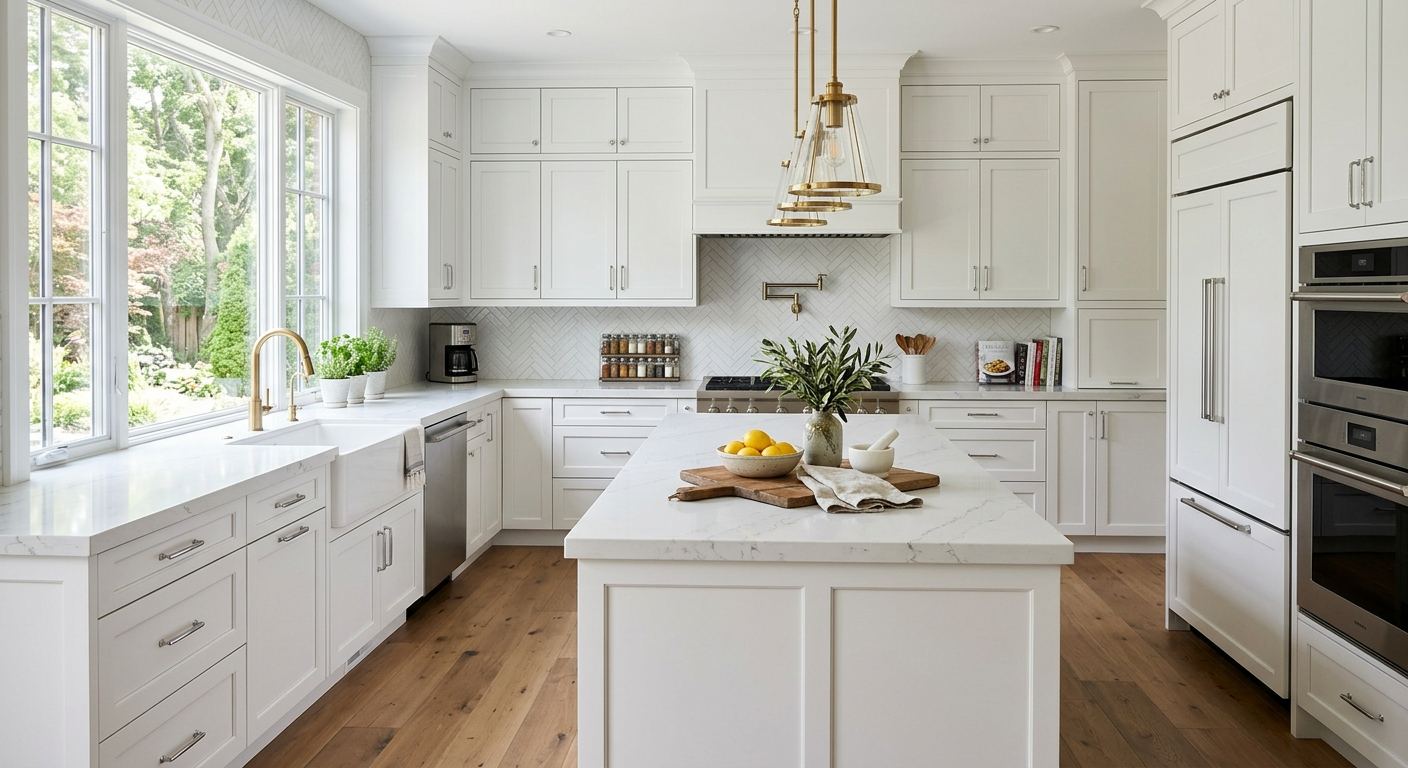
Kitchen renovation options and costs in Westwood Plateau
Westwood Plateau, British Columbia has a distinctive kitchen-renovation rhythm: lots of homeowners want a finish that feels “Vancouver-calibre,” but the final price depends far more on what tier you choose than on weather alone. In 2021, Westwood Plateau’s population sat at 19,776 (Statistics Canada, 2021 Census). That demand is supported by a Lower Mainland owner base that commonly expects longer-wearing surfaces and cabinetry that looks fitted rather than “boxy.” In the Lower Mainland–Southwest, contractor availability and scheduling also track how quickly trades get booked in Surrey, Burnaby, and nearby Burnaby Heights-style pockets—so timelines can swing when multiple larger projects overlap.
On costs, the Lower Mainland–Southwest typically prices kitchen work around expected resale value. Owners in higher-value micro-markets often gravitate toward semi-custom or custom cabinetry, quartz/stone counters, and design-led layouts, which pushes average totals toward the upper end of the full kitchen renovation band. A “refresh-only” scope still exists, but many homeowners treat it as a stepping stone: paint, hardware, and appliance swaps first—then plan the cabinet and countertop work once they’re ready. Climate plays a smaller role than many people assume in BC; the bigger practical impacts are indoor humidity swings and how quickly materials show wear in day-to-day cooking, especially around the sink and near external doors.
Because Westwood Plateau renovations commonly include cabinetry and surface changes (not just cosmetic updates), your best comparison starts with renovation tier, then narrows into cabinets, counters, and layout. Use the table below as a baseline for budgeting before you request itemised quotes.
| Renovation Tier |
What's Included |
Typical Duration |
Price Range |
| Cosmetic refresh (paint, hardware, new appliances only) |
Paint, new cabinet hardware/pulls, appliance swap (like-for-like), minor caulking, basic cleaning/tune-ups |
1–2 weeks |
$8,000–$25,000 |
| Mid-range full renovation (new cabinets, counters, sink, tile) |
Cabinet replacement, countertop installation, sink + tap, backsplash tile, flooring repair/replace as needed, standard electrical for lighting where applicable |
4–8 weeks |
$40,000–$80,000 |
| High-end full renovation (custom cabinets, stone counters, island) |
Custom/semi-custom millwork, quartz or natural stone counters, island build, upgraded backsplash (often to ceiling where designed), higher-end fixtures, more complex layout and lighting |
8–14 weeks |
$85,000–$120,000 |
| Cabinet refacing only (new doors + drawer fronts, same boxes) |
New door/drawer fronts, new hinges/soft-close hardware, fresh paint/finish, hardware install, limited touch-ups |
2–4 weeks |
$8,000–$30,000 |
| Countertop swap only (laminate to quartz or stone) |
Remove/replace countertop, new sink-to-counter integration where needed, standard edging and sealing as required |
1–3 weeks |
$3,000–$12,000 |
| Backsplash tile installation only |
Tile supply coordination, tear-out of existing surface if needed, tile install, grout/seal, finishing trims and sealing at edges |
3–7 days |
$1,500–$6,000 |
Prices are estimates only and vary by project scope, site access and material selection.
What affects the price of kitchen renovation in Westwood Plateau
For the same kitchen size, quotes can vary by 30–50% across the Lower Mainland–Southwest and other British Columbia markets because contractors price for finish expectations, labour availability, and how complex the installation becomes—not just because of climate. In Westwood Plateau and the broader Lower Mainland–Southwest, higher local home values and buyer expectations often pull projects toward quartz/stone counters and semi-custom cabinetry, which aligns with typical “full renovation” totals in the $40,000–$120,000 band. Meanwhile, if you’re keeping finishes more restrained (laminate counters, stock cabinets, minimal layout changes), budgets often stay closer to the lower end of that range or even shift into “refresh” territory.
The most unpredictable costs almost always come from layout changes: removing a wall, adding an island, moving a gas line, or relocating drain and supply lines. Even when materials are mid-range, the trades time and the amount of behind-the-wall work can move a project into a higher tier. For example, if you move plumbing to support a new island prep sink, you may see a meaningful jump in labour and materials compared to a countertop swap only (often $3,000–$12,000). On the other hand, upgrading surfaces without touching plumbing—like swapping laminate for quartz—can deliver a “whole kitchen” look while staying within a narrower budget band.
Two common Westwood Plateau examples: (1) older homes can require more demo and subfloor/flooring make-good around cabinet runs, which affects flooring and prep time; and (2) homes with tighter electrical routing (typical in many older Metro Vancouver builds) can increase costs when you add island power and under-cabinet lighting. In short, climate isn’t the driver—finish expectations and the complexity of moving services are.
| Price Factor |
Why It Matters |
Cost Impact |
| Cabinet tier — stock vs. semi-custom vs. fully custom millwork |
Custom and semi-custom increase fabrication time, fit/finish, and often require more site measurements and adjustments |
Can move a full renovation by roughly $15,000–$40,000 depending on scope |
| Countertop material — laminate vs. quartz vs. granite vs. stone |
Material cost and install complexity change; stone and some quartz profiles require more templating, handling, and seam planning |
Typically adds $2,000–$10,000+ over laminate for many Westwood Plateau kitchens |
| Layout change — wall removal, island add, plumbing/gas move |
Behind-the-wall work drives labour, inspection requirements, and schedule delays |
Often the biggest swing factor; can add $8,000–$30,000+ |
| Appliance package tier — builder vs. mid-range vs. pro-grade |
Pro-grade models can require more venting/clearances and have different power/connection requirements |
Can shift appliance line items by $1,500–$8,000+ and affect labour allowances |
| Flooring — refinish existing vs. full replacement |
Refinishing reduces demo and disposal, while replacements need underlay, transition trims, and moisture-safe detailing |
Usually $1,500–$6,000+ difference once you include prep and transitions |
| Backsplash — ceramic tile vs. marble vs. full-height slab |
Natural stone and slab systems require stricter substrate prep and more skilled finishing |
May add $800–$3,500 depending on area and material |
| Electrical — new circuits for island, under-cabinet lighting |
Electrical work changes inspection needs and can affect the rough-in timeline |
Often $1,000–$5,000+ depending on circuit count and lighting plan |
| Permit fees and licensed trade requirements |
Where permits apply, you add administrative steps plus coordinated inspections |
Can add $500–$3,000+ and extend timelines even if the actual build cost looks small |
Permits & regulations in British Columbia
In British Columbia, many “swap-in-place” kitchen changes are straightforward from a permitting standpoint. Cabinet and countertop replacements typically do not require permits because you’re not altering building services—no new drain/supply runs, no moving gas lines, and no electrical redistribution. Likewise, replacing fixtures like a sink and tap is usually treated as a service swap, not a major system relocation.
Where permits do become common is when you change the underlying systems. Moving plumbing supply or drain lines, relocating gas (including changes to how a gas stove or range works), removing a load-bearing wall, or adding electrical circuits (for example, new circuits feeding an island, or major lighting upgrades) usually requires permits and licensed trades. Gas work must be performed by a licensed gas fitter, and electrical work must be done by a licensed electrician; both require appropriate inspections.
For a homeowner in Westwood Plateau, verify before you sign: (1) ask for the contractor’s BC licence details and confirm they use licensed subs where required; (2) request a current certificate of insurance (liability) and, where applicable for the contractor’s workforce, proof that workers’ coverage obligations are in place (commonly documented via clearance letters); (3) check product warranties and installation responsibilities; and (4) confirm in writing who pulls permits and who is financially responsible if something isn’t approved.
Best practice: ensure permit responsibility, inspection scheduling, and any exclusions are clearly stated in your written contract—because “we’ll handle it” needs a paper trail.
Cabinets, countertops and layout decisions in Westwood Plateau
In Westwood Plateau, three decisions typically determine 80% of the cost and the “buyer appeal” of the finished kitchen: (1) cabinet tier (stock, semi-custom, or custom), (2) countertop material (laminate, quartz, granite, butcher block, or marble), and (3) whether you change layout (open-concept wall removal, island addition, or plumbing/gas relocation). Lower Mainland–Southwest resale expectations often favour clean lines, integrated hardware, and surfaces that look premium in photos and handle daily cooking. That’s why many renovations priced in the mid-range band focus on semi-custom cabinetry and quartz—while the top end trends toward custom millwork, stone counters, and islands.
Cabinet tier is mainly about fit and how quickly the job moves. Stock cabinets are typically the fastest path, but you may pay later in “fit compromises” if your kitchen has irregular walls or unusual angles. Semi-custom is the most popular balance: you get better sizing and more design flexibility without custom lead times. Custom cabinetry offers the tightest, most built-in look, but it’s where budgets can climb quickly, especially when you add an island and need more complex toe-kick and storage layouts.
Counter choice should match your maintenance tolerance. Laminate is cost-effective but can be more sensitive to impacts at seams; quartz is generally the practical sweet spot for durability and stain resistance. Granite and other natural stones are beautiful and durable, but sealing/maintenance considerations matter for homeowners who cook frequently and want minimal ongoing care.
Layout changes are justified when the space gain improves function: adding an island can create work zones, but relocating plumbing or gas is where costs jump. For example, if you’re already budgeting a full mid-range renovation around $40,000–$80,000, upgrading to a quartz countertop and keeping plumbing in place can deliver the “premium” look without the biggest labour swing. Trying to add a new island sink while also upgrading to custom millwork can easily push you toward the higher-end full renovation band ($85,000–$120,000).
| Option |
Durability |
Maintenance |
Best For |
Price Range |
| Stock cabinets (big-box) |
Solid for typical wear; durability depends on finish and door/hinge quality |
Low; occasional tightening and cleaning |
Fast turnarounds and practical budgets with a straightforward layout |
$10,000–$25,000 |
| Semi-custom cabinets (local dealer) |
Very good; improved fit and better hardware options (often soft-close) |
Low to moderate; keep hinges tuned and wipe surfaces properly |
Most Westwood Plateau mid-range renovations that aim for a tailored look |
$20,000–$45,000 |
| Custom cabinets (local millwork shop) |
Excellent; built around your exact wall conditions and storage needs |
Low; benefits from quality finishes and precise installation |
When resale appeal depends on “built-in” perfection (often with islands) |
$35,000–$70,000 |
| Laminate countertop |
Good for day-to-day cooking; seams and edges are the most vulnerable points |
Low; avoid prolonged moisture at seams and use cutting boards |
Budget-conscious refreshes and rentals/temporary timelines |
$3,000–$6,000 |
| Quartz engineered countertop |
Very durable; resistant to staining and scratching compared to many surfaces |
Low; routine cleaning with non-abrasive products |
Busy households wanting a premium look with minimal maintenance |
$6,000–$10,500 |
| Granite / natural stone countertop |
High; strong against heat and everyday impacts |
Moderate; periodic sealing and careful cleaning at natural stone pores |
Homeowners who want unique veining and a true natural look |
$7,000–$12,000 |
| Butcher block countertop |
Good; resilient with proper care but can mark if abused |
Moderate to high; oiling and drying practices matter |
Families who value warmth and are comfortable doing periodic maintenance |
$5,000–$9,000 |
| Marble countertop |
Beautiful but softer than quartz; can etch with acidic spills |
Moderate; requires attentive cleaning and sealing |
More design-led kitchens where spills are managed carefully |
$8,000–$12,500 |
How to choose a kitchen renovation contractor in Westwood Plateau
Choosing the right contractor in Westwood Plateau starts with proof, not promises. In British Columbia, you should confirm licensing for the trade work involved: gas-related tasks require a licensed gas fitter, and electrical requires a licensed electrician. For the contractor overseeing the renovation, ask for liability insurance and evidence of workers’ coverage where applicable (commonly shown via clearance letters or equivalent documentation). To check, you can look up licence details through provincial/regulatory sources where available, and you should be able to request updated certificate-of-insurance documents directly from the contractor.
Next, get 2–3 itemised written quotes. Itemised is critical: you want labour and materials broken out (cabinet supply vs. installation, countertop template and install, tile supply vs. labour, disposal, and any electrical allowances). Avoid quotes that are one lump sum without clarity, because kitchen scope creep most often comes from “minor” items that become major when you open walls—like subfloor repairs, shimming/levelling for cabinet runs, or changes to water lines.
Read the scope carefully for exclusions: is permit pulling included where needed, is drywall/paint included after rough-in, and is disposal and haul-away included? Warranty matters too. Confirm the workmanship warranty length (and what it covers), plus the manufacturer warranty for cabinets and countertops. Ask whether warranties are transferable to you as the homeowner (some product warranties require registration).
Payment schedule: don’t pay more than about 10–15% upfront. Use a holdback until completion (or until specific milestones like cabinet and counter installation are signed off). Finally, insist on a start date and a completion estimate in writing so you can plan around trade schedules in the Lower Mainland.
- Verify the contractor’s BC credentials and that required subs (gas/electrical) are licensed.
- Request a current certificate of liability insurance and confirm the effective dates.
- Ask for proof of workers’ coverage (clearance letter documentation, if applicable).
- Get at least 2–3 itemised quotes (labour + materials, not a single total).
- Confirm whether permits/inspections are included and who is responsible for them.
- In writing, define what’s included in demo, disposal, and site protection.
- Ask who repairs drywall/paint after plumbing/electrical rough-in.
- Confirm countertop templating lead times and whether your quote includes templating.
- Check warranty: workmanship duration, product warranty, and transferability.
- Use a milestone-based payment schedule; keep a holdback until final sign-off.
- Confirm protection for floors, stairs, and neighbouring rooms during construction.
- Ask for a realistic schedule with trade coordination points (cabinet install, counter install, final electrical).
Red flags I see in Westwood Plateau: contractors who won’t put permit responsibility in the contract, quotes with no line items for plumbing/electrical allowances, overly large upfront deposits, vague “allowances” that aren’t matched to real brands/materials, and no written warranty terms. If the documentation feels light, the risk is usually yours.
Frequently asked questions — kitchen renovation in Westwood Plateau
What is the difference between a galley and open-concept kitchen?
A galley kitchen is a corridor-style layout with counters along two parallel walls, often with a clear walkway in between. It typically keeps plumbing and exhaust connections compact, which can help control renovation scope—especially if you’re staying within a “refresh” or mid-range plan. An open-concept kitchen removes barriers (or redefines the space) so the kitchen blends into living/dining areas. In Westwood Plateau and the Lower Mainland–Southwest, open concepts are popular because they suit everyday hosting and resale buyer expectations, but they can raise costs when you remove a load-bearing wall or add electrical circuits for island lighting. If you need to move plumbing or gas to support the new layout, that’s where budgets can jump into the full renovation band (often around $40,000–$80,000 or more depending on finish tier).
How do I get accurate kitchen renovation quotes in Westwood Plateau?
Accurate quotes start with consistent scope. In Westwood Plateau, you’ll get more comparable bids when you provide the same base plan (dimensions, appliance list, and whether you’re changing layout). Ask for itemised written estimates that separate labour and materials: cabinet supply vs. installation, countertop templating and install, backsplash tile supply vs. labour, disposal/haul-away, and any electrical allowances. If your plan includes moving services (plumbing supply/drain or gas), confirm whether permits and licensed trades are included or excluded. Also ask about lead times—cabinets and counters often drive schedule. For a reference point, many homeowners keep within a limited scope like countertop swap only (commonly $3,000–$12,000) to reduce variables, then decide on cabinets later once product options are confirmed.
What's the best countertop material for a busy Westwood Plateau kitchen?
For most busy households in Westwood Plateau, quartz is the practical “best overall” choice: it’s generally durable, handles stains well, and needs routine cleaning without the regular sealing attention natural stones may require. If you cook often, quartz usually stays looking clean with less fuss around acidic spills than marble, and it resists normal scratches better than many softer surfaces. Laminate is the budget alternative, and it can work for a refresh when you’re keeping costs controlled, but seams and edges need careful handling. Natural granite is excellent for daily wear and unique appearance, while butcher block can be great if you’re comfortable with periodic oiling. If your renovation aims for a mid-range full build, the countertop portion is often a significant line item inside the broader $40,000–$80,000 project band.
How do I add an island to my Westwood Plateau kitchen?
Adding an island usually requires three checks: space clearance, cabinet/support planning, and service routing. First, confirm you can maintain comfortable walkways around the island—tight clearance creates bottlenecks even with a beautiful design. Second, decide how services (if any) will work: do you want an island cooktop, a sink, or just seating and prep space? If you move plumbing supply/drain to add a sink, or relocate gas for a cooktop, you’ll typically trigger permit and licensed-trade requirements in British Columbia, and inspections must be coordinated. For electrical, adding under-cabinet lighting or island power usually means electrical work by a licensed electrician. If you’d like an island but want to control costs, consider keeping plumbing/gas where they are and building the island as “prep + seating” initially—then upgrade later if needed.
How much does a kitchen renovation cost in Westwood Plateau?
Kitchen renovation costs in Westwood Plateau typically track the Lower Mainland–Southwest finish expectations more than climate. A cosmetic refresh (paint, hardware, and new appliances only) can land around the lower end of the budgeting spectrum. For a broader renovation with new cabinets, counters, a sink, and tile, many projects fall within the $40,000–$80,000 range. Higher-end builds with custom cabinets, stone counters, and an island often move toward $85,000–$120,000. If you want to budget more narrowly, scope-specific options like a countertop swap only are often around $3,000–$12,000, and backsplash tile installation only commonly lands around $1,500–$6,000. The biggest cost swings happen when layout changes require moving plumbing/gas or adding electrical circuits.
How long does a kitchen renovation take in Westwood Plateau?
Timelines depend on scope and lead times, not just labour capacity. A cosmetic refresh can often be done in about 1–2 weeks. A mid-range full renovation typically takes 4–8 weeks, assuming cabinets and countertops are ready and approvals/rough-ins happen smoothly. High-end custom work (especially with islands and more complex cabinetry) commonly runs 8–14 weeks. Countertops require templating and scheduling around installers, and cabinet lead times can stretch the critical path. If your plan includes plumbing/gas relocation or new electrical circuits, permit approvals and inspections can add days or even a couple of weeks, depending on scheduling. To keep your start and end dates realistic, ask contractors to provide a written timeline tied to key milestones (demo completion, rough-ins, cabinet install, countertop template/install, and final trim/cleanup).