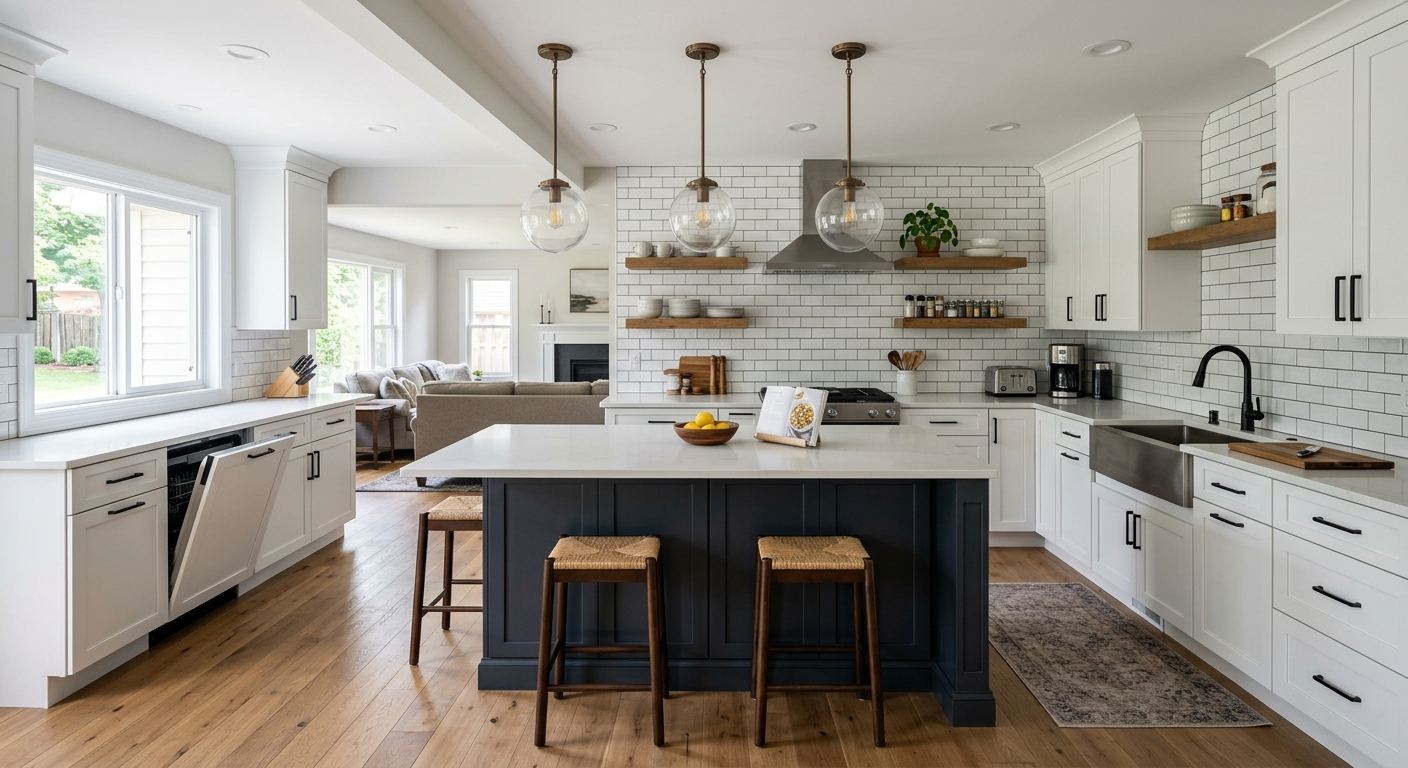
Kitchen renovation options and costs in Fairfield
Fairfield, British Columbia has a steady stream of homeowners updating older kitchens, and the choices you make usually matter more than the weather. With a population of 11,740 (Statistics Canada, 2021 Census), the local market is smaller than Vancouver proper, so contractors often prioritize projects with clear scopes—especially in neighbourhood pockets like Fairfield West where trades activity is consistently in demand. In the Lower Mainland–Southwest, kitchen pricing is driven more by the expected finish level and home value than by climate. That’s important because homeowners in higher-value pockets tend to choose semi-custom cabinetry, quartz or stone counters, and upgraded hardware, while more modest scopes still sell well when the layout is practical and the surfaces are fresh. Local expectations align with the broader Lower Mainland–Southwest trend: when the renovation cost can be recovered on resale, premium materials become the default.
Seasonality in the region is also a planning factor, even if it doesn’t directly “damage” cabinetry. Moisture swings from winter rains to spring drying can affect install schedules for flooring and tile, and it can slow down drying times for paint, patching, and mortar set-up. Labour availability can tighten during peak months as multiple homeowners pursue simultaneous renovations across the Lower Mainland–Southwest. That’s why the same kitchen can land as a $40,000–$120,000 full renovation range when you upgrade cabinetry and counters, or sit lower when you keep the boxwork and focus on appliances, paint, and hardware.
Use the tiers below to compare common scopes, then match a tier to your goals before you request quotes in Fairfield.
| Renovation Tier |
What's Included |
Typical Duration |
Price Range |
| Cosmetic refresh (paint, hardware, new appliances only) |
Cabinet and wall prep, paint (or glaze-style refinishing), new hardware, appliance swap, new sink taps, basic caulking and touch-ups (no cabinet box replacement) |
5–10 business days |
$8,000–$25,000 |
| Mid-range full renovation (new cabinets, counters, sink, tile) |
New semi-custom or quality stock cabinets, countertop replacement (quartz often), new sink/faucet, backsplash tile, flooring tie-ins, and standard plumbing/electrical hookups |
3–6 weeks |
$40,000–$85,000 |
| High-end full renovation (custom cabinets, stone counters, island) |
Fully custom millwork, premium stone (granite or higher-end engineered), island with upgraded lighting, full-height or designer backsplash, enhanced finishing details |
6–12 weeks |
$85,000–$120,000 |
| Cabinet refacing only (new doors + drawer fronts, same boxes) |
New door and drawer fronts, new veneer, trim and hardware upgrades, countertop and plumbing left in place unless you choose a later swap |
2–4 weeks |
$8,000–$40,000 |
| Countertop swap only (laminate to quartz or stone) |
Remove existing surface, fabricate and install new quartz/stone, re-seal and adjust sink cut-out as needed, basic backsplash edge refresh |
3–8 business days |
$3,000–$12,000 |
| Backsplash tile installation only |
Surface prep, tile supply (or allow for your selection), layout/installation, grout, sealing where required, finishing at counters and edges |
3–7 business days |
$1,500–$6,000 |
Prices are estimates only and vary by project scope, site access and material selection.
What affects the price of kitchen renovation in Fairfield
In Fairfield and across the Lower Mainland–Southwest, two homeowners can receive quotes for what looks like “the same kitchen” and still see 30–50% variation. The driver is usually not climate—it’s finish tier, home value expectations, and how much labour becomes hidden work once walls are opened. In higher-value Lower Mainland–Southwest pockets (and especially where resale buyers expect a more design-led look), owners often default to quartz or stone counters and semi-custom cabinetry because the added spend is more likely to feel “recoverable” on resale. In more modest markets, laminate and stock cabinets remain popular because they deliver a noticeable refresh at a lower cash-out rate.
Layout changes are where costs jump unpredictably regardless of materials. Removing a wall, adding an island, or moving a gas line or drain can trigger additional framing, subfloor work, venting changes, and permit steps. That risk is why the renovation range for a typical full project can swing from the $40,000–$120,000 band toward the higher end even when the finishes aren’t the most expensive. For example: (1) switching from laminate to quartz might add several thousand dollars, but relocating plumbing to free up an island circulation path can add far more because it affects drainage routing and trade scheduling; (2) upgrading cabinets while keeping the existing footprint is often a predictable mid-range move, while adding under-cabinet lighting can add labour and electrical detail even though material costs are relatively small.
In older Fairfield homes, the age of the framing and the condition of existing subfloor can also change labour needs. If the kitchen has older, uneven floors, you may need extra patching and self-levelling before tile or new counters install cleanly, which can push countertop and backsplash labour upward. In practice, whether you’re aiming for a mid-range full renovation or a cabinet-focused package, the quote typically reflects both the visible scope and the amount of “make-good” work uncovered during demo.
| Price Factor |
Why It Matters |
Cost Impact |
| Cabinet tier — stock vs. semi-custom vs. fully custom millwork |
Higher tiers use better materials, more options (sizes, heights, interior storage), and more precise fit work |
Often the biggest swing inside the $40,000–$120,000 full renovation range |
| Countertop material — laminate vs. quartz vs. granite vs. stone |
Material cost plus fabrication complexity; seams, thickness, and sink cut-outs affect labour |
Typical countertop installation band: $3,000–$12,000 depending on material |
| Layout change — wall removal, island add, plumbing/gas move |
Changes structural/framing and triggers new pathways for drain, vent, and often gas/electrical |
Can add major labour and permit costs even with basic finishes |
| Appliance package tier — builder vs. mid-range vs. pro-grade |
Cut-outs, specs, power needs, and installation complexity differ by tier and brand |
Ranges from modest to significant, especially when pro-grade requires electrical upgrades |
| Flooring — refinish existing vs. full replacement |
Tile/laminate underfoot changes can increase demo scope and level subfloor work |
Replacement usually increases time and labour; refinish reduces disruption |
| Backsplash — ceramic tile vs. marble vs. full-height slab |
Material hardness, edge details, and height scope change labour intensity |
Backsplash & tile band: $1,500–$6,000 |
| Electrical — new circuits for island, under-cabinet lighting |
New receptacles/lighting often require additional circuits, wiring runs, and inspection |
Can affect both labour and timeline |
| Permit fees and licensed trade requirements |
Moving gas, adding circuits, or altering load-bearing elements typically requires permits and licensed trades |
Adds administrative cost and can extend schedule |
Permits & regulations in British Columbia
In British Columbia, swapping cabinets and countertops by themselves generally doesn’t require a permit because you’re not altering a building system. If your plan is to replace existing countertop surfaces or refresh your cabinet look (for instance, refacing doors and drawer fronts or changing countertop material only), you typically avoid the permit pathway.
However, permits and licensed trades are commonly required when you change plumbing supply/drain routes, relocate a gas appliance or gas line, remove a load-bearing wall, or add/modify electrical circuits. Concrete examples that usually DO require permits include: moving a kitchen sink that changes drain routing; relocating a range/stove that involves gas supply work; adding a new electrical circuit or moving receptacles for an island; and removing or altering structural elements as part of an open-concept wall removal.
To verify a contractor in Fairfield, start with their British Columbia licence status for the trades they claim to do (especially electrical and gas). Then request a certificate of insurance and confirm they carry the right coverage for the work scope (liability and proof of coverage appropriate to the project). If your contractor or subcontractor is handling trades that require it, ask for documentation that shows coverage is active at the time of work—don’t accept “we’re insured” verbally. Finally, ask the contractor to clearly state in writing which permits they will pull (and which homeowner responsibilities exist, if any). Always confirm permit responsibility in the contract before deposits are finalized.
Cabinets, countertops and layout decisions in Fairfield
In a Fairfield kitchen renovation, three decisions usually determine 80% of your outcome: (1) cabinet tier, (2) countertop material, and (3) layout changes. Start with cabinets: stock cabinets are the fastest and cheapest option, semi-custom is the “most popular” mid-range choice because it offers better sizes and storage without custom lead times, and custom cabinets deliver the best fit for unusual rooms—often the most cost-intensive route. Next, decide on countertops. Laminate is budget-friendly and can look excellent with modern profiles, but it’s more sensitive to cuts and heat. Quartz offers the strongest everyday durability-to-maintenance balance for busy households in the Lower Mainland–Southwest. Granite/stone looks premium and handles wear well, but it can involve more care (sealing) and typically costs more. Butcher block is warmer and repairable, yet it demands ongoing maintenance and thoughtful placement.
Finally, evaluate layout changes. Open-concept wall removal or adding an island can create real value in how the space functions, but the cost is easiest to justify when the change improves traffic flow and usable counter space—not just aesthetics. If you’re moving plumbing/gas to unlock an island, you’re paying for routing, trade scheduling, and often permit steps; that’s when the renovation tends to climb toward the higher end of the $40,000–$120,000 band.
Dollar example: upgrading from laminate to quartz alone commonly lands in the countertop swap band of $3,000–$12,000, and it’s often a worthwhile “high impact” upgrade. By contrast, adding an island and relocating plumbing can multiply labour needs because it affects drainage and underfloor work—so the same visual goal costs far more. In Fairfield’s home stock—where older foundations and floors are sometimes uneven—plan on modest extra prep if tile or counters need level corrections.
| Option |
Durability |
Maintenance |
Best For |
Price Range |
| Stock cabinets (big-box) |
Good for everyday use; limited size flexibility |
Low; standard cleaning |
Fast timelines and tighter budgets |
$8,000–$25,000 |
| Semi-custom cabinets (local dealer) |
Very solid; improved materials and interior options |
Low; depends on finish type |
Most Fairfield mid-range remodels |
$15,000–$50,000 |
| Custom cabinets (local millwork shop) |
Excellent; best fit for irregular spaces |
Low; higher-quality finishes |
Design-led layouts and maximizing storage |
$30,000–$80,000 |
| Laminate countertop |
Moderate; can scratch and scorch if misused |
Easy daily cleaning; protect edges and heat |
Budget refreshes and rentals |
$3,000–$6,000 |
| Quartz engineered countertop |
High; resistant to stains and everyday wear |
Low; wipe-and-go routine |
Busy households and resale-friendly finishes |
$6,000–$10,000 |
| Granite / natural stone countertop |
Very high; natural durability |
Moderate; periodic sealing may be required |
Premium look and long-term wear |
$8,000–$12,000 |
| Butcher block countertop |
Moderate to high; durable but can mark |
Higher; oils/maintenance to prevent drying |
Warm, traditional style and touch-up capability |
$4,000–$9,000 |
| Marble countertop |
High but softer than quartz; shows wear faster |
Higher; staining risk and careful cleaning |
Statement kitchens where you accept patina |
$9,000–$14,000 |
How to choose a kitchen renovation contractor in Fairfield
Choosing the right contractor in Fairfield starts with proof, not promises. For British Columbia work, verify the contractor’s applicable licensing for the trades they’ll perform directly and ensure subcontractors are properly licensed where required. Ask for liability insurance documentation and confirm coverage is active for the project period; for trade work, you should also have clear paperwork showing coverage appropriate to the tasks being completed. If something is unclear, request clarification before signing anything—your contract should align with the scope and the coverage you’re being sold.
Next, get 2–3 itemised written quotes instead of one lump sum. Your quote should break down labour and materials (cabinet supply, countertop fabrication/installation, tile, disposal, electrical/plumbing line items where applicable). Pay attention to what’s excluded: permit pull responsibilities, demolition disposal, subfloor prep, patching/leveling, and any allowances for flooring tie-in or drywall repairs. Warranty matters too—ask for the workmanship warranty length and whether it is transferable if you sell your home. Product warranties typically come from the manufacturer for cabinets and countertops, while workmanship covers installation.
For payments, use a sensible schedule: never pay more than 10–15% upfront, and keep a holdback until key milestones are complete. Confirm the timeline with a start date and a completion estimate in writing, and make sure the plan accounts for material lead times common to cabinets and stone.
- Request BC trade licensing details for any electrical, gas, or structural-related work.
- Get a certificate of insurance and verify coverage dates match your project schedule.
- Ask whether disposal (dumpsters/haul-away) is included, and for how it’s managed.
- Ensure the quote is itemised: cabinets, counters, tile, plumbing/electrical allowances, labour, and prep work.
- Confirm permit responsibility in the contract if you’re adding circuits, moving plumbing/gas, or changing structure.
- Review warranty terms: workmanship length, exclusions, and whether it transfers to future owners.
- Check who supplies materials versus who selects; avoid vague “allowance” language without amounts.
- Confirm lead times for cabinets and stone fabrication and how delays are handled.
- Verify under-cabinet lighting and electrical details are specified (quantity, locations, switch type).
- Ask how they handle patching and drywall finishing after demo to keep schedules realistic.
- Ensure the work plan includes site protection (dust control, drop sheets, floor protection).
- Use milestone-based payments and retain a holdback until walkthrough and punch-list completion.
Red flags in Fairfield: (1) quotes that don’t list allowances or list “allowances” too low for quartz/stone and quality cabinets; (2) refusal to put permit responsibility and licensed-trade requirements in writing; (3) large upfront payments (well beyond 10–15%); (4) vague timelines with no material lead-time plan; and (5) no clear workmanship warranty terms.
Frequently asked questions — kitchen renovation in Fairfield
Should I reface or replace my cabinets?
If your existing cabinet boxes are solid (level floors, good box attachment, and no major water damage), refacing can be a smart Fairfield option because you keep the structure and refresh the look. Cabinet refacing typically sits in the $8,000–$50,000 band depending on door styles, hardware, and how much repair/trim work is needed. Replace the cabinets if your boxes are warped, the layout feels inefficient, or you want major storage changes (pull-outs, corner solutions, deeper drawers) that may require new framing. In the Lower Mainland–Southwest, many homeowners choose semi-custom replacement when resale buyers will notice storage and finish consistency, while others reface to control cost and still update hardware, paint, and doors. A good contractor will advise after a walkthrough and measurement with moisture/water checks.
Do I need a permit for a kitchen renovation in British Columbia?
In British Columbia, a simple cabinet and countertop swap typically doesn’t require a permit. But Fairfield homeowners should expect permits and licensed trades when you change plumbing routes or relocate gas, alter load-bearing walls, or add new electrical circuits—especially for island receptacles and under-cabinet lighting. For example, moving a sink that changes drain routing or relocating a stove for a new layout usually crosses into permit territory. If the renovation is a “refresh” (paint, hardware, and appliance swaps without altering building systems), it’s usually more straightforward. Always confirm with your contractor before signing because permit responsibility must be clear in the written contract, and the permit steps can also affect the timeline.
What's the ROI on a kitchen renovation?
ROI depends heavily on what you change. In Fairfield and the wider Lower Mainland–Southwest, kitchens tend to influence buyer perception, but the strongest “value” comes from practical upgrades that match what resale buyers expect—clean cabinetry lines, durable counters, and a functional layout. If you stay within a mid-range full renovation scope (often $40,000–$85,000), you’re more likely to avoid over-improving compared to similar homes, especially if you choose durable finishes like quartz. Premium custom builds can be beautiful, but the ROI can be harder to maximize if the rest of the home isn’t updated to match. Your contractor can help you calibrate the tier by comparing your planned cabinet and countertop choices to the expected finish level in your neighbourhood and price point—without guessing.
How do I budget for a kitchen renovation?
Budgeting starts with choosing a tier that matches your goals. If you’re keeping the layout and focusing on surfaces and appliances, your budget may align with a cosmetic refresh or a cabinet/countertop-focused upgrade. If you’re doing a full renovation, remember the typical Fairfield range of $40,000–$120,000 for complete kitchen remodels in this tier. Build your budget with categories: cabinets, countertops, backsplash tile, flooring tie-ins, plumbing/electrical allowances, and demo/disposal. Also include a realistic contingency for older home conditions—uneven floors, patching needs, or hidden water damage. Quotes should be itemised so you can compare apples-to-apples and see where cost moves—cabinet tier, countertop material, and layout changes—rather than relying on a single lump-sum number.
Can I move my kitchen sink or stove?
Yes, you can move a kitchen sink or stove, but in Fairfield and across British Columbia it’s not just a “construction” decision—it’s plumbing/gas/electrical scope. Moving a sink typically changes drain routing and venting details, which often triggers permits and requires qualified plumbing work. Relocating a stove for a new layout can involve gas supply considerations; gas-related work must be done by a licensed gas fitter, and inspections may be required. The upside is a better layout (like freeing counter space or enabling an island), but the downside is timeline and cost unpredictability compared to keeping plumbing in place. If you want to control budget, ask your contractor for an option that keeps plumbing/gas where possible and adjusts only cabinet arrangement and countertop dimensions.
What's the most cost-effective kitchen upgrade?
The most cost-effective upgrade depends on your starting point, but in Fairfield kitchens the best “bang for buck” is often a countertop and hardware/finishes refresh—especially when cabinets are still structurally sound. A countertop swap alone commonly falls in the $3,000–$12,000 band and can instantly modernize the look without the disruption of full cabinet removal. If you’re keeping your cabinet boxes, refacing plus new hardware is another efficient path, typically within the $8,000–$50,000 range depending on door style and trim repairs. If your goal is the biggest visual change with the least demolition, backsplash tile installation is also a popular add-on. The “most cost-effective” option is usually the one that avoids layout changes (plumbing/gas/electrical moves), because that’s where the unpredictable costs and permit steps tend to start.