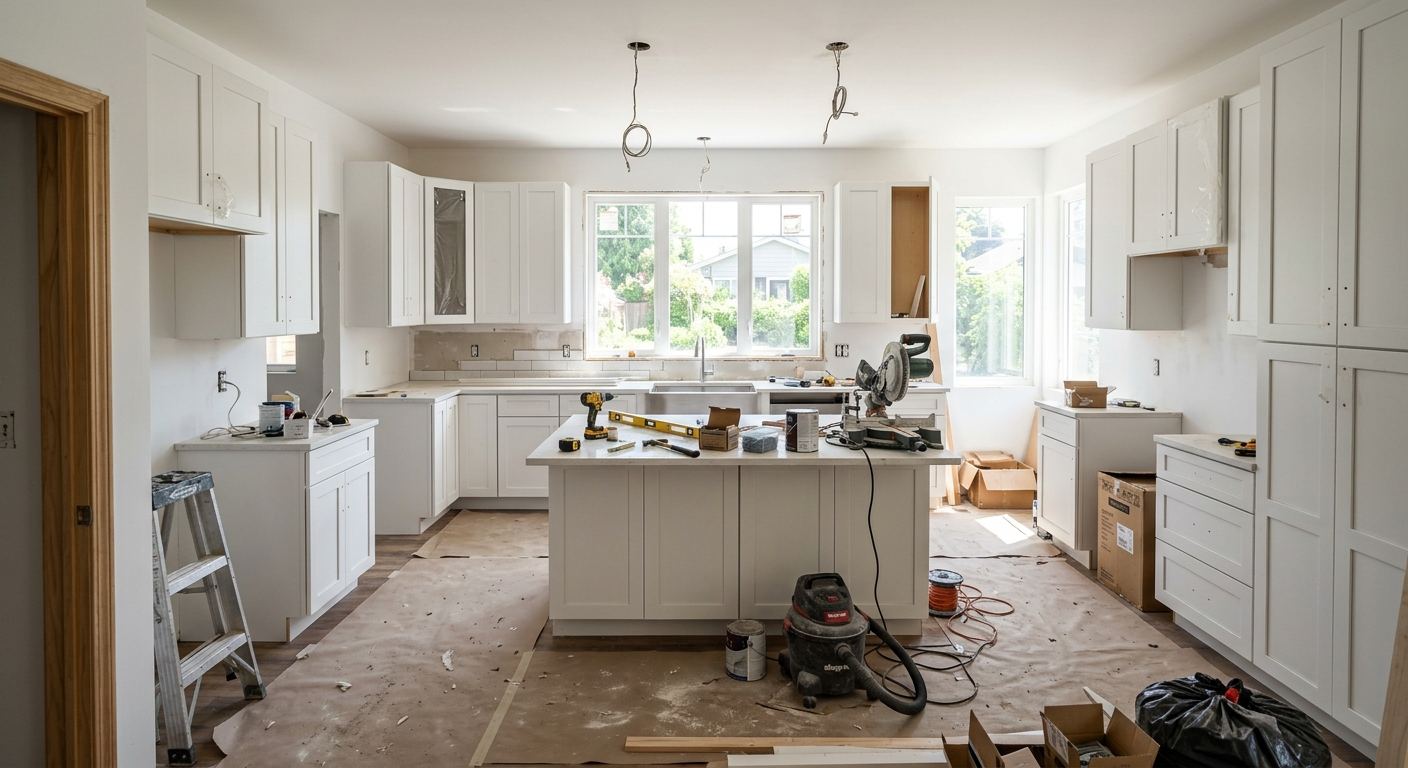
Kitchen renovation options and costs in Canyon Springs
Canyon Springs kitchen renovations are often less about the weather and more about what buyers expect when they walk into a home. With a city population of 7,528 (Statistics Canada, 2021 Census), most work is driven by owner-occupiers and family upgraders, not quick-flip rehabs. In the Lower Mainland–Southwest, the cost gap between “same-size” kitchens is usually tied to local income and home value expectations, which tends to pull homeowners toward more durable surfaces and better-fitting cabinetry rather than the cheapest possible refresh. In practice, that means two neighbours can price very differently: one may keep the footprint and go quartz, while the other rebuilds the cabinetry base for better storage and resale-ready finishes.
Because the Lower Mainland–Southwest market skews higher in finish expectations than many other parts of British Columbia, you’ll see contractors prioritizing semi-custom cabinetry packages and quartz/stone counters, even when a full custom look isn’t chosen. Climate still matters: the region’s damp marine conditions and frequent temperature swings make it especially important to seal/vent properly (especially around sinks and dishwashers) and to choose materials that won’t swell or delaminate over time. Contractor availability is also stronger during peak spring scheduling in metro-adjacent areas, so booking early can protect your schedule and reduce overtime premiums.
In Canyon Springs, demand is especially noticeable around the newer residential clusters and the broader Surrey–Southwest commuter corridor feel—projects get scheduled tightly once permit and cabinet lead times lock in. Below are typical renovation tiers to help you compare quotes before you compare contractors.
| Renovation Tier |
What's Included |
Typical Duration |
Price Range |
| Cosmetic refresh (paint, hardware, new appliances only) |
Paint, new cabinet hardware, appliance swap (like-for-like), minor caulking/touch-ups, basic countertop polishing if applicable |
3–7 days |
$8,000–$22,000 |
| Mid-range full renovation (new cabinets, counters, sink, tile) |
New semi-custom cabinets, new counters, sink and faucet, backsplash tile, flooring patching/repair, standard plumbing connection, labour + typical site disposal |
3–6 weeks |
$40,000–$85,000 |
| High-end full renovation (custom cabinets, stone counters, island) |
Fully custom millwork, stone counters (often quartz/stone slabs), island with upgraded cabinetry, extended backsplash, upgraded hardware, electrical for island lighting, coordination of multiple trades |
6–12 weeks |
$85,000–$120,000 |
| Cabinet refacing only (new doors + drawer fronts, same boxes) |
Replace doors/drawer fronts, reface veneer panels, new pulls/hinges, refinishing/repair of cabinet boxes if sound, labour + materials for refacing |
1–3 weeks |
$8,000–$35,000 |
| Countertop swap only (laminate to quartz or stone) |
Remove old top (and backsplash where required), template and install new countertop, sink cut-out adjustments, sealant and basic cleanup |
5–15 business days |
$3,000–$12,000 |
| Backsplash tile installation only |
Tile supply allowance, prep of wall surface, mortar/setting, grout/seal where applicable, edging and caulking details |
3–7 days |
$1,500–$6,000 |
Prices are estimates only and vary by project scope, site access and material selection.
What affects the price of kitchen renovation in Canyon Springs
In the Lower Mainland–Southwest, it’s common to see the same basic kitchen idea quoted 30–50% apart across British Columbia. The reason is rarely “labour costs alone.” Local home values and typical household income expectations push the market toward higher-finish tiers—quartz or stone counters, semi-custom cabinetry, upgraded hardware—because owners can justify the spend on resale. Where the market is more price-sensitive, laminate and stock cabinets are often chosen to protect ROI. In Canyon Springs specifically, the damp coastal air doesn’t usually change labour pricing directly, but it does influence material choices and installation standards (proper sealing, ventilation, and moisture-tolerant finishes). That can add cost up front, but it reduces costly repairs later.
Local examples I see often: (1) older homes with less modern electrical capacity may require additional circuits for under-cabinet lighting and island outlets, even when the homeowner thinks they’re only “replacing cabinets.” That can push a backsplash/tile-only plan into a larger electrical scope. (2) if the kitchen has swelling-prone particleboard areas near the sink, replacing doors may not be enough—refacing can turn into partial box replacement. (3) for layout changes, moving a gas line, rerouting drains, or adding a new island bar changes the unpredictability more than the countertop choice. Even a mid-range scope (often $40,000–$85,000) can jump when plumbing/gas and electrical must be opened up.
On the higher end, a stone-focused rebuild (commonly $85,000–$120,000) usually costs more because custom-fit cabinetry and island electrical/lighting aren’t “add-ons”—they require coordination and longer lead times. In short: finish tier affects pricing, but plumbing/gas and layout decisions are what most often break budgets.
| Price Factor |
Why It Matters |
Cost Impact |
| Cabinet tier — stock vs. semi-custom vs. fully custom millwork |
Materials, door/drawer construction, fit/finish, and whether you’re using made-to-measure dimensions |
Can swing total cabinet costs by tens of thousands; typically the biggest controllable driver after layout |
| Countertop material — laminate vs. quartz vs. granite vs. stone |
Slab sourcing, fabrication complexity, seam layout, weight/handling, and hardness for daily use |
Laminate can be fastest/cheapest; quartz/stone adds both material and labour coordination |
| Layout change — wall removal, island add, plumbing/gas move |
Creates new framing/finishing, new load paths, and adds trades and inspection steps |
Often the most unpredictable cost, regardless of finish tier |
| Appliance package tier — builder vs. mid-range vs. pro-grade |
Ventilation requirements, cut-out accuracy, electrical hookups and long-lead availability |
Premium appliances can add thousands and delay scheduling if backordered |
| Flooring — refinish existing vs. full replacement |
Subfloor condition, moisture tolerance, and whether the kitchen is being opened up |
Spot repairs can cost more than expected if the finish can’t be matched |
| Backsplash — ceramic tile vs. marble vs. full-height slab |
Material weight, pattern matching, and whether the job needs extra surface preparation |
Full-height and natural stone can raise both labour time and material waste |
| Electrical — new circuits for island, under-cabinet lighting |
Safety requirements, code-compliant circuiting, and coordination with cabinet install |
Frequently adds a separate trade visit and changes rough-in timing |
| Permit fees and licensed trade requirements |
When permitted work is required, inspections and documentation add admin time |
Often manageable but can affect schedule; costs vary by scope and what must be permitted |
Permits & regulations in British Columbia
In British Columbia, a simple cabinet or countertop swap typically does not require a permit, especially when you’re keeping plumbing/gas/electrical connections in the same locations. That means replacing countertops, installing new cabinet boxes, swapping cabinet doors, or updating a backsplash with no service relocation is usually straightforward from a permitting perspective. However, once you start changing “services,” the permit world changes: moving plumbing supply lines or drain lines, relocating a gas stove/range, altering a gas-fired range setup, removing a load-bearing wall, or adding new electrical circuits (for an island, new outlets, or new lighting circuits) generally requires permits and licensed trades.
Here’s how I recommend a Canyon Springs homeowner verify everything before work starts. Step one: ask the contractor which exact items are permitted and who will pull the permit (and confirm it in writing). Step two: verify the gas work is done by a licensed gas fitter when gas is involved—don’t accept “our plumber can handle it.” Step three: verify the electrical work is completed by a licensed electrician when new circuits or panel changes are required.
Step four: request a certificate of insurance for liability coverage and confirm coverage is active for the project date range. Step five: ask how workers’ compensation coverage is handled (commonly through WCB coverage documentation). Then, step six: check licence status using the relevant provincial online registries, and ensure the clearance letter (when applicable) is current. Clear contracts and proper documentation are the difference between a smooth remodel and a dispute later.
Cabinets, countertops and layout decisions in Canyon Springs
If you want the biggest impact per dollar in Canyon Springs, focus on three decisions: cabinet tier, countertop material, and whether you’ll change the layout. Cabinet choice drives longevity and daily usability. Stock cabinets are fastest and cheapest because they come in standard sizes; semi-custom is the most popular mid-range route because it’s easier to fit odd corners while staying reasonable on cost; custom cabinets maximize fit and storage but require a longer lead time and a higher budget.
Countertops are where Canyon Springs homeowners often feel the “market premium.” Quartz engineered countertops are a common sweet spot in the Lower Mainland–Southwest: they handle normal kitchen heat/cold swings well, resist staining better than many natural options, and are consistent in appearance. Laminate is the budget lever and can work well for a short-horizon refresh. Natural stone (granite/other stone) looks premium and can be very durable, but it demands careful sealing/maintenance and fabrication considerations. With marine humidity and occasional moisture exposure near sinks, installation quality and sealing details matter—especially with cut-outs and seams.
Layout changes are the wildcard. Removing a wall or adding an island can be worth it because you gain function and storage where families actually live—yet it’s also where costs can jump quickly due to plumbing/gas relocation and electrical rough-ins. For example, adding an island that requires moving plumbing and creating a proper vent/routing path can push a project far beyond a simple cabinet/counter refresh; sometimes it’s smarter to keep the footprint and spend the savings on upgraded cabinetry. At the same time, if your current layout creates awkward circulation, paying the layout premium can be justified—buyers notice flow immediately.
As a rough guide to the justification: upgrading a standard mid-range kitchen (often landing in $40,000–$85,000) to semi-custom cabinets plus quartz can be a meaningful step up without the same risk as relocating services. Going to a full stone-and-island rebuild (often $85,000–$120,000) is where custom cabinetry and island electrical/lighting typically “earn” their cost.
| Option |
Durability |
Maintenance |
Best For |
Price Range |
| Stock cabinets (big-box) |
Good for standard sizes; durability depends on box construction and finish quality |
Basic cleaning; keep an eye on humidity near sink |
Fast timelines and budget-friendly refreshes |
$12,000–$25,000 |
| Semi-custom cabinets (local dealer) |
Better fit and upgraded door/drawer options; strong day-to-day wear performance |
Low; wipe clean and maintain seals around moisture-prone areas |
Most Canyon Springs homeowners aiming for resale-ready storage |
$25,000–$50,000 |
| Custom cabinets (local millwork shop) |
Highest fit quality; excellent for awkward layouts and premium hardware |
Low to moderate; stable build helps reduce long-term warping risk |
Maximizing storage and design alignment for open-concept homes |
$50,000–$90,000 |
| Laminate countertop |
Solid for everyday use but more sensitive to edge damage and heat over time |
Low, but repair chips quickly; protect seams and edges |
Cost-conscious refreshes where you keep the footprint |
$3,000–$6,500 |
| Quartz engineered countertop |
High durability and consistent performance; resists staining and everyday wear |
Very low; wipe clean, avoid cutting directly on surfaces |
Balanced “premium look” with practical maintenance for busy households |
$6,500–$12,000 |
| Granite / natural stone countertop |
Very durable; performance depends on stone type and finish |
Moderate—may require periodic sealing and careful seam design |
Premium natural look for homeowners willing to maintain |
$8,000–$14,000 |
| Butcher block countertop |
Durable with proper care; can dent if mishandled |
Moderate—oil/seasoning and prompt wipe-dry to manage moisture |
Warm, traditional kitchens and homeowners who like maintenance routines |
$5,000–$10,000 |
| Marble countertop |
Luxury look; softer than many stones and more prone to etching/staining |
Higher maintenance—requires sealing and more careful cleaning |
Design-first kitchens where you protect surfaces |
$10,000–$18,000 |
How to choose a kitchen renovation contractor in Canyon Springs
Choosing the right contractor matters more in Canyon Springs than almost anywhere, because lead times for cabinetry and countertops can compress schedules quickly. Start with British Columbia licensing and coverage. Ask for the contractor’s licence information (and confirm it matches the trades performing the work), a liability insurance certificate, and proof workers’ compensation coverage. To check: (1) look up contractor licence status in the appropriate provincial online registry, (2) review the certificate of insurance to confirm it’s active and lists the right entity, and (3) request confirmation of workers’ compensation coverage documentation for the team working in your home.
Next, get 2–3 itemised written quotes. “Itemised” means labour and materials are broken out (cabinet supply, cabinet install labour, countertop fabrication and install, tile setting labour, disposal, electrical/plumbing trade allowances). Avoid lump sums that don’t state what happens when an unforeseen condition appears. Read the scope carefully for inclusions and exclusions: is permit pulling included if required, is debris removal included, and is your disposal covered or does it come from your pocket? Warranty also needs clarity—ask for the workmanship warranty length and whether it’s transferable if you sell. Confirm product/manufacturer warranties separately for cabinets, countertops, and appliances.
Payment schedule should protect you: never pay more than 10–15% upfront. Use a holdback until key milestones are complete, especially after cabinet install, countertop install, and final electrical/plumbing checks. Finally, insist on a written start date and completion estimate tied to lead times so you’re not guessing.
- Confirm BC licence/registration relevant to the trades performing the work
- Request liability insurance certificate and verify dates match your project
- Ask for workers’ compensation/WCB coverage documentation for crew
- Get 2–3 itemised quotes with labour + material breakdowns
- Ensure permits and licensed trade work are clearly listed (and who pulls permits)
- Clarify exclusions: subfloor repairs, mould remediation, drywall replacement, and why they may be billed separately
- Confirm disposal is included (dump fees and load-out), not just “general cleanup”
- Verify cabinet lead time and how the schedule adjusts if delivery slips
- Ask for countertop template date and fabrication/installation timeline
- Review the warranty: workmanship length, product warranty, and transferability
- Use a payment plan with 10–15% max deposit and milestone-based progress
- Put start/completion dates in writing and include a change-order process
Red flags I see in Canyon Springs: quotes that are all “one number” with no itemisation, contractors who won’t confirm whether permits are required in writing, vague warranty terms (especially no workmanship coverage), asking for large upfront payments, and schedules that ignore cabinet/countertop lead times or provide no written timeline.
Frequently asked questions — kitchen renovation in Canyon Springs
Quartz vs granite countertops — which is better?
In British Columbia, both quartz and granite are strong performers, but they feel different day-to-day. Quartz is engineered for consistency: it resists staining well and typically needs less ongoing maintenance than natural stone, which matters in Canyon Springs where moisture exposure around the sink is a real-world factor. Granite is naturally beautiful and very durable, but it may require periodic sealing and thoughtful seam placement; maintenance depends on the specific stone. If you’re budgeting for a targeted upgrade, countertop-only swaps often sit in the $3,000–$12,000 range, and quartz usually fits predictably within that band. If you’re considering a full rebuild, stone counters and premium fabrication often align with mid-range to high-end totals.
Should I reface or replace my cabinets?
Refacing can be the right move when your cabinet boxes are structurally sound: no swelling near the sink, no significant sagging, and the layout still works. If your current boxes are damaged by moisture or your kitchen has out-of-date dimensions that limit storage, replacement usually delivers better long-term value. In Canyon Springs, many homeowners choose reface first to control cost and dust disruption, especially if appliances and counters are staying. Cabinet refacing projects commonly fall in the $8,000–$35,000 range, while a mid-range full renovation that includes new cabinets and counters is often far higher (commonly within $40,000–$85,000). A good contractor will assess the boxes and show you what’s worth saving, rather than pushing refacing as the default.
Do I need a permit for a kitchen renovation in British Columbia?
Often, you do not need a permit for simple cosmetic work in British Columbia—like painting cabinets, swapping appliances, replacing countertops, or installing backsplash tile—when you’re not changing plumbing, gas, electrical circuits, or structural walls. However, permits are typically required when you move plumbing supply or drain lines, relocate gas appliances (including gas stove/range setups), remove a load-bearing wall, or add new electrical circuits (for example, island outlets or new lighting circuits). In Canyon Springs, I recommend you confirm scope in the written contract: ask whether the contractor will pull permits and which licensed trades are involved. If gas work or new electrical circuits are planned, make sure the contractor identifies the licensed trades and inspection steps upfront.
What's the ROI on a kitchen renovation?
ROI depends on the market and finish tier, and in the Lower Mainland–Southwest it’s strongly tied to buyer expectations at resale rather than climate alone. Homes here often justify durable, modern finishes—quartz/stone counters, solid cabinet construction, and upgraded hardware—because they photograph well and hold up to everyday wear. That said, ROI can drop if you overspend on premium upgrades that don’t match the home’s overall price point or layout practicality. A practical approach is to match your spend to your intent: if you’re staying 5+ years, investing in layout and cabinetry can pay off in comfort even beyond resale. If you’re updating for resale, a mid-range renovation that lands around $40,000–$85,000 can be a strong balance, while more extensive island/custom upgrades often push into $85,000–$120,000 territory where the buyer pool expects premium finishes.
How do I budget for a kitchen renovation?
Budgeting starts with choosing a renovation tier and protecting a contingency. In Canyon Springs and across British Columbia’s Lower Mainland–Southwest, the same kitchen concept can come back 30–50% different based on cabinetry tier, countertop material, and whether plumbing/gas/electrical are relocated. Use the price bands as a guide: cosmetic refreshes typically sit lower, while mid-range full renovations often land around $40,000–$85,000. High-end builds with custom millwork and island upgrades often range around $85,000–$120,000. I also recommend setting aside contingency for hidden conditions, especially in older kitchens: water damage near the sink, outdated wiring, and subfloor unevenness can add unexpected labour. Finally, insist on itemised quotes so you know what’s included (permits, disposal, and electrical/plumbing trade allowances).
Can I move my kitchen sink or stove?
Yes, you can move a sink or stove in British Columbia, but it’s exactly the kind of change that affects cost and scheduling. Moving a sink generally means changes to plumbing supply and drain routing, which can require permits and licensed plumbing work. Moving a stove can involve gas relocation if you currently have a gas range, meaning a licensed gas fitter and associated permit/inspection steps. In Canyon Springs, it’s also important to plan for cabinet framing, venting, and electrical needs for new lighting or outlets near the island. If you’re on a tighter budget, a sensible strategy is to keep services where possible and upgrade cabinets and countertops within the $40,000–$85,000 mid-range band. If you truly need the space gain, be ready for the unpredictability that comes with opening walls and rerouting services.