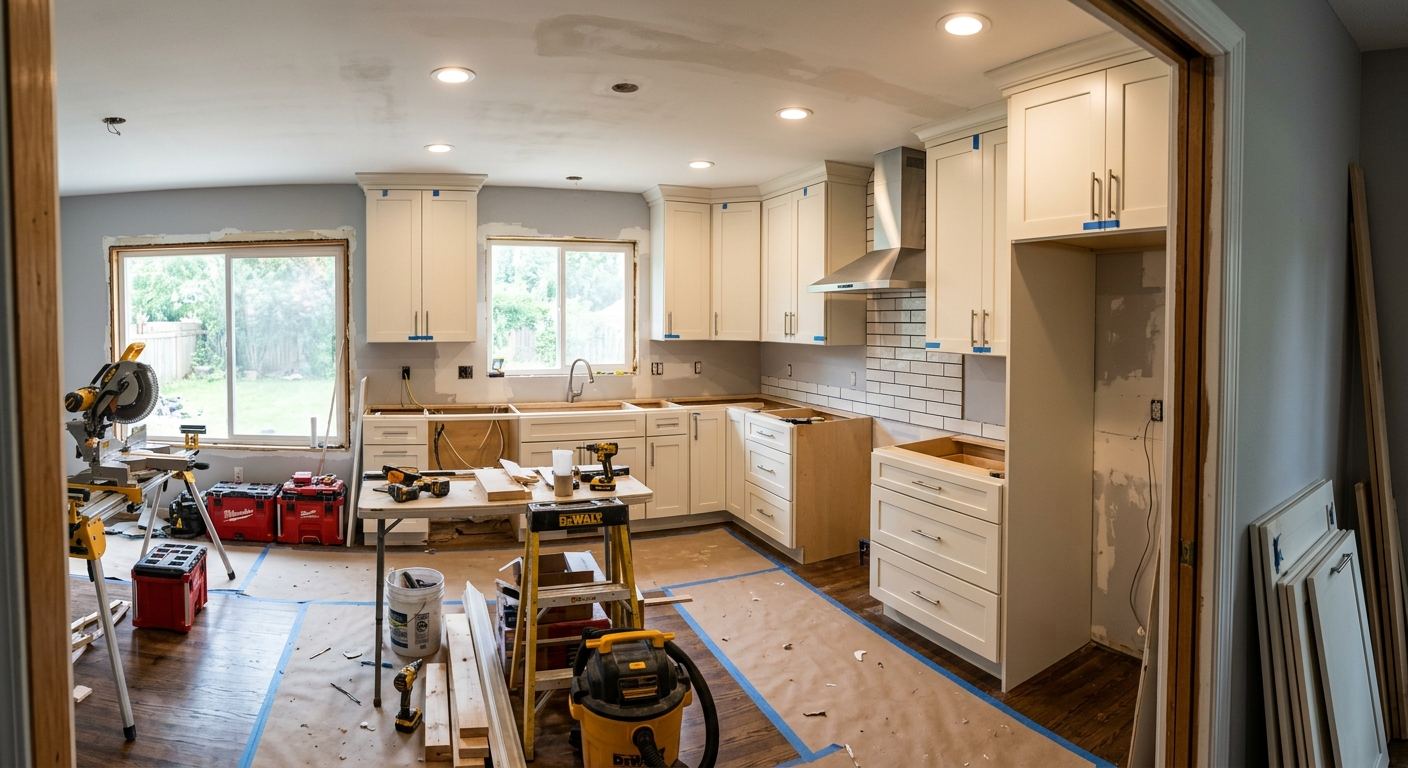
Kitchen renovation options and costs in Dundarave
Dundarave homeowners usually start their kitchen renovation by deciding how big a change they want—because in this part of Metro Vancouver, kitchens are a visible “value signal” in the home. With a population of 5,350 (Statistics Canada, 2021 Census), the local market is smaller and renovation crews tend to time projects tightly around availability. In the Lower Mainland–Southwest, pricing is driven more by expected finish level tied to home values and household incomes than by temperature or precipitation. That means two identical kitchens can price very differently depending on whether the upgrade is treated like a refresh or a full rebuild.
Even though British Columbia’s coastal climate brings moisture and salt-air conditions, most kitchen cost swings come from cabinetry scope, counter upgrades, and how much layout work is being done. Contractors in Dundarave often see extra demand in the West Vancouver–adjacent corridor where clients expect design-led results; that’s where semi-custom cabinetry and stone counters are most common. Labour and scheduling can also be impacted by winter slowdowns followed by spring and summer backlogs—so getting a detailed plan early helps avoid premium rush pricing.
If you’re comparing options, it’s helpful to anchor the conversation to realistic project bands. For example, a cosmetic refresh typically stays below the mid-range full renovation costs, while a high-end rebuild using custom millwork and stone counters quickly moves toward the top end of the full renovation range. Use the table below to map a scope to typical duration and budget so you can compare quotes apples-to-apples.
| Renovation Tier |
What's Included |
Typical Duration |
Price Range |
| Cosmetic refresh (paint, hardware, new appliances only) |
Wall paint/trim touch-ups, new cabinet hardware, appliance swap (dishwasher/range/fridge as selected), basic deep clean; no cabinet box replacement |
3–7 business days |
$8,000–$22,000 |
| Mid-range full renovation (new cabinets, counters, sink, tile) |
New cabinets (stock or semi-custom), new counters, sink and faucet, backsplash tile, replace/patch subfloor as needed, disposal and plumbing tie-ins |
3–6 weeks |
$40,000–$85,000 |
| High-end full renovation (custom cabinets, stone counters, island) |
Custom cabinetry, quartz or premium stone countertops, island construction, upgraded backsplash (including more complex tile), advanced hardware, coordinated electrical/lighting |
6–12 weeks |
$85,000–$120,000 |
| Cabinet refacing only (new doors + drawer fronts, same boxes) |
Door/drawer-front replacement, new hinges/rollers where needed, matching end panels, paint or stain refinishing, hardware update |
1–3 weeks |
$15,000–$35,000 |
| Countertop swap only (laminate to quartz or stone) |
Removal and install of new counters, sink cut-out and re-seal, edge profile upgrade, optional backsplash top-skim adjustment |
3–10 business days |
$6,000–$22,000 |
| Backsplash tile installation only |
Tile supply and install (typical 18–30 sq. ft.), minor wall prep, trim returns, grout/seal where applicable |
3–7 business days |
$1,800–$6,000 |
Prices are estimates only and vary by project scope, site access and material selection.
What affects the price of kitchen renovation in Dundarave
In Dundarave and the broader Lower Mainland–Southwest, quotes for the “same” kitchen can differ by 30–50% because homeowners target different end-states—especially finishes and cabinetry fit. A basic refresh might focus on replacing appliances and upgrading visible hardware, while another owner plans for semi-custom or custom cabinetry plus quartz or stone counters that carry a stronger resale expectation. Across British Columbia, the variability comes less from climate and more from how much value the project is expected to add, how complex the millwork is, and what labour availability looks like when you’re ready to start.
In the Lower Mainland–Southwest, higher-value neighbourhoods tend to default to quartz or stone counters and semi-custom cabinetry because buyers often perceive those materials as “done right.” Where owners choose laminate and stock cabinets, the project can still deliver a noticeable update while keeping spend closer to the lower end of the countertop and cabinetry bands. Meanwhile, layout changes are the wild card regardless of finish tier: removing a wall, adding an island, or moving a gas line or plumbing drain/supply introduces new rough-in work and drywall trades, which is where budgets can swing fastest.
In Dundarave specifically, I see cost pressure when existing homes have older electrical runs that don’t support under-cabinet lighting or new island outlets, and when countertop templates must be taken more carefully due to uneven walls or legacy cut-outs. Coastal humidity can also mean additional prep work for cabinet mounting surfaces and sealant detailing around sinks and seams. As a result, even within a $40,000–$120,000 full renovation band, a “same size” kitchen can end up at the low end with a practical plan—or at the high end once island plumbing, premium stone edges, and upgraded cabinetry are included.
| Price Factor |
Why It Matters |
Cost Impact |
| Cabinet tier — stock vs. semi-custom vs. fully custom millwork |
Stock is quick to install; semi-custom balances options and timelines; custom millwork adds design time, fitting and sometimes specialty hardware |
Can swing several thousand dollars to tens of thousands within the full renovation range |
| Countertop material — laminate vs. quartz vs. granite vs. stone |
Material cost, fabrication complexity, seam planning and edge profiles change both labour and waste |
Laminate keeps budgets near the lower countertop install band; quartz/stone push toward the top end |
| Layout change — wall removal, island add, plumbing/gas move |
New framing, rough-in work, venting, permitting/inspections and additional drywall/finishing are labour-intensive |
Often the largest unpredictable driver; can increase total project cost by 20%+ on certain scopes |
| Appliance package tier — builder vs. mid-range vs. pro-grade |
Pro-grade models may require different electrical/gas connections, higher specs and longer lead times |
Typically adds budget pressure especially when moving from builder to pro-grade in one go |
| Flooring — refinish existing vs. full replacement |
Protecting existing finishes is cheaper but less predictable if subfloor is uneven or water-damaged near the sink |
Refinishing/reuse can keep costs lower; full replacement adds both demo and new material costs |
| Backsplash — ceramic tile vs. marble vs. full-height slab |
Stone and tall-format installs require more precision, support, and careful waterproofing/sealing |
Ceramic is easiest to price; marble/full-height can push backsplash labour toward the upper band |
| Electrical — new circuits for island, under-cabinet lighting |
New circuits drive licensed labour, inspections and coordination with cabinet layout and lighting placement |
Usually a moderate but necessary add; complexity rises with islands and multiple lighting zones |
| Permit fees and licensed trade requirements |
Permits and inspections apply when services move or structural/electrical changes are introduced |
Adds predictable administrative cost plus time; delays can occur if trade scheduling slips |
Permits & regulations in British Columbia
In British Columbia, not every kitchen change needs a permit, and this is where many homeowners get tripped up. Cabinet and countertop swaps typically do not require permits because they don’t change building services or structural elements—so a simple “install new cabinets and new quartz” scope can usually proceed as a straightforward contractor-managed install. However, permits and licensed trades are typically required when you move plumbing supply or drain lines, relocate gas (for example, changing where the stove/range sits or working on a gas range hood tied into a gas supply), remove a load-bearing wall, or add new electrical circuits (such as for an island with new outlets, dedicated lighting, or a reconfigured panel circuit).
For Dundarave homeowners, the practical step-by-step process is:
- Ask the contractor what permits are required before signing, and ensure it’s written in the contract (who pulls permits, who schedules inspections).
- Confirm gas work is performed by a licensed gas fitter; electrical work by a licensed electrician.
- Request a certificate of insurance naming you as required by your contract terms.
- Verify coverage through the contractor’s Workers’ compensation arrangement (commonly WCB coverage) for your project trades.
- Keep documentation: permit number(s), inspection dates, and any clearance or completion paperwork provided after rough-in and final checks.
If you’re ever unsure whether a change counts as “moving services,” treat it as permit-worthy until proven otherwise—this avoids costly rework and inspection delays.
Cabinets, countertops and layout decisions in Dundarave
The three most consequential decisions in a Dundarave kitchen renovation are cabinet tier, countertop material, and whether you’ll change the layout. Start with cabinets: stock cabinets are typically the fastest and cheapest because they’re mass-manufactured and easier to schedule. Semi-custom cabinets are the most popular mid-range choice in the Lower Mainland–Southwest because you get better height/width options, more flexibility in finishes, and still a manageable install timeline. Custom cabinets deliver the best fit but cost more in design, fabrication and on-site fitting.
Next, choose countertops based on durability and daily use. Laminate can be a smart refresh option when you want a lower upfront cost, but it’s less forgiving of impacts and heat over time. Quartz is a popular Dundarave choice because it resists staining and handles everyday life well; granite and other natural stones bring variety and premium appeal, but they may require more thoughtful sealing routines. In coastal British Columbia, the kitchen sees moisture from cooking and sink splash; that makes proper sealing around seams and edges—especially around sinks—just as important as the material label.
Finally, layout changes justify cost only when the space gain is real. Opening up for an island can improve circulation and storage, but moving plumbing or gas lines is expensive regardless of whether your counters are laminate or quartz. For example, if your plan keeps plumbing in place, you might land near the mid-range full renovation band (around $40,000–$85,000). If you add an island that requires relocating drain lines and electrical for a new circuit, it can push you toward the upper end of full renovation scope ($85,000–$120,000) even with a “normal” finish selection.
| Option |
Durability |
Maintenance |
Best For |
Price Range |
| Stock cabinets (big-box) |
Solid for everyday use; fit can be tighter or looser depending on your wall condition |
Low—wipe clean; adjust door alignment if settling occurs |
Fast turnarounds and budget-focused refreshes |
$8,000–$25,000 |
| Semi-custom cabinets (local dealer) |
Good long-term performance; better option selection for inserts, heights and storage |
Low—typical cabinet care; keep hardware tightened |
Most Dundarave renovations targeting a “lived-in luxury” look |
$20,000–$45,000 |
| Custom cabinets (local millwork shop) |
Highest fit and finish; ideal for unusual layouts and built-in storage solutions |
Low to moderate—best cared for with gentle cleaners and periodic hinge checks |
Design-forward kitchens and complex storage/island integration |
$35,000–$65,000 |
| Laminate countertop |
Moderate impact resistance; seams and edges need careful handling |
Low—avoid sustained heat and heavy cutting directly on the surface |
Budget upgrades where you keep finish changes visible but controlled |
$3,000–$7,000 |
| Quartz engineered countertop |
High durability; resists staining and handles daily cooking well |
Low—routine wipe-down; protect against very hot items with trivets |
Busy households and buyers expecting a premium but practical surface |
$6,000–$12,000 |
| Granite / natural stone countertop |
Very durable with natural character; depends on stone selection and thickness |
Moderate—sealing and careful maintenance based on the stone type |
Premium look and a unique finish variation |
$8,000–$15,000 |
| Butcher block countertop |
Good durability if maintained; susceptible to water swelling if not sealed |
Higher—oil conditioning and prompt drying after spills |
Warm, casual styles and homeowners willing to maintain |
$5,000–$11,000 |
| Marble countertop |
Premium look; softer than quartz and more prone to etching if not cared for |
Higher—gentle cleaners, routine sealing, avoid acidic spills |
Low-heat, more formal kitchens where appearance is a priority |
$9,000–$18,000 |
How to choose a kitchen renovation contractor in Dundarave
Choosing the right contractor in Dundarave comes down to proof, paperwork, and clarity—not just a nice showroom pitch. Start by verifying British Columbia licensing for the trades they’re responsible for, then confirm liability insurance and Workers’ compensation coverage (commonly WCB for the contractor’s workforce and subcontractors where applicable). Ask for copies (or links) to the licensing confirmation and insurance certificate. If the contractor won’t provide documentation promptly, that’s usually a sign to keep looking.
Get 2–3 itemised written quotes with a labour and materials breakdown. You want line items that separate cabinet supply, countertop fabrication, install labour, plumbing tie-ins, electrical work, tile prep, demolition, and disposal. Also confirm what’s included: is the permit pulled by the contractor or the homeowner? Is old countertop/disposal included? Are you paying for protection and clean-up as a separate line?
Warranty matters too. Ask for the workmanship warranty length and whether it’s transferable if you sell your home in the Lower Mainland–Southwest. Also review the product/manufacturer warranties for cabinets and countertops and how claims are handled. For payment schedules, a safe rule is never pay more than 10–15% upfront; hold back until the job is complete and verified. Finally, insist on a start date and completion estimate in writing so you’re not relying on verbal timelines.
- Ask for at least 3 references from recent Dundarave/Lower Mainland–Southwest kitchen installs.
- Confirm who pulls permits and schedules inspections (and that it’s written).
- Get a demolition plan that protects floors, stairways, and nearby rooms.
- Require a detailed scope that lists exclusions (lighting, soffits, patching, subfloor replacement).
- Verify electrical and gas work is done by the appropriate licensed trades.
- Request a countertop templating timeline and who is responsible for templating changes.
- Confirm tile substrate prep method and waterproofing approach near the sink.
- Check cabinet installation method (French cleat/fastening strategy) for your wall type.
- Ensure disposal and dumpster costs are either included or clearly listed.
- Confirm waste handling and recycling responsibilities after demolition.
- Review warranty terms for labour and for cabinet/countertop products.
- Use a payment schedule with milestone holdbacks and a clear “substantial completion” definition.
Red flags I see around Dundarave kitchen projects: (1) a quote that’s mostly lump sum with no line items, (2) no clear permit responsibility stated, (3) missing or outdated insurance/licence paperwork, (4) vague timelines without start/end dates, and (5) pressure to pay large deposits (more than 10–15% upfront) before ordering materials.
Frequently asked questions — kitchen renovation in Dundarave
What's the most cost-effective kitchen upgrade?
The most cost-effective upgrades in Dundarave are usually the ones that change the “look” without triggering major plumbing or electrical work. In practice, many homeowners get the best value from a cosmetic refresh plus targeted upgrades—new hardware, a fresh appliance package, and a well-installed backsplash. If you want a stronger visual impact while still controlling cost, a countertop swap (for example, upgrading to quartz) is often a sweet spot because it updates the entire room at a predictable range—countertop installation commonly falls around $3,000–$12,000 depending on edge details and sink cut-outs. If your existing layout is sound, keep plumbing in place to avoid the largest cost swings that come with moving supply, drains, or gas connections.
Custom vs stock cabinets — is custom worth it?
Custom cabinets can be worth it in Dundarave when your kitchen has challenging measurements, a true built-in design (like a shaped island, appliance garages, or specialty pantry storage), or you need solutions that stock lines can’t match. If your walls and ceiling alignment are straightforward and you mainly care about a clean, modern finish, semi-custom or stock can deliver excellent ROI at lower cost. A realistic way to decide is to compare the cabinet tier difference against the rest of your scope: for many projects, material upgrades and layout changes are what push you toward the higher full renovation band of $85,000–$120,000. If you’re staying closer to a mid-range remodel, cabinet choices that balance fit and speed often keep the project in the $40,000–$85,000 range while still looking “premium” to buyers.
How do I choose a kitchen contractor in Dundarave?
Start by requiring itemised written quotes with a clear labour/material split and a detailed scope that spells out inclusions and exclusions. In British Columbia, also verify the contractor’s licensing for the work they manage, and confirm they carry liability insurance and Workers’ compensation coverage as applicable. Ask to see a certificate of insurance before work starts, and confirm who is responsible for permits if your plan includes changes like relocating plumbing, moving a gas range, removing a load-bearing wall, or adding electrical circuits. A good contractor will explain countertop templating, demolition protection, backsplash prep, and warranty coverage. If the quote is only a single number and they won’t discuss permits or trade coverage, take that as a risk—kitchen projects tend to magnify small gaps in scope.
What order do kitchen renovation steps happen in?
In Dundarave, kitchens typically follow a logical sequence to control dust, protect finished surfaces, and coordinate trades. Generally: (1) site measurement and templating (especially for countertops), (2) demolition and any required rough-in changes (plumbing/gas/electrical), (3) framing/drywall repairs and surface prep, (4) install cabinets (with proper shimming/levelling), (5) set countertops after templating/fabrication is ready, (6) install sinks/faucets and connect plumbing, (7) tile/backsplash installation, and (8) finish electrical (lighting/outlets) plus final trim, caulking and hardware installation. If permits are needed, rough-in inspections usually happen after rough wiring/plumbing is complete and before walls close up. The exact order can shift based on your layout and whether you add an island.
Can I live at home during a kitchen renovation in Dundarave?
Often yes, but it depends on the scope and how long the kitchen is out of service. For a cosmetic refresh or a countertop swap, many Dundarave homeowners stay in place because demolition is limited and the work window is short. For a mid-range full renovation, expect a period where cabinets and countertops are removed and your kitchen isn’t functional, usually spanning weeks. You’ll need a temporary setup: a microwave, kettle, basic dishes, and a safe food prep area outside the work zone. Contractors should protect floors and pathways and manage dust control. For full remodels that include moving plumbing or gas, plan for more disruption because inspections and rough-in phases can extend the “no-cook” period.
Should I renovate my kitchen before selling in Dundarave?
If you’re selling in the near term in Dundarave, renovate for the right buyer signals: clean, modern finishes and a functional layout typically matter more than high-cost custom features that don’t change daily utility. A refresh can be a strong option when your cabinets are structurally sound but finishes are dated. If your countertops are worn or your backsplash is failing, replacing surfaces can be a comparatively efficient way to improve showings, and countertop installation commonly lands in the $3,000–$12,000 band depending on material. A full renovation is usually justified when the kitchen’s usability or layout is a barrier for buyers, but those projects commonly fall into the $40,000–$120,000 range. A contractor can help you prioritize changes that look premium yet stay aligned with market expectations in the Lower Mainland–Southwest.