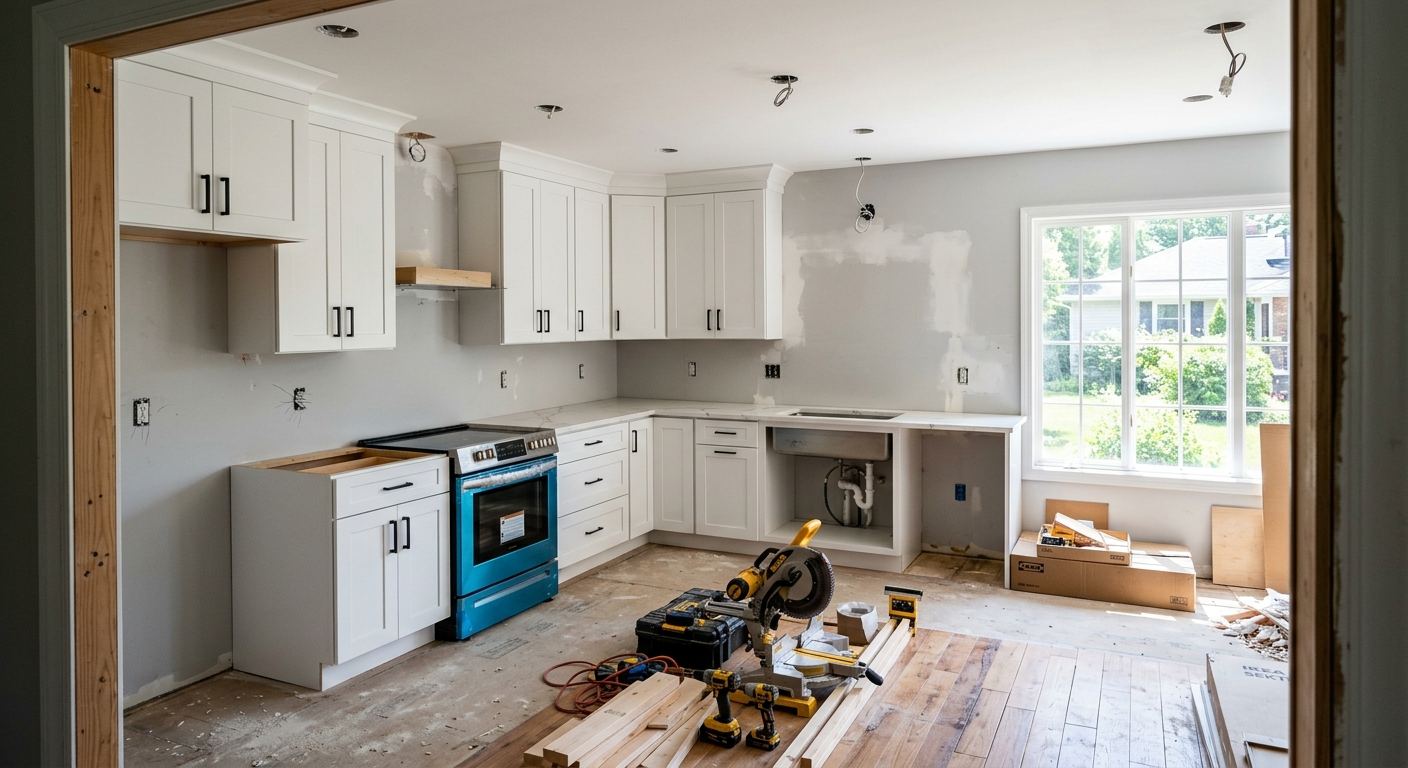
Kitchen renovation options and costs in Oakridge
Kitchen renovations in Oakridge tend to sort into three lanes: cosmetic refreshes, practical mid-range rebuilds, and high-end design-led remodels. In a community of about 13,030 residents (Statistics Canada, 2021 Census), homeowners typically have a wider range of budgets than many smaller towns—because Lower Mainland–Southwest buyers often plan for resale and price-point upgrades. In higher-value pockets of Metro Vancouver, many owners recover more of their spend by moving toward semi-custom cabinetry and quartz/stone counters rather than keeping the existing laminate look. That finish expectation aligns with higher household incomes across the region (Statistics Canada, 2021 Census), and it shows up in the way contractors package options and allowances.
Costs in the Lower Mainland–Southwest aren’t driven primarily by harsh winters; the climate is comparatively mild, so the “weather risk” premium is usually lower than in freeze–thaw regions. Instead, kitchen pricing is driven more by local demand, project complexity, and the neighbourhood’s finish expectations. Trade availability can tighten around peak renovation seasons, especially where sewer access, parking constraints, or older condo/townhouse service lines make demolition and utility reroutes slower. In Oakridge, the trade is often in especially strong demand in the South Granville / Oakridge corridor where many homeowners prefer a modern, resale-friendly layout with efficient storage.
If you’re trying to budget before you talk to a contractor, this tier-by-tier comparison gives you a realistic starting point—then you can fine-tune it with your cabinet and countertop selections in the table below.
| Renovation Tier |
What's Included |
Typical Duration |
Price Range |
| Cosmetic refresh (paint, hardware, new appliances only) |
Cabinet paint or refinishing, new pulls/knobs, caulking/trim touch-ups, new appliances (no cabinet reconfiguration) |
5–10 business days |
$8,000–$18,000 |
| Mid-range full renovation (new cabinets, counters, sink, tile) |
New semi-custom or upgraded stock cabinets, countertop install, new sink & faucet, backsplash tile, basic lighting updates, disposal and prep |
3–5 weeks |
$45,000–$85,000 |
| High-end full renovation (custom cabinets, stone counters, island) |
Custom millwork, quartz or natural stone countertops, island build, upgraded hardware, full backsplash (often upgraded coverage), electrical for island lighting, higher-end finishes |
6–10 weeks |
$90,000–$120,000 |
| Cabinet refacing only (new doors + drawer fronts, same boxes) |
Door/drawer replacement, hardware refresh, re-leveling and minor repairs to existing boxes, new matching panel surfaces |
1–3 weeks |
$12,000–$35,000 |
| Countertop swap only (laminate to quartz or stone) |
Remove existing laminate, template, quartz/stone install, sink cut-out adjustments (as needed), basic re-caulking, disposal |
3–7 business days |
$3,500–$12,000 |
| Backsplash tile installation only |
Tile supply and install (ceramic/porcelain or similar), layout and thinset prep, waterproofing as required, grout and sealing |
3–6 business days |
$1,500–$6,000 |
Prices are estimates only and vary by project scope, site access and material selection.
What affects the price of kitchen renovation in Oakridge
In the Lower Mainland–Southwest, it’s common to see the same kitchen project come in 30–50% apart across British Columbia even when the room size is similar. The biggest drivers aren’t the local weather; they’re the region’s home values and the finish tier homeowners expect at that price point. In higher-value Metro Vancouver markets, homeowners frequently move toward quartz or natural stone and semi-custom cabinetry because the renovation cost is easier to recoup on resale. In lower-cost markets elsewhere in B.C., laminate counters and stock cabinets remain popular because the return on spend is more constrained. That’s why two quotes in Oakridge can diverge quickly: one contractor may price a “like-for-like” refresh while another prices a buyer-attractive package with upgraded hardware, more storage, and a higher finish tolerance.
Layout changes create the most unpredictable cost regardless of finish tier. Removing a wall, adding an island, or moving a gas line can add days of scheduling and require more trades coordination—especially when plumbing/electrical rough-ins must be planned around existing floor structure and venting. In Oakridge specifically, older homes and certain townhome builds can have dated venting or supply routing, which sometimes means a plumbing update before new countertops go in.
Here are a few practical examples contractors commonly see: (1) converting a basic “U” layout into a layout with an island often shifts the job from the mid-range band of roughly $45,000–$85,000 into the higher-end $90,000–$120,000 range once electrical and stone fabrication for the island are included; (2) staying with existing cabinet boxes can keep you closer to cabinet-focused scopes, while changing corner geometry or toe-kick details adds build time and labour.
| Price Factor |
Why It Matters |
Cost Impact |
| Cabinet tier — stock vs. semi-custom vs. fully custom millwork |
Door/drawer quality, storage planning, fit-and-finish tolerances, and build lead times vary a lot by tier |
Stock keeps budgets lean; semi-custom typically drives most mid-range projects; fully custom can jump total cost quickly |
| Countertop material — laminate vs. quartz vs. granite vs. stone |
Material price, thickness, edge profiles, and fabrication complexity affect both material and install labour |
Laminate is lowest cost; quartz/stone generally increases the countertop line item and can push other trades to match finishes |
| Layout change — wall removal, island add, plumbing/gas move |
Rough-ins (water, drain, gas, venting, electrical circuits) and inspections are schedule-defining items |
Often the largest swing factor; can move a job from mid-range into high-end totals even with similar materials |
| Appliance package tier — builder vs. mid-range vs. pro-grade |
Clearances, electrical requirements, and installation complexity vary by brand and specs |
Pro-grade packages can add noticeable cost but don’t always change cabinet/counter pricing unless the layout needs rework |
| Flooring — refinish existing vs. full replacement |
Whether the contractor protects and restores flooring or replaces it after demolition |
Replacement increases scope; refinishing/recovery can reduce waste and time |
| Backsplash — ceramic tile vs. marble vs. full-height slab |
Surface prep, material weight, and detailing (cuts around outlets, corners, and niches) vary |
Upgraded tile or stone can raise the backsplash budget from a few thousand into a higher band quickly |
| Electrical — new circuits for island, under-cabinet lighting |
More lighting zones and island outlets usually require new circuits and a coordinated electrical plan |
Can add labour + permit-driven work; often small compared to cabinet changes, but it drives scheduling |
| Permit fees and licensed trade requirements |
Specific work triggers permits and inspections; coordination affects timelines |
Usually moderate in cost, but delays can increase total site labour if not planned early |
Permits & regulations in British Columbia
In British Columbia, not all kitchen changes require a permit. Typically, cabinet and countertop swaps alone (like replacing existing laminate with quartz, or swapping doors while keeping the existing box layout) usually do not require permits. However, permits and licensed trades are commonly required when you change the “services” or structure: moving plumbing supply or drain lines, relocating a gas appliance or changing gas line routing, removing a load-bearing wall, and adding electrical circuits (for example, new island outlets or rewiring to support new under-cabinet lighting zones).
Gas work must be performed by a licensed gas fitter, and electrical work must be done by a licensed electrician. Both generally require inspections once rough work is complete and again at final completion. Because kitchen renovations often involve several trades, permit responsibility can become a negotiation point—so confirm it in the written contract before you start.
For homeowners in Oakridge, verify a contractor the practical way:
- Request their BC licence info and confirm it via the relevant online licensing registry for the trade doing the gas/electrical work.
- Ask for a current certificate of insurance (liability) showing coverage amounts and effective dates.
- Confirm they carry appropriate workers’ compensation coverage (WSIB/WCB coverage) for their workers.
- Get “who pulls permits” in writing—then ensure the contractor schedules inspections that align with your job phases.
- Ask for a clearance letter or proof of coverage documentation where applicable, and keep it with your contract documents.
Cabinets, countertops and layout decisions in Oakridge
In an Oakridge kitchen renovation, three decisions drive most of your satisfaction and your resale appeal: (1) cabinet tier, (2) countertop material, and (3) layout changes. Cabinet tier is about how quickly you can complete the job and how precisely the kitchen fits the space. Stock cabinets are the fastest and cheapest, but semi-custom (a very common mid-range choice in the Lower Mainland–Southwest) balances lead times with better options for storage and door styles. Custom cabinets cost more, but they’re where you see best-fit details around ceilings, awkward corners, and tall pantry runs.
Countertops are where day-to-day use and buyer perception meet. Laminate is budget-friendly and fine for light use, but it’s more susceptible to wear at seams and edge exposure. Quartz is a strong Oakridge choice because it delivers a stone-like look with low maintenance, and it tends to align with the finish expectations buyers look for in this market. A realistic difference example: if you’re building a mid-range renovation budget around $45,000–$85,000, upgrading from laminate to quartz often costs enough that you still stay mid-range—but adding an island with stone fabrication can push you into the high-end band (often $90,000–$120,000) once you include countertop fabrication, electrical coordination, and any plumbing/gas adjustments.
Layout changes—like opening an older wall, adding an island, or relocating plumbing/gas—are the cost accelerators. They’re justified when the space gain improves circulation and storage rather than just aesthetics. In a resale-focused neighbourhood like Oakridge, the “works in daily life and shows well in photos” factor usually matters more than trending colour palettes.
| Option |
Durability |
Maintenance |
Best For |
Price Range |
| Stock cabinets (big-box) |
Good for everyday use; depends on door quality and finish |
Low; wipe-clean surfaces, handle minor dings quickly |
Fast timeline and budget-controlled refresh |
$8,000–$20,000 |
| Semi-custom cabinets (local dealer) |
Very solid build; better storage planning and tighter fit |
Low; routine cleaning, inspect hardware regularly |
Most Oakridge renovations aiming for resale-friendly looks |
$20,000–$45,000 |
| Custom cabinets (local millwork shop) |
Highest; built to your space with refined detailing |
Low; long-term serviceability and repair-friendly design |
Complex layouts, ceilings, appliance niches, or premium aesthetic |
$45,000–$80,000 |
| Laminate countertop |
Moderate; can show wear at edges and seams over time |
Simple daily care; avoid prolonged moisture at seams |
Budget refreshes and rental-friendly updates |
$3,000–$6,000 |
| Quartz engineered countertop |
High; resists staining and everyday scratches |
Low; clean with mild soap, avoid abrasive pads |
Busy family kitchens and resale-focused upgrades |
$6,000–$10,500 |
| Granite / natural stone countertop |
High; durable but varies by stone and finish |
Moderate; may require periodic sealing depending on stone |
Homeowners wanting natural variation and luxury look |
$8,000–$12,000 |
| Butcher block countertop |
Medium-high; resilient but needs care around moisture |
Moderate; regular oiling and mindful heat/water use |
Warm, casual styling and light-to-moderate wear |
$5,000–$9,000 |
| Marble countertop |
Medium; softer surface can scratch and etch |
Higher; requires careful cleaning and sealing discipline |
Low-impact entertaining kitchens or premium visual priority |
$9,000–$14,000 |
How to choose a kitchen renovation contractor in Oakridge
Choosing the right contractor in Oakridge comes down to verification plus clarity. First, confirm British Columbia licensing and insurance. For gas and electrical work, you want the specific licensed trade contractor (not just a general renovator) doing the permitted scopes. Check licensing through the relevant BC online registries for the trade involved, and request proof of liability insurance—plus workers’ compensation coverage for their employees. If a contractor can’t provide documentation promptly, it’s usually a sign you’ll pay later through delays or rework.
Next, get 2–3 itemised written quotes, not lump sums. A good quote breaks labour and materials separately so you can compare cabinet tiers, countertop options, and line items like disposal, patching, and electrical rough-in. Read the scope carefully for exclusions: Is permit pulling included? Is demolition debris disposal included? Are repairs to adjacent drywall and baseboards included, or billed as “extras” after you’ve signed?
Warranty matters in kitchens because settlement, cabinet alignment, and caulking failures can happen months later. Ask for workmanship warranty length, product/manufacturer warranty coverage, and whether warranties transfer to you if you sell. On payment schedule, avoid large deposits; a common practical limit is keeping upfront payments to around 10–15%, with a holdback until completion.
Finally, demand a written start date and completion estimate, and ensure the contractor explains what could change the timeline (cabinet lead times, stone template delays, or permit/inspection scheduling).
- Provide BC licence details for trades involved (especially gas and electrical).
- Show certificate of liability insurance with current dates and coverage limits.
- Confirm workers’ compensation coverage for their crews (WSIB/WCB coverage).
- Use itemised quotes (labour + materials), not a single total line.
- List inclusions/exclusions clearly: permits, disposal, protection of floors, patching.
- Include a detailed demolition plan and who handles hazardous waste/old materials appropriately.
- Specify cabinet tier and door/drawer hardware brands (or provide allowances).
- Confirm countertop template timing and fabrication lead assumptions.
- Spell out backsplash scope (prep, waterproofing, grout type, sealing expectations).
- Get electrical and lighting scope in writing if you’re adding under-cabinet or island lights.
- Agree on workmanship warranty duration and who responds to service calls.
- Use a payment schedule with a holdback until punch list completion.
Concrete red flags in Oakridge: contractors who won’t itemise labour and material costs; quotes that lump plumbing/electrical under “allowances” with unclear scope; missing or outdated insurance/licence documentation; schedules that rely on “we’ll order later” for cabinets without stating lead times; and payment requests that exceed 10–15% upfront without a signed schedule and deliverables.
Frequently asked questions — kitchen renovation in Oakridge
Should I renovate my kitchen before selling in Oakridge?
If you’re selling in Oakridge or nearby areas in the Lower Mainland–Southwest, a renovation can help—but only if it improves buyer confidence rather than over-improving for the home’s price point. Many sellers choose targeted upgrades like a cabinet and countertop package in the mid-range tier (often around $45,000–$85,000) because it updates the look without introducing major layout risk. If your kitchen is functional but dated, consider a cosmetic refresh first and reserve a full remodel for when you’re ready to manage permits, trade scheduling, and lead times. Also remember local housing stock: older layouts sometimes hide plumbing/electrical issues, and fixing those mid-sale can delay your timeline. In British Columbia, plan for the possibility that plumbing or gas modifications (if needed) will require licensed trades and inspections, which affects both cost and listing readiness.
What's the most popular kitchen style in Oakridge right now?
In Oakridge and much of the Lower Mainland–Southwest, the most commonly requested direction is a clean, modern look with warmer neutrals—think simple shaker-style or slab-front cabinetry, practical storage upgrades, and bright lighting that photographs well. Homeowners also frequently ask for an island layout where space allows, because it improves day-to-day workflow and supports open-concept living. Countertops are often quartz or quartz-style engineered stone because they balance appearance with low maintenance. That preference shows up in how contractors price options: a practical mid-range build with quartz counters and semi-custom cabinets is commonly placed in the $45,000–$85,000 band, while more complex layouts and custom millwork push toward the higher-end ranges (up to $90,000–$120,000). Your exact “popular” style should still reflect your home’s age, ceiling heights, and existing plumbing constraints.
How do I know if I need to update my kitchen plumbing in Oakridge?
A good sign you may need plumbing updates is when you see slow drains, recurring leaks under the sink, inconsistent water pressure, or corrosion on shutoff valves. Another common trigger is layout change: moving the sink, dishwasher, or adding an island with a prep sink or additional water line. In British Columbia, those changes typically require permits and licensed trades, so you shouldn’t assume a countertop swap is the only scope. Even if your pipes “seem fine,” older kitchens sometimes have supply or drain routing that doesn’t align with modern valve types or that complicates new cabinetry and sink installs. Ask your contractor to include a basic plumbing assessment in the pre-construction phase, and confirm in the contract whether any plumbing repairs are covered under the quoted scope or billed separately if hidden damage is found during demolition.
What is the difference between a galley and open-concept kitchen?
A galley kitchen is a corridor-style layout with counters on parallel walls; it’s efficient for cooking but can feel tight and less social. An open-concept kitchen removes barriers and connects the cooking area with the living/dining space, usually improving flow and how the home “shows” to visitors. In Oakridge, the choice often hinges on how much structure you’re willing to modify and whether you can accommodate a new island or expanded circulation. Layout shifts are where costs get unpredictable: opening walls or relocating plumbing/gas can push projects upward, often moving totals beyond simple countertop changes. If you’re staying in a cosmetic or countertop-only scope, you typically avoid the permit-driven work; however, structural wall removals and service relocations generally require permits and licensed trades in B.C., plus inspections. Your contractor can map which option fits your space without creating costly bottlenecks.
How do I get accurate kitchen renovation quotes in Oakridge?
To get accurate quotes in Oakridge, start by producing a clear scope and asking for itemised pricing. You want labour and materials broken out—especially cabinet tier, countertop choice, backsplash coverage, electrical scope, and disposal. Provide photos and rough measurements, but also schedule an on-site measure so the contractor can assess cabinet fit, wall straightness, and floor condition. Ask whether the quote includes permit pulling (if required), patching and drywall finish after demo, and protection of surrounding areas. Quotes vary widely across Lower Mainland–Southwest versus other B.C. markets because finish expectations and home values influence material selections. To keep comparisons fair, anchor your quote to realistic budgets such as the mid-range renovation band (around $45,000–$85,000) or a countertop-only band (often $3,500–$12,000 depending on material and sink cut-outs). Finally, get start dates and lead-time assumptions in writing so you understand what can change.
What's the best countertop material for a busy Oakridge kitchen?
For most busy Oakridge households, quartz is often the best all-rounder: it handles daily cooking well, resists staining better than many natural options, and stays looking consistent with relatively simple care. In British Columbia’s mild, coastal moisture conditions, many homeowners still prefer quartz because it reduces worry about long-term maintenance compared with some porous stones. Laminate can be a budget-friendly option for a refresh, but it typically won’t deliver the same “premium” feel buyers expect in higher-finish resale listings. If you’re deciding between options, your budget matters: laminate upgrades can commonly fit lower countertop-only scopes (often around $3,000–$6,000), while quartz typically moves you into a higher band such as $6,000–$10,500. For a more luxurious, natural look you can consider granite or marble, but those often come with higher maintenance expectations.