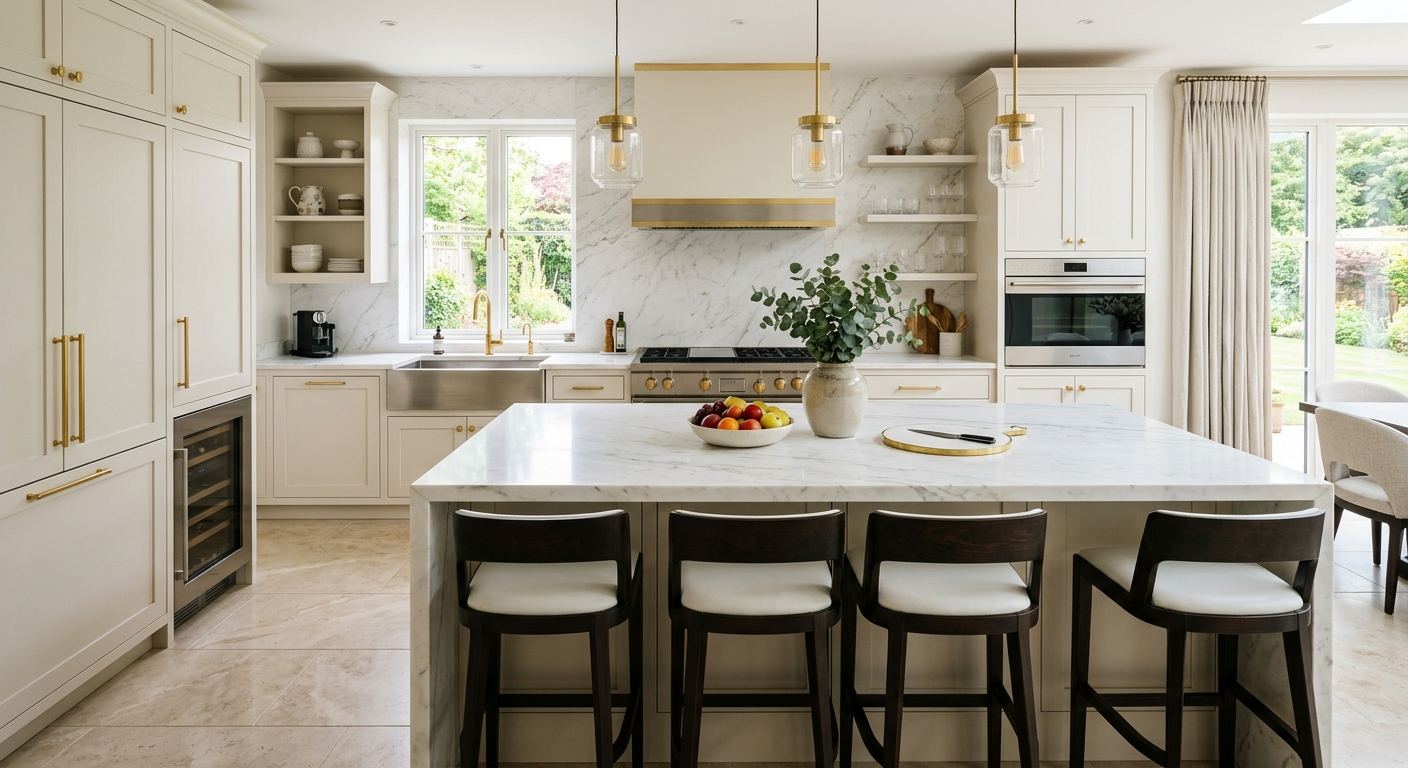
Kitchen renovation options and costs in Port Haney
Port Haney homeowners typically have a lot of options when planning a kitchen renovation, and the cost can swing widely based on the finish tier you choose. In a community of about 6,630 people (Statistics Canada, 2021 Census), many owners in the Lower Mainland–Southwest are planning renovations around long-term use and resale appeal. At the same time, this is a higher-expectation market: when household purchasing power is stronger in the region, buyers often expect more design-led details, and that pulls projects toward semi-custom cabinetry and stone surfaces rather than “good enough” laminate.
In Port Haney specifically, the Lower Mainland–Southwest climate doesn’t usually drive extreme material failure the way freeze–thaw regions do, so contractors focus on predictable cost drivers: labour availability, cabinet build/lead times, and material selection. Coastal humidity can matter for finishes—especially under-sink areas, caulking details, and how contractors manage ventilation—but kitchen pricing is still driven more by home value and expected finish level than by weather alone. For many homeowners, trades are also in demand near the Port Haney/Harbour corridor, where homes with updated layouts and modern materials are common.
To compare like-for-like, use the ranges below. A cosmetic refresh can make your kitchen feel new without opening walls, while a full rebuild moves plumbing, upgrades electrical, and replaces cabinetry and counters—where the real cost differences show up. Use the table as your starting point before you request itemised quotes for your exact scope.
| Renovation Tier |
What's Included |
Typical Duration |
Price Range |
| Cosmetic refresh (paint, hardware, new appliances only) |
Cabinet/trim paint or stain touch-up, new hardware, appliance swap (no major plumbing/electrical changes), minor caulking and alignment |
3–7 days |
$8,000–$22,000 |
| Mid-range full renovation (new cabinets, counters, sink, tile) |
New cabinet install (stock or semi-custom), new counters, sink and faucet, backsplash tile, tile flooring or targeted tile replacement, basic plumbing adjustments, standard electrical reconnects |
3–6 weeks |
$55,000–$85,000 |
| High-end full renovation (custom cabinets, stone counters, island) |
Custom cabinetry (made-to-fit), stone countertops (quartz or natural stone), island with plumbing/electrical as required, full backsplash treatment, upgraded lighting, higher-end finishes and hardware |
6–12+ weeks |
$100,000–$145,000 |
| Cabinet refacing only (new doors + drawer fronts, same boxes) |
Refacing of existing cabinet boxes, new doors/drawer fronts, new hardware, selective repairs, surface prep and finish match |
1–3 weeks |
$18,000–$38,000 |
| Countertop swap only (laminate to quartz or stone) |
Remove old countertop, template, fabricate and install new quartz/stone, new sink cut-out as needed, re-seal/finish edges, optional backsplash piece |
5–10 business days |
$12,000–$26,000 |
| Backsplash tile installation only |
Tile supply and install (standard pattern), surface prep, waterproofing/adhesive suitable for wet areas, grout and sealing, trim details |
3–7 days |
$1,500–$6,000 |
Prices are estimates only and vary by project scope, site access and material selection.
What affects the price of kitchen renovation in Port Haney
In the Lower Mainland–Southwest, two quotes for the “same” kitchen can differ by 30–50% because the market often prices to expected buyer outcomes rather than just square footage. In higher-value pockets, homeowners are more likely to choose semi-custom or custom cabinetry, quartz or natural stone counters, upgraded hardware, and more complex layouts (like islands and open sightlines). Those choices are frequently supported by easier resale recovery—so projects climb toward the full renovation band of roughly $40,000–$120,000. In more modest choices, owners can keep costs lower with laminate surfaces and stock cabinets, which better matches the typical mid-range approach.
Local home values and household income shape the finish tier far more than climate does. Coastal air and humidity in the Lower Mainland can accelerate wear at vulnerable spots (under-sink cabinets, caulk joints, grout), so contractors may recommend better ventilation and tighter waterproofing around sinks and dishwashers. Even then, the biggest cost swings still come from layout and services: removing a wall, adding an island, or moving a gas line or plumbing run adds unpredictable work regardless of finish level.
Here are a few Port Haney–specific examples that commonly change the number: (1) older home kitchens often have narrower cabinet bays and dated service runs, which can increase demo time and adjustment labour; (2) if your electrical panel is older or your kitchen needs new circuits for an island or under-cabinet lighting, electrical scope can expand quickly; and (3) if you’re aiming for a stone countertop look, templating accuracy and moisture protection details become critical—especially around sinks—so prep work can add labour even when material costs look straightforward. The result: the same “stone and tile” vision can land in the $3,000–$12,000 countertop installation range or move upward once plumbing, electrical, and layout are included.
| Price Factor |
Why It Matters |
Cost Impact |
| Cabinet tier — stock vs. semi-custom vs. fully custom millwork |
Box quality, door style, fit/finish tolerance, and lead times change materially with each tier |
Often the largest swing within mid- vs high-end projects |
| Countertop material — laminate vs. quartz vs. granite vs. stone |
Material price, fabrication complexity, and edge/undermount details affect installed cost |
Can move from restrained budgets up into premium totals |
| Layout change — wall removal, island add, plumbing/gas move |
New framing, service relocation, and inspections add time and risk |
Frequently the biggest “surprise” cost driver even with identical finishes |
| Appliance package tier — builder vs. mid-range vs. pro-grade |
Brand/model differences change electrical/plumbing requirements and install complexity |
May add cost even if cabinetry stays the same |
| Flooring — refinish existing vs. full replacement |
Subfloor prep, transitions, and matching patterns can expand scope |
Can add days and extra materials if thresholds or leveling are needed |
| Backsplash — ceramic tile vs. marble vs. full-height slab |
Material thickness, cutouts, and waterproofing requirements change installation time |
Full-height or premium stone typically increases labour and waste |
| Electrical — new circuits for island, under-cabinet lighting |
New circuits require licensed work and inspection; cable runs affect wall opening |
Often adds cost in older homes with limited capacity |
| Permit fees and licensed trade requirements |
Certain service changes require permits and inspections; trade coordination adds scheduling cost |
Small line items individually, but can add overall project overhead |
Permits & regulations in British Columbia
In British Columbia, some kitchen updates can be done without permits, but many “real life” changes trigger permit and licensed trade requirements. A straightforward countertop swap and most cabinet door/drawer front replacements typically do not require a permit as long as you’re not altering plumbing, gas piping, structural elements, or electrical systems. Similarly, replacing like-for-like appliances (and reconnecting the same service points where permitted) often stays under a maintenance-style scope.
Permits are generally required when you’re changing the services or structure, including: moving plumbing supply or drain lines (sink relocation, dishwasher drain changes), relocating gas connections for a stove or range hood when gas is involved, removing a load-bearing wall, adding or moving electrical circuits (for example, new outlets in an island or adding new under-cabinet lighting circuits), or making significant electrical upgrades. Gas work must be done by a licensed gas fitter, and electrical work must be done by a licensed electrician; both trades require inspections before the work can be signed off.
To verify a contractor in Port Haney, homeowners should: (1) confirm the contractor’s licence details through the applicable online registry; (2) ask for a current certificate of liability insurance showing kitchen reno coverage and effective dates; (3) confirm coverage for workers—commonly handled through WSBC/WCB—by requesting clearance or proof of coverage; and (4) ensure the permit responsibility is clearly stated in the written contract. Don’t rely on verbal answers—ask who pulls the permits, and confirm which trade(s) will complete the inspections.
Cabinets, countertops and layout decisions in Port Haney
When you’re renovating a kitchen in Port Haney, three decisions determine most of the outcome: (1) cabinet tier, (2) countertop material, and (3) layout changes. Start with cabinet tier. Stock cabinets are the fastest and usually cheapest, but they’re less forgiving if your existing walls are out of square. Semi-custom cabinets are the local sweet spot because you can adjust sizes, improve storage, and get a more built-in look without custom lead times. Custom cabinets deliver the best fit and most storage options, but the installed cost climbs quickly—especially if you’re also adding an island or changing the layout.
Next, countertops. Laminate can look clean and modern, but it’s more sensitive to heat and sharp impact. Quartz is often the practical “busy kitchen” choice because it’s durable, consistent in colour, and lower maintenance than natural stone. Granite/natural stone looks premium and patina well, but it can require more attentive sealing and care. Butcher block adds warmth and can be very functional, though it needs ongoing maintenance; marble looks high-end but is typically softer and more prone to etching.
Finally, layout. Removing an open sightline or adding an island can justify cost because it changes how the space works for daily life and resale appeal. In the Lower Mainland–Southwest, buyers often expect a kitchen that feels open and bright, so wall removal or island additions can pay off—provided the services and structure are planned properly. For a concrete example: if you budget an additional $10,000–$20,000 to move plumbing/electrical for an island, that can be justified when it creates usable seating and better circulation; however, if your kitchen is already efficient, switching to quartz from laminate without layout changes may deliver a similar “wow” effect with less risk.
| Option |
Durability |
Maintenance |
Best For |
Price Range |
| Stock cabinets (big-box) |
Good daily durability; fit depends on wall conditions |
Low—standard cleaning; touch-ups if doors chip |
Fast renovations, tighter budgets, simple layouts |
$8,000–$22,000 |
| Semi-custom cabinets (local dealer) |
Very strong build; better sizing options for typical older homes |
Low to moderate; choose quality hinges and finishes |
Most Port Haney mid-range remodels and resale-focused updates |
$22,000–$45,000 |
| Custom cabinets (local millwork shop) |
Highest durability and exact fit; best for complex spaces |
Low—when finished properly, they hold up well in humid coastal air |
Premium kitchens, unusual dimensions, maximum storage planning |
$45,000–$80,000+ |
| Laminate countertop |
Moderate; seams and edges need careful protection |
Low, but avoid heat and sharp impacts |
Budget refreshes and quick updates |
$3,000–$7,000 |
| Quartz engineered countertop |
High; resistant to scratches and everyday staining |
Low; wipe clean and use gentle cleaners |
Busy households wanting a “stone-like” look with easy upkeep |
$6,000–$12,000 |
| Granite / natural stone countertop |
High; extremely durable but varies by stone |
Moderate; sealing and care recommended |
Premium look and character |
$8,000–$14,000 |
| Butcher block countertop |
Moderate to high; can dent but holds up with refinishing |
Moderate; periodic oiling and sealing |
Food-prep focused kitchens and warm design styles |
$5,000–$10,000 |
| Marble countertop |
Moderate; softer and can etch |
Higher; protect from acids and spills |
Low- to moderate-use kitchens that prioritize luxury aesthetics |
$10,000–$18,000+ |
How to choose a kitchen renovation contractor in Port Haney
Choosing the right contractor in Port Haney starts with proof. Ask for their British Columbia licence information and verify it through the relevant online registry. Request their certificate of liability insurance (make sure it’s current and covers renovation work), and confirm WSBC/WCB clearance for workers—then get it in writing. For contractors who coordinate trades, you should also expect licensed electricians and gas fitters where services require it; don’t accept “we’ll handle it” without seeing who is actually performing the regulated work.
Next, demand itemised quotes. You want a breakdown that separates labour and materials: demolition, cabinet install, countertop fabrication/installation, tile, plumbing/electrical scope, disposal, and any contingency allowance. Avoid lump-sum pricing that doesn’t show what’s excluded. Ask if permit pulls are included, whether disposal/recycling is included, and whether you’re responsible for any temporary kitchen needs (like sink backup or power during rough-in). A clear warranty matters too: get workmanship warranty length and whether product warranties from manufacturers are transferable if you sell the home.
Finally, payment schedule and timing. A reputable builder won’t ask for more than about 10–15% upfront; hold back a portion until the job is complete and punch-list items are resolved. Ensure the start date and completion estimate are written so you can plan around lead times for cabinets and stone—these are often the real timeline drivers in the Lower Mainland–Southwest.
- Verify contractor licence details and request written proof.
- Confirm liability insurance certificate is current and renovation-specific.
- Request WSBC/WCB clearance or proof of coverage for workers.
- Get 2–3 itemised quotes (labour + materials) rather than a single lump sum.
- Ask what’s excluded (old cabinet disposal, patching, drywall finishing, paint, trim).
- Confirm permit responsibility in the contract (who pulls permits, who pays).
- Ask whether disposal and recycling are included in pricing.
- Confirm who templates countertops and what happens if measurements shift.
- Check warranty: workmanship length, what triggers service, and exclusions.
- Confirm product/manufacturer warranties and whether they transfer to the next owner.
- Require a detailed payment schedule with a small deposit and holdback until completion.
- Get a written schedule with start date, phases, and realistic cabinet/stone lead times.
Red flags I commonly see around kitchen renovations in Port Haney: a quote that doesn’t itemise labour vs materials; no clear scope for permits or disposal; refusing to provide insurance/WSBC/WCB clearance; demanding a large upfront deposit (beyond roughly 10–15%); and promising exact start/finish dates without acknowledging cabinet and countertop lead times.
Frequently asked questions — kitchen renovation in Port Haney
How do I know if I need to update my kitchen plumbing in Port Haney?
In Port Haney and across British Columbia, the best trigger for plumbing updates is visible risk, not just aesthetics. If your sink drain is slow, you smell odours after the dishwasher, or you see staining/corrosion under the sink, you may need new supply lines, improved venting, or repipe sections. If you’re moving the sink or adding an island, plumbing changes almost always follow (drain slope, trap placement, and connection details), so it’s a good time to replace aging supply lines and confirm shutoffs work properly. If your kitchen has older pipes or you’re unsure, ask for an on-site assessment before you lock in cabinets and countertops—hidden leaks become expensive after installation.
What is the difference between a galley and open-concept kitchen?
A galley kitchen is typically two parallel counter runs with limited space between, which makes workflow efficient but can feel enclosed. An open-concept kitchen connects the kitchen area with dining/living space, often by removing a wall or creating a wider opening, so it feels brighter and more social. In the Lower Mainland–Southwest resale market, open layouts are commonly preferred for how they photograph and how they function for hosting, which is why many Port Haney projects include layout work. The trade-off is that opening walls and rerouting services can push you toward full renovation totals (often within the $40,000–$120,000 band), while a galley refresh can sometimes be achieved as a smaller refresh or partial remodel.
How do I get accurate kitchen renovation quotes in Port Haney?
To get accurate quotes in Port Haney, start by defining scope in writing and requesting itemised numbers. Ask for a labour/material breakdown that includes demolition, cabinet install, countertop templating and install, tile work, plumbing and electrical scope, and disposal. Confirm whether permits are included if you’re moving plumbing, gas, or adding electrical circuits. Provide photos and a measured plan, and—if possible—book a site visit so the contractor can check wall condition and service access. Accurate quotes usually account for lead times for cabinets and stone and include contingency for older homes. If you compare quotes that are “apples-to-apples” (same cabinet tier, same countertop, same electrical scope), differences become easier to interpret.
What's the best countertop material for a busy Port Haney kitchen?
For a busy kitchen in Port Haney, quartz is often the best balance of durability and low maintenance. It resists stains and scratches better than laminate and generally requires less daily care than natural stone. If your household uses the kitchen hard—kids, cooking oils, frequent prep—quartz typically holds up well in British Columbia’s coastal climate where moisture management matters around sinks. Natural stone like granite can also perform extremely well, but it may need sealing and more attentive cleaning choices. If you want the lowest upfront spend, laminate can be a practical refresh option, but you should protect it from heat and impacts. In terms of installed cost, countertop swaps often land roughly within the $3,000–$12,000 range depending on the material tier and complexity.
How do I add an island to my Port Haney kitchen?
Adding an island is mostly about planning services and circulation. First, confirm available floor space and clearance so drawers and walkways work comfortably—especially in older homes. Then decide whether the island needs a cooktop, sink, or just seating and storage. If you move plumbing or relocate gas for a stove/range arrangement, permits and licensed trades are typically required in British Columbia. For electrical, adding outlets and under-cabinet lighting usually means new circuits and an electrician’s involvement. Cost-wise, an island can be the difference between a mid-range remodel and a high-end full renovation, particularly when you’re routing plumbing and electrical. A realistic starting point is to treat it as a full-scope project within the $40,000–$120,000 band if significant changes are involved.
How much does a kitchen renovation cost in Port Haney?
In Port Haney, kitchen renovation cost typically tracks scope and finish tier more than climate. For a cosmetic refresh (paint, hardware, new appliances only), many projects stay relatively restrained, while full renovations expand quickly once cabinetry, counters, and services change. Local market pricing generally fits the region’s bands: full kitchen renovation projects commonly range from $40,000–$120,000, cabinet installation/refacing varies widely by tier (including refacing-only approaches), and countertop installations are often in the $3,000–$12,000 range depending on material and complexity. If you’re unsure, start with your desired cabinet tier and whether you’re changing the layout—wall removal, moving plumbing, and new electrical circuits are usually what moves your budget up.