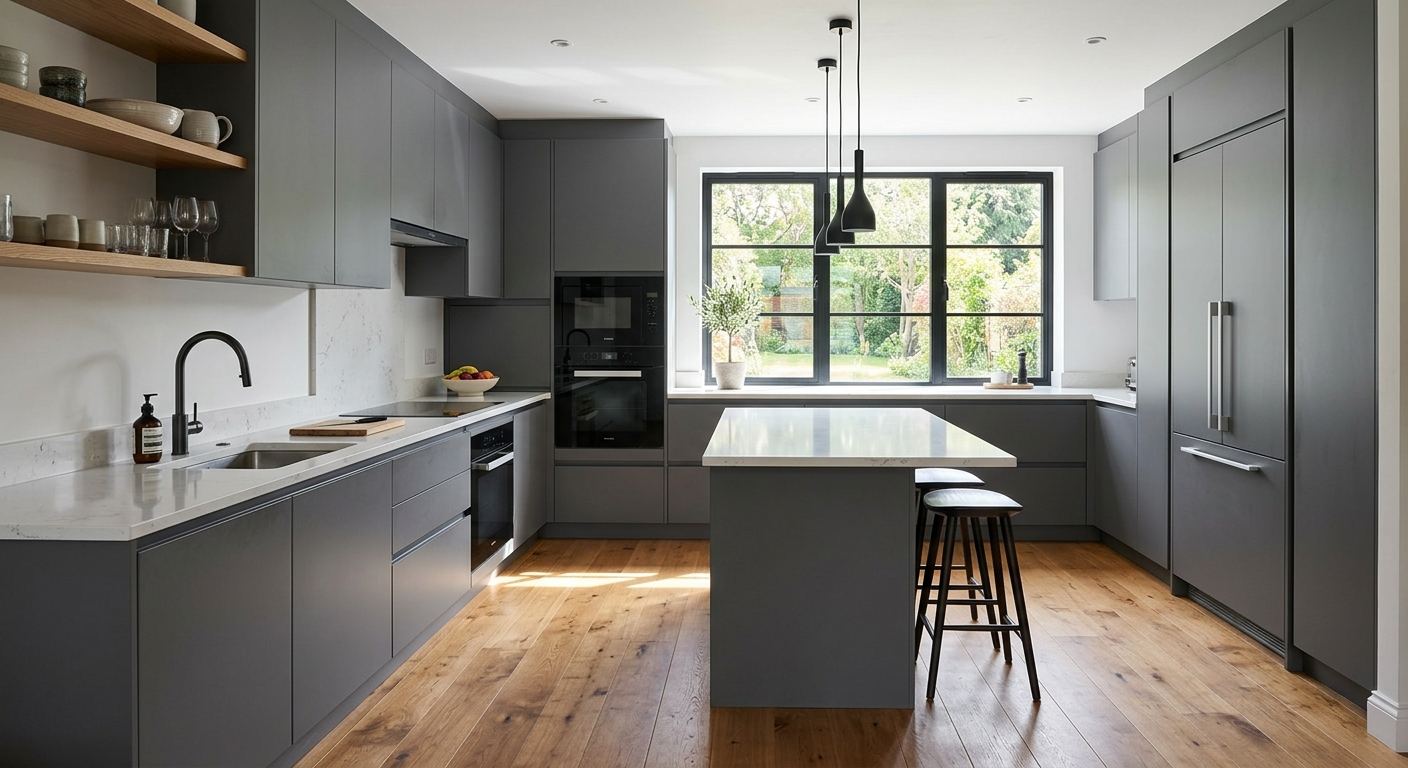
Kitchen renovation options and costs in Broadmoor
Kitchen renovations in Broadmoor usually start with a realistic decision: are you refreshing what you already have, or rebuilding to match the finish level buyers expect in the Lower Mainland–Southwest? With Broadmoor’s population sitting at 23,050 (Statistics Canada, 2021 Census), demand is steady, but the real driver of pricing is the local housing economy—where higher home values and buyer expectations tend to push projects toward semi-custom or custom cabinetry and stone surfaces. In practical terms, a “similar-sized” kitchen can land very differently when one home is being prepped for resale and another is being designed purely for long-term living. Lower Mainland–Southwest pricing is more tied to perceived value and contractor availability than to climate, but coastal conditions still matter: kitchens here see more humidity swings, so materials and install details (sealing, ventilation, and water-resistance around the sink/dishwasher) influence labour time and warranty comfort.
In Broadmoor, trades are especially busy for cabinet installs and countertop work near high-traffic retail and service corridors, where homeowners often schedule during peak spring and summer demand. If you want the cleanest path to budgeting, it helps to compare renovation “tiers” side-by-side, then choose your level of change. The table below summarizes what’s typically included, how long it takes, and what you can expect to pay for common scopes—from a cosmetic update to a full high-end rebuild.
| Renovation Tier |
What's Included |
Typical Duration |
Price Range |
| Cosmetic refresh (paint, hardware, new appliances only) |
Surface prep and paint, new cabinet hardware/handles, appliance swap (no major plumbing/gas/electrical changes), minor caulking and trim touch-ups |
1–3 weeks |
$8,000–$20,000 |
| Mid-range full renovation (new cabinets, counters, sink, tile) |
New cabinet layout (stock to semi-custom), new countertops, sink and taps, backsplash tile, under-cabinet work where needed, flooring tie-ins as required |
4–8 weeks |
$40,000–$85,000 |
| High-end full renovation (custom cabinets, stone counters, island) |
Custom millwork, quartz or natural stone countertops, island (often with power), upgraded hardware and lighting, full backsplash coverage, more complex plumbing/electrical coordination |
8–16 weeks |
$85,000–$120,000 |
| Cabinet refacing only (new doors + drawer fronts, same boxes) |
Door and drawer-front replacement, new cabinet hardware, resurfacing, touch-up and alignment, optional repainting of existing boxes if condition allows |
2–5 weeks |
$8,000–$30,000 |
| Countertop swap only (laminate to quartz or stone) |
Removal and disposal, new countertop fabrication and install, new sink cut-out (if switching sink type), basic reseal and caulking at perimeter |
1–3 weeks |
$3,000–$12,000 |
| Backsplash tile installation only |
Surface prep, tile layout and setting, grout and seal, finishing trims and caulking; excludes moving plumbing/electrical unless already planned |
4–10 days |
$1,500–$6,000 |
Prices are estimates only and vary by project scope, site access and material selection.
What affects the price of kitchen renovation in Broadmoor
For the same kitchen size in the Lower Mainland–Southwest, two quotes can differ by 30–50% across British Columbia because finish tier, cabinet complexity, and job logistics matter more than the weather. Coastal climate influences drying times and surface prep, but it rarely drives the “big delta” between budgets. Instead, Broadmoor’s local market economics steer many homeowners toward resale-friendly materials: in higher-value areas, quartz or stone counters and semi-custom cabinetry are common because the improvement is easier to recoup. In more modest parts of the province, laminate and stock cabinetry still dominate because the ROI is clearer for homeowners who prefer lower upfront cost. Layout changes are the wildcard everywhere, especially in Surrey/Abbotsford-to-Burnaby-style project realities that include moving plumbing or reworking gas line runs.
In Broadmoor specifically, I see three cost levers show up repeatedly. First, many homes have older cabinet boxes or dated millwork; when you keep existing boxes for a refacing scope, costs can stay in the refacing band (roughly $8,000–$30,000) because demolition and carpentry are limited. Second, countertop changes alone can look simple, but turning a laminate install into a quartz or stone install often adds extended fabrication coordination; that’s why many projects price in the $3,000–$12,000 countertop band depending on thickness, edge profiles, and sink cut-outs. Third, houses with tighter corridors or older HVAC routes can make it harder to stage material and protect floors—adding labour time and disposal costs even when the kitchen design looks “straightforward.”
Finally, housing age matters. When kitchens were built before modern ventilation and outlet requirements, you may need new electrical circuits for island power or under-cabinet lighting, which can quickly move a “mid-range” plan toward a full renovation budget (including tiles and cabinetry). Climate is the supporting factor: higher humidity means good ventilation and proper sealing are non-negotiable around sinks and exterior-facing walls, and that affects workmanship time.
| Price Factor |
Why It Matters |
Cost Impact |
| Cabinet tier — stock vs. semi-custom vs. fully custom millwork |
Complex sizing, finishes, internal organizers, and specialty hinges/soft-close systems change both material and install time |
Typically the largest swing; can move a project several tens of thousands |
| Countertop material — laminate vs. quartz vs. granite vs. stone |
Fabrication difficulty, edge profiles, weight, and sealing requirements affect labour and staging |
Often shifts the countertop portion by thousands; laminate lowest, stone highest |
| Layout change — wall removal, island add, plumbing/gas move |
Structural considerations, new rough-in work, and coordination across trades drive unpredictability |
Can add major cost even with “same cabinet style” finishes |
| Appliance package tier — builder vs. mid-range vs. pro-grade |
Electrical/gas hookups, venting requirements, and sometimes custom trim kits |
Can add from a few hundred to several thousand depending on package |
| Flooring — refinish existing vs. full replacement |
Protecting and matching existing surfaces can be cheaper than full removal and leveling |
Moderate to large; full replacement increases scope and timeline |
| Backsplash — ceramic tile vs. marble vs. full-height slab |
Material weight and cutting complexity increase install hours |
From “quick tile” costs to premium surface pricing |
| Electrical — new circuits for island, under-cabinet lighting |
More outlets, dedicated circuits, and lighting adds licensed electrical labour and inspection time |
Common reason mid-range plans climb toward full renovation budgets |
| Permit fees and licensed trade requirements |
When permits and inspections are triggered, you pay for administration plus scheduling |
Smaller line items individually, but can affect overall project cost and timing |
Permits & regulations in British Columbia
In British Columbia, a simple cabinet or countertop swap usually does not trigger a permit. If you’re keeping plumbing where it is and you’re not altering load-bearing structure, you can often proceed with licensed installers for workmanship without permit overhead. However, Broadmoor homeowners should expect permits and licensed trades when the project changes systems: moving plumbing supply/drain lines (sink, dishwasher, or fridge water connections), relocating gas appliances or gas piping (including the stove/range hood setup where gas is involved), removing a load-bearing wall, or adding new electrical circuits for an island, additional outlets, or under-cabinet lighting.
How to verify the contractor before you sign (step-by-step):
- Ask for their business licence details and confirm they are registered/eligible to perform the scope they’re offering.
- Request a certificate of insurance (liability) and confirm it’s current and matches the job address.
- For trade work, verify licensed coverage: electrical work should be by a licensed electrician; gas work by a licensed gas fitter. Ask the contractor to name the responsible licensed professionals.
- Confirm coverage documentation for worker-related protection (WCB/WSIB equivalent coverage in BC via the appropriate provincial coverage). Get the clearance letter or evidence of coverage from the contractor.
- Make sure the contract clearly states who pulls permits (if required), who pays permit fees, and who schedules inspections.
Always confirm permit responsibility in writing—contractors who cannot clearly explain what needs permits (and what doesn’t) are where projects slow down or get costly.
Cabinets, countertops and layout decisions in Broadmoor
The three most consequential decisions in a Broadmoor kitchen renovation are cabinet tier, countertop material, and whether you change the layout. Cabinet tier is about fit and speed: stock cabinets are typically the fastest and cheapest, semi-custom is the most popular mid-range choice because it balances design flexibility with predictable lead times, and custom cabinets deliver the best fit when your kitchen has odd angles, built-in-style requirements, or you want advanced internal storage. Countertops then set the “face” of the kitchen: laminate can be a cost-effective refresh, while quartz or natural stone are chosen for durability and a resale-friendly look that holds up in real everyday use. Finally, layout changes—open-concept wall removal, island addition, or plumbing/gas relocation—should be justified by space gain and lifestyle, because they add the most unpredictable rough-in cost regardless of finish tier.
In the Lower Mainland–Southwest resale market, buyers often expect quartz or stone counters and clean, modern cabinet lines at higher price points, especially when the kitchen is the main “value driver” in an open living area. That expectation is why mid-range renovations can still land around the $40,000–$85,000 band when you stay practical (semi-custom cabinets, quartz counters, and tile backsplash) and avoid major plumbing moves. A good example: if you swap laminate to quartz and keep the sink where it is, you might stay closer to the countertop-focused band of $3,000–$12,000 for the upgrade. But if you add an island that requires moving power and potentially adjusting the existing plumbing plan, the budget often grows quickly and moves closer to the higher-end full renovation range (up to $120,000), mainly due to trade coordination.
Coastal humidity in Broadmoor also means you should plan for good ventilation and proper sealing around moisture-prone areas. That makes “small” install choices—like under-sink finishing and backsplash sealing—worth paying for, particularly in older homes where surfaces may be less uniform.
| Option |
Durability |
Maintenance |
Best For |
Price Range |
| Stock cabinets (big-box) |
Good for standard sizing; hinges and finishes vary by line |
Simple care; focus on protecting edges and drawer slides |
Fast refreshes with minimal design changes |
$8,000–$25,000 |
| Semi-custom cabinets (local dealer) |
Solid build with better internal options and finish consistency |
Low to moderate; keep hardware tightened and reseal as needed |
Most homeowners seeking mid-range value and flexibility |
$20,000–$55,000 |
| Custom cabinets (local millwork shop) |
Best fit and finish; strongest match for unusual layouts |
Low maintenance, but expect premium hardware servicing over time |
Premium upgrades and problem-space solutions |
$45,000–$90,000 |
| Laminate countertop |
Decent for everyday use; edges are the weak point if mishandled |
Wipe clean; avoid prolonged standing water at seams and cuts |
Budget-conscious refreshes keeping the kitchen functional |
$3,000–$6,500 |
| Quartz engineered countertop |
High durability; resists staining and typical kitchen wear |
Low; basic soap-and-water cleaning, protect from extreme heat |
Resale-friendly choice with minimal upkeep |
$6,000–$10,000 |
| Granite / natural stone countertop |
Very durable and unique appearance; variety affects performance |
Periodic sealing is usually required; treat spills promptly |
Homeowners wanting natural variation and premium look |
$8,000–$12,000 |
| Butcher block countertop |
Strong but can scratch; longevity depends on care |
Needs periodic oiling and mindful protection from moisture edges |
Warm, casual kitchens and homeowners willing to maintain |
$5,000–$9,500 |
| Marble countertop |
Beautiful but softer; vulnerable to etching and acidic spills |
Higher care; sealing and fast spill cleanup matter |
Design-led kitchens where maintenance is acceptable |
$10,000–$14,000 |
How to choose a kitchen renovation contractor in Broadmoor
Choosing the right kitchen renovation contractor in Broadmoor is mostly about proof and process. Start by verifying British Columbia licensing: electrical work must be performed by a licensed electrician, and any gas-related work (if you’re relocating a stove or gas-fed hood setup) must be done by a licensed gas fitter. Ask the contractor for their liability insurance certificate and confirm it lists coverage appropriate for renovations, not just general contracting. For worker protection, request proof of worker coverage (WCB/WSIB equivalent clearance documentation) so you know the business is compliant. Don’t rely on verbal assurances—ask for documents and check that the coverage is current for your project dates.
Next, get 2–3 itemised written quotes (not a single lump-sum). You want labour and materials broken out so you can compare apples to apples: cabinet supply vs installation, countertop fabrication vs install, tile labour, electrical work allowances, plumbing allowances, and disposal/demolition. Read the scope carefully for what’s excluded: permit pulling, dumpster and haul-away, patching and painting, floor protection, and whether the quote includes changes to the schedule for new rough-ins. Confirm warranty details—workmanship warranty length, product/manufacturer warranty for cabinets/counters/appliances, and whether warranties are transferable if you sell the home. For payments, a safe approach is never paying more than 10–15% upfront; use progressive payments tied to completed milestones and hold back until the work is complete and deficiencies are addressed. Finally, request a start date and completion estimate in writing, with allowances for cabinet/counter lead times.
- Ask for proof of insurance and keep a copy in your records.
- Confirm licensed electrician and licensed gas fitter involvement where applicable.
- Use itemised quotes with line items for cabinets, counters, tile, electrical/plumbing allowances, and disposal.
- Check if permits are included and who is responsible for pulling them (if needed).
- Confirm demolition scope: includes disconnect/reconnect? includes patching drywall?
- Verify who supplies small materials (shims, sealants, trim) and whether they’re included.
- Confirm countertop template timing and who pays for redo if measurements are off.
- Ask about lead times for cabinet doors and countertop fabrication and how delays are handled.
- Require a written warranty for workmanship and identify what it covers.
- Set a milestone schedule with dates tied to real progress, not vague “upon completion.”
- Avoid large deposits; keep at or below 10–15% upfront unless you’re explicitly funding custom orders.
- Ensure dust control and floor protection are included in the scope.
Red flags I see in Broadmoor: contracts with vague scopes (“allowances” with no numbers), missing insurance documentation, no clear statement on permits/disposal, warranties limited to “materials only,” and payment schedules that demand large upfront deposits before any work starts.
Frequently asked questions — kitchen renovation in Broadmoor
Custom vs stock cabinets — is custom worth it?
In Broadmoor and across the Lower Mainland–Southwest, custom cabinets are worth it when your kitchen has design constraints: odd wall lengths, non-standard ceiling lines, or you want integrated storage (pantries, appliance garages, drawers sized for real utensils). If your layout is straightforward and you’re aiming for the best value, semi-custom often delivers the practical upgrade most homeowners want without the longest lead times. Stock cabinets can work well for cosmetic refreshes, especially when you’re keeping the boxes and budget around a cabinet refacing or mid-range plan. For a reality check, many homeowners who upgrade fully land in the broader full renovation band of about $40,000–$85,000, where semi-custom cabinets plus quartz typically pencil out more smoothly than fully custom millwork.
How do I choose a kitchen contractor in Broadmoor?
Start with verification: ask for liability insurance, proof of worker coverage, and confirm that licensed trades will be used for any electrical or gas-related work. In British Columbia, countertop and cabinet swaps often don’t require permits, but adding new circuits, moving plumbing lines, or relocating gas can. Then compare 2–3 itemised quotes so you can see what’s actually included—labour, materials, tile scope, disposal, and whether permit pulling is part of the contractor’s responsibility. For Broadmoor projects, I also recommend checking their schedule handling for cabinet/counter lead times so you don’t get stuck waiting mid-renovation. Finally, keep your payment schedule conservative (10–15% upfront max) and require a written start date and completion estimate.
What order do kitchen renovation steps happen in?
A typical kitchen renovation sequence in Broadmoor starts with measurement and design decisions, then demolition and rough-in changes (electrical/plumbing/gas) if you’re moving anything. After rough-ins are confirmed, you’ll see drywall patching and surface prep so cabinets and backsplashes can be installed on a clean, level plane. Cabinet installation follows (with shimming and anchoring), then countertops are templated and fabricated, and finally counters are installed with sink cut-outs. Backsplash tile and flooring tie-ins happen after cabinetry is set, so tile lines up properly with cabinet reveals. Finishing steps—caulking, trim, painting touch-ups, and appliance install—come at the end. This order matters because delaying electrical/plumbing decisions can push countertop templating and extend your overall timeline.
Can I live at home during a kitchen renovation in Broadmoor?
Often, yes—especially for cosmetic refreshes or countertop/backsplash-only work. For a full renovation in the $40,000–$85,000 range, many Broadmoor homeowners stay home, but they usually set up a temporary “kitchen-in-a-room” with a microwave, kettle, and basic prep area. If you’re removing cabinets and moving plumbing or adding an island, plan for more dust and downtime, and confirm dust control measures and floor protection in the scope. For high-end projects (which can climb toward the $85,000–$120,000 band), schedules are longer, so living arrangements need more planning. If you prefer not to manage a temporary setup, some contractors can phase the work so appliances and a limited sink setup come online sooner—but that depends on your exact scope and trade sequencing.
Should I renovate my kitchen before selling in Broadmoor?
Usually, kitchens are worth renovating before selling only when the update improves buyer confidence: clean cabinet fronts, modern lighting, reliable counters, and a layout that doesn’t feel cramped or dated. In the Lower Mainland–Southwest market, many buyers respond to quartz/stone looks and consistent finishes, which is why mid-range full renovations commonly land around the $40,000–$85,000 range when you keep the footprint practical. If you’re considering a higher-cost approach, be careful about “over-improving” for your immediate resale context—custom cabinetry and premium stone can pay off when your home’s pricing position supports it. Countertop-only upgrades are also a strong pre-sale option when cabinets are structurally fine; those often fit the $3,000–$12,000 countertop band depending on material and sink details. Your realtor and contractor should review comps and your home’s age/condition before you commit.
What's the most popular kitchen style in Broadmoor right now?
Broadmoor kitchens currently trend toward modern, clean-lined designs with warm neutrals and durable surfaces that photograph well and hold up to everyday use. On the finish side, quartz counters (often light-to-mid tones) and practical cabinet colours are common because they align with what buyers expect in Metro Vancouver–area resale. Hardware is also moving toward understated, consistent pulls and soft-close expectations. In many mid-range projects, homeowners choose semi-custom cabinets paired with a quartz engineered countertop and a simple, tasteful backsplash—an approach that keeps budgets more controllable than full custom millwork. This is especially relevant if you’re trying to land within the mid-range full renovation band of $40,000–$85,000 without adding unpredictable layout costs. Coastal humidity also means good ventilation and proper sealing around the sink area are increasingly treated as part of the “style,” not just maintenance.