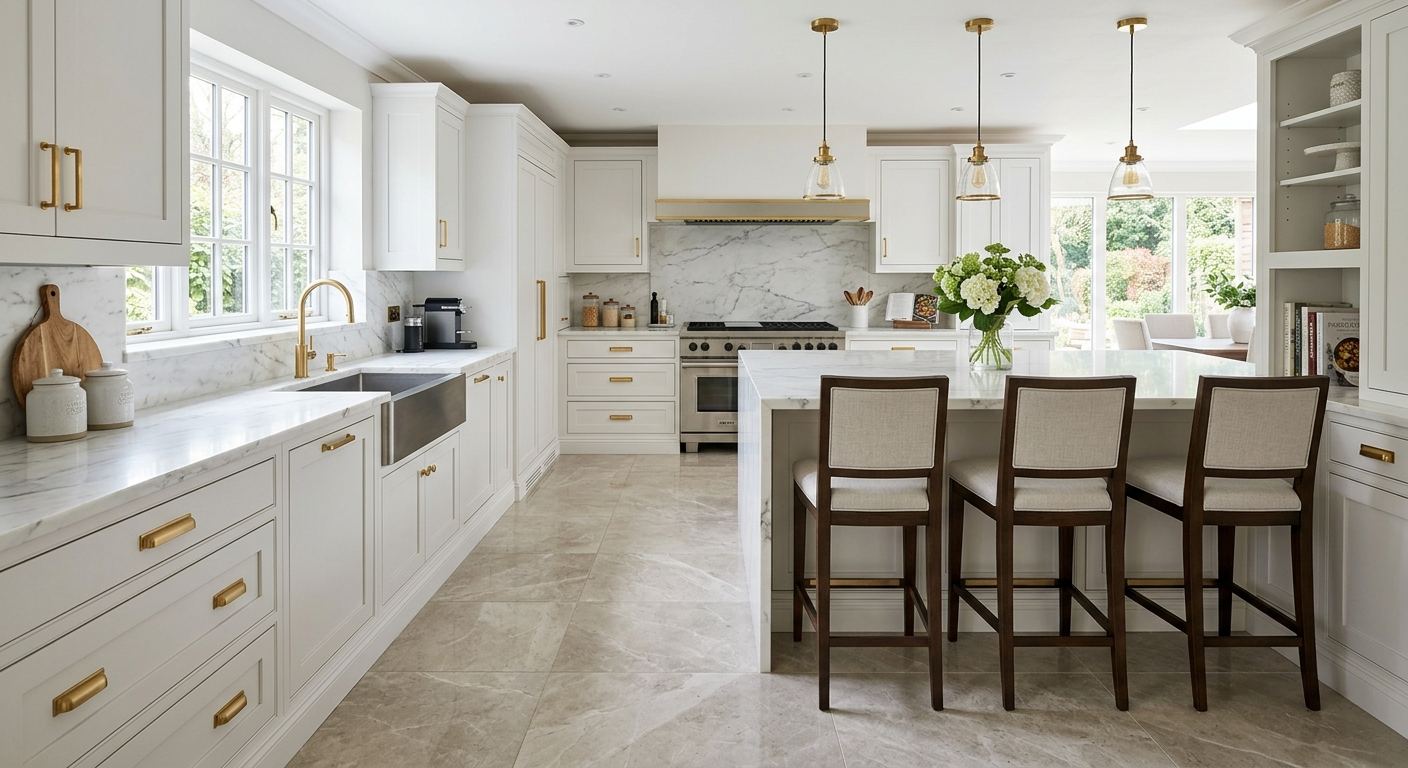
Kitchen renovation options and costs in Stride Hill
Stride Hill homeowners usually start their search by asking what a kitchen renovation “should” cost, but the real answer depends on how you’re positioning your home. In Stride Hill, the local profile shows a population of 6,019 (Statistics Canada, 2021 Census), and most kitchen buyers nearby are planning around resale expectations in the Lower Mainland–Southwest. That matters because kitchen finish choices often track household purchasing power and the level of improvement homeowners feel comfortable paying for—especially when the home value in the Metro Vancouver orbit supports higher-end updates. Contractors in this area tend to see more semi-custom cabinetry and stone-look surfaces where owners want a clear “move-in ready” outcome.
Pricing in the Lower Mainland–Southwest is driven more by home value, income, and the finish tier than by climate, so you’ll notice quotes swing based on cabinetry complexity, counter material, and whether layout work is included. We still have to account for our wet, freeze-thaw-free coastal conditions: less extreme temperature cycling than inland B.C., but higher indoor humidity exposure from everyday living can affect how materials are installed and how sealants perform long-term. Availability also plays a role—when trades are busy across Surrey/Abbotsford and the region, lead times for cabinets and quartz can push schedules and labour logistics.
If you’re in the most active renovation corridors around Stride Hill’s shopping-and-services belt, contractors typically book faster for full renos in the “practical but upgraded” category. Next, use the tiers below to compare common scopes and budget ranges, then dial in the option that matches your goals.
| Renovation Tier |
What's Included |
Typical Duration |
Price Range |
| Cosmetic refresh (paint, hardware, new appliances only) |
Cabinet paint or stain (if applicable), new hardware, appliance swap, minor touch-ups; no cabinet/counter rework |
1–2 weeks |
$5,000–$20,000 |
| Mid-range full renovation (new cabinets, counters, sink, tile) |
Semi-custom or upgraded stock cabinets, countertop install, sink/faucet, backsplash tile, new flooring piecework as needed, basic electrical allowance |
3–6 weeks |
$40,000–$80,000 |
| High-end full renovation (custom cabinets, stone counters, island) |
Fully custom millwork, quartz/stone countertops, island with upgraded storage, full backsplash, enhanced lighting allowance, sink + disposal, premium finishes |
6–12 weeks |
$85,000–$120,000 |
| Cabinet refacing only (new doors + drawer fronts, same boxes) |
Door/drawer replacement, new hardware, finishing system; countertops and tile not included |
2–4 weeks |
$8,000–$35,000 |
| Countertop swap only (laminate to quartz or stone) |
Removal and install of new countertops, edge upgrade, backsplash may be partially adjusted if required |
3–7 days |
$3,000–$12,000 |
| Backsplash tile installation only |
Tile supply and install, surface prep, grout/seal; includes standard trim and outlet/edge details |
4–10 days |
$1,500–$6,000 |
Prices are estimates only and vary by project scope, site access and material selection.
What affects the price of kitchen renovation in Stride Hill
In Stride Hill and across the Lower Mainland–Southwest, you can see the same kitchen project land 30–50% apart depending on the finish tier, how many trades are involved, and how complicated the job becomes behind the walls. It’s not because of climate alone—B.C.’s coastal conditions affect ventilation and material handling, but the biggest driver is homeowner expectation tied to local housing economics. In higher-value pockets of the Lower Mainland, owners often default to quartz or stone counters and semi-custom cabinetry because the improvement is easier to justify on resale. In lower-cost renovation scopes, laminate and stock cabinet systems dominate because they reduce risk and still deliver a clean, functional upgrade.
Layout changes are where uncertainty spikes regardless of finish level: removing a wall, adding an island, or moving a gas line and venting approach. In practice, that work can push you from a “mid-range” plan into the upper end of full renovation budgets that align with the $40,000–$80,000 band, especially when electrical and plumbing rough-ins expand. Conversely, staying in place—new cabinets on the existing footprint and a countertop refresh—can keep budgets closer to the $8,000–$50,000 cabinet tier or even countertop-only ranges.
Concrete Stride Hill examples I see often: (1) older homes with out-of-date shutoffs can add time to plumbing coordination and pressure testing before counters go in; (2) if you’re installing an island with under-cabinet lighting, you’re effectively adding circuits and more drywall work than homeowners expect; (3) moving from laminate to quartz can be straightforward if the substrate is flat and dry, but if the existing base has sag or water exposure near sink plumbing, you’ll pay to correct before the new counter goes on.
The short version: finish selection matters, but layout, hidden conditions, and trade coordination are what most reliably move your quote up or down in Stride Hill.
| Price Factor |
Why It Matters |
Cost Impact |
| Cabinet tier — stock vs. semi-custom vs. fully custom millwork |
Build quality, door styles, internal storage, and how cabinets fit around uneven walls/soffits |
Small refresh: $8,000–$25,000; full upgrades: can shift a project toward the $40,000–$120,000 range |
| Countertop material — laminate vs. quartz vs. granite vs. stone |
Material cost, thickness, edge profiles, and fabrication/installation complexity |
Laminate is lowest; quartz/stone commonly add thousands and can drive the countertop portion closer to $3,000–$12,000 |
| Layout change — wall removal, island add, plumbing/gas move |
Requires structural checks, permits, rough-ins, and longer sequencing between trades |
Often the largest swing; can add several thousand to tens of thousands depending on scope |
| Appliance package tier — builder vs. mid-range vs. pro-grade |
Cutouts, venting requirements, power needs, and finish matching |
Pro-grade packages commonly increase appliance and install costs versus mid-range |
| Flooring — refinish existing vs. full replacement |
Protection, subfloor condition, and whether cabinets need to be removed to re-floor |
Refinishing keeps costs restrained; full replacement adds trade time and material |
| Backsplash — ceramic tile vs. marble vs. full-height slab |
Material weight, cutting around outlets, and whether you’re tiling to full height or using a slab system |
Standard tile commonly lands in $1,500–$6,000; premium slab increases labour and material |
| Electrical — new circuits for island, under-cabinet lighting |
Lighting changes are minor, but new circuits add inspection steps and wiring time |
Can add several thousand once wiring, protection, and testing are included |
| Permit fees and licensed trade requirements |
Covers inspections and ensures the right licensed trades do the right work |
Usually moderate by itself, but required scope expansions can increase overall project cost |
Permits & regulations in British Columbia
In British Columbia, homeowners can often renovate without permits for straightforward cosmetic work. Cabinet and countertop swaps typically do not require permits, because you’re replacing surfaces without changing the plumbing, gas, electrical, or structure. Where projects do change is when you alter systems behind the finishes: moving plumbing supply or drain lines, relocating gas appliances (such as a stove/range hood venting situation that involves gas), removing a load-bearing wall, or adding electrical circuits for an island or new lighting runs all commonly trigger permit requirements and inspections. Gas work must be performed by a licensed gas fitter, and electrical work must be done by a licensed electrician—both then need the appropriate inspections before walls close.
For a Stride Hill homeowner, the practical step-by-step verification looks like this: first, ask your contractor in writing whether permits are required for your exact scope. Second, confirm the trades’ licensing before work starts—request their licence details (or proof) and ensure the work is tied to the correct licensed company. Third, check liability insurance and request a certificate of insurance showing the contractor’s coverage amount and effective dates. If your contractor subcontracts labour, you should also ask for confirmation of workers’ compensation coverage (often handled under WCB arrangements for the company doing the work). Finally, require clear documentation in your contract about who pulls permits and who pays for inspections—don’t rely on “we’ll handle it” without specifics.
Bottom line: confirm responsibility in the contract first, then verify the paperwork with the contractor and the licensed trades before any demolition starts.
Cabinets, countertops and layout decisions in Stride Hill
For most Stride Hill renovations, three decisions determine 80% of your outcome: (1) cabinet tier, (2) countertop material, and (3) whether you change the layout. Start with cabinets. Stock systems are fastest and cheapest but can look more “standard” and may require extra filler when walls aren’t perfectly square. Semi-custom is the most popular mid-range choice because it balances faster lead times with better storage and fit—especially around soffits and older framing typical in parts of the Lower Mainland. Custom cabinets give you the best storage and aesthetics, but they’re the cost driver in the higher-end full renovation band.
Countertops should match your maintenance tolerance. Laminate is budget-friendly and fine for lighter use, but it’s less forgiving with heat and can be more sensitive to damage at seams. Quartz is popular here because it handles daily use well and provides a consistent look buyers expect at mid-range to premium tiers; it also performs well in our coastal humidity when installed correctly. Granite/natural stone can be very durable, but it usually adds higher maintenance expectations (sealing practices and care) and can cost more. Marble is the most “elegant” but tends to be the least forgiving for households that cook heavily.
Layout is where buyers feel the upgrade most. An open-concept wall removal or an island add can be justified if it improves traffic flow and creates real work-and-storage space—but it’s also where plumbing/gas relocation can materially increase cost. If you’re keeping the footprint, you can often stay closer to the mid-range full renovation band (around $40,000–$80,000) with new cabinets, counters, and tile. As a dollar example: moving from laminate counters to quartz might add a few thousand, and that’s usually worth it when you’re already upgrading cabinets; but if you’re only doing a small refresh, that added spend may be better saved for later when you’re ready to redesign the layout.
Make these choices with Lower Mainland–Southwest resale expectations in mind, and you’ll avoid paying “premium” prices for parts of the kitchen that aren’t actually being changed.
| Option |
Durability |
Maintenance |
Best For |
Price Range |
| Stock cabinets (big-box) |
Good for daily use; durability depends on door/hardware quality |
Low; wipe-down and handle tightening as needed |
Budget-focused refreshes and quick turnarounds |
$8,000–$25,000 |
| Semi-custom cabinets (local dealer) |
Very good; better storage options and fit around details |
Low; requires normal care of finishes and hardware |
Most Stride Hill renovations balancing value and aesthetics |
$25,000–$60,000 |
| Custom cabinets (local millwork shop) |
Excellent; tailored fit and higher-end hardware options |
Low to moderate; premium finishes may need specific cleaners |
High-end rebuilds and owners optimizing storage/layout |
$60,000–$95,000 |
| Laminate countertop |
Moderate; can chip or wear at edges and seams over time |
Low; avoid heat exposure and heavy impact at seams |
Shorter budget horizons or lighter cooking routines |
$3,000–$6,000 |
| Quartz engineered countertop |
High; very resilient to staining and daily abrasion |
Low; wipe clean, avoid standing hot cookware |
Busy kitchens and resale-friendly “upgrade” projects |
$6,000–$10,000 |
| Granite / natural stone countertop |
High; depends on stone selection and finish |
Moderate; may require periodic sealing and careful cleaners |
Owners who want natural veining and premium character |
$8,000–$12,000 |
| Butcher block countertop |
Moderate to high; subject to cutting/impact patterns |
Moderate; oiling and careful moisture management |
Warm look, food-prep focused kitchens (with good care) |
$5,000–$9,000 |
| Marble countertop |
Moderate; more prone to etching and staining than quartz |
Moderate to high; needs careful cleaning and protection |
Design-led kitchens where aesthetics matter most |
$10,000–$16,000 |
How to choose a kitchen renovation contractor in Stride Hill
Choosing the right contractor in Stride Hill comes down to proof and process, not just a number. Start by verifying British Columbia licensing: ask for the relevant trade licence details (for gas work and electrical, this is mandatory with licensed trades) and confirm the contractor’s company registration is appropriate for the scope. Then confirm insurance: request a certificate of liability insurance and ensure it names the correct legal entity and covers the work date range. For workers’ coverage, ask how workers’ compensation is handled (WCB coverage confirmation for the company doing the labour). If a contractor hesitates, delays, or only provides verbal assurances, that’s a warning sign.
Next, get 2–3 itemised written quotes that break labour and materials down by line item rather than one lump sum. Your quote should clearly state what’s included and what’s excluded: permit pull included or not, demolition/disposal, appliance installation responsibilities, and whether plumbing/electrical work is “allowance” based. A good quote also lists lead-time assumptions for cabinets and counters—important on the Lower Mainland when manufacturers and fabricators are booked.
Warranty matters too: confirm workmanship warranty length, what it covers (for example, cabinet alignment/settling, backsplash adhesion, countertop seam performance), and whether product/manufacturer warranties are separate and transferable. Payment schedule should be conservative: never more than 10–15% upfront; keep a holdback until key milestones are complete. Finally, insist on a written timeline: start date, phased plan, and completion estimate tied to material delivery.
- Ask for an itemised scope with line-item labour and material allowances.
- Confirm who pulls permits and who pays inspection fees.
- Require countertop fabrication dates and installation scheduling in writing.
- Check certificate of insurance (liability) with correct legal name and dates.
- Verify WCB coverage confirmation for the labour-providing company.
- Confirm licensed trades for gas and electrical with licence proof before work.
- Review warranty terms: workmanship duration and exclusions.
- Demand a payment schedule with a holdback until completion and walkthrough.
- Ask how hidden conditions are handled (subfloor, water damage near sink).
- Confirm disposal: demolition debris haul-away is included or priced separately.
- Get start/completion dates as written milestones, not “estimated” only.
- Clarify what happens if materials arrive late (schedule adjustments and costs).
Red flags I see in Stride Hill: quotes that don’t list permits/disposal responsibilities, vague scopes that mix allowances with no quantities, contractors who won’t provide insurance documentation, unrealistic timelines that ignore cabinet/quartz lead times, and payment requests that exceed 10–15% upfront without a written milestone plan.
Frequently asked questions — kitchen renovation in Stride Hill
What's the most popular kitchen style in Stride Hill right now?
In Stride Hill and the surrounding Lower Mainland–Southwest market, the most popular direction is a clean, bright modern look with practical storage: shaker-style or simple slab fronts, neutral wall colours, and upgraded hardware (often brushed nickel or matte black). On the upgrade side, many homeowners choose quartz countertops because they look premium with relatively low maintenance and hold up to daily use. If you’re aiming for a mid-range full renovation, many projects cluster around the $40,000–$80,000 band, which typically allows semi-custom cabinetry, updated counters, and a coordinated backsplash. Older homes also influence style—people prefer finishes that visually “refresh” the kitchen without requiring major structural changes, especially when timelines and disruption matter.
How do I know if I need to update my kitchen plumbing in Stride Hill?
You usually don’t need to replace plumbing just because you’re doing cosmetic work, but you do need a plumbing plan when the renovation touches sink locations, dishwasher hookups, or any drainage reroutes. In Stride Hill, the most common reason plumbing gets updated during a reno is hidden age or wear near the sink—leaking shutoffs, slow drains, or undersized lines that can’t handle modern dishwasher flow. During the quote process, ask whether your contractor will evaluate shutoff valves and check for corrosion before countertop installation. If you’re moving a sink or adding an island with plumbing, that’s a clear trigger for licensed work and permits, and it can increase total cost even if your finishes stay in the mid-range.
What is the difference between a galley and open-concept kitchen?
A galley kitchen is a narrow layout with counters on two parallel sides, typically with a tighter work corridor. An open-concept kitchen removes or reduces barriers so the kitchen connects into the living/dining area, improving sightlines and traffic flow. In the Lower Mainland–Southwest, open-concept renovations are popular for resale appeal, but they’re also more expensive because they often involve structural review (if walls are removed), electrical planning, and sometimes plumbing or ventilation changes. If you keep a galley footprint and do cabinet/counter upgrades, costs are usually easier to control within a cabinet-focused or mid-range full scope. If you go open-concept, budget for a higher tier and more coordination between trades.
How do I get accurate kitchen renovation quotes in Stride Hill?
Accurate quotes come from a defined scope and itemised assumptions, not just measurements. Start by providing clear dimensions and a finish direction (cabinet tier, countertop material, backsplash scope). Then request 2–3 itemised written quotes separating labour and materials, including allowances for cabinets, counters, tile, electrical, and plumbing. Ask whether permits are required and who pulls them, and confirm whether disposal and site protection are included. For reliability, ask your contractor to include a start date, delivery assumptions, and how schedule changes are handled if cabinets or quartz arrive late. If you’re comparing options, remember that a mid-range full renovation can sit in the $40,000–$80,000 band, while premium upgrades with custom millwork and stone counters often push toward the $85,000–$120,000 range.
What's the best countertop material for a busy Stride Hill kitchen?
For most busy households in Stride Hill and across British Columbia, quartz is the “best practical balance”: it’s very stain-resistant, easy to clean, and generally durable for everyday cooking. It also tends to install cleanly during full renovations because it’s engineered and consistent in thickness and appearance. If you want a lower upfront cost, laminate is workable, but it’s less forgiving with heat and impact and can age faster at seams. Granite/natural stone can be excellent for durability and appearance, but it may require more care and sealing habits depending on stone selection. If your plan includes a full remodel, quartz often fits the mid-range upgrade expectations buyers look for; if your budget is closer to countertop-only work, quartz is still a realistic upgrade within the countertop installation band of $3,000–$12,000.
How do I add an island to my Stride Hill kitchen?
Adding an island usually starts with checking clearances and then deciding what the island must do. If it’s mainly for seating and extra storage, you can often avoid the biggest cost swings by keeping it “electrical-only” (for example, adding outlets and under-cabinet lighting) rather than plumbing. If you want a sink or gas cooktop in the island, that triggers more complex rough-ins and commonly requires permits plus licensed trade involvement. In Stride Hill, many homeowners find the layout justification is strongest when the island meaningfully improves workflow—creating a clear path from fridge to sink to cooking zone. Ask your contractor to show you two scenarios in the quote: island with outlets only versus island with plumbing/gas, because the second option usually changes the project total substantially.