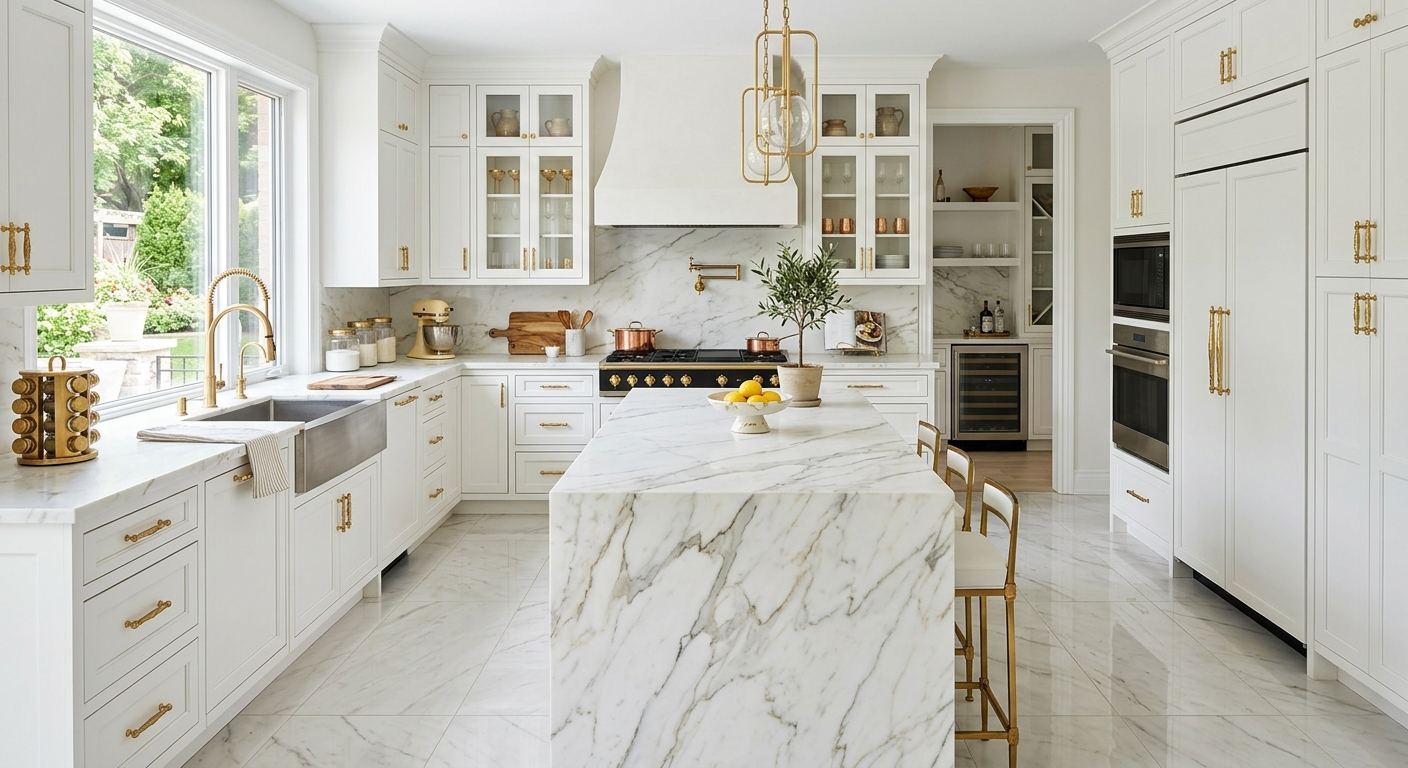
Kitchen renovation options and costs in Canyon Heights
In Canyon Heights, the cost of a kitchen renovation often comes down less to the weather and more to what buyers expect when they walk through the finished home. With Canyon Heights sitting within the Lower Mainland–Southwest, local homeowners typically weigh upgrade value against resale practicality, especially in a market where many properties already have modernized cores. The Census profile shows a smaller population base (2,849 residents in Canyon Heights in 2021) that supports a steady, relationship-driven trades market, rather than one-off “wholesale only” installers. At the same time, the Lower Mainland’s higher household income households in the broader region tend to push projects toward semi-custom or custom cabinetry and stone counters, because the finish level is easier to justify at resale. (Statistics Canada, 2021 Census)
Even though British Columbia’s coastal climate can increase humidity swings and affect drying times for coatings and adhesives, the bigger cost drivers are finish tier, cabinetry complexity, and whether you’re changing plumbing, gas, or electrical. In the Lower Mainland–Southwest, contractor availability is generally strong, but premium scopes (custom millwork, quartz/stone slabs, and layout changes) do book out faster. A neighbourhood where this trade is consistently in demand in Canyon Heights is the North Vancouver–adjacent corridor near Lynn Valley and the surrounding canyon-side areas, where many homeowners are doing full refreshes rather than minimal updates.
Below are the common renovation tiers contractors use when comparing Canyon Heights quotes—this is the best way to separate apples-to-apples scopes before you choose materials.
| Renovation Tier |
What's Included |
Typical Duration |
Price Range |
| Cosmetic refresh (paint, hardware, new appliances only) |
Cabinet paint or repaint, new pulls/hinges, appliance swap, basic caulking and touch-ups |
1–2 weeks |
$8,000–$18,000 |
| Mid-range full renovation (new cabinets, counters, sink, tile) |
New semi-custom or upgraded stock cabinets, quartz or laminate counters, sink + faucet, backsplash tile, flooring spot repair/trim |
3–6 weeks |
$40,000–$80,000 |
| High-end full renovation (custom cabinets, stone counters, island) |
Fully custom millwork, stone counters, island base + lighting, upgraded backsplash (tile to slab option), sink + faucet upgrade, premium finishes |
6–12 weeks |
$90,000–$120,000 |
| Cabinet refacing only (new doors + drawer fronts, same boxes) |
Door and drawer front replacement, new hardware, optional internal improvements (soft-close upgrade) |
2–4 weeks |
$8,000–$30,000 |
| Countertop swap only (laminate to quartz or stone) |
Remove existing top, template, supply and install new counters (quartz/stone), sink cut-outs if applicable |
1–3 weeks |
$3,500–$12,000 |
| Backsplash tile installation only |
Surface prep, tile install (ceramic/porcelain), grout + caulk transitions |
3–7 days |
$1,500–$4,500 |
Prices are estimates only and vary by project scope, site access and material selection.
What affects the price of kitchen renovation in Canyon Heights
In Canyon Heights and across the Lower Mainland–Southwest, two homeowners can receive bids that differ by 30–50% for the “same” kitchen because the price hinges on what isn’t visible in photos: cabinetry engineering, the true labour hours behind layout changes, and how premium the installer’s finish package is (edge banding quality, hardware grade, and how they handle drywall/tiling transitions). Climate plays a secondary role. Coastal British Columbia humidity can slow cure times for coatings and adhesives, but it usually doesn’t create the kind of cost swing that material tier and trade scope do. That’s why, in higher-value parts of the Metro Vancouver belt, owners often default to quartz or stone counters and semi-custom cabinetry—those costs are easier to recover when the home is marketed (and when buyers scan for modern finishes). In more modest scopes, laminate and stock cabinets dominate because they keep you near the lower end of the mid-range bands while still updating the look.
Here are a few Canyon Heights–relevant examples that push costs up or down. First, older homes and kitchen back walls sometimes have out-of-square framing; plan for extra subfloor and wall prep when you’re replacing tile or installing new cabinets. Second, island additions or open-concept work can require relocating a gas line or moving plumbing lines—those are the unpredictables that sit outside your “finish” budget. Third, if your current counters are older laminate with weak substrate, countertop swaps can expand into additional structural reinforcement, which moves you toward the higher countertop installation end (for example, $3,000–$12,000). Finally, electrical upgrades for under-cabinet lighting and new circuits can add time even when materials stay mid-range.
When you compare quotes, anchor them to the project outcome bands: a practical mid-range full renovation often lands in the $40,000–$80,000 bracket, while custom millwork and stone with an island commonly pushes a high-end full renovation toward $90,000–$120,000. Finish tier is important—but the layout and service moves are what most often break the budget.
| Price Factor |
Why It Matters |
Cost Impact |
| Cabinet tier — stock vs. semi-custom vs. fully custom millwork |
Custom sizing, internal hardware options, and build quality change labour time and material cost |
Can shift a full renovation by roughly $10,000–$40,000 depending on the kitchen size and complexity |
| Countertop material — laminate vs. quartz vs. granite vs. stone |
Material cost, thickness, templating complexity, and seam planning drive pricing |
Countertops alone can range from about $3,000 up to $12,000+ installed |
| Layout change — wall removal, island add, plumbing/gas move |
Service relocation adds licensed labour, patching time, and inspection scheduling |
Often adds $5,000–$25,000+ even if finishes stay mid-range |
| Appliance package tier — builder vs. mid-range vs. pro-grade |
Dimensions, power requirements, ventilation needs, and install requirements vary |
Commonly shifts appliance-related scope by $1,500–$8,000 |
| Flooring — refinish existing vs. full replacement |
Cabinet base removal and uneven subfloor may force full replacement or underlayment upgrades |
Can add $2,000–$12,000+ depending on flooring type and demolition extent |
| Backsplash — ceramic tile vs. marble vs. full-height slab |
Material weight, pattern matching, and finishing details affect labour and waste |
Backsplash-only often runs $1,500–$6,000 based on finish tier |
| Electrical — new circuits for island, under-cabinet lighting |
Licensed electrician time + new runs for power/lighting affect schedule |
Can add $800–$6,000+ depending on number of fixtures and wiring paths |
| Permit fees and licensed trade requirements |
Any work involving services, load-bearing changes, or added circuits can trigger permitting and inspections |
Typically adds a few thousand dollars once you include trade scheduling and admin |
Permits & regulations in British Columbia
In British Columbia, cabinet and countertop swaps usually do not require permits if you’re not moving the underlying services. That means replacing existing cabinets, switching the countertop material, and installing a new backsplash are typically “no-permit” scopes—assuming you’re not changing plumbing/gas/electrical routes. However, permits are commonly required when the work changes the home’s services or structure. Examples of work that typically does require a permit and licensed trades include: moving plumbing supply or drain lines, relocating gas connections (such as a stove or gas range hood), removing or altering a load-bearing wall, and adding new electrical circuits (like dedicated power for an island, new lighting circuits, or significant electrical rework).
Gas work must be completed by a licensed gasfitter, and electrical work must be done by a licensed electrician, with inspections arranged as required. Before you sign anything, confirm in writing who is responsible for pulling permits (contractor vs. homeowner) and what’s included for inspection scheduling.
How to verify a contractor in Canyon Heights step-by-step: first, ask for licence information and check the contractor’s trade credentials for electrical and gas where applicable. Next, request a certificate of liability insurance and verify coverage is active for your project date range. For workers, ask about coverage documentation (WCB clearance letter or proof of coverage, where applicable) and make sure subcontractors provide their own documentation too. If they can’t provide clear documents, that’s usually a sign to keep shopping.
Cabinets, countertops and layout decisions in Canyon Heights
When you plan a kitchen renovation in Canyon Heights, three decisions dominate the outcome: (1) cabinet tier, (2) countertop material, and (3) whether you change the layout. Cabinet tier drives speed and fit. Stock cabinets are the fastest and cheapest option because the parts are standardized; semi-custom (the most common choice) balances price with better sizing for typical Lower Mainland homes; custom cabinets cost more but solve awkward ceiling heights, niche spaces, and any “almost standard” wall conditions you see in older neighbourhood houses.
Countertops then set the day-to-day satisfaction level. Laminate is the budget-friendly route and can be upgraded visually, but it’s less forgiving with impacts and heat. Quartz is popular in British Columbia kitchens because it resists staining and is consistent across slabs, landing often in the mid-to-upper end of typical countertop installs (and pushing the total closer to the mid-range renovation tier). Granite and other natural stones look premium but require more care; marble is beautiful yet more sensitive to etching and acidic spills, which matters in a family kitchen.
Finally, layout decisions are where you justify cost with space gain. Open-concept wall removal or an island addition can be worth it when it improves traffic flow and seating; but plumbing or gas relocation is the largest swing factor regardless of finish level. For example, if your plan is “mid-range full renovation” and you keep plumbing in place, you might stay closer to $40,000–$80,000. If you add an island and move a gas line, you can still use quartz cabinets and counters—but the services and licensed trade time often push the project toward the high end of the full renovation band.
Climate-wise, Canyon Heights’ coastal conditions mean contractors should manage moisture-sensitive finishes and scheduling, but the resale-driven finish expectations in the Lower Mainland–Southwest remain the primary cost influencer.
| Option |
Durability |
Maintenance |
Best For |
Price Range |
| Stock cabinets (big-box) |
Good for standard dimensions; durability depends on assembly quality |
Low—typical cleaning and occasional hinge/hardware tightening |
Fast refreshes where walls are close to standard |
$8,000–$20,000 |
| Semi-custom cabinets (local dealer) |
Very solid construction with better fit options |
Low—soft-close hardware reduces wear on doors and drawers |
Most Canyon Heights mid-range renos seeking a tailored look |
$20,000–$45,000 |
| Custom cabinets (local millwork shop) |
Excellent fit and longevity; tailored joinery and finishes |
Low—best when paired with quality hardware and stable installation |
Complex layouts, awkward ceilings, and premium finish goals |
$45,000–$80,000 |
| Laminate countertop |
Moderate; can chip or blister with heat or impact if not handled carefully |
Easy daily care; avoid prolonged standing water at seams |
Budget-focused upgrades with a modern-look goal |
$3,000–$6,000 |
| Quartz engineered countertop |
High—strong against staining and everyday wear |
Low—requires basic cleaning, protects against heavy impact |
Busy households wanting consistent performance in British Columbia kitchens |
$6,000–$10,000 |
| Granite / natural stone countertop |
High—durable and heat tolerant |
Medium—may need periodic sealing depending on slab |
Homeowners wanting natural variation and premium curb appeal |
$8,000–$12,000 |
| Butcher block countertop |
Moderate to high when maintained; can dent without routine care |
Higher—requires oiling and careful sanitation around seams |
Warm, family-friendly kitchens with a hands-on maintenance preference |
$4,000–$8,000 |
| Marble countertop |
Moderate—more susceptible to scratching and etching |
Higher—needs careful cleaning and quick spill attention |
Design-forward kitchens used more lightly or with strong habits |
$10,000–$16,000 |
How to choose a kitchen renovation contractor in Canyon Heights
Choosing the right contractor in Canyon Heights starts with verifying the right credentials for the kind of work you’re doing. In British Columbia, ask for proof of licensing where required (electrical and gasfitting credentials for those scopes), and confirm their contractor status. Request certificate of liability insurance and ensure the policy covers renovations at your address for the project term. For coverage related to worker protection, ask for a WCB clearance letter or proof of WCB coverage for the contractor and any subcontractors; reputable firms provide this without delays.
Next, get 2–3 itemised written quotes, not one lump-sum number. A good quote breaks labour and materials by major categories—demo/disposal, cabinetry supply and install, countertop templating and installation, plumbing/gas/electrical trades (if applicable), tile/backsplash, drywall/paint, and any allowance line items. Review what’s excluded (often this is where budgets get eaten): permits and inspections, disposal, patch/paint above cabinets, moving appliances, and subfloor repairs. Also ask whether permit pull is included when required and who schedules inspections.
Warranty matters in kitchen renos: confirm the workmanship warranty length and what it covers, and ask for the manufacturer’s product warranty details (cabinets and countertop). Find out whether warranties are transferable if you sell.
For payment, never pay more than 10–15% upfront. Hold back a portion until the job is complete and punch-list items are corrected. Finally, insist on a written timeline with a start date and estimated completion window—especially in the Lower Mainland, where custom cabinetry lead times can affect your schedule.
- Confirm electrical and gas scopes are covered by licensed trades with documentation
- Request certificate of liability insurance and verify it’s active
- Ask for WCB clearance letter/proof of coverage (contractor and key subcontractors)
- Use itemised quotes with labour/material lines, not a single total
- Check whether permits and inspections are included in the quoted scope
- Confirm disposal and demolition haul-away are included (or priced separately)
- Verify cabinetry installation includes shimming, anchoring, and hardware set-up
- Ask how they handle out-of-square walls and older framing conditions
- Review backsplash scope: wall prep, waterproofing (where needed), and grout type
- Clarify countertop scope: templating, seam locations, sink/cooktop cut-outs
- Confirm warranty: workmanship duration and manufacturer warranty terms
- Set a payment schedule with a holdback until completion and punch list
Concrete red flags I see around Canyon Heights kitchen renovations: (1) quotes that don’t specify cabinet tier or countertop material grade, (2) no written scope for disposal, (3) vague “permit handled” wording without assigning responsibility, (4) asking for large upfront payments beyond 10–15%, and (5) refusing to provide insurance/WCB paperwork or only sending screenshots that don’t clearly show coverage dates.
Frequently asked questions — kitchen renovation in Canyon Heights
What is the difference between a galley and open-concept kitchen?
A galley kitchen is a corridor layout: counters run along two parallel walls with limited walking space between. It’s efficient for cooking and works well in narrower homes common across older Lower Mainland streets, including parts of Canyon Heights. An open-concept kitchen removes a visual barrier—often a wall—so the kitchen flows into the living/dining area. In British Columbia, open-concept work can trigger additional permitting if you remove or alter a load-bearing wall, and it can add cost because electrical and sometimes plumbing/gas routes need re-planning. Typically, galley refreshes can fit the lower end of your renovation band (sometimes closer to appliance-and-finish updates), while open-concept remodels often land in full-renovation pricing once cabinetry, tile, and service coordination are included.
How do I get accurate kitchen renovation quotes in Canyon Heights?
To get accurate quotes in Canyon Heights, start with a written scope and bring consistent specs to each contractor—cabinet tier, countertop material, backsplash height, appliance model tiers, and whether you’re changing the layout. Ask for 2–3 itemised quotes with labour and materials broken out. Confirm whether permits are included where required and whether disposal is included, because those items can swing totals by thousands. If you want stone counters, specify quartz vs. natural stone; for example, a countertop swap-only scope can commonly fall around $3,500–$12,000 installed depending on material and sink/cut-outs. Also request a site visit or at least a detailed measurement process; older walls and out-of-square framing in the Lower Mainland can affect labour and waste. Finally, keep the timeline realistic by asking for lead times on cabinets and countertops.
What's the best countertop material for a busy Canyon Heights kitchen?
For most busy households in Canyon Heights and across the Lower Mainland–Southwest, quartz engineered countertops are a practical “best overall” choice: they’re resistant to staining from everyday cooking, and they’re low-maintenance compared to many natural stones. That’s especially helpful in a coastal climate where humidity can make strict maintenance routines feel more complicated. Laminate can work if you’re prioritizing budget, but it’s more sensitive to heat and impact. Granite is durable and elegant, but sealing and care requirements can vary by slab. Marble is stunning but tends to be more vulnerable to etching from acidic spills, so it’s better for kitchens with careful habits. If you’re budgeting, note that countertop installation commonly ranges roughly $3,000–$12,000+ depending on material; choosing quartz vs. higher-end stone affects both upfront cost and long-term day-to-day stress.
How do I add an island to my Canyon Heights kitchen?
Adding an island is usually feasible, but the cost depends on two questions: space and services. First, measure clearances—too-tight aisles make an island feel cramped, especially in galley-to-open transitions. Second, determine whether the island requires new power, plumbing, or gas. If you move or add plumbing/gas connections, British Columbia permitting and licensed trades are typically required, and inspections add time. If the island is “non-service” (seating only, no sink/cooktop), you can often keep the project closer to a mid-range full renovation band; if it includes a sink, dishwasher tie-in, venting, or gas cooking, costs can climb quickly. A contractor should model the layout, plan seam locations for countertops, and confirm how the floor transitions will be handled to avoid movement—particularly in older homes where subfloor may be uneven.
How much does a kitchen renovation cost in Canyon Heights?
In Canyon Heights, kitchen renovation costs commonly fall into the typical British Columbia bands for the Lower Mainland–Southwest tier: a full kitchen renovation is often quoted in the range of $40,000–$120,000 depending on cabinet tier, countertop choice, and whether you change the layout. For a mid-range full renovation (new cabinets, counters, sink, and tile), many projects land closer to $40,000–$80,000. If you choose custom cabinetry and stone counters with an island and more complex finish detailing, projects more often approach $90,000–$120,000. Cabinet refacing only generally sits around $8,000–$50,000 depending on how much hardware and internal upgrades you add. Pricing differences can also reflect the broader market’s finish expectations; in a region with higher-income demand, homeowners frequently choose semi-custom or stone to support resale.
How long does a kitchen renovation take in Canyon Heights?
Typical timelines in Canyon Heights depend on scope and material lead times. A cosmetic refresh (paint, hardware, and appliance swaps) often takes about 1–2 weeks. A mid-range full renovation with new cabinets, counters, sink, and backsplash is commonly 3–6 weeks, assuming cabinets and countertops arrive on schedule. High-end full renovations—especially with custom cabinets and stone counters plus an island—often run 6–12 weeks due to fabrication and coordinated trade scheduling. Coastal humidity in British Columbia can also influence curing times for coatings and the sequencing of flooring, drywall, and countertop installation prep. Your best protection is a written schedule with a start date and realistic completion estimate, plus confirmed lead times from suppliers before demolition starts.