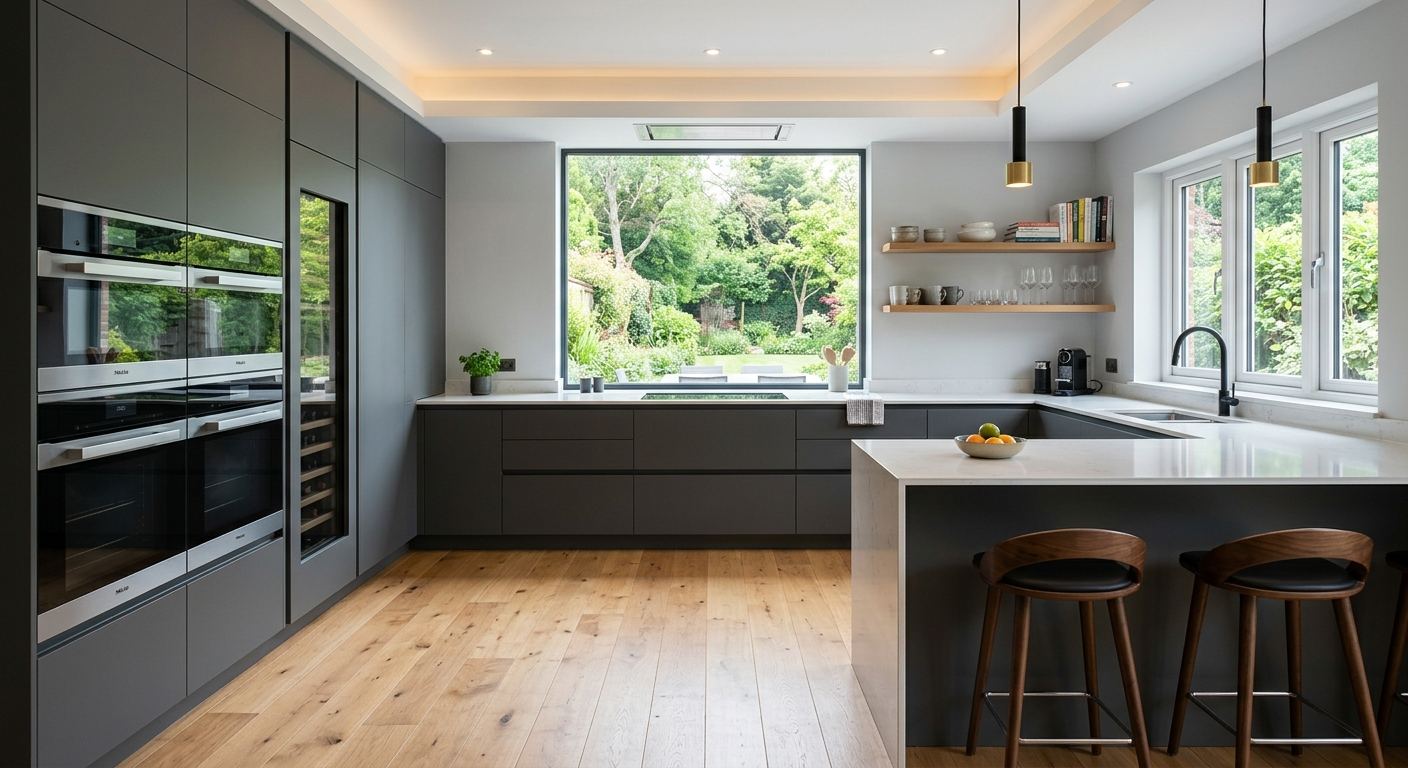
Kitchen renovation options and costs in Gabriola
Gabriola sits on Vancouver Island’s doorstep, but your kitchen costs are still strongly influenced by the Lower Mainland–Southwest market—especially materials and the labour pool that supplies projects across the region. With a population of about 4,500 residents (Statistics Canada, 2021 Census), Gabriola often draws trades from nearby communities for cabinetry, tile, and stone, which can tighten availability during peak renovation seasons. In the Lower Mainland–Southwest, higher home values and owner expectations typically push finishes toward semi-custom cabinetry and quartz/stone rather than laminate. That “finish default” is a big reason the same kitchen size can land in very different price bands depending on whether it’s a practical refresh or a full rebuild aimed at resale.
BC’s climate doesn’t usually drive kitchen pricing the way it does for exterior envelope work, but it affects day-to-day execution: humidity can slow drying times for certain coatings, and coastal corrosion expectations influence hardware choices (more stainless-leaning selections). On top of that, the Lower Mainland–Southwest demand for premium millwork and quartz can pull installers into scheduling windows sooner than you’d expect.
On Gabriola, trade interest is often highest for homes in the older, established neighbourhood pockets near the ferry corridor and around the village core, where homeowners commonly blend upgrades with partial layout improvements. If you’re comparing options, the best way to estimate your direction is to start with the tier that matches your finish level—then confirm what needs permits or licensed trades before you price the timeline.
Here are typical renovation tiers contractors use when building a quote for Gabriola.
| Renovation Tier |
What's Included |
Typical Duration |
Price Range |
| Cosmetic refresh (paint, hardware, new appliances only) |
Cabinet paint or restain (no new cabinetry), new pulls/knobs, replace appliances, minor caulking and touch-ups |
3–7 days (plus 1–2 days for appliance delivery/turn-on) |
$8,000–$20,000 |
| Mid-range full renovation (new cabinets, counters, sink, tile) |
New stock or semi-custom cabinets, new countertops, sink and faucet, backsplash tile, updated flooring tie-in, basic lighting adjustments |
4–7 weeks |
$40,000–$85,000 |
| High-end full renovation (custom cabinets, stone counters, island) |
Custom cabinets, quartz/granite/stone, extended backsplash or feature wall, island with power, enhanced lighting package, premium hardware and fixtures |
8–14 weeks |
$85,000–$120,000 |
| Cabinet refacing only (new doors + drawer fronts, same boxes) |
New cabinet doors and drawer fronts, new hardware, sanding/prep and finishing to match, optional interior re-lam or shelves depending on system |
2–4 weeks |
$8,000–$35,000 |
| Countertop swap only (laminate to quartz or stone) |
Remove and dispose old laminate, install quartz/stone, new sink cut-out if needed, seam planning, sealing as applicable |
1–3 weeks |
$3,000–$12,000 |
| Backsplash tile installation only |
Surface prep, tile install (ceramic/porcelain), grout, sealant at changes of plane, allowance for trim/edge pieces |
1–2 weeks |
$1,500–$6,000 |
Prices are estimates only and vary by project scope, site access and material selection.
What affects the price of kitchen renovation in Gabriola
In the Lower Mainland–Southwest, the difference between two quotes for the same kitchen can easily swing by 30–50% because pricing tracks perceived value: homeowners in higher-value pockets typically aim for semi-custom or custom cabinetry and quartz/stone counters, while more modest scopes often stick to stock cabinets and laminate to protect ROI. That’s why “same room, same footprint” doesn’t always mean “same cost” across British Columbia—material choice and perceived resale impact drive the largest portion of the spread.
In Gabriola, the finish tier still largely follows the Lower Mainland–Southwest buyer expectation, not coastal humidity. Where homes are positioned for stronger resale demand, quartz or stone counters and upgraded hardware become the default because the cost is easier to justify when you’re updating the kitchen for showings. In more budget-focused refreshes, laminate and stock cabinets keep the total within recognizable renovation bands like a mid-range full renovation around $40,000–$85,000 rather than moving into premium rebuild territory.
Layout changes are the most unpredictable regardless of finish level. Removing a wall, adding an island, or moving plumbing/gas lines can change labour hours, inspection steps, and materials entirely—often dominating the quote even when you keep cabinets and counters in a similar category.
Two concrete Gabriola-friendly examples I see often: (1) replacing laminate with quartz may feel “straightforward,” but if you change sink size or tap the counter for an undermount, countertop and plumbing coordination can bump the scope; (2) opting for full-height backsplash tile increases labour due to scribing to uneven walls in older homes. If you’re working around older housing-stock, expect extra time for prep—tight tolerance adjustments can add cost even when the visible finish is simple.
| Price Factor |
Why It Matters |
Cost Impact |
| Cabinet tier — stock vs. semi-custom vs. fully custom millwork |
Higher tiers change door/style complexity, build time, and installation precision for a better fit and finish |
- Can shift total project by tens of thousands on full remodels
- Refacing can hold cost down when existing boxes are sound
|
| Countertop material — laminate vs. quartz vs. granite vs. stone |
Material cost and fabrication complexity (seams, edge profiles, cut-outs) drive labour and waste |
- Quartz/stone generally raises countertop budgets compared with laminate
- Natural stone can add variability for slab selection and scheduling
|
| Layout change — wall removal, island add, plumbing/gas move |
Changes trades coordination, permits, and structural/electrical/plumbing scope |
- Often increases total cost more than upgrading finishes
- Can add inspection and lead-time delays
|
| Appliance package tier — builder vs. mid-range vs. pro-grade |
Delivery lead times, trim kits, electrical requirements, and installation tolerances vary by tier |
- Pro-grade packages can increase cost and cabinet planning needs
- Mid-range is a common “resale-safe” compromise
|
| Flooring — refinish existing vs. full replacement |
Kitchen renovations often uncover subfloor issues; removing and re-laying flooring can trigger additional prep |
- Full replacement typically adds labour and material cost
- Refinishing can reduce disruption when subfloor is stable
|
| Backsplash — ceramic tile vs. marble vs. full-height slab |
Slab formats require more precise alignment and handling; full-height increases surface area significantly |
- Full-height or stone increases tile/stone labour and risk of rework
- Ceramic tile stays the most predictable
|
| Electrical — new circuits for island, under-cabinet lighting |
More power points and lighting usually means additional circuits, permits, and a licensed electrician’s time |
- Can add cost even if cabinet and counter budgets hold
- Under-cabinet lighting can be a big “perceived value” win
|
| Permit fees and licensed trade requirements |
Any work that changes plumbing/gas/electrical or structural elements adds administrative and inspection time |
- Typically increases labour coordination and timeline
- Cost varies by scope and jurisdictional steps
|
Permits & regulations in British Columbia
In British Columbia, a simple cabinet and countertop swap usually does not require a building permit—because you’re replacing finishes and surfacing without relocating core systems. That said, kitchen projects frequently cross the line into “permit required” territory once you move plumbing, relocate gas, remove structural elements, or add new electrical circuits.
What typically DOES require a permit and licensed trades in BC:
- Moving plumbing supply or drain lines (sink relocation, changing where dishwasher ties in, rerouting drains)
- Relocating gas appliances or modifying gas connections (range/stove location changes; gas range hood moves)
- Adding or moving electrical circuits and outlets (especially power for an island, new under-cabinet lighting circuits, upgrading service loads)
- Removing a load-bearing wall or otherwise changing structural support
What typically does NOT require a permit:
- Replacing existing cabinets in the same footprint
- Installing new countertops on existing cabinet bases (even with minor cut-out adjustments)
- Backsplash tile installation that doesn’t alter plumbing/electrical
Step-by-step for Gabriola homeowners: (1) Ask the contractor to name which permit(s) they will pull, if any, and who is responsible; it must be written in the contract. (2) Verify the electrician’s and gas fitter’s licence credentials through the provincial online registries (search the trades’ business/individual credentials). (3) Request a certificate of insurance (liability) before work begins; a Clearance/coverage letter helps confirm active coverage. (4) Keep copies of all licence and insurance documents for your records in case of a dispute or inspection issue.
Cabinets, countertops and layout decisions in Gabriola
Your three biggest cost drivers in a Gabriola kitchen renovation are: (1) cabinet tier, (2) countertop material, and (3) layout changes. If you want the cleanest path to value, decide these in order, then refine the rest.
Cabinet tier: Stock cabinets are the fastest and usually cheapest, but they’re less forgiving when your existing walls aren’t perfectly square or when you want a custom corner/insert. Semi-custom cabinets are the most popular mid-range choice because they balance lead times and better fit—often landing in the “practical upgrade” zone that fits many Lower Mainland–Southwest buyer expectations. Custom cabinets provide the best fit and can maximize storage, but they cost more and require longer lead times.
Countertops: Laminate is budget-friendly and durable for day-to-day cooking, but it’s not the same “stain and scratch” story as engineered quartz. Quartz engineered countertops typically look like stone, resist staining better, and remain a common premium upgrade that supports resale. Granite/natural stone and marble are beautiful, but maintenance and care expectations (sealing for many stones, more sensitivity to certain acids) can be a factor if you prefer low-touch living. In Gabriola’s coastal setting, choosing sealed, quality surfaces and corrosion-resistant hardware matters for longevity.
Layout changes justify cost when they create real space benefits—like adding an island for seating or improving the work triangle—rather than simply moving components “because you can.” For example, if you’re deciding between staying in a mid-range full renovation at roughly $40,000–$85,000 versus stepping into a high-end rebuild near $85,000–$120,000, the largest justification for the higher tier is usually an island plus more complex cabinetry and countertop fabrication, not just upgrading finishes.
| Option |
Durability |
Maintenance |
Best For |
Price Range |
| Stock cabinets (big-box) |
Solid for typical household use; durability depends on door/finish quality |
Low-maintenance; hardware upkeep as needed |
Fast timelines, straightforward footprints, budget-conscious refresh |
$8,000–$25,000 |
| Semi-custom cabinets (local dealer) |
Higher build quality and better fit to uneven walls |
Low maintenance; easier to service/adjust components |
Most resale-friendly balance of cost, options, and appearance |
$25,000–$55,000 |
| Custom cabinets (local millwork shop) |
Highest longevity with tailored construction and details |
Low maintenance, but requires careful care for finishes |
Unusual layouts, premium design, maximum storage, high-end resale strategy |
$55,000–$90,000 |
| Laminate countertop |
Decent for daily use; seams and edges are the weak points |
Wipe clean; avoid prolonged moisture at seams/edges |
Budget upgrades where footprint stays the same |
$3,000–$6,500 |
| Quartz engineered countertop |
High durability for scratches and staining in normal use |
Low maintenance; generally no sealing required |
Most popular “premium without drama” choice for kitchens |
$6,500–$12,000 |
| Granite / natural stone countertop |
Very durable, heat-tolerant; natural variance in pattern |
Usually needs periodic sealing; careful with acidic spills depending on stone |
Look-first homeowners who plan for stone care |
$8,000–$14,000 |
| Butcher block countertop |
Durable with proper care; sensitive to standing water |
Requires oiling and routine conditioning |
Warm, casual aesthetics; homes where owners enjoy upkeep |
$5,500–$10,000 |
| Marble countertop |
Beautiful but more porous; can scratch/dull with use |
Higher maintenance; sealing and prompt spill cleanup |
Design-led kitchens where the surface is treated more carefully |
$10,000–$18,000 |
How to choose a kitchen renovation contractor in Gabriola
Choosing the right contractor is where most Gabriola homeowners win—or lose—time and money. Start by verifying British Columbia licensing for trades involved (especially gas and electrical). For cabinetry/tile contractors, confirm business registration and ask for proof of liability insurance; then check that their staff/partners working on your site are properly licensed where required.
For insurance, request a certificate of insurance showing active liability coverage and coverage limits that match your job size. For workers’ compensation in construction contexts, ask for proof of appropriate coverage documentation so you’re not exposed if a subcontractor gets injured. (In practice, you should be able to receive a clearance letter or equivalent evidence before work starts.)
Next, get 2–3 itemised written quotes—labour and materials separated, not lump-sum only. A proper quote clearly lists: cabinets (brand/tier), countertop material and thickness, backsplash scope, plumbing fixtures allowance, electrical scope, and disposal/dump fees. Read the exclusions line-by-line: disposal included or extra? Permit pull included or contractor must be paid separately? Any drywall repair after tile or countertop edges—who pays for it?
Warranty matters for both sides: ask for the workmanship warranty length and what it covers, and confirm the product/manufacturer warranty details. If a warranty is transferable on resale, ask that in writing. For payment scheduling, never pay more than 10–15% upfront; hold back the remaining balance until substantial completion and final walkthrough. Finally, require a start date and a realistic completion estimate in writing, including lead times for cabinets and stone/engineered surfaces.
- License/insurance proof provided before contract signing
- Itemised quote with line-by-line scope and allowances
- Clear demolition/disposal plan (dump fees included or not)
- Permit responsibility stated in the contract
- Named subcontractors (electrician/gas fitter if needed)
- Appliance inclusions and allowances written down
- Start date, milestone dates, and completion target documented
- Warranty terms for workmanship and manufacturer products in writing
- Payment schedule capped at 10–15% deposit; progress payments after milestones
- Protection plan for floors/doorways and cleanup expectations documented
- Change-order process described (how pricing is recalculated)
- References from recent local kitchen renos in similar scopes
Concrete red flags: contractors who won’t provide insurance/licence documents on request; quotes that use “allowances” with no ceiling and no item list; insisting on large upfront payments; vague timelines with no lead-time explanation; and changing the scope verbally after you’ve signed without a written change order.
Frequently asked questions — kitchen renovation in Gabriola
What's the ROI on a kitchen renovation?
ROI varies by how “market-ready” your kitchen becomes for British Columbia buyers. In the Lower Mainland–Southwest, kitchens are a major resale driver, but the best returns usually come from practical upgrades: good cabinet fit (often semi-custom), durable countertops (commonly quartz), and layouts that make daily use easier. A full renovation can be a higher investment—often in the $40,000–$85,000 mid-range band, and it can climb into $85,000–$120,000 with custom cabinetry and island work. Because Gabriola homes are smaller and turn-over is less frequent, ROI depends on your target buyer: if your kitchen is dated and cramped, a functional rebuild tends to help; if your layout is already strong, a more restrained refresh (paint/hardware/appliances) may deliver better value per dollar.
How do I budget for a kitchen renovation?
Budgeting in Gabriola is easiest when you choose a tier first, then let the quote confirm the scope. Start with realistic total bands: cosmetic refreshes with new appliances typically sit closer to the lower end, while mid-range full renovations usually fall around $40,000–$85,000. If you’re planning custom cabinetry, stone counters, and an island with more complex electrical, plan for the upper band near $85,000–$120,000. Also reserve contingency—unexpected prep, plumbing updates, or uneven wall conditions can add cost. Finally, make sure you budget separately for any permit-required work tied to plumbing/gas/electrical or structural changes, because those can add trades coordination time and inspection steps.
Can I move my kitchen sink or stove?
Yes, but moving a sink or stove usually changes the project scope more than homeowners expect. In British Columbia, relocating plumbing supply/drain lines for a sink (or adjusting dishwasher connections) commonly requires permit steps and licensed plumbing work, and moving a stove tied to gas can require permit steps and licensed gas fitting. That means you should treat “moving it” as a full coordination task: cabinet adjustments, countertop cut-outs, electrical planning (if you add outlets or lighting), and inspection timing. If you’re keeping costs controlled, the most affordable approach is often maintaining the same general locations and swapping cabinets and countertops. If you want a new island layout, consider whether it’s worth the cost versus improving storage and workflow in place.
What's the most cost-effective kitchen upgrade?
The most cost-effective upgrade is usually one that delivers high visual impact without triggering major demo or permit work. In many Gabriola kitchens, upgrading the countertop and updating the backsplash provide a “new kitchen” look with relatively predictable pricing. For example, a countertop swap (laminate to quartz or stone) typically sits around $3,000–$12,000, and backsplash tile installation only is often in the $1,500–$6,000 range. If your cabinet boxes are in good shape, refacing doors and drawer fronts can also be efficient. The key is to avoid unnecessary layout changes—moving plumbing or gas lines can overwhelm the savings from doing only finishes.
Custom vs stock cabinets — is custom worth it?
Custom cabinets are worth it when your kitchen needs a tailored solution: unusual angles, maximizing storage in a tight footprint, or creating a design-led look that stock can’t match. In Lower Mainland–Southwest buyer expectations, semi-custom cabinets are often the best “sweet spot” because they fit well and look premium without the longest lead times. Stock cabinets are typically the fastest and cheapest route, especially if your walls are relatively square and you’re keeping the footprint the same. If you’re moving into an island and changing workflow, custom or semi-custom may become more valuable because you’ll likely need better planning for appliance bays and drawers. For many homeowners, the ROI comes from smart layout and durable finishes—custom isn’t automatically the best financial choice unless it solves a real problem.
How do I choose a kitchen contractor in Gabriola?
Choose a contractor the way you’d choose a good system installer: verify credentials, confirm scope detail, and protect your cash flow. Ask for British Columbia trade licensing details for any electrical/gas/permit-required work and request proof of liability insurance before they start. Get 2–3 itemised written quotes with labour and materials broken out, and insist the contract states who pulls permits (if needed), who handles disposal, and what’s excluded. Warranty should be clear: workmanship warranty length plus manufacturer warranty terms, and whether it’s transferable. Payment should be structured with a modest upfront deposit (commonly no more than 10–15%), with holdback until completion. If a contractor can’t produce documentation or refuses to itemise, that’s a major red flag—especially when your project may touch counters, tile, and trades that need scheduling coordination.