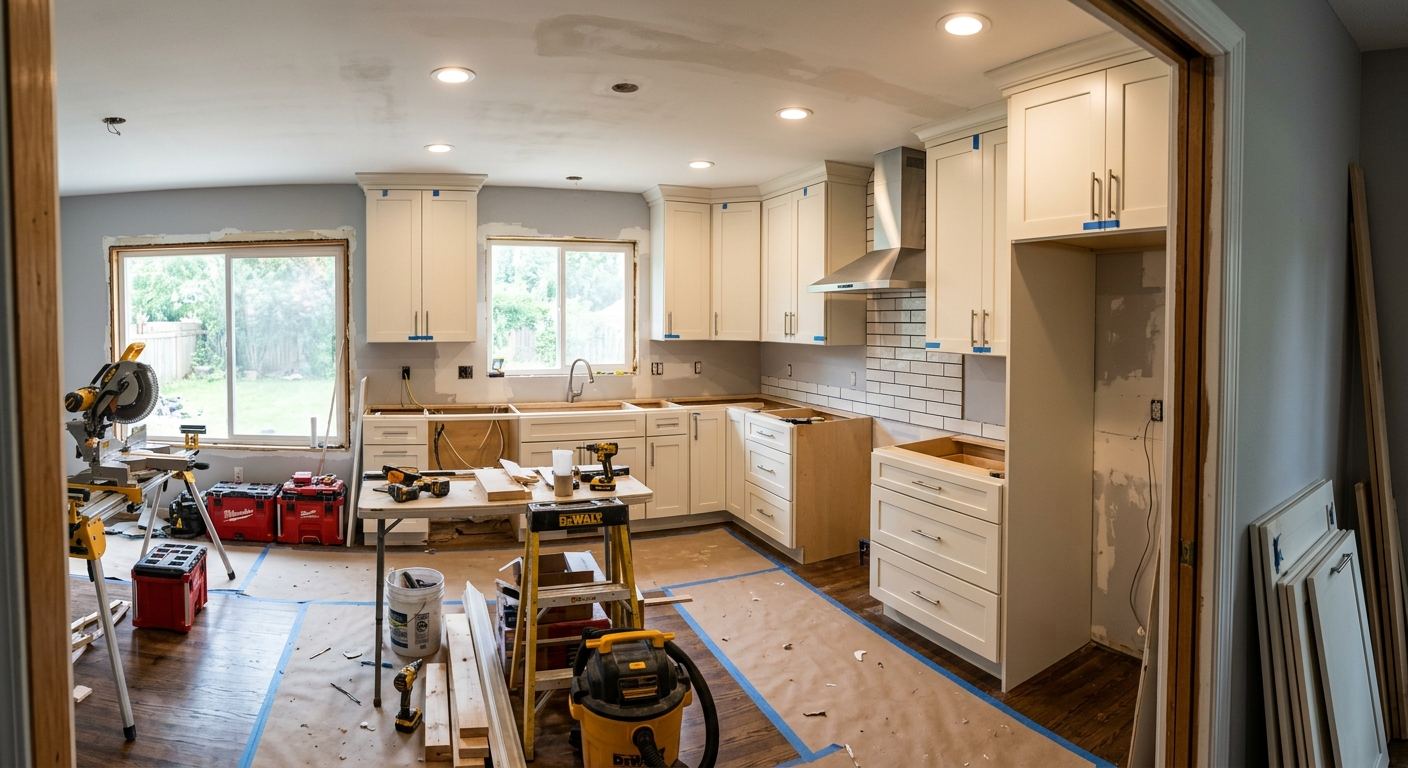
Kitchen renovation options and costs in Westvale
Kitchen renovation costs in Westvale tend to track the broader Toronto market, where owners commonly choose finishes based on resale expectations and not just function. With a 2021 population of 6,730 in Westvale (Statistics Canada, 2021 Census), you’ll see a steady mix of homeowners updating long-standing family kitchens and smaller numbers of buyers making move-in ready upgrades. That matters because the Toronto economic region is influenced by stronger earning households and higher home values—homeowners often invest a meaningful share of their property value into kitchens, pushing many projects toward quartz, upgraded hardware, and more tailored cabinetry. In practice, even when two kitchens are the same size, different finish tiers can swing the budget quickly: in higher-value areas of the region, kitchens commonly land in the higher bands, while more price-sensitive projects cluster in the mid-range.
Ontario climate and day-to-day weather don’t usually drive kitchen renovation costs the way they do exterior envelope work, but they do affect site conditions and timelines. Humidity and freeze–thaw cycles can slow drying times for repairs and floor work, and older homes in the GTA often have older subfloors and imperfect wall lines that add labour to get cabinets level and doors aligned. Contractor availability can also be seasonal—late spring and early summer are busiest, and rushing a schedule mid-winter often costs more.
In Westvale, renovations are especially active in older residential pockets near the city’s established retail corridors, where many homes were built decades ago and benefit from modern layouts and storage upgrades. Below is a practical comparison of typical tiers and durations to help you budget confidently before you request quotes.
| Renovation Tier |
What's Included |
Typical Duration |
Price Range |
| Cosmetic refresh (paint, hardware, new appliances only) |
Cabinet paint or stain-touch-up (if applicable), new hardware/handles, appliance swap, minor caulking/trim, basic prep & cleanup |
3–7 business days |
$8,000–$18,000 |
| Mid-range full renovation (new cabinets, counters, sink, tile) |
New stock or semi-custom cabinets, countertop (quartz or quality laminate), sink & faucet, backsplash tile, under-cabinet caulking, flooring refinishing or limited replacement, standard plumbing adjustments |
3–5 weeks |
$25,000–$55,000 |
| High-end full renovation (custom cabinets, stone counters, island) |
Fully custom cabinetry, premium quartz or natural stone, larger island build, feature backsplash (tile accent or upgraded finishes), upgraded appliance package, enhanced lighting prep, more extensive layout and trade coordination |
6–10 weeks |
$60,000–$90,000 |
| Cabinet refacing only (new doors + drawer fronts, same boxes) |
Door and drawer-front replacement, new panels/finish on existing boxes, new hardware, hinge adjustments, optional new trim and toe-kick refresh |
2–4 weeks |
$8,000–$25,000 |
| Countertop swap only (laminate to quartz or stone) |
Remove old top, install new quartz or stone, new sink cut-out/fit (as needed), silicone/finish trim, disposal and countertop handling |
3–7 business days |
$3,000–$15,000 |
| Backsplash tile installation only |
Tile supply allowance, tile layout and installation, grout/seal, straightening to finished line, minor prep of wall surface |
3–6 business days |
$2,000–$10,000 |
Prices are estimates only and vary by project scope, site access and material selection.
What affects the price of kitchen renovation in Westvale
In Toronto and across Ontario, it’s common to see quotes for the “same” kitchen renovation come in 30–50% apart. The usual reason isn’t labour availability alone—it’s the finish tier homeowners select and how much change your scope requires. In higher-value pockets of the Toronto economic region, many owners default to quartz or natural stone counters and semi-custom or custom cabinetry because buyers often see that upgrade value at resale. In more price-sensitive parts of the region, laminate counters and stock or refaced cabinets keep projects in the low–mid range while still refreshing the look and improving day-to-day storage. The key point: local home value and household purchasing power shape the finish level far more than climate.
Layout changes are where cost surprises land. Removing a wall, adding an island, or moving a gas line can add trades coordination, longer schedules and extra rough-in work—often regardless of whether you choose laminate or stone. For example, if you’re already budgeting around the mid-range full renovation band of $25,000–$55,000, swapping laminate to quartz may be manageable, but opening walls for new plumbing can push you into the upper portion of your budget. Conversely, keeping the plumbing where it is can help you stay closer to $60,000–$90,000 only if you’re truly aiming for custom millwork and an island, not just cosmetic upgrades.
In Westvale specifically, older housing stock often means uneven walls and dated electrical runs behind cabinets. That can add labour to prep surfaces and extend wiring properly for under-cabinet lighting and island power. Also, because Ontario winters can tighten contractor schedules and drying windows, flooring prep and wall patching can take longer in colder months—especially where subfloors need flattening before cabinet installation.
| Price Factor |
Why It Matters |
Cost Impact |
| Cabinet tier — stock vs. semi-custom vs. fully custom millwork |
Higher tiers increase material quality, door styles, internal organizers, and lead times |
Typically the largest swing within the renovation budget; can move a kitchen several tens of thousands |
| Countertop material — laminate vs. quartz vs. granite vs. stone |
Material price, fabrication complexity, and seam/layout requirements change the total cost |
Laminate keeps projects in the lower end; quartz and natural stone commonly push mid to high bands |
| Layout change — wall removal, island add, plumbing/gas move |
Creates rough-in work, inspections, structural considerations, and extended coordination |
Often adds the most unpredictable cost; frequently the difference between “mid-range” and “high-end” |
| Appliance package tier — builder vs. mid-range vs. pro-grade |
Pro-grade units cost more, may require different electrical/venting, and can change cut-outs |
Can shift several thousand dollars depending on brand tier and ventilation needs |
| Flooring — refinish existing vs. full replacement |
Cabinet removal can expose damage; matching existing floors may be difficult |
Refinish is usually lower cost; full replacement adds labour plus material and time |
| Backsplash — ceramic tile vs. marble vs. full-height slab |
Premium tile and slab require more careful layout, heavier materials and additional fabrication |
Tile upgrades can quickly move within the backsplash-only band of $2,000–$10,000 |
| Electrical — new circuits for island, under-cabinet lighting |
Additional circuits and fixtures require licensed electrical work and inspection |
May add several hundred to a few thousand depending on scope |
| Permit fees and licensed trade requirements |
Any permit/inspection adds administration, time, and trade coordination costs |
Typically modest as a line item, but can affect schedule and total labour |
Permits & regulations in Ontario
In Ontario, a straight cabinet or countertop replacement is usually permit-free. Swapping existing cabinets in the same footprint and changing tops (including laminate to quartz) typically does not require a permit because you’re not changing the building services in a major way. However, once you move plumbing supply/drain lines, relocate a gas stove, or add new electrical circuits (for an island power run or under-cabinet lighting changes), permits and licensed trade work become part of the process.
Specifically, work that typically does require a permit or at least triggers inspection through licensed trades includes: moving or adding plumbing connections (new or relocated dishwasher lines, sink drain changes, tapping new water supply locations), relocating gas appliances or gas-related components, removing a load-bearing wall or structural element, and installing/altering electrical circuits beyond simple in-kind replacements. Gas work must be performed by a licensed gas fitter, and electrical work by a licensed electrician—both should have inspections scheduled as required.
How you verify this as a homeowner in Westvale is straightforward. First, ask for the contractor’s Ontario business details and licence information, plus a certificate of liability insurance showing the correct insured party and appropriate coverage limits. Second, confirm WSIB/WCB clearance coverage (or equivalent proof where applicable) from the contractor so you’re not stuck with liability for on-site injuries. Finally, request a copy of clearance documentation (or the insurer/written confirmation) before work starts. Make sure the permit responsibility—who pulls permits, who pays fees, and who schedules inspections—is clearly stated in the signed contract.
Cabinets, countertops and layout decisions in Westvale
For most Westvale kitchens, three decisions drive both cost and satisfaction: (1) cabinet tier, (2) countertop material, and (3) layout changes. Cabinet tier determines how fast the renovation can be completed and how well the kitchen “fits” the room—stock cabinets are usually the quickest and cheapest, while semi-custom offers the best balance of options and schedule. Custom cabinets are highest cost but deliver the tightest alignment with older walls and awkward angles common in many GTA homes.
Countertops then set your look and longevity. Laminate is budget-friendly but more vulnerable to burns and impacts at seams. Quartz is popular in the Toronto market because it resists staining better and holds up well to daily cooking. Granite/natural stone adds premium character, but it may require periodic sealing and careful maintenance. Butcher block can feel warm and high-end when installed and sealed correctly, though it needs more attention around moisture.
Finally, layout changes are where resale value and function can justify the spend—if there’s a real space gain. Adding an island can improve workflow, but moving plumbing or gas for a new sink or cooktop is the expensive part. A practical example: if you’re targeting the mid-range kitchen band ($25,000–$55,000) and you choose quartz instead of laminate, you might be adding a few thousand dollars for a more durable surface. If you also move plumbing to reposition the sink, that same “upgrade” can become a full scope change and push you toward the upper end of high-end projects—especially with custom cabinetry and stone features.
Ontario’s climate doesn’t usually damage countertops directly, but it affects humidity and site readiness. In older Westvale homes, letting subsurface repairs dry properly before installing cabinets prevents door misalignment and reduces callbacks—so schedule planning matters as much as material choice.
| Option |
Durability |
Maintenance |
Best For |
Price Range |
| Stock cabinets (big-box) |
Good day-to-day durability; can be less tailored to imperfect walls |
Low maintenance; hinges/hardware depend on brand |
Cost control and faster timelines |
$8,000–$22,000 |
| Semi-custom cabinets (local dealer) |
Very good durability; better internal storage options |
Low maintenance; quality hinges and finishes last longer |
Most homeowners aiming for resale-friendly upgrades |
$18,000–$40,000 |
| Custom cabinets (local millwork shop) |
Excellent durability; best fit for older layouts |
Low maintenance; premium hardware usually included |
Unusual spaces, built-ins, and high-end design |
$35,000–$65,000 |
| Laminate countertop |
Moderate durability; susceptible to heat and impact at edges |
Easy daily cleaning; avoid prolonged heat exposure |
Budget-friendly refreshes that still look clean and modern |
$3,000–$7,000 |
| Quartz engineered countertop |
High durability; strong resistance to staining |
Very low maintenance; wipe-clean routine |
Popular Toronto resale-friendly kitchens |
$7,000–$12,000 |
| Granite / natural stone countertop |
High durability; handles daily use well with proper sealing |
Periodic sealing recommended depending on stone |
Premium look with natural variation |
$9,000–$15,000 |
| Butcher block countertop |
Good durability; needs protection from moisture and sharp impacts |
Oiling/conditioning routine; careful around standing water |
Warm, lived-in styles and prep-focused kitchens |
$6,000–$12,000 |
| Marble countertop |
Beautiful but softer; can mark etch with acids |
Higher maintenance; sealing and prompt cleanup of spills |
Statement luxury look when homeowners are comfortable with care |
$10,000–$18,000 |
How to choose a kitchen renovation contractor in Westvale
Choosing the right contractor in Westvale starts with verification and documentation. Ask for proof of Ontario licensing where applicable, liability insurance, and WSIB/WCB coverage (clearance letter or verification). For insurance, request a current certificate of insurance that lists the correct business name and coverage terms; for WSIB/WCB, request clearance documentation before work begins. If they can’t provide these, keep looking.
Next, require 2–3 itemised written quotes. You want a breakdown that separates labour and materials, including cabinetry supply, countertop fabrication/installation, tile labour, plumbing/electrical labour when trades are involved, demolition, disposal, and any allowance items. A lump-sum number without line items is where budget creep hides. Also read the scope closely: what’s excluded (subfloor repairs, drywall patching, fixture upgrades), is permit pulling included, and is waste disposal included? Confirm demolition and hauling responsibilities in writing.
Warranty matters, especially in a multi-trade project. Ask for the workmanship warranty length and what it covers, whether product/manufacturer warranties apply to cabinets/counters, and whether warranties are transferable to you if you sell. For payment scheduling, never let the project start with a large deposit—aim for no more than 10–15% upfront and hold back a portion until key items are complete and verified. Finally, insist on a start date and a completion estimate in writing; delays typically come from cabinet lead times or inspection scheduling, so get those assumptions stated.
- Request insurance certificate and WSIB/WCB clearance before signing.
- Get 2–3 itemised quotes with labour and materials separated.
- Confirm permit responsibility in the contract for any plumbing, gas, structural or electrical changes.
- Ask who supplies and installs appliances and whether cut-outs/venting are included.
- Verify cabinet measurements are field-confirmed after demolition (not just “on paper”).
- Confirm countertop templating timing and how it affects schedule.
- Ensure tile scope includes prep, backer board where needed, and waterproofing details.
- Ask what’s included for demolition, protection of remaining finishes, and disposal/hauling.
- Get a written warranty for workmanship and a separate explanation of manufacturer warranties.
- Use a payment schedule tied to milestones; hold back until snag list is complete.
- Ask for references for at least one similar Westvale kitchen scope (size and cabinet tier).
- Confirm lead times for cabinets/appliances and what happens if timelines slip.
Common red flags in Westvale: vague scope language that leaves key costs “to be determined,” no proof of liability insurance or WSIB/WCB clearance, quotes that don’t include disposal or permit responsibility, frequent substitutions without written approvals, and payment requests higher than 10–15% upfront without a signed milestone schedule.
Frequently asked questions — kitchen renovation in Westvale
How do I choose a kitchen contractor in Westvale?
Start by verifying credentials relevant to Ontario projects: ask for proof of liability insurance and WSIB/WCB coverage (clearance letter or verification). In Westvale, a trustworthy kitchen renovator should also be transparent about who pulls permits when plumbing, gas relocation, structural changes, or electrical circuit work is involved. Next, request 2–3 itemised quotes that separate labour and materials—especially cabinets, countertops, tile labour, demolition/disposal, and any electrical or plumbing trades. Avoid contractors who provide only one lump-sum figure without exclusions. Finally, compare warranty terms and schedule assumptions: if a quote is aiming for a mid-range budget (for example, $25,000–$55,000) but includes custom lead times without explanation, clarify whether any costs or timelines shift.
What order do kitchen renovation steps happen in?
A typical Westvale sequence starts with site protection and demolition, followed by rough-in work if you’re changing anything major. Cabinets should not be installed until walls are straight, flooring is finished to the right height, and any plumbing/electrical/gas rough-ins are inspected and approved. After that, countertops are templated, then installed once fabrication is ready. Only then do final finishes happen: backsplash tile, trim, caulking, and hardware installation. Finally, appliances are set and adjusted, and the contractor completes cleanup and a punch-list. If you’re doing a countertop-only project (often around $3,000–$15,000), the workflow is faster: disconnect/replace top, confirm sink fit, then finish the edges and sealant—no cabinet demo needed.
Can I live at home during a kitchen renovation in Westvale?
Often, yes, but it depends on how disruptive your scope is. For cosmetic refreshes or backsplash-only installs, many homeowners in Westvale can continue daily routines with minimal disruption. For a mid-range full renovation, expect periods where the sink, stove, and part of the cooking area are out of service—especially during countertop templating and installation. If your project includes moving plumbing or adding an island, the disruption can be greater because rough-in work changes multiple areas and may require inspection scheduling. If you want to remain at home, plan an alternative food setup (microwave, kettle, and small fridge) and ensure dust control measures are in place. For high-end rebuilds that run longer—sometimes into the upper band of $60,000–$90,000—some families choose to stay elsewhere temporarily for a few weeks.
Should I renovate my kitchen before selling in Westvale?
In Ontario’s Toronto region, a kitchen update can pay back because buyers usually expect modern finishes and functional storage. In Westvale, whether to renovate before selling depends on your starting condition and how much of the kitchen is “dated” versus still structurally sound. If your cabinets are solid but worn, refacing or a countertop refresh can be a smarter, quicker move than fully replacing everything. If layout is poor or appliances are aging, a full renovation may improve buyer interest. That said, market-driven decisions matter: homeowners often lean toward quartz or stone and semi-custom cabinetry in higher-value expectations, while cost-sensitive upgrades may stick closer to laminate and stock options. If you’re targeting the low–mid renovation band ($25,000–$55,000), keep scope improvements where they’re visible (cabinets, counters, lighting, backsplash) before doing expensive structural changes that may not be fully recouped.
What's the most popular kitchen style in Westvale right now?
Homeowners in Westvale commonly choose clean-lined, modern-contemporary looks: shaker-style or flat-panel cabinets, warm neutrals, and durable countertops like quartz. Hardware is often brushed nickel or matte black for contrast, and backsplash is typically a mix of simple tile patterns with room for texture. Many kitchens also incorporate better task lighting—like under-cabinet LED strips—because it makes the space feel larger and more premium to buyers. Material choices frequently follow the same cost logic across the Toronto region: laminate stays popular in budget refreshes, while quartz (and sometimes natural stone) shows up more often in mid-to-high projects. If you’re budgeting around $25,000–$55,000, quartz plus semi-custom cabinets is a very common “sweet spot.”
How do I know if I need to update my kitchen plumbing in Westvale?
You may not need plumbing replacement if it’s functioning reliably, but you do need to update it when you’re changing the layout or when inspection reveals risk. In older Westvale homes, common triggers include low water pressure at the sink, slow drain issues, signs of moisture under the sink, corrosion at supply lines, or outdated valves that don’t shut off cleanly. If you’re moving a sink, adding a dishwasher relocation, or changing where a fridge line or island plumbing will run, plumbing work becomes part of the scope and may require permits and licensed trades. Even when you’re not moving plumbing, replacing aged shutoff valves and flexible supply lines during cabinet replacement is often a smart safety upgrade. If you’re planning a full renovation, get a clear written plumbing scope early so you don’t discover costly surprises after cabinets arrive.