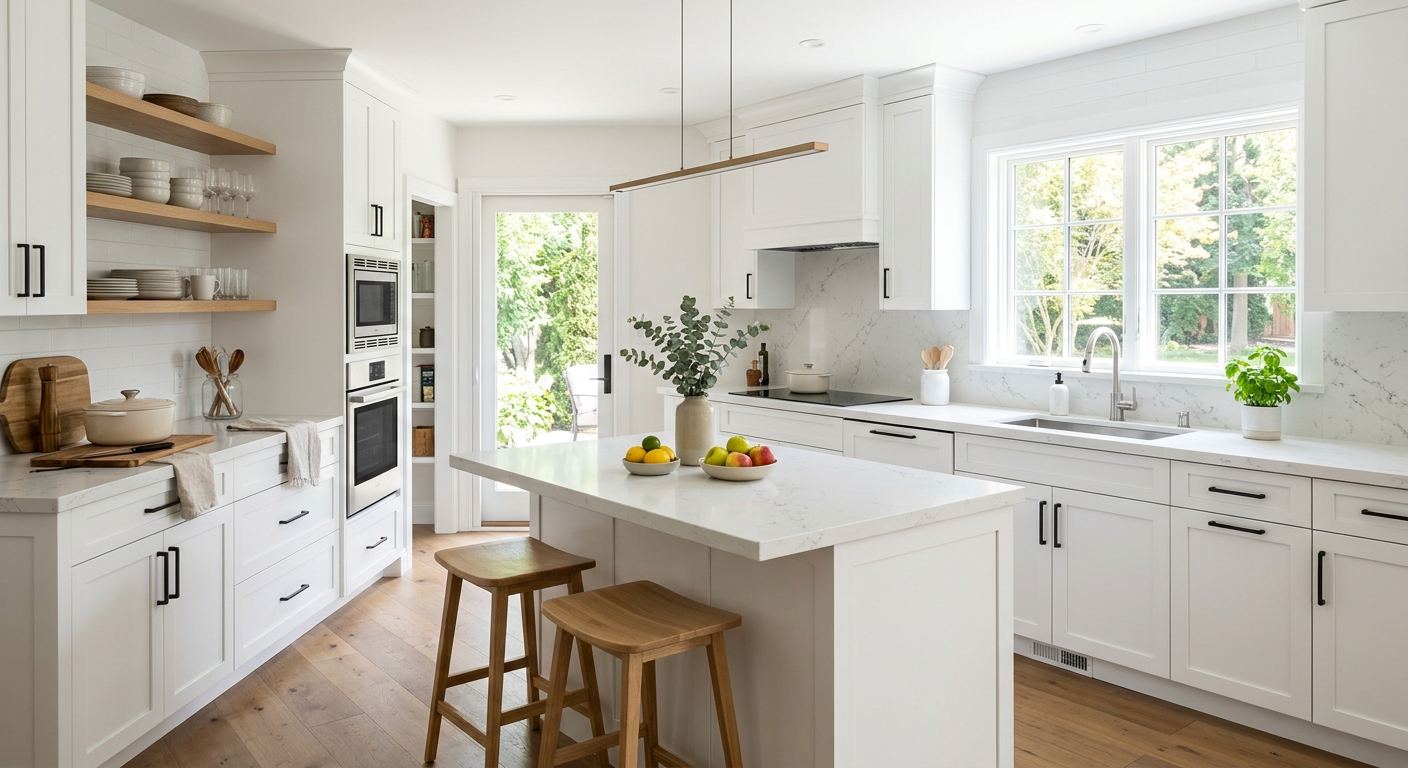
Kitchen renovation options and costs in Little Current
Kitchen renovations in Little Current typically start with a clear decision on how big a change you want—cosmetic refresh, mid-range refresh, or a full high-end rebuild. With a population of 2,156 (Statistics Canada, 2021 Census), the town has fewer trades “on rotation” than downtown Toronto, so scheduling and lead times can be tighter when multiple local projects hit at once. At the same time, kitchen spend in the wider Toronto economic region is strongly tied to homeowner market expectations and resale value, with many owners steering toward better finishes when they’re investing a larger share of their home value into the kitchen—often in the 8% to 15% range in higher-value pockets. Even though Little Current’s housing stock is smaller in scale, contractors price in the same GTA labour and materials realities, and homeowners still compare their upgrades against what buyers see across the region.
Ontario’s kitchen pricing is rarely driven by weather, but the coast-like freshwater environment in the nearby Manitoulin area can mean higher humidity swings. That affects how we approach ventilation, cabinet sealing, and grout/countertop joint details. In peak season, availability can also tighten because skilled crews travel within the region. In Little Current, demand is especially strong around the Main Street and waterfront-adjacent areas where older homes are common and basements influence service routing—so layout and plumbing decisions can have a bigger cost ripple than you’d expect. From there, the best next step is to use the price guide below to compare renovation tiers.
| Renovation Tier |
What's Included |
Typical Duration |
Price Range |
| Cosmetic refresh (paint, hardware, new appliances only) |
Cabinet paint or refinishing, new hardware, caulking updates, new appliances (no plumbing/gas moves), basic lighting refresh where existing circuits allow |
3–7 days (plus appliance delivery time) |
$8,000–$18,000 |
| Mid-range full renovation (new cabinets, counters, sink, tile) |
New semi-custom cabinets, quartz or good laminate counters, sink & faucet swap, backsplash tile, flooring patch/replace as needed, electrical allowance for under-cabinet lighting (where applicable) |
2–5 weeks |
$25,000–$55,000 |
| High-end full renovation (custom cabinets, stone counters, island) |
Fully custom millwork, premium quartz or natural stone, island build-out, upgraded appliance package, full-height or designer backsplash, likely additional electrical and enhanced lighting |
5–10 weeks |
$70,000–$90,000+ |
| Cabinet refacing only (new doors + drawer fronts, same boxes) |
Refacing panels, new doors/drawer fronts, new hardware, labour for removal/reinstall and finishing; counters may be retained or swapped separately |
1–2 weeks |
$8,000–$35,000 |
| Countertop swap only (laminate to quartz or stone) |
Remove existing top, prep/edge treatment, install quartz or natural stone, reseal/silicone joints, sink/cooktop cut-out adjustments where required |
2–6 days |
$3,000–$15,000 |
| Backsplash tile installation only |
Tile supply (typical mid-range selection), underlayment/prep, tile set and grout, silicone at changes of plane, minor trimming for outlets (where circuits exist) |
2–5 days |
$2,000–$10,000 |
Prices are estimates only and vary by project scope, site access and material selection.
What affects the price of kitchen renovation in Little Current
Even when two homeowners in Ontario want “the same” kitchen, quotes can land 30% to 50% apart because contractors price risk and unknowns differently—especially when the scope touches plumbing, electrical, or structural changes. In the Toronto economic region, finish tier often follows local home values and the lifestyle buyers associate with those homes: higher-value areas more frequently justify quartz or natural stone and semi-custom/custom millwork, while more price-sensitive areas often choose laminate or stock/refaced cabinets with smart layout tweaks to protect resale ROI. As a practical range, full renovations commonly start around the mid-$20k level for modest refreshes and climb into the $80k+ bracket for larger kitchens with custom cabinetry and island work.
In Little Current, the biggest “cost swing” is usually not climate—it’s what your existing kitchen is built like. Many older homes have uneven walls, older subflooring, or plumbing runs that aren’t designed for modern layouts. For example, if your sink plumbing has to be rerouted to accommodate a new island placement or deeper undermount basin, the labour and materials can jump the same day the contractor opens walls. Likewise, if you’re replacing laminate with quartz and the substrate isn’t perfectly level, you may need additional prep work before install—small on paper, costly in labour. Finally, ventilation matters: if you upgrade a hood or add ducting, you can see a noticeable increase in trades coordination, even when cabinets and counters are otherwise straightforward.
Two concrete examples we see often in Little Current: (1) adding under-cabinet lighting can push the electrical scope from “minor patching” to new circuits and licensed connections; (2) moving a gas range to a different spot can require permit-driven work and specialized scheduling, moving the project toward the higher end of the $25,000–$90,000 full-renovation band. Those are the variables that shape how your budget plays out far more than weather alone.
| Price Factor |
Why It Matters |
Cost Impact |
| Cabinet tier — stock vs. semi-custom vs. fully custom millwork |
Custom sizes, interior features (organizers/soft-close), and material/finish levels drive both labour and production time. |
Small refreshes may stay near the low end; custom often moves projects toward mid-range or high-end totals. |
| Countertop material — laminate vs. quartz vs. granite vs. stone |
Material price, fabrication complexity, and edge/cut-out requirements change total cost. |
Laminate keeps you in the low–mid bands; quartz/stone commonly add significant dollars, especially with islands. |
| Layout change — wall removal, island add, plumbing/gas move |
Altering structure and service lines introduces engineering risk, demo/disposal, and licensed trades. |
Often the biggest unpredictable jump; it can move a project 30%+ even with the same finishes. |
| Appliance package tier — builder vs. mid-range vs. pro-grade |
Pro-grade appliances cost more and may require electrical/venting upgrades. |
Can shift budgets by thousands; higher tiers often raise labour coordination complexity. |
| Flooring — refinish existing vs. full replacement |
Matching existing floors is difficult; underlayment/subfloor repairs are common after demo. |
Refinishing can save; full replacement adds materials and labour. |
| Backsplash — ceramic tile vs. marble vs. full-height slab |
Specialty stone needs extra sealing/care and often more precise installation. |
Tile is typically predictable; premium stone/fulls can add cost quickly. |
| Electrical — new circuits for island, under-cabinet lighting |
Islands and modern lighting often require new outlets and dedicated circuits. |
Minor changes are manageable; new circuits and rewiring push cost upward. |
| Permit fees and licensed trade requirements |
Work that touches gas, electrical, or structure needs permits, inspections, and licensed trades. |
Expected when permits apply; it’s one reason bids diverge even for similar designs. |
Permits & regulations in Ontario
In Ontario, replacing cabinets, swapping countertops, and changing finishes typically do not require building permits. If you’re simply painting/refinishing cabinetry, installing new laminate or quartz tops, or setting a backsplash tile without altering walls or services, your job is generally considered a renovation finish scope that’s handled by the contractor and trades involved—no permit pathway is usually required.
Where permits do come into play is when you change services or structure. In practical terms for a Little Current kitchen, these items typically DO require permits and inspections: moving plumbing supply or drain lines (sink relocation, dishwasher line changes, new venting), relocating a gas stove/cooktop or doing gas work tied to the range or range hood, removing a load-bearing wall, adding new electrical circuits (for island outlets, under-cabinet lighting with new wiring, or any panel/service change), and any work that triggers inspected electrical/gas requirements. Gas work must be performed by a licensed gas fitter, and electrical work by a licensed electrician.
Step-by-step for verifying a contractor in Ontario: (1) ask for their current liability insurance certificate of insurance and confirm the address/project is covered; (2) request proof of WSIB/WCB coverage (or a clearance letter where applicable) before work starts; (3) verify licensing/credentials through the relevant online registry for trades you’ll be relying on (especially electrician and gas fitter); (4) keep everything in writing—permit responsibility, who pulls permits, and inspection steps—so it’s clear in the contract before the first day of demo.
Cabinets, countertops and layout decisions in Little Current
The three biggest decisions that drive both your day-to-day usability and your resale story in Little Current are (1) cabinet tier, (2) countertop material, and (3) whether you change layout. Cabinet tier sets the tone immediately: stock cabinets are fastest and cheapest, semi-custom is the most popular mid-range choice because it balances better sizing and options without the full cost of custom millwork, and fully custom cabinets deliver the tightest fit and highest design flexibility. Countertop choice impacts daily durability and how you maintain the surface: laminate is budget-friendly but can be more vulnerable at seams, quartz offers consistent performance and easier upkeep, while granite/stone adds natural variation and prestige. But for layout, the cost is justified only when the space gain changes how you live—opening up with a wall removal, adding an island for work zones, or relocating plumbing/gas lines so the kitchen’s “triangle” actually makes sense.
Ontario’s Toronto resale market matters here because buyers often expect a modern, bright kitchen with updated finishes. That’s why a project that lands around the mid-range full renovation band ($25,000–$55,000) typically pairs semi-custom cabinetry with quartz or laminate counters, plus a sensible backsplash upgrade. If you push into high-end territory ($70,000–$90,000+), the design choices usually include an island, upgraded appliance staging, and stone counters that photograph well and hold up in real use.
A dollar example: moving a sink to support island seating or better workflow can add thousands once plumbing and potential subfloor repairs are considered—sometimes enough that the “extra” spend is better directed toward quartz upgrade and better cabinet organization. In many Little Current homes, that trade-off is where owners get the most value: invest in the workflow first, then select countertops that match your maintenance comfort and budget.
| Option |
Durability |
Maintenance |
Best For |
Price Range |
| Stock cabinets (big-box) |
Durable with proper installation; limited custom sizing can create gaps or compromises. |
Wipe-clean finishes; adjust hardware if settling occurs. |
Fast timelines, budget control, straightforward layouts |
$8,000–$20,000 |
| Semi-custom cabinets (local dealer) |
Strong day-to-day durability; better fit and more storage options. |
Basic cleaning; hinges and slides typically serviceable over time. |
Most homeowners aiming for resale appeal without fully custom pricing |
$15,000–$35,000 |
| Custom cabinets (local millwork shop) |
Excellent longevity and fit; built around your room geometry. |
Maintain finishes; tailored interior systems help reduce wear from overloading. |
Complex layouts, unique dimensions, premium design goals |
$30,000–$60,000+ |
| Laminate countertop |
Good daily durability; seams can be the weak point if not sealed well. |
Simple wipe-down; avoid prolonged standing water at seams. |
Budget-first refreshes and rental-friendly practicality |
$3,000–$7,000 |
| Quartz engineered countertop |
Very durable and consistent; resists staining better than many natural surfaces. |
Low maintenance; sealers usually not required. |
Busy households and homeowners who want a “set it and forget it” look |
$6,000–$14,000 |
| Granite / natural stone countertop |
High durability; natural variation can hide wear better but requires care. |
Often needs periodic sealing depending on finish. |
Premium look with natural character |
$8,000–$15,000 |
| Butcher block countertop |
Durable but needs proper protection from moisture and heat. |
Oil conditioning and careful drying; quick cleanup is important. |
Warm design style and households comfortable with upkeep |
$5,000–$12,000 |
| Marble countertop |
Beautiful but softer than quartz/granite; can etch or stain with neglect. |
More maintenance—sealing and careful use needed. |
High-end visual appeal for lower-impact cooking habits |
$10,000–$18,000+ |
How to choose a kitchen renovation contractor in Little Current
Choosing the right kitchen renovation contractor in Little Current starts with checking Ontario requirements and protecting yourself with documentation. First, verify trades licensing where needed: gas work must be done by a licensed gas fitter and electrical by a licensed electrician. Ask your general contractor for proof of liability insurance (with the project listed or verifiable), and request WSIB/WCB coverage documents—either WSIB/WCB clearance or equivalent proof—before work begins. A legitimate contractor will provide these items quickly without “we’ll get to it later.”
Next, get 2 to 3 itemised written quotes rather than one lump-sum number. You want a breakdown that shows labour versus materials, line-items for demo/disposal, cabinet installation, countertop template/install, tile setting, and any allowance for electrical or plumbing changes. Read exclusions carefully: what’s not included (old cabinet removal, patching drywall, disposal, waste hauling), who pulls permits, and whether site protection is included. Warranty is just as important—confirm the workmanship warranty length, who honours it, whether it’s transferable to a new owner, and whether product warranties come directly from the manufacturer.
For payment, avoid large upfront payments: never pay more than about 10% to 15% upfront, then hold back the final portion until completion and punch-list items are done. Finally, ask for a realistic start date and completion estimate in writing, including when materials are ordered and when countertop fabrication happens—those sequencing points determine whether you drift into schedule risk.
- Ask for WSIB/WCB clearance or proof of coverage before the first day on site.
- Request a current certificate of liability insurance and confirm it covers renovation work.
- Confirm who pulls permits for gas/electrical/plumbing or structural work and that it’s in the contract.
- Get 2–3 itemised quotes with labour and material line-items (not one overall number).
- Check that countertop installation includes templating, fabrication allowances, and cut-out adjustments.
- Verify backsplash scope includes prep, backer where needed, and proper caulking at edges.
- Confirm flooring scope: whether patching is included or full replacement is assumed.
- Ask about disposal and jobsite protection (planking, dust control, sealing doorways).
- Request start date, milestones, and a completion target in writing.
- Confirm warranty terms: workmanship duration, product warranty source, and transferability.
- Use a holdback: retain funds for punch list completion rather than paying everything early.
- Ensure the contract lists inclusions/exclusions (for example, plumbing/electrical allowances and contingencies).
Concrete red flags I see with renovation contractors in and around Little Current: (1) refusing to provide insurance/WSIB/WCB documentation; (2) quoting a “low price” without an itemised scope, especially missing disposal, prep, or electrical/plumbing allowances; (3) promising installation dates before countertop templating dates are scheduled; (4) telling you permits are “not needed” even when you’re moving plumbing/gas or adding electrical circuits; and (5) pushing for 30%+ upfront deposits or no holdback despite the contract timeline.
Frequently asked questions — kitchen renovation in Little Current
Can I move my kitchen sink or stove?
Yes, you can move a kitchen sink or stove in Little Current, but it’s usually not “just a few changes”—it can trigger the biggest permitting and labour costs in the whole renovation. Moving a sink commonly means rerouting supply and drain lines, and that typically requires a permit and licensed plumbing work, plus inspection. If you’re moving a stove or cooktop that uses gas, the range relocation is even more regulated: gas work must be completed by a licensed gas fitter, and permits/inspections are usually involved. If the layout change pushes you toward a higher level of work, your project can move from a mid-range full renovation budget into higher-end totals, so it’s worth modelling the workflow first and then pricing the service moves alongside the finishes.
What's the most cost-effective kitchen upgrade?
The most cost-effective upgrade is usually one that delivers a visible “new kitchen” effect without major demolition or service moves. In Ontario, many homeowners get the best value by combining a cabinet refresh (paint/refacing) with selective upgrades—new hardware, updated lighting, and modern appliances—staying near the cosmetic refresh band of about $8,000–$18,000. If you want a step up without fully rebuilding, a countertop swap (for example, laminates to quartz) plus a backsplash can also be efficient, especially if your cabinet boxes are still solid. In Little Current, where older cabinet installations sometimes have uneven walls, it’s worth spending a bit on prep so the finish doesn’t fail early—this is often cheaper than redoing tile or seam issues later.
Custom vs stock cabinets — is custom worth it?
Custom cabinets can be worth it when your kitchen layout is complex, you need uncommon dimensions, or you want specialized storage that improves daily function (pantry systems, integrated organizers, appliance garages). For many homeowners in Little Current, semi-custom or stock is the smarter value because it meets buyer expectations while controlling schedule and cost. Stock cabinets are typically the fastest/most budget-friendly route, while semi-custom balances fit and options; custom moves you toward higher project totals. If your overall renovation budget is closer to the mid-range full renovation band ($25,000–$55,000), you’ll usually get better “value per dollar” by allocating funds toward durable countertops like quartz and a practical layout—custom only becomes truly cost-effective if the room geometry or storage goals demand it.
How do I choose a kitchen contractor in Little Current?
Start by verifying Ontario requirements and protecting yourself with paperwork. Ask for proof of liability insurance and WSIB/WCB coverage (or a clearance letter where applicable) before work begins. Then confirm licensing expectations: gas work by a licensed gas fitter and electrical by a licensed electrician—your contractor should either be licensed themselves or coordinate properly. Get 2–3 itemised written quotes that break out labour and materials, including demo/disposal, countertop templating and installation, and any allowance for electrical/plumbing changes. Finally, review the contract for what’s excluded (permit pulling, patch drywall, dust protection, site cleanup). A professional contractor will provide warranty terms and a realistic schedule in writing.
What order do kitchen renovation steps happen in?
A typical sequence in Ontario kitchens is: (1) finalize design and confirm measurements; (2) if needed, pull permits and schedule licensed trades; (3) protect the home and complete demolition; (4) rough-in plumbing/electrical and any structural changes; (5) prep surfaces (leveling and drywall repairs); (6) install cabinets; (7) template and fabricate countertops (timed so install day is efficient); (8) install countertops, sink, and cooktop; (9) install backsplash and flooring transitions; and (10) final electrical/trim, caulking, and punch-list items. The key timing issue—especially in Little Current—is countertop templating. If that step slips, it stalls the entire finish stage, which is why reputable contractors tie the timeline to countertop fabrication, not just cabinet delivery.
Can I live at home during a kitchen renovation in Little Current?
Often yes, but it depends on scope and how your home is set up. A cosmetic refresh or countertop/backsplash-only work is usually easier to manage while staying at home. If you’re doing a mid-range full renovation ($25,000–$55,000), you may be able to live in the home with a temporary kitchen setup, but expect restricted access for several weeks because cabinets, counters, and flooring are being installed. For high-end full renovations—especially with an island, plumbing/gas changes, or structural work—many homeowners choose to stay elsewhere for part of the project due to dust control and safety around rough-ins. In Ontario, your contractor should plan dust barriers, waste removal, and clear “work zones” so you can stay safe and functional while work progresses.