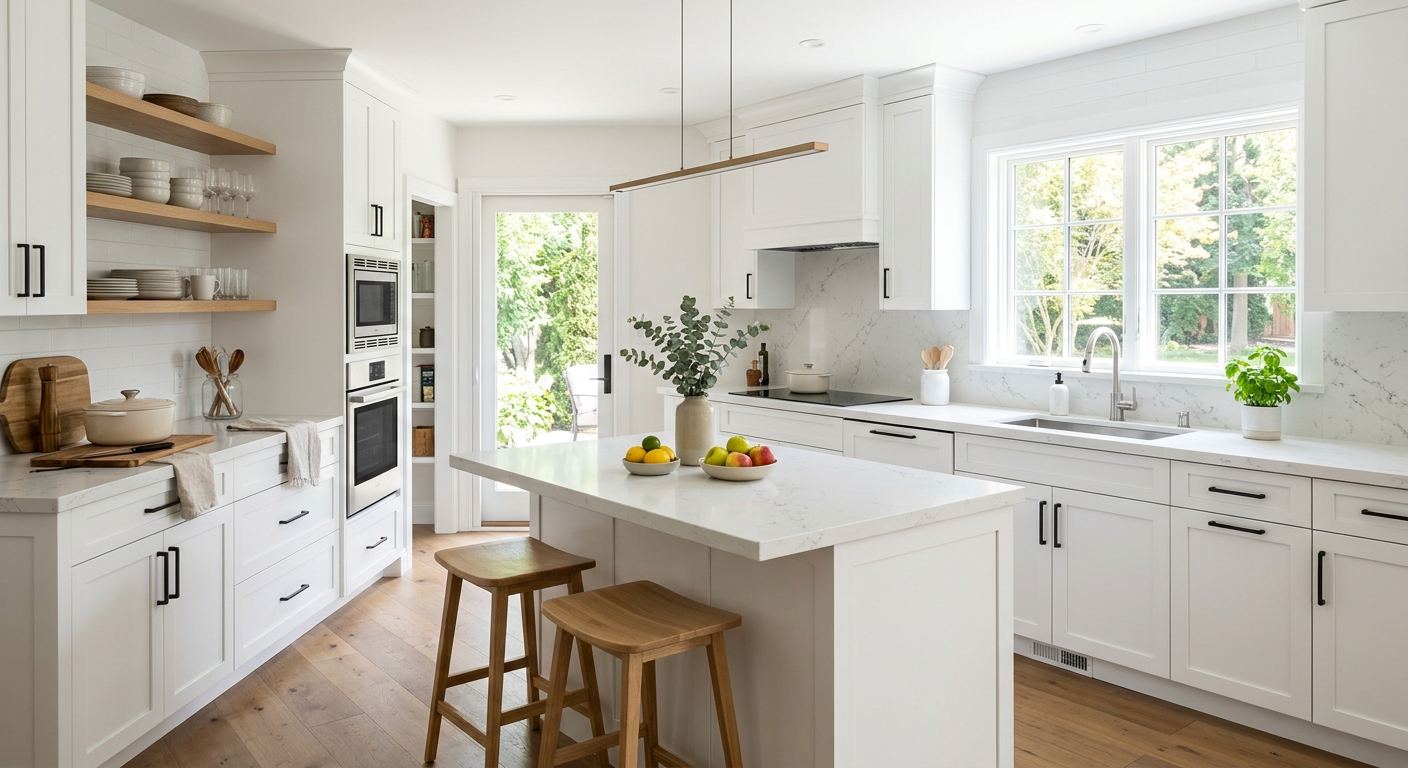
Kitchen renovation options and costs in Rayside-Balfour
Rayside-Balfour homeowners typically start their kitchen plans with a simple question: what can we afford, and what will actually last? With a local population of 14,557 (Statistics Canada, 2021 Census), the area draws steady demand from contractors, but project pacing is also influenced by the broader Toronto economic region where home values drive finish expectations. In high-value pockets around the GTA, many owners target a kitchen spend that’s closer to 8–15% of home value, which pushes more projects toward semi-custom cabinetry, quartz, and upgraded appliance packages. Even in a smaller community like Rayside-Balfour, that Toronto “taste level” shows up in the way quotes are structured—clients often compare options based on resale appeal rather than only day-to-day cost.
Ontario’s renovation pricing is shaped less by weather and more by market economics and labour availability. While our winters can be rough on schedules—delivery delays and indoor humidity swings can affect installation timing—contractor availability and material pricing tend to be the bigger driver of total cost variance. In practice, the biggest swings come from scope: a cosmetic refresh stays in the low–mid range, while layout changes and premium materials quickly move the project toward the higher end of the $25,000–$90,000 full-kitchen band.
In Rayside-Balfour, kitchen trades are especially busy in and around the older housing stock areas where homeowners are updating dated cabinets, swapping countertops, and modernizing backsplash and lighting. If you’re deciding between tiers, the table below will help you compare what each option typically includes and how long it usually takes.
| Renovation Tier |
What's Included |
Typical Duration |
Price Range |
| Cosmetic refresh (paint, hardware, new appliances only) |
Cabinet paint or refinishing, new hardware, new appliance set, sink/faucet refresh (if no plumbing move), trim touch-ups |
3–7 days |
$5,000–$15,000 |
| Mid-range full renovation (new cabinets, counters, sink, tile) |
New cabinets (stock or semi-custom), new countertop (quartz or good laminate), sink and faucet install, backsplash tile, standard lighting updates |
2–4 weeks |
$25,000–$55,000 |
| High-end full renovation (custom cabinets, stone counters, island) |
Custom cabinetry, upgraded stone (quartz premium or natural stone), island (electrical + plumbing as required), full-height backsplash or upgraded tile package |
4–8 weeks |
$60,000–$90,000 |
| Cabinet refacing only (new doors + drawer fronts, same boxes) |
Replace doors/drawer fronts and hardware, veneer/laminate refresh to existing cabinet boxes, basic alignment and touch-up work |
1–3 weeks |
$8,000–$35,000 |
| Countertop swap only (laminate to quartz or stone) |
Remove old surface, measure/fabricate new slab, install and seam/edge finishing, minor caulking and trim adjustments |
3–10 days |
$3,000–$15,000 |
| Backsplash tile installation only |
Tile supply and install, surface prep, grout/seal where applicable, caulking at changes of plane |
2–5 days |
$2,000–$10,000 |
Prices are estimates only and vary by project scope, site access and material selection.
What affects the price of kitchen renovation in Rayside-Balfour
In Rayside-Balfour and across Ontario, two homeowners can receive quotes for a “similar” kitchen that differ by 30–50%, mainly because contractors price risk: unknown conditions in existing walls, electrical/plumbing constraints, and how much finishing work is required once demolition starts. In the Toronto economic region, local home values and household income expectations push many buyers toward certain finish tiers. When buyers expect quartz or stone and semi-custom cabinetry, labour time and material selection both move up—even if the layout stays the same. In more price-sensitive pockets around the GTA, homeowners often choose laminate and stock or refaced cabinets to balance resale value with affordability, which helps keep projects near the lower end of the $25,000–$90,000 full-kitchen band.
Climate plays a smaller role in pricing than you’d think. Toronto-region supply chains and indoor scheduling matter more than seasonal exposure, but winter work can still add cost through weather-related logistics. For example, if delivery arrives late, installers may need to protect surfaces and adjust sequencing, which can extend timelines. Also, older Ontario homes frequently have out-of-square walls; that impacts cabinet install time and can raise labour costs even when material choices are mid-range—sometimes adding $1,000–$3,000 in “hidden conditions” work.
Concrete examples we see locally: (1) moving a range hood vent or making room for an island often triggers plumbing/electrical coordination, which can jump a job from a mid-range $25,000–$55,000 into the higher $60,000–$90,000 tier. (2) if your countertop swap is over an uneven base, you may pay extra for sub-top corrections and support—pushing a countertop-only job beyond the $3,000–$15,000 band. (3) full-height backsplash and upgraded tile layouts increase labour time and materials, often turning a $2,000–$10,000 backsplash into a larger line item.
| Price Factor |
Why It Matters |
Cost Impact |
| Cabinet tier — stock vs. semi-custom vs. fully custom millwork |
Higher tiers require more design time, premium materials and longer fabrication/install labour |
Often shifts the project by $8,000–$30,000 depending on scope |
| Countertop material — laminate vs. quartz vs. granite vs. stone |
Material cost and installation complexity (templates, seams, edge profiles) change totals |
Typical variance of $2,000–$10,000 |
| Layout change — wall removal, island add, plumbing/gas move |
Creates structural, mechanical and electrical work; introduces permitting and inspections |
Commonly adds $5,000–$25,000 |
| Appliance package tier — builder vs. mid-range vs. pro-grade |
Pro-grade models cost more and may require different electrical/venting considerations |
Varies by $1,500–$12,000 |
| Flooring — refinish existing vs. full replacement |
Demo exposes subfloor conditions; matching existing flooring can be harder than replacing |
Typical variance of $1,000–$8,000 |
| Backsplash — ceramic tile vs. marble vs. full-height slab |
Premium surfaces increase material cost; full-height installs add prep, cuts and labour |
Often changes by $1,000–$6,000 |
| Electrical — new circuits for island, under-cabinet lighting |
More fixtures/loads mean more labour and potential panel or breaker upgrades |
Commonly adds $800–$5,000 |
| Permit fees and licensed trade requirements |
Work that requires permits must be done by the correct licensed trades and inspected |
Can add $300–$3,500 plus scheduling time |
Permits & regulations in Ontario
In Ontario, a straightforward cabinet or countertop swap typically does not require a building permit, as long as you’re not changing plumbing, gas, electrical systems, or structural elements. However, the moment you move supply/drain lines, relocate a gas appliance or range hood, remove a load-bearing wall, or add electrical circuits (for example, powering an island, adding dedicated under-cabinet lighting circuits, or relocating outlets), you’re generally in permit-and-inspection territory.
Gas work must be performed by a licensed gas fitter, and electrical work must be done by a licensed electrician—then inspected as required. For Rayside-Balfour homeowners, the practical step is contractual: confirm who pulls the permit, who schedules inspections, and who pays the permit fees before signing. In many real projects, the “permit responsibility” becomes unclear unless it’s written into the scope.
To verify a contractor properly, follow a three-step check. First, look up the contractor’s and subcontractors’ Ontario licensing where applicable (and confirm they’re the right trade for the work). Second, request a certificate of insurance and review that it includes liability coverage for your project’s address and the correct policy term. Third, confirm workers’ compensation coverage (WSIB) for the trades doing site labour; ask for the clearance letter or proof of account status. If anything is missing or delayed, pause and ask—kitchen renovations often involve multiple trades, so documentation matters.
Cabinets, countertops and layout decisions in Rayside-Balfour
Your three biggest cost-and-value decisions in a Rayside-Balfour kitchen renovation are: (1) cabinet tier, (2) countertop material, and (3) whether you change the layout. These choices matter because Toronto-area buyers tend to shop kitchens based on “fit and finish” first, then functionality—especially in resale listings. Even though Rayside-Balfour housing stock varies, many homes have older cabinets and dated finishes, and buyers expect a modern look with durable surfaces.
Cabinet tier: stock cabinets are the fastest path and usually the cheapest because lead times are shorter and standard dimensions are easier to install. Semi-custom cabinets are the most popular mid-range option—best when you want better sizing, more finish choices, and still keep your project closer to the $25,000–$55,000 band. Fully custom cabinetry gives the tightest fit and the best storage solutions, but it’s the cost driver that can push you toward the $60,000–$90,000 high-end range—especially when you add specialty drawers and a feature hood wall.
Countertops: laminate is budget-friendly and fine for light-to-moderate use, but it’s less resilient to heat and staining. Quartz is the most common upgrade because it offers a premium look with relatively low maintenance. Natural stone (granite/other stone) is durable but can require more careful sealing and is sensitive to installation quality. In Ontario’s seasonal indoor humidity swings, well-sealed stone and properly built bases tend to reduce long-term issues.
Layout: removing a wall for open-concept flow or adding an island can justify costs when it improves traffic flow and workspace. But plumbing/gas relocation tends to be the “unpredictable cost” step. A common example: upgrading from laminate to quartz may add a few thousand dollars, while relocating plumbing for an island can multiply labour and coordination costs—so it’s usually smarter to spend on cabinets and counters before paying for mechanical moves unless the space gain is truly worth it.
| Option |
Durability |
Maintenance |
Best For |
Price Range |
| Stock cabinets (big-box) |
Good durability with standard hardware; limited customization |
Minimal—regular cleaning and hardware tightening as needed |
Fast timelines, modest budgets, straightforward layouts |
$8,000–$22,000 |
| Semi-custom cabinets (local dealer) |
Very good durability; better door/drawer options |
Low—use care with hinges and wipe spills promptly |
Most Rayside-Balfour renovators aiming for resale-ready kitchens |
$15,000–$40,000 |
| Custom cabinets (local millwork shop) |
Excellent durability; tailored storage and fit |
Low—typically quality hardware and better build consistency |
Complex spaces, curved walls, premium feature kitchens and islands |
$30,000–$70,000 |
| Laminate countertop |
Moderate; can chip or scorch if overheated or cut directly |
Easy cleaning; avoid heat and abrasive pads |
Budget-focused upgrades where the layout already works |
$3,000–$7,000 |
| Quartz engineered countertop |
High durability; resistant to staining and everyday wear |
Low—wipe clean, no sealing required for most products |
Busy households wanting a premium look with minimal upkeep |
$6,000–$14,000 |
| Granite / natural stone countertop |
Very durable; varies by slab and finish |
Moderate—periodic sealing may be needed |
Homeowners who want unique natural movement and upscale appeal |
$8,000–$16,000 |
| Butcher block countertop |
Good; can dent but can be refinished |
Higher—oil/maintenance routine to keep it looking sharp |
Casual warmth; families who don’t mind ongoing care |
$5,000–$12,000 |
| Marble countertop |
Beautiful but softer; can etch with acids and hot items |
Higher—careful cleaning, sealing and protective habits |
Low-traffic show kitchens and buyers prioritizing luxury aesthetics |
$10,000–$18,000 |
How to choose a kitchen renovation contractor in Rayside-Balfour
Choosing the right contractor in Rayside-Balfour is mostly about verifying coverage, getting detailed quotes, and making sure the schedule and scope are realistic. First, confirm Ontario licensing and insurance documentation. For liability coverage, ask for a current certificate of insurance listing your project address (or at least confirming it covers work in Ontario). For workers’ compensation, request proof of WSIB/WCB coverage or a clearance letter showing they’re set up to work legally and safely.
Next, get 2–3 itemised written quotes—labour and materials separated—rather than a single lump sum. You want to see line items for demolition, cabinet installation, countertop templating/installation, tile prep, electrical work allowances, and any permit pull/responsibility. Read the exclusions carefully: disposal included or not, patching/drywall included or not, and whether the contractor is responsible for leveling/subfloor correction after demo.
Warranty matters too. Ask for the workmanship warranty length in writing, and confirm whether product warranties apply directly to you and whether they’re transferable if you sell the home. A solid schedule also needs to be in the contract: start date, completion target, and what happens if deliveries arrive late.
Finally, payment terms should protect you. Avoid paying more than 10–15% upfront, and plan a holdback until the job is complete and deficiencies are corrected.
- Ask for Ontario trade licences for subcontractors used (gas fitter, electrician) and confirm they match the scope.
- Request a certificate of insurance and verify policy dates plus liability limits.
- Confirm WSIB/WCB coverage with a clearance letter or proof of account status.
- Get 2–3 itemised quotes with labour and materials broken out (not lump sum).
- Ensure the quote specifies demolition, disposal, and patching responsibilities.
- Check whether permit fees and permit pulling are included and who is responsible.
- Verify what is included for countertop templating, seams, edge finishing, and cut-outs.
- Confirm electrical scope: new circuits, lighting plan, and outlet relocation allowance.
- Ask about backsplash waterproofing/prep method behind tile (especially in older homes).
- Review warranty details: workmanship length, product warranty ownership, and transferability.
- Agree on payment schedule with a holdback until punch-list items are signed off.
- Get a written timeline with key milestones (demo, cabinets on-site, counters templated/installed).
In Rayside-Balfour, I consider these red flags: (1) a contractor who won’t provide written insurance/WSIB proof, (2) quotes that don’t list what’s excluded (especially disposal, drywall patching, and permit responsibility), (3) vague timelines with no start/completion estimate, (4) requests for large deposits beyond 10–15% without a written schedule, and (5) “fixed price” claims that don’t account for existing-wall conditions revealed after demolition.
Frequently asked questions — kitchen renovation in Rayside-Balfour
Custom vs stock cabinets — is custom worth it?
In Ontario, custom cabinets are worth it when you need a tailored fit (odd wall angles, built-ins, deep storage, or a true island plan) and you want premium hardware and exact layout. If your kitchen footprint is fairly standard, stock or semi-custom often delivers the best value per dollar. In Rayside-Balfour kitchens that are going up for resale, buyers usually respond strongly to consistent door/drawer fronts and clean lines more than to fully custom millwork. If you’re trying to stay nearer the mid-range budget, most homeowners land in the $25,000–$55,000 full-renovation tier by choosing semi-custom cabinetry and investing in quartz counters. When projects climb toward the $60,000–$90,000 high-end tier, that’s where custom is most often justified—especially if you’re also changing layout and adding specialty storage.
How do I choose a kitchen contractor in Rayside-Balfour?
Start by verifying coverage and licensing for the relevant trades. Ask for a current certificate of liability insurance and proof of WSIB/WCB coverage (a clearance letter is ideal). Then require 2–3 itemised written quotes showing labour and materials line-by-line, including whether permit pulling is included. In Ontario, countertops and cabinet swaps often don’t need permits, but moving plumbing supply/drain, relocating gas, or adding electrical circuits typically does. A good contractor will clarify who’s pulling permits and scheduling inspections in your written contract. Finally, check the warranty: workmanship length, product warranty ownership, and whether warranties transfer if you sell. If a contractor is hard to reach, avoids documentation, or can’t clearly explain scope/exclusions, treat it as a serious risk for your Rayside-Balfour renovation timeline.
What order do kitchen renovation steps happen in?
For most kitchen renovations in Rayside-Balfour, we follow a logical sequence to prevent rework. First is site protection and demolition, then rough-in work if plumbing, gas, or electrical changes are planned. Next comes structural/drywall patching and surface prep—this matters for cabinet alignment and tile adhesion. Cabinets are installed before countertops because correct cabinet positioning controls countertop templating accuracy. After cabinets are set, the countertop fabricator templates, then counters are installed, followed by backsplash tile installation (and sealing/grouting as required). Finally, you complete trim work, reinstall appliances, and do a punch-list walkthrough. If you’re only doing a countertop swap, the process compresses, but it still requires careful protection and seam planning to avoid damaging existing cabinets and finishes.
Can I live at home during a kitchen renovation in Rayside-Balfour?
Often, yes—especially for cosmetic refreshes, cabinet refacing, backsplash, or countertop-only projects. For a full renovation, living at home depends on how much demolition and dust are involved, and whether plumbing/gas/electrical work requires longer periods. In Rayside-Balfour, winter timing can make it more uncomfortable: the work area needs proper ventilation and dust control, and you’ll want a reliable way to keep heat while trades open walls. Many homeowners set up a temporary kitchen in another room with a microwave, kettle, and basic prep space. If you’re adding an island or moving major lines, expect more disruption and longer protected areas. If your contractor can provide clear daily access times, dust barriers, and a realistic timeline, you’ll usually be able to stay, but you should plan for at least portions of the job to be “no full kitchen use” days.
Should I renovate my kitchen before selling in Rayside-Balfour?
Usually, kitchen renovations pay off most when they address visible, high-impact items buyers notice: cabinet condition/appearance, countertop look, lighting, and layout flow. In the Toronto economic region, buyers often look for quartz-like surfaces and modern cabinet styling—so a cosmetic refresh plus a countertop upgrade can improve perceived value without moving plumbing or gas lines. If your kitchen is dated and functional, it may be smarter to target a mid-range plan rather than a full custom build; many homeowners aim for the $25,000–$55,000 range to keep risk controlled. If you’re planning larger changes that push toward the $60,000–$90,000 tier, consider whether the neighbourhood’s buyer expectations support that spend. Also confirm Ontario permit and trade requirements; incomplete or improperly permitted work can become a sale risk, even if the finishes look great.
What's the most popular kitchen style in Rayside-Balfour right now?
Across Ontario, including Rayside-Balfour, the most requested look is a clean, modern transitional style: shaker or flat-panel cabinetry, warm neutrals (often whites, soft greys, or natural wood tones), and durable countertops like quartz. The “reason it sells” is straightforward—light colours make older rooms feel brighter, and quartz performs well for everyday use. Many homeowners also add under-cabinet lighting and a simple tile backsplash for a more updated finish without the cost of full custom millwork. In terms of budgets, that style is commonly built within the mid-range full renovation band—moving you toward the $25,000–$55,000 tier when you choose semi-custom cabinets and quartz, and toward the $60,000–$90,000 tier when you add an island with electrical/plumbing and premium stone options. Your best match depends on whether you’re refreshing or changing layout—layout drives the real cost, regardless of style.