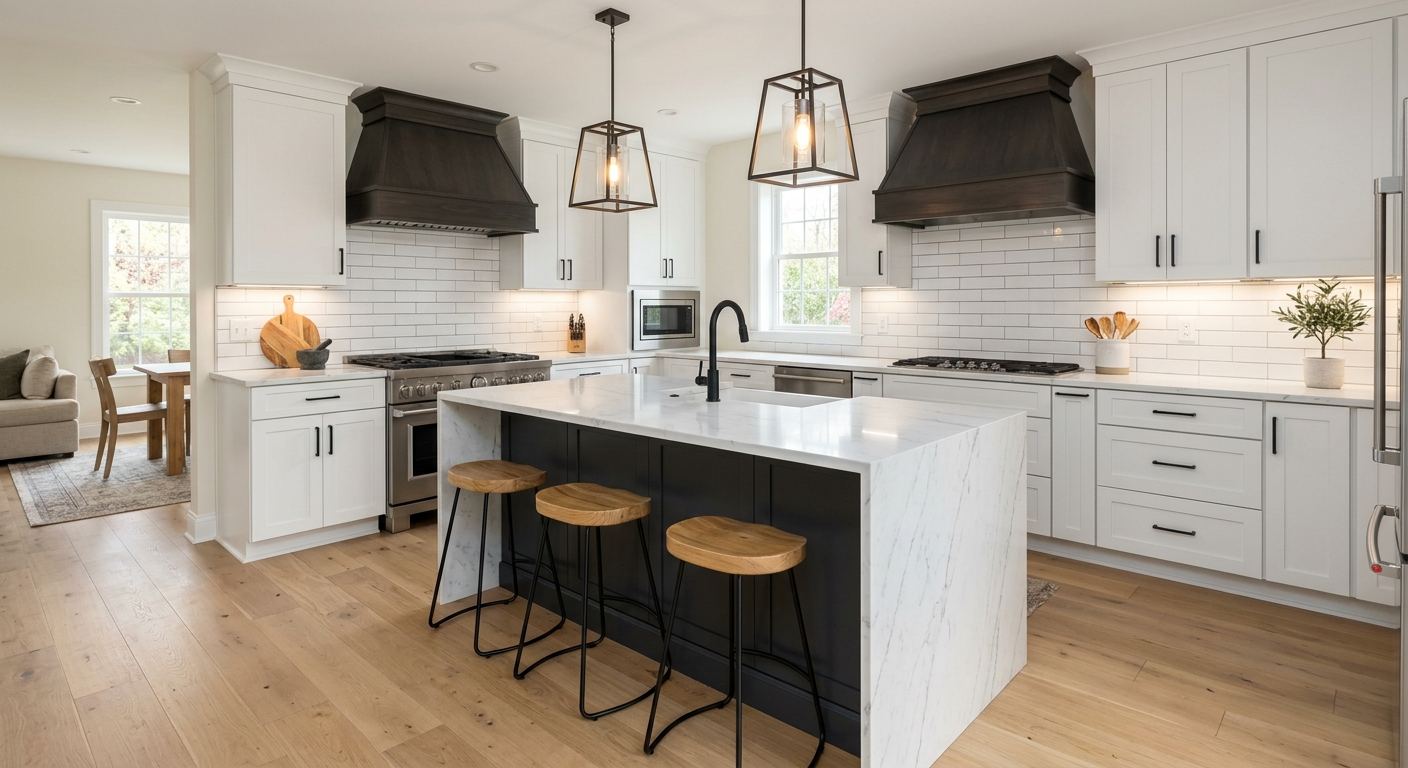
Kitchen renovation options and costs in Carp
Carp homeowners typically start with one big question: what will a kitchen renovation cost here? With Carp’s small population (1,477 residents as of the 2021 Census) and a Toronto economic-region pricing environment, expectations often align more with local resale dynamics than with sheer square footage. In higher-value pockets around the GTA, renovations commonly target kitchen finishes that look “new” for years—think quartz counters and upgraded hardware—because buyers are used to that standard. Even in smaller communities like Carp, contractors still price labour and materials off the same GTA market supply chains, so budgets can move quickly once you step up finish tier.
Ontario projects are also shaped by the Toronto region’s typical “invest more in the kitchen” mindset in higher-value neighbourhoods, where homeowners may spend roughly 8–15% of home value on kitchen upgrades (Statistics Canada, 2021 Census). Climate matters less than people assume: Carp’s freeze–thaw cycles don’t drive kitchen line items the way exterior work does, but they do influence indoor humidity management and the care required for natural materials near sinks and dishwashers. Availability is another practical factor—when demand is high across the Toronto economic region, scheduling can push out and increase the cost of coordination, especially for custom cabinetry and stone fabrication.
In Carp, the trade is especially in demand among homeowners near the village core and along the main commuter corridors into Ottawa, where kitchens tend to be updated to match modern open-plan expectations. From that starting point, the options below help you compare tiers before you call for an itemised quote.
| Renovation Tier |
What's Included |
Typical Duration |
Price Range |
| Cosmetic refresh (paint, hardware, new appliances only) |
Cabinet painting or touch-ups, new pulls/knobs, backsplash cleaning/refresh (no full tile), installation of replacement appliances |
1–3 weeks |
$7,000–$18,000 |
| Mid-range full renovation (new cabinets, counters, sink, tile) |
Semi-custom or stock cabinets, quartz or laminate counters, new sink and taps, backsplash tile, under-cabinet lighting (where available), disposal and basic plumbing tie-ins |
4–7 weeks |
$35,000–$65,000 |
| High-end full renovation (custom cabinets, stone counters, island) |
Fully custom cabinetry, premium stone counters, larger island with seating, upgraded appliance package, full-height or feature backsplash, more extensive electrical/plumbing |
7–12 weeks |
$75,000–$95,000 |
| Cabinet refacing only (new doors + drawer fronts, same boxes) |
Reface with new doors/drawer fronts, new trim, updated hardware, optional new crown/soffit treatment |
2–4 weeks |
$8,000–$25,000 |
| Countertop swap only (laminate to quartz or stone) |
Remove existing tops, template/fabrication, install new countertop, sink cut-outs and basic re-seal, backsplash not included unless specified |
1–2 weeks |
$4,500–$14,500 |
| Backsplash tile installation only |
Tile supply and installation, grout/seal, finish around outlets (no moving electrical locations) |
3–7 days |
$2,000–$10,000 |
Prices are estimates only and vary by project scope, site access and material selection.
What affects the price of kitchen renovation in Carp
It’s common to see quotes for the “same” kitchen end up 30–50% apart across the Toronto economic region and Ontario. The big reason isn’t climate—it’s finish tier, labour scheduling, and how often layout and services change. In higher-value markets around Toronto, homeowners are more likely to choose quartz or natural stone and semi-custom cabinetry because the cost is easier to justify at resale; in more price-sensitive areas of the region, laminate and stock cabinets keep budgets in the low–mid range. Either way, layout changes (even small ones) add the most unpredictable cost because they trigger plumbing/gas/electrical adjustments and more demo and reinstatement.
In Carp specifically, two conditions tend to raise costs. First, many older homes have kitchens with less-than-modern rough-in spacing—when we open walls for a better workflow or to add an island, we sometimes find dated drain/vent runs that require extra labour. Second, if you’re targeting a premium look, the material lead time matters: stone fabrication and custom cabinetry schedules can extend timelines, and a longer site lock-up can add coordination costs. On the other hand, you can lower the total by keeping the “wet wall” and by staying in the $25,000–$90,000 full-kitchen range with selective upgrades.
Three practical examples: (1) Moving a dishwasher 2 feet may sound minor, but it can turn into a drain line change plus extra labour, pushing a project toward the higher end of mid-range budgets. (2) Swapping laminate for quartz without moving plumbing usually stays manageable; countertop-only installs often land in the $3,000–$15,000 band depending on edge profiles. (3) Upgrading to a stone backsplash with more coverage (behind range to ceiling height) changes both labour and material waste rates, which is why “just tile” can land at the upper part of the $2,000–$10,000 range.
| Price Factor |
Why It Matters |
Cost Impact |
| Cabinet tier — stock vs. semi-custom vs. fully custom millwork |
Custom heights, widths, internal storage, and framing details drive material and labour time |
$10,000–$55,000 swing across tiers in typical projects |
| Countertop material — laminate vs. quartz vs. granite vs. stone |
Fabrication complexity, thickness, and finishing methods change install time and waste |
$3,000–$15,000 depending on material and scope |
| Layout change — wall removal, island add, plumbing/gas move |
Alters structural work and service routing; requires coordination with licensed trades |
$5,000–$25,000 common variance |
| Appliance package tier — builder vs. mid-range vs. pro-grade |
Dimensional fit, electrical requirements, and trim kits affect labour and installation |
$2,000–$10,000 variation |
| Flooring — refinish existing vs. full replacement |
Demo and re-leveling can grow quickly, especially with tile removal or subfloor repairs |
$1,500–$12,000 variance |
| Backsplash — ceramic tile vs. marble vs. full-height slab |
Coverage height and material hardness change labour time and cutting |
$2,000–$10,000 depending on finish |
| Electrical — new circuits for island, under-cabinet lighting |
New circuits require permitted electrical work and inspection readiness |
$800–$5,500 typical spread |
| Permit fees and licensed trade requirements |
Permits add direct fees; licensed trade coordination affects scheduling and sequencing |
$300–$3,500 plus time impacts |
Permits & regulations in Ontario
In Ontario, not every kitchen change needs a permit. A cabinet and countertop swap typically does not require a permit because you’re replacing finishes without altering the building services. That said, if your Carp kitchen renovation moves the “utilities” inside the walls or changes how the kitchen is served, you’re usually in permit territory.
Work that typically DOES require a permit and licensed trades includes: relocating plumbing supply or drain lines (sink, dishwasher, or wet-wall reconfiguration), moving a gas stove or altering venting for gas appliances, removing a load-bearing wall (structural changes), and adding electrical circuits—such as new power for an island, dedicated circuits for microwave/hood use, or changing the electrical service routing. Gas work must be performed by a licensed gas fitter, and electrical work must be completed by a licensed electrician, followed by inspections.
To verify contractor compliance in Carp before you sign, use a simple checklist. First, ask for a copy of their Ontario licence documentation and check their standing through the relevant online registry; confirm the scope matches kitchen electrical/gas/plumbing work if they claim it. Second, request a certificate of insurance (general liability) and confirm the contractor’s coverage is active for the project dates. Third, ask for proof of WSIB/WCB coverage (or the applicable clearance letter, depending on the contractor’s status) so you’re not exposed if a worker is injured. Finally, ensure the permit responsibility is stated clearly in writing—pulling the permit, paying fees, and scheduling inspections should be assigned in your contract.
Cabinets, countertops and layout decisions in Carp
Three decisions drive most Carp kitchen renovation outcomes: cabinet tier, countertop material, and whether you change the layout. If you choose the right combination, you can hit a modern Toronto resale look without overspending.
1) Cabinet tier. Stock cabinets are the fastest and cheapest path, but they can feel “standard” and sometimes don’t fit older kitchen wall conditions without fillers and trim. Semi-custom is the most popular mid-range choice in this region because it balances lead time and fit—especially for homes with awkward corners and non-square walls. Fully custom millwork costs more, but it’s the best option when you want built-in fridge panels, perfect crown detailing, and storage that matches how you actually cook.
2) Countertop material. Laminate is budget-friendly, quartz is the common sweet spot, granite/natural stone adds a premium look, and marble is beautiful but more maintenance-sensitive. In Carp’s typical indoor conditions, the biggest practical difference is sealing and stain resistance near the sink and dishwasher. If you’re working inside the mid-range $25,000–$90,000 full-renovation budget, quartz is often the easiest way to feel “high-end” without paying for full stone fabrication and extra replacement allowances.
3) Layout changes. Open-concept wall removal, island additions, and plumbing or gas relocation are justified when they improve flow and storage enough to “solve” a real pain point (like too little counter space or a cramped traffic path). If your “wet wall” stays put, you can often control costs. For example, upgrading from laminate to quartz might cost roughly a few thousand dollars more, but if it avoids rework from extra changes, that price difference is usually easier to recover on resale than expanding scope everywhere.
| Option |
Durability |
Maintenance |
Best For |
Price Range |
| Stock cabinets (big-box) |
Good for everyday use; limited sizes can force awkward gaps if walls aren’t true |
Low maintenance; touch up scratches as needed |
Fast timelines and budget-focused renos |
$8,000–$22,000 |
| Semi-custom cabinets (local dealer) |
Very good; better sizing and internal options |
Low maintenance; clean with standard cabinet-safe products |
Most Carp homeowners targeting resale-ready finishes |
$18,000–$40,000 |
| Custom cabinets (local millwork shop) |
Excellent; optimized joinery and fit |
Low maintenance but requires quality hardware and careful installation |
Unique layouts, built-ins, and premium kitchen identity |
$30,000–$60,000 |
| Laminate countertop |
Moderate; can chip or dent at edges if impacted |
Wipe clean; avoid prolonged standing water at seams |
Lower-cost refresh where aesthetics matter most |
$3,000–$6,500 |
| Quartz engineered countertop |
High; resistant to staining and everyday wear |
Low maintenance; no sealing required |
Best balance of durability and “looks like stone” value |
$6,000–$14,500 |
| Granite / natural stone countertop |
High; natural variation and strong performance for most households |
Periodic sealing recommended depending on stone and finish |
Premium look with a natural, one-of-a-kind pattern |
$8,500–$16,500 |
| Butcher block countertop |
Good; durable but susceptible to heat and heavy water exposure |
Regular oiling and careful drying near sink |
Warm, traditional kitchens and casual entertaining |
$4,500–$10,500 |
| Marble countertop |
Beautiful but softer; can etch or stain with acidic spills |
Higher maintenance; sealing and fast cleanup are essential |
Statement look when you’re willing to care for it |
$10,000–$20,000 |
How to choose a kitchen renovation contractor in Carp
Choosing the right contractor is what keeps your Carp kitchen renovation on budget and on schedule. Start by verifying Ontario licensing and compliance. Ask for their licence documentation relevant to the work they’ll do (especially electrical and gas-related scope) and request a certificate of insurance showing active general liability coverage for the project period. Next, confirm WSIB/WCB coverage: you should be able to get proof of coverage or a clearance letter so you’re not left dealing with worker claims if something happens on site.
Then get 2–3 itemised written quotes. You want labour and materials broken out—not just one lump sum—so you can compare like-for-like. Confirm whether permit pulling is included, whether disposal and dumpster fees are covered, and what is excluded (subfloor repairs, sub-trade patching, hardware supply, drywall finishing level, or flooring reinstatement). A high-quality contractor will outline exclusions clearly and propose allowances where pricing depends on selections.
Warranty matters too. Ask for (1) workmanship warranty length and what it covers, (2) product/manufacturer warranties for cabinets, counters, and appliances, and (3) whether warranties are transferable if you sell your home. For payment schedule, don’t hand over large sums early—aim for a deposit only and typically no more than 10–15% upfront, with a holdback until substantial completion. Finally, demand a written start date and completion estimate, including how long lead-time items (stone, custom cabinets) will affect the schedule.
- Provide licence proof for any electrical/gas scope they handle.
- Show current general liability insurance (certificate of insurance).
- Confirm WSIB/WCB coverage or clearance letter before work begins.
- Use itemised quotes: labour hours, materials, and allowances separated.
- Clarify exclusions: drywall finishing level, moulding, patching, and flooring.
- Confirm whether permits are included or paid separately.
- Ask who supplies and installs hardware, sinks, taps, and trims.
- Confirm disposal/dumpster and protection of finishes (floors/counters).
- Verify countertop templating timing and responsibility for template delays.
- Get a written schedule that includes lead times for cabinets/stone.
- Review the warranty in writing: workmanship and product terms.
- Set a payment plan with a holdback until completion and final cleanup.
Common red flags in Carp: contractors who won’t provide insurance/WSIB documentation, quotes that exclude electrical/plumbing rough-in details but price “fixed price” work, vague scopes with no allowance line items, asking for most payment upfront, or scheduling that ignores cabinet/stone fabrication lead times and then “blames materials” for missed timelines.
Frequently asked questions — kitchen renovation in Carp
How much does a kitchen renovation cost in Carp?
In Carp, pricing generally follows the broader Toronto economic-region reality: finish tier drives cost more than climate. For a full kitchen renovation, realistic budgets typically land in the $25,000–$90,000 band depending on whether you’re doing a modest refresh with stock components or a larger custom build with premium counters and an island. Cosmetic-only updates (paint, hardware, and appliance swaps) can be lower, while moving plumbing/electrical can push budgets toward the upper end even if your finishes aren’t “luxury.” Because Carp is a small community, scheduling and lead-time planning also matter—when custom cabinetry or stone is delayed, the total can climb due to extended site coordination (Statistics Canada, 2021 Census).
How long does a kitchen renovation take in Carp?
Timelines in Carp usually depend on how much demo you do and whether you’re changing services. A cosmetic refresh can be 1–3 weeks if only finishes and appliances are being replaced. A mid-range full renovation (new cabinets, counters, sink, and tile) commonly takes about 4–7 weeks, assuming countertop templating and cabinet delivery stay on track. High-end projects with custom millwork, stone, and islands often run 7–12 weeks. The most common delays come from countertop fabrication lead times and cabinet backorders, not from the install itself. Your contractor should provide a written schedule and explicitly state when decisions must be made to keep dates realistic.
Quartz vs granite countertops — which is better?
Neither is “universally better”—they’re different trade-offs. Quartz is engineered, typically stain-resistant, and usually low maintenance (no sealing for many products), which makes it a practical choice for busy households and resale-ready kitchens in Ontario. Granite/natural stone offers unique natural patterns and a premium look, but it often benefits from periodic sealing and careful care near sinks and around edges. In Carp, the decision often comes down to your tolerance for maintenance and your design goals. If you want a reliable, everyday surface within the mid-range countertop budget, quartz often fits well within the $6,000–$14,500 range. If you want maximum natural character, granite generally pushes higher within the broader stone bands.
Should I reface or replace my cabinets?
Refacing is usually the right move when the cabinet boxes are structurally sound, the layout is working, and you want a refreshed look without full demolition. It’s often faster and can keep costs lower—cabinet refacing commonly sits in the $8,000–$25,000 range. Replacement is the better option if your boxes are damaged, the layout needs correction, or you want major upgrades to internal storage, pull-outs, and sizing. In older Carp homes, refacing can be a smart way to avoid opening wall cavities, which can uncover plumbing or electrical surprises. If you’re considering new countertops at the same time, ask your contractor whether the refacing schedule allows countertop templating without shifting timelines.
Do I need a permit for a kitchen renovation in Ontario?
Many kitchen changes in Ontario don’t require permits. Typically, swapping cabinets and countertops without moving services is considered straightforward finish work and generally doesn’t require a permit. Permits are usually required when you change the “systems,” such as relocating plumbing supply or drain lines, moving gas appliances or making gas-related changes, removing a load-bearing wall, or adding new electrical circuits (for example, power for an island). Gas work must be done by a licensed gas fitter and electrical work by a licensed electrician, with inspections. For a Carp homeowner, the key is to have the contractor confirm—in writing—what permits they will (and won’t) apply for and who is responsible for scheduling inspections.
What's the ROI on a kitchen renovation?
ROI depends on how your renovation matches local buyer expectations. In the Toronto economic region, buyers often value a kitchen that looks modern and functions well—especially upgraded countertops, consistent cabinet fronts, and updated lighting and hardware. That said, exact ROI varies because it hinges on your home’s condition, your neighbourhood’s price point, and the scope you choose. A safe strategy in Carp is to prioritize changes that feel “new” visually (cabinets and counters) while controlling structural and service changes. If you keep the wet wall and avoid major plumbing/gas/electrical moves, you can aim for a renovation that feels tailored without overspending beyond typical resale influence. Budgeting within the $35,000–$65,000 mid-range often helps balance resale appeal with cost control.