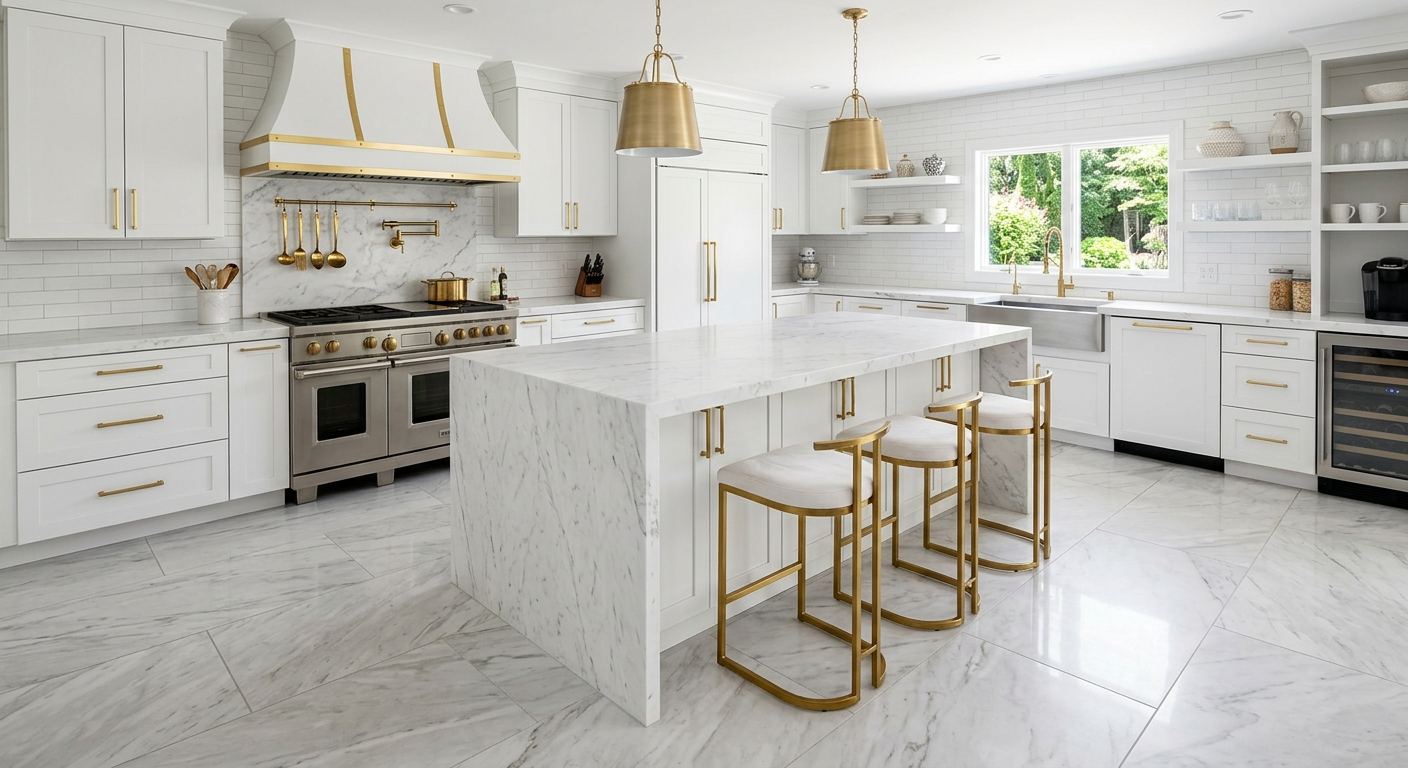
Kitchen renovation options and costs in Markland Wood
Markland Wood, Ontario is a great place to renovate kitchens because many homes in the area are mature, practical layouts that can be upgraded without major demolition. With a 2021 population of 10,554 (Statistics Canada, 2021 Census), the community is big enough to support consistent contractor availability, yet it still feels neighbourhood-specific—so you’ll often see repeat trades familiar with local home styles and constraints. In the Toronto economic region, pricing typically reflects what buyers will pay for modern finishes. That’s why higher-value areas around the GTA tend to push kitchens toward custom cabinetry and quartz or natural stone, with homeowners commonly investing roughly 8–15% of home value into the kitchen; in more price-sensitive pockets, semi-custom or refaced cabinetry plus quartz (or even good laminate) keeps budgets closer to the mid-range. (Statistics Canada, 2021 Census) While the local climate isn’t the main driver of kitchen costs, Toronto’s freeze–thaw cycles do matter indirectly: poor ventilation or water management under exterior-facing windows and older plumbing can lead to subfloor issues. Those hidden repairs show up most often during wall opening, cabinet removal, or when replacing sink plumbing and flooring. In Markland Wood, we tend to see especially strong demand around the central corridor of the community where homeowners renovate for resale and daily usability—particularly for open-concept living and better pantry storage. Below is a practical way to compare common renovation tiers so you can line up realistic budgets before you request quotes.
| Renovation Tier |
What's Included |
Typical Duration |
Price Range |
| Cosmetic refresh (paint, hardware, new appliances only) |
Cabinet paint or stain touch-up, new hardware/pulls, backsplash as an add-on only if specified, appliance swap (no plumbing/gas moves), minor caulking and trim |
3–7 days |
$25,000–$30,000 |
| Mid-range full renovation (new cabinets, counters, sink, tile) |
New semi-custom or stock cabinets, quartz or laminate counters, sink and faucet install (no major plumbing relocation), tile backsplash, new flooring prep and underlayment as needed |
2–4 weeks |
$35,000–$60,000 |
| High-end full renovation (custom cabinets, stone counters, island) |
Custom millwork, premium quartz/stone counters, island with electrical allowances, higher-end appliance package, full-height or upgraded stone-look backsplash, structural coordination if opening/layout changes |
4–8 weeks |
$60,000–$90,000 |
| Cabinet refacing only (new doors + drawer fronts, same boxes) |
Door/drawer replacement, new hardware, interior refacing components where possible, labour for careful removal/re-install to match existing layout, typically no countertop replacement |
1–2 weeks |
$8,000–$25,000 |
| Countertop swap only (laminate to quartz or stone) |
Remove existing top, install new engineered stone/quartz or stone slab, sink cut-out and caulking, standard edge profile; backsplashes may be limited unless included |
3–7 days |
$3,000–$15,000 |
| Backsplash tile installation only |
Surface prep, layout and tile setting, grout/seal where required, trim pieces and caulking; assumes cabinets/counters are already complete |
2–5 days |
$2,000–$10,000 |
Prices are estimates only and vary by project scope, site access and material selection.
What affects the price of kitchen renovation in Markland Wood
In Markland Wood and across the Toronto economic region, two homeowners can receive quotes for a “similar” kitchen and see a 30–50% difference because the biggest variables are the same ones contractors can’t know perfectly until measurements and site conditions are confirmed. Local home values and household purchasing power influence the finish tier far more than climate. In higher-value neighbourhood pockets, buyers tend to expect quartz or natural stone counters, fully integrated hardware, and semi-custom or custom cabinet details—so the job naturally moves toward the upper portion of the $25,000–$90,000 full-renovation band. In more modest scenarios, laminate countertops and stock/refaced cabinets keep labour and materials predictable, often landing closer to the mid-range. Market-driven decisions matter because resale value is the real “ROI engine”: a durable, neutral kitchen with today’s cabinet/edge profiles reduces buyer hesitation, so homeowners are more comfortable investing up when their property value supports it.
That said, Toronto’s housing stock adds cost uncertainty. Older homes (common in this community) can have out-of-level floors or undersized subflooring, and freeze–thaw can worsen minor water intrusion around exterior penetrations—especially near sinks and dishwashers. Two concrete examples we see often in Markland Wood: (1) swapping to a new undermount sink can require adjusted cabinet framing if the original opening is out of square, adding time to “make it fit”; (2) moving a refrigerator or adding an island can expose dated wiring pathways, which increases electrical labour and patching.
Finally, the layout itself is usually the most unpredictable cost driver—removing a wall, adding an island, or moving a gas line can swing a budget even when the finish tier stays mid-range. That’s why we plan layout decisions early, then choose cabinets and counters with the numbers aligned to either a mid-range $35,000–$60,000 renovation or a higher-end $60,000–$90,000 build.
| Price Factor |
Why It Matters |
Cost Impact |
| Cabinet tier — stock vs. semi-custom vs. fully custom millwork |
Custom boxes, door styles, internal storage upgrades, and installation tolerances change both materials and labour time |
Often the largest controllable variable after scope; can shift total cost by tens of thousands |
| Countertop material — laminate vs. quartz vs. granite vs. stone |
Material price and install complexity vary (templating, slab handling, edge profiles, seam strategy) |
Laminate is lowest; quartz/stone increases both materials and fabrication |
| Layout change — wall removal, island add, plumbing/gas move |
Triggers additional trades, may require permits, and can uncover hidden conditions behind walls |
Highest uncertainty; can materially increase timelines and total budget |
| Appliance package tier — builder vs. mid-range vs. pro-grade |
Electrical and ventilation requirements can differ; fit/finish and integration details add cost |
Can move the project up quickly if venting/clearance needs change |
| Flooring — refinish existing vs. full replacement |
Removing cabinets can require new underlayment, and damaged subfloor must be addressed |
Partial fixes are cheaper; full replacement is higher but more consistent |
| Backsplash — ceramic tile vs. marble vs. full-height slab |
Material type affects setting time, wall prep, and finishing; height increases labour and materials |
Full-height and natural stone options push cost toward the top of the band |
| Electrical — new circuits for island, under-cabinet lighting |
New circuits require licensed electrical work and may affect permit scope and inspections |
Can add noticeable labour + permit/inspection costs |
| Permit fees and licensed trade requirements |
Work involving plumbing/gas, significant electrical, or structural changes requires permits and trade coordination |
Raises base costs and adds scheduling constraints |
Permits & regulations in Ontario
In Ontario, many “face-lift” kitchen updates don’t require permits—while more invasive work absolutely does. A cabinet and countertop swap (including replacing doors, drawer fronts, and new tops) typically does not require permits because it’s generally treated as like-for-like replacement. However, permits and licensed trades are usually required when you change a kitchen’s life-safety and utility systems. That includes moving plumbing supply/drain lines (sink, dishwasher connections, relocating drains), relocating gas components (stove/range location, or changes tied to a gas line), removing a load-bearing wall, or adding electrical circuits (for an island, moving receptacles, or adding significant under-cabinet lighting with new wiring). Where permits apply, inspections also follow—so the schedule can shift if rough-in or inspection windows don’t align.
If you’re in Markland Wood, here’s a practical way to verify compliance before you sign. Step 1: ask the contractor what work is permit-triggering and confirm it in the written contract (not just by email). Step 2: request proof of contractor and subcontractor licensing—electrician and gas fitter for their respective scope. Step 3: ask for certificates of liability insurance and evidence of coverage for workers (WSIB/WCB documentation, where applicable). Step 4: verify the actual registration/licence using the online public registries your contractor references, and match the names on the certificate to the trades assigned to your project. This protects you if there’s an inspection issue, a schedule delay, or workmanship/manufacturer disputes.
Cabinets, countertops and layout decisions in Markland Wood
For a Markland Wood kitchen renovation, the three most consequential decisions are cabinet tier, countertop material, and whether to change the layout. Start with cabinets: stock is typically the fastest and cheapest because it uses standard sizing and shorter lead times. Semi-custom is the “sweet spot” in the Toronto market—more storage options, better door/drawer selections, and a fit that still respects budget. Custom millwork delivers the most tailored fit and storage, but it’s also where timelines and costs can rise quickly.
Next: countertops. Laminate can look clean and modern for the budget, but it can be less forgiving with heat and impacts. Quartz is a popular Toronto choice because it’s durable, low-maintenance, and resists day-to-day wear that’s common in family kitchens. Granite and natural stone are premium in appearance and longevity, but they can require more upkeep depending on the specific stone and sealing needs. Butcher block brings warmth and repairability, while marble leans high-end but is more sensitive to acids and etching.
Finally: layout changes. Removing a wall or adding an island can be justified when it meaningfully improves circulation and storage—especially in homes where the kitchen-to-living flow limits how the space is used today. Conversely, a layout change that forces plumbing/gas relocation can inflate costs quickly and lengthen the schedule, even if your finishes stay mid-range.
Toronto resale buyers often expect neutral, durable surfaces at a mid-range price point; when you move into higher-end builds, integrated islands, premium edges, and stone counters become the differentiator. For a specific example: if you’re deciding between quartz and laminate, upgrading to quartz can be a smart “value-per-day” choice when the rest of the renovation is already in the $35,000–$60,000 band. But if you’re trying to stay closer to the mid-range without changing the footprint, putting the money into cabinet storage and a durable countertop usually beats over-spending on exotic stone.
| Option |
Durability |
Maintenance |
Best For |
Price Range |
| Stock cabinets (big-box) |
Good durability; depends on door hardware and material build |
Low effort; keep hinges adjusted and clean surfaces promptly |
Fast, cost-controlled projects with minimal layout changes |
$12,000–$22,000 |
| Semi-custom cabinets (local dealer) |
Very good durability with better internal storage options |
Low effort; quality hinges and finishes reduce wear |
Most Markland Wood renovations targeting resale-ready finishes |
$18,000–$35,000 |
| Custom cabinets (local millwork shop) |
Excellent durability when built with premium materials and fit |
Low effort; premium finishes usually age more gracefully |
Challenging layouts or homeowners wanting a fully tailored kitchen |
$30,000–$55,000 |
| Laminate countertop |
Moderate; can be impacted by heat and heavy impacts |
Simple cleaning, but avoid prolonged heat exposure and abrasive pads |
Budget-conscious renovations where appearance matters most |
$3,000–$6,500 |
| Quartz engineered countertop |
High; very resistant to staining and everyday wear |
Low maintenance; wipe clean and use standard non-abrasive cleaners |
Family kitchens and resale-ready upgrades in Ontario |
$6,500–$12,000 |
| Granite / natural stone countertop |
High; resilient and distinctive with natural variation |
May require periodic sealing depending on the stone |
High-end look while keeping long service life in daily use |
$9,000–$15,000 |
| Butcher block countertop |
Moderate to high; can be sanded/refinished if cared for |
Requires oiling/maintenance and mindful use around moisture |
Warm, casual style kitchens; homeowners who enjoy upkeep |
$5,500–$10,000 |
| Marble countertop |
Moderate; beautiful but more prone to etching from acids |
Higher maintenance: careful cleaning and immediate spill wipe-ups |
Design-forward kitchens where homeowners value luxury aesthetics |
$10,000–$16,000 |
How to choose a kitchen renovation contractor in Markland Wood
Choosing the right contractor in Markland Wood comes down to proof, process, and paper trails. First, verify Ontario licensing and coverage. Ask for the contractor’s general liability insurance certificate and confirm it matches the company name on the quote. If your scope includes gas work, request proof the gas fitter is properly licensed for that work. If you need new circuits or moving receptacles, get the electrician’s licence details too. For worker coverage, ask for WSIB/WCB documentation where applicable and keep copies with your contract package. Next, get 2–3 itemised written quotes—labour and materials separated, not one lump sum. Make sure the scope aligns: permit pull included or not, disposal included or not, and which items are exclusions (often drywall patching, subfloor repairs, or flooring underlayment). For warranties, confirm both workmanship and product coverage. Ask whether warranties transfer to future owners if you plan to sell.
Payment schedules matter. Never agree to pay more than about 10–15% upfront; hold back a portion until the job is complete and deficiencies are corrected. Also request a written start date and completion estimate, plus a realistic allowance for lead times on cabinets and countertops. In GTA kitchen renovations, delays are usually a materials scheduling issue, so a clear timeline reduces stress.
- Confirm licensing for electrical and gas scopes before you sign.
- Request and review liability insurance certificate and verify coverage limits.
- Ask for WSIB/WCB proof for the crew that will be on site.
- Get itemised quotes: labour breakdown, materials list, and allowances.
- Ensure demolition, disposal, and site protection are explicitly included.
- Clarify what happens if hidden damage is discovered (subfloor, framing, wiring).
- Confirm permit responsibility and whether permits are included in price.
- Ask about inspection scheduling and how it affects the start date.
- Verify warranty length for workmanship and finish materials.
- Check whether product warranties are direct-to-manufacturer and transferable.
- Use a payment schedule with a 10–15% maximum upfront deposit.
- Get a written completion target and a change-order process in writing.
Red flags to watch for: (1) quotes with no itemisation or missing allowance details; (2) refusal to list subcontractors or provide insurance/coverage documents; (3) vague scope language like “as required” without costs; (4) insisting on large upfront deposits beyond 15%; and (5) no written timeline or no documented change-order process—especially risky when moving plumbing, gas, or adding electrical for an island.
Frequently asked questions — kitchen renovation in Markland Wood
Should I reface or replace my cabinets?
In Markland Wood, refacing is often the smart move when your cabinet boxes are solid and square, the layout works, and you’re aiming for a quicker renovation. If the existing boxes are warped, water-damaged near the sink/dishwasher, or the layout is inefficient, replacement usually gives a cleaner result and better long-term performance. A cabinet refacing project typically falls around $8,000–$25,000, while replacing cabinets as part of a full renovation often pushes you into the $35,000–$60,000 or higher range depending on countertops and layout. Climate and Toronto housing age matter because older kitchens can have hidden moisture issues—so we recommend inspecting the toe-kicks, under-sink area, and cabinet bases before deciding. In many cases, we’ll reface only if the boxes pass fit and moisture checks.
Do I need a permit for a kitchen renovation in Ontario?
Ontario generally doesn’t require permits for like-for-like cabinet and countertop swaps (including most new doors/drawer fronts and replacing tops). However, if your Markland Wood renovation includes moving plumbing supply or drain lines, relocating gas equipment (such as the stove), removing a load-bearing wall, or adding new electrical circuits, permits and licensed trades typically apply. The key is that “cosmetic” work is usually permit-light, while “utility and structural changes” trigger review and inspection. Before you sign, ask your contractor to confirm what permits are required and who pulls them, then ensure it’s stated clearly in the written contract. Also confirm that the correct licensed professionals are assigned—gas work by a licensed gas fitter and electrical by a licensed electrician—so inspections match the actual work performed.
What's the ROI on a kitchen renovation?
ROI in the Toronto area is less about a universal percentage and more about matching buyer expectations for finishes and function. In higher-value parts of the GTA, kitchens are often a bigger share of buyer decision-making, so investing in durable surfaces and cabinetry can be easier to justify for resale. In budget-sensitive areas, the ROI tends to be strongest when you spend on what buyers can see (clean cabinetry, modern countertops, good lighting) while keeping layout changes controlled. Practically, we often see homeowners get the best “value per dollar” by targeting mid-range upgrades—frequently landing in the $35,000–$60,000 band—rather than trying to achieve a fully custom, high-end build unless the rest of the home supports it. If you’re considering a layout move, treat it as a functional investment: improved traffic flow and storage can matter more than switching to the most expensive counter material.
How do I budget for a kitchen renovation?
Budgeting starts with choosing a realistic renovation tier, then deciding which scope elements you’ll lock early. In Markland Wood and the broader Toronto economic region, a full kitchen renovation commonly falls between $25,000–$90,000, with mid-range projects often clustering around $35,000–$60,000. To avoid surprises, plan for a contingency for hidden conditions (subfloor, wiring, framing behind old cabinets) and separate “must-haves” from “nice-to-haves.” If you’re only changing surfaces, start with countertop or backsplash costs—countertop installation commonly sits around $3,000–$15,000 and backsplash tile around $2,000–$10,000. Also get itemised quotes so you can compare apples-to-apples: labour, materials, disposal, and whether any permits are included. If you move plumbing or add electrical for an island, budget the additional trades and time as well.
Can I move my kitchen sink or stove?
Yes, but in Ontario you should expect the scope to change significantly when you move utilities. Moving a sink generally means altering plumbing supply and drain lines, and moving a gas stove means gas line relocation—both typically involve permits and licensed trades. That’s where costs and timelines become less predictable, especially in older Toronto homes where existing lines and openings may be less accessible. If your goal is improved function, we often recommend evaluating whether you can achieve the same usability benefit with a smaller layout change first (better cabinet storage, adjusted appliance clearances, or an island that doesn’t require relocating the stove). When relocation is necessary, plan around rough-in scheduling, inspection windows, and careful sealing to reduce future moisture risk—particularly around the sink base where freeze–thaw and past minor leaks can cause subfloor issues. Your contractor should outline the exact trades and permit steps in writing before work begins.
What's the most cost-effective kitchen upgrade?
The most cost-effective upgrade is usually the one that delivers a “complete visual refresh” without triggering expensive utility relocations. For many Markland Wood homeowners, upgrading cabinet hardware and paint (plus swapping in new appliances without moving plumbing or gas) can be a quick improvement, but the highest-impact upgrades tend to be cabinets and countertops done in a coordinated way. If you already have good cabinet boxes, refacing is often the best value—commonly around $8,000–$25,000—because you change the look while avoiding full demolition and new box installation. If you’re not ready for cabinet work, a countertop swap to quartz (installation often sits in the $3,000–$15,000 range) can dramatically modernize the kitchen. If your cabinets are dated but structurally fine, start there; if your cabinets are worn or water-affected near the sink, replacing or refacing with box repairs will beat “just counters” for long-term satisfaction.