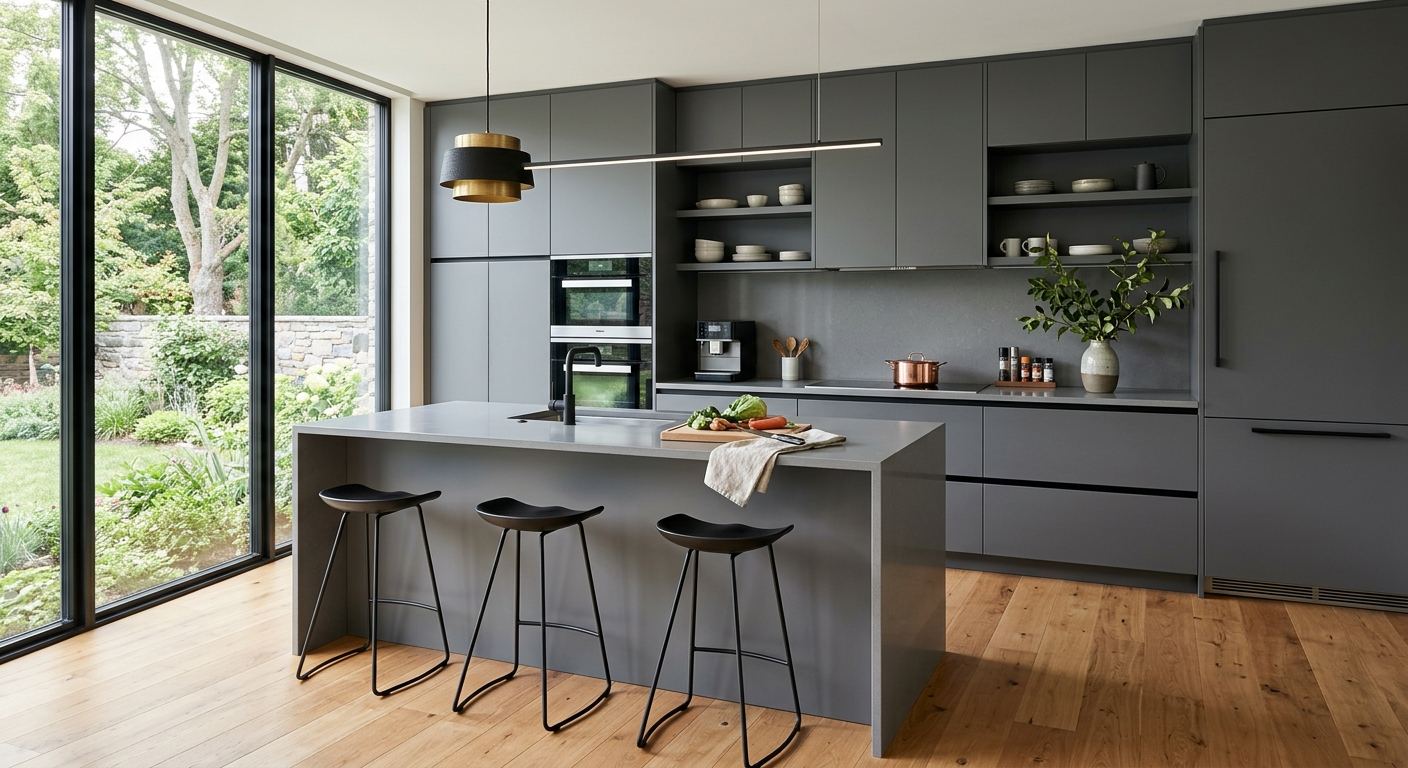
Kitchen renovation options and costs in Blake-Jones
Kitchen renovations in Blake-Jones are shaped less by weather and more by the local Toronto market—how much homeowners can spend and what buyers expect to see when they walk in. With a 2021 population of 7,727 in the area (Statistics Canada, 2021 Census), the neighbourhoods around Blake-Jones also draw from a broader Toronto buyer pool, where kitchen upgrades are a visible selling point. In higher-value pockets of the Toronto economic region, owners often invest around 8–15% of home value into the kitchen, which nudges many projects toward semi-custom cabinetry, quartz, and upgraded appliances rather than just paint and hardware.
Even though Ontario’s winter weather is hard on heated homes, the cost impacts you feel in a kitchen are mostly indirect: older townhomes and detached houses are prone to uneven subfloors, older plumbing runs, and electrical that doesn’t support modern appliance loads. Contractor availability can also swing with GTA demand—when multiple trades are booked out for concurrent jobs, schedules tighten and labour becomes a larger portion of your quote. Areas with more established housing stock tend to need more “real-world” prep work (shimming, wall patching, tying into existing ducting or venting), which can push even mid-range refreshes upward. In Blake-Jones, demand is especially strong in family-oriented pockets and near the Denison-area corridors, where kitchens are frequently updated to match modern open layouts.
Below are realistic budget ranges so you can compare options side-by-side and then align your selections with your resale goals before calling for an itemised quote.
| Renovation Tier |
What's Included |
Typical Duration |
Price Range |
| Cosmetic refresh (paint, hardware, new appliances only) |
Cabinet paint or touch-up (existing boxes), new hardware, paint/trim, dishwasher or range swap, fridge/hood connection checks, minor wall repair, basic cleaning/caulking |
1–2 weeks |
$8,500–$20,000 |
| Mid-range full renovation (new cabinets, counters, sink, tile) |
Semi-custom or quality stock cabinets, new laminate or quartz counters, sink and tap, backsplash tile, new flooring prep/patching, plumbing change-outs as needed, electrical updates for lighting |
3–6 weeks |
$25,000–$55,000 |
| High-end full renovation (custom cabinets, stone counters, island) |
Custom cabinetry, quartz or natural stone (often with island), full-height backsplash or premium tile plan, island electrical/plumbing tie-ins, upgraded hood/venting, higher-grade appliances and lighting |
6–10 weeks |
$60,000–$90,000 |
| Cabinet refacing only (new doors + drawer fronts, same boxes) |
Refacing panels and new doors/drawer fronts, new hardware, site sanding/prep, optional lighting provisions, repaint/finish updates where required |
2–4 weeks |
$10,000–$35,000 |
| Countertop swap only (laminate to quartz or stone) |
Remove and replace countertop only, cut-outs for sink/cooktop as needed, new edge detail, disposal of existing surface, caulking and final sealing |
3–7 days |
$3,500–$15,000 |
| Backsplash tile installation only |
Surface prep, layout and setting ceramic/porcelain tile, grout/seal where needed, caulking edges, removal of old backsplash material if included in scope |
3–6 days |
$2,000–$10,000 |
Prices are estimates only and vary by project scope, site access and material selection.
What affects the price of kitchen renovation in Blake-Jones
In Blake-Jones and across the wider Toronto region, you can see quotes for the “same” kitchen jump by 30–50% because the finish tier and the hidden conditions (subfloor level, plumbing age, wiring capacity) change the labour and prep requirements. Locally, home values and household purchasing power tend to steer homeowners toward a particular look: in higher-value GTA pockets, quartz or natural stone and semi-custom cabinetry are common because the cost is more easily recouped on resale. In more price-sensitive areas of outer Mississauga and Brampton, many buyers still want an updated look, so projects often start with stock or refaced cabinets and laminate or good quartz at a controlled budget—closer to the low–mid range of $25,000–$55,000 for full remodels.
What drives the variability most isn’t climate—it’s the product choices and how much rework your home’s existing layout demands. For example, if a home has older galvanized plumbing, small changes like swapping a sink or moving a faucet can become a longer plumbing run, affecting time and material. If your kitchen includes a gas range, upgrading the hood or relocating the cooking area often triggers additional permitting and licensed gas work, which raises costs even if the cabinet and countertop tier stays mid-range. Conversely, if you keep the “wet wall” where it is and only replace finishes, a countertop swap can stay in the $3,500–$15,000 band with minimal disruption. Across Ontario, older 1970s–1990s housing stock can also mean electrical panels need adjustments for new lighting circuits and modern appliance loads—another cost swing.
Put simply: Toronto budgets react to resale-driven finish expectations first, then to the layout and service realities. Use the factors below to understand why contractors price the same plan differently—and to keep your scope tight before you sign.
| Price Factor |
Why It Matters |
Cost Impact |
| Cabinet tier — stock vs. semi-custom vs. fully custom millwork |
Custom boxes and door styles take more shop time and often require more onsite fitting |
Can shift a full kitchen from mid-range to high-end pricing |
| Countertop material — laminate vs. quartz vs. granite vs. stone |
Material cost, edge profiles, and template/installation time vary significantly |
Typically one of the top three cost drivers after cabinets |
| Layout change — wall removal, island add, plumbing/gas move |
Changing the layout can require permits, structural work, new lines, and additional scheduling of trades |
Often adds the most unpredictable cost regardless of finish tier |
| Appliance package tier — builder vs. mid-range vs. pro-grade |
Higher-end models add ventilation complexity and can change electrical requirements |
Can move you $5,000+ depending on selection and ventilation/trim |
| Flooring — refinish existing vs. full replacement |
Refinishing saves tear-out, while full replacement affects underlayment and transitions |
Usually a moderate swing, but can become large if levels are off |
| Backsplash — ceramic tile vs. marble vs. full-height slab |
Pattern complexity, material fragility, and coverage height drive labour and waste |
Full-height upgrades can materially increase backsplash totals |
| Electrical — new circuits for island, under-cabinet lighting |
Modern lighting and outlets increase rough-in scope and inspection steps |
Can add several thousand depending on panel capacity and layout |
| Permit fees and licensed trade requirements |
Work involving gas, significant electrical, or structural changes triggers permitted trades and inspections |
Costs rise even when finish scope stays the same |
Permits & regulations in Ontario
In Ontario, some kitchen changes are “no-permit” in the everyday sense, but other common upgrades definitely require permits and licensed trades. A straight cabinet and countertop swap—keeping the layout and not moving plumbing—typically does not require a permit. Likewise, replacing fixtures like a sink/tap within the same openings and positions usually falls under standard renovation work.
Where permits do come into play in Blake-Jones is when you change services or structure. Moving plumbing supply or drain lines, relocating a gas stove or altering gas connections (including work tied to a range hood with gas), removing a load-bearing wall, adding/relocating vents, and adding new electrical circuits for an island or under-cabinet lighting usually require permits and inspections. Gas work must be done by a licensed gas fitter, and electrical work must be performed by a licensed electrician—both require appropriate paperwork and inspection sign-offs.
Step-by-step, here’s how you verify a contractor in Ontario before work starts: (1) Ask for their Ontario trade licensing number(s) relevant to the scope (gas/electrical where applicable). (2) Request a certificate of insurance showing liability coverage and ask whether the work will be covered during the renovation period. (3) Confirm WSIB/WCB coverage for workers involved in your project (or ask for proof of clearance where applicable). (4) Require that the permit responsibility is clearly stated in the written contract—who pulls permits, pays fees, and schedules inspections.
Taking these steps early protects you from schedule delays and ensures your kitchen passes inspections where required.
Cabinets, countertops and layout decisions in Blake-Jones
The three most consequential decisions in a Blake-Jones kitchen renovation are cabinet tier, countertop material, and whether you change the layout. Cabinets control your daily experience—door alignment, storage depth, drawer quality, and how smoothly the kitchen functions. Countertops are your durability and maintenance workhorse, and in Toronto resale reality, the look of the counters is what buyers notice first. Layout changes—opening up a wall, adding an island, or moving plumbing/gas—can transform how the space lives, but they also create the most cost uncertainty because you’re adding trade coordination and service work.
In this market, stock cabinets are the fastest path when you’re doing a refresh and want to keep spending controlled. Semi-custom is the sweet spot many homeowners choose in GTA-style mid-range renovations because it offers better finishes and wider options without jumping fully into custom millwork. Custom cabinets make the most sense when your space has tricky angles, unusual ceiling heights, or you want a specific storage plan that aligns with how the family uses the room.
Countertop choice follows the same resale logic. Quartz is often the practical upgrade people want: it’s durable, generally low-maintenance, and fits well in the mid-range to high-end bands of full remodels. Laminate can still be a smart choice when the goal is ROI and you want budgets closer to the $25,000–$55,000 range. For a concrete example: if upgrading from laminate to quartz adds roughly $3,000–$7,000 within a full renovation (depending on seam details and edge profiles), that difference can be worth it if you’re also improving the look of the kitchen with updated cabinetry and lighting—because buyers typically value the “new-looking” surface.
Ontario’s seasonal swings can also highlight cabinet and countertop installation quality—good ventilation and proper sealing around sinks help prevent nuisance moisture issues during winter dry-in and spring humidity changes. Choose options that match your renovation scope and the way your household uses the kitchen.
| Option |
Durability |
Maintenance |
Best For |
Price Range |
| Stock cabinets (big-box) |
Good for standard layouts; limited customization for odd sizes |
Wipe clean; depends on finish quality and hinges/hardware |
Budget-conscious updates and quick turnarounds |
$8,000–$20,000 |
| Semi-custom cabinets (local dealer) |
Strong build and improved fit/finish versus stock; better storage options |
Easy care; soft-close hinges and drawers reduce wear |
Most mid-range Blake-Jones renovations targeting resale-ready styling |
$18,000–$45,000 |
| Custom cabinets (local millwork shop) |
Highest fit for the space; supports bespoke storage and layout detailing |
Generally straightforward; hinges/hardware dictate long-term feel |
Irregular footprints, premium finishes, and high-end designs |
$35,000–$75,000 |
| Laminate countertop |
Resistant to daily use; seams and edges need proper installation to avoid wear |
Wipe down; avoid standing water at seams/edges |
Keeping spend in check while modernizing the kitchen appearance |
$3,000–$8,000 |
| Quartz engineered countertop |
Very durable for busy households; consistent look and strong stain resistance |
Minimal care—typical wipe and mild cleaner |
Busy Blake-Jones kitchens where you want a “premium look” without stone upkeep |
$7,000–$15,000 |
| Granite / natural stone countertop |
Hard and long-lasting; varies by slab and thickness |
Sealing schedule depending on the stone; wipe spills promptly |
Homeowners wanting natural variation and a high-end countertop presence |
$8,000–$18,000 |
| Butcher block countertop |
Durable with care; can mark if abused, but repairable |
Oiling/maintenance required; needs routine care around wet areas |
Casual or warm designs where families cook often and accept upkeep |
$4,500–$12,000 |
| Marble countertop |
Luxurious but softer; more prone to etching/staining without careful use |
Requires more diligent cleaning and sealing discipline |
Statement kitchens where aesthetics matter more than heavy everyday abuse |
$10,000–$20,000 |
How to choose a kitchen renovation contractor in Blake-Jones
Choosing the right contractor in Blake-Jones is mostly about verifying credentials and tightening the paperwork. Start with Ontario licensing and insurance: confirm that any work requiring a licensed gas fitter or licensed electrician is performed by the right certified trades for your scope. Ask for proof of liability insurance and ensure the certificate covers the renovation period. For worker coverage, request WSIB/WCB evidence or a clearance letter, depending on the contractor’s arrangement. Don’t accept vague statements—ask to see documents.
Next, get 2–3 itemised written quotes. You want a breakdown of labour and materials, not a single lump sum. A good quote separates cabinet supply, countertop fabrication/installation, plumbing/electrical line items, demolition, disposal, and finish work like tile and caulking. Read the scope carefully: what’s excluded (subfloor repairs, patching, leveling, disposal of debris), who pulls permits, and whether project cleanup and final punch-list are included.
Warranty matters too. Ask for the workmanship warranty length and what it covers—especially for tile setting, cabinet installation, countertop seams, and caulking/joints. Also confirm manufacturer warranties for cabinets, countertops, and appliances, and whether they’re transferable to you if you sell the home.
Payment schedules should be conservative. Never pay more than 10–15% upfront. Hold back the remainder until completion milestones and the punch list are done. Finally, insist on a timeline with a start date and a completion estimate in writing so you can plan around school and work schedules.
- Confirm relevant Ontario licence(s) for the trade scope (gas and electrical if included).
- Request liability insurance proof before signing; verify it aligns with your address and project dates.
- Ask for WSIB/WCB coverage proof or clearance documentation.
- Get itemised quotes with labour + material breakdowns (demolition, install, disposal, electrical, plumbing).
- Ensure permit pull responsibility is stated in the contract.
- Clarify what disposal is included and whether it covers cabinets/tops/tiling waste.
- Confirm who handles site protection (floor protection, plastic containment where needed).
- Ask about lead times for cabinets and countertops and what happens if they arrive late.
- Verify measurement and templating process for counters (and who pays for mistakes).
- Read the warranty terms for workmanship and product separately.
- Use milestone-based payments, holding back money until the punch list is completed.
- Require a written timeline with start date, inspection points, and estimated finish.
Concrete red flags I see in Blake-Jones: contractors who won’t provide insurance/WSIB proof, quotes that aren’t itemised (no line items for plumbing/electrical), vague scope language like “as required” without allowances, refusing to put permit responsibility in writing, or pushing for large upfront deposits beyond 10–15%.
Frequently asked questions — kitchen renovation in Blake-Jones
Should I renovate my kitchen before selling in Blake-Jones?
Often, yes—if your kitchen is dated or poorly functioning—but the timing depends on what you can recoup on resale. In the Toronto economic region, buyers commonly expect modern-looking finishes: cleaner cabinet fronts, updated counters, and lighting. That said, a full custom build isn’t always the best play. If you’re trying to improve resale quickly without overbuilding the value, aim for a mid-range full renovation—commonly in the $25,000–$55,000 band—plus changes that buyers see immediately (cabinets, counters, backsplash, and a brighter lighting plan). If your layout is already efficient and your cabinets are solid, you may get better ROI by refacing or doing a countertop swap first. Always keep the scope aligned with your home’s condition and neighbourhood expectations; Blake-Jones buyers still notice layout flaws, so fixes that improve flow can matter as much as finish tier.
What's the most popular kitchen style in Blake-Jones right now?
In Blake-Jones and across the Toronto region, the most requested style is a clean, bright modern/transitional look: simple shaker-style cabinet doors, light-to-medium colours, and quartz countertops that read “uniform” and crisp. Many homeowners also add practical design upgrades—undercabinet lighting, deeper drawers for utensils, and an island that supports casual seating. The style works because it matches what buyers expect in showings: it photographs well and feels updated without requiring fully custom millwork. That’s why you’ll commonly see semi-custom cabinets and quartz in projects that land in the mid-range full renovation band ($25,000–$55,000). Higher-value renovations typically go further with custom cabinetry, premium stone, and more detailed backsplashes, pushing budgets toward the $60,000–$90,000 territory. The key is choosing finishes that won’t look dated within a few years.
How do I know if I need to update my kitchen plumbing in Blake-Jones?
Start with symptoms: frequent leaks under the sink, low water pressure, discoloured hot water, slow drains, or repeated clogs. If you’re doing any layout changes—moving a sink, dishwasher, or island—you should assume plumbing may need modification even if nothing is currently “broken.” In many older Ontario homes, pipes and shutoff valves can be aging, and tying into existing lines can require replacement sections. You’ll also want the plumbing updated if you’re adding a new dishwasher location, switching to a different sink type, or upgrading to modern pull-down faucets that need better water pressure. Ask your contractor to inspect shutoff valves, supply lines, and drain accessibility during demolition planning. Plumbing changes often affect both schedule and permits when drain/supply runs are moved, so having that clarity early prevents surprises.
What is the difference between a galley and open-concept kitchen?
A galley kitchen is a corridor-style layout with counters along two parallel walls, typically with a walkway in between. It’s efficient for cooking and tends to cost less to renovate because services are often already concentrated along one side/wet wall. An open-concept kitchen removes barriers between the kitchen and living/dining areas, which can improve visibility and social flow but often increases complexity and cost. In Blake-Jones, homeowners usually consider an open concept when they want a space that feels larger and more modern for family living and resale showings. The cost impact comes from trade coordination: wall removal, potential structural considerations, new electrical for recessed lighting/outlets, and sometimes plumbing/gas adjustments. If you keep the wet wall and simply update finishes, you can often stay in the $25,000–$55,000 range; if you’re opening walls and moving services, budgets commonly trend higher.
How do I get accurate kitchen renovation quotes in Blake-Jones?
Accurate quotes start with a tight scope and good measurements. Ask for 2–3 itemised quotes with clear line items for cabinets, countertops (including templating), plumbing/electrical allowances, tile/backsplash, demolition, disposal, and labour. Don’t accept “we’ll figure it out later” language—scope gaps are what create change orders and can swing your final cost by 30–50% across the Toronto area. Bring photos and your goal list: what you’re keeping (flooring, layout, wet wall position), what you’re changing, and your preferred finish tier. If you’re moving electrical for an island or lighting, have that explicitly included. Confirm whether permits are pulled by the contractor and who pays. Finally, verify contractor credentials (Ontario licensing where needed, liability insurance, and WSIB/WCB coverage) before comparing pricing. When quotes are properly detailed, you can compare apples-to-apples and choose within your $25,000–$90,000 realistic band.
What's the best countertop material for a busy Blake-Jones kitchen?
For most busy Blake-Jones households, quartz is the safest “best overall” choice: it’s durable, stain-resistant, and generally low-maintenance compared with natural stone. You get a consistent look that performs well under everyday cooking demands—messy evenings, kids’ snacks, and weekend entertaining. In practical terms, quartz often lands within the mid-to-upper portions of countertop budgets, commonly contributing to full kitchen projects in the $25,000–$55,000 range when paired with semi-custom cabinets, or higher when combined with custom cabinetry and an island. Laminate can be a smart budget move if you’re keeping total spend controlled; just be careful with seams and edges during daily use. Granite/natural stone can be great too, but it may require sealing discipline, while butcher block needs routine oiling and marble needs careful cleaning to avoid etching. Your best match depends on how much maintenance you’re willing to do.