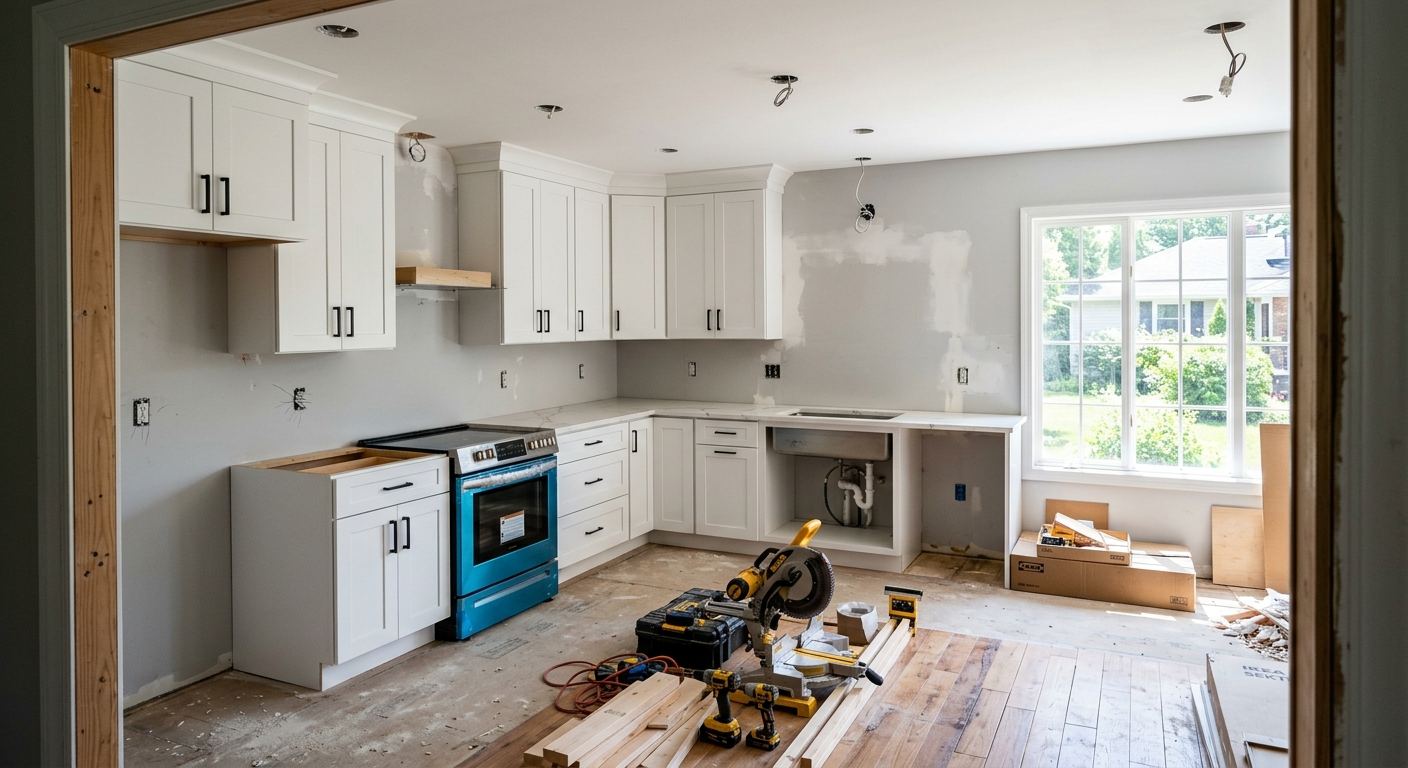
Kitchen renovation options and costs in Henry Farm
In Henry Farm, kitchen renovation options typically follow the same pattern you see across the Toronto economic region: homeowners decide how “upgrade-ready” their kitchen should feel, then scale the budget to match. With a local population of 15,723 (Statistics Canada, 2021 Census), demand is steady enough that you can usually get contractor availability within a reasonable window—especially for cabinet and countertop installs. Cost expectations are also influenced by the fact that Toronto-area homes in higher-value pockets tend to attract buyers who expect modern finishes; that’s why many projects move toward quartz, better hardware, and higher cabinetry tiers rather than just paint and new appliances. In practice, the region’s renovation budgets often land in the mid-$20k range for modest refreshes, while larger custom builds commonly push into $80k+ territory.
Ontario “climate” doesn’t drive kitchen costs the way it does exterior work, but it affects material handling and scheduling: winter work can mean slower drying times for paint/finishes and a bit more care around humidity control for cabinet installation and flooring. Market conditions matter more than weather—Toronto pricing pressure and the mix of semi-custom vs. fully custom trades in nearby areas shape what you pay for labour, especially when demolition and layout changes are involved.
In Henry Farm itself—particularly around neighbourhood pockets with many condo-townhouse and mature semi-detached homes—contractors see especially high interest in mid-range renovations that include upgraded countertops and refreshed tile. Below is a practical comparison to help you align your goals with a realistic budget before you request quotes.
| Renovation Tier |
What's Included |
Typical Duration |
Price Range |
| Cosmetic refresh (paint, hardware, new appliances only) |
Cabinet paint or touch-up, new hardware, appliance swap, minor caulking/trim, basic cleaning and tune-up |
1–3 weeks |
$8,000–$20,000 |
| Mid-range full renovation (new cabinets, counters, sink, tile) |
New semi-custom or quality stock cabinets, quartz or good laminate counters, sink/faucet, backsplash tile, new flooring prep and selective flooring work, labour for standard plumbing hookups |
3–7 weeks |
$25,000–$60,000 |
| High-end full renovation (custom cabinets, stone counters, island) |
Custom millwork, premium stone counters, island with electrical considerations, upgraded lighting, full-height backsplash options, coordinated plumbing/gas moves as required |
6–12 weeks |
$70,000–$90,000 |
| Cabinet refacing only (new doors + drawer fronts, same boxes) |
Door/drawer replacement, new veneer panels, upgraded hinges/soft-close hardware, new trim where needed, optional repainting of adjacent cabinetry |
2–5 weeks |
$8,000–$35,000 |
| Countertop swap only (laminate to quartz or stone) |
Template and install, sink cut-out transfer, basic sealing, edge upgrade options |
1–3 weeks |
$3,000–$15,000 |
| Backsplash tile installation only |
Surface prep, tile install, grout/sealer, caulking at counters and corners, cleanup |
5–10 business days |
$2,000–$10,000 |
Prices are estimates only and vary by project scope, site access and material selection.
What affects the price of kitchen renovation in Henry Farm
In Toronto and across Ontario, you can see the same kitchen renovation swing by 30–50% between quotes because the “hidden variables” are different: who is supplying cabinets, whether your scope includes demolition and disposal, how many trades are involved, and whether you’re changing the layout or just replacing finishes. Local home values and household income influence finish tier far more than weather. In higher-value areas of the Toronto region, homeowners more often choose quartz or natural stone counters and semi-custom cabinetry because the cost is easier to justify on resale—owners aim for a more “buyer-ready” kitchen. In more price-sensitive pockets, laminate and stock cabinets tend to dominate, and renovations stay in the low–mid range (often closer to the mid-$20k band) by limiting structural work.
In Henry Farm specifically, two common conditions raise or lower cost: (1) the age and layout of many homes, where older plumbing runs may require more labour to access or replace lines cleanly; and (2) typical winter scheduling, where drying time for coatings and installation logistics can slow down a multi-trade timeline if the site isn’t well protected. Even when climate isn’t the driver, heating and humidity stability inside the home affects finish quality, which can influence how quickly certain work is signed off. If you’re staying within a $25,000–$60,000 mid-range renovation, you can usually avoid the most unpredictable items by keeping the sink and stove in place and selecting a consistent cabinet/counter package. Once you move into full custom or island builds, budgets more commonly trend toward the $70,000–$90,000 band because layout, electrical, and coordination become the major cost drivers.
Concrete examples from Henry Farm jobs: upgrading an appliance package to pro-grade can add cost, but moving a gas line or adding under-cabinet lighting circuits often changes labour hours regardless of countertop choice. Similarly, reusing existing flooring can hold the line, while full replacement adds both material and time for subfloor prep.
| Price Factor |
Why It Matters |
Cost Impact |
| Cabinet tier — stock vs. semi-custom vs. fully custom millwork |
Cabinet construction method, finish quality, internal options (drawers, organizers) and lead times change both materials and labour |
$8,000–$35,000 for cabinet installs/refacing portions, with custom pushing higher within full projects |
| Countertop material — laminate vs. quartz vs. granite vs. stone |
Material price per square foot, edge complexity, and install method affect labour, templating and downtime |
$3,000–$15,000 for countertop swaps alone |
| Layout change — wall removal, island add, plumbing/gas move |
Structural and MEP work (mechanical/electrical/plumbing) drives permits, inspections, and trade coordination |
$10,000–$30,000+ depending on scope |
| Appliance package tier — builder vs. mid-range vs. pro-grade |
Higher-end models add cost and may require different electrical or ventilation considerations |
$2,000–$10,000+ beyond a refresh |
| Flooring — refinish existing vs. full replacement |
Subfloor condition and level changes determine patching effort and labour hours |
$1,500–$8,000 typical swing for kitchen floor scope |
| Backsplash — ceramic tile vs. marble vs. full-height slab |
Pattern layout, stone weight, and coverage area change both material and installation time |
$2,000–$10,000 for tile installation only |
| Electrical — new circuits for island, under-cabinet lighting |
New circuits require licensed work, inspections, and planning for load and placement |
$1,500–$6,000+ |
| Permit fees and licensed trade requirements |
Work that affects electrical, plumbing/gas, or structural elements typically triggers permit and inspection costs |
$500–$5,000+ depending on municipality process and scope |
Permits & regulations in Ontario
In Ontario, cabinet and countertop swaps generally do not require permits because you’re finishing surfaces and keeping the existing plumbing and electrical locations. A like-for-like change—removing cabinets, installing new cabinetry in the same footprint, and swapping countertops—typically falls into work that can be done by the renovating contractor and associated trades without a permit pull. Similarly, replacing a backsplash often doesn’t require permits if you’re not changing underlying electrical routing or structural elements.
Where permits do come into play is when you change how the kitchen services the home. Moving plumbing supply or drain lines, relocating a gas stove or making changes to gas piping, removing a load-bearing wall, adding new electrical circuits (for an island, new outlets, or under-cabinet lighting that requires new runs), or installing a new venting path for certain range hood setups typically requires permits and licensed trades. Gas work must be done by a licensed gas fitter; electrical by a licensed electrician. Both require inspections.
For a homeowner in Henry Farm, verify three things in writing before you sign: (1) Ontario licence/registration for each trade involved (check the relevant online registry for the contractor/trades you’re hiring); (2) liability insurance—request a certificate of insurance showing current coverage and adequate limits; and (3) WSIB/WCB coverage—ask whether the contractor is registered and provide proof. If a clearance letter is available for WCB/WSIB, keep a copy with your contract package. Also confirm in the contract who is responsible for permits—don’t assume it’s automatic.
Cabinets, countertops and layout decisions in Henry Farm
When you renovate in Henry Farm, the three decisions that most affect both your daily use and resale desirability are: (1) cabinet tier, (2) countertop material, and (3) whether you change the layout. Cabinet tier is where timelines and fit matter. Stock cabinets are fastest and typically lowest cost, but they can limit storage customization. Semi-custom cabinets are the “sweet spot” in Toronto-area budgets because you get better options (drawer widths, heights, and finishes) without fully custom lead times. Custom cabinets offer the best fit for awkward spaces, but they’re the costliest and often require longer planning and a clearer design phase.
Countertops should be chosen for how they’ll handle real kitchen life. Laminate is budget-friendly and easy to upgrade within a refresh scope, but it’s less resilient than engineered stone. Quartz is a popular Toronto compromise: it resists stains better than many alternatives and is low maintenance, which aligns with the finish expectations at different resale price points. Granite/natural stone offers premium look and durability, while butcher block brings warmth but needs ongoing care to prevent staining and water damage. Marble is beautiful but requires more maintenance because it’s more sensitive to acidic spills.
Layout changes are justified when they unlock usable space—like adding an island for seating or improving workflow—rather than “moving things for the sake of change.” Plumbing/gas relocation is where costs jump and become less predictable. For example, staying within a mid-range $25,000–$60,000 renovation is often realistic when you upgrade cabinets and counters without moving your sink or stove. If you want an island and plan to relocate services, the budget commonly moves toward the $70,000–$90,000 range.
| Option |
Durability |
Maintenance |
Best For |
Price Range |
| Stock cabinets (big-box) |
Good day-to-day durability; limited customization can affect fit in older layouts |
Low maintenance; keep hardware maintained |
Budget-conscious refreshes and quick-turn projects |
$8,000–$25,000 |
| Semi-custom cabinets (local dealer) |
Excellent everyday durability; better drawer/storage options reduce wear points |
Low to moderate; clean and check soft-close hardware |
Most Henry Farm homeowners aiming for strong resale appeal without full custom cost |
$15,000–$45,000 |
| Custom cabinets (local millwork shop) |
Very high durability; tailored structure for long-term alignment |
Low maintenance, but best results require correct installation and leveling |
Complex layouts, pantry systems, and “built-to-fit” kitchens |
$30,000–$70,000+ |
| Laminate countertop |
Resists everyday wear; edge/cut damage can be a weak point over time |
Easy; avoid prolonged water pooling at seams/edges |
Value-focused renovations that still want a modern look |
$3,000–$7,000 |
| Quartz engineered countertop |
High durability for cooking and staining resistance; consistent look |
Very low maintenance; wipe clean and use non-abrasive cleaners |
Homeowners who want a low-maintenance, buyer-friendly upgrade |
$6,000–$15,000 |
| Granite / natural stone countertop |
Very durable; variation in pattern is part of the appeal |
Moderate; periodic sealing may be needed depending on the stone |
Premium look seekers who don’t mind light maintenance |
$8,000–$20,000+ |
| Butcher block countertop |
Durable with care; susceptible to water/heat issues if neglected |
Higher maintenance; oiling/conditioning and prompt drying |
Families who want warmth and are willing to maintain the surface |
$5,000–$12,000 |
| Marble countertop |
Durable but more prone to etching/staining than quartz |
Higher maintenance; use proper cleaners and protect from acidic spills |
Statement kitchens where appearance matters more than maximum stain resistance |
$8,000–$20,000+ |
How to choose a kitchen renovation contractor in Henry Farm
Choosing the right contractor in Henry Farm is mostly about verification and scope clarity, not just price. Start with Ontario licensing: ask for the contractor’s registration details where applicable, plus licence proof for the trades they sub to (gas fitting and electrical in particular). Then verify liability insurance—request a certificate of insurance and confirm it covers the work described. For coverage like WSIB/WCB, ask whether the company has active coverage and provide proof (certificate and/or clearance letter, where available). If they can’t provide documentation quickly, treat that as a red flag and move on.
Next, get 2–3 itemised written quotes. You want a breakdown that separates labour from materials (not a single lump sum), including cabinetry supply, countertop install, tile work, demolition/disposal, and any electrical/plumbing allowance. Read the scope line-by-line: what’s excluded (appliance hookups, flooring underlayment, patching drywall beyond a stated area)? Is permit pulling included if needed? Is waste disposal included or is it billed separately? A proper warranty should be in the contract: workmanship warranty length, how manufacturer product warranties apply, and whether warranties are transferable to a future owner. Payment should follow a sensible schedule—never more than 10–15% upfront; hold back a portion until completion and any punch list items are signed off. Finally, insist on a start date and completion estimate in writing, with allowances for lead times on cabinets and stone templating.
- Confirm licences for gas fitting/electrical trades before work begins.
- Request liability insurance certificate and verify coverage limits.
- Get proof of WSIB/WCB coverage (or clearance letter if provided).
- Require itemised quotes: labour + materials + allowances.
- Check who pulls permits and pays permit fees (in writing).
- Confirm disposal/demolition hauling is included or clearly priced.
- Ask about cabinet lead times and countertop templating schedule.
- Ensure the quote lists brands/models for appliances and lighting (or an allowance).
- Verify warranty terms for workmanship and products.
- Agree on a clear payment schedule with 10–15% max deposit.
- Use a signed scope including finish colours, tile grout type, and edge profiles.
- Confirm site protection (dust barriers) and daily cleanup expectations.
In Henry Farm, common contractor red flags include: refusing to provide proof of insurance/coverage, quoting a lump sum without itemisation, promising “no permits needed” even when you’re moving plumbing/gas or adding circuits, starting without a signed scope for what’s included, and changing the work list daily without change orders or updated pricing.
Frequently asked questions — kitchen renovation in Henry Farm
Quartz vs granite countertops — which is better?
For most Henry Farm homeowners, quartz is the “simpler win.” Quartz is engineered for consistent appearance and typically offers strong stain resistance with very low daily maintenance—so it fits busy households and the buyer expectations in the Toronto market. Granite is also durable and looks premium, but it’s more variable in pattern and often needs periodic sealing depending on the slab. If you’re choosing between options purely on practicality, quartz usually reduces homeowner upkeep time. Budget-wise, countertop swaps commonly sit in the $3,000–$15,000 band, but granite or other natural stones can push higher once you include edge profiles and slab selection. If your priority is low fuss and broad resale appeal, quartz is usually the better match; if you want the unique “one-of-a-kind” look and you’re willing to maintain it, granite is a strong choice.
Should I reface or replace my cabinets?
Refacing is a strong option when your cabinet boxes and framing are still solid, level, and not suffering from water damage—very common in older but well-maintained Henry Farm homes. It typically costs less than full replacement because you’re keeping the structure and only updating doors, drawer fronts, and often hardware. If you want a refresh that targets aesthetics while controlling budget, cabinet refacing often lands in the $8,000–$35,000 range. Replacement makes more sense when boxes are sagging, layouts are outdated (you want wider drawers, taller pantry units, or reconfigured storage), or when you need to correct moisture issues behind the old cabinetry. A realistic rule of thumb: if you’re already planning meaningful layout work (like moving services or changing the footprint), replacing cabinets can align better with the remodel’s rework. If you want a faster upgrade with less disruption, refacing is usually the better first step.
Do I need a permit for a kitchen renovation in Ontario?
In Ontario, many kitchen renovations don’t need permits when you’re swapping finishes only—like replacing cabinets in the same location, installing a new backsplash, or changing countertops without moving services. However, permits are typically required when you change plumbing supply/drain lines, relocate gas for a stove/range/hood setup involving gas, remove a load-bearing wall, or add/modify electrical circuits (for example, new island outlets or upgraded lighting that requires new wiring). In Henry Farm, homeowners sometimes assume “renovation work is always permit-free,” but service changes are the dividing line. Gas work must be done by a licensed gas fitter and electrical by a licensed electrician, with inspections for the relevant work. Always confirm who pulls the permit in your signed contract—responsibility should not be assumed.
What's the ROI on a kitchen renovation?
ROI varies based on scope, materials, and whether you improve functionality versus only upgrading appearance. In the Toronto area, homeowners often recover more value when the renovation aligns with what buyers expect at your property’s price point—clean layout, durable counters, and modern cabinetry matter. That’s why finish tier is so influential in this region: lower-cost refreshes can help resale, but full upgrades (especially with quartz/stone and better cabinetry) tend to perform better when they make the kitchen feel “move-in ready.” Practical budgeting matters: modest refresh projects can start around the mid-$20k range, while larger custom work often falls into $80k+ territory—so chasing the most expensive finishes may not pay back dollar-for-dollar. The best ROI usually comes from sensible improvements that reduce buyer concerns (traffic flow, storage, and dated finishes) rather than purely chasing high-end stone or structural changes.
How do I budget for a kitchen renovation?
Budgeting in Henry Farm works best when you start with the finish tier and then decide how much layout/service work you’re willing to do. A kitchen renovation in this GTA tier commonly runs from $25,000–$90,000 depending on cabinetry choice, countertop material, and whether you’re changing plumbing/electrical. If you keep the sink and stove where they are and focus on cabinets plus countertops, staying in the $25,000–$60,000 range is often realistic. If you add an island with new electrical, or relocate plumbing/gas lines, the project commonly moves toward $70,000–$90,000. Also budget separately for “scope multipliers” that appear in quotes: demolition/disposal, subfloor repairs, electrical circuit additions, and potential permit/inspection work. Finally, plan for lead times—cabinet orders and countertop templating can add weeks, and winter scheduling can affect how quickly certain finishes are completed. A good contractor will translate your priorities into an itemised budget you can actually control.
Can I move my kitchen sink or stove?
Yes, you can move a sink or stove, but it’s not just a carpentry decision—it’s a plumbing and gas (if applicable) decision and it usually triggers permits and licensed trades in Ontario. Moving a kitchen sink means extending or rerouting drain and supply lines; moving a stove can involve gas piping and/or venting considerations. That’s also why service relocation is often the biggest cost unpredictability: it can require wall access, more labour, possible drywall replacement, and coordinated inspections. If you’re trying to stay near a mid-range budget (for example, $25,000–$60,000), the best cost control usually comes from keeping the sink and stove in the same general location and improving only finishes. If your layout goal is worth it—like better workflow or a new island—then relocation can be justified, but you should expect it to push your quote higher and ask for a detailed plan in writing.