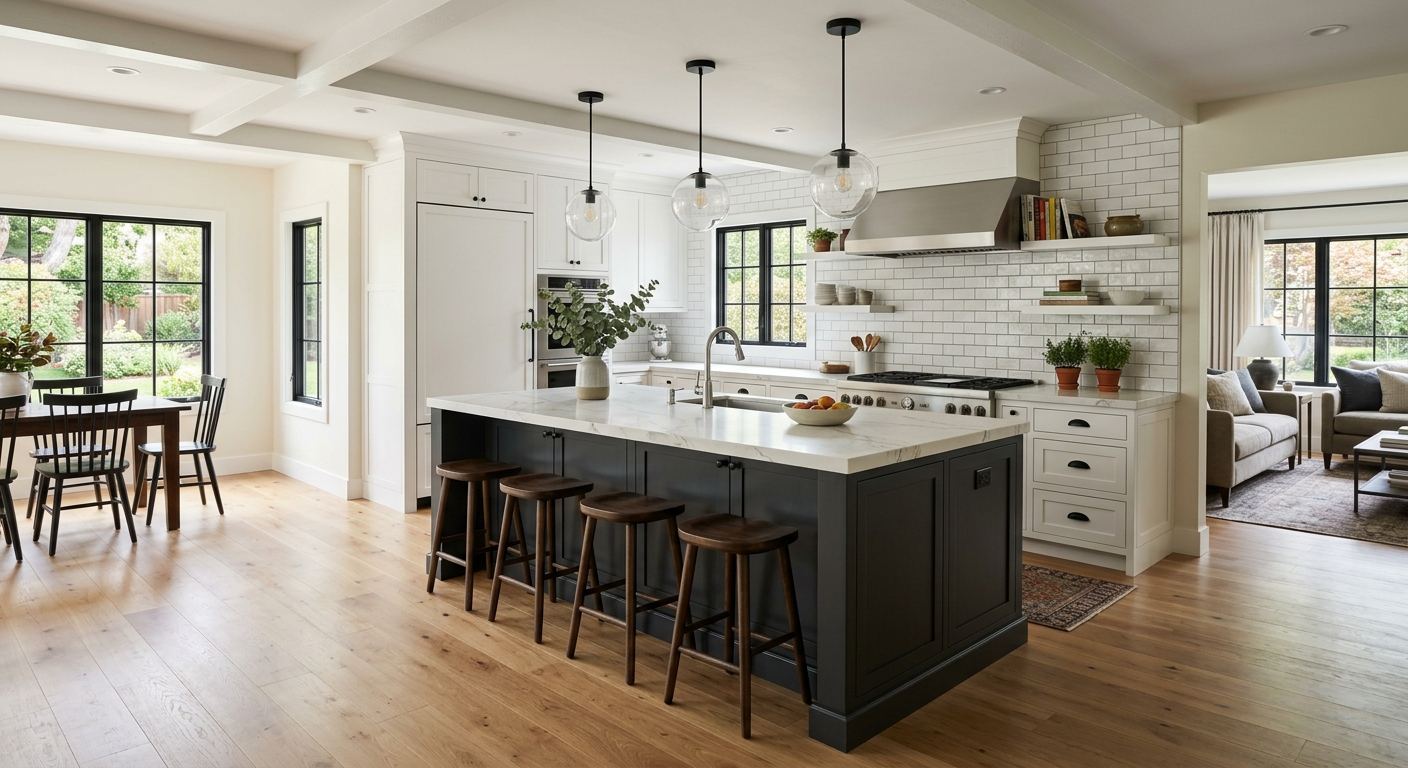
Kitchen renovation options and costs in Etobicoke
Etobicoke homeowners typically start their kitchen plans with one big question: what level of change fits their budget and their home. With a population of about 365,000 in 2021 (Statistics Canada, 2021 Census), the area has steady demand, especially from families in established neighbourhoods where kitchens are now due for updates. In Toronto’s economic orbit, the kitchen budget often tracks local property values and household expectations more than anything else. In practice, many buyers expect more “finish-per-dollar” than they did a decade ago—so renovations in higher-value pockets tend to move toward quartz, upgraded hardware, and better cabinetry detailing to protect resale appeal.
On the cost side, Toronto-area pricing is shaped largely by market choices—materials availability and contractor workload—rather than weather damage. That said, Ontario’s freeze–thaw cycle can be harder on older homes’ plumbing access and under-slab conditions, which sometimes shows up when we open walls or move plumbing lines. The labour market also matters: during peak seasons, cabinet and countertop scheduling can extend timelines, especially when multiple projects hit the same delivery week. In Etobicoke, trade demand is especially strong in the west-end corridor and around newer-but-established growth pockets like Islington Village, where homeowners want modernized layouts without sacrificing function.
Below is a practical comparison of the main renovation tiers—use it as a baseline before you start collecting quotes for your specific scope.
| Renovation Tier |
What's Included |
Typical Duration |
Price Range |
| Cosmetic refresh (paint, hardware, new appliances only) |
Cabinet paint or glaze (or no-cabinet touch-ups), new pulls/knobs, appliance swap (no plumbing/gas relocation), minor caulking, and a basic clean-up |
3–7 days |
$2,500–$12,000 |
| Mid-range full renovation (new cabinets, counters, sink, tile) |
Semi-custom or quality stock cabinetry, new countertop (quartz or laminate), sink + faucet install, backsplash tile, new flooring prep as needed, and electrical touch-ups for standard lighting |
2–5 weeks |
$25,000–$55,000 |
| High-end full renovation (custom cabinets, stone counters, island) |
Fully custom millwork, premium quartz or natural stone countertops, built-in island, upgraded backsplash detailing (including upgraded tile or full-height options), enhanced lighting, and more complex finishing |
5–10 weeks |
$65,000–$90,000 |
| Cabinet refacing only (new doors + drawer fronts, same boxes) |
Door/drawer replacement, new veneer or surface update, new hardware, and re-sealing of edges; countertop usually not included |
1–3 weeks |
$8,000–$35,000 |
| Countertop swap only (laminate to quartz or stone) |
Remove existing top, template, install new countertop, edge profiling, and basic sink cut-out changes (minor plumbing touch-ups only if needed) |
5–12 days |
$3,000–$15,000 |
| Backsplash tile installation only |
Surface prep, tile supply and installation, grout/seal where required, and finishing at edges (no cabinet or countertop replacement) |
3–10 days |
$2,000–$10,000 |
Prices are estimates only and vary by project scope, site access and material selection.
What affects the price of kitchen renovation in Etobicoke
In Etobicoke and across the Toronto economic region, you can see quote differences of 30–50% for the “same” kitchen because contractors price risk differently. Two quotes can look similar until you compare what’s truly included: demolition depth, how much electrical is redone, whether plumbing relocations are assumed, and how many hours are allowed for custom detailing. Locally, the biggest driver is the finish tier homeowners choose—mostly influenced by local housing values and buyer expectations. In higher-value GTA pockets, owners more often justify quartz or stone and semi-custom cabinetry because the renovation cost is easier to recoup on resale; in more price-sensitive areas, many projects stay mid-range with laminate or stock cabinets and selective upgrades. In other words, it’s not the weather that sets the ceiling—it’s the market.
Layout decisions add the most unpredictability regardless of finish. Removing a wall, adding an island, or moving a gas line can push costs rapidly because trades must coordinate around structural and service constraints. I’ve also seen Etobicoke homes where older plumbing runs or awkward venting routes make “simple” sink moves cost more than expected once we open walls.
Concrete examples we often see in Etobicoke: (1) swapping from laminate to quartz can be a meaningful jump, but it’s usually still within the $3,000–$15,000 countertop installation band when the sink opening stays the same; (2) adding an island where the supply line and electrical need relocation can add major labour and material time, often outweighing the difference between mid-range and high-end cabinet choices. For many homeowners, staying in a mid-range full renovation budget near $25,000–$55,000 is achievable unless the layout triggers extensive plumbing, electrical, or structural work.
Next, let’s break down the specific price factors that sit behind those numbers.
| Price Factor |
Why It Matters |
Cost Impact |
| Cabinet tier — stock vs. semi-custom vs. fully custom millwork |
Materials, door styles, internal components, and fit/finish tolerances change labour and install time |
Higher tiers can move the same kitchen from mid-range into high-end territory quickly |
| Countertop material — laminate vs. quartz vs. granite vs. stone |
Material cost, templating complexity, edge work, and install handling differ |
Can shift overall project cost by several thousand dollars depending on size and edge profile |
| Layout change — wall removal, island add, plumbing/gas move |
Creates coordination across carpentry, plumbing, gas, electrical and sometimes structural scope |
Often the biggest swing factor; can add weeks and significant labour |
| Appliance package tier — builder vs. mid-range vs. pro-grade |
Cut-out sizes, ventilation requirements, and installation time increase with higher-end models |
May add several thousand dollars and can require electrical or ventilation upgrades |
| Flooring — refinish existing vs. full replacement |
What’s beneath matters when cabinets are removed; replacement avoids patching lines |
Replacements can add material + labour, especially if the subfloor is uneven |
| Backsplash — ceramic tile vs. marble vs. full-height slab |
Cutting, sealing, and finishing demands rise with natural stone and taller coverage |
Full-height or specialty stone often pushes backsplash beyond the basic band |
| Electrical — new circuits for island, under-cabinet lighting |
Additional circuits involve licensed work, load assessment, and inspection timing |
Can add cost even if finishes look similar on day one |
| Permit fees and licensed trade requirements |
Permits and inspections increase administrative time and can require trade scheduling buffers |
Generally manageable, but can affect both budget and timeline |
Permits & regulations in Ontario
In Ontario, many kitchen swaps are straightforward from a permitting perspective: cabinet and countertop replacements typically do not require a permit when you’re keeping the existing service locations. If you’re replacing cabinets in the same positions and swapping a countertop without moving plumbing or gas fixtures, it’s usually treated as a renovation with standard contractor trade work. The key point is when you change where services run or where structural support lives.
Permits and licensed trades are typically required when you do things like moving plumbing supply or drain lines, relocating gas (including changing the position of a gas stove or making major hood changes tied to gas), removing a load-bearing wall, or adding new electrical circuits (for example, new outlets for an island, relocating vented range hood wiring, or adding a dedicated under-cabinet lighting circuit). Gas work must be performed by a licensed gas fitter, and electrical work must be performed by a licensed electrician; both generally require inspections once the work is complete.
For an Etobicoke homeowner, the practical step-by-step check is: (1) ask the contractor for their licence details and insurance documentation; (2) confirm their certificate of insurance matches your project address (liability coverage) and request the clearance letter or proof document if available; (3) verify WSIB coverage (or WCB coverage where applicable) documentation before work starts; (4) ensure the contract clearly states who is responsible for permits and inspections, and that it’s written—not only discussed.
Before you sign, confirm the scope against these triggers so there are no surprises mid-project.
Cabinets, countertops and layout decisions in Etobicoke
When you’re planning a kitchen renovation in Etobicoke, three decisions drive most of the outcome: cabinet tier, countertop material, and whether you change the layout. (1) Cabinet tier determines how fast the project goes and how “custom” it looks—stock cabinets are the fastest, semi-custom is usually the best mid-range balance, and custom millwork is the highest-cost option with the tightest fit. (2) Countertops affect daily use and resale appeal. Laminate can be budget-friendly and still look great, while quartz and natural stone are more durable against heat and staining, with quartz being a common “sweet spot” for Ontario homeowners. (3) Layout changes—open-concept wall removal, island additions, or plumbing/gas relocation—are only cost-justified when the space gain creates real usability (circulation flow, seating, and work zone efficiency).
Toronto-area resale expectations matter because the kitchen is a headline feature. Higher-value buyers often expect cleaner lines, integrated storage, and a modern surface like quartz or stone. However, for many households, you can get most of the visual upgrade without maxing out the budget: for example, moving from a mid-range setup to quartz countertops may add a few thousand dollars compared with laminate, but the improvement is immediate, durable, and easy to market.
Climate doesn’t usually “wear out” countertops in a visible way, but older Etobicoke home conditions can influence cost once we remove cabinets—especially when we discover uneven subfloors, older shut-offs, or awkward service locations. As a dollar example: if a cabinet-and-counter mid-range renovation is around $25,000–$55,000, upgrading counters from laminate to quartz may be a targeted add within the $3,000–$15,000 countertop band, while relocating plumbing for an island can far exceed that and should be assessed early with photos or a pre-demolition site visit.
Use the table below to align materials and layout choices with what they cost and how they perform.
| Option |
Durability |
Maintenance |
Best For |
Price Range |
| Stock cabinets (big-box) |
Good for typical daily use; limited flexibility for odd dimensions |
Easy to clean; hinges and hardware can be simple to replace |
Fast timelines, tighter budgets, straightforward layouts |
$8,000–$18,000 |
| Semi-custom cabinets (local dealer) |
Strong build quality with more door/style and internal storage options |
Standard wipe-down; better adjustability for long-term alignment |
The most common Etobicoke choice balancing look and cost |
$18,000–$35,000 |
| Custom cabinets (local millwork shop) |
Highest fit and finish; ideal for maximizing storage in older layouts |
Careful cleaning; quality hardware typically lasts longer |
Complex kitchens, architectural features, and premium resale finishes |
$35,000–$60,000 |
| Laminate countertop |
Moderate—can chip at edges if impacted; heat protection matters |
Low maintenance; avoid harsh abrasives and prolonged heat exposure |
Budget-focused renovations where appearance updates are the priority |
$3,000–$6,500 |
| Quartz engineered countertop |
High—resists staining and is generally more impact/heat tolerant than laminate |
Wipe-clean; minimal sealing (no routine sealing required for most quartz) |
Most Toronto-area kitchens seeking a premium look without full stone upkeep |
$6,500–$12,000 |
| Granite / natural stone countertop |
Very high—excellent durability; variations in pattern and hardness by slab |
Periodic sealing may be recommended depending on the stone and finish |
Premium projects and buyers who want unique natural character |
$9,000–$15,000 |
| Butcher block countertop |
Good—durable for cutting but vulnerable to heavy water exposure at seams |
Regular oiling/conditioning; quick cleanup of spills is important |
Warm, traditional looks and kitchens used frequently for prep |
$4,500–$10,000 |
| Marble countertop |
Moderate to high—hard and elegant but more prone to etching/staining than quartz |
More careful use; sealing and gentle cleaning are important |
Statement kitchens where the homeowner understands maintenance |
$10,000–$18,000 |
How to choose a kitchen renovation contractor in Etobicoke
Choosing the right contractor in Etobicoke is mostly about verifying eligibility and protecting yourself contractually. Start by checking Ontario licensing information for any trade work involved—especially gas fitting and electrical. Then verify liability insurance: request a certificate of insurance showing the contractor’s coverage and confirm the policy is active. For coverage related to on-the-job injuries, ask for WSIB/WCB documentation (and keep copies). If a contractor can’t provide these documents promptly, that’s your first warning sign.
Next, get 2–3 itemised written quotes with a line-by-line breakdown for labour and materials rather than a lump sum that hides assumptions. The scope should clearly state what’s included: demolition depth, cabinet removal and disposal, countertop templating and installation, backsplash prep, electrical allowances, and whether permits are pulled by the contractor or by you. Confirm disposal/recycling—many homeowners are surprised when “demo” doesn’t include haul-away. Warranty matters too: ask for the workmanship warranty length and whether it’s tied to the contractor or transferable if you sell your home. Product/manufacturer warranties should be provided in writing as well.
For payment, insist on a schedule where you never pay more than 10–15% upfront. Use a holdback until key milestones are completed—typically cabinet installation verification, countertop set, and final walk-through. Finally, lock in a timeline with a start date and a completion estimate in writing, not just a target month.
- Ask for insurance certificates before signing (liability coverage for your project).
- Request WSIB/WCB proof and verify coverage applies to your job.
- Confirm which trades are licensed for gas and electrical scope.
- Get itemised quotes: labour hours, material allowances, and line items.
- Check exclusions (e.g., subfloor repairs, mould removal, drywall replacement).
- Confirm disposal/hauling is included or priced separately.
- Verify permit responsibility and inspection scheduling in the contract.
- Ask about countertop templating timing and who handles changes.
- Review the cabinet delivery schedule and what happens if it slips.
- Confirm warranty terms for workmanship and products (and transferability).
- Set a payment schedule with a holdback until final sign-off.
- Require written timelines, including inspection and lock-in dates for materials.
Red flags I see in Etobicoke: (1) quotes that aren’t itemised and don’t specify allowances; (2) contractors who promise “everything included” but can’t explain permits and who pulls them; (3) refusal to provide insurance and WSIB/WCB proof; (4) vague timelines with no dates for cabinet and countertop installation; and (5) pressure for large upfront deposits or cash-only payments.
Frequently asked questions — kitchen renovation in Etobicoke
Custom vs stock cabinets — is custom worth it?
In Etobicoke and across the GTA, custom cabinets are “worth it” when you have uneven walls, unusual room dimensions, or you want maximum storage tailored to how your household works. If your layout is straightforward, stock cabinets can deliver a strong look quickly and keep you closer to the mid-range cabinet budgets. For many homeowners, semi-custom is the practical middle ground: you get better internal storage options and more door/style choices without the full cost premium of fully custom millwork. The resale logic also matters in Toronto’s market—higher-end buyers often notice details, but they also care that the kitchen functions well. If your total project target is in the $25,000–$55,000 band, starting with semi-custom and upgrading the countertops may deliver more visible value per dollar than going fully custom everywhere.
How do I choose a kitchen contractor in Etobicoke?
Choose a contractor the way you would for a structural trade: verify eligibility first, then compare the scope. In Ontario, ensure any gas and electrical work is done by licensed trades, and confirm the contractor provides liability insurance and WSIB/WCB coverage documentation before work begins. Next, request 2–3 itemised written quotes so you can see what’s included—permit responsibility, disposal/haul-away, electrical allowances, and any subfloor drywall repairs. A good kitchen contractor in Etobicoke will also explain scheduling realities: cabinet delivery lead times, countertop templating dates, and how changes are priced. Finally, check warranty terms in writing and confirm payment milestones (generally keeping upfront at 10–15%). If one quote is far lower, ask what’s missing rather than assuming it’s a bargain.
What order do kitchen renovation steps happen in?
In most Etobicoke renovations, the workflow is designed to keep trades from working over each other. Typically, demolition comes first, followed by any needed structural/plumbing/electrical rough work if your scope includes service changes or permitted work. After that, drywall and surface prep are completed so cabinets sit on a solid, level substrate. Cabinets go in next, then countertops are templated (and ordered) so they can be fabricated off-site. Once the countertops arrive, we set them, connect fixtures (sink/faucet), and complete backsplash installation so edges look clean. Finally, electrical finishing and appliance install happen, followed by caulking, touch-ups, and a thorough clean-up. If you’re only doing a countertop swap, you’ll usually skip the earlier rough trades—while still keeping templating accuracy as the key timing step.
Can I live at home during a kitchen renovation in Etobicoke?
Yes, many Etobicoke homeowners live at home during renovations, especially for cosmetic refreshes or mid-range projects where we stage the work efficiently. For a full renovation, you’ll usually need to plan a “temporary kitchen” setup—microwave, kettle, and a small sink station—because the main sink and countertops are often out of service during cabinet and countertop installs. Dust control is also important in older homes common in the Etobicoke area; sealing off the work zone and protecting flooring helps reduce disruption. If your scope includes plumbing or gas relocations, the downtime can be longer, but it’s still possible with good scheduling. If your total project is near the $25,000–$55,000 mid-range band, living on-site is often manageable with clear daily protection rules and a defined work area.
Should I renovate my kitchen before selling in Etobicoke?
Often, a kitchen refresh can help attract buyers, but timing and scope matter in Ontario’s real estate context. If your cabinets are functional and the layout is solid, a targeted upgrade—new hardware, repainting, and a countertop or backsplash update—can improve appearance without major disruption. If you’re planning a mid-range full renovation, make sure it aligns with what buyers in Etobicoke are paying for: clean lines, modern surfaces, and durable finishes like quartz. However, if you’re considering a high-end custom build, the recovery can be less predictable unless the rest of the home matches that level of finish. A practical approach is to prioritize “visible and usable” items first and avoid expensive structural changes unless they clearly improve flow. In many cases, keeping a realistic budget within the $25,000–$55,000 range is a smarter sales-position move than overspending on layout when the rest of the home is average.
What's the most popular kitchen style in Etobicoke right now?
Right now, the most common style we see in Etobicoke is a modern transitional look: simple cabinet silhouettes, shaker-style doors or clean slab fronts, and bright, neutral palettes with warmer accents. Quartz is a top choice because it reads modern and stays consistent, and many homeowners pair it with a subtle backsplash (often full-height tile behind the range or a refined ceramic pattern). Island seating is still popular, but the style works best when the layout supports circulation—especially in older homes where service runs can be tricky. Hardware is also trending toward matte finishes and streamlined pulls, and lighting upgrades under cabinets are increasingly expected. Budget-wise, homeowners who want the look without going fully custom commonly aim for mid-range full renovations near $25,000–$55,000, while high-end buyers push toward stone counters and more custom millwork in the $65,000–$90,000 range.