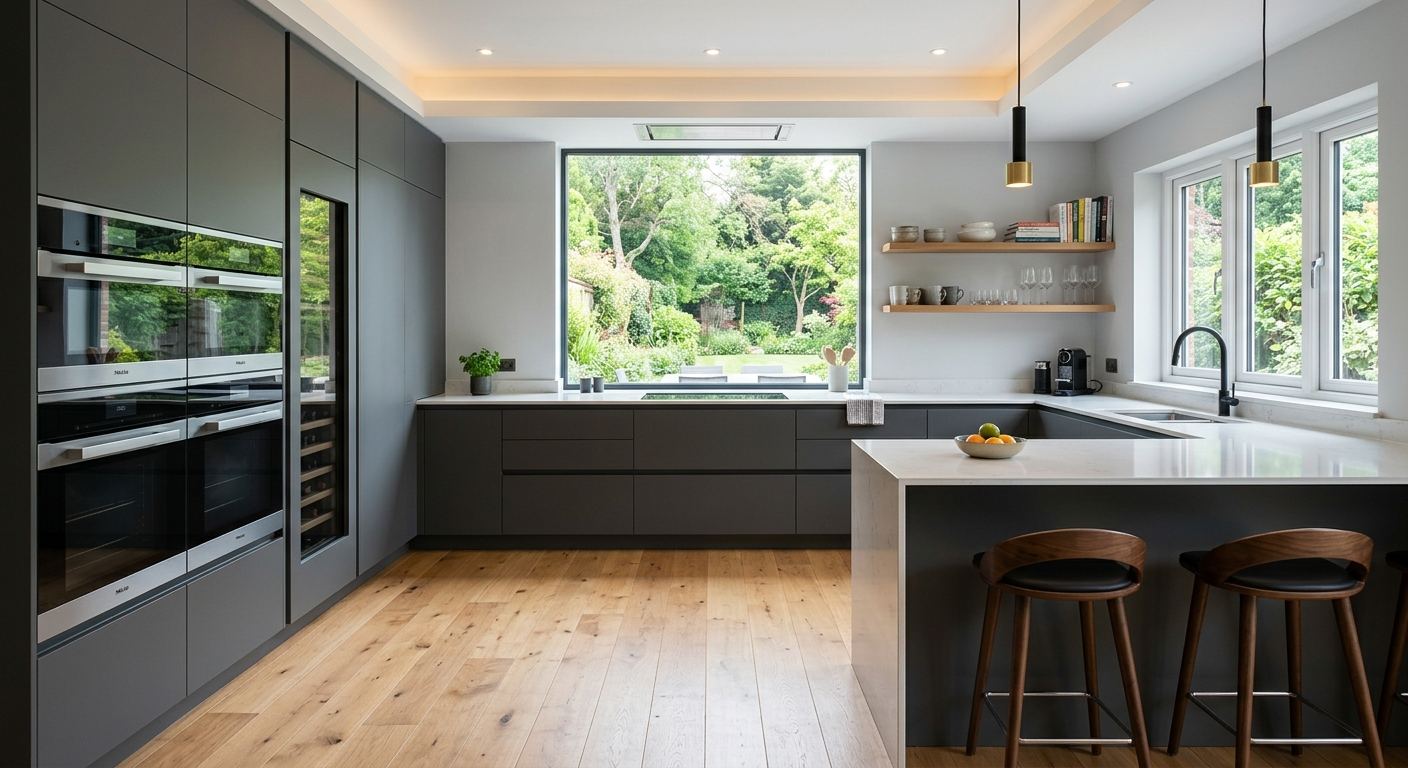
Kitchen renovation options and costs in Lively
Lively, Ontario is a great place to renovate, especially for homeowners trying to balance day-to-day comfort with resale appeal. With a local population of 5,608 (Statistics Canada, 2021 Census), renovations tend to follow what the broader Toronto economic region supports: finish levels that buyers recognize. In higher-value pockets across the region, many owners target a kitchen spend that aligns with a home-value recovery mindset—often settling in the 8%–15% range of property value for projects that feel “move-in ready.” That demand is why you’ll usually see more premium choices in kitchen makeovers than in smaller markets.
In practical terms, the Toronto region’s market conditions influence budgets more than weather. The real cost drivers are material pricing and labour availability: when many homeowners pursue renovations at the same time, scheduling and installation lead times can push labour costs and affect what contractors can staff. Ontario’s broader housing stock also matters—older homes around Lively often have dated electrical panels, narrower cabinet runs, or plumbing locations that force additional coordination if you want an island or a new sink location.
If you’re hearing different prices for “the same kitchen,” it’s usually because one quote assumes stock/standard materials while another includes semi-custom millwork, quartz, upgraded appliances, or electrical and plumbing moves. For many homeowners in Lively—particularly those servicing the core residential areas near Regional Road 8 and adjacent neighbourhoods—contractors stay busy because kitchens are a top resale feature. Next, use the price tiers below as a realistic starting point for your comparison.
| Renovation Tier |
What's Included |
Typical Duration |
Price Range |
| Cosmetic refresh (paint, hardware, new appliances only) |
Cabinet paint or stain touch-ups (no box changes), new hardware, new under-cabinet lighting (if already wired), appliance swap, minor caulking/grout and cosmetic tile/backsplash refresh (existing surfaces) |
1–3 weeks |
$25,000–$35,000 |
| Mid-range full renovation (new cabinets, counters, sink, tile) |
Semi-custom or quality stock cabinets, new countertop (quartz or durable laminate), new sink/faucet, backsplash tile, flooring patching or partial replacement, electrical adjustments for lighting (if needed) |
4–7 weeks |
$35,000–$65,000 |
| High-end full renovation (custom cabinets, stone counters, island) |
Custom millwork, premium quartz or natural stone (including island), upgraded appliance package, expanded electrical/lighting plan, detailed backsplash (stone tile or slab look), often includes layout refinements and upgraded finishes |
7–12 weeks |
$65,000–$90,000 |
| Cabinet refacing only (new doors + drawer fronts, same boxes) |
Door and drawer front replacement, veneer/finish on existing boxes, new hardware, optional new moulding details, existing boxes remain unless damaged |
2–4 weeks |
$8,000–$35,000 |
| Countertop swap only (laminate to quartz or stone) |
Remove old tops, template, install new countertop, seam integration, faucet/sink adjustments as needed, basic backsplash tie-in (not full tile tear-out) |
1–2 weeks |
$3,000–$15,000 |
| Backsplash tile installation only |
Tile removal (if needed), surface prep, waterproof backer/treatment as required, tile install, grouting and sealing where applicable |
3–7 days |
$2,000–$10,000 |
Prices are estimates only and vary by project scope, site access and material selection.
What affects the price of kitchen renovation in Lively
In Lively and across the Toronto economic region, you can see the same kitchen renovation come back with bids that differ by 30%–50%. The reason is straightforward: quotes often assume different finish tiers, different allowances for site conditions, and different assumptions about whether plumbing, electrical, and venting changes are needed. Toronto-area pricing trends also mean homeowners in higher-value areas more often choose quartz or stone countertops and semi-custom cabinetry, which shifts the entire project budget upward—even when the layout is unchanged.
Local home values and median income shape the typical finish tier far more than climate. Where buyers expect a “premium” look, you’ll commonly see budgets that target the upper part of the $25,000–$90,000 full-kitchen band through upgraded cabinets, better drawer systems, and more expensive countertops. In more price-sensitive settings, projects often stay in the mid-range (closer to the $35,000–$65,000 comfort zone) using stock or refaced cabinetry and durable laminate or mid-tier quartz, which can be a stronger affordability move while still looking modern.
Layout decisions add the most unpredictable costs regardless of finish level. For example, adding an island usually triggers electrical work and sometimes plumbing/gas coordination for a sink or upgraded cooktop. In older Lively homes, it’s also common to run into dated rough-ins behind the drywall—so a “same plumbing location” plan can quietly become a relocation if the existing lines can’t be reused.
Concrete ways Lively conditions shift cost: (1) homes with older electrical runs may require new circuits for under-cabinet lighting or an island outlet plan; (2) small, tighter kitchens often need careful measurement and trade sequencing, which can add labour time for cabinet fit; (3) projects timed during peak contractor demand can extend lead times for cabinets and countertops, affecting scheduling and resourcing. With that in mind, use the factors below to interpret your quote line by line.
| Price Factor |
Why It Matters |
Cost Impact |
| Cabinet tier — stock vs. semi-custom vs. fully custom millwork |
Build method, interior components, finish quality, and fit/finish tolerances change dramatically by tier. |
Typically drives the largest share of variance: stock can keep full projects near the low–mid range, while custom often pushes toward the high-end band. |
| Countertop material — laminate vs. quartz vs. granite vs. stone |
Material price, templating complexity, and seam requirements change with countertop type. |
Laminate is usually the lowest-cost upgrade; quartz commonly lands mid-range; natural stone can push budgets upward quickly, especially with islands. |
| Layout change — wall removal, island add, plumbing/gas move |
Altering structure and moving rough-ins affects trades coordination and inspection requirements. |
Can add substantial, hard-to-predict costs even on “nice but not fancy” kitchens. |
| Appliance package tier — builder vs. mid-range vs. pro-grade |
Higher tiers require better fit tolerances and may change ventilation needs. |
Mid-range upgrades can be efficient; pro-grade often increases overall budget even if cabinetry is modest. |
| Flooring — refinish existing vs. full replacement |
Subfloor condition and demolition extent determine how far flooring work goes. |
Sticking with existing floor or limited patching keeps costs down; full replacement is usually a noticeable add-on. |
| Backsplash — ceramic tile vs. marble vs. full-height slab |
Material and labour intensity vary, especially with specialty edges and full-height runs. |
Tile can stay in the mid band; marble or slab looks tend to move toward higher end. |
| Electrical — new circuits for island, under-cabinet lighting |
Modern lighting plans and appliance needs can require new circuits and connections. |
Often increases cost beyond what homeowners initially estimate, especially with island outlets or new lighting zones. |
| Permit fees and licensed trade requirements |
Some work triggers permits and inspections; licensed trades add labour costs. |
Expect additional line items for permitted work, but costs remain manageable when scoped clearly from day one. |
Permits & regulations in Ontario
In Ontario, cabinet and countertop swaps typically do not require permits because they’re considered finish work. If you’re replacing cabinets with new ones in the same footprint, and installing a new countertop on the existing cabinet base, you generally avoid permit-triggering work. Likewise, swapping an existing sink and faucet without changing drain/supply routing is often treated as non-permit work.
Where permits do come into play is when you change core services: moving plumbing supply or drain lines, relocating a gas stove or cooktop, removing or altering a load-bearing wall, or adding electrical circuits (for example, new outlets for an island, additional under-cabinet lighting circuits, or upgrading power pathways). Gas work must be performed by a licensed gas fitter, and any electrical changes must be done by a licensed electrician—both require inspections where the scope triggers them.
How homeowners in Lively can verify the right coverage step-by-step: (1) ask the contractor for their Ontario business details and check their credentials; (2) request a certificate of insurance showing liability coverage (and confirm it’s current); (3) for trade labour, ensure WSIB/WCB coverage is appropriate for the companies doing the work—ask for the clearance letter or verification documents; (4) keep a copy of everything with your contract. Most importantly, confirm in writing who pulls permits, because responsibility should be clearly assigned before signing.
Cabinets, countertops and layout decisions in Lively
When planning a kitchen renovation in Lively, the biggest payoffs come from three decisions: cabinet tier, countertop material, and layout change. In the Toronto resale market, buyers often “read” cabinetry first—how drawers open, how doors align, and whether the kitchen looks clean and updated. Cabinet strategy usually falls into stock (fastest and cheapest), semi-custom (the most popular mid-range balance), or custom (highest cost, best fit for unusual spaces).
Next is countertop material. Laminate is a budget-friendly option but needs careful daily care around heat and sharp impacts. Quartz offers a strong middle ground for durability and maintenance, while granite and other natural stones deliver premium visual depth but can be more maintenance-heavy depending on the stone. Butcher block looks warm and timeless, yet it needs protective care and sealing routines—especially in homes that cook often.
Finally, consider layout changes. Open-concept wall removal and island additions are the transformations that buyers notice most, but they’re also where costs swing because of rough-in coordination (electrical, plumbing, sometimes gas). In older Lively homes, the existing plumbing or venting locations can be challenging, so moving a sink or cooktop frequently becomes the justification test: if the space gain meaningfully improves traffic flow and work zones, the cost is usually worth it; if the move only changes aesthetics, you may be better investing that budget into cabinets and quartz.
For example, if you’re choosing between a mid-range full renovation and a higher-end custom direction, redirecting even a portion of layout complexity toward cabinets and quartz can be more effective than chasing every premium finish. In many projects, that tradeoff is how homeowners stay closer to the $35,000–$65,000 zone while still delivering the “new kitchen” feel buyers expect.
| Option |
Durability |
Maintenance |
Best For |
Price Range |
| Stock cabinets (big-box) |
Solid for normal use; durability depends on door quality and installation fit. |
Low day-to-day upkeep; avoid impact damage at corners. |
Cost-conscious renovations with quick timelines and straightforward layouts. |
$8,000–$25,000 |
| Semi-custom cabinets (local dealer) |
Better fit and finish; stronger selection of internal storage components. |
Low to moderate; hardware and hinges benefit from periodic tightening. |
Most Lively homeowners aiming for a resale-ready look without full custom pricing. |
$15,000–$45,000 |
| Custom cabinets (local millwork shop) |
Excellent fit for odd dimensions; best longevity with tailored construction. |
Low day-to-day upkeep; higher-quality hardware usually lasts longer. |
Unique layouts, built-ins, high-end styling, and maximum storage efficiency. |
$30,000–$75,000 |
| Laminate countertop |
Good for everyday use; can be vulnerable to heat and edge wear. |
Wipe clean; use trivets for hot items and protect the seams/edges. |
Budget upgrades where you want a modern look with controlled cost. |
$3,000–$8,000 |
| Quartz engineered countertop |
High durability; resistant to staining and everyday scratches (within reason). |
Low maintenance; clean with mild soap and avoid abrasive pads. |
Family kitchens that want a premium look with easy care. |
$6,000–$15,000 |
| Granite / natural stone countertop |
Very durable; natural variability adds character. |
Periodic sealing may be needed; protect against acidic spills depending on stone. |
Owners who want a high-end, unique surface and can commit to care. |
$8,000–$20,000 |
| Butcher block countertop |
Durable but can dent and needs proper sealing. |
Regular oiling/sealing; safe for cutting with proper care. |
Homes prioritizing warmth and food prep surfaces. |
$4,000–$12,000 |
| Marble countertop |
Beautiful but softer than quartz; more prone to etching and staining. |
Higher maintenance; requires careful cleaning and sealing for protection. |
Design-forward kitchens where appearance matters most and you’re willing to maintain it. |
$10,000–$25,000 |
How to choose a kitchen renovation contractor in Lively
Choosing the right contractor in Lively is mostly about verifying credentials, then confirming scope clarity. Start with Ontario licensing and coverage. Ask for their proof of liability insurance (certificate of insurance) and confirm they have the right WSIB/WCB coverage for their crews and subcontractors. To check, look for clear documentation in their paperwork package: certificates should be current, and a WSIB/WCB clearance letter (or equivalent verification) should align with the trades involved. If they can’t provide documentation promptly, that’s a warning sign.
Next, get 2–3 itemised written quotes—labour and materials separated, not a single lump-sum number. A good quote shows what’s included for demo, disposal, cabinet installation, countertop templating/installation, electrical allowances, and any tile prep requirements. Read the exclusions carefully: is disposal included, is drywall repair included, and are permits listed if electrical or plumbing work triggers them?
Warranty is another deal-breaker. Make sure you understand workmanship warranty length and what it covers (often hinges and install-related issues). Also confirm the product/manufacturer warranty and whether it’s transferable to you if you sell the home.
For payments, never start with more than 10%–15% upfront. Hold back a portion until key milestones are complete, such as cabinet installation acceptance and countertop installation sign-off. Finally, request a written start date and completion estimate; renovation schedules in the GTA depend on cabinet and countertop lead times, so dates should be tied to realistic production windows.
- Ask for proof of insurance (liability) and confirm it matches the project start date.
- Request WSIB/WCB clearance/verification for the companies doing the work.
- Confirm who pulls permits for electrical/plumbing/gas-triggered scope (in writing).
- Get itemised labour and materials—not a single line “kitchen renovation.”
- Ensure allowances are listed (cabinets, countertop style, tile quantities, fixtures).
- Confirm disposal is included (and whether it includes dump fees).
- Ask how drywall repair and patching are handled after demo.
- Review timeline with dependencies (cabinet delivery, countertop templating, installation sequencing).
- Check that installation includes leveling, shimming, and proper fasteners for wall type.
- Verify electrical/lighting scope clearly: outlets, under-cabinet lighting, and circuit needs.
- Clarify warranty terms: workmanship duration, manufacturer warranty, and transferability.
- Use a payment schedule tied to milestones, with no large final draw before punch-list completion.
In Lively, a few red flags tend to repeat: contractors who won’t put permit responsibility in the contract; quotes that omit disposal and drywall patching but assume you’ll “figure it out later”; vague warranty language (no duration or coverage details); asking for large upfront payments beyond 10%–15%; and refusing to provide itemised pricing with named allowances for cabinets, counters, or tile.
Frequently asked questions — kitchen renovation in Lively
What's the most cost-effective kitchen upgrade?
If you’re renovating in Lively and want the biggest visual impact for the least disruption, start with what changes the “look” without triggering lots of trades. For most homes, a cabinet refresh—new hardware plus paint on existing cabinets, or cabinet refacing—delivers a modern front without the full demolition and rough-in work. If your layout is already functional, switching to a durable countertop can also be a high-impact move: moving from older laminate to quartz often updates the entire kitchen feel while staying closer to mid-range budgets (for countertop work alone, many projects land in the $3,000–$15,000 band). Avoid costly layout changes unless there’s a real traffic or storage problem; moving plumbing or adding an island can add unpredictability fast.
Custom vs stock cabinets — is custom worth it?
Custom cabinets are worth it when your kitchen has unusual dimensions, needs built-ins for specific storage goals, or you’re aiming for a high-end finish that matches a premium resale expectation. In the Toronto economic region, higher-value homeowners often lean toward custom millwork and premium surfaces, because the kitchen “fit and finish” can support a stronger resale story. But for many Lively projects, semi-custom is the sweet spot: you get better storage options and a more tailored look without the top-tier pricing. As a rough guide, stock and semi-custom paths typically keep full renovations closer to the $35,000–$65,000 zone when you hold layout changes steady, while custom-heavy plans more often move toward the $65,000–$90,000 band. If your primary goal is ROI and modern appearance, start with semi-custom and upgrade the countertop and hardware first.
How do I choose a kitchen contractor in Lively?
Choose a contractor by verifying documentation and comparing itemised quotes. In Ontario, you should receive proof of liability insurance (certificate of insurance) and verification of WSIB/WCB coverage for the companies performing the work. Ask for the WSIB/WCB clearance letter or equivalent confirmation, and confirm insurance is active for the job dates. Then request 2–3 quotes that break down labour and materials—cabinets, countertop, tile, demo, disposal, and any electrical/plumbing allowances. Kitchen renovations often get messy if scope is unclear, so check whether permit pulling is included when electrical circuits or plumbing/gas relocation is required. Finally, read warranties: workmanship coverage length, product/manufacturer warranty terms, and whether warranties transfer if you sell.
What order do kitchen renovation steps happen in?
A common sequence in Ontario kitchen renovations is: (1) design finalization and measurements, including cabinet sizing and countertop templating details; (2) demo and site protection (dust control) plus removal of old finishes; (3) rough-ins—only if you’re changing services like plumbing/drains, relocating a sink/cooktop, or adding electrical circuits; (4) inspections where required; (5) install cabinets, then finalize countertop templating; (6) install countertops, sink, and sealing; (7) backsplash and tile work after countertop edges are set; (8) flooring touch-ups or final floor install if it’s part of the scope; (9) appliance install and final trim; and (10) punch-list corrections and cleanup. Lead times in the GTA matter, so countertop templating should align with cabinet installation readiness.
Can I live at home during a kitchen renovation in Lively?
Often, yes—especially for mid-range refreshes that don’t involve major structural changes. In Lively, homeowners typically keep living areas usable by isolating work zones with dust control barriers and scheduling noisy/demolition days in the first part of the project. If your renovation is cosmetic (paint/hardware/appliances only) or a backsplash/countertop-only job, living at home is usually straightforward. For full renovations, you can usually stay if you can set up a temporary kitchen in another room (microwave, kettle, small fridge) and if the contractor manages plumbing/electrical cutovers safely and on schedule. The key factor is your tolerance for a staged kitchen: once cabinets are removed, access and cooking become difficult until the countertop and sink are installed. Discuss the plan early so the contractor can sequence work to minimize downtime.
Should I renovate my kitchen before selling in Lively?
In many Lively sales scenarios, a renovation before listing helps if it modernizes the kitchen without over-improving beyond your buyer pool. In the Toronto economic region, buyers respond strongly to clean, updated cabinetry and countertops—often favouring quartz-like surfaces and well-organized storage—so a mid-range refresh can be a smart presentation move. That said, renovations that require significant layout changes (island additions, plumbing/gas moves, major electrical) can increase costs quickly and may be harder to justify unless the layout clearly improves function. If you’re budgeting, consider a controlled plan in the $25,000–$90,000 full-kitchen band, but aim for the middle where finishes look current and warranties are solid. If your timeline is short, focus on low-disruption upgrades first (hardware, paint, refacing, and countertop upgrades) and avoid custom-only spending unless the kitchen layout truly supports it.