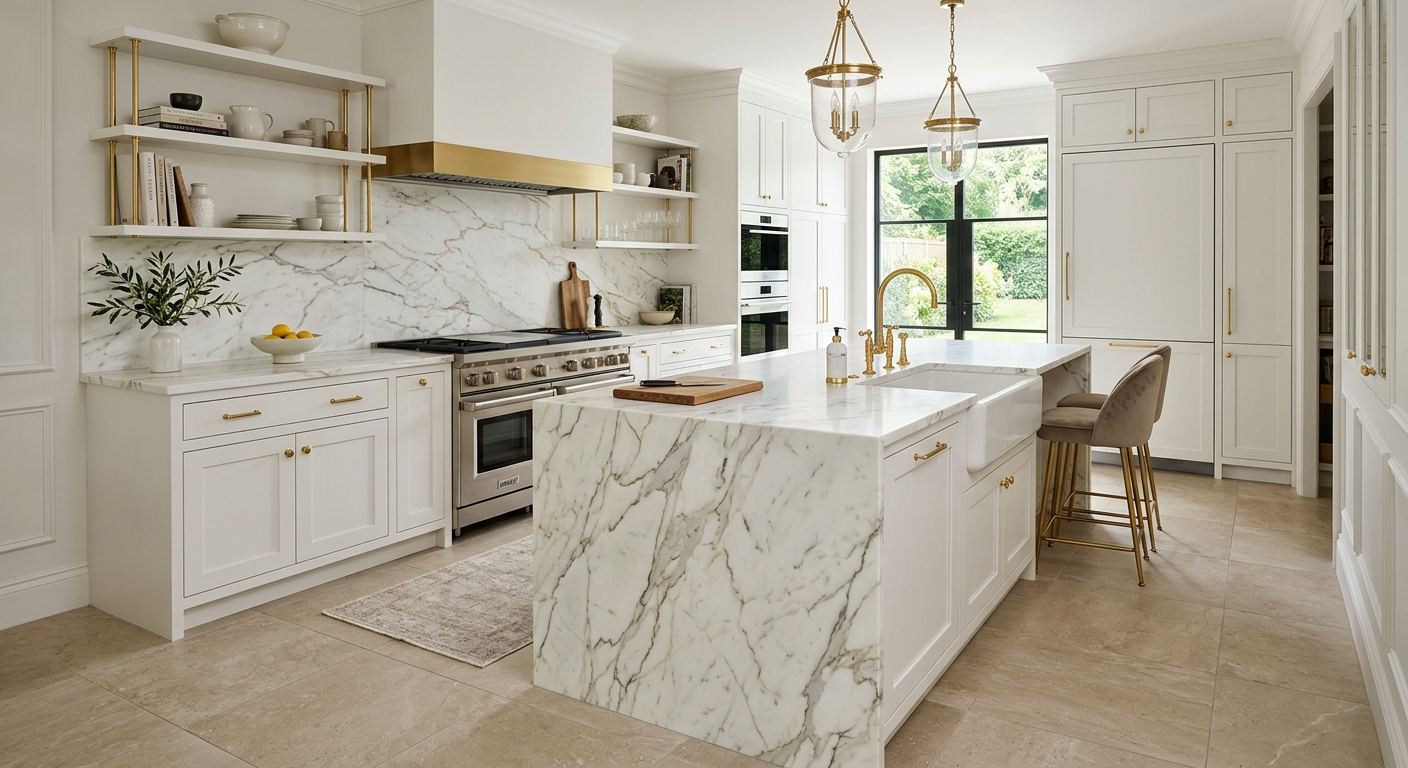
Kitchen renovation options and costs in City Commercial Core
In City Commercial Core, Ontario, kitchen renovation costs tend to track local home values and buyer expectations more than weather. In the Toronto economic region, higher-value pockets typically support a higher finish tier—homeowners often budget around 8–15% of their property value toward the kitchen—because they want modern, durable surfaces that test well at resale. At the same time, household spending power matters: the local profile shows a population of 2,953 in the area you’re renovating (Statistics Canada, 2021 Census), and even within the broader GTA, projects are influenced by what buyers nearby are paying for turnkey homes.
Toronto’s climate plays a smaller role in price than you’d expect. We don’t have the extreme temperature swings that drive foundation or envelope-driven scope, so most kitchen cost swings come from design complexity and material selection, not freeze/thaw. Contractor availability is still seasonal: demand spikes in spring and early summer, which can tighten scheduling and nudge labour pricing during those windows. In areas of high redevelopment demand—especially around older housing stock in the downtown core near major transit corridors—kitchen trades are busy and lead times for stone, custom millwork, and appliance installs can stretch.
Once you pick the renovation tier, the rest of the budget usually follows the same pattern: cabinets and countertops drive most of the range, while layout changes and electrical/plumbing moves add the uncertainty. Use the table below as your baseline for comparing quotes.
| Renovation Tier |
What's Included |
Typical Duration |
Price Range |
| Cosmetic refresh (paint, hardware, new appliances only) |
Cabinet paint or touch-ups, new hardware, new/like-for-like appliances, minor caulking, basic wall prep |
3–7 business days |
$6,000–$18,000 |
| Mid-range full renovation (new cabinets, counters, sink, tile) |
Semi-custom or quality stock cabinets, quartz or laminate counters, sink + faucet, backsplash tile, new flooring tie-in where needed |
3–5 weeks |
$25,000–$60,000 |
| High-end full renovation (custom cabinets, stone counters, island) |
Fully custom cabinetry, premium quartz or natural stone, island fabrication/installation, upgraded appliance package, full backsplash/feature tile |
6–10 weeks |
$65,000–$90,000 |
| Cabinet refacing only (new doors + drawer fronts, same boxes) |
Door/drawer replacement, veneer/laminate refacing, new trim, optional interior reconfig (minor), hardware changes |
1–2.5 weeks |
$8,000–$35,000 |
| Countertop swap only (laminate to quartz or stone) |
Removal and install of new counters, sink cut-in (like-for-like), edge profile upgrades, basic sealing |
4–10 business days |
$3,000–$15,000 |
| Backsplash tile installation only |
Tile supply and install, preparation, waterproofing membrane where appropriate, grout/seal, trim/scribe at edges |
3–7 business days |
$2,000–$10,000 |
Prices are estimates only and vary by project scope, site access and material selection.
What affects the price of kitchen renovation in City Commercial Core
If you get three quotes for the “same” kitchen renovation in the GTA, it can differ by 30–50% because contractors price risk differently: hidden framing issues, how trades handle scheduling, and how allowances are written for stone and electrical. In City Commercial Core and across the Toronto economic region, local home values and median income shape the typical finish tier far more than climate. In higher-value areas, homeowners tend to default to quartz or stone counters and semi-custom cabinetry because the kitchen spend is easier to justify on resale. In more price-sensitive areas (parts of Brampton and outer Mississauga), laminate tops and stock or refaced cabinets stay common because they deliver the look without pushing the total toward the upper end of the $25,000–$90,000 full-renovation band.
Layout changes are the most unpredictable cost regardless of finish level. Moving a wall, adding an island, or relocating a gas line typically creates extra demolition, subfloor/framing repair, and licensed-trade involvement. For example: (1) older downtown homes often have dated venting runs—upgrades can add time and materials even when cabinets are budgeted mid-range. (2) If your kitchen sits over/near older services, relocating plumbing can require more cast-iron/drain work, which pushes you toward the higher end of countertop and cabinet installs. (3) In a compact City Commercial Core layout, an island can force you into more custom cabinet carcass sizes and electrical planning, which lifts budgets toward the $80,000+ range more quickly than homeowners expect.
It helps to treat finish and structure separately in your quote. A quartz upgrade can move you within the $3,000–$15,000 countertop band, but plumbing/gas and electrical work can add cost even if you keep cabinetry budget-friendly. Next, here are the biggest price drivers contractors use when building your numbers.
| Price Factor |
Why It Matters |
Cost Impact |
| Cabinet tier — stock vs. semi-custom vs. fully custom millwork |
Carcass build quality, door styles, internal organization, and how well units fit irregular Toronto-era walls |
Small refreshes stay lower; full custom can push projects toward the upper end of $25,000–$90,000 |
| Countertop material — laminate vs. quartz vs. granite vs. stone |
Material cost, edge complexity, thickness, and fabrication difficulty |
Typically shifts within $3,000–$15,000; stone and premium edges are highest |
| Layout change — wall removal, island add, plumbing/gas move |
Demolition, structural assessment, subfloor repairs, and licensed trade coordination |
Largest unpredictable swing; can move a mid-range job into high-end territory |
| Appliance package tier — builder vs. mid-range vs. pro-grade |
Ventilation demands, electrical requirements, and whether trims/fit are standard or custom |
Can add meaningful cost even if cabinets and counters stay mid-range |
| Flooring — refinish existing vs. full replacement |
Underlayment, subfloor corrections, and matching Toronto hardwood/laminate wear patterns |
Replacement is usually higher; partial refinishing can reduce scope |
| Backsplash — ceramic tile vs. marble vs. full-height slab |
Material density, cutting, sealing, and splash-zone waterproofing details |
Often shifts within $2,000–$10,000 depending on height and stone type |
| Electrical — new circuits for island, under-cabinet lighting |
Load planning, permit involvement, wire routing, and cabinet lighting layout |
Can add cost even with the same cabinet and countertop selections |
| Permit fees and licensed trade requirements |
What’s allowed under “like-for-like” vs changes to plumbing, gas, or electrical |
Generally increases labour coordination and inspection time; impacts overall timeline |
Permits & regulations in Ontario
In Ontario, many “like-for-like” kitchen swaps don’t require permits—cabinet and countertop replacements typically fall into work that can be done without municipal permitting. However, the moment you move the plumbing supply or drain lines, relocate gas equipment (including stoves and range hood venting where gas is involved), remove a load-bearing wall, or add new electrical circuits for features like an island or under-cabinet lighting, permits are typically required and licensed trades must do the work.
A good rule of thumb for homeowners in City Commercial Core is: keep fixtures where they are for the simplest path. If you want to change the sink location (especially shifting drain direction) or move a cooktop’s gas connection, expect permitting and inspections. For electrical, adding circuits and tying new lighting or receptacles into a kitchen plan often triggers permit requirements through a licensed electrician.
Step-by-step, verify your contractor’s Ontario compliance before signing: (1) Ask for their Ontario licence details and confirm the trade is registered through the appropriate provincial registry where applicable. (2) Request a current certificate of liability insurance and ensure it matches the business name on the contract. (3) Ask for WSIB/WCB coverage evidence (or the contractor’s proof of coverage/exemption as applicable) so you’re not exposed if a worker is injured. (4) Make sure the contract clearly states who pulls permits, which inspections are expected, and what happens if requirements change mid-project.
Cabinets, countertops and layout decisions in City Commercial Core
In City Commercial Core, three decisions most strongly shape both your cost and your resale value: (1) cabinet tier, (2) countertop material, and (3) layout changes. Cabinet tier determines how smoothly the design fits older framing and out-of-square walls common in downtown renovations. Stock cabinets are the fastest and usually cheapest, but they can be harder to perfectly tailor to awkward corners. Semi-custom is the popular mid-range choice because it offers better sizes and options without fully custom lead times. Custom cabinets are best when you want a precise look—like a built-in fridge surround or an island that matches ceiling lines—but they’re the highest cost.
Countertops should match how you live: laminate is budget-friendly and handles daily use well, but it can be less forgiving with long-term heat and heavy-impact wear. Quartz is a strong resale bet because it resists staining and doesn’t require sealing like some natural stone. Granite and other natural stone look premium but need careful maintenance and edge-finish selection. Butcher block adds warmth yet needs more ongoing care to stay looking crisp in a busy kitchen.
Layout changes—open-concept wall removal, island additions, and plumbing/gas relocation—are often worth it only when the space gain directly improves traffic flow or creates a functional work triangle. In tight downtown footprints, an island can also push your budget upward through custom cabinet carcasses and electrical planning. For a real-world dollar example: upgrading from laminate to quartz often moves within the $3,000–$15,000 countertop band, which is easier to justify than moving plumbing lines, where you’re more likely to exceed mid-range pricing even if cabinets stay semi-custom.
Ontario’s climate doesn’t usually force kitchen material changes the way it can affect exterior building systems, so the “best” option is usually the one that’s durable for daily use and aligns with what Toronto buyers expect at your price point.
| Option |
Durability |
Maintenance |
Best For |
Price Range |
| Stock cabinets (big-box) |
Good day-to-day strength; best performance when walls are relatively straight |
Basic cleaning; limited adjustability if you need perfect toe-kick or corner fits |
Fast timelines and budget-focused renos in City Commercial Core |
$8,000–$18,000 |
| Semi-custom cabinets (local dealer) |
Very solid for kitchens; better variety for Toronto-era awkward layouts |
Standard wipe-down; more options for organizers to reduce wear on hardware |
Most homeowners targeting strong resale without fully custom pricing |
$15,000–$35,000 |
| Custom cabinets (local millwork shop) |
Highest fit-and-finish potential; ideal for built-ins and complex islands |
Depends on finish system; generally durable with proper care |
High-end projects and homeowners who want a tailored layout |
$30,000–$60,000 |
| Laminate countertop |
Reliable for everyday use; can be more sensitive to heat and sharp impacts |
Wipe clean; avoid prolonged heat exposure and standing water at seams |
Budget-friendly refreshes and rental-to-resale positioning |
$2,000–$6,000 |
| Quartz engineered countertop |
High resistance to staining and everyday wear; consistent look |
Minimal—routine cleaning is usually enough |
Homes aiming for modern durability that buyers recognize quickly |
$4,500–$12,000 |
| Granite / natural stone countertop |
Very durable and heat-tolerant; varies by slab pattern and finish |
May require periodic sealing; care depends on the specific stone |
Premium look seekers who want natural variation |
$7,000–$15,000 |
| Butcher block countertop |
Good impact resistance; surface wear tells the story and can be refinished |
Needs oiling/sealing and careful daily habits |
Warm, casual kitchens where homeowners maintain surfaces |
$3,500–$10,000 |
| Marble countertop |
Beautiful but softer than quartz/granite; scratches and etching are possible |
Higher upkeep; careful stain/etch management |
Design-forward kitchens where the look is the priority |
$8,000–$18,000 |
How to choose a kitchen renovation contractor in City Commercial Core
Choosing the right kitchen contractor in City Commercial Core, Ontario comes down to proof and clarity. First, verify Ontario licensing for any trade-specific work (electrical and gas must be done by licensed professionals) and confirm the contractor carries liability insurance. Ask for WSIB/WCB coverage documentation before work starts—this protects you if a worker is injured on site. When you receive documents, look for matching business names, active coverage dates, and the exact scope the coverage applies to (general liability for the work is the minimum you should expect).
Next, get 2–3 itemised written quotes. You want a breakdown that separates labour and materials, including allowances for cabinets, countertops, tile, demolition/disposal, and any electrical/plumbing work. Avoid quotes that only provide a lump sum without specifying what’s included. Read the scope carefully: is permit pulling included, who pays permit fees, and is waste/disposal part of the contract or billed separately? Warranty matters too: confirm workmanship warranty length, whether it covers rework for installation issues, and whether product warranties transfer to you if you sell.
Finally, manage cash flow and timeline. A fair payment schedule usually keeps upfront deposits to around 10–15%, with the balance tied to milestones. Hold back funds until completion details are confirmed. Request a start date and a completion estimate in writing, including lead times for stone fabrication and cabinetry—Toronto demand can tighten schedules in peak months.
- Ask for proof of liability insurance and confirm the policy is current.
- Request WSIB/WCB coverage documentation (and exemptions, if any, in writing).
- Confirm licensed trade involvement for electrical and gas-related scope.
- Get 2–3 itemised quotes (labour + materials), not a single number.
- Ensure the scope spells out what’s included in demolition and disposal.
- Ask who pulls permits and whether permit fees are included in the quote.
- Clarify what happens if stone/cabinet lead times slip.
- Confirm start date, milestones, and completion window in the contract.
- Verify cabinet measurements and how out-of-square walls are handled.
- Review warranty: workmanship, manufacturer coverage, and transferability.
- Set a sensible holdback for punch-list and close-out documentation.
- Ensure change orders are in writing with cost/time impacts stated.
Common red flags I see with kitchen renovation contractors in City Commercial Core include: (1) refusing to provide itemised quotes and instead relying on vague “allowances,” (2) skipping written scope details for permits, disposal, or electrical/plumbing responsibilities, (3) requesting large upfront payments beyond typical 10–15% without clear milestones, (4) weak or missing insurance/coverage documentation, and (5) no written start/completion timeline—especially when stone or custom cabinetry is involved.
Frequently asked questions — kitchen renovation in City Commercial Core
Can I move my kitchen sink or stove?
Yes, but in Ontario you should plan for permits and licensed trade work once you change plumbing or gas locations. Moving a sink typically means relocating water supply and drain lines, which is not usually “like-for-like,” so it often triggers permit requirements and inspection sign-offs. Relocating a gas stove or cooktop involves gas work, which must be done by a licensed gas fitter, plus additional safety/venting considerations.
In City Commercial Core, many homeowners try to keep their budget in the mid-range by avoiding major moves, because layout changes are the biggest cost swing. If you stay within a refresh, you can keep the project closer to the $25,000–$60,000 mid-range full-renovation band. If you move plumbing/gas and add electrical for an island, it’s easier for budgets to drift upward even if cabinets and counters are not premium.
What's the most cost-effective kitchen upgrade?
For most homes in City Commercial Core, the most cost-effective upgrade is usually a change that delivers a big visual difference without triggering extensive demolition. If your boxes and layout are sound, cabinet refacing or a countertop swap can deliver strong “new kitchen” impact while staying inside predictable budget bands. Refacing only (new doors and drawer fronts on existing boxes) often fits the $8,000–$35,000 cabinet installation/refacing range, and it reduces the amount of construction waste and labour time. If you want the fastest “wow,” a countertop swap—laminate to quartz or stone—often fits the $3,000–$15,000 countertop band, especially when the sink cut-out remains like-for-like.
When you compare ROI, avoid expensive layout changes unless the functional gain is clear. Toronto buyers notice surfaces and cleanliness first, and they’ll forgive an unchanged footprint more than they’ll forgive worn cabinets or dated counters.
Custom vs stock cabinets — is custom worth it?
Custom cabinets can be worth it in City Commercial Core if your kitchen has irregular wall conditions, a complex island, or you want built-ins that match specific dimensions (for example, a fridge surround with precise panel reveals). Custom also helps achieve cleaner lines in older downtown homes where floors and walls can be slightly out of square. That said, “worth it” usually depends on how much of your total spend is going toward cabinetry versus countertops and appliance upgrades.
Many homeowners land in the best-value middle with semi-custom, because it offers better sizing and options without the highest lead times and millwork cost. If you’re targeting a full renovation budget around $25,000–$60,000, stock or semi-custom is typically more practical. If you’re building toward the high-end $65,000–$90,000 range, custom cabinetry becomes more compelling, especially alongside stone countertops and an island.
How do I choose a kitchen contractor in City Commercial Core?
Choose a contractor by verifying compliance and comparing how they build their numbers. In Ontario, confirm the contractor’s insurance and WSIB/WCB coverage before work begins, and ensure they route electrical and gas scope through properly licensed trades. Ask for documentation: a current certificate of liability insurance, WSIB/WCB proof (or exemption documentation in writing), and clear written confirmation of who handles permits.
Then request 2–3 itemised quotes that separate labour, materials, and allowances (stone, tile, cabinet upgrades). A good quote clearly states what’s included for demolition/disposal, whether permit fees are covered, and how changes are handled. In a busy Toronto market, also ask about lead times for stone and cabinetry and whether the timeline accounts for fabrication.
If you’re comparing options within the $25,000–$90,000 full kitchen band, the contractor who is most transparent about scope and documentation is usually the safest value—even before you consider price.
What order do kitchen renovation steps happen in?
A typical kitchen renovation sequence in Ontario goes in stages: demolition first, then rough-in work, then cabinet and countertop installations, followed by finishing trades. After demolition, contractors confirm measurements and assess subfloor/framing so cabinet carcasses sit level. If you’re relocating plumbing or adding electrical circuits, licensed rough-in work happens next—this is where permits and inspections often come into play.
Once rough-ins are signed off (where required), cabinets install, then countertop fabrication follows the final measurements. Backsplash tile generally goes after countertops are set to ensure accurate alignment and clean edges. Flooring tie-ins happen either before cabinets (if trim/baseboards are removed) or after (if it’s a surface-level transition), depending on your plan.
In City Commercial Core, lead times can shift the schedule, especially for quartz/stone and custom cabinetry. A contractor should provide a written timeline that reflects these real fabrication windows.
Can I live at home during a kitchen renovation in City Commercial Core?
Often, yes—many homeowners in City Commercial Core renovate while staying in the home, especially for phased work or cosmetic refreshes. For a cosmetic refresh (paint, hardware, and new appliances only), disruption is usually limited, and some households can keep normal routines with a temporary setup. For mid-range or high-end full renovations, staying fully functional is harder because demolition, dust control, and the absence of a usable sink/cooktop area can limit day-to-day convenience.
If you stay, plan a “temporary kitchen” in another room: a microwave, kettle, small fridge, and access to safe water (sometimes via a temporary sink) while work progresses. Contractors should manage dust containment, protect floors and doorways, and keep pathways safe. If your project includes electrical or plumbing moves, downtime may be unavoidable during rough-in and inspection windows.
For planning, discuss whether your budget is closer to $25,000–$60,000 (often more manageable) or closer to $65,000–$90,000 (more disruptive due to custom builds and fabrication time).