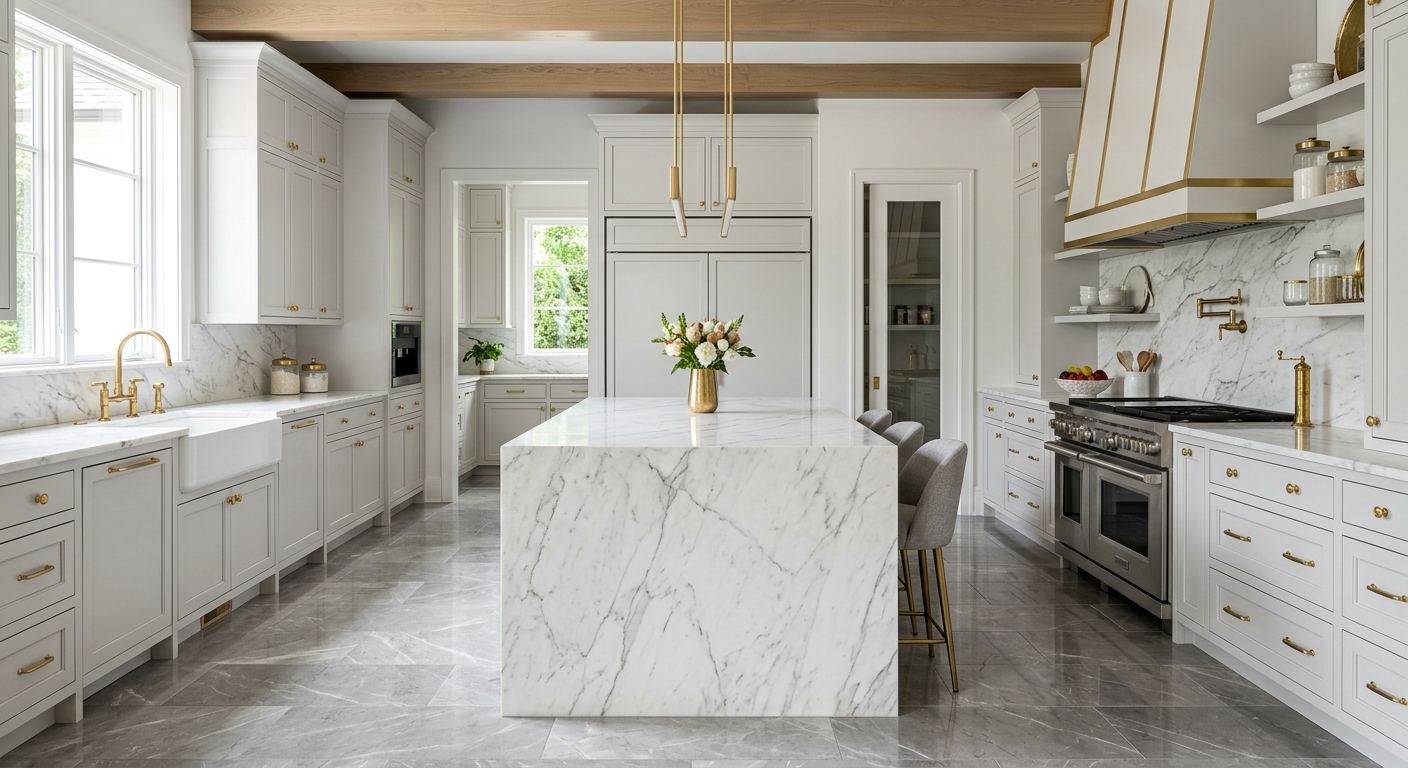
Kitchen renovation options and costs in Kingsway South
In Kingsway South, Ontario, kitchen renovation options typically start with a “refresh” and scale up to full custom builds depending on resale expectations and how much you want to change the room. With a small local population of 9,271 (Statistics Canada, 2021 Census), homeowners here tend to renovate with a clear plan because good trades availability can be easier to manage when work is scheduled well. In the Toronto economic region, budgets also track closely to household purchasing power and local home values—so it’s common to see kitchens built to perform for the next owner, not just your next few years. In higher-value pockets across the GTA, owners often allocate a larger share of the home’s value to the kitchen, which pushes decisions toward quartz or natural stone, upgraded hardware, and more tailored cabinetry. In more price-sensitive areas nearby, projects are more likely to use semi-custom layouts, refacing, and durable mid-tier finishes.
Toronto-area costs aren’t driven much by climate in the day-to-day labour sense—our biggest weather-related pressure is how winter scheduling affects indoor trade throughput, drying/curing times for finishes, and demand spikes when milder weeks arrive. Availability of cabinet installers and stone suppliers can also swing timelines, so the same renovation can land higher or lower depending on lead times and how flexible your start date is.
In Kingsway South and the surrounding midtown corridor, trade demand is especially strong around the older bungalow and early-split housing stock where homeowners want modern storage, better lighting, and improved kitchen flow without changing the entire footprint. From there, it’s easier to compare realistic budgets by tier, using the table below as your backbone.
| Renovation Tier |
What's Included |
Typical Duration |
Price Range |
| Cosmetic refresh (paint, hardware, new appliances only) |
Paint, new hardware, appliance replacement, minor caulking/touch-ups; no cabinet box changes |
1–3 weeks |
$9,000–$18,000 |
| Mid-range full renovation (new cabinets, counters, sink, tile) |
Semi-custom or stock cabinets, quartz or laminate counters, sink + faucet, backsplash tile, flooring refinishing or partial replacement |
3–6 weeks |
$28,000–$62,000 |
| High-end full renovation (custom cabinets, stone counters, island) |
Custom millwork, upgraded stone (quartz/stone), island with seating, under-cabinet lighting, upgraded appliance package, full-height backsplash options |
6–12+ weeks |
$65,000–$90,000 |
| Cabinet refacing only (new doors + drawer fronts, same boxes) |
Replace doors/drawer fronts, new veneer panels, new hardware, adjust/trim existing boxes; no structural cabinet moving |
1–3 weeks |
$8,000–$28,000 |
| Countertop swap only (laminate to quartz or stone) |
Remove existing top, install new quartz/stone or premium laminate; include sink cutout and new seals |
3–10 days |
$3,000–$15,000 |
| Backsplash tile installation only |
Demo (if needed), tile supply/installation, grout/seal, edge trims; excludes major electrical work |
3–7 days |
$2,000–$10,000 |
Prices are estimates only and vary by project scope, site access and material selection.
What affects the price of kitchen renovation in Kingsway South
Homeowners in Kingsway South often get quotes that look wildly different for the “same” kitchen—commonly a 30–50% spread—because contractors price the parts you can’t always see: cabinet build tier, countertop thickness and fabrication, what’s included in demo and disposal, how much electrical/plumbing rework is allowed for, and how many custom details are being engineered. In the Toronto economic region, local home values and the typical finish expectations tied to them influence the usual finish tier more than climate does. When buyers expect a premium look, owners move toward quartz or stone counters and semi-custom cabinetry because the renovation cost is easier to justify on resale. In more modest budgets, laminate and stock cabinetry dominate, and you can still get a modern look by improving lighting, hardware, and workflow.
Layout changes are where costs become least predictable—removing a wall, adding an island, or moving a gas line can swing labour and trade coordination, even if your cabinet style stays the same. For example, a homeowner who upgrades from laminate to quartz might move from a mid-range full renovation budget into the upper side of the $25,000–$90,000 band, but if they also add an island, the project can jump substantially because of new electrical, ducting/venting coordination, and additional cabinet base framing. Conversely, a countertop-only change—say, within the $3,000–$15,000 countertop band—can stay close to estimate when your sink location and plumbing connections don’t change.
In Kingsway South specifically, older kitchens sometimes have dated roughed-in plumbing, tighter chase spaces, and non-standard cabinet heights. That can add time to relevel cabinets or modify wall framing for backsplash and under-cabinet lighting. Also, winter scheduling in the Toronto market can push lead times—so if you’re buying custom cabinets that require fabrication, your start date flexibility can affect labour availability and how quickly trades can stack work.
| Price Factor |
Why It Matters |
Cost Impact |
| Cabinet tier — stock vs. semi-custom vs. fully custom millwork |
Determines door/drawer quality, internal storage options, fit/finish tolerance, and build time |
Can shift a full renovation by roughly $10,000–$35,000 depending on tier and layout |
| Countertop material — laminate vs. quartz vs. granite vs. stone |
Material cost, fabrication complexity, seam count, and edge profiles drive both supply and labour |
Typical change of about $3,000–$12,000 when moving between laminate and premium stone |
| Layout change — wall removal, island add, plumbing/gas move |
Structural modifications require trades coordination and inspections; moving lines adds rough-in scope |
Often the largest swing factor: +$5,000–$25,000 beyond a like-for-like refresh |
| Appliance package tier — builder vs. mid-range vs. pro-grade |
Range, venting, fridge depth, and integration style affect cabinetry and electrical/vent requirements |
Can add $2,000–$15,000 depending on package and venting approach |
| Flooring — refinish existing vs. full replacement |
Refinishing is faster when subfloors are sound; replacement is costlier but hides age and inconsistencies |
Usually +$2,000–$10,000 if moving from refinishing to full replacement |
| Backsplash — ceramic tile vs. marble vs. full-height slab |
Premium stone/slab needs higher-skilled installation, extra cutting, and sometimes more structural backing |
Often ranges +$1,000–$6,000 depending on material and coverage |
| Electrical — new circuits for island, under-cabinet lighting |
Island drops, pot lights, and lighting changes require safe circuit planning |
Commonly +$1,500–$8,000 depending on number of additions |
| Permit fees and licensed trade requirements |
Permits and inspections can be straightforward, but they add coordination and sometimes rework allowances |
Typically +$500–$3,500, but can rise with complex electrical/plumbing/gas work |
Permits & regulations in Ontario
In Ontario, many kitchen updates don’t trigger permits—most notably cabinet and countertop swaps when you’re keeping existing plumbing, gas connections, and electrical locations the same. A like-for-like cabinet installation (or refacing that doesn’t require structural changes), a countertop replacement that doesn’t alter sink plumbing, and a backsplash installation that doesn’t require new circuits typically fall into the “no permit” category. However, permits and licensed trades are usually required when you move plumbing supply/drain lines, relocate a gas appliance or change gas-related venting, remove a load-bearing wall, or add/modify electrical circuits (such as new island receptacles or substantial lighting upgrades).
For gas work in Ontario, use a licensed gas fitter; for electrical, use a licensed electrician. Both trades must follow inspection requirements where applicable, and you should receive documentation as part of the closeout package. Before you sign, make sure the contractor clearly states who pulls permits (if any), what inspections are included, and whether trade scheduling is already accounted for in the timeline—this belongs in your written contract.
To verify licensing in Kingsway South: (1) Ask for your contractor’s liability insurance certificate and confirm it’s current; (2) request proof of WSIB/WCB coverage for the trades (or the contractor’s coverage, depending on who employs the labour); (3) check trade-specific credentials—licensed gas work and licensed electrical should be documented by their respective trades; and (4) confirm the permit process in writing if any plumbing, gas, structural, or electrical changes are planned.
Cabinets, countertops and layout decisions in Kingsway South
The three most consequential decisions in a Kingsway South kitchen renovation are your cabinet tier, countertop material, and whether the layout change is truly worth the disruption. Cabinet tier sets the pace and look of the room: stock cabinets are fastest and cheapest, semi-custom is the most popular mid-range because it balances better storage and door options with a manageable budget, and custom cabinets deliver the tightest fit and best storage for odd angles and ceilings. Toronto resale expectations also matter: at higher price points, buyers typically expect clean lines, durable surfaces, and thoughtful storage—especially soft-close drawers, good pantry space, and a consistent cabinet reveal.
Next is the countertop material. Laminate can be cost-effective, easy to replace, and good for a refreshed look, but it isn’t as resistant to heat and long-term wear as quartz or natural stone. Quartz is the common “sweet spot” because it offers a premium feel without the sealing/maintenance expectations of some natural stones. For layout, adding an island or opening up to a more functional path through the kitchen is often justified when you can improve traffic flow, add seating, or create better storage—yet any plumbing/gas relocation or new venting can push labour and coordination beyond a cosmetic update.
Here’s a practical dollar example: upgrading only the surface is often the most controlled cost. A countertop-only change is commonly within the $3,000–$15,000 band, so moving laminate to quartz can feel “big” without risking a full rebuild. But if you pair that upgrade with an island that requires electrical and plumbing adjustments, your project is more likely to land in the upper portions of the $25,000–$90,000 full renovation band due to rough-in, inspections, and cabinet reconfiguration.
| Option |
Durability |
Maintenance |
Best For |
Price Range |
| Stock cabinets (big-box) |
Solid for standard dimensions; less forgiving with ceiling angles and tight corners |
Low—wipe clean; door/drawer performance depends on hardware chosen |
Fast turnarounds and budget-first renovations |
$8,000–$22,000 |
| Semi-custom cabinets (local dealer) |
Good build quality with more flexibility for storage and finishes |
Low; requires normal care for finishes and hardware |
Most Kingsway South homeowners targeting value + improved function |
$18,000–$45,000 |
| Custom cabinets (local millwork shop) |
Best fit and detailing; ideal for unique layouts and maximizing storage |
Low—treat finishes properly; expect longer service life with quality hardware |
Premium builds and high resale expectations with complex spaces |
$35,000–$70,000 |
| Laminate countertop |
Good for everyday use; less resistant to heat and deep staining |
Simple cleaning; replace if chips occur at edges |
Budget-friendly refresh while keeping cabinet spend controlled |
$3,000–$7,000 |
| Quartz engineered countertop |
Very durable; resistant to daily wear and many stains |
Minimal—no sealing; wipe with standard household cleaners |
Most popular “upgrade” choice for a premium look without natural-stone upkeep |
$7,000–$14,000 |
| Granite / natural stone countertop |
Strong and heat-tolerant; durability varies by slab and finish |
May need periodic sealing depending on the stone and finish |
Homeowners seeking unique veining and a luxury, one-of-a-kind appearance |
$9,000–$16,000 |
| Butcher block countertop |
Durable when maintained; can scratch and needs oiling |
Requires regular oiling and careful treatment of seams |
Warm, traditional styles and households that like food-prep versatility |
$6,000–$12,000 |
| Marble countertop |
Premium look; softer and more prone to etching and staining than quartz |
More care required—sealing and prompt cleaning recommended |
High-end aesthetics where the homeowner understands the maintenance tradeoff |
$10,000–$20,000 |
How to choose a kitchen renovation contractor in Kingsway South
Choosing the right contractor in Kingsway South comes down to verifying credentials, locking scope details, and making sure the quote is priced for the real work—not just a best guess. Start by confirming Ontario licensing where relevant: ask the contractor for proof of liability insurance and ask how they handle WSIB/WCB coverage. Liability insurance matters because kitchen renovations involve cutouts, dust work, and trades entry into occupied homes; WSIB/WCB coverage (or equivalent) protects you and the workers if something goes wrong on site. Then get 2–3 itemised quotes with a labour and materials breakdown rather than a single lump-sum line. If you can’t compare line items (demo, cabinetry install, countertop template/fabrication allowance, tile setting, disposal), you can’t compare value.
Read the scope carefully for what’s excluded: permit pull responsibility, disposal/hauling, floor protection, appliance hookups, patching/drywall finishes, and whether plumbing or electrical rough-ins are included or just “noted.” Warranty also matters: confirm the workmanship warranty length, the product/manufacturer warranties, and whether the warranty is transferable to future owners (important in Toronto’s resale-driven market). Finally, payment schedule should protect you—avoid large deposits. A good rule is never more than 10–15% upfront, with holdback until completion and punch-list items are finished. Ask for a written start date and a completion estimate, especially for lead-time-sensitive components like cabinets and stone.
- Ask for insurance certificate and verify it includes general liability suitable for renovation work.
- Confirm WSIB/WCB coverage for workers (or provide equivalent documentation).
- Get itemised quotes: labour vs materials, and line items for demo, drywall, tile, cabinets, countertops, and disposal.
- Confirm whether permits (if any) are included and who is responsible for pulling them.
- Check exclusions: what happens if you find hidden damage behind the old backsplash or base cabinets?
- Ask for a cabinet and countertop lead-time estimate in writing.
- Review warranty terms: workmanship duration, manufacturer coverage, and transferability.
- Clarify payment milestones and keep a holdback until punch list completion.
- Require a site-protection plan (floor protection, dust control, protective coverings).
- Confirm the disposal/hauling method and whether it’s included.
- Ask who handles punch-list touchups and how long they stay on-site after “substantial completion.”
- Get a schedule with trade days and key milestones (demo, rough-in, cabinetry install, countertop template, final tiling).
Concrete red flags to watch for: (1) quote is a single number with no labour/material breakdown; (2) contractor won’t put permit responsibility, timelines, or exclusions in writing; (3) they ask for heavy upfront payment beyond 10–15%; (4) no proof of liability insurance or WSIB/WCB coverage; and (5) they promise “everything included” but can’t explain who is pulling permits or handling licensed plumbing/electrical/gas when changes are required.
Frequently asked questions — kitchen renovation in Kingsway South
How do I choose a kitchen contractor in Kingsway South?
Start with proof: ask for liability insurance and confirm WSIB/WCB coverage for the workers doing the work. Then request 2–3 itemised written quotes so you can compare cabinet installation labour, countertop template/fabrication allowances, tile setting, and disposal—lump-sum-only bids are hard to audit. In Ontario kitchens, make sure they clarify permit responsibility up front, especially if you plan to add circuits for an island or move plumbing/gas connections. In Kingsway South, a lot of the “real” variability is in scope details and lead times, so choose the contractor who provides a clear schedule for cabinetry and stone and who will stand behind workmanship with a defined warranty.
What order do kitchen renovation steps happen in?
A typical sequence in Ontario is: site protection and demo, then rough-in (electrical and plumbing, and gas work if applicable), followed by drywall/patching and subfloor or flooring adjustments. Cabinets come next (leveling and securing), then countertop templating and fabrication, and finally countertop install, sink connections, backsplash tile, and finishing trades (trim/caulking/paint touch-ups). Appliances are installed near the end, after wiring and hookups are verified. If you’re doing a smaller change like a countertop swap in the $3,000–$15,000 range, the order still matters—your sink cutouts and plumbing alignment must be correct before the final countertop is set.
Can I live at home during a kitchen renovation in Kingsway South?
Often yes, especially for refreshes or contained scopes (paint/hardware, or cabinet refacing), but it depends on demo intensity and how much plumbing/electrical work is happening. For many homes in Kingsway South, contractors set up a temporary cooking zone and manage dust control to keep the rest of the home usable. The more you remove walls, move plumbing/gas lines, or replace flooring entirely, the less comfortable day-to-day living becomes. If you’re aiming for a mid-range full renovation, planning for at least partial downtime is wise. Your contractor should provide a schedule so you can anticipate when the kitchen is “out of service” and when you can start using key features again.
Should I renovate my kitchen before selling in Kingsway South?
In Toronto, kitchens often influence buyer decisions more than almost any other reno, but the best ROI comes from the right tier and a clean, modern finish—not the most expensive materials. If your goal is resale, focus on durable surfaces and a layout that feels functional. Many homeowners choose semi-custom or refaced cabinetry and quartz counters because they look premium and hold up well under daily use. Budgeting is key: a modest refresh may not justify the disruption, while a full renovation often lands in the $25,000–$90,000 range depending on cabinet tier, countertop selection, and layout changes. In Kingsway South’s housing stock, even small improvements like better lighting and updated backsplash can make an older kitchen feel current, which buyers notice quickly.
What's the most popular kitchen style in Kingsway South right now?
Right now in Kingsway South (and across the Toronto market), the most common demand is a clean, modern transitional look: shaker-style cabinetry, matte or satin finishes, simple slab or minimal-edge hardware, and bright, layered lighting (including under-cabinet LED). Countertops frequently skew toward quartz because it delivers a consistent, upscale appearance with low maintenance. Many homeowners also choose a practical layout upgrade—better storage, a more usable work triangle, and sometimes an island—if their footprint allows. Style-wise, it’s less about “trends” and more about buyer-friendly neutrals that pair with common Toronto resale preferences. If you’re building toward a premium tier, stone-like quartz finishes and upgraded backsplash coverage usually align best with that approach.
How do I know if I need to update my kitchen plumbing in Kingsway South?
You may need updates when you’re moving the sink location, changing the dishwasher configuration, adding an island with a sink, or discovering old supply/drain lines that don’t meet current installation best practices. Even if you aren’t moving plumbing, signs like slow drains, frequent leaks, or aging shutoff valves can be a reason to replace lines during renovation—because opening walls later is costlier. For Ontario compliance, plumbing changes typically require licensed plumbing work and may involve permits depending on the scope. A good contractor will assess shutoff valves, current pipe conditions behind base cabinets, and how your proposed countertop/sink cutouts will connect. If you keep the sink in the same place, costs may stay closer to a countertop-only plan (often $3,000–$15,000 for the surface portion) rather than expanding to full rough-in work.