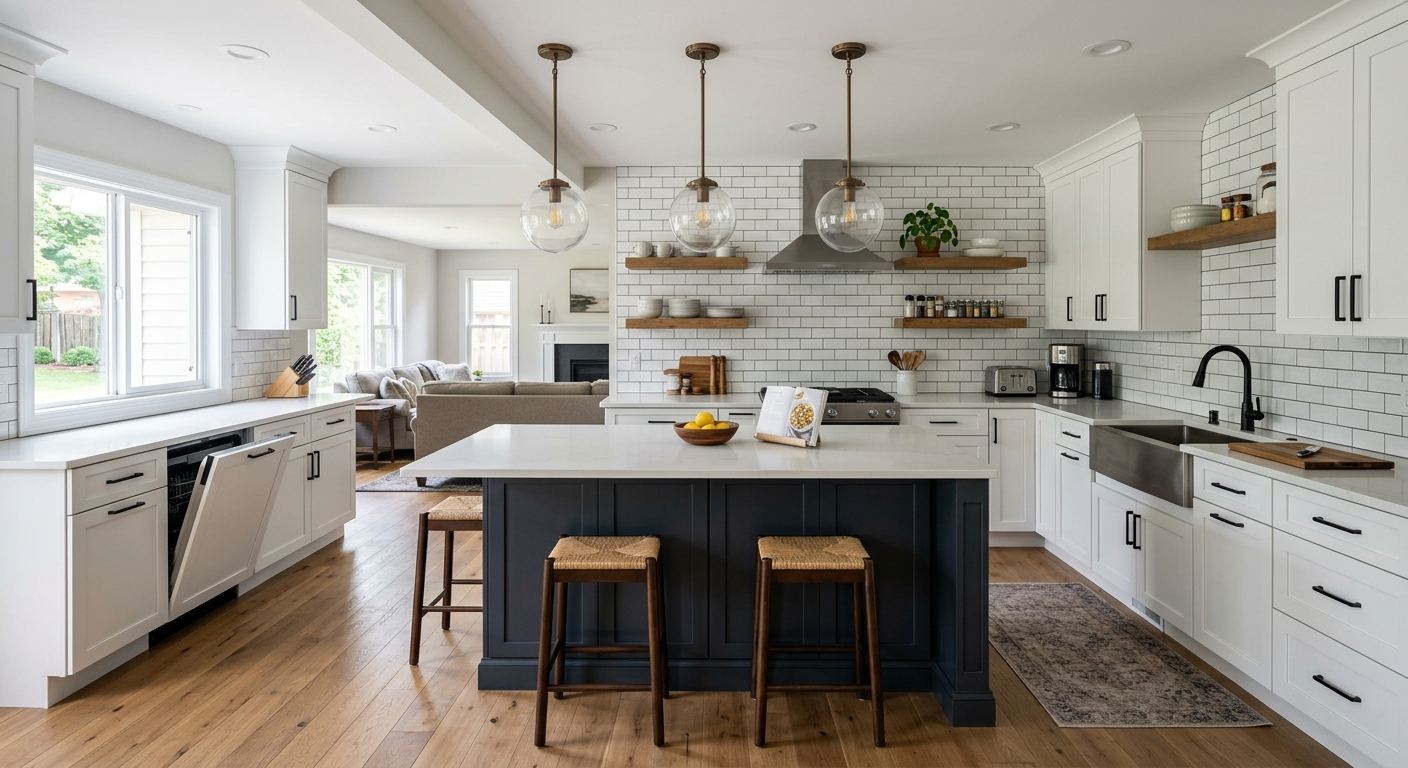
Kitchen renovation options and costs in Rural East-Country Squire
In Rural East-Country Squire, kitchen renovation costs tend to land inside the same budgeting reality as the broader Toronto economic region: you’ll pay for better finishes when buyers expect them. With a small local population of 1,510 (Statistics Canada, 2021 Census), there are fewer trades available than in the GTA cores, so scheduling and site logistics can tighten timelines. At the same time, homeowners here are influenced by regional buying expectations—Toronto-area purchasing power is what drives owners to invest more aggressively in cabinetry, countertops, and appliances, especially when resale value is on the line. In high-value pockets across the Toronto economic region, it’s common to see kitchens absorbing roughly 8%–15% of home value, which pushes budgets toward quartz or natural stone and semi-custom or custom millwork.
Ontario’s kitchen-cost pattern is less about weather than market and home value strategy. In practice, bids vary because cabinet tier and countertop material are the biggest levers, while layout changes add unpredictability regardless of finish level. Even in Rural East-Country Squire, contractors may price differently depending on whether they need to coordinate longer-material lead times (common for custom doors and stone) or add trade days for electrical and plumbing when you’re adjusting islands, vents, or gas lines.
Demand is especially steady for renovations in the community’s older homes and main-street-style neighbourhoods where homeowners often want updated storage and modern countertops without expanding the footprint. If you’re weighing a refresh versus a full build, the table below will help you compare realistic scopes at a glance.
| Renovation Tier |
What's Included |
Typical Duration |
Price Range |
| Cosmetic refresh (paint, hardware, new appliances only) |
Cabinet paint or refinish limited to surfaces, new pulls/knobs, backsplash touch-up if needed, replacement appliances (no plumbing/gas moving), minor caulking and trim. |
3–7 days |
$25,000–$35,000 |
| Mid-range full renovation (new cabinets, counters, sink, tile) |
New stock or semi-custom cabinets, new countertops (quartz or quality laminate), new sink and faucet, backsplash tile, updated lighting and labour for electrical hookups, flooring refresh as agreed. |
2–5 weeks |
$45,000–$65,000 |
| High-end full renovation (custom cabinets, stone counters, island) |
Custom millwork, premium quartz/stone, island build (including electrical/plumbing as needed), full-height backsplash options, upgraded appliance package, coordinated trade schedule and structural/site details. |
5–10 weeks |
$70,000–$90,000 |
| Cabinet refacing only (new doors + drawer fronts, same boxes) |
Replace cabinet doors and drawer fronts, reface panels/trim where feasible, new hardware, clean-and-adjust hinges, matching finishes to existing layout. |
1–3 weeks |
$8,000–$20,000 |
| Countertop swap only (laminate to quartz or stone) |
Remove old laminate, fabricate/install new countertop, cut-outs for sink and cooktop where applicable, reseal and refit undermount sink, minor backsplash returns only if required. |
2–7 days |
$7,000–$15,000 |
| Backsplash tile installation only |
Tile supply and installation, surface prep, waterproofing where required, grout/seal, edge trim and caulking to match existing finishes. |
2–5 days |
$2,000–$10,000 |
Prices are estimates only and vary by project scope, site access and material selection.
What affects the price of kitchen renovation in Rural East-Country Squire
In Rural East-Country Squire and across Ontario, it’s common to see quotes for the same “kitchen makeover” vary by 30%–50%. The reason usually isn’t labour availability alone—it’s the mix of design choices, material sourcing, and how much of the work triggers additional trades. In the Toronto economic region, local home value and household income expectations strongly influence finish tier: when buyers and homeowners anticipate a premium resale outcome, they often choose quartz or stone and semi-custom cabinetry, which shifts projects upward into the mid-to-high bands.
Climate plays a smaller role than you might expect. Kitchen costs don’t rise because of winter temperatures the way exterior work does; instead, the bigger factor is how older home builds handle moisture and ventilation. If your home has dated venting or older plumbing runs, improvements can become necessary when you open walls for electrical, island wiring, or updated sink lines. Those hidden realities are what turn a “$45,000 plan” into a “$65,000 plan.”
Here are a few concrete ways local conditions change cost in this area:
- Older cabinets/frames: if existing boxes aren’t square, cabinet installs may require additional shimming, wall repair, or re-labelling—especially when moving from laminate-tops to thicker quartz.
- Ventilation constraints: many renovations require new range hood ducting routes; rerouting ductwork adds labour even if finishes stay mid-range.
- Lead times for stone and custom doors: if you’re planning a high-end island in the $70,000–$90,000 range, ordering early prevents idle trade days.
Finally, remember the biggest cost unpredictability comes from layout changes—removing a wall, adding an island, or moving a gas line. Those decisions can push a project out of the “mid-range full renovation” band and into higher territory fast.
| Price Factor |
Why It Matters |
Cost Impact |
| Cabinet tier — stock vs. semi-custom vs. fully custom millwork |
Custom sizing, specialty finishes, and upgraded internal storage drive fabrication time and materials. |
Can shift a full renovation by roughly $15,000–$35,000 |
| Countertop material — laminate vs. quartz vs. granite vs. stone |
Higher-end stones require stronger fabrication, more templates, and sometimes more expensive edging/undermount work. |
Often $3,000–$12,000 difference depending on size and complexity |
| Layout change — wall removal, island add, plumbing/gas move |
Structural work and added rough-in for water/drain and venting create the widest swing in cost. |
Can add $10,000–$25,000 or more |
| Appliance package tier — builder vs. mid-range vs. pro-grade |
Pro-grade appliances raise unit costs and can change venting requirements and power needs. |
Typically $2,000–$10,000 swing |
| Flooring — refinish existing vs. full replacement |
Matching existing floors may be limited by wear and subfloor condition; full replacement adds demo and underlayment costs. |
Usually $1,500–$8,000 |
| Backsplash — ceramic tile vs. marble vs. full-height slab |
Large-format stone and full-height installs need more preparation and careful waterproof detailing. |
Often $2,000–$10,000+ |
| Electrical — new circuits for island, under-cabinet lighting |
New circuits require licensed electrical work and sometimes panel load planning. |
Commonly $800–$4,500 depending on scope |
| Permit fees and licensed trade requirements |
When permits/inspections are needed, the trade schedule and documentation add cost. |
Often $300–$2,500 net impact, plus trade coordination |
Permits & regulations in Ontario
In Ontario, swapping cabinets or countertops usually does not require a building permit—especially when you’re keeping plumbing and gas routing the same and you’re not touching structural elements. However, the moment your renovation moves into rough-in work, permits and licensed trades become part of the process. In particular, these types of kitchen work typically require permits and inspections: moving plumbing supply or drain lines, relocating a gas stove/range, running or altering gas lines, removing a load-bearing wall (or doing structural modifications), and adding electrical circuits (for example, dedicated island circuits or major under-cabinet lighting expansions).
Gas work must be done by a licensed gas fitter, and electrical work must be completed by a licensed electrician. Both trades should schedule required inspections, and those results can affect the timeline if anything needs correction. Before you sign a contract, confirm in writing who is pulling permits, what’s covered, and who pays for inspections.
To verify a contractor in Rural East-Country Squire, check three things step-by-step: (1) licence information for relevant trades (look for the online registry details provided by the contractor and the trade’s own registration references), (2) a current certificate of insurance (general liability plus any trade-specific coverage where applicable), and (3) WSIB/WCB clearance or proof of coverage where required by the contract and trade role. Ask for the clearance letter or proof document, then keep copies with your contract paperwork.
Cabinets, countertops and layout decisions in Rural East-Country Squire
The three most consequential decisions in a Rural East-Country Squire kitchen renovation are (1) cabinet tier, (2) countertop material, and (3) whether you change the layout. These choices matter because they shape both day-to-day usability and what buyers expect when they view the home. Toronto-area buyers often look for clean, durable surfaces and well-finished storage, so kitchens typically justify investment when the finish tier matches the home’s target value and layout utility.
Cabinet tier: Stock cabinets are the fastest and cheapest, but they can be limiting if you have an awkward corner or want deeper drawers. Semi-custom cabinets are the most popular mid-range choice because you can adjust sizes and internal storage while keeping costs predictable. Custom cabinets are best when you need a perfect fit for an older footprint or you want built-ins (pantry towers, appliance garages, concealed lifts).
Countertop material: In Ontario, the kitchen’s real “climate” is humidity and daily use—spills, boiling water, and temperature changes. Laminate is budget-friendly and forgiving, but it’s more vulnerable to edge damage over time. Quartz and natural stone handle heat and staining better; quartz is especially consistent in colour and pattern. If you’re aiming for a high-end look, granite or stone adds visual depth but increases cost due to fabrication and installation.
Layout changes: Removing a wall or adding an island often costs more because it can trigger electrical, plumbing, and potentially permit work. It’s justified when the space gain improves traffic flow and storage access—especially in smaller older kitchens where every inch counts.
Example: if you’re deciding between quartz and laminate, a typical countertop swap in the $7,000–$15,000 range can be worth it when it upgrades the “touch points” buyers see first. But if your budget is already near the $45,000–$65,000 mid-range band, adding an island before you upgrade cabinets can stretch labour and rough-in costs without improving storage the way a good cabinet plan would.
| Option |
Durability |
Maintenance |
Best For |
Price Range |
| Stock cabinets (big-box) |
Good for everyday use; hinges and drawer quality vary by brand. |
Low; keep hardware tightened and clean with non-abrasive products. |
Fast timelines and budget-conscious refreshes. |
$8,000–$22,000 |
| Semi-custom cabinets (local dealer) |
Very good; better sizing options and improved hardware/finishes. |
Low to moderate; occasional adjustment for alignment. |
Most mid-range renovations seeking a tailored fit. |
$20,000–$45,000 |
| Custom cabinets (local millwork shop) |
Excellent; built to your exact dimensions and usage. |
Low; quality materials hold up with proper care. |
Perfect fit, unique layouts, and premium storage features. |
$35,000–$70,000 |
| Laminate countertop |
Moderate; edges are the most common weak point. |
Easy cleaning; avoid impact and prolonged standing water at seams. |
Keeping budgets in the lower half of countertop swaps. |
$3,000–$7,000 |
| Quartz engineered countertop |
High; resists staining and everyday wear very well. |
Low; wipe clean, no sealing required in typical installations. |
Balancing a premium look with practical maintenance. |
$7,000–$12,000 |
| Granite / natural stone countertop |
High; durable and heat-tolerant, with natural variation. |
Moderate; may require periodic sealing depending on stone. |
Homeowners prioritizing natural texture and resale appeal. |
$10,000–$15,000 |
| Butcher block countertop |
Good to high when cared for; can show dents if not maintained. |
Moderate; needs oiling and proper drying habits. |
Warm look and casual family kitchens. |
$6,000–$12,000 |
| Marble countertop |
Medium; beautiful but more susceptible to etching and staining. |
Higher maintenance; careful cleaning and sealing discipline. |
Statement kitchens where owners will manage upkeep. |
$12,000–$18,000 |
How to choose a kitchen renovation contractor in Rural East-Country Squire
Choosing the right kitchen renovator in Rural East-Country Squire is about verifying credentials and forcing clarity in writing. First, confirm Ontario licensing for the trades involved: electrical work should be by a licensed electrician, and any gas-related alterations must be done by a licensed gas fitter. Ask the contractor for liability insurance documents (certificate of insurance showing current coverage and the coverage limits) and proof of WSIB/WCB coverage or clearance where required. A reputable contractor won’t hesitate to provide documents before work starts—especially for projects involving electrical, plumbing, or demolition.
Next, get 2–3 itemised quotes—not a single lump sum. You want a breakdown that separates labour, cabinet supply and installation, countertop fabrication and install, tile/backsplash labour, electrical and plumbing allowances, disposal, and any permit coordination. Make sure the scope spells out what’s included and what’s excluded: permit pull included or not, drywall patching responsibility, whether old materials are disposed of, and whether flooring transitions and underlayment adjustments are part of the work.
Warranty matters too. Look for a workmanship warranty length (how long they stand behind installation) plus the manufacturer/product warranties for cabinets and countertops. Ask if warranties are transferable to future owners—this can matter if you sell within a few years. For payment scheduling, avoid large upfront deposits; a common safe approach is 10%–15% upfront, then progress payments tied to milestones, with a holdback until completion.
Finally, insist on a start date and an estimated completion window in writing, so you can coordinate your household and avoid schedule gaps.
- Request proof of WSIB/WCB clearance (or coverage) before demolition starts.
- Verify the licence for each trade involved (electrician and gas fitter where applicable).
- Get a certificate of insurance and confirm the expiry date and coverage limits.
- Use itemised quotes: labour vs materials vs allowances (no “mystery numbers”).
- Confirm who pulls permits and who pays permit/inspection fees.
- Confirm whether disposal and dump fees are included.
- Ask what’s excluded: moving appliances, removing non-installed items, flooring matching, painting.
- Check whether the timeline includes material lead times for cabinets and stone.
- Make sure countertop fabrication and template timing is stated.
- Clarify cabinet installation responsibility if walls are out of plumb or floors are uneven.
- Review warranty terms in writing (workmanship duration and product warranty details).
- Use a milestone-based payment schedule; hold back a portion until final completion.
Red flags I see in kitchen jobs around Rural East-Country Squire include: quotes that don’t itemise labour and materials; promises of “no permits needed” even when you’re moving plumbing, gas, or electrical circuits; missing insurance or unwillingness to provide WSIB/WCB proof; a payment schedule with more than 10–15% upfront plus no holdback; and vague timelines without acknowledging cabinet/stone lead times. If any of these appear, slow down and ask for a revised scope.
Frequently asked questions — kitchen renovation in Rural East-Country Squire
How do I budget for a kitchen renovation?
Start by deciding which tier you’re actually doing, then budget for the unknowns that come with layout changes. For example, a modest cosmetic refresh can land in the low-to-mid tens of thousands, while a mid-range full renovation (new cabinets, counters, sink, and tile) commonly sits in the $45,000–$65,000 range. If you’re planning custom millwork, premium stone, and an island, it’s realistic to plan for $70,000–$90,000. In Rural East-Country Squire (and Ontario generally), quotes vary because cabinet tier and countertop material drive the largest cost swings, while electrical/plumbing rough-ins and permit-triggering work can add unpredictability. To keep control, ask your contractor to price options for cabinet tier and countertop material separately, then choose the mix that matches your resale goals.
Can I move my kitchen sink or stove?
Yes, but whether it’s easy and affordable depends on what you’re moving and what you’re moving it through. Moving a sink typically means changes to plumbing supply and drain lines; moving a stove can also mean relocating venting and, if it’s gas, relocating gas lines. In Ontario, those kinds of plumbing/gas alterations usually require permits and licensed trades, which means additional steps and inspection scheduling. If you’re trying to stay budget-conscious, a common compromise is to keep major supply/drain routes as-is and focus on cabinet and countertop upgrades, landing you closer to the mid-range kitchen band rather than higher-end rough-in costs. In Rural East-Country Squire, older homes sometimes have tighter access to plumbing runs, so it’s important to plan a scope that accounts for possible wall opening and patching.
What's the most cost-effective kitchen upgrade?
Most homeowners get the biggest “impact per dollar” from one visible, high-touch upgrade: cabinets or countertops—paired sensibly. If your cabinet boxes are sound, cabinet refacing is often a strong value move because it upgrades the look without full demolition, and it can stay within the $8,000–$20,000 range depending on door styles and finish. If cabinets are dated structurally or the layout is poorly planned, a mid-range full renovation in the $45,000–$65,000 band can make more sense because you can address storage, lighting, and counter space together. Countertop-only swaps are also cost-effective when you want a quick visual lift; moving from laminate to quartz often fits within the $7,000–$15,000 range for typical installations. The key is matching your upgrade to your cabinet condition and your willingness to handle plumbing/electrical complexity.
Custom vs stock cabinets — is custom worth it?
Custom cabinets are “worth it” when your kitchen layout, measurements, or storage needs require a tailored solution. Stock cabinets are typically the fastest and cheapest path, and they work well for simpler spaces and standard dimensions. Semi-custom is often the best compromise in Rural East-Country Squire because you can adjust key sizes and storage while staying closer to a mid-range budget. Custom becomes valuable when you have an awkward footprint, want specialty storage (deep drawers, hidden compartments, built-in appliances), or need exact matching around irregular walls. In terms of cost, fully custom cabinetry can push you toward the high-end full renovation band; many projects with custom millwork and stone countertops end up in the $70,000–$90,000 range. If your goal is resale-ready aesthetics on a predictable budget, semi-custom paired with durable quartz is usually the more ROI-friendly choice.
How do I choose a kitchen contractor in Rural East-Country Squire?
Choose a contractor who can prove they’re ready to manage Ontario trade requirements and who provides itemised quotes. Verify the contractor’s liability insurance and ask for WSIB/WCB clearance or proof of coverage where applicable. For scope that includes electrical or gas-related work, confirm the trades are properly licensed and that the contractor will coordinate inspections when permits are required. Get 2–3 written, itemised quotes that separate labour from material supply, demolition, disposal, countertops, cabinetry installation, and allowances. Read the scope carefully: confirm who pulls permits, what’s included in disposal, and whether drywall patching/painting is part of the contract. Finally, look for a clear payment schedule—typically no more than 10%–15% upfront and a holdback until completion—plus a written start date and timeline that respects cabinet and stone lead times.
What order do kitchen renovation steps happen in?
A typical kitchen renovation in Ontario starts with measurements, design finalization, and ordering cabinets and countertops—because lead times can dictate the schedule. Then come demolition and rough-in: electrical and plumbing work happens before drywall closure, especially if you’re adding circuits, moving a sink, or changing venting. After rough-in, you’ll usually see drywall repair/patching, flooring underlayment or flooring prep, then cabinet installation. Countertop templating comes next, followed by countertop fabrication and install. Tile/backsplash work is typically completed before final caulking and finish details, then appliances are installed and the job finishes with trim touch-ups, painting (if included), and walkthrough/warranty sign-off. For Rural East-Country Squire, the order is especially important because stone and custom cabinet deliveries can affect trade availability—good contractors schedule critical-path items first.