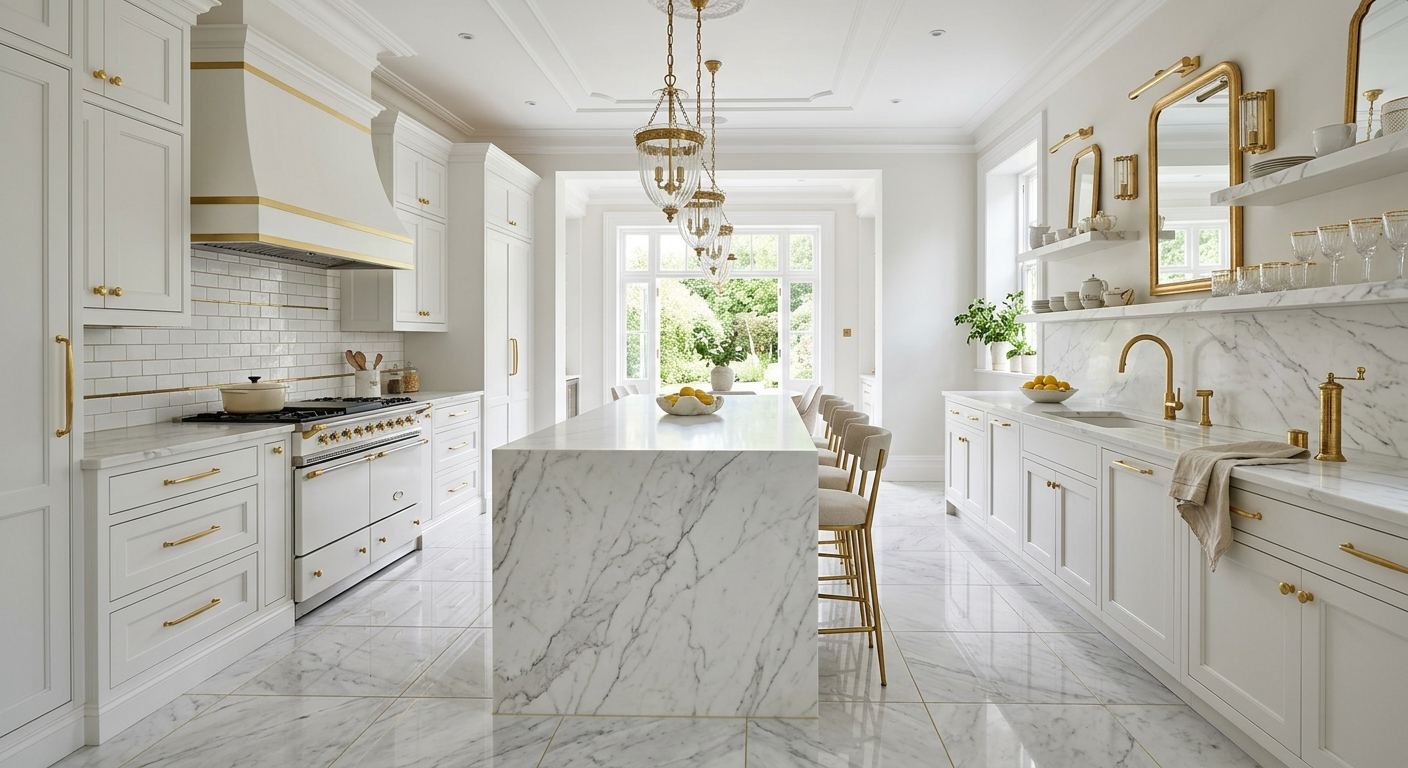
Kitchen renovation options and costs in King East
Kitchen renovations in King East, Ontario are often driven more by local home values than by day-to-day weather. With a small King East population of 2,040 (Statistics Canada, 2021 Census), projects tend to be carefully planned, and homeowners usually want finishes that match how buyers view the Toronto market. In higher-value parts of the broader Toronto economic region, many owners invest around 8–15% of their home’s value back into the kitchen—so the budget commonly stretches into custom cabinetry, quartz, and upgraded appliances rather than basic upgrades. Even though King East is closer to the “value-minded” end of the GTA, the demand for modern kitchens in nearby growth corridors keeps contractor availability strong, but it can also push labour pricing when multiple trades are booked at once.
Toronto’s market also affects timing: as new listings turn over, design lead times (especially for cabinetry and stone fabrication) can add weeks to the schedule, and that influences the total cost because your project may require interim protection, site management, and rescheduling of trades. Climate plays a smaller role in cost than many people expect, but local freeze–thaw cycles and humidity swings can amplify the importance of proper ventilation, caulking, and moisture-resistant cabinet construction—especially around sinks, dishwasher areas, and any exterior-wall kitchen sections. If you’re working in an older home stock area, you may also see extra prep for electrical and subfloor conditioning.
Below are realistic cost ranges homeowners typically see for common renovation tiers in King East, so you can compare quotes apples-to-apples.
| Renovation Tier |
What's Included |
Typical Duration |
Price Range |
| Cosmetic refresh (paint, hardware, new appliances only) |
Cabinet paint or refinishing, new hardware, appliance replacement (no major plumbing/gas moves), basic caulking and tune-ups |
3–7 days |
$6,000–$18,000 |
| Mid-range full renovation (new cabinets, counters, sink, tile) |
New semi-custom or stock cabinets, quartz or good laminate countertops, sink and tap, backsplash tile, standard under-cabinet lighting (if wiring is already present) |
3–5 weeks |
$25,000–$55,000 |
| High-end full renovation (custom cabinets, stone counters, island) |
Fully custom millwork, stone countertops (quartz premium or natural stone), island build, upgraded appliance package, full backsplash (tile to ceiling where desired) |
5–9 weeks |
$70,000–$90,000 |
| Cabinet refacing only (new doors + drawer fronts, same boxes) |
New door/drawer fronts, new hardware, fresh interior paint where needed, matching panels, optional new backsplash |
1–3 weeks |
$8,000–$28,000 |
| Countertop swap only (laminate to quartz or stone) |
Template, removal of old top, new countertop install, sink cut-out adjustments (if size/fixtures change), edge profile upgrade |
4–10 days |
$3,000–$15,000 |
| Backsplash tile installation only |
Tile removal (if needed), cement board/tape at required areas, tile install, grout/seal, clean-up |
3–8 days |
$2,000–$10,000 |
Prices are estimates only and vary by project scope, site access and material selection.
What affects the price of kitchen renovation in King East
Even when homeowners ask for the “same kitchen,” quotes across Toronto and Ontario can swing by 30–50% because the price is made up of several moving parts: cabinet tier, countertop material, trade scheduling, and whether you’re changing the layout or services. In practice, the finish tier drives most of the variance, because labour is only part of the total—materials and fabrication are often the deciding cost. In higher-value economic pockets around the GTA, buyers tend to default to quartz or stone counters and semi-custom cabinetry, since those upgrades are easier to justify at resale. In more price-sensitive areas, laminate and stock cabinets are common to protect the budget and still refresh the look.
Layout changes are the most unpredictable cost in any King East renovation. Removing a wall, adding an island, or relocating a gas line or plumbing supply can require additional framing, electrical work, venting updates, and longer coordination between trades—so a modest-looking idea can shift the project into a higher band quickly. For example, if you keep the layout and stay mid-range, you might land in the $25,000–$55,000 band. If you expand the project with an island plus service relocations and premium surfaces, you can push toward the high-end $70,000–$90,000 territory.
Concrete King East examples that commonly raise or lower cost: (1) older homes may have outdated electrical panels or undersized circuits, so adding an island or under-cabinet lighting can require a larger electrical scope; (2) kitchens on exterior walls can feel the effects of moisture from winter condensation, increasing the need for proper insulation/air sealing and better ventilation detailing; and (3) if your existing tile floor is uneven, floor levelling or substrate replacement can add labour even when cabinets are “simple.”
| Price Factor |
Why It Matters |
Cost Impact |
| Cabinet tier — stock vs. semi-custom vs. fully custom millwork |
Higher tiers include better hardware, door styles, fit/finish options, and more interior configuration |
Small projects can move from mid-range into high-end quickly; often the #1 line-item driver |
| Countertop material — laminate vs. quartz vs. granite vs. stone |
Materials vary in cost, edge profiles, fabrication complexity, and installation labour |
Can shift your budget by several thousand dollars; premium stone increases template and install time |
| Layout change — wall removal, island add, plumbing/gas move |
Changes trigger new framing, service routing, inspections, and more coordination |
Typically the biggest unpredictability; can add days/weeks and thousands in trade work |
| Appliance package tier — builder vs. mid-range vs. pro-grade |
Pro-grade appliances often require cabinetry tolerances, venting upgrades, and different electrical/gas needs |
Can add a noticeable premium even when cabinet and counter choices stay mid-range |
| Flooring — refinish existing vs. full replacement |
Restoring a damaged subfloor or replacing throughout changes demolition and install time |
Refinish tends to keep costs down; full replacement adds substrate, underlayment, and labour |
| Backsplash — ceramic tile vs. marble vs. full-height slab |
Higher-end materials increase cutting complexity, sealing, and risk of rework |
Small-looking area can still add thousands when going full height or premium stone |
| Electrical — new circuits for island, under-cabinet lighting |
New circuits and lighting often require licensed work and sometimes panel upgrades |
Moderate-to-high impact; scope is hard to estimate without an on-site assessment |
| Permit fees and licensed trade requirements |
Work that requires permits adds administrative steps and scheduled inspections |
Costs vary by scope; inspections and re-visits can add both cost and timeline risk |
Permits & regulations in Ontario
In Ontario, many common kitchen refresh tasks do not require permits—for example, a cabinet swap with no moving of plumbing or gas lines, and a countertop replacement where you’re not altering the underlying plumbing, drains, or venting. However, permits become important when you change the “services” or structure. Moving plumbing supply or drain lines, relocating a gas stove or changing the way a range hood vents, removing a load-bearing wall, and adding new electrical circuits (such as powering an island, adding dedicated outlets, or upgrading lighting where circuits don’t exist) typically require permits and licensed trades.
Because King East homeowners often renovate older housing stock, it’s worth being precise about responsibility: confirm in writing what permits your contractor will pull, who provides licensed labour (gas fitter and electrician), and which trade is responsible for inspections. Gas work must be done by a licensed gas fitter, and electrical work by a licensed electrician; both generally require inspections. Always avoid assumptions—permit responsibility belongs in the contract, not in a verbal promise.
To verify a contractor in Ontario step-by-step: (1) Ask for their licence details and check the contractor’s presence on the appropriate Ontario registry/verification route; (2) Request a current certificate of insurance and confirm it lists your work address (liability coverage) and is not expired; (3) Ask for WSIB/WCB clearance for the workers—then look for a clearance letter or documentation provided at time of booking; (4) For any gas or electrical scope, request the individual licensed trade information for that specific work package, not just the general contractor’s name.
Cabinets, countertops and layout decisions in King East
The three biggest decisions in a King East kitchen renovation are cabinet tier, countertop material, and layout changes. Start with cabinet tier: stock cabinets are the fastest and typically the cheapest, semi-custom cabinets are the most popular balance for GTA resale expectations, and custom cabinets deliver the best fit for awkward corners, ceiling heights, and specific storage needs. Next is countertop material. Laminate is budget-friendly and can look great in the right colour pairings, but it’s less forgiving to heat and impacts. Quartz engineered countertops are a common “sweet spot” for families because they’re durable, stain-resistant, and consistent in look. Natural stone (granite or marble) is more temperature- and maintenance-sensitive and often costs more because of fabrication and finishing.
Finally, layout. Open-concept wall removal, island additions, and plumbing or gas relocation are the decisions that most often justify higher budgets—when the space gain actually improves day-to-day flow and buyer appeal. In the Toronto resale market, a kitchen that feels brighter and more functional (without awkward circulation) tends to hold value. In contrast, “premium” surfaces alone can underperform if the layout still restricts movement or hides storage.
Climate-wise, King East’s winter freeze–thaw cycles and indoor humidity swings make ventilation and moisture management important. Where kitchens sit on exterior walls, we commonly plan for proper sealing and durable materials around sinks and dishwasher bays. As a dollar example: if you’re choosing between standard laminate and quartz, the upgrade can add several thousand dollars—but it’s often justified when you’re also doing cabinet installs in a mid-range budget (around $25,000–$55,000), because the paired upgrade helps the kitchen “read” premium to buyers, not just functionally better. If you’re staying purely cosmetic, laminate may be the better ROI; quartz usually makes most sense when cabinets and layout are already being refreshed.
| Option |
Durability |
Maintenance |
Best For |
Price Range |
| Stock cabinets (big-box) |
Good day-to-day durability; limited sizing flexibility |
Low maintenance; rely on proper leveling and sealed edges |
Fast timelines and budget-focused refreshes |
$8,000–$25,000 |
| Semi-custom cabinets (local dealer) |
Very durable construction with better storage options |
Low to moderate; keep hardware aligned with normal use |
Most King East homeowners targeting strong resale appeal |
$18,000–$45,000 |
| Custom cabinets (local millwork shop) |
Best durability and fit; handles odd layouts well |
Low maintenance; higher-quality finishes and hardware |
Full custom kitchens with islands and built-in features |
$35,000–$70,000 |
| Laminate countertop |
Moderate durability; can mark from heat and impact |
Easy to clean; avoid prolonged heat exposure and heavy gouges |
Budget-conscious projects keeping the look modern |
$3,000–$8,000 |
| Quartz engineered countertop |
High durability; resistant to staining and daily wear |
Low maintenance; wipe clean, avoid abrasive pads |
Busy households and homeowners prioritizing a premium feel |
$6,000–$14,000 |
| Granite / natural stone countertop |
Very durable surface; unique patterning with natural variation |
Moderate—often requires periodic sealing (varies by stone) |
Premium look with a more “natural” aesthetic |
$8,000–$15,000 |
| Butcher block countertop |
Durable but can dent; sensitive to water exposure if unsealed |
Higher maintenance—regular oiling and careful moisture control |
Farmhouse/warm styles and kitchens used lightly or with routine care |
$5,000–$12,000 |
| Marble countertop |
Luxurious but less forgiving to etching; can etch with acidic spills |
Higher maintenance—seal and clean carefully to preserve finish |
High-end aesthetics where the kitchen is more lifestyle than workplace |
$10,000–$18,000 |
How to choose a kitchen renovation contractor in King East
Choosing a contractor in King East starts with proof, not polish. In Ontario, verify licensing where applicable and confirm liability insurance and WSIB/WCB coverage before any work begins. For insurance, ask for a certificate of insurance that’s current, includes your project address or at least the declared work location, and lists general liability (and any other coverage they carry for subcontractors). For WSIB/WCB, request clearance documentation and confirm it covers the workers who will be on site; clearance letters are typically provided when you ask. If a contractor won’t share documents early, treat that as a red flag.
Get 2–3 itemised written quotes—not lump sums. You want a breakdown that separates labour from materials, and that clearly lists allowances for cabinets, countertops, tile, plumbing/electrical scope, demolition, waste disposal, and any permit-related admin. Read the scope line-by-line: what’s excluded? Are appliances included or allowance-based? Is disposal and protection for flooring included? Is drywall repair included after plumbing/electrical access? Clear scopes reduce change orders later.
Warranty matters too. Ask for workmanship warranty length in writing, plus the manufacturer warranty details for cabinets and countertops. Confirm whether warranties are transferable if you sell within the warranty period. For payments, never agree to pay more than 10–15% upfront; hold back a portion until the job is complete and deficiencies are corrected. Finally, request a start date and a completion estimate in writing, tied to lead times for cabinetry and stone—those lead times often drive scheduling in the GTA.
- Confirm the contractor’s insurance certificate is current and matches your project location.
- Ask for WSIB/WCB clearance documentation for the workers who will perform the renovation.
- Require an itemised quote with labour and material allowances broken out by trade and task.
- Verify permit responsibility in the contract for plumbing, gas, electrical, or structural changes.
- Ensure demolition, waste haul-away, and site protection (flooring/entries) are included or listed.
- Check that electrical scope includes outlet and lighting counts, not just “new lights.”
- Demand a detailed cabinet installation scope (shimming, mounting method, fillers, soffits, hardware).
- Confirm countertop template and install responsibilities, including sink/cooktop cut-out details.
- Ask how they handle delayed cabinet or stone fabrication—what costs or schedule shifts apply?
- Get warranty terms in writing: workmanship coverage and product/manufacturer warranty details.
- Use a payment schedule that keeps 10–15% (or more) as a holdback until punch list completion.
- Require a written timeline with inspection and trade sequencing noted (plumbing/electrical prior to closure).
Red flags in King East: (1) quotes that only show a single lump sum with vague inclusions, (2) reluctance to provide insurance/WSIB/WCB documentation up front, (3) missing permit language when plumbing/gas/electrical changes are proposed, (4) no written warranty terms beyond “it’s fine,” and (5) pressure to pay large deposits before ordering cabinetry or confirming measurements.
Frequently asked questions — kitchen renovation in King East
How do I choose a kitchen contractor in King East?
Start by verifying Ontario compliance and paperwork. For any King East project that includes electrical or gas changes, you should ensure the work is done by the properly licensed trades, and you should ask the contractor for their insurance certificate and WSIB/WCB clearance documentation before the first deposit. Next, request 2–3 itemised written quotes (labour plus materials allowances) so you can compare apples-to-apples. Avoid “too-good-to-be-true” pricing that doesn’t include demolition, waste disposal, permit responsibility, and electrical/plumbing scope. Finally, check warranty terms: workmanship warranty duration, product/manufacturer warranty details, and whether warranties are transferable if you sell. If you’re budgeting a full renovation, confirm whether your scope aligns with realistic bands such as $25,000–$55,000 for mid-range or $70,000–$90,000 for higher-end builds.
What order do kitchen renovation steps happen in?
In most King East renovations, the sequence is set to protect your new finishes and avoid rework. Typically, demolition comes first, followed by rough-ins: electrical (new circuits, outlets, under-cabinet lighting) and plumbing/gas work if you’re relocating fixtures. Once rough-ins are signed off by inspection where required, contractors move to framing adjustments and drywall repair as needed, then move on to cabinets: leveling, mounting, and installation are done before countertop work. After cabinets are solid, countertops are templated and installed, and then backsplash tile is completed. Flooring and painting usually happen after the rough-in stages but before final detailing, depending on your flooring type. This ordering matters for frost and humidity swings too—ventilation and sealing around the sink and dishwasher zones are finalized before final trim, so moisture doesn’t get trapped behind new surfaces.
Can I live at home during a kitchen renovation in King East?
Often yes, but it depends on how invasive the scope is. A cosmetic refresh (paint, hardware, and some appliance swaps) usually allows you to stay in the home with minor disruption. For a mid-range full kitchen, you can still live at home in many King East households, but you’ll likely have a temporary cooking setup and limited access to the sink area until plumbing and countertop install is complete. High-end projects with island builds, more complex stone, and added electrical/plumbing typically require more staged work and longer timelines, so daily living disruption can be greater. Contractors usually protect floors and create a workable path through the home. If the renovation involves permits and trade coordination, you may experience a few “wait days” while inspections are scheduled. Plan for that and confirm in writing when the kitchen becomes usable again, especially if you’re targeting a $25,000–$55,000 mid-range schedule.
Should I renovate my kitchen before selling in King East?
It depends on your current condition, timeline, and how much value you expect the buyer to pay for the update. In King East and the broader Toronto market, kitchens are a major decision factor, so a clean, modern finish often helps. That said, renovations are most effective when the layout and finishes align with what buyers expect at your price point. If your kitchen is dated but structurally sound, a targeted refresh can be smarter than a full tear-out. If you’re considering a full renovation, mid-range projects around $25,000–$55,000 can improve buyer confidence, especially when you pair cabinets and countertops with durable, low-maintenance materials like quartz. Higher-end budgets ($70,000–$90,000) are best reserved for homes where buyers already expect premium finishes and where the renovation will match the overall property value. Your contractor should help you estimate what changes will be most visible during showings.
What's the most popular kitchen style in King East right now?
In King East, the most common “safe bet” style buyers respond to is a modern transitional look—clean lines, shaker-style or slab-front cabinetry in warm greys, whites, or soft neutrals, and countertops that read premium without being overly fussy. Quartz continues to be a popular choice because it stays consistent in appearance and handles everyday spills well. Many homeowners also pair that with a subtle backsplash pattern (often ceramic tile) and under-cabinet lighting for a bright, high-end feel. Where budgets allow, semi-custom cabinets are common because they deliver better storage planning (wider drawers, improved pantry solutions, and sensible corner storage), which matters for families and resale. If you’re working in a mid-range band such as $25,000–$55,000, you can still achieve a premium look by focusing your spend on cabinet fit, quartz edges, and a well-executed backsplash rather than overspending on only one element.
How do I know if I need to update my kitchen plumbing in King East?
You don’t always need full plumbing replacement, but you should plan for updates when you see certain warning signs or when you’re changing the layout. In older King East homes, common triggers include recurring leaks under the sink, slow drains, corroded shutoff valves, brittle supply lines, or dishwasher connection issues that don’t fully resolve with adjustments. If you’re relocating the sink, adding an island with new plumbing, or changing appliance connections, you’ll likely need new supply/drain routing and should expect permits and licensed trade involvement for the plumbing work. Plumbing scope can also affect timing: rough-ins happen early and must be tested before drywall and cabinets are closed in. Ask your contractor to assess valves, drains, and water pressure early and to include the required licensed work in your written scope; this helps prevent surprise change orders that can move a project out of a target band such as $25,000–$55,000.