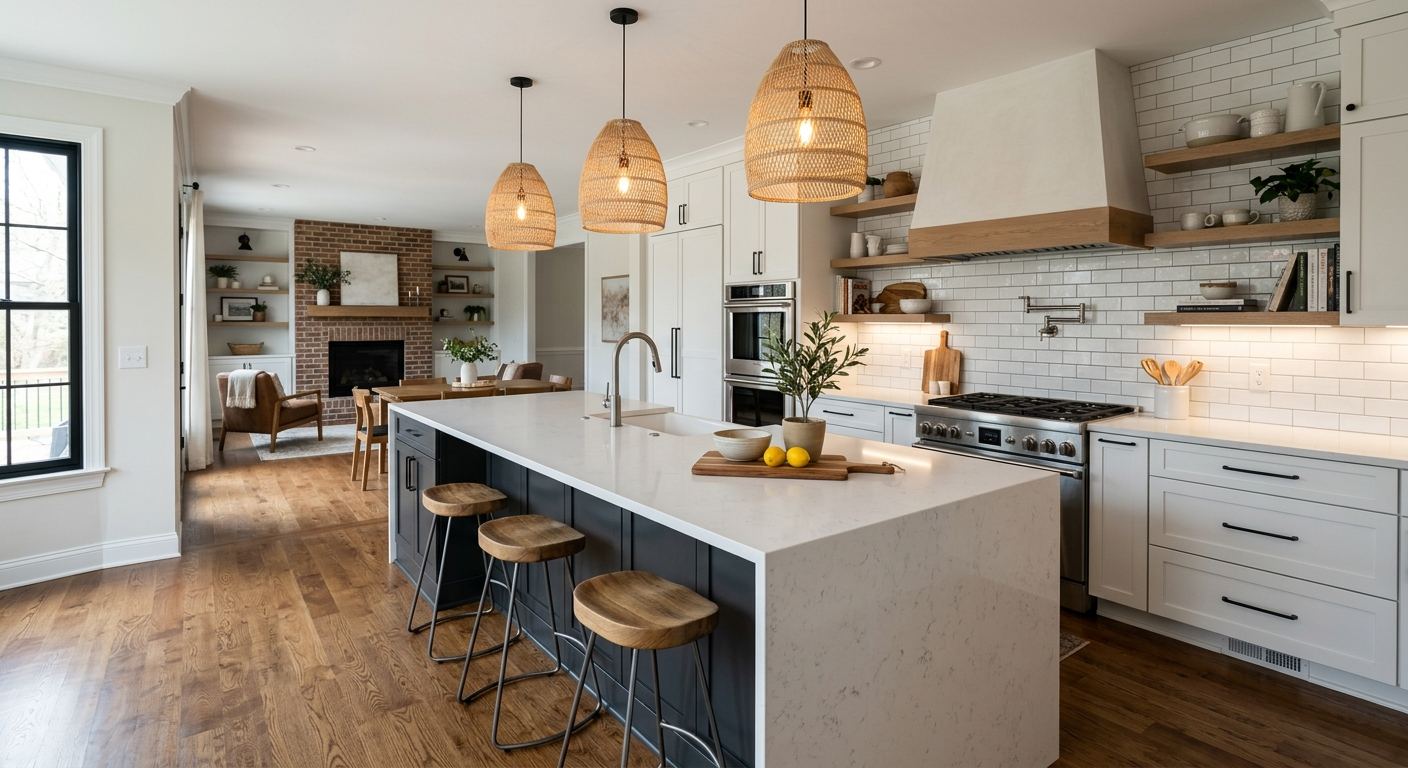
Kitchen renovation options and costs in Austin Heights
Kitchen renovation in Austin Heights comes down to which level of finish you want, and that choice is strongly tied to what buyers will pay across the Lower Mainland–Southwest. With a population of 3,340 (Statistics Canada, 2021 Census), Austin Heights is small enough that contractors often rely on established supplier reps and proven installation crews, which can help scheduling stay tight once materials are selected. At the same time, the surrounding Metro Vancouver market is value-driven, and that typically means homeowners plan for resale: renovations often skew toward durable, easy-care surfaces rather than “cheap upgrades.” (Statistics Canada, 2021 Census is also the source used for local demographic context.)
In the Lower Mainland–Southwest, costs are less about harsh weather and more about demand and expected finish level. British Columbia’s coastal climate can still influence planning—higher humidity can affect paint curing and the need for proper ventilation during demolition and cabinet installation—but it doesn’t usually make labour itself wildly different. What does swing prices is whether you’re doing a cosmetic refresh versus a full rebuild, and whether you’re selecting stock, semi-custom, or custom cabinetry. Labour availability can also vary seasonally as trades move between Surrey, Abbotsford, and parts of Burnaby, so early design decisions and material ordering matter. If you’re in the Den/Serpentine area of Austin Heights (near the busier commuter corridors), appliance and cabinet installers are especially in demand due to the volume of mid-range family remodels.
Use the tiered guide below as a starting point, then we’ll break down what affects pricing and permits so your quote makes sense before you sign.
| Renovation Tier |
What's Included |
Typical Duration |
Price Range |
| Cosmetic refresh (paint, hardware, new appliances only) |
Cabinet paint or recoat (where applicable), new hardware, appliance swap (no plumbing/gas moves), minor lighting refresh, basic cleaning/prep |
5–10 working days |
$8,000–$18,000 |
| Mid-range full renovation (new cabinets, counters, sink, tile) |
New semi-custom cabinets, quartz or similar counters, sink and faucet swap, backsplash tile, under-cabinet lighting option, flooring or tile updates (scope-dependent) |
3–6 weeks |
$40,000–$75,000 |
| High-end full renovation (custom cabinets, stone counters, island) |
Custom millwork, stone counters (quartz slab or natural stone), island with upgraded finishes, expanded tile, premium hardware, possible layout changes (often) |
6–12 weeks |
$85,000–$120,000 |
| Cabinet refacing only (new doors + drawer fronts, same boxes) |
Replace doors and drawer fronts, new hardware, refinish/coat existing boxes (as condition allows), basic prep and installation |
1–2.5 weeks |
$8,000–$28,000 |
| Countertop swap only (laminate to quartz or stone) |
Remove old laminate, template, install new quartz/stone, new sink cut-out (if needed), caulking and finishing |
3–10 working days (plus lead times) |
$5,000–$12,000 |
| Backsplash tile installation only |
Surface prep, waterproofing where needed, tile supply (scope-dependent), cutting around outlets/switches, grout/seal and finishing |
3–7 working days |
$1,500–$6,000 |
Prices are estimates only and vary by project scope, site access and material selection.
What affects the price of kitchen renovation in Austin Heights
Homeowners in Austin Heights can see the same kitchen scope priced 30–50% differently across the Lower Mainland–Southwest and other parts of British Columbia. In the Lower Mainland, the cost pressure is usually tied to higher home value expectations and faster “turnover” demand—more buyers want quartz/stone looks and tighter cabinet fit—so finishes and custom cabinetry are more common. Across BC, labour availability and supplier lead times also differ, and that affects how contractors plan crews, scheduling, and procurement. Climate plays a smaller role in cost than people expect: the Lower Mainland’s coastal humidity can affect curing times and the need for careful drying after demolition, but it doesn’t typically replace a main driver like cabinetry tier or layout complexity.
In higher-value Lower Mainland–Southwest pockets, homeowners often default to quartz or stone counters and semi-custom cabinetry because the renovation cost is easier to recover at resale. In more modest markets, laminate and stock cabinets dominate because they offer the best ROI when you’re trying to refresh quickly. Regardless of finish tier, layout changes tend to be the biggest unpredictable cost: removing a wall, adding an island, or moving a gas line or plumbing is where contractors’ time and licensed trade requirements expand.
Two examples from kitchens I’ve built around Austin Heights: (1) A “simple” counter swap can balloon if the old counters don’t have correct substrate support—correcting it can add $1,000–$3,000. (2) Adding an island often pushes a mid-range project toward a high-end timeline because the electrical and plumbing scope is treated as a separate trade package; it’s also common to see electrical and under-cabinet lighting added in tandem.
That’s why a practical mid-range renovation can land near the $40,000–$75,000 band, while custom cabinets and stone counters with an island commonly move into the $85,000–$120,000 range.
| Price Factor |
Why It Matters |
Cost Impact |
| Cabinet tier — stock vs. semi-custom vs. fully custom millwork |
Pricing changes with build quality, fit/finish, door style options, and whether components are made-to-measure |
Typically $8,000–$55,000 of the total, depending on kitchen size and tier |
| Countertop material — laminate vs. quartz vs. granite vs. stone |
Material cost, thickness, edging, and fabrication tolerances affect both labour and install time |
Often $3,000–$12,000 for install/swap scope alone |
| Layout change — wall removal, island add, plumbing/gas move |
Trade coordination and building changes increase site time, inspection steps, and material staging |
Commonly $5,000–$30,000+ depending on what moves |
| Appliance package tier — builder vs. mid-range vs. pro-grade |
Electrical requirements, venting, dimensions, and brand-specific installation notes vary |
Often $2,000–$15,000 swing versus a base package |
| Flooring — refinish existing vs. full replacement |
Whether floors are protected and patched or fully replaced changes demo, labour, and waste disposal |
Typically $1,000–$8,000 depending on flooring type |
| Backsplash — ceramic tile vs. marble vs. full-height slab |
Material weight, pattern matching, and waterproof detailing drive complexity |
Often $1,500–$6,000 for tile scope |
| Electrical — new circuits for island, under-cabinet lighting |
Islands usually require dedicated power, task lighting, and sometimes additional outlets |
Often $1,500–$6,000 in typical upgrades |
| Permit fees and licensed trade requirements |
Permits/inspections are required for specific work, and licensed trades cost more than handyman tasks |
Varies by scope, commonly $500–$3,500+ plus trade pricing |
Permits & regulations in British Columbia
In British Columbia, many kitchen “swap” jobs are straightforward and typically do not require permits. Cabinet and countertop swaps—when you keep existing plumbing and gas connections in place—usually fall into the category of work that can be completed without permits, provided you’re not changing the structural or services layout. However, permits and licensed trades are commonly required when you move plumbing supply or drain lines, relocate gas (for example a stove/range or a gas range hood connection), remove a load-bearing wall, or add new electrical circuits (like power for an island or dedicated lighting circuits). Gas work must be done by a licensed gas fitter, and electrical by a licensed electrician; both trades require appropriate inspections.
Here’s how a homeowner in Austin Heights can verify the contractor’s responsibility step-by-step. First, ask what permits (if any) will be required for your exact scope and whether the contractor pulls them or assigns the homeowner responsibility in the written contract. Next, confirm the contractor’s liability insurance certificate before work starts. Then, verify the relevant licensed trades: request the licensed electrician and gas fitter details (licence number or confirmation from the trade’s online verification tools) and ensure inspections are planned when permits apply. Finally, look for coverage details and ask how WSIB/WCB-equivalent coverage is handled for workers on site (request documentation or clearance letters where applicable). The key is that the scope of work in your contract should clearly state who obtains permits, who arranges inspections, and who is responsible for compliance.
Always confirm before signing—because the fastest way to protect your budget is making sure permit timelines and inspection lead times are already built into the schedule.
Cabinets, countertops and layout decisions in Austin Heights
Your three most consequential decisions in a kitchen renovation in Austin Heights are cabinet tier, countertop material, and whether you change the layout. (1) Cabinet tier: stock is typically the fastest and cheapest; semi-custom is the most common mid-range choice for better door styles and more flexible sizes; custom millwork gives the tightest fit and best storage planning but increases lead times and cost. (2) Countertops: laminate is budget-friendly, but it’s less forgiving to chips and heat; quartz and stone look premium and are easier for everyday use; butcher block adds warmth but needs sealing and more maintenance; marble is elegant yet more sensitive to etching and staining if you don’t manage it carefully. (3) Layout changes: removing an open-concept wall, adding an island, or relocating plumbing/gas is where cost and disruption grow—so you justify it by genuine space gain and better day-to-day flow.
In the Lower Mainland–Southwest resale market, buyers tend to expect a clean, “modern” finish at certain price points. That’s why a move from laminate to quartz can be a visually large upgrade with a manageable budget hit, while a full cabinet tier jump costs more but delivers better organization and fit. Coastal humidity in BC doesn’t force you into a particular material tier, but it does reward proper ventilation and careful drying so paints and finishes cure as intended—especially if you’re removing cabinets and opening up walls.
A concrete dollar example: if your plan is a counter swap only and you’re comparing laminate to quartz, you may see countertop install scope around the $3,000–$12,000 band depending on square footage and edges. That upgrade can be worth it in a $40,000–$75,000 mid-range renovation because it improves the “front-of-kitchen” look without triggering full cabinet rework. By contrast, adding an island and moving plumbing/gas can push the project toward the $85,000–$120,000 high-end band because electrical, trade coordination, and cabinetry adjustments all stack.
| Option |
Durability |
Maintenance |
Best For |
Price Range |
| Stock cabinets (big-box) |
Good for daily use, but limited sizes can affect overall fit |
Low to moderate; depends on finish quality |
Budget-conscious refreshes and quicker timelines |
$8,000–$20,000 |
| Semi-custom cabinets (local dealer) |
High durability with better door and storage options |
Low; keep hinges and slides tuned |
Most Austin Heights homeowners targeting mid-range resale appeal |
$18,000–$45,000 |
| Custom cabinets (local millwork shop) |
Excellent durability with tailored storage and precise alignment |
Low; proper installation matters more than the wood type alone |
Complex layouts, unique storage needs, and premium design |
$35,000–$70,000+ |
| Laminate countertop |
Moderate; can chip or scorch if misused |
Wipe clean; avoid heat and sharp impacts |
Fast refreshes where you want to stay budget-friendly |
$3,000–$6,500 |
| Quartz engineered countertop |
High; strong against staining and everyday wear |
Very low; gentle cleaners are usually sufficient |
Busy families wanting a “forever” surface look |
$6,000–$12,000 |
| Granite / natural stone countertop |
High; durable though performance varies by stone type |
Moderate; may require periodic sealing |
Premium look with unique variation in each slab |
$7,000–$14,000 |
| Butcher block countertop |
Medium to high with proper oiling and use |
Higher; routine oiling and careful cleaning are needed |
Warm, casual kitchens and light-duty prep preferences |
$5,000–$10,000 |
| Marble countertop |
Moderate; can etch and stain without careful care |
High; requires protective habits and tailored cleaning |
Low-traffic display-style kitchens or homeowners who manage maintenance |
$9,000–$18,000 |
How to choose a kitchen renovation contractor in Austin Heights
Choosing the right contractor in Austin Heights is mostly about verifying credentials and making sure your quote is detailed enough to price surprises out of the job. Start by confirming British Columbia licensing: request licence details for any trades involved and verify using the applicable online registries. Then check liability insurance—ask for a current certificate of insurance naming you as an additional insured where required by contract. For worker coverage, request proof of WSIB/WCB-equivalent coverage for their workforce or subcontractors and ask how clearance documentation is handled before work begins. A good contractor will provide these items without hesitation because they’re part of standard onboarding.
Next, get 2–3 itemised written quotes (not lump sums). The best quotes break labour and materials into categories: demo/disposal, framing/cabinet install, countertop/template/fabrication, tile and finishing, and any electrical/plumbing scope adjustments. Read the scope carefully: confirm what’s excluded (for example, drywall patching, floor refinishing, garbage hauling beyond normal debris, or permit pull fees). Also clarify whether disposal is included, who protects existing finishes, and what happens if you find concealed damage behind older cabinets—especially common in Vancouver-area housing stock built or renovated in phases.
Warranty matters too: ask for the workmanship warranty length and whether product warranties come directly from manufacturers and are transferable if you sell. For payment schedule, avoid large upfront payments—never more than 10–15% upfront, and request a holdback until punch-list completion. Finally, insist on a written start date and completion estimate that accounts for material lead times and inspection scheduling.
- Request insurance and coverage documentation before signing.
- Ask which permits will be required for your exact scope.
- Confirm whether disposal and protection of floors/counters are included.
- Get an itemised labour/materials breakdown (cabinet, install, template, tile, finishing).
- Verify who handles electrical and gas—licensed trades only for regulated work.
- Confirm countertop templating dates and slab/fabrication lead times.
- Get the cabinet lead time in writing (not “typical” estimates).
- Clarify change-order pricing and how revisions are documented.
- Ask how they handle moisture control during demo and cabinet install (BC humidity).
- Review warranty terms in writing and what’s covered for workmanship.
- Use a payment schedule with 10–15% max upfront and a holdback.
- Schedule weekly check-ins and a punch-list process at the end.
Red flags I commonly see in Austin Heights include: quotes that don’t list line items for cabinets/counters or disposal; vague wording like “plumbing adjustments included” without specifying what moves; contractors who won’t confirm who is pulling permits and scheduling inspections; requiring large upfront payments; and no written timeline that accounts for countertop templating and fabrication. If any of these show up, pause and re-check the scope before you commit.
Frequently asked questions — kitchen renovation in Austin Heights
What is the difference between a galley and open-concept kitchen?
In Austin Heights, a galley kitchen is typically a straight run of cabinets on two parallel walls, with the work triangle squeezed into a narrower space. An open-concept kitchen removes barriers so the kitchen blends into a living/dining area, which changes how people experience lighting, sightlines, and traffic flow. Cost-wise, open-concept layouts often increase renovation complexity because they may involve removing walls, reworking electrical, and—depending on plumbing/gas locations—sometimes relocating services. That’s why layout changes can move a project into higher bands more quickly than a countertop-only or backsplash-only update. If you’re aiming for a mid-range renovation, staying within the existing footprint can help keep budgeting closer to the $40,000–$75,000 range.
How do I get accurate kitchen renovation quotes in Austin Heights?
To get accurate quotes in British Columbia for your Austin Heights kitchen, you need a consistent scope package. Provide the same measurements, demolition notes, and appliance list to each contractor, and ask for itemised pricing (labour + materials) rather than a single lump number. Confirm whether permit pulling is included, whether disposal is included, and what’s excluded (for example drywall patching, floor refinishing, or any concealed damage allowance). For accurate pricing, insist on countertop templating timing and lead times included in the schedule—counter fabrication delays are a common source of budget creep. If one quote lands near the $85,000–$120,000 high-end band while another stays closer to $40,000–$75,000, compare cabinetry tier, electrical scope, and whether layout changes are being priced.
What's the best countertop material for a busy Austin Heights kitchen?
For most busy households in Austin Heights, quartz is the “safe” premium pick because it handles daily wear, resists staining better than many natural stones, and typically needs only routine cleaning. Laminate can work for budget refreshes, but it’s more vulnerable to chips and heat damage, so it’s often better in cosmetic updates rather than long-term family use. Granite is also durable, but the upkeep can be more variable depending on the specific stone and sealing needs. Butcher block is great for warm, casual kitchens but requires consistent sealing and protective habits, and marble needs careful maintenance to prevent etching and staining. If you’re targeting a mid-range renovation, quartz often delivers the look buyers expect without forcing you into the full premium custom rebuild cost.
How do I add an island to my Austin Heights kitchen?
Adding an island is usually a three-part coordination job: layout, cabinetry, and services. The layout side means confirming clearance for walkways, cabinet depth, and how the island changes traffic patterns between fridge/sink/cooking zones. The services side is where costs jump: islands commonly require new electrical for outlets and lighting, and sometimes plumbing or gas relocation depending on your design. In British Columbia, new electrical circuits require a licensed electrician, and any gas or plumbing changes may require permits and additional inspections. To keep the island addition within budget, consider an island plan that stays within the existing electrical/power path where possible, or limit plumbing complexity if you’re not committed to a sink in the island. This is one of the reasons island projects often move from mid-range toward the higher renovation bands.
How much does a kitchen renovation cost in Austin Heights?
Kitchen renovation costs in Austin Heights depend mainly on cabinetry tier, countertop choice, and whether you change the layout. As a starting point for British Columbia homeowners, a full renovation commonly falls in bands like $40,000–$120,000. For many practical mid-range projects—new semi-custom cabinets, counters, a sink, and tile—you’ll often see totals around $40,000–$75,000. If you move into custom cabinets, stone counters, and an island (plus additional electrical/plumbing scope), many projects land in the $85,000–$120,000 range. Cosmetic refreshes (paint, hardware, and new appliances only) are typically far lower, but once you add new cabinetry and counters, the project quickly becomes a full multi-trade job. Your final number will reflect material lead times and site access, so itemised quotes are essential.
How long does a kitchen renovation take in Austin Heights?
Timelines in Austin Heights usually come down to lead times for cabinets and countertops, plus how much plumbing/electrical work is included. A cosmetic refresh (paint/hardware/appliances only) is often around 5–10 working days. A mid-range full renovation with new cabinets and counters commonly takes 3–6 weeks once demolition, cabinet install, tile, and finishing are scheduled. High-end remodels with custom millwork and stone counters can be 6–12 weeks due to fabrication schedules and the added complexity of island builds and services changes. British Columbia’s coastal humidity can extend curing/finish steps if ventilation isn’t managed during the work. The best way to protect your timeline is to require a written start/completion estimate and a schedule that explicitly includes countertop templating and manufacturing lead time.