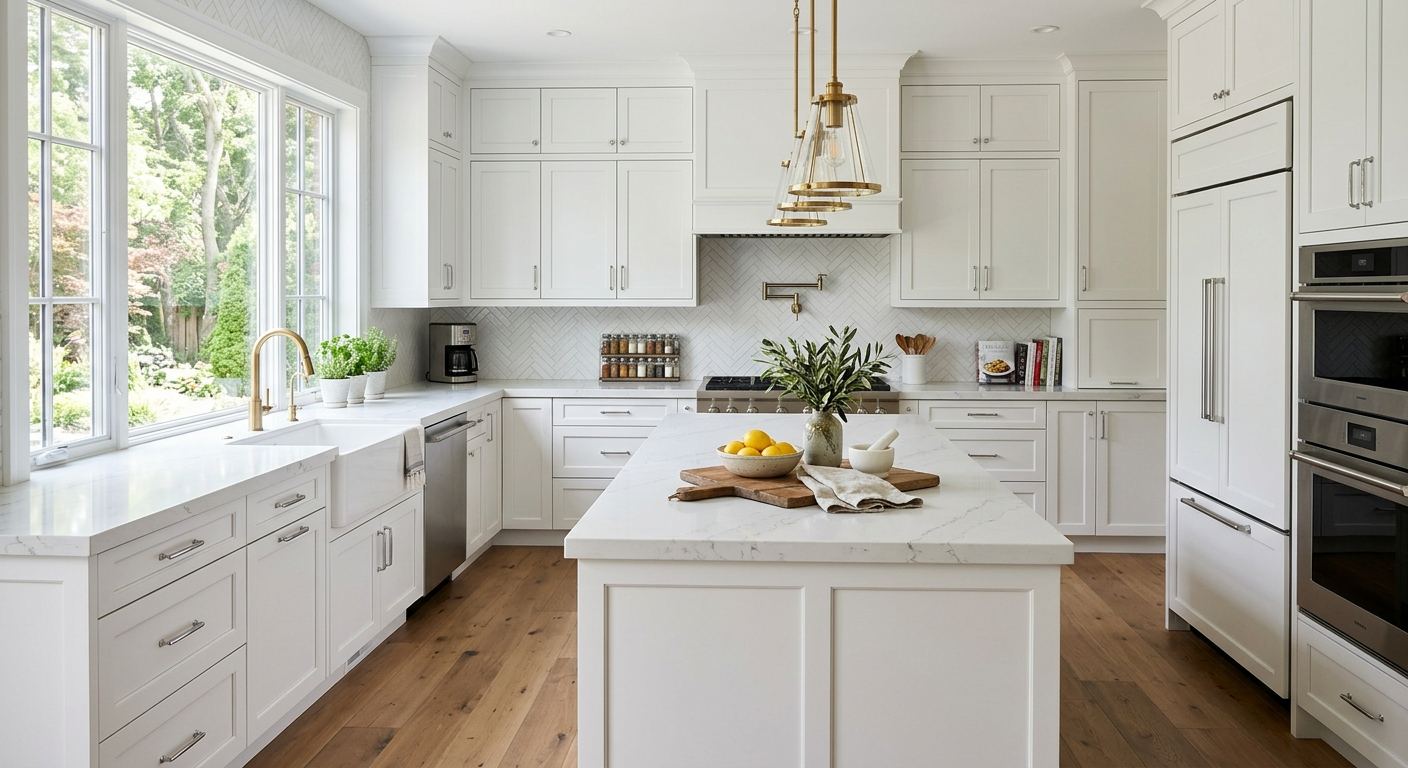
Kitchen renovation options and costs in South End
South End, British Columbia is a tight, neighbourhood-scale market where kitchen renovation decisions are usually driven more by home value and buyer expectations than by weather alone. With a small local population (2,475, Statistics Canada, 2021 Census), you’ll typically find a smaller pool of crews nearby, so schedule availability can influence pricing during peak spring and summer demand. In the Lower Mainland–Southwest, many homeowners also benchmark finishes against the broader Metro Vancouver market—expectations trend higher where households can afford more durable surfaces and made-to-fit cabinetry.
In our region, the climate impact is indirect: kitchens in coastal BC see higher humidity and frequent temperature swings, so material choices that resist swelling at seams (good cabinet box build, properly sealed countertops, and appropriate ventilation) reduce callbacks. At the same time, contractor availability and labour rates often affect quotes more than snow loads or freeze–thaw cycles. For example, around the South End waterfront and the flatter older-lot streets, renovations tied to open living layouts and updated ventilation are in steady demand because many homes are older and want better airflow and storage.
You can think of costs in “tiers.” A practical refresh (paint, new hardware, appliance swaps) stays closer to the lower end of the regional bands, while a full mid-range or high-end renovation rises quickly once cabinetry, counter material, and any layout plumbing or gas moves are included. Use the table below as a baseline, then we’ll break down what actually moves a quote up or down.
| Renovation Tier |
What's Included |
Typical Duration |
Price Range |
| Cosmetic refresh (paint, hardware, new appliances only) |
Paint cabinets/walls as specified, new pulls/knobs, appliance swap (same footprint), basic caulking and touch-ups |
5–10 business days |
$8,000–$20,000 |
| Mid-range full renovation (new cabinets, counters, sink, tile) |
Semi-custom cabinets, new countertop, sink and faucet swap, backsplash tile, selective flooring repair, disposal hook-up as needed |
3–6 weeks |
$40,000–$85,000 |
| High-end full renovation (custom cabinets, stone counters, island) |
Custom cabinetry and millwork, stone counters, island with electrical, upgraded backsplash (often slab look or premium tile), more complex layout and finishes |
6–12 weeks |
$85,000–$120,000 |
| Cabinet refacing only (new doors + drawer fronts, same boxes) |
Replace doors/drawer fronts, new trim, re-surface where possible, new hardware, minor adjustments if boxes are sound |
2–4 weeks |
$8,000–$35,000 |
| Countertop swap only (laminate to quartz or stone) |
Remove existing top, install new engineered stone/quartz or natural stone, standard backsplash allowance depending on scope |
3–7 business days |
$3,000–$12,000 |
| Backsplash tile installation only |
Prep and tile set, grout/seal as required, trim at edges, cleanup and caulking at change-of-plane |
3–8 business days |
$1,500–$6,000 |
Prices are estimates only and vary by project scope, site access and material selection.
What affects the price of kitchen renovation in South End
In the Lower Mainland–Southwest, you can see the same kitchen renovation swing by roughly 30–50% depending on the finish tier and what the homeowner expects to recoup on resale. It’s less about BC weather and more about the economics of the market: local home value and achievable household budgets tend to push kitchens toward semi-custom or custom cabinetry, quartz/stone counters, upgraded hardware, and more design-led layouts in higher-value pockets. In more modest scopes, laminate and stock cabinet systems often deliver better ROI because the work stays “cosmetic-forward” without opening walls or re-routing major services.
Climate does play a supporting role in South End because coastal humidity can exaggerate issues like cabinet swelling at exposed edges, grout discoloration, and countertop seam performance if ventilation isn’t right. That said, when you compare price bands, the biggest drivers are still cabinetry and layout changes. For example, a mid-range full renovation commonly lands around $40,000–$85,000, while high-end builds with premium stone and an island routinely move into the $85,000–$120,000 range once complexity and millwork increase.
Here are a few South End examples we see often: (1) older homes with dated ducting frequently need better range hood performance and electrical for under-cabinet lighting—small changes that cost more than expected; (2) narrow galley-style footprints can lower material waste, but relocating plumbing can add labour and rough-in time; (3) if the existing subfloor is uneven (common in older stock), levelling costs rise whether you choose laminate or quartz.
Across BC, labour availability is also cyclical. When popular trades are booked, timelines extend and change orders become more expensive to manage—so your quote should reflect a realistic build window, not best-case conditions.
| Price Factor |
Why It Matters |
Cost Impact |
| Cabinet tier — stock vs. semi-custom vs. fully custom millwork |
Custom boxes, upgraded internal organization, and made-to-fit carcasses reduce gaps but raise fabrication and install complexity |
Can move a full renovation by tens of thousands |
| Countertop material — laminate vs. quartz vs. granite vs. stone |
Material cost, edge profiles, and template accuracy all change install time and fabrication cost |
Typical countertop swaps range from $3,000–$12,000, and can climb with premium stone |
| Layout change — wall removal, island add, plumbing/gas move |
Structural changes and service relocations require more labour trades, more inspections, and more labour hours |
Usually the most unpredictable line item regardless of finish level |
| Appliance package tier — builder vs. mid-range vs. pro-grade |
Pro-grade models often need dedicated electrical, more ventilation, and tight clearances |
Can add budget strain even if the cabinetry is mid-range |
| Flooring — refinish existing vs. full replacement |
Kitchen renos expose subfloor and can reveal water damage; replacement avoids long-term squeaks and uneven transitions |
Refinish saves cost, while full replacement increases labour and disposal |
| Backsplash — ceramic tile vs. marble vs. full-height slab |
More intricate materials increase cutting complexity, labour time, and risk of visible seams |
Backsplash & tile typically run $1,500–$6,000 |
| Electrical — new circuits for island, under-cabinet lighting |
Additional circuits and lighting require licensed work, layout coordination, and inspection scheduling |
Adds measurable cost and can extend timeline |
| Permit fees and licensed trade requirements |
Permits and inspections are tied to scope; licensing prevents rework and reduces risk |
Often a small portion of total, but can trigger delays and higher labour rates |
Permits & regulations in British Columbia
In British Columbia, a simple cabinet and countertop swap typically doesn’t require a building permit: replacing existing cabinets/doors in the same footprint and installing a new countertop are usually considered a like-for-like improvement. Where permits and licensed trades become necessary is when you change building systems or structural elements. For a South End kitchen, that usually means moving plumbing supply or drain lines, relocating a gas appliance or modifying gas connections (including work tied to the range/range hood if gas is involved), removing a load-bearing wall, or adding new electrical circuits for an island, new outlets, or under-cabinet lighting.
Step-by-step, homeowners can protect themselves before work starts. First, ask the contractor for their provincial licence details for the trades involved (gas fitter for any gas work; electrician for any electrical circuits). Second, request a current certificate of insurance and confirm liability coverage for the specific job site scope. Third, for coverage related to workplace risk, ask what their workers’ protection coverage is for their employees (and whether they use subcontractors with their own clearance/coverage documentation). Then, ask the contractor to clarify who pulls permits—before you sign the contract—so responsibility and timelines are in writing.
Finally, make sure the scope clearly lists which tasks trigger permits and inspections, and confirm that inspections are scheduled so trades don’t get stranded mid-install.
Cabinets, countertops and layout decisions in South End
When you renovate in South End, the “three decision points” that most affect both your budget and your daily use are: (1) cabinet tier, (2) countertop material, and (3) layout changes. Cabinet tier sets the pace and the look. Stock cabinets are typically the fastest option and easiest to price because components are pre-made; semi-custom is the most popular mid-range choice because it balances cost with better fit for real-world walls and floors; custom cabinetry gives the highest accuracy and storage features but adds fabrication lead time and labour.
Countertop material is where homeowners feel the value difference immediately. Laminate is budget-friendly and practical, but in a coastal climate it relies heavily on edge detailing and seam sealing to resist moisture ingress. Quartz is a strong all-rounder: it handles everyday spills and humidity well and tends to look consistent over time. Granite and other natural stones deliver premium look and variation, while butcher block can be beautiful but needs more regular maintenance to protect against moisture and heat.
Layout is the biggest “justification” lever. Opening an older wall for a better flow or adding an island can make the space feel larger and more social—buyers notice—but moving plumbing or gas lines and reworking electrical can quickly erode savings. A common example: upgrading from laminate to quartz might be an incremental move inside a mid-range plan, but adding a plumbing relocation to serve an island can push you from a $40,000–$85,000 mid-range renovation toward the $85,000–$120,000 high-end band.
In the Lower Mainland–Southwest resale market, many buyers expect clean lines, durable surfaces, and functional lighting. If you choose wisely on tier and material while minimizing unnecessary service moves, you get the “wow” without the most expensive surprises.
| Option |
Durability |
Maintenance |
Best For |
Price Range |
| Stock cabinets (big-box) |
Solid for typical use; fit depends on your walls being relatively straight |
Low—cleaning and hardware checks; limited adjustments if boxes don’t align |
Fast timelines and budget-conscious updates |
$8,000–$25,000 |
| Semi-custom cabinets (local dealer) |
Good durability with better sizing and option variety |
Low—standard cleaning; hinges/soft-close hardware may need occasional adjustment |
Most South End renos that want a tailored look without full custom pricing |
$20,000–$55,000 |
| Custom cabinets (local millwork shop) |
Highest fit and build quality; best when walls are irregular or layout is complex |
Low—more time spent upfront means fewer long-term fit issues |
Design-heavy kitchens, islands, and difficult footprints |
$45,000–$90,000 |
| Laminate countertop |
Moderate durability; can chip at edges if impacted and needs careful seam sealing |
Low daily care; avoid prolonged standing water at seams and edges |
Refresh projects that keep plumbing and cabinetry unchanged |
$3,000–$6,000 |
| Quartz engineered countertop |
High durability; resistant to staining and daily wear |
Low—typical wipe-down; avoid harsh solvents that can dull finishes |
Most South End kitchens where resale-ready durability matters |
$6,000–$10,000 |
| Granite / natural stone countertop |
Very durable surface; good impact resistance and premium feel |
Moderate—may require periodic sealing depending on the stone |
Premium look with natural variation |
$8,000–$12,000 |
| Butcher block countertop |
Durable if maintained; vulnerable at seams if moisture sits |
Higher—regular oiling/sanding and immediate wipe-up of spills |
Warm, rustic styles and homeowners who’ll do maintenance |
$4,500–$9,000 |
| Marble countertop |
Premium but softer than many stones; can etch with acids |
Higher—needs careful cleaning and periodic sealing |
Design-led kitchens where you want a luxury look |
$9,000–$14,000 |
How to choose a kitchen renovation contractor in South End
Choosing the right contractor in South End starts with verification, not brochures. In British Columbia, confirm licensing for the trades that will touch regulated systems: gas work must be done by a licensed gas fitter, and electrical circuits by a licensed electrician. Ask for proof of liability insurance for the project (certificate of insurance showing job-site coverage), and request documentation for worker protection coverage for their employees and subcontractors (so you’re not left holding risk if there’s an incident). If any part of the scope includes gas or new circuits, don’t proceed until you can clearly match each task to the correct licensed trade.
Next, get 2–3 itemised written quotes. Not “lump sum” only—ask for labour and materials breakdowns by category (demolition, carpentry, electrical, plumbing, countertops/cabinetry supply, tile, ventilation, disposal). Read exclusions carefully: will they handle permit applications if needed? Is dumpster/disposal included? Are drywall repair and paint part of the scope, or is it billed separately?
Warranty matters in kitchens because moisture and movement show up later. Ask for workmanship warranty length, what manufacturers cover for cabinet hardware and countertop surface, and whether warranties are transferable to future owners (important for resale). Keep payment schedules conservative: never pay more than 10–15% upfront, and insist on a holdback until key milestones are complete. Finally, require a start date and completion estimate in writing so you can plan around contractor lead times for cabinetry and stone fabrication.
- Confirm which scope items require permits and which party pulls them.
- Verify gas fitter and electrician credentials match the tasks in your quote.
- Request certificate of insurance naming your project address and coverage limits.
- Ask for itemised labour/materials—not only product brand names.
- Confirm disposal/dumpster and jobsite protection (floors, stairs, entrances).
- Clarify demolition limits (what gets removed and what stays).
- Ensure drywall patching, sanding, primer and paint are explicitly included or excluded.
- Check cabinet installation details (shim/level strategy for older floors/walls).
- Ask how countertop templates are scheduled and who pays for remakes.
- Confirm tile scope: substrate prep, waterproofing (if used), grout/seal details.
- Ask about ventilation upgrades if you’re changing a range or layout.
- Lock in a realistic schedule with lead times for cabinets and stone.
Red flags we commonly see in South End: (1) quotes that won’t list line items for electrical/plumbing or leave permit responsibility vague, (2) very low pricing that assumes “existing conditions are fine” without an allowance for out-of-square walls or subfloor repair, (3) no written warranty terms for workmanship, (4) requesting large upfront deposits beyond 10–15%, and (5) “we’ll figure it out later” changes without change-order pricing in writing.
Frequently asked questions — kitchen renovation in South End
Can I live at home during a kitchen renovation in South End?
Often yes, especially for a refresh or a targeted scope where the layout stays intact. In South End, many homeowners remain in the home during cabinet installs, backsplash work, and countertop templates. The practical challenge is usually not dust—it’s access: kitchens are the main traffic path and older homes can have tighter hallways. If your renovation includes demolition down to studs, new plumbing, or electrical for an island, expect periods where the kitchen can’t be safely used. In those cases, plan for a temporary cooking setup (microwave, induction hot plate, and a dedicated kettle station) and confirm how the contractor will protect floors and contain dust. Budget-wise, a smaller scope like a countertop-only swap (often within the $3,000–$12,000 band) is typically the easiest to live through.
Should I renovate my kitchen before selling in South End?
Usually, yes—if the work moves the kitchen toward what buyers expect and your budget matches the finish tier of comparable homes. In the Lower Mainland–Southwest, buyers often respond to durable surfaces and a coherent layout, which is why quartz or stone counters and well-fitted semi-custom cabinetry are common “resale-friendly” choices. Since South End’s local population is small (2,475, Statistics Canada, 2021 Census), the best approach is to reduce project risk and aim for visible improvements that photograph well: updated hardware, refreshed backsplash, upgraded lighting, and functional storage. If you’re staying in the $40,000–$85,000 mid-range band, a full renovation can be a strong value play when it’s paired with clean lines and minimal service relocation. Avoid overspending on fully custom millwork unless the rest of the home supports that level and you’re confident the layout will stay.
What's the most popular kitchen style in South End right now?
Right now, the style most often requested in South End and across the Lower Mainland–Southwest is a modern transitional look: shaker-style or simple slab fronts, matte hardware finishes, and bright, easy-to-clean surfaces. Homeowners frequently pair semi-custom cabinetry with quartz countertops because it delivers a consistent appearance that holds up to coastal humidity conditions. Layout-wise, “open flow” is common—either a partial wall opening or better circulation between the kitchen and adjacent dining/living areas. Islands are popular when space allows, but many homes need a careful plan because moving plumbing or gas lines adds uncertainty and requires permitting in BC when services change. The takeaway: the “most popular” style is less about trendy colour and more about durable finishes plus a practical, light-filled layout.
How do I know if I need to update my kitchen plumbing in South End?
Look for symptoms first: slow drains, recurring leaks under sinks, corrosion at fittings, inconsistent hot-water pressure, or shutoffs that don’t fully stop flow. In older South End homes, plumbing updates are also common when you change the layout—like adding a dishwasher, moving the sink, or relocating water supply/drain lines for an island. Even if fixtures “work,” you may want to budget plumbing refresh if the contractor finds ageing lines during demolition. Plumbing changes in British Columbia are treated as regulated work and are typically where permits and licensed trades come into play when supply or drain routing is altered. If your scope is staying in the same footprint, you can often do fixture swaps without re-piping, keeping costs closer to the mid-range renovation band rather than triggering a larger service rework.
What is the difference between a galley and open-concept kitchen?
A galley kitchen is a long, narrow layout where counters and storage run along two opposing walls, creating an efficient but enclosed work zone. An open-concept kitchen blends the kitchen with adjacent living/dining space, usually by opening a wall (when structurally feasible) or using a layout that keeps sightlines open. In South End, both layouts exist in older housing stock, so the best choice depends on your daily routine and how much you can adjust services. An open concept often costs more when it requires electrical/plumbing changes, because new circuits, ventilation modifications, or plumbing relocation may need permits and licensed trades in BC. If you stay with a galley and only replace surfaces, costs can remain closer to refresh scopes; if you open walls and reconfigure services, budget for a full renovation—often $40,000–$85,000—and sometimes more.
How do I get accurate kitchen renovation quotes in South End?
Accuracy starts with scope clarity and site reality. Ask for 2–3 itemised quotes that break down labour and materials (cabinets, countertops, tile, electrical, plumbing, disposal, drywall/paint), not a single lump sum. Confirm what’s included for permits and whether the contractor pulls them if required—especially for any plumbing/gas moves or new electrical circuits, which are permit-driven in British Columbia. Provide clear measurements and include photos of existing conditions; if you can, schedule a site visit so the contractor can account for out-of-square walls, older subfloor conditions, and ventilation realities. Also ask how they handle allowances (for repairs, leveling, or unexpected electrical/plumbing findings). A well-formed quote should align with regional bands—cosmetic refreshes often sit below the mid-range, while full renovations typically land in the $40,000–$120,000 total range depending on cabinetry and stone choices.