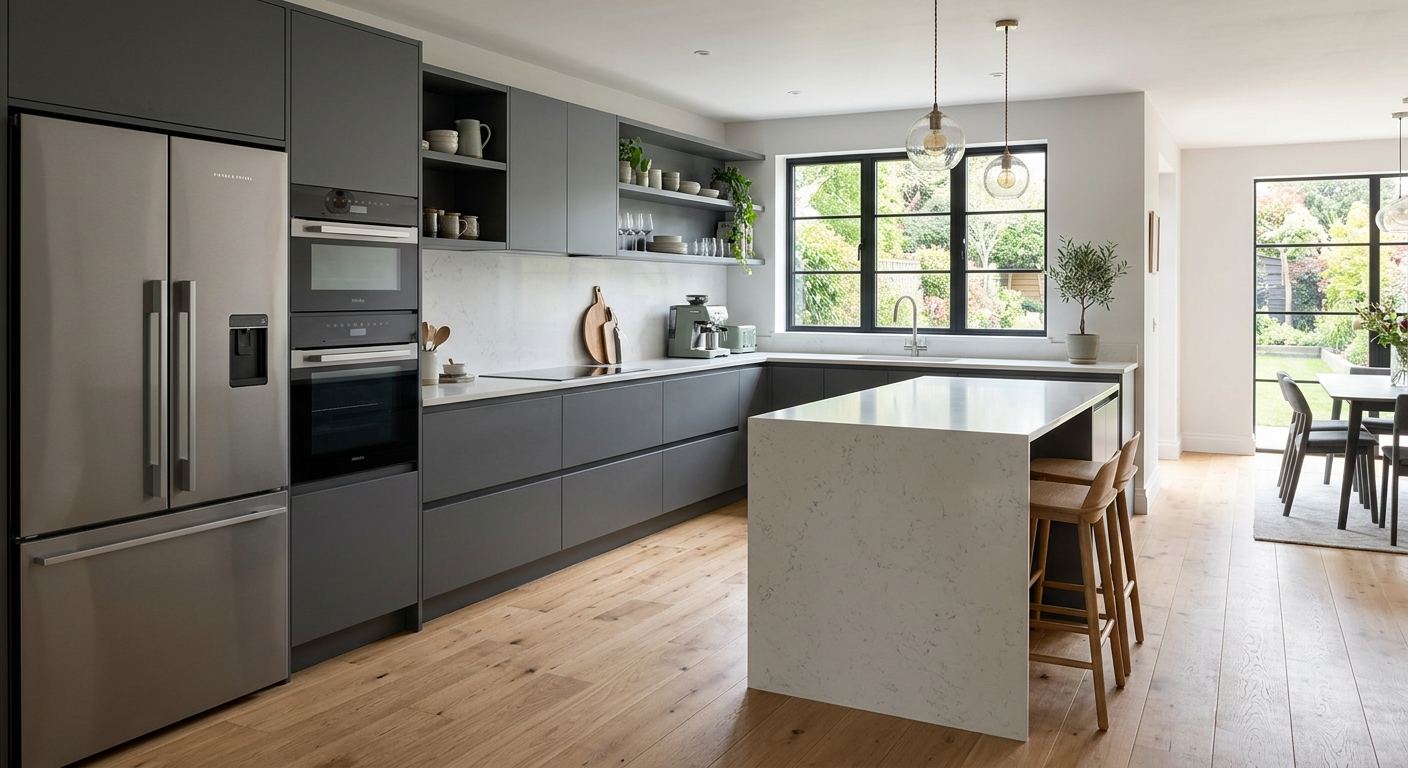
Kitchen renovation options and costs in Little Mountain
In Little Mountain, most homeowners start by asking what a “reasonable” kitchen renovation should cost, and the answer depends on which renovation tier you’re aiming for. With a small local population of 1,170 people (Statistics Canada, 2021 Census), you’ll notice trade work can be busier in the Lower Mainland–Southwest corridor during peak seasons, so scheduling can affect your labour pricing. That said, the biggest driver is usually how your home is valued and what finish level buyers will expect on resale—Lower Mainland–Southwest projects often skew higher-end because upgrades can be easier to recoup in higher-value pockets across the region (Statistics Canada, 2021 Census).
In this part of British Columbia, the climate influence is real but secondary: kitchens don’t see extreme freeze-thaw like interior BC. Instead, moisture control and ventilation matter most (especially with older venting that’s common in housing stock built before modern range hoods). On top of that, cabinetry and countertop choices are strongly shaped by market finish norms. Semi-custom or fully custom cabinetry with quartz or stone counters is common in higher-value areas of the Lower Mainland–Southwest, while more modest refreshes lean toward laminate and stock cabinets for better ROI.
In Little Mountain, demand is especially noticeable around the village centre and nearby rural lots where renovations need flexible scheduling and careful jobsite protection (driveways, narrow access, and staging space). Use the table below to compare realistic scopes, durations, and price ranges—then we can narrow it to your exact layout and finish tier.
| Renovation Tier |
What's Included |
Typical Duration |
Price Range |
| Cosmetic refresh (paint, hardware, new appliances only) |
Cabinet/trim paint or refinishing, new pulls/knobs, replace appliances, basic caulking/trim touch-ups, light electrical adjustments as needed |
1–3 weeks |
$8,000 – $22,000 |
| Mid-range full renovation (new cabinets, counters, sink, tile) |
New stock/semi-custom cabinets, new countertop, sink + faucet, backsplash tile, new/relocated lighting within existing circuit limits, flooring patching and cleanup |
4–7 weeks |
$40,000 – $75,000 |
| High-end full renovation (custom cabinets, stone counters, island) |
Custom cabinetry/made-to-fit millwork, stone counters (quartz/stone), island build, upgraded hardware and under-cabinet lighting, upgraded backsplash treatment, more complex layout and finishing |
7–12 weeks |
$85,000 – $120,000 |
| Cabinet refacing only (new doors + drawer fronts, same boxes) |
New door/drawer fronts, veneer panels where applicable, new hardware, interior re-lining where needed, sealing and adjustments; counters left in place (unless bundled) |
2–5 weeks |
$18,000 – $45,000 |
| Countertop swap only (laminate to quartz or stone) |
Remove and dispose of existing tops, install new countertop and sink cut-outs, basic re-caulking, coordinate with cabinet top condition |
1–2 weeks |
$10,000 – $28,000 |
| Backsplash tile installation only |
Surface prep, tile supply coordination, install backsplash, sealing/finishing at edges, grout and cleanup |
3–7 days |
$1,500 – $6,000 |
Prices are estimates only and vary by project scope, site access and material selection.
What affects the price of kitchen renovation in Little Mountain
In Little Mountain and across the Lower Mainland–Southwest, two quotes for the “same” kitchen can swing by roughly 30–50% once you look past the headline materials. In higher-value Metro Vancouver-adjacent areas, homeowners often budget for semi-custom or custom cabinetry, quartz/stone counters, upgraded hardware, and more complex layouts—so labour and materials rise together. In other British Columbia markets (and in more budget-aware refreshes), the same footprint may stay closer to laminate surfaces and stock cabinetry, keeping totals lower.
For Lower Mainland–Southwest specifically, home value and household income shape what finish tier becomes the default purchase decision far more than climate. Quartz or stone counters and semi-custom cabinetry are common because the renovation cost is more likely to be supported on resale. Where budgets are tighter, laminate or stock cabinets dominate because they deliver a noticeable visual upgrade without the cost of made-to-fit millwork. Either way, layout changes are the true cost wild card: removing a wall, adding an island, moving a gas line, or relocating plumbing can push work beyond the “materials only” part of a quote.
Here are concrete examples that commonly show up in Little Mountain jobs. First, older kitchens sometimes have venting that doesn’t align with modern hood sizes; when ducting needs adjustment, it becomes a bigger trades coordination item and can add several thousand dollars. Second, if your home has uneven subflooring or out-of-square walls, cabinet installation can require more shimming, rework, and longer install time—especially with semi-custom or custom cabinets. Third, kitchens with narrow staging access can slow crews down; that labour time shows up in tighter finish tolerances and more careful protective measures.
That’s why a “mid-range full renovation” band of $40,000 – $75,000 can become $85,000 – $120,000 quickly when you move from stock to semi-custom/custom millwork and add an island, stone counters, and lighting upgrades.
| Price Factor |
Why It Matters |
Cost Impact |
| Cabinet tier — stock vs. semi-custom vs. fully custom millwork |
Manufacturing complexity, fit/finish tolerance, and included components (soft-close, internal storage) |
Can add $15,000 – $50,000 depending on size and custom features |
| Countertop material — laminate vs. quartz vs. granite vs. stone |
Material cost, thickness, edge profiles, fabrication complexity, and install labour |
Typically $3,000 – $12,000 for install only, plus significant material spread |
| Layout change — wall removal, island add, plumbing/gas move |
More trades coordination, potential engineering/structural work, and service routing |
Often the biggest swing; commonly $5,000 – $40,000+ |
| Appliance package tier — builder vs. mid-range vs. pro-grade |
Power requirements, ventilation needs, and premium trim/specs |
Can add $3,000 – $15,000 before installation considerations |
| Flooring — refinish existing vs. full replacement |
Protection and patching effort, moisture tolerance under new cabinets |
May add $2,000 – $12,000 depending on condition and area |
| Backsplash — ceramic tile vs. marble vs. full-height slab |
Material weight, cutting complexity, and higher-end finishing details |
Typically $1,500 – $6,000, higher with premium slabs |
| Electrical — new circuits for island, under-cabinet lighting |
Licensed work, routing, and load planning |
Often $2,000 – $10,000 depending on scope |
| Permit fees and licensed trade requirements |
Required permits/inspections for specific changes; adds admin and compliance time |
Frequently $500 – $5,000+ plus potential schedule impact |
Permits & regulations in British Columbia
For homeowners in British Columbia, cabinet and countertop swaps are typically straightforward: replacing cabinets, swapping countertops, and updating a backsplash usually do not require a permit. However, once you change the plumbing, relocate a gas appliance connection, remove a load-bearing wall, or add electrical circuits, permits and licensed trades come into play. In practice, that means a cosmetic refresh or countertop-only project is usually simpler than a remodel that moves a sink, changes ducting, or adds an island with power.
Work that typically requires a permit includes moving plumbing supply or drain lines (sink relocation), relocating or modifying gas connections (stove/range and related venting), adding or altering electrical circuits (new outlets for an island, under-cabinet lighting tied into new runs), and any structural changes such as removing a load-bearing wall. Work that typically does NOT require a permit includes repainting cabinets/trim, installing new door/drawer fronts over existing boxes, replacing the countertop in the same footprint, and installing backsplash tile where it doesn’t require cutting into services.
In Little Mountain, the homeowner verification process should be simple and documented. Step one: ask the contractor for their licence details and certificate of insurance (COI) before work starts, and confirm coverage limits match a renovation with occupied home access. Step two: request WSBC/WCB clearance letter(s) where applicable for the trades they subcontract. Step three: ensure gas fitting and electrical work is performed by licensed providers—confirm their licences and keep copies in your project folder. Finally, confirm in writing who pulls permits and who is responsible for inspections—this belongs in the contract, not only in verbal assurances.
Cabinets, countertops and layout decisions in Little Mountain
When you renovate in Little Mountain, you get the biggest outcome by making three decisions early: cabinet tier, countertop material, and whether you’re changing the layout. Cabinet choice drives both timeline and how “custom” your kitchen feels. Stock cabinets are the fastest route (generally less made-to-fit labour). Semi-custom cabinets are the popular middle in the Lower Mainland–Southwest—good variety, better storage options, and a better chance of aligning with older home walls. Custom cabinets offer the best fit for out-of-square rooms and unusual angles, but they’re the most expensive and typically the longest lead.
Countertops follow your lifestyle and your resale intent. In Little Mountain’s coastal climate, moisture management and ventilation still matter, but the decision is usually about durability and maintenance: laminate can be budget-friendly and visually flexible, while quartz and granite offer stronger stain and heat resistance. Butcher block can look warm and work beautifully in family kitchens if you treat it like a wood surface; marble is stunning yet more maintenance-heavy.
Layout changes are where you justify cost with space gain. If you add an island, you’re not only buying cabinets and stone—you’re also potentially adding electrical outlets, rethinking appliance clearances, and coordinating plumbing/gas if you’re relocating a sink or cooktop. For many homeowners, a cost-effective path is keeping plumbing in place while improving flow—this can protect your budget and still modernize the kitchen experience.
Dollar example: upgrading from laminate to quartz is often the easiest “value-feels-like-an-upgrade” move. If your base mid-range kitchen renovation sits around $40,000 – $75,000, adding quartz can nudge you upward within that band. But if you pair quartz with a full island build and custom millwork, totals more often land toward the $85,000 – $120,000 range.
| Option |
Durability |
Maintenance |
Best For |
Price Range |
| Stock cabinets (big-box) |
Good for standard layouts; can show seams/adjustments in older or uneven rooms |
Low—keep doors clean and tighten hardware as needed |
Fast refresh with minimal layout changes |
$8,000 – $25,000 |
| Semi-custom cabinets (local dealer) |
Very solid; better interior storage and finish quality |
Low—wipes clean; consistent care across finishes |
Most renovations targeting a mid-range resale-friendly finish |
$20,000 – $50,000 |
| Custom cabinets (local millwork shop) |
Excellent fit and build quality; ideal for challenging footprints |
Low to moderate—best results with regular hardware care |
Unusual layouts, full-height builds, and maximum storage |
$45,000 – $90,000+ |
| Laminate countertop |
Decent daily durability; more vulnerable to burns and edge wear than stone |
Wipe-clean; avoid prolonged standing water at seams |
Budget-conscious refreshes and rental-friendly upgrades |
$3,000 – $7,000 |
| Quartz engineered countertop |
High durability; strong stain resistance and consistent surface |
Low—routine cleaning, avoid cutting directly if you want maximum longevity |
Busy families and resale-focused upgrades |
$6,000 – $12,000 |
| Granite / natural stone countertop |
Very durable; natural variation means unique patterning |
Moderate—may require periodic sealing depending on the stone |
Homeowners who want one-of-a-kind character |
$8,000 – $14,000 |
| Butcher block countertop |
Good durability with proper care; can scratch—repairs are feasible |
Higher—needs oiling/maintenance and wood-safe cleaning |
Warm, casual kitchens where daily prep is part of the routine |
$5,000 – $10,000 |
| Marble countertop |
Moderate to high strength but more sensitive to etching/staining than quartz |
Higher—requires careful cleaning and seal/maintenance |
Low-to-moderate traffic kitchens with a designer look |
$10,000 – $18,000 |
How to choose a kitchen renovation contractor in Little Mountain
Choosing a contractor in Little Mountain is mostly about checking three things: licensing/coverage, clarity of scope, and realistic scheduling. Start with British Columbia requirements: for any electrical work, ensure the electrician is licensed; for any gas work, ensure the gas fitter is licensed. Ask your contractor for their liability insurance certificate (COI) and confirm coverage limits. Also ask for WSBC/WCB clearance documentation for the trades they use—then verify you’ve got the clearance in writing before work starts.
Next, get 2–3 itemised written quotes with labour and material breakdowns rather than one lump sum. A good quote will separate cabinetry, counters, tile/backsplash, demolition/disposal, electrical and plumbing allowances (where applicable), and finish carpentry. Read exclusions carefully: confirm whether permits are included, whether jobsite protection is included, and whether disposal and recycling bins are part of the price or added later.
Warranty matters too. Ask for the workmanship warranty length, what it covers, and whether product warranties are manufacturer-backed and transferable to you as the homeowner. Payment scheduling should be conservative: never pay more than about 10–15% upfront; hold back a portion until the job is complete and punch list items are addressed. Finally, ensure the timeline includes a start date and an estimated completion date in writing, with a note about lead times for cabinets and stone.
- Confirm licensed trade details for gas/electrical work before signing.
- Request COI (liability insurance) and keep a copy for your records.
- Ask for WSBC/WCB clearance documentation for the contractor and key subcontractors.
- Get 2–3 itemised quotes (labour vs materials, not just a total).
- Verify whether demolition and disposal/recycling are included.
- Confirm who pulls permits and who pays permit fees if required.
- Ask how the contractor protects floors, doorways, and finishes during demolition.
- Clarify allowances (appliance allowance, lighting allowance, tile grade allowance).
- Check warranty: workmanship duration, product warranty documentation, and transferability.
- Review the payment schedule; keep the first deposit to 10–15% max.
- Ensure there’s a written schedule with start date and completion target.
- Ask for a site visit to measure—avoid estimates built without a measurement.
Red flags I see in Little Mountain include: (1) quotes that omit electrical/plumbing allowances and then add them as change orders, (2) a “lump sum” with vague scope language like “as required” for removals and finish repairs, (3) no COI or reluctance to provide licensing/coverage proof, (4) demanding large upfront deposits beyond 10–15%, and (5) no written warranty terms or schedule—only verbal timelines.
Frequently asked questions — kitchen renovation in Little Mountain
What's the most popular kitchen style in Little Mountain right now?
Right now, many Little Mountain homeowners are leaning toward clean, modern transitional kitchens: flat-panel or simple shaker-style doors, soft-close hardware, and a light-to-medium neutral palette that reads well in resale photos. In the Lower Mainland–Southwest, the most popular “middle lane” upgrade is semi-custom cabinetry paired with quartz countertops, because it balances durability and cost without looking too budget. If you’re trying to stay in a typical renovation band, many full mid-range remodels land around $40,000 – $75,000, while high-end looks with an island and stone-driven finishes often trend toward $85,000 – $120,000. Coastal British Columbia kitchens also benefit from good range-hood ventilation and easy-wipe surfaces, which reinforces the popularity of quartz and durable cabinet finishes.
How do I know if I need to update my kitchen plumbing in Little Mountain?
You usually need a plumbing update when the kitchen is moving beyond a cosmetic refresh—especially if you’re relocating a sink, adding an island with a dishwasher/line changes, or encountering slow drains and inconsistent hot water. In older homes around Little Mountain, supply lines and shutoffs can be dated, and repairs sometimes cost more than a planned replacement once walls and cabinetry are open. A simple check is to run taps during peak use and watch for pressure drop or irregular temperature. If you’re seeing leaks under the sink cabinet, persistent odours, or repeated drain clogs, plan for at least inspection and likely replacement allowances. Even when permits aren’t triggered by cabinet/counter swaps, relocating plumbing lines typically requires permitting and licensed trade work in British Columbia.
What is the difference between a galley and open-concept kitchen?
A galley kitchen is a long, narrow layout with counters on two parallel walls. It’s efficient for workflow, but it often feels closed in—especially in smaller homes—so owners look to brighten finishes and add task lighting. An open-concept kitchen removes or modifies barriers to connect the kitchen to a living/dining area, improving sightlines and making gatherings easier. In Little Mountain and the Lower Mainland–Southwest, converting to open-concept is where costs can jump, because wall removal may involve structural considerations and often triggers permitting, plus electrical/plumbing coordination. If you keep plumbing in place and only refresh surfaces, costs typically stay closer to the mid-range bands; if you’re changing service routes, you’ll commonly move toward the higher end of full renovation pricing rather than a cosmetic-only scope.
How do I get accurate kitchen renovation quotes in Little Mountain?
Accurate quotes come from itemised scopes and measured site conditions. Start by asking for 2–3 written quotes that break down labour and materials separately—cabinetry tier, countertop type, backsplash tile, plumbing/electrical allowances, demolition and disposal, and any schedule/lead-time notes for stone or custom millwork. Provide photos, measurements, and a clear list of what you want moved (or not moved). For Little Mountain, also ask how the contractor handles jobsite protection when access is tight near rural driveways. Be explicit about permits: confirm whether permit pulling is included or costed separately. As a reference point, a countertop swap only will usually be far below a full renovation; for example, quartz/stone installs often fall within $10,000 – $28,000 when you bundle removal and install, while full renovations commonly start around $40,000 – $75,000 for mid-range scopes.
What's the best countertop material for a busy Little Mountain kitchen?
For a busy Little Mountain kitchen, quartz is usually the best balance of durability, low maintenance, and resale appeal in British Columbia’s coastal climate. It resists stains well, handles daily cooking better than laminate, and typically doesn’t require the same sealing attention as natural stone. Laminate can work for budget refreshes, and it’s quicker to install, but it’s generally more vulnerable to edge wear and heat damage over time. Butcher block can be great if you’re willing to oil and treat it as a wood surface; marble looks premium but needs more care to avoid etching and staining. If you’re targeting a practical, family-friendly upgrade, many homeowners that start in the mid-range band around $40,000 – $75,000 choose quartz as the centerpiece upgrade because it offers the “looks expensive” effect without pushing the whole project into the high-end range.
How do I add an island to my Little Mountain kitchen?
Adding an island is doable, but it’s where planning matters most because it can trigger plumbing/gas and electrical changes. The first step is layout: measure clearances for walkways and make sure the island doesn’t block doors or reduce access to appliances. Next, decide whether the island is purely for prep/storage or whether it will include a sink or cooktop. If you add a sink, you’ll likely need plumbing relocation work; if you add a cooktop, gas and/or electrical venting requirements can apply—both typically require licensed trades and permitting. Even if you keep services where they are, you’ll probably add at least new electrical for outlets and lighting. In price terms, island upgrades commonly move a mid-range renovation upward; many projects that start near $40,000 – $75,000 land higher once cabinetry, stone, and service coordination are included.