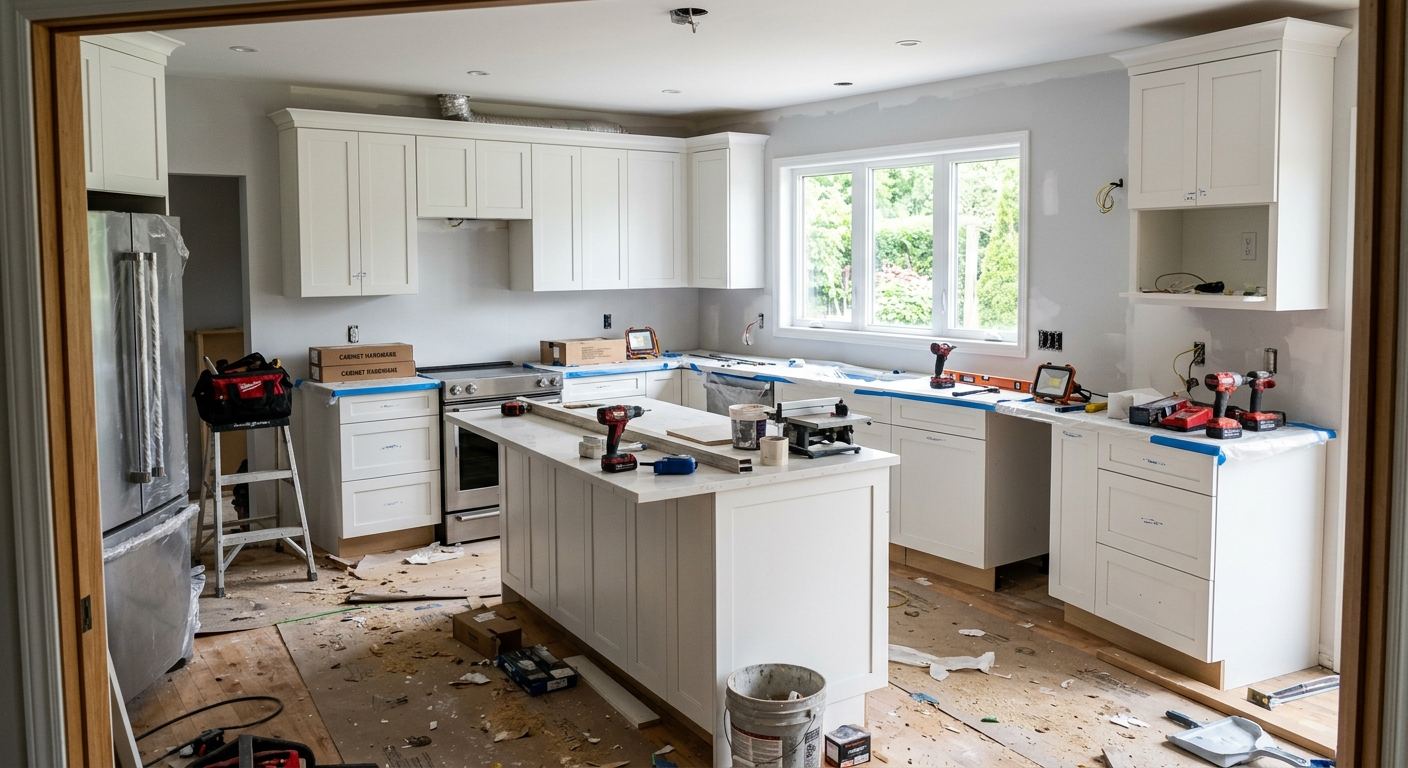
Kitchen renovation options and costs in Coal Harbour
In Coal Harbour, kitchen renovation costs typically start with the finish level you’re aiming for—not just the square footage. Even though Coal Harbour itself is a small, waterfront community within Metro Vancouver, homeowners usually renovate with resale expectations in mind. With 10,441 residents in the area (Statistics Canada, 2021 Census) and a household mix that aligns closely with higher-value Lower Mainland purchasing power, many projects lean toward durable surfaces and design-led upgrades rather than purely budget refreshes. (Statistics Canada, 2021 Census)
Across the Lower Mainland–Southwest, pricing is driven more by home value and expected finish level than by the day-to-day weather. Coastal British Columbia humidity can be hard on poorly sealed edges and low-quality finishes, but most of the budget swing comes from how much built-in cabinetry you replace, whether you change the layout, and whether you upgrade to quartz/stone. Contractor availability also matters: when trades get booked for multiple Vancouver and Richmond projects, labour premiums can show up in scheduling and scheduling certainty.
In Coal Harbour, renovation work is often especially in demand around the harbourfront condominiums and the high-rise corridors leading toward Downtown Vancouver access routes, where kitchens are commonly compact and logistics (elevators, protection, staging) influence the day-to-day cost. Because of that, the “same kitchen” can land as a cosmetic refresh or as a full rebuild once you factor in millwork, countertops, plumbing moves, and appliance package tier.
Use the table below to compare common scope options and typical timing before you request itemised quotes.
| Renovation Tier |
What's Included |
Typical Duration |
Price Range |
| Cosmetic refresh (paint, hardware, new appliances only) |
Cabinet paint or refinish (no box replacement), new pulls/knobs, appliance swaps (same cut-outs where possible), touch-up drywall, basic deep clean |
1–3 weeks |
$8,000–$22,000 |
| Mid-range full renovation (new cabinets, counters, sink, tile) |
New semi-custom or stock cabinets, quartz or durable laminate counters, sink + faucet, backsplash tile, plumbing adjustments (minimal moves), flooring patching or refinish where needed |
4–8 weeks |
$40,000–$80,000 |
| High-end full renovation (custom cabinets, stone counters, island) |
Fully custom cabinetry, stone counters (quartz/stone), island build-out, upgraded hardware, professional lighting plan (often under-cabinet + toe-kick), full-height or designer backsplash, more involved plumbing/electrical |
8–14 weeks |
$90,000–$120,000 |
| Cabinet refacing only (new doors + drawer fronts, same boxes) |
New veneer/laminate or refacing panels, doors/drawer fronts, updated pulls, optional cabinet interior upgrades (soft-close hardware, organisers) |
2–5 weeks |
$12,000–$45,000 |
| Countertop swap only (laminate to quartz or stone) |
Remove and dispose of old surface, templating, installation of quartz/stone, new sink cut-out if compatible, caulking/sealing, basic edge finishing |
1–3 weeks |
$6,000–$12,000 |
| Backsplash tile installation only |
Wall prep, tile layout and setting, grout/seal, trim/edges, cleanup and caulking at counters |
3–10 days |
$1,500–$6,000 |
Prices are estimates only and vary by project scope, site access and material selection.
What affects the price of kitchen renovation in Coal Harbour
Homeowners in Coal Harbour often notice that two quotes for the “same” kitchen can swing by 30–50% across the Lower Mainland–Southwest and other British Columbia markets. The biggest drivers aren’t the coastal climate itself; they’re the homeowner’s expected finish tier, the local supply chain for cabinetry and stone, and how often layout changes trigger additional trades. In higher-value Metro Vancouver segments, homeowners commonly default to quartz or stone counters and semi-custom cabinetry because the renovation cost is easier to recoup at resale. In more modest British Columbia markets, laminate surfaces and stock cabinets can dominate because they deliver better ROI per dollar spent.
In Coal Harbour specifically, local conditions can still move the needle. First, many homes are older or have older rough-ins—if you uncover dated plumbing runs or uneven framing behind the toe-kick, the labour to make everything level and serviceable can add days. Second, the coastal humidity and temperature swings (typical of the Lower Mainland) can reveal cabinet and countertop sealing issues faster, which means preparation and proper caulking/sealing become more important when swapping counters.
Concrete examples we see often: replacing a single laminate countertop with quartz may land in the countertop band near $3,000–$12,000, but upgrading the sink and changing cut-outs can push you toward the upper end once carpentry and rework are included. Similarly, a cabinet refresh can look affordable on paper, yet if you decide to add an island or relocate a gas line for a range/hood reconfiguration, the layout work becomes the budget driver—regardless of whether you choose stock or semi-custom.
Those layout and trade-trigger costs are why a project that could be a mid-range full renovation can quickly slide into a full rebuild level (for example, moving from the $40,000–$80,000 band toward $90,000–$120,000) when plumbing, electrical, and cabinet complexity stack up.
| Price Factor |
Why It Matters |
Cost Impact |
| Cabinet tier — stock vs. semi-custom vs. fully custom millwork |
Higher tiers have better fit, more storage options, and more design freedom for awkward condo walls and angled corners |
Can shift total budget by roughly 15%–40% |
| Countertop material — laminate vs. quartz vs. granite vs. stone |
Stone and quartz require templating, heavier fabrication, and more careful install tolerances |
Often adds $2,000–$10,000 compared with laminate depending on size and edges |
| Layout change — wall removal, island add, plumbing/gas move |
Layout work triggers framing, electrical, plumbing, and sometimes gas reconfiguration and permitting |
Commonly the largest swing factor (10%–35% of total) |
| Appliance package tier — builder vs. mid-range vs. pro-grade |
Pro-grade models often require specific electrical/gas considerations and premium finishes to match |
Can vary by $3,000–$15,000+ |
| Flooring — refinish existing vs. full replacement |
If subfloors are damaged, you pay for removal and prep before new flooring can be installed |
Often adds $1,000–$8,000 depending on extent |
| Backsplash — ceramic tile vs. marble vs. full-height slab |
Premium materials increase labour and waste; full-height installs demand straighter walls and better waterproofing |
Typically $1,500–$6,000 range |
| Electrical — new circuits for island, under-cabinet lighting |
Island lighting, new outlets, and dedicated circuits require licensed work and careful routing |
Often adds $1,000–$6,000+ |
| Permit fees and licensed trade requirements |
Certain changes require inspections and documentation; licensed trades add scheduling overhead |
Usually $500–$3,000+ depending on scope |
Permits & regulations in British Columbia
In British Columbia, many kitchen updates can be done without permits—cabinet and countertop swaps are generally in the “no permit required” category when you’re keeping existing plumbing, gas lines, and electrical work in place. However, permits typically become necessary when you change the systems, not just the finishes. If you move plumbing supply or drain lines, relocate a gas connection (for a stove or certain range hood configurations), remove a load-bearing wall, or add new electrical circuits for outlets or island lighting, you’ll need permits and licensed trade involvement.
For gas work in BC, a licensed gas fitter must perform the work and the installation must be inspected. For electrical, a licensed electrician must complete the permitted work and the system may require inspection before it’s energised. The key for homeowners in Coal Harbour is to confirm who pulls permits before signing—permit responsibility should be explicitly stated in the written contract, not assumed.
To verify contractor readiness step-by-step: first, ask for the contractor’s certificate of insurance and confirm the policy covers the scope (liability, and any required endorsements). Next, verify licences online for the trades involved (gas fitter for gas, electrician for electrical). Then ask for clearance/clear documentation of inspections where applicable. Also request your contractor’s Workers’ Compensation coverage details (WCB/WSIB-equivalent coverage) and keep a copy for your records. A reputable Coal Harbour contractor will provide documents quickly and won’t discourage you from checking.
Cabinets, countertops and layout decisions in Coal Harbour
The three most consequential decisions in a Coal Harbour kitchen renovation are (1) cabinet tier, (2) countertop material, and (3) layout changes. These choices affect resale appeal in the Lower Mainland–Southwest far more than they affect comfort in day-to-day use. That’s because local buyers typically look for clean lines, durable surfaces, and built-in storage that feels “custom,” even when the renovation is mid-range.
Start with cabinet tier. Stock cabinets are the fastest and cheapest option, especially when your kitchen is straightforward. Semi-custom cabinets are the most popular mid-range approach in Coal Harbour because they balance lead times, fit, and cost—particularly for condos with limited wall tolerance. Custom cabinets create the best fit for irregular openings, angled ends, or unique storage needs, but they usually push you toward the higher full-renovation band.
Next is countertop material. Laminate is budget-friendly and fine for lower-heat households, but it’s less forgiving for long-term durability around sinks and seams. Quartz offers a strong middle ground: it’s stain-resistant and visually consistent with the premium look many buyers expect. Granite/natural stone reads premium and can be stunning, but requires more care and seam planning. In coastal British Columbia conditions, proper sealing and edge finishing matter; a cheap edge detail becomes a maintenance problem later.
Finally, decide whether to change the layout. Removing a wall, adding an island, or relocating plumbing/gas is the cost shock absorber—layout changes add framing, wiring, and licensed trade work. It can be justified when you gain clear traffic flow (for example, turning a tight galley into an open-concept feel), but it’s not justified just to “improve aesthetics” if your current footprint already works.
Dollar example: if you’re targeting a mid-range renovation, a quartz countertop upgrade can move you upward within the $3,000–$12,000 countertop band. But if you also change sink location and require plumbing rework, the same “countertop swap” can effectively behave like a mini-renovation, pulling the project closer to full renovation totals.
| Option |
Durability |
Maintenance |
Best For |
Price Range |
| Stock cabinets (big-box) |
Good for standard layouts; can be sensitive to uneven walls if not properly shimmed |
Low; wipe down and keep hardware tight |
Fast refreshes where dimensions are straightforward |
$8,000–$25,000 |
| Semi-custom cabinets (local dealer) |
Very solid; better options for storage and tolerances |
Low; soft-close hardware benefits day-to-day use |
Most Coal Harbour mid-range renovations |
$20,000–$50,000 |
| Custom cabinets (local millwork shop) |
Highest fit and build quality; best for irregular openings |
Low; relies on good coating/finish quality |
High-end remodels and unique layouts |
$45,000–$90,000 |
| Laminate countertop |
Moderate; seams and edges are the common weak points |
Simple cleaning; avoid prolonged heat and water at seams |
Budget-conscious refreshes |
$3,000–$6,000 |
| Quartz engineered countertop |
High durability; resistant to stains and everyday impact |
Low; wipe with mild soap and avoid abrasive pads |
Most resale-focused Coal Harbour kitchens |
$6,000–$11,000 |
| Granite / natural stone countertop |
Very durable; varies by slab and finish |
Medium; may require periodic sealing depending on stone |
Premium look with natural variation |
$7,000–$12,000 |
| Butcher block countertop |
Good; can be vulnerable to water exposure at seams |
Requires oiling/conditioning and careful wet protection |
Warm, casual styles and families who like maintenance |
$5,000–$10,000 |
| Marble countertop |
Beautiful but softer; more prone to etching |
Higher maintenance; needs careful cleaning and protection |
Statement kitchens where homeowners are detail-oriented |
$10,000–$16,000 |
How to choose a kitchen renovation contractor in Coal Harbour
Choosing the right contractor in Coal Harbour is mostly about verifying credentials and controlling scope surprises. In British Columbia, you should verify licensing and coverage before any work starts. For trades: ask for the licence details for the electrician and gas fitter (where gas work is involved) and confirm the contractor is coordinating the right licensed professionals for the tasks. For coverage: request liability insurance (certificate of insurance) and confirm limits are appropriate for renovation work, and ask for Workers’ Compensation coverage documentation for the contractor’s employees. Having these documents before the first demo protects you if something goes wrong.
Next, get 2–3 itemised written quotes. “Itemised” means a labour + materials breakdown—cabinets, countertop fabrication and install, tile, demo/disposal, plumbing/electrical line items, and any allowance for extras like subfloor prep. Avoid lump sums that don’t explain what’s included. Read scope carefully: is permit pulling included (when required)? Is debris removal and disposal included? Are wall repairs and paint included or treated as extras? Also confirm disposal logistics, especially for high-rise sites common in Coal Harbour where move-in/out rules and elevator scheduling can affect cost.
Warranty matters. Ask for workmanship warranty length and whether product/manufacturer warranties are provided directly by suppliers and if they’re transferable to you as the homeowner. Payment schedule should be controlled: never pay more than 10–15% upfront, and use a holdback until key milestones are complete.
Finally, demand a realistic start date and completion estimate in writing. If the contractor can’t commit to a timeline for ordering and installation sequences, expect delays once your cabinetry or stone is templated.
- Confirm the contractor’s general liability insurance via certificate of insurance before signing.
- Verify the electrician and gas fitter licences for any electrical circuits and gas changes.
- Ask for proof of Workers’ Compensation coverage (and keep a copy).
- Request 2–3 itemised quotes with labour and material line items (not lump sums).
- Check whether permits are included where layout/system changes trigger them.
- Confirm what demolition and disposal includes (dump fees, haul-away, recycling).
- Ask who handles field measurements and templating for countertops.
- Verify cabinet warranty terms and finish coverage; ensure edges and sealing are addressed.
- Get a detailed inclusions list for tile: waterproofing, backer board, and grout type.
- Review the payment schedule; limit upfront payment to 10–15% and keep a holdback.
- Insist on start date and completion estimate in writing, including lead-time assumptions.
- Ask how changes are priced (change order process and rates for labour/materials).
Red flags to watch in Coal Harbour: contractors who won’t provide insurance/coverage documentation, quotes without line-item scope, vague timelines that ignore cabinet/counter lead times, “cheap” numbers that omit demo/disposal or electrical/plumbing allowances, and requests for large upfront payments or no holdback.
Frequently asked questions — kitchen renovation in Coal Harbour
What order do kitchen renovation steps happen in?
In Coal Harbour, a typical renovation sequence starts with confirmation of measurements and selections (cabinet plans, counter colour, tile pattern, and appliance specs). Then comes demo, site protection, and rough-in work when you’re changing layout elements—electrical circuits, plumbing supply/drain adjustments, and any permitted gas work. After that, trades complete framing adjustments, install cabinets (or cabinet refacing if boxes stay), and then countertops are templated and fabricated. Tile and backsplash follow once walls are prepped and cabinets are set. Finally, appliances are installed, trim is completed, and the contractor does caulking, final cleaning, and walkthrough handoff.
Can I live at home during a kitchen renovation in Coal Harbour?
Often yes, but it depends on your scope and your building’s logistics. For a cosmetic refresh or backsplash-only work, many Coal Harbour homeowners continue living in the home with minimal disruption. For mid-range or full renovations (for example, projects that land in the $40,000–$80,000 band), you can usually live at home if you have access to at least a small alternate cooking setup (bar fridge, microwave, or temporary kitchenette) and if the contractor sequences work to keep pathways clear. For high-rise sites, elevator booking and debris handling can still restrict daily routines, even if the work is contained. If the renovation includes gas or electrical changes, the schedule and inspection steps can lengthen certain periods, so plan for a more active workspace during those windows.
Should I renovate my kitchen before selling in Coal Harbour?
In British Columbia—especially in the Lower Mainland–Southwest—kitchens are one of the first rooms buyers evaluate, so a renovation can help if it upgrades the features people expect: durable counters, clean cabinetry lines, and reliable lighting. However, spending heavily on highly custom upgrades doesn’t always guarantee a dollar-for-dollar return. If your layout is already functional, a mid-range approach can be smarter—such as new quartz countertops plus updated cabinets and backsplash—while keeping changes focused. If you’re considering a full rebuild, align the level with your target buyer segment so you don’t over-improve for the neighbourhood. A practical reference point: if your kitchen needs significant updates, budgeting within the full renovation range ($40,000–$120,000) may be realistic, but keep the scope tied to what buyers in your segment will actually pay for.
What's the most popular kitchen style in Coal Harbour right now?
Right now, many Coal Harbour renovations lean toward modern transitional styling: flat-panel or shaker-inspired cabinetry, neutral palettes, and quartz counters with a consistent, clean look. Hardware is typically updated to brushed nickel or matte black, and lighting is often upgraded with under-cabinet LED strips to reduce shadows in compact kitchen layouts. Buyers also tend to prefer storage-forward designs—full-height pantry options, better drawer interiors, and clearer sightlines from the main living area. The popularity isn’t “one trend”; it’s the balance: visually premium materials at a finish tier that feels current without requiring an extreme custom build-out. That’s why semi-custom cabinetry is often a sweet spot for many homeowners in the $40,000–$80,000 mid-range band.
How do I know if I need to update my kitchen plumbing in Coal Harbour?
You may need plumbing updates when you see leaks, persistent slow drains, corrosion at supply lines, water hammer, or recurring shutoff valve problems. You’ll also likely need adjustments if you’re changing the sink location, adding a dishwasher, upgrading to a different faucet configuration, or modifying the layout (especially for an island where routing can change). In older British Columbia housing stock, the hidden rough-ins can be the “surprise cost” during demo—subfloors may need repair, and valves may not align with updated cabinet depths. A good contractor checks shutoffs before demo and identifies whether any plumbing work should be scoped under mid-range renovation budgets versus a full rebuild. Even if you’re doing a countertop swap within the $3,000–$12,000 band, confirm whether the sink cut-out and faucet rough-in compatibility are unchanged to avoid extra plumbing labour.
What is the difference between a galley and open-concept kitchen?
A galley kitchen is a corridor-style layout with counters and appliances lined along two parallel walls, which maximises efficiency in smaller spaces. An open-concept kitchen removes barriers so the kitchen flows into the living/dining area, often using a peninsula or island to create separation without a full wall. In Coal Harbour, condo kitchens can start as galley layouts due to older building plans and corridor-style layouts. Moving from galley to open-concept typically triggers major work—wall removal (which can involve structural considerations), rerouting electrical, and sometimes plumbing/gas relocation—so it usually becomes a cost driver regardless of finish tier. That’s why homeowners usually justify open-concept changes with real space gain and traffic flow improvements, not just a cosmetic goal.