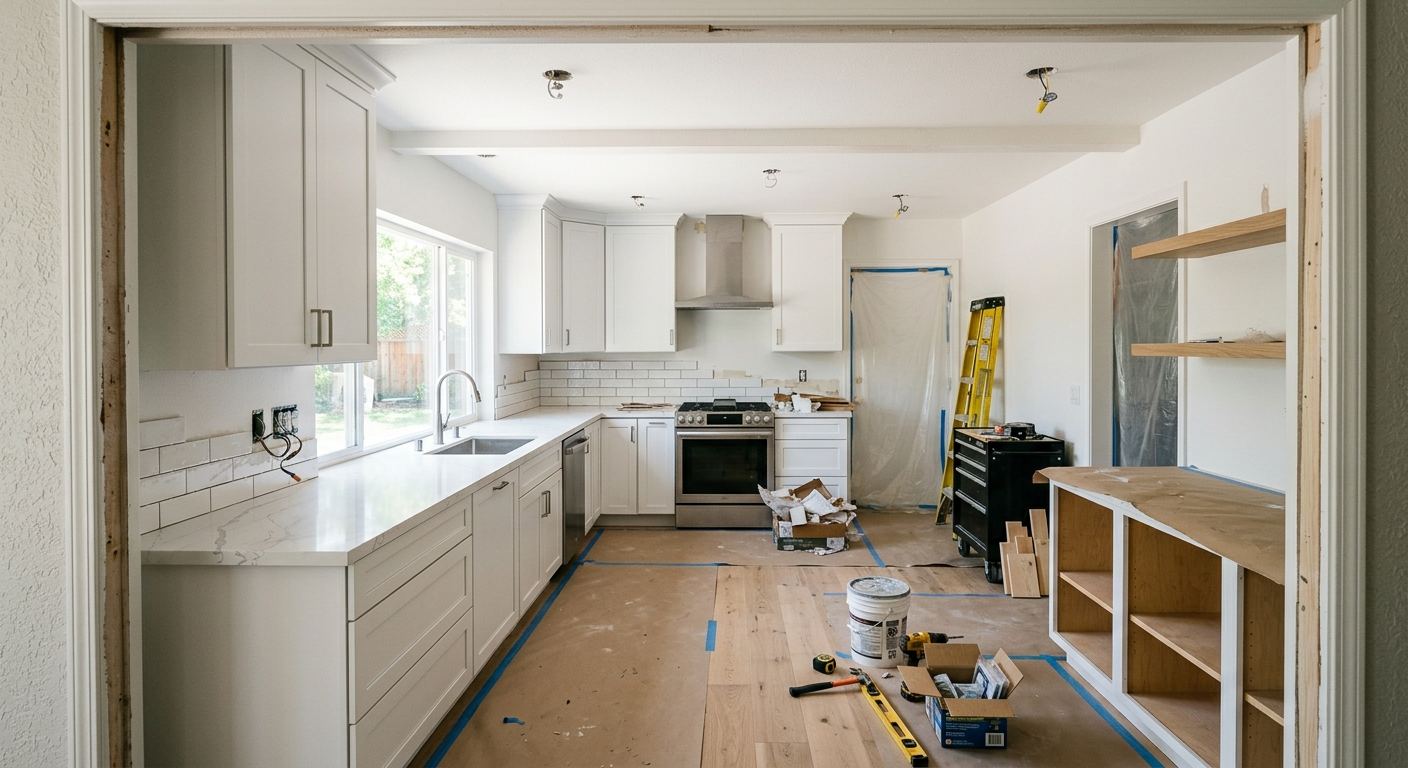
Kitchen renovation options and costs in Cascade Heights
Cascade Heights homeowners typically see kitchen renovation quotes vary less because of weather and more because of the Lower Mainland–Southwest buyer expectations for materials and workmanship. With a population of 7,449 (Statistics Canada, 2021 Census), projects here often serve families upgrading functional layouts for resale, not just day-to-day living. In this part of the Lower Mainland, renovation budgets are strongly influenced by local home-value and income levels—when owners expect buyers to pay more, they commonly move toward semi-custom or custom cabinetry and quartz or stone countertops, which pushes total project costs into the higher end of the regional bands. In contrast, a practical “refresh” approach (paint, hardware, and new appliances) can keep spend much closer to the lower tiers.
While British Columbia’s coastal climate is known for moisture swings and humidity that can affect finishes, contractors usually manage that with good prep, proper ventilation, and moisture-stable materials. The bigger cost driver is market timing and contractor availability across nearby areas—trade capacity is especially in demand around the East Abbotsford corridor and the broader Surrey–Abbotsford–Burnaby work stream, where many multi-trade renovations run concurrently. That demand can tighten scheduling, but it also means installers are familiar with common kitchen rebuild details like under-cabinet lighting runs, updated ventilation, and slab-ready cabinet bases.
Below are realistic tiers you can use as a baseline before you compare itemised quotes from local installers.
| Renovation Tier |
What's Included |
Typical Duration |
Price Range |
| Cosmetic refresh (paint, hardware, new appliances only) |
Cabinet paint or re-finish (no box change), new pulls/knobs, new backsplash within same tile footprint, appliance swap, basic labour for swaps |
3–7 days |
$8,000–$25,000 |
| Mid-range full renovation (new cabinets, counters, sink, tile) |
Semi-custom or quality stock cabinetry, countertop replacement, new sink and faucet, backsplash tile, removal/disposal, standard plumbing/electrical for hookups |
2–4 weeks |
$40,000–$85,000 |
| High-end full renovation (custom cabinets, stone counters, island) |
Fully custom millwork, stone counters (quartz/stone), island build or major layout change, upgraded hardware, under-cabinet lighting, extended tile and finish details |
4–8 weeks |
$85,000–$120,000 |
| Cabinet refacing only (new doors + drawer fronts, same boxes) |
Door and drawer front replacement, veneer or panel work, new hardware, repaint/finish touch-ups as required |
1–2 weeks |
$8,000–$35,000 |
| Countertop swap only (laminate to quartz or stone) |
Remove existing surface, template, install quartz/stone, seal where applicable, basic sink cut-out adjustments if needed |
3–7 days |
$6,000–$22,000 |
| Backsplash tile installation only |
Tile installation (ceramic/porcelain or similar), surface prep, grouting, sealing as needed |
2–5 days |
$1,500–$6,000 |
Prices are estimates only and vary by project scope, site access and material selection.
What affects the price of kitchen renovation in Cascade Heights
In Cascade Heights and the wider Lower Mainland–Southwest, it’s common to see quotes for the “same size” kitchen land 30–50% apart once homeowners choose different finish tiers or decide to change the layout. Across British Columbia, the pricing gap often shows up not because of climate in isolation, but because homeowners in higher-value pockets more readily invest in quartz or stone counters, semi-custom cabinetry, upgraded hardware, and more complex millwork—cost that can be easier to justify on resale.
In the Lower Mainland–Southwest, local market demand also influences what contractors keep in their scheduling pipeline. When there’s stronger pull for stone and premium cabinetry packages near areas like Surrey and Abbotsford, labour and install lead times can compress, and that can affect how quickly a project can start. Coastal humidity can accelerate the need for careful cabinet base sealing and proper ventilation, but that’s usually a manageable part of prep—not the dominant line item.
Layout changes remain the most unpredictable cost regardless of finish level. Removing a wall, adding an island, or relocating plumbing (sink) and gas (if applicable) often triggers additional framing, subfloor work, venting, and sometimes permit steps. For example, a countertop swap from laminate to quartz may fit the mid-band of about $6,000–$22,000, while adding a new island that requires electrical and plumbing adjustments can push the overall kitchen project upward into a $40,000–$85,000 scope or beyond, even if cabinet finishes are mid-range.
Concrete examples specific to this area include: (1) older home framing and uneven subfloors—common in many Lower Mainland neighbourhoods—can increase base-cabinet adjustment time; (2) moisture-prone wall sections near exterior exposures can require extra prep materials before tile and cabinetry are installed; and (3) tighter in-home access in typical residential lots can add labour for material staging and dust control, which shows up most on full rebuild timelines. That’s why the same kitchen can be a practical “refresh” in one home and a full rebuild in another.
| Price Factor |
Why It Matters |
Cost Impact |
| Cabinet tier — stock vs. semi-custom vs. fully custom millwork |
Custom dimensions, specialty storage (pantries, lifts), and higher-grade construction affect both material cost and install complexity |
Typically shifts the project by $10,000–$40,000 |
| Countertop material — laminate vs. quartz vs. granite vs. stone |
Material and fabrication costs vary widely; stone also depends on thickness, edges and number of cut-outs |
Usually adds $3,000–$12,000 for materials and install depending on scope |
| Layout change — wall removal, island add, plumbing/gas move |
Triggers carpentry, subfloor/framing changes, potential permits, and trade coordination; labour risk increases |
Often increases total spend by 15%–35% (sometimes more) |
| Appliance package tier — builder vs. mid-range vs. pro-grade |
Pro-grade ranges, hoods, and built-in appliances can require specific clearances, wiring, and ventilation details |
Can move appliance spend by $2,000–$15,000+ |
| Flooring — refinish existing vs. full replacement |
Kitchen work often exposes flooring transitions and requires matching underlayment and leveling |
Usually adds $1,500–$8,000 depending on finish type |
| Backsplash — ceramic tile vs. marble vs. full-height slab |
Harder materials (marble/slab) add fabrication and install time, plus more precise wall prep |
Often adds $1,500–$6,000+ |
| Electrical — new circuits for island, under-cabinet lighting |
New circuits and lighting runs require licensed work and can involve ceiling or wall access |
Typically $800–$5,000 depending on how many changes |
| Permit fees and licensed trade requirements |
Complex work (gas, electrical circuits, structural changes) requires permitting and inspections, affecting lead times and admin labour |
Often adds $500–$2,500+ (more if multiple permits) |
Permits & regulations in British Columbia
In British Columbia, straightforward kitchen updates like cabinet door swaps and countertop replacements typically don’t require permits. However, the moment you move plumbing supply/drain lines, relocate gas appliances (including stoves and some ventilation upgrades), remove a load-bearing wall, or add new electrical circuits, permits and licensed trades usually come into play. Gas work must be completed by a licensed gas fitter, and electrical work must be completed by a licensed electrician; both require inspections after the work is done. Because permit responsibility can differ by scope, confirm in writing what your contractor will pull (and what you must approve) before you sign your contract.
Here’s what typically DOES require a permit in the renovation work we see in Cascade Heights: new or relocated plumbing lines (sink drains, supply lines), moving a range/stove location or changing a gas connection, installing or relocating an exhaust/hood system where gas is involved, adding electrical circuits for an island or moving outlets, and structural changes such as removing a wall that could be load-bearing. What typically DOES NOT require a permit: repainting/refinishing cabinets, replacing cabinet doors and drawer fronts (refacing) without altering box placement, swapping a countertop that uses the existing plumbing footprint, and installing a backsplash tile where no electrical or venting changes occur.
To verify a contractor’s legitimacy, start with their licence information (provincial contractor licence details where applicable), then check their liability insurance certificate and proof of workplace coverage. Ask for a current clearance letter if their work requires it. Finally, ensure they list the scope of work that each licensed trade will complete, and keep copies of all certificates and inspection-ready documentation for your records.
Cabinets, countertops and layout decisions in Cascade Heights
The three most consequential decisions in a Cascade Heights kitchen renovation are (1) cabinet tier, (2) countertop material, and (3) layout changes. Cabinet tier matters because it affects how quickly the job can be scheduled, how well the kitchen will fit older framing, and how smoothly the finish details line up around toe-kicks, soffits and corners. Stock cabinets are fastest and cheapest, semi-custom is the “most popular mid-range” choice for Lower Mainland resale expectations, and custom cabinets cost the most but offer the best fit for unique wall conditions and storage needs.
Countertop material drives both durability and daily maintenance. Laminate can be a budget-friendly option, but it wears faster and may be more vulnerable to damage at seams. Quartz is the common sweet spot for durability and looks; it’s a strong choice for families cooking often and for buyers expecting a modern, low-maintenance surface. Granite/natural stone is also durable but needs more care depending on finish and sealing schedule, while butcher block adds warmth and can be refreshed but requires thoughtful maintenance. Marble looks premium and elegant, but it is typically more prone to etching and staining unless maintained carefully.
For layout, open-concept wall removal and island additions can be justified when the space gain improves flow and seating—but they’re also where budgets most easily overrun due to framing, flooring transitions and utility reroutes. A practical example: if you keep the sink in the same location and only upgrade counters and fronts, you may stay within a countertop-swap band such as $6,000–$22,000. If you move plumbing and add an island that needs electrical and potentially venting clearance, the project can climb from a mid-range $40,000–$85,000 kitchen into a higher-end rebuild scope even if you don’t choose the most expensive cabinet finish.
These decisions are best guided by the Lower Mainland–Southwest resale market: homeowners who want broad buyer appeal often choose semi-custom cabinetry and quartz, while those aiming for premium resale momentum lean into custom millwork and stone details.
| Option |
Durability |
Maintenance |
Best For |
Price Range |
| Stock cabinets (big-box) |
Good for standard dimensions; less forgiving around out-of-square walls |
Low—wipe clean; touch-ups if exposed edges get scuffed |
Fast turnarounds, tight budgets, straightforward kitchen footprints |
$10,000–$28,000 |
| Semi-custom cabinets (local dealer) |
Very solid construction with better options for storage and trims |
Low; routine cleaning and occasional hardware tightening |
Most Cascade Heights renovations aiming for “move-in-ready” resale appeal |
$20,000–$55,000 |
| Custom cabinets (local millwork shop) |
Excellent fit and build quality; ideal for unusual layouts and full-height details |
Low; proper care depends on finish type (painted/stained) |
Premium remodels and homes where fit and storage are priorities |
$45,000–$90,000 |
| Laminate countertop |
Moderate; seams and edges can be more vulnerable to impact |
Low daily upkeep, but chips and seam damage may need patching/replacement |
Budget-first refreshes where footprint stays the same |
$3,000–$7,000 |
| Quartz engineered countertop |
High; resistant to staining and daily wear |
Low—typical countertop cleaning only; avoid extreme heat |
Broad buyer appeal and family kitchens needing durable surfaces |
$6,000–$14,000 |
| Granite / natural stone countertop |
High durability; varies by slab and finish |
Moderate—periodic sealing and careful cleaning |
Premium look with natural variation for a custom aesthetic |
$7,000–$16,000 |
| Butcher block countertop |
Medium to high with proper care; can dent and scratch |
Higher—regular oiling/sanding cycles to keep it looking fresh |
Warm design, lighter cooking households, and owners who maintain |
$4,000–$10,000 |
| Marble countertop |
Moderate; beautiful but sensitive to acidic spills |
Higher—frequent sealing and careful stain/etch management |
Design-led premium projects where homeowners accept extra care |
$10,000–$20,000 |
How to choose a kitchen renovation contractor in Cascade Heights
Choosing the right kitchen renovation contractor in British Columbia starts with verification. First, confirm the contractor’s credentials and licensing for the scope they’re leading, and ask for their current liability insurance certificate. For labour coverage, request evidence of workplace coverage status (including WSIB/WCB compliance where applicable to their operations) and keep a copy for your file. If a trade subcontractor is performing gas or electrical work, ask for their licence details and ensure the work scope is assigned correctly in the contract.
Second, get 2–3 itemised written quotes. The best quotes separate labour and materials (cabinets, counters, tile, demolition, plumbing/electrical allowance, disposal) rather than giving a single lump sum with “allowances” that don’t match your selections. Read the scope carefully: what’s excluded? Is permit pulling included? Is dust control and site protection included? Who pays for disposal? A clear, line-by-line scope is how you avoid the common Cascade Heights surprise where the project starts on plan but ends with change orders for missing items.
Third, review warranties. Ask for the workmanship warranty length and what it covers (water damage from installation, cabinet hardware adjustment, tile setbacks). Also ask for manufacturer product warranties for cabinets, countertops, and appliances, and whether warranties are transferable to future owners—important in the Lower Mainland resale market.
Finally, payment schedule matters. Never pay more than 10–15% upfront, and hold back a portion until the job is complete and deficiencies are corrected. Ask for a start date and completion estimate in writing, including realistic lead times for cabinetry and countertop fabrication.
- Request licence and insurance documents before work begins
- Ask for itemised labour/material breakdown, not just allowances
- Confirm who pulls permits (and what permits apply)
- Verify disposal and dump fees are included
- Check that plumbing/electrical rough-in scopes are defined
- Confirm dust control measures and floor protection plans
- Insist on start date and completion timeline in writing
- Confirm cabinet delivery lead times and what happens if items are delayed
- Ask how changes are priced (hourly rate or written change order)
- Get a detailed warranty statement in writing
- Confirm the cleanup standard and final walkthrough process
- Use a staged payment schedule with holdback until deficiencies are corrected
Red flags I commonly see in Cascade Heights kitchen projects: (1) no written scope or vague “allowances” that don’t match your cabinet/counter choices; (2) requesting large upfront payments beyond 10–15% without a schedule-based plan; (3) refusing to provide insurance/coverage proof; (4) unclear responsibility for permits and licensed trades; and (5) no clear completion date or no process for change orders and deficiencies. When you see multiple red flags at once, it’s usually cheaper long-term to pause and get another quote.
Frequently asked questions — kitchen renovation in Cascade Heights
Can I move my kitchen sink or stove?
Yes, you can move a sink or stove in Cascade Heights, but the cost and permit requirements depend on how far you move them and what has to change behind the walls. Moving a sink typically means relocating plumbing supply lines and drain runs; that work generally requires licensed plumbing and often a permit, plus time for framing access and patching. Moving a stove (especially if it’s gas) also adds complexity—gas appliance relocation must be done by a licensed gas fitter and usually requires inspection. If you can keep the sink location on the same rough-in footprint, you’ll usually control costs much better. It’s one reason many homeowners choose a mid-range full renovation path (often around $40,000–$85,000) without major plumbing relocation.
What's the most cost-effective kitchen upgrade?
The most cost-effective upgrade is usually the one that delivers a high visual impact with minimal structural work. In Cascade Heights, cabinet refacing plus hardware is often a strong value, because you keep existing cabinet boxes and avoid demolition-heavy rebuild costs. Another cost-effective option is a countertop swap—moving from laminate to quartz can refresh the entire look while keeping layout changes limited. If you’re staying practical, a backsplash tile installation can also make a big difference for a relatively small budget (commonly in the $1,500–$6,000 range). If you’re choosing between upgrades, think in terms of “what buyers see first”: cabinets and countertops lead, then lighting and backsplash. For truly tight budgets, a cosmetic refresh with new hardware and appliances can reduce disruption, but it won’t change the kitchen’s overall storage and durability the way new cabinets can.
Custom vs stock cabinets — is custom worth it?
Custom cabinets can be worth it in British Columbia when your kitchen has out-of-square walls, unusual ceiling heights, or you want tailored storage solutions that aren’t available in standard lines. In Cascade Heights, where many homes are built with older framing quirks and different wall finishes, custom or semi-custom can help the doors align cleanly and give you better use of awkward corners. Stock cabinets are typically the fastest and cheapest route, but you may need more filler, trimming, or compromises to get a perfect fit—especially around soffits and uneven surfaces. If your goal is resale-ready, semi-custom is often the best balance. As a budgeting reference, a mid-range kitchen renovation commonly lands around $40,000–$85,000; if you jump to high-end custom millwork and stone, you can quickly move into the $85,000–$120,000 territory due to cabinetry, fabrication complexity, and often layout upgrades.
How do I choose a kitchen contractor in Cascade Heights?
Choose a contractor by verifying credentials, confirming the scope is complete, and comparing itemised quotes. Start by asking for evidence of liability insurance and workplace coverage, and ensure gas and electrical work will be done by the appropriate licensed trades. In British Columbia, the project needs proper coordination when plumbing moves, gas appliances are relocated, or new electrical circuits are added—so you want a contractor who can clearly define those scopes. Get 2–3 quotes that break down labour and materials (cabinets, counters, tile, demolition, disposal, and allowances) instead of lump sums. Read what’s excluded: permit pulling, disposal, and site protection are common sources of confusion. Confirm warranty terms for workmanship and product warranties, including whether warranties are transferable. Finally, use a staged payment schedule: never more than 10–15% upfront, and hold back until the final walkthrough shows everything is complete.
What order do kitchen renovation steps happen in?
A typical order for a kitchen renovation in Cascade Heights is designed to keep your house safe and your trades coordinated. First comes demolition and site protection (as needed for dust and debris control). Next, contractors complete rough work that must happen before cabinets and finishes—this often includes plumbing rough-ins, electrical wiring for outlets and lighting, and any gas line changes that require licensed trades and permits/inspections. After rough work passes inspection, framing/repairs and subfloor leveling follow. Then it’s cabinetry installation, followed by countertop templating and install (because counters need accurate measurements from the cabinet base). Tile/backsplash installation generally comes after cabinets are set. Finally, trim, hardware, painting touch-ups, appliance hookups, and cleanup wrap up. If you’re doing a countertop swap only, the sequence tightens, but templating and removal still govern timing.
Can I live at home during a kitchen renovation in Cascade Heights?
Many homeowners can live in their homes during a kitchen renovation in Cascade Heights, but it depends on scope and how disruptive the trade access is. A cosmetic refresh or cabinet refacing is usually the easiest to live with because demolition and plumbing changes are limited. For a mid-range full renovation, you may be able to cook minimally if an alternate setup is planned, but expect restricted access to sinks and power as work progresses—often aligning with the $40,000–$85,000 range projects. Full high-end renovations with layout changes and stone counters typically require more trades working longer hours, and living arrangements can become harder when electrical/plumbing lines are opened and insulation or framing is replaced. In coastal British Columbia homes, good ventilation and dust control matter—ask how the contractor will manage airborne dust and moisture during cabinet and tile work. The safest approach is to ask for a day-by-day plan and decide based on your household’s cooking, sanitation, and accessibility needs.