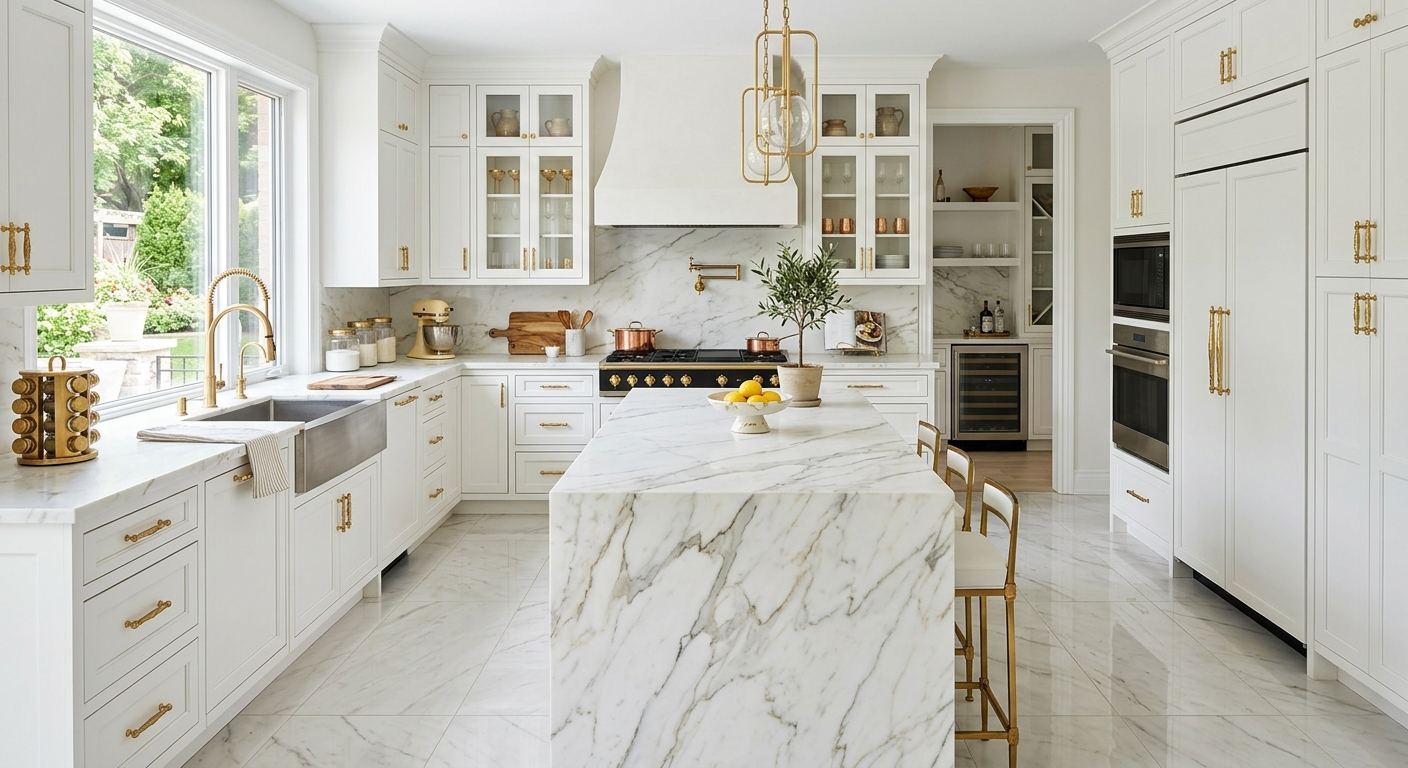
Kitchen renovation options and costs in Okanagan Mission
Okanagan Mission homeowners typically start a kitchen renovation with a practical question: “What can we change without blowing the budget?” With a population of 38,374 (Statistics Canada, 2021 Census), and a Lower Mainland–Southwest market where buyers often expect a polished, move-in-ready finish, the range of options here is wide—from quick refreshes to full rebuilds with high-end cabinetry. While British Columbia’s climate is mild compared to the Prairies, the real cost driver is market expectation: in higher-value Lower Mainland areas, renovations are often positioned for resale value, so homeowners more readily choose quartz or stone counters and semi-custom cabinetry rather than staying with laminate and stock products. That said, you can still keep costs controlled in Okanagan Mission when the plan is practical and the scope is clear.
Contractor availability is another factor. In the Lower Mainland–Southwest, kitchen crews and trades can get booked quickly when multiple neighbourhoods are running at once, which can stretch schedules on full demolitions. Also, older homes near Okanagan Mission’s lake-adjacent pockets often have dated plumbing runs and electrical capacity issues, meaning some “simple” upgrades turn into coordinated trades work. A cosmetic refresh may be a fast weekend-to-two-week job, while a full renovation can land in the backbone range of $40,000–$120,000 depending on cabinet tier, counter material, layout changes, and tile/flooring choices.
If you’re comparing quotes, the tiers below are a reliable starting point—then you can map your kitchen size and finish level to the right band before a contractor ever numbers your labour.
| Renovation Tier |
What's Included |
Typical Duration |
Price Range |
| Cosmetic refresh (paint, hardware, new appliances only) |
Prep/paint, new cabinet hardware, replace appliances (no plumbing/gas moves), basic caulking and touch-ups |
1–2 weeks |
$8,000–$25,000 |
| Mid-range full renovation (new cabinets, counters, sink, tile) |
Semi-custom or upgraded stock cabinets, countertop (quartz typical), sink and faucet, backsplash tile, tile flooring or refresh, updated shutoffs/typical plumbing connections |
3–7 weeks |
$40,000–$80,000 |
| High-end full renovation (custom cabinets, stone counters, island) |
Custom millwork, stone counters (quartz/stone), island with upgraded lighting, coordinated plumbing/gas changes, full-height backsplash options, upgraded flooring and trim |
6–12 weeks |
$80,000–$120,000 |
| Cabinet refacing only (new doors + drawer fronts, same boxes) |
New doors/drawer fronts, new hardware, veneer/finish upgrade, selective box repairs; counters may be separate scope |
2–4 weeks |
$12,000–$40,000 |
| Countertop swap only (laminate to quartz or stone) |
Remove and dispose existing counters, templating, install quartz/stone, edge profile, reseal and fit at backsplash line (backsplash may be separate) |
3–10 days (plus template/lead time) |
$3,000–$12,000 |
| Backsplash tile installation only |
Surface prep, tile supply/installation, grout/sealing, trim and finishing; excludes cabinetry/counter changes unless noted |
3–7 days |
$1,500–$6,000 |
Prices are estimates only and vary by project scope, site access and material selection.
What affects the price of kitchen renovation in Okanagan Mission
In the Lower Mainland–Southwest, you can see the same kitchen come in 30–50% apart from one homeowner to the next, even when the square footage looks identical. The “why” is usually simple: local home values, income expectations, and the finish tier buyers want drive material choices (cabinet type, counter material, hardware) more than the day-to-day effects of climate. In higher-value Lower Mainland markets, homeowners often default to quartz or stone counters and semi-custom cabinetry because those upgrades are easier to justify on resale and appraisals. In more modest scopes, laminate and stock cabinetry dominate because they deliver a strong look without the premium package cost. Across British Columbia, a basic refresh can stay relatively restrained, while a full remodel rises quickly once cabinetry, trades coordination, layout changes, and premium finishes are included.
Layout decisions are where costs become unpredictable. Removing a wall, adding an island, or moving a gas line tends to trigger extra trades (plumber/gas fitter/electrician), inspection requirements, and sometimes structural and reinforcement work—regardless of whether you’re aiming for the mid-range band of $40,000–$80,000 or the high-end $80,000–$120,000. Two common Okanagan Mission examples I see: (1) older kitchens with dated shutoffs or undersized supply lines—upgrades can add labour and materials; (2) homes with less-than-ideal ventilation paths—range hood ducting sometimes needs re-routing, which raises cost even if cabinets stay the same. On the climate side, Okanagan Mission’s seasonal humidity swings make proper sealing and substrate prep important around sinks and backsplashes; the upside is you generally won’t pay “climate tax” the way harsher regions do—your bigger cost swings come from scope and finish choices.
For budgeting, treat cabinetry tier and layout work as your variables, then use countertop and backsplash selections to refine the plan.
| Price Factor |
Why It Matters |
Cost Impact |
| Cabinet tier — stock vs. semi-custom vs. fully custom millwork |
Custom boxes and fitted interiors change labour and material volume; soft-close hardware and specialty storage add cost |
Often the largest swing inside a full kitchen project: roughly $10,000–$50,000 difference between tiers |
| Countertop material — laminate vs. quartz vs. granite vs. stone |
Material price, edge profiles, seam complexity, and install method affect both material and labour |
Laminate may start around $3,000–$6,000, while quartz/stone commonly moves into $6,000–$12,000 for many swaps |
| Layout change — wall removal, island add, plumbing/gas move |
Triggers structural considerations, more trades, potential permit needs, and longer coordination time |
Can add $5,000–$25,000 depending on what’s moved and whether openings are reinforced |
| Appliance package tier — builder vs. mid-range vs. pro-grade |
Installation requirements and matching finishes can affect electrical capacity, ventilation, and trim/fit |
Usually $2,000–$12,000 variance once you include ventilation and install fit |
| Flooring — refinish existing vs. full replacement |
Existing surfaces dictate prep time; replacing floors across the kitchen and adjacent areas increases labour and material |
Can shift by $1,500–$8,000 based on demolition extent and flooring choice |
| Backsplash — ceramic tile vs. marble vs. full-height slab |
Higher-end stone needs more precise layout and setting; full-height adds complexity and trim detailing |
Commonly ranges $1,500–$6,000 for installation-only scopes; higher-end can exceed that with full-height plans |
| Electrical — new circuits for island, under-cabinet lighting |
Electrical scope determines how many outlets/lighting runs are added and what’s available in the panel |
Often $1,000–$6,000 when adding circuits and layered lighting |
| Permit fees and licensed trade requirements |
Some work requires permitting, inspections, and specific licensed trades (which affects scheduling and administration) |
May add $500–$3,500 plus scheduling lead time, depending on scope |
Permits & regulations in British Columbia
In British Columbia, many kitchen “surface” upgrades are straightforward from a permit standpoint, but changes to services and structural elements often require permits and licensed trades. Typically, cabinet and countertop swaps do not require a permit—if you’re keeping plumbing and gas lines where they are and you’re not changing load-bearing elements. However, permitting usually is required when you move plumbing supply or drain lines, relocate a gas line (including work related to a stove/range setup), remove a load-bearing wall, or add new electrical circuits (for example, outlets and island lighting). Gas work must be performed by a licensed gas fitter, and electrical work must be done by a licensed electrician; both require inspections after the work is completed.
For an Okanagan Mission homeowner, the simplest verification process is to make it a requirement before work begins. Step one: ask for the contractor’s British Columbia licensing details for the relevant trade(s) involved (or their subcontractor details). Step two: confirm liability insurance and ask for a certificate of insurance that clearly shows the coverage is active for the current project period. Step three: request coverage documentation for workers’ compensation—commonly provided as a clearance letter or equivalent proof—so you know the contractor is covered for their employees. Step four: confirm, in writing, whether the permit responsibility is on the contractor or on you—then ensure it matches what your scope actually includes.
Always verify in the contract that permit pulls, inspections, and licensed trade responsibilities are assigned correctly. “We’ll take care of it” isn’t good enough without written scope language.
Cabinets, countertops and layout decisions in Okanagan Mission
If you want the biggest impact with the least regret in an Okanagan Mission kitchen renovation, focus on three decisions: (1) cabinet tier, (2) countertop material, and (3) layout changes. Cabinet tier drives everything—storage, door finish, and how “custom” the kitchen feels in day-to-day use. Stock cabinets are the fastest and cheapest route, but the fit and internal organization can be more generic. Semi-custom is the most common mid-range choice in the Lower Mainland–Southwest because it balances variety with cost control. Custom cabinets give you the best fit (especially for older homes with walls that aren’t perfectly square), but they come with higher labour and material time.
Countertop material matters for both durability and maintenance. In this market, quartz is a popular middle ground: it resists staining well, generally requires less maintenance than natural stone, and it pairs neatly with today’s buyer expectations for a clean, uniform look. Granite/natural stone can be beautiful, but it may need sealing routines depending on the stone. Laminate is budget-friendly, but it’s more vulnerable to edge damage and heat exposure over time. Butcher block adds warmth and is workable for casual cooking styles, though it needs oiling and careful drying—especially around sink plumbing areas.
Layout changes are the “justified when” category. Adding an island or removing a wall can be worth it when the space gain creates better traffic flow and makes the room functional for how your household lives. For a rough dollar reality check: a mid-range plan often lands around $40,000–$80,000, and if you jump to a high-end, custom+island approach you can be in $80,000–$120,000. One common example where costs are justified: if your current kitchen is closed-off and cramped, opening up with an island can change the entire livability and resale appeal—however, if you’re only swapping finishes while keeping the same cramped geometry, those dollars usually don’t “pay back” as well.
Okanagan Mission’s rainy-season moisture means backsplash and sink-area detailing must be done properly—good waterproofing and caulking practices protect your investment regardless of what finish tier you choose.
| Option |
Durability |
Maintenance |
Best For |
Price Range |
| Stock cabinets (big-box) |
Good for everyday use; limited flexibility for odd wall dimensions |
Low—standard cleaning; touch-ups if edges or hinges wear over time |
Speed and budget control; straightforward layouts |
$8,000–$25,000 |
| Semi-custom cabinets (local dealer) |
Very durable with upgraded door styles and storage options |
Low—normal wipe-down; hinges/hardware typically built for longevity |
Most common Okanagan Mission remodel where you want a more tailored look |
$20,000–$55,000 |
| Custom cabinets (local millwork shop) |
High durability; best fit and best internal organization |
Low to moderate—enjoyable to maintain; quality hardware may extend service life |
Challenging layouts, off-square walls, and buyers who want a “built-in” feel |
$45,000–$90,000 |
| Laminate countertop |
Moderate—can chip at edges; less heat tolerance than stone |
Low day-to-day, but edges need care around moisture and heat |
Budget refreshes where you want the look without stone pricing |
$3,000–$6,000 |
| Quartz engineered countertop |
High—excellent stain and scratch resistance for busy households |
Low—routine cleaning only; avoid excessive heat exposure |
Busy family kitchens and resale-friendly finishes |
$6,000–$12,000 |
| Granite / natural stone countertop |
High but varies by stone; can be very durable with correct sealing |
Moderate—may require periodic sealing and careful stain prevention |
Homeowners prioritizing natural variation and high-end aesthetics |
$8,000–$16,000 |
| Butcher block countertop |
Good—strong surface but susceptible to scratches and water damage if neglected |
Moderate—oil and routine conditioning; dry thoroughly near the sink |
Casual cooking styles, families who like a warmer, lived-in look |
$5,000–$10,000 |
| Marble countertop |
Beautiful but more sensitive to etching and staining |
Higher—requires careful maintenance and protection from acidic foods |
Lower-usage kitchens or showpiece upgrades |
$10,000–$20,000 |
How to choose a kitchen renovation contractor in Okanagan Mission
Choosing the right contractor in Okanagan Mission starts with proof, not promises. In British Columbia, confirm the contractor’s licensing where applicable to the trades they will perform or manage, and verify liability insurance before any demo begins. For workers’ compensation, ask for proof in the form of a clearance letter or equivalent documentation so you know their workers are covered under WCB arrangements. If a subcontractor will do gas or electrical work, those trades should be licensed and inspected as required—don’t assume the general contractor’s credentials cover every task. You can usually check licensing details using online trade registries and by reviewing the certificate of insurance paperwork they provide.
Next, get 2–3 itemised written quotes that break labour and materials into understandable line items rather than a single lump sum. Look for specifics like cabinet supply cost versus installation labour, countertop templating/install costs, demolition and disposal, and what’s included for backsplash finishing and caulking. Scope language matters: confirm whether permits are included, whether drywall patches and painting touch-ups are part of the contract, and whether debris removal and disposal bins are included. Ask for warranty terms in writing: workmanship warranty length, manufacturer warranty for cabinets/counters/appliances, and whether any warranty is transferable if you sell your home. For payment scheduling, a fair approach is keeping upfront deposits to no more than 10–15% and holding back a portion until completion and final walkthrough. Finally, insist on a start date and completion estimate in writing—kitchen timelines in the Lower Mainland can move quickly when schedules overlap.
- Verify British Columbia trade licensing for the work they’ll perform (and for their subcontractors).
- Request a current certificate of liability insurance with project dates listed.
- Get proof of workers’ compensation coverage (clearance letter or equivalent).
- Insist on itemised quotes: labour vs materials vs allowances.
- Confirm what’s excluded (demo, patching, paint touch-ups, disposal, hardware installation).
- Clarify whether permit fees and licensed trade scheduling are included for any service changes.
- Confirm countertop templating lead times and who coordinates measurements.
- Ask about the warranty: workmanship duration and what triggers a claim.
- Verify manufacturer warranty terms for cabinets, counters, and any specialty components.
- Agree on payment schedule (10–15% upfront max; holdback until completion).
- Require start date and completion estimate in writing, plus schedule contingencies.
- Request examples of past kitchen projects in the Lower Mainland–Southwest (photos and references).
Red flags to watch for in Okanagan Mission: (1) quotes that aren’t itemised and use vague allowances for cabinets/counters; (2) refusal to provide insurance and workers’ compensation documentation; (3) “permit-free” claims that don’t match the actual scope (especially plumbing/electrical/gas or any wall removal); (4) asking for large upfront payments beyond 10–15% without a clear milestone plan; and (5) no written timeline or no warranty terms in the contract.
Frequently asked questions — kitchen renovation in Okanagan Mission
How do I know if I need to update my kitchen plumbing in Okanagan Mission?
In Okanagan Mission and across British Columbia, you don’t always have to replace every pipe to get a good result—however, you should plan to update plumbing if your shutoffs are old, corroded, leaking, or if the lines don’t meet how your new layout will connect. A good contractor will inspect under-sink shutoffs, supply lines, and visible drainage connections before you lock in cabinet measurements. If you’re moving the sink location, adding a dishwasher with a new run, or upgrading to a different faucet style, plumbing changes become likely. Even without relocation, full renovations often justify addressing dated supply lines because it reduces callbacks after floors and cabinets go in. If you’re budgeting, plumbing typically sits inside the broader mid-range/full renovation totals of $40,000–$80,000 (sometimes more) rather than being a standalone line item.
What is the difference between a galley and open-concept kitchen?
A galley kitchen is a corridor-style layout with counters on two parallel walls, which can be efficient but limits traffic flow when multiple people cook or when you want space for dining. An open-concept kitchen typically removes or reduces barriers between the kitchen and living/dining areas so you get a more social space and better sightlines. In the Lower Mainland–Southwest, open-concept is often a resale-friendly look, but it can involve more scope than you expect—especially if you’re removing a wall or reworking ventilation and electrical for an island. From a permit and trades standpoint, opening walls may require additional approvals and inspections. If your goal is mainly cosmetic, you can often stay closer to a refresh tier, but if you’re changing the layout, budgets tend to follow full renovation bands like $80,000–$120,000 for high-end scope.
How do I get accurate kitchen renovation quotes in Okanagan Mission?
To get accurate quotes in Okanagan Mission, provide (or request) a clear scope and measurements: cabinet dimensions, appliance list, countertop specs, and whether you’re keeping or moving plumbing/gas/electrical. Ask for itemised quotes that separate labour and materials instead of lumping everything into one number. Make sure the quote states what’s included for demo and disposal, subfloor/floor repair, backsplash installation, and paint touch-ups after cabinet install. If permits are needed (for example, moving plumbing/drains, relocating gas, adding circuits, or removing a load-bearing wall), ask whether permit work is included or billed separately. Also confirm product selections early—lead times for cabinets/counters can affect scheduling. A reliable contractor should help you map your choices to realistic full kitchen ranges such as $40,000–$80,000 for mid-range plans or $80,000–$120,000 for custom/high-end rebuilds.
What's the best countertop material for a busy Okanagan Mission kitchen?
For most busy Okanagan Mission households, quartz engineered countertops are the “best all-around” choice because they handle day-to-day impacts well and resist staining with minimal fuss. If you cook frequently, entertain, or have kids, quartz typically offers a strong balance of durability and low maintenance compared with many natural options. Laminate can work well for tighter budgets, but it needs more care around heat exposure and edge impact, and it can show wear sooner in high-traffic zones. Natural stone like granite or marble can be beautiful, but marble often requires more attention to avoid etching from acidic foods. In many Lower Mainland renovations, quartz aligns with the mid-range/full renovation expectation, where countertop installs commonly sit within $6,000–$12,000 depending on size and edge complexity. The “best” choice ultimately depends on your cooking habits, how much care you want to provide, and your overall project band.
How do I add an island to my Okanagan Mission kitchen?
Adding an island usually means you need to plan for three things: space flow, electrical (if you want outlets or under-cabinet/island lighting), and any plumbing/gas relocation if you’re adding a sink or cooktop. In Okanagan Mission and throughout British Columbia, the moment you move plumbing or change gas-related connections, you’re into licensed trade work and likely permit requirements. Even if you’re just adding a non-functional island (no sink/cooktop), electrical changes may still be needed if you want pendant lighting or additional power. Budget-wise, an island can push you from a simple refresh into a full renovation scope quickly, especially if you need drywall repairs, floor leveling, and cabinet/counter modifications. Many homeowners see total project totals trend toward the $40,000–$80,000 band for mid-range island projects, and higher if you’re moving services or choosing custom cabinetry.
How much does a kitchen renovation cost in Okanagan Mission?
Kitchen renovation cost in Okanagan Mission depends on finish tier and what’s changing. A cosmetic refresh (paint, hardware, and new appliances only) can be much lower, but once you replace cabinets and countertops and add tile, you’re typically in a full renovation band. For the Lower Mainland–Southwest market, full kitchen renovations commonly fall between $40,000–$80,000 for mid-range scopes and $80,000–$120,000 for high-end projects with custom cabinetry, stone counters, and islands. Cabinet refacing-only projects often land in the mid tens of thousands, while countertop-only swaps and backsplash-only installs can be priced as focused upgrades. Climate affects durability mainly through moisture management around sink and backsplash areas, but cost is mostly driven by home value expectations, material selection, and whether you’re altering the layout. If you share your approximate kitchen size and whether you plan to move plumbing or gas, a contractor can narrow your band quickly.