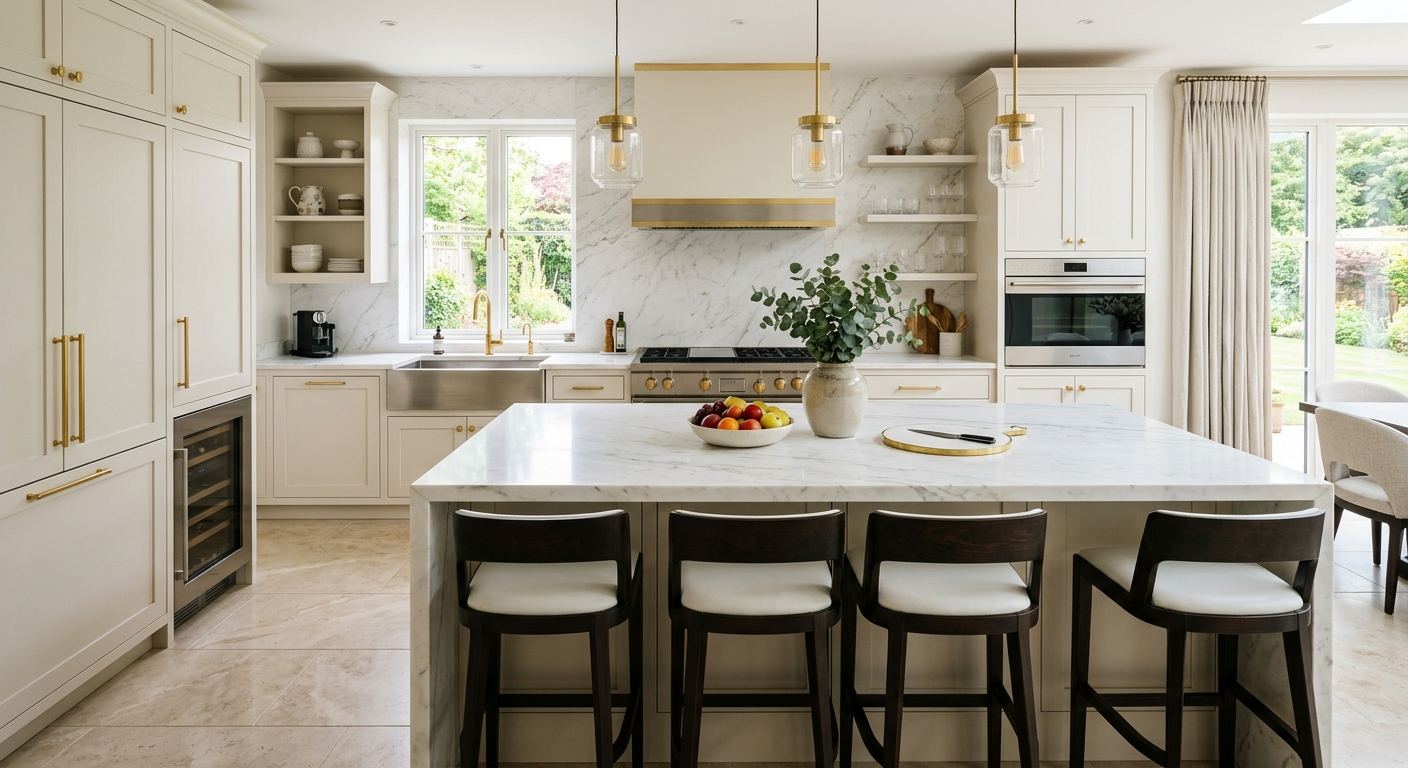
Kitchen renovation options and costs in Cadboro Bay
Kitchen renovation in Cadboro Bay is one of those projects where the “same” kitchen can land in very different price bands depending on finish expectations and how much of the room you truly change. With a population of about 4,000 in the area (Statistics Canada, 2021 Census), you’ll often see fewer trades per job than in larger centres, so scheduling can tighten during peak renovation months. And because the Lower Mainland–Southwest is tied closely to resale-driven decisions, homeowners in higher-value parts of the region tend to default to a more premium look—often because that finish level is easier to justify when you’re thinking about future buyers. (Statistics Canada, 2021 Census)
In Cadboro Bay and the broader Lower Mainland–Southwest, the climate is mild, but humidity and coastal air can still be tough on finishes—especially if cabinet materials or sealants aren’t chosen correctly. The bigger driver of cost, though, is the market: homes that sell at a premium typically see semi-custom or custom cabinetry and quartz/stone counters, while more budget-focused refreshes lean on laminate surfaces and practical hardware swaps. Availability also follows demand: Vancouver Island contractors may be limited on certain weeks, so you may see higher labour quotes when a project needs specific installers or when trades are booked out.
Below is a practical comparison of common renovation tiers you’ll see in Cadboro Bay; use it as a baseline before you start shopping for quotes.
| Renovation Tier |
What's Included |
Typical Duration |
Price Range |
| Cosmetic refresh (paint, hardware, new appliances only) |
Cabinet paint/finish where feasible, new pulls/knobs, caulking & trim touch-ups, appliance-only swaps (no cabinet/counter changes), basic sink re-install if unchanged |
3–7 days |
$8,000–$20,000 |
| Mid-range full renovation (new cabinets, counters, sink, tile) |
New semi-custom or quality stock cabinets, new countertop, sink & faucet, backsplash tile, updated lighting where needed, subfloor/backsplash prep, disposal |
3–6 weeks |
$40,000–$80,000 |
| High-end full renovation (custom cabinets, stone counters, island) |
Fully custom millwork, quartz or natural stone counters, island build (or expansion), upgraded hardware, integrated lighting, higher-spec backsplash (slab or premium tile), potential layout changes |
6–12 weeks |
$90,000–$120,000 |
| Cabinet refacing only (new doors + drawer fronts, same boxes) |
Door & drawer front replacement, new hinges/slides as needed, finish refinishing of boxes if required, optional interior upgrades, backsplash only if included by scope |
1–3 weeks |
$8,000–$35,000 |
| Countertop swap only (laminate to quartz or stone) |
Removal of existing counters, fabrication & install of new countertop, sink cut-outs/resets if unchanged layout, basic backsplash transition work as needed |
3–10 business days |
$3,000–$12,000 |
| Backsplash tile installation only |
Demo of existing backsplash if needed, tile supply & install, waterproofing prep, grout/seal where appropriate, clean-up |
3–7 days |
$1,500–$6,000 |
Prices are estimates only and vary by project scope, site access and material selection.
What affects the price of kitchen renovation in Cadboro Bay
In the Lower Mainland–Southwest, you can see quotes for the “same” kitchen vary by roughly 30–50% because pricing is driven more by local home value expectations and the finish tier buyers want than by weather alone. British Columbia projects often move quickly from “nice refresh” to “full rebuild” once homeowners change cabinetry configuration, upgrade countertops, or add an island—especially when those costs are easily absorbed into a higher resale narrative.
Local housing value and typical buyer income shape the finish tier far more than climate. In higher-value neighbourhoods within the Lower Mainland–Southwest, quartz or stone counters and semi-custom cabinetry are common because homeowners can justify the renovation cost on resale. In more modest scopes, laminate and stock cabinets dominate because they offer better cost control and faster timelines. In practical terms, you’ll usually see that the same kitchen layout—kept intact—stays closer to the lower end of the band, while layout changes push you toward the upper end even before premium finishes are chosen.
In Cadboro Bay, two local conditions commonly raise costs: (1) older homes with dated rough-ins can require extra time for plumbing/gas access, and (2) coastal humidity can reveal cabinet swelling or failing caulking earlier during demo, triggering additional prep work. A third factor is contractor availability—when multiple trades are booked, you often lose days to scheduling, which shows up in labour. For example, keeping the kitchen configuration and doing a countertop-only swap can stay within $3,000–$12,000, while adding an island and relocating a gas line can move the overall project toward $90,000–$120,000 even if cabinetry is “mid-range.”
| Price Factor |
Why It Matters |
Cost Impact |
| Cabinet tier — stock vs. semi-custom vs. fully custom millwork |
Custom sizing, higher-spec materials, better hardware and finish options change both material and install time |
Often shifts the kitchen by about $10,000–$40,000 depending on complexity |
| Countertop material — laminate vs. quartz vs. granite vs. stone |
Fabrication requirements and edge profiles vary; natural stone may require extra templating and sealing considerations |
Typical difference can be $3,000–$10,000+ for the same footprint |
| Layout change — wall removal, island add, plumbing/gas move |
New framing, rerouting lines, electrical adjustments and inspection requirements add unpredictability |
Commonly adds $8,000–$35,000 beyond “like-for-like” |
| Appliance package tier — builder vs. mid-range vs. pro-grade |
Pro-grade units increase venting needs, install clearances and sometimes electrical requirements |
Typically $2,500–$15,000 difference within the same kitchen |
| Flooring — refinish existing vs. full replacement |
Demolition around cabinetry can expose subfloor issues; matching new flooring to existing can add labour |
Often $1,500–$8,000 depending on condition and finish |
| Backsplash — ceramic tile vs. marble vs. full-height slab |
Large-format, natural stone, and full-height installs require more precision and time |
Can swing $1,000–$6,000+ on a mid-size kitchen |
| Electrical — new circuits for island, under-cabinet lighting |
New outlets, dedicated circuits, and lighting runs drive electrician time and material |
Often $800–$5,000+ depending on scope |
| Permit fees and licensed trade requirements |
Permits and inspections apply when plumbing, gas, electrical circuits, or structural changes are involved |
Usually $500–$3,000+ plus trade availability impacts |
Permits & regulations in British Columbia
In British Columbia, homeowners often assume any kitchen update needs permits, but the truth is more specific. Straightforward changes like swapping cabinets, replacing a countertop, and installing a new backsplash typically do not require permits. However, permits and licensed trades are usually required when you change the mechanical and electrical systems—especially where safety and code compliance are concerned.
Work that does require a permit commonly includes: moving plumbing supply or drain lines (for sinks, dishwashers, or adding a second sink); relocating gas appliances or running/reworking gas lines (stove/range and any gas-rated range hood venting); removing a load-bearing wall or making structural changes; and adding or changing electrical circuits (for example, adding dedicated circuits for an island, moving major appliances, or installing new under-cabinet lighting where wiring changes are required). Gas work must be completed by a licensed gas fitter, and electrical work must be done by a licensed electrician—with inspections typically required.
Step-by-step for Cadboro Bay homeowners: (1) ask the contractor to confirm what permits they will pull and which trades are responsible in the written scope; (2) request proof of current liability insurance and a certificate of insurance before work starts; (3) verify licensing through the applicable provincial online licensing registry and ensure the named individuals match the quote; (4) for workers’ compensation coverage, confirm their WSBC/WCB clearance letter (or equivalent proof) so you’re not exposed if a worker is injured. Before signing, ensure permit responsibility is clearly assigned in the contract.
Cabinets, countertops and layout decisions in Cadboro Bay
In Cadboro Bay, the three decisions that most strongly affect your end cost and your resale appeal are: (1) cabinet tier, (2) countertop material, and (3) whether you change the layout. Start with cabinet tier. Stock cabinets are the fastest and usually the cheapest, but the sizing constraints can show up if your room has an odd wall line or older framing. Semi-custom is the most popular mid-range route because you can get better fit and storage without going fully custom. Custom cabinets deliver the best fit and design-led layouts, but the price rises quickly once you add special corners, integrated panels, or a detailed island.
Next, countertop material. Laminate is budget-friendly and practical, but it’s less resilient against deep cuts and prolonged heat exposure. Quartz is a strong “busy kitchen” option: it’s durable, low-maintenance, and typically less fussy than granite regarding day-to-day care. Granite and natural stones can be a beautiful upgrade, while marble looks high-end but needs more careful sealing and maintenance—important in a coastal climate where frequent wipe-downs and moisture control matter.
Finally, layout changes. In the Lower Mainland–Southwest resale market, buyers often respond to open-concept flow and islands—yet layout changes are also where costs become unpredictable. If you’re keeping plumbing/gas where it is, you can hold closer to the lower bands; if you’re moving lines, adding circuits, or modifying venting, you’ll pay more regardless of whether you choose laminate or quartz.
Example: staying “like-for-like” and swapping old laminate for quartz can often land around $3,000–$12,000 for the countertop portion, while adding an island and relocating plumbing/gas commonly pushes the overall project toward the $90,000–$120,000 high-end band—especially when custom millwork and stone are included.
| Option |
Durability |
Maintenance |
Best For |
Price Range |
| Stock cabinets (big-box) |
Good for standard households; strength depends on box build and door quality |
Low; simple cleaning and basic tightening of hardware over time |
Budget refreshes with minimal layout changes |
$10,000–$25,000 |
| Semi-custom cabinets (local dealer) |
Very solid with better fit, hinges/slides options, and finish consistency |
Low to moderate; keep up with sealing at edges where moisture can reach |
Most Cadboro Bay owners balancing cost and a custom look |
$25,000–$55,000 |
| Custom cabinets (local millwork shop) |
Highest durability and fit; designed around irregular spaces and storage needs |
Low; best results come from proper sealing and moisture-resistant materials |
Design-led kitchens and complex islands/open-concept builds |
$55,000–$85,000+ |
| Laminate countertop |
Moderate; can chip at edges and is less forgiving with heat |
Low; avoid hot pans directly and replace protective edges if damaged |
Cash-conscious renos where the priority is layout and cabinet upgrades |
$2,500–$5,500 |
| Quartz engineered countertop |
High; resistant to staining and everyday wear |
Low; wipe-clean routine with no routine sealing |
Busy kitchens that need durable performance in a coastal, humid environment |
$5,500–$10,500 |
| Granite / natural stone countertop |
High; strong surface but varies by stone type and edge profile |
Moderate; periodic sealing helps, especially in moist climates |
Homeowners wanting natural variation and premium appearance |
$7,000–$12,000 |
| Butcher block countertop |
Moderate to high with proper care; can scratch but can be sanded/refinished |
Higher than quartz; needs regular oiling and careful moisture control |
Warm, casual styles and households that cook daily |
$4,000–$8,500 |
| Marble countertop |
Moderate; can etch with acids and may mark more easily |
Higher; requires sealing and careful cleaning habits |
Premium look for lower-impact use cases |
$9,000–$14,000+ |
How to choose a kitchen renovation contractor in Cadboro Bay
Choosing the right contractor in Cadboro Bay is mostly about verification and clarity. Start with British Columbia licensing and coverage. Confirm the contractor is licensed where applicable (and that the licensed trades you’ll rely on—gas fitter and electrician—are verified for their specific work). Ask for proof of liability insurance (certificate of insurance naming you as certificate holder where appropriate), and confirm workers’ compensation coverage via a WSBC/WCB clearance letter. Then verify professional standing using provincial online registries for the individuals doing the work, not just the company name on the quote.
Next, get 2–3 itemised written quotes. You want a labour-and-materials breakdown: cabinet supply vs install labour, countertop fabrication vs install, tile labour, plumbing/electrical trade costs, disposal, and any demolition allowance. A lump-sum number without exclusions invites change orders later.
Read the scope carefully for exclusions: Is permit pulling included? Is old material disposal included? What about cabinet re-levels, subfloor repairs, drywall patches, or new toe-kick/trim? Warranty matters too—ask for the workmanship warranty length and whether product warranties are manufacturer-backed and transferable when you sell the home. Payment schedule should be controlled: never pay more than about 10–15% upfront, and use a holdback until the job is complete. Finally, require a start date and completion estimate in writing, including how long materials lead times may take.
- Verify the contractor’s and trade partners’ licences using the correct provincial registries.
- Request a current certificate of insurance and confirm coverage amounts.
- Confirm WSBC/WCB clearance with a letter before work begins.
- Require a written scope with line-by-line allowances and exclusions.
- Ask who pulls permits and whether permit fees are included in the quote.
- Ensure plumbing/gas and electrical work is quoted as licensed trade scopes.
- Confirm disposal and dump fees are included (or stated as an add-on).
- Check cabinet ordering timelines and whether the quote includes delays/lead time plan.
- Ask about moisture-resistant cabinet installation details for coastal areas.
- Get warranty details for workmanship and confirm manufacturer warranty conditions.
- Use milestone-based payments with a holdback until final walkthrough.
- Require a written schedule for demo, rough-in, cabinet install, countertop templating, and final trim.
Red flags in Cadboro Bay include: vague scopes that don’t list what’s included, quotes that don’t name the licensed trades for plumbing/gas/electrical, requests for large upfront deposits (beyond roughly 10–15%), “verbal” permit responsibility, and warranties that only cover labour for a very short window without product details.
Frequently asked questions — kitchen renovation in Cadboro Bay
Should I renovate my kitchen before selling in Cadboro Bay?
If you’re planning to sell in Cadboro Bay, a kitchen refresh can help, but the best approach is “buyer-relevant” upgrades, not over-improving. In the Lower Mainland–Southwest, many buyers respond well to a clean, modern look: updated cabinets (often semi-custom), durable counters, and an upgraded backsplash. If your budget is tight, prioritize changes that modernize appearance without triggering expensive layout work—like a countertop swap or a cosmetic refresh. For reference, a countertop-only swap often sits around $3,000–$12,000, while a full mid-range renovation commonly ranges $40,000–$80,000. Before you commit, compare your current kitchen’s condition to the typical finish level on nearby listings and decide whether the renovation will address real pain points (poor storage, dated materials, or layout friction).
What's the most popular kitchen style in Cadboro Bay right now?
Right now, homeowners in Cadboro Bay tend to choose styles that look timeless on resale photos: warm neutrals, simple shaker or shaker-adjacent cabinet faces, and a clean backsplash that doesn’t feel “trendy” in two years. Semi-custom cabinetry is especially popular because it gives better fit around older framing and can incorporate storage upgrades that stock layouts can’t. Quartz counters are often the default for busy kitchens because they hold up well and don’t demand heavy daily care. Islands are also a common request, but the design usually stays resale-friendly: comfortable seating clearance and practical circulation. The most “popular” style varies by budget tier, but the consistent theme is a bright, uncluttered look with durable materials that handle coastal humidity and everyday cooking.
How do I know if I need to update my kitchen plumbing in Cadboro Bay?
You may not need to replace everything, but you should plan for plumbing updates if you’re moving fixtures, dealing with leaks, or finding deteriorated rough-ins during demo. Signs include slow drains, water backing up, frequent faucet repairs, rust staining, or soft spots at sink base cabinets. Older homes may also have supply line materials that can be harder to work with once cabinets are removed, and coastal moisture can accelerate cabinet face warping when leaks are minor but persistent. If you’re changing the layout—moving a sink, adding a dishwasher, or relocating a gas-rated range hood vent—plumbing changes become more likely and may require permits. A contractor should inspect existing shutoffs, supply lines, drain routing, and the condition of any access panels before finalizing scope and pricing.
What is the difference between a galley and open-concept kitchen?
A galley kitchen is a narrow, corridor-style layout with counters on two parallel walls, which usually optimizes efficiency and can reduce the need for major structural changes. An open-concept kitchen removes barriers between the kitchen and living space, often improving sightlines and how the home feels when entertaining. In Cadboro Bay, open-concept renovations can be popular for resale, but they’re typically more expensive because walls may be removed, new supports could be required, and electrical/plumbing/gas lines might need rerouting. If you’re staying with a galley layout, costs often stay closer to the lower bands—particularly for cosmetic updates or countertop swaps. If you’re moving toward open-concept, expect more trades, longer schedules, and more permitting steps depending on what’s behind the wall.
How do I get accurate kitchen renovation quotes in Cadboro Bay?
Accurate quotes start with a clear, itemised scope and consistent materials. Ask for 2–3 written quotes that break out labour and materials (cabinet supply/install, countertop fabrication/install, tile labour, and any plumbing/electrical allowances). Bring photos and measurements, and specify whether the layout is staying the same or changing (especially where plumbing/gas and electrical are involved). Confirm who is pulling permits and whether disposal is included. For example, if one quote lists a “full renovation” but doesn’t include tile or doesn’t state whether cabinets are semi-custom or custom, the difference can be huge—like falling anywhere between $40,000–$80,000 and $90,000–$120,000 depending on cabinetry and countertop tier. Finally, ask for a schedule and clarify lead times for cabinets and countertop templating.
What's the best countertop material for a busy Cadboro Bay kitchen?
For most busy households in Cadboro Bay, quartz is the top balance of durability and low maintenance. It resists staining and everyday wear better than laminate, and it avoids the more careful maintenance routine some natural stones require. If you cook frequently, want a consistent surface, and prefer a straightforward wipe-down approach, quartz usually wins. Laminate can work if the goal is to modernize on a tight budget, but it’s more vulnerable to chipping at edges and heat damage. Natural stone like granite can be great if you like the patterning, but you may need periodic sealing and careful cleaning habits. Marble is beautiful, but it’s generally the highest-maintenance option for acids and etching. In terms of pricing, quartz often falls within about $5,500–$10,500, while laminate typically sits around $2,500–$5,500.