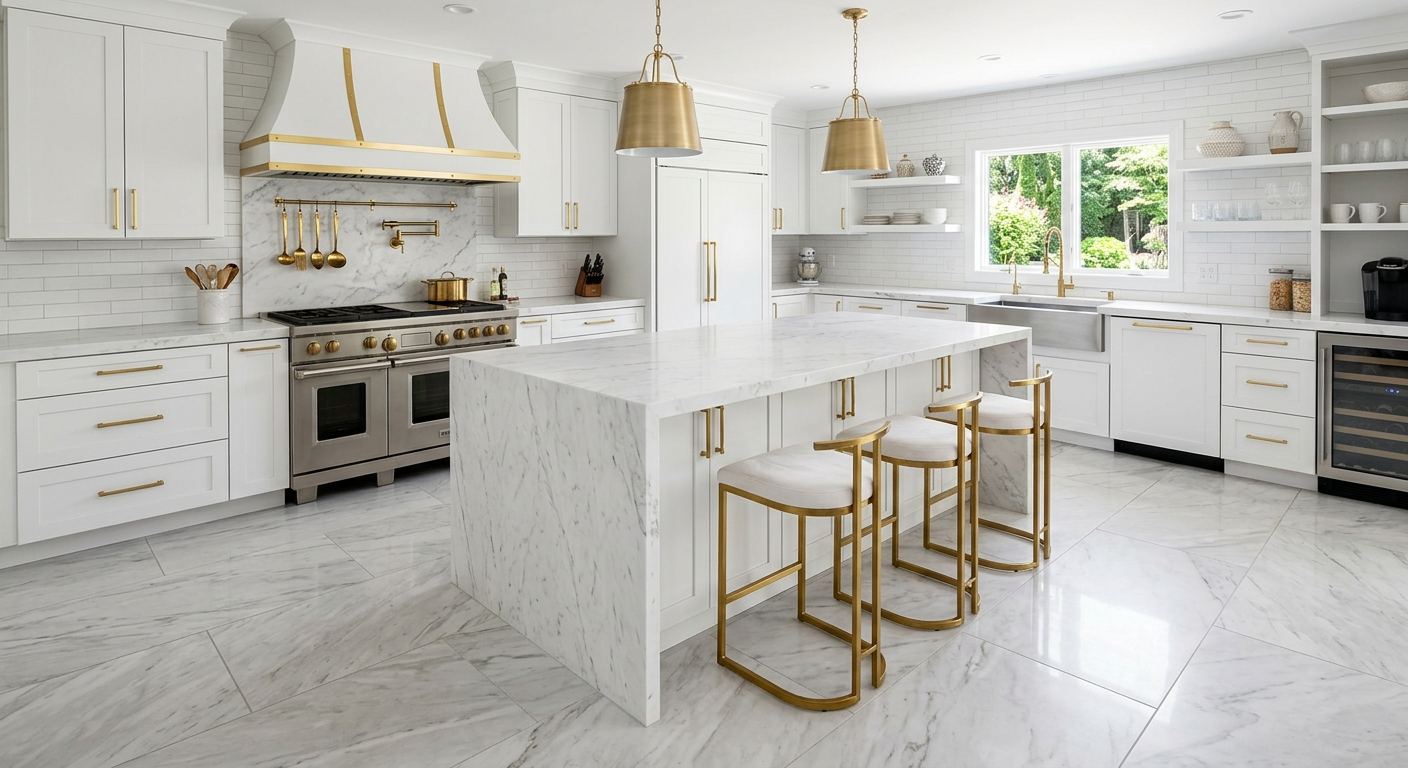
Kitchen renovation options and costs in Oaklands
In Oaklands, kitchen renovation options tend to sort quickly into a few predictable tiers: a cosmetic refresh that focuses on surfaces, a practical mid-range rebuild that upgrades cabinetry and key finishes, and a high-end package aimed at premium resale appeal. With a population of 7,585 (Statistics Canada, 2021 Census), Oaklands is small enough that many homeowners work with a limited set of local kitchen and cabinet installers, so scheduling is often more about trade availability than “market demand.” At the same time, Lower Mainland–Southwest homeowners typically invest based on what buyers expect when they tour—especially in higher-value pockets where more people favour made-to-fit millwork, upgraded hardware, and quartz or stone counters.
In the Lower Mainland–Southwest, pricing is driven more by home value, income, and the intended finish level than by climate. That said, moisture and temperature swings (from coastal weather and winter freeze-thaw in some homes) can expose weak spots over time—so older cabinetry boxes, older tile substrates, or aging caulking around plumbing penetrations can add “surprise” labour during demolition. Tradeship capacity and material lead times also matter: during busy periods, cabinet and counter ordering can push the schedule even when demolition is fast.
If you’re in the area, many homeowners in nearby Oaklands-adjacent neighbourhoods like the Grandview-Woodland area find the trade ecosystem particularly active—demand tends to spike where families plan both kitchen upgrades and adjacent bathroom/laundry improvements. With that in mind, use the table below to map typical scope to realistic budget expectations, then tailor the tier once you know what’s moving (or not moving).
| Renovation Tier |
What's Included |
Typical Duration |
Price Range |
| Cosmetic refresh (paint, hardware, new appliances only) |
Prep and paint, new pulls/knobs, appliance swap, minor caulking/trim touch-ups (no cabinet box changes) |
1–2 weeks |
$8,000–$20,000 |
| Mid-range full renovation (new cabinets, counters, sink, tile) |
New semi-custom or upgraded-stock cabinets, quartz or laminate counters, new sink/faucet, backsplash tile, new flooring section if needed |
4–8 weeks |
$40,000–$85,000 |
| High-end full renovation (custom cabinets, stone counters, island) |
Custom cabinetry and millwork, stone counters (quartz/stone), island with upgraded hardware, extended backsplash, improved lighting/electrical allowances |
8–16 weeks |
$85,000–$120,000 |
| Cabinet refacing only (new doors + drawer fronts, same boxes) |
Door/drawer-front replacement, refinishing existing cabinet boxes (when sound), new pulls, re-sealing at joints |
2–5 weeks |
$8,000–$35,000 |
| Countertop swap only (laminate to quartz or stone) |
Remove and replace existing counters, new templating, sink cut-out provision (scope permitting), basic sealing and edge finishing |
1–3 weeks (plus lead time) |
$10,000–$28,000 |
| Backsplash tile installation only |
Surface prep, tile install, grout/seal, cutouts for outlets and fixtures, cleanup |
3–7 days |
$1,500–$6,000 |
Prices are estimates only and vary by project scope, site access and material selection.
What affects the price of kitchen renovation in Oaklands
Two quotes for the “same” kitchen can vary by about 30–50% across the Lower Mainland–Southwest and other parts of British Columbia because the labour mix, material tier, and how much redesign is included differ from job to job. In high-value Lower Mainland–Southwest markets, homeowners more often choose quartz or stone counters and semi-custom cabinetry because those upgrades are easier to justify on resale; in lower-cost markets, laminate and stock cabinets still dominate and typically deliver a better ROI for the spend. Climate isn’t the main driver here—market expectations and finish level are. However, the coastal region’s humidity and winter temperature swings can uncover substrate issues (old wallboard behind tile, soft framing near sinks/dishwashers, or failing sealants), and that can add labour even when you think you’re doing a “refresh.”
Here are a few Oaklands-specific cost shifters you’ll see in real projects. First, if your home has older plumbing rough-ins, moving a sink even a short distance can trigger hidden work to reroute drains—often adding cost regardless of whether you select laminate or quartz. Second, if your cabinets are original and the wall is out of plumb, custom installation time rises because floors and walls in older homes can vary more than in newer builds. Third, if you’re targeting a mid-range renovation (for example, $40,000–$85,000) but decide halfway through to add an island, the plumbing/electrical scope can push you toward higher-end totals. That’s why layout changes—removing a wall, adding an island, or moving a gas line—add the most unpredictable cost.
Across the region, appliance and cabinet lead times can also widen variance: a cabinet package swap from semi-custom to fully custom isn’t just material—it changes install time, template accuracy, and finishing trades. Pair that with typical backsplash/tile work (often $1,500–$6,000) and you can see how “small decisions” stack into big differences.
| Price Factor |
Why It Matters |
Cost Impact |
| Cabinet tier — stock vs. semi-custom vs. fully custom millwork |
Higher tiers mean made-to-fit sizing, more finishing steps, better hardware options and stronger warranty terms |
Often +$15,000 to +$50,000 from stock to fully custom on full projects |
| Countertop material — laminate vs. quartz vs. granite vs. stone |
Material cost and fabrication complexity; stone edges, seams, and thickness can require additional labour |
Laminate can be ~1/3 to 1/2 the cost of quartz/stone in many cases |
| Layout change — wall removal, island add, plumbing/gas move |
Changes trigger framing, demolition, and trades coordination; inspections and reroutes add unpredictability |
Commonly adds +$10,000 to +$35,000 even before premium finishes |
| Appliance package tier — builder vs. mid-range vs. pro-grade |
Pro-grade can require different electrical/venting clearances and increases install and accessory costs |
Typically +$2,000 to +$15,000 depending on selections |
| Flooring — refinish existing vs. full replacement |
Subfloor condition and leveling affect how much replacement/patching is needed around demolition |
Can swing +$1,500 to +$8,000 based on what’s underneath |
| Backsplash — ceramic tile vs. marble vs. full-height slab |
Full-height and premium stone raise material, weight, and labour for proper support and sealing |
Tile installs can be +$1,500 to +$6,000; premium slabs can push higher |
| Electrical — new circuits for island, under-cabinet lighting |
New island power outlets, lighting runs, and switch locations require planning and permit/inspection when applicable |
Often +$1,000 to +$6,000 depending on scope |
| Permit fees and licensed trade requirements |
Required permits add administrative time; licensed trades increase labour line items |
Typically +$500 to +$3,500, higher when multiple systems are altered |
Permits & regulations in British Columbia
In British Columbia, straightforward kitchen swaps often do not require permits—while the moment you change a system (plumbing, gas, or electrical circuits) the process typically does. Cabinet and countertop replacements usually do not require a permit, provided you are not altering building systems behind them. Likewise, swapping fixtures like a sink and faucet without changing the supply/drain routing is usually treated as a no-permit kind of upgrade.
Where homeowners in Oaklands need permits and licensed trades is when you relocate or significantly alter services. Common examples that do require permits and licensed work include: moving plumbing supply or drain lines; relocating gas for a stove or any gas connection; removing a load-bearing wall; adding new electrical circuits for an island (or relocating substantial electrical components); and installing or rerouting venting tied to gas appliances. Gas work must be done by a licensed gas fitter, and electrical work must be done by a licensed electrician; both generally require inspections.
To verify a contractor in Oaklands, start by asking for (1) their British Columbia licence details (and company registration where applicable), (2) proof of liability insurance, and (3) confirmation of workers’ compensation coverage (WCB/WSIB coverage). Then ask for clearance documentation if they have staff. Request a certificate of insurance and ensure the name matches the signing company. Finally, confirm in writing who is pulling permits and paying the permit fees—responsibility belongs in the contract, not in an email thread after work begins.
Cabinets, countertops and layout decisions in Oaklands
The three biggest decisions in a kitchen renovation in Oaklands are (1) cabinet tier, (2) countertop material, and (3) layout changes. These choices determine not only cost, but also how the finished kitchen performs day-to-day and how it will be valued when you sell. In the Lower Mainland–Southwest, buyers commonly expect clean, durable surfaces and modern storage—so stock cabinets can look dated faster, while semi-custom and custom packages help your layout fit the room and reduce wasted space.
Cabinet tier: stock cabinets are typically fastest and cheapest, but you’ll often spend extra on filler panels or compromises in fit. Semi-custom is the most popular mid-range choice because it balances realistic budgeting with better sizing and more flexible layouts. Custom cabinets are the highest cost because they’re built to the room and usually allow more thoughtful storage (pantry layouts, appliance garages, and optimized drawers). Countertops: laminate is budget-friendly and fine for light use, while quartz engineered counters are popular in busy kitchens because they’re durable and easier to maintain than most natural stones. Natural stone options like granite are also durable, but require more careful sealing practices; marble is beautiful but more prone to staining and etching.
Layout changes are where ROI either clicks—or doesn’t. An island can be justified when it meaningfully improves circulation and seating, especially if you currently have an inefficient single-cook zone. But if it requires moving plumbing or adding electrical for outlets/lighting, it can push your total toward higher project bands (for example, a renovation targeting $40,000–$85,000 may move upward once island plumbing/electrical complexity is added). In short: spend extra on layout only if the space gain is real.
| Option |
Durability |
Maintenance |
Best For |
Price Range |
| Stock cabinets (big-box) |
Good for standard use; durability depends on box quality and hardware |
Low; mainly keep hinges and runners clean and tightened |
Budget refreshes where the footprint won’t change |
$8,000–$25,000 |
| Semi-custom cabinets (local dealer) |
Very good; better options for drawer builds and finish control |
Low; typical wipe-down and routine hardware checks |
Most Oaklands homeowners balancing fit and budget |
$20,000–$55,000 |
| Custom cabinets (local millwork shop) |
Excellent; built-to-fit reduces stress points and improves alignment |
Low to moderate; longer service life rewards proper care |
Complex layouts, high-end storage needs, and premium finishes |
$40,000–$90,000 |
| Laminate countertop |
Moderate; can chip or delaminate if edges aren’t protected |
Low; avoid prolonged moisture at seams and hot-pans directly on surface |
Cost-controlled upgrades |
$3,000–$6,500 |
| Quartz engineered countertop |
High; resistant to scratches and most household staining |
Low; wipe clean with non-abrasive products |
Busy Oaklands households wanting a “set it and forget it” surface |
$6,000–$12,000 |
| Granite / natural stone countertop |
High; very durable with proper sealing |
Moderate; periodic sealing and quick cleanup of spills |
Natural look seekers and durable cooking surfaces |
$7,000–$14,000 |
| Butcher block countertop |
Good; sturdy but susceptible to deep scratches and moisture if neglected |
Moderate; needs oiling and attentive maintenance near sinks |
Warm, traditional style kitchens |
$4,000–$9,500 |
| Marble countertop |
Moderate; more prone to etching from acids and staining |
Higher; frequent sealing and careful spill management |
Low-to-moderate cooking use and premium aesthetic |
$10,000–$18,000 |
How to choose a kitchen renovation contractor in Oaklands
Choosing the right kitchen contractor in Oaklands is less about whether they sound confident and more about whether their documentation, quoting style, and scheduling are accountable. In British Columbia, verify licensing and coverage before you sign. Ask for proof of liability insurance and the contractor’s workers’ compensation coverage (WCB/WSIB coverage). How to check: confirm the name on the certificate matches the legal business; review the coverage dates; and request any clearance letter if they provide one for their workforce. For trades involved in gas or electrical, require evidence that the licensed parties are booked for the permitted scope.
Next, get 2–3 itemised written quotes that break labour and materials into lines—don’t accept a single “lump sum” unless the scope is truly identical. The quote should specify what’s included in demolition, disposal, cabinet install, counter templating, and whether drywall/tile substrate repairs are covered. Confirm: is permit pulling included? Is disposal included? Are drywall patching and paint included after trades? Then look at warranties: workmanship warranty length, product/manufacturer warranties, and whether the warranty transfers if you sell the home.
Finally, watch payment and timing. Never pay more than 10–15% upfront; hold back a portion until key milestones are complete. Get the start date and completion estimate in writing, including lead-time assumptions for cabinets and countertops.
- Confirm they carry liability insurance and provide a current certificate of insurance.
- Verify WCB/WSIB coverage for their workers (request clearance documentation if available).
- Ask who pulls permits for plumbing/gas/electrical changes and who pays the fees.
- Require itemised quotes with labour + materials (not just totals).
- Check inclusions: demolition, haul-away/disposal, drywall patching, and dust protection.
- Confirm counter templating and who is responsible for fabrication accuracy.
- Ask how they handle out-of-square walls/floors common in older Oaklands housing stock.
- Ensure electrical and under-cabinet lighting lines are explicitly scoped and priced.
- Clarify appliance installation responsibility (disconnect/reconnect, venting allowances).
- Review warranty terms in writing (workmanship + manufacturer) and transferability.
- Verify payment schedule: 10–15% upfront max, then milestone payments.
- Get a start date and a realistic completion timeline tied to ordered materials.
Red flags I see in Oaklands often include: vague scopes (“all related work included” without specifics), refusing to provide itemised pricing, missing or outdated insurance/WCB documents, promising delivery dates without acknowledging cabinet/counter lead times, and requesting large upfront deposits beyond 10–15%.
Frequently asked questions — kitchen renovation in Oaklands
How do I get accurate kitchen renovation quotes in Oaklands?
For Oaklands, the fastest way to accurate quotes is to standardize what you’re asking for. Provide measurements, photos, and a simple scope list (what’s staying, what’s moving, and what finishes you want). Then ask for itemised quotes so labour and materials are separated—especially for cabinets, counters, tile, and any electrical/plumbing allowances. If you’re changing a layout (like adding an island), be clear whether you want outlets/lighting and whether plumbing/gas moves are included. In practice, many projects land in the mid-range when homeowners aim for a full renovation budget like $40,000–$85,000, but quotes can swing if the contractor discovers older substrate issues during demo. Also, confirm lead times for cabinet and countertop ordering so schedules and cash-flow match reality.
What's the best countertop material for a busy Oaklands kitchen?
For most busy kitchens in British Columbia (including Oaklands), quartz is a strong “daily driver” choice: it’s tough, resists staining from typical household use, and usually needs only routine cleaning. Laminate can work if you’re cost-controlled, but seams and edges require care, and it can show wear sooner in high-traffic cooking zones. Natural stone like granite is durable too, but it often calls for periodic sealing and quick spill management. If you’re considering a countertop swap only, you’ll usually see totals like $10,000–$28,000 depending on size, edge profile, and sink cut-outs. For most households, the practical decision is quartz versus laminate—granite is great if you want natural variation and are willing to maintain sealing schedules.
How do I add an island to my Oaklands kitchen?
Add an island only when the space supports it—clear walkways and door swings matter more than style. Before you commit, decide the island “services” plan: will you add an outlet for small appliances, under-cabinet lighting, and/or a vented cooktop? Those choices drive electrical work and sometimes plumbing/gas modifications, which can require permits and licensed trades in British Columbia. If your island requires moving plumbing supply/drain or relocating gas, that’s where budgets commonly jump. A good approach is to ask your contractor to outline two options: a “non-serviced” island (storage only) and a fully serviced island. That comparison makes it easy to justify cost. Even if your renovation starts as a mid-range plan, island services can move you toward higher-end totals once labour, inspections, and rerouting are included.
How much does a kitchen renovation cost in Oaklands?
In Oaklands, kitchen renovation pricing typically follows regional tiering rather than climate alone. For a cosmetic refresh (paint, hardware, new appliances only), budgets often start around $8,000–$20,000. A practical mid-range full renovation—new cabinets and counters, sink, and tile—commonly lands around $40,000–$85,000. If you go for premium finishes like custom cabinetry and stone counters and include an island with a more complex scope, it can rise into a high-end band of $85,000–$120,000. If you’re unsure which tier you’re actually buying, request an itemised quote that separates cabinetry tier, countertop material, backsplash/tile, and any layout-related trades (plumbing/gas/electrical), because that breakdown is where most cost differences are hiding.
How long does a kitchen renovation take in Oaklands?
Timelines in Oaklands depend mostly on material lead times and how much demolition trades overlap. A cosmetic refresh can often be completed in about 1–2 weeks if appliances and paint materials are ready. A mid-range full renovation usually takes around 4–8 weeks once cabinets and countertops are ordered and templated. High-end custom cabinetry can extend the schedule to 8–16 weeks because fabrication and installation steps multiply. Countertop swaps often feel quick but still require templating and fabrication time, so they’re frequently more like 1–3 weeks. If you add an island and relocate plumbing/gas/electrical, the coordination and inspection steps can add days to weeks. Your best protection is a written timeline that states the start date, completion estimate, and assumptions about lead times for cabinets and counters.
Quartz vs granite countertops — which is better?
“Better” depends on your priorities, but for most Oaklands households, quartz is the lower-hassle option. Quartz countertops are engineered to be consistently strong and typically resist staining and scratching better in day-to-day use, with easier maintenance (usually just routine cleaning). Granite is also durable and offers natural variation and a premium look, but it often requires periodic sealing and more careful management of acidic spills depending on the stone. Price-wise, quartz commonly sits in the broader countertop band of $6,000–$12,000, while granite/natural stone is often higher once you account for slab selection and cut/edge complexity. If you love the natural veining of granite and are comfortable with maintenance, granite is a great choice; if you want “set it and forget it,” quartz is usually the best match.