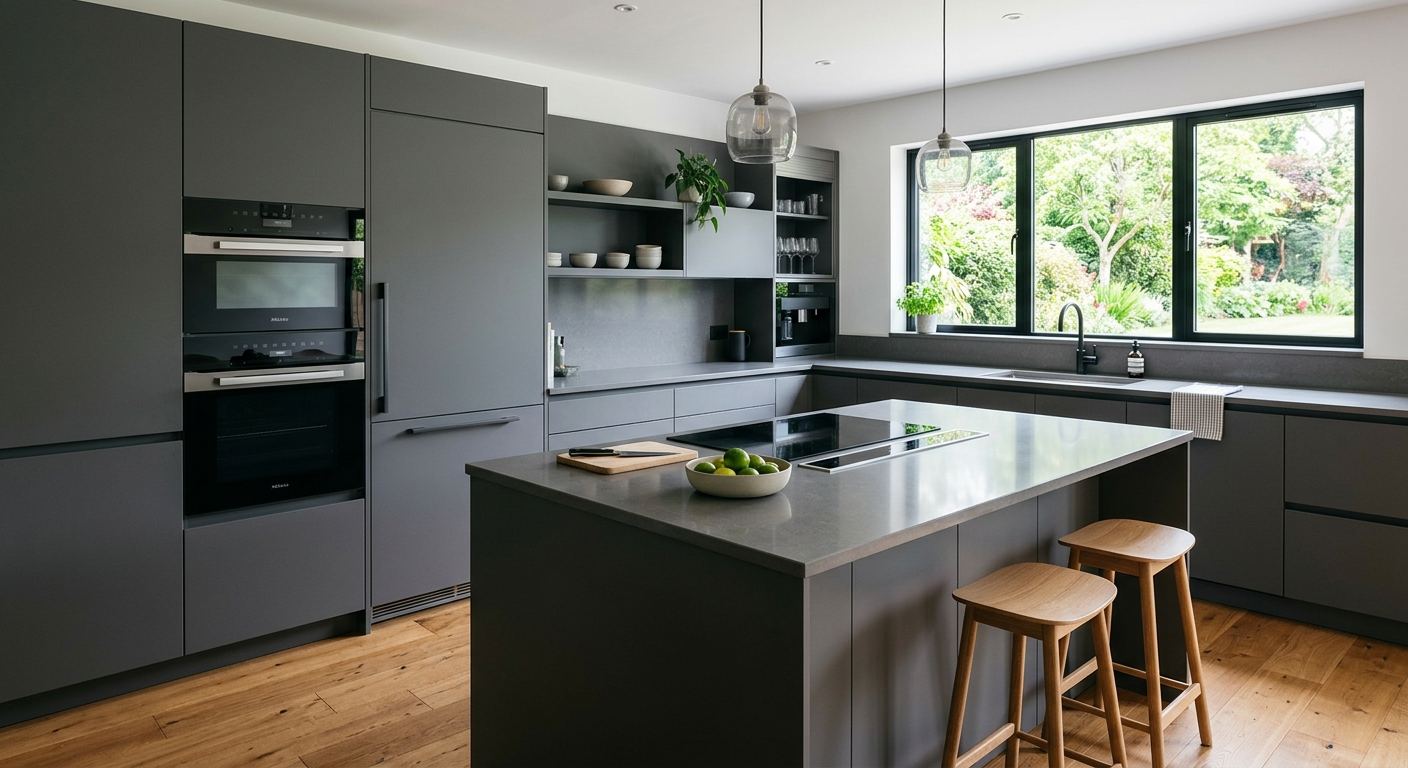
Kitchen renovation options and costs in Mill Bay
Kitchen renovations in Mill Bay typically start with a decision about finish level, not just square footage. With a population of about 7,200 people (Statistics Canada, 2021 Census), Mill Bay has a smaller local contractor pool than bigger centres, so scheduling and “who can get here when” can influence labour availability. In the Lower Mainland–Southwest, what you pay is also strongly tied to the value of homes and the expectations of buyers on resale—owners often treat the kitchen as a high-visibility investment, which nudges many projects toward semi-custom cabinetry and more durable surfaces.
Across the Lower Mainland–Southwest, costs can swing because homeowners in higher-value pockets usually default to quartz or stone counters, upgraded hardware, and layout-led storage—those choices are easier to justify when buyers see the upgrade. By contrast, a refresh scope that keeps existing cabinet boxes and uses laminate or standard counters tends to stay closer to the lower end of the province-wide bands.
Climate matters, but it’s usually secondary here. British Columbia’s coastal weather can mean higher humidity indoors, which makes moisture-tolerant finishes and well-sealed transitions around sinks and under-cabinet areas more important; the big cost differences still come from cabinetry complexity, counter material, and whether plumbing or electrical has to move. In Mill Bay, trade demand is especially common around the Cowichan Valley links and fast-paced renovations where homes are near busy commuting routes and sightlines—those jobs often have tighter access windows for delivery trucks and trades.
Below is a practical way to compare the most common scope types before you request quotes.
| Renovation Tier |
What's Included |
Typical Duration |
Price Range |
| Cosmetic refresh (paint, hardware, new appliances only) |
Cabinet paint or refinish, new hardware, appliance swap (no plumbing/gas relocation), caulking/touch-ups, basic countertop cleaning or reseal if applicable |
3–7 days |
$8,000–$18,000 |
| Mid-range full renovation (new cabinets, counters, sink, tile) |
New semi-custom cabinets, new counters, sink and faucet, backsplash tile, flooring touch-ups or refinishing plan, standard labour for plumbing/electrical hookups, disposal |
3–6 weeks |
$40,000–$85,000 |
| High-end full renovation (custom cabinets, stone counters, island) |
Fully custom millwork, stone counters, larger layout changes (often island), upgraded hardware, designer lighting plan, full backsplash, premium tile or slab detailing, more complex trade coordination |
6–12 weeks |
$85,000–$120,000 |
| Cabinet refacing only (new doors + drawer fronts, same boxes) |
Door/drawer front replacement, veneer/finish system on existing boxes, new hardware, alignment adjustments, basic trim work |
1–3 weeks |
$8,000–$35,000 |
| Countertop swap only (laminate to quartz or stone) |
Remove old top, template, install new quartz/stone, sink cut-out updates if needed, reseal and caulk, backsplash adjustment where required |
4–10 days |
$3,000–$12,000 |
| Backsplash tile installation only |
Tile supply/installation (scope-dependent), surface prep, grout/seal, edge detailing around outlets and backsplash termination |
2–7 days |
$1,500–$6,000 |
Prices are estimates only and vary by project scope, site access and material selection.
What affects the price of kitchen renovation in Mill Bay
It’s common to see quotes for the “same” kitchen end up 30–50% apart in the Lower Mainland–Southwest and across British Columbia. The reason usually isn’t climate alone—it’s the local mix of home value, household income expectations, and the finish tier homeowners choose. In higher-value Metro Vancouver areas, owners lean toward quartz or stone counters, semi-custom cabinetry, and upgraded hardware because those costs are more easily recovered at resale. In more modest markets, laminate and stock cabinets dominate because they offer the best return for a practical refresh.
In Mill Bay, the Lower Mainland–Southwest dynamic still matters: even when your project isn’t in Vancouver proper, your contractor pricing and material lead times often track the same supplier network. Climate adds a layer of durability requirements. Coastal humidity and temperature swings make it more important to get proper sealing around sinks, maintain consistent ventilation, and choose cabinetry finishes that won’t swell at the edges. That doesn’t usually change the base cost by itself—layout and trade scope do.
Layout changes are the biggest wildcard regardless of finish tier. Removing a wall, adding an island, or moving a gas line can quickly move you from a mid-range full renovation band (around $40,000–$85,000) into the higher end ($85,000–$120,000) because it adds structural work, longer timelines, and additional trades coordination.
Concrete Mill Bay examples contractors see often: (1) older homes may have finished walls that hide older plumbing routing, so “simple” sink moves turn into longer drain/supply reruns; (2) homes with limited access on site can raise labour due to staging and slower material handling; and (3) upgrading to under-cabinet lighting and extra outlets typically adds electrical time even when cabinetry remains similar.
| Price Factor |
Why It Matters |
Cost Impact |
| Cabinet tier — stock vs. semi-custom vs. fully custom millwork |
Custom sizing, internal organizers, and fit-and-finish drive labour and material costs |
Can shift the cabinet portion by several thousand dollars and move whole projects up a tier |
| Countertop material — laminate vs. quartz vs. granite vs. stone |
Material price, templating accuracy, and install method change costs |
Typical countertop install swaps range from $3,000–$12,000 depending on material and complexity |
| Layout change — wall removal, island add, plumbing/gas move |
Structural/utility relocations add trades, inspections, and schedule risk |
Often adds the largest unpredictable jump, regardless of finish level |
| Appliance package tier — builder vs. mid-range vs. pro-grade |
Dimensions, venting requirements, and power needs differ by tier |
Can add thousands quickly, plus installation complexity for pro-grade units |
| Flooring — refinish existing vs. full replacement |
Subfloor conditions and matching existing materials affect scope |
Refinishing can keep costs restrained; full replacement adds material and labour |
| Backsplash — ceramic tile vs. marble vs. full-height slab |
Surface prep, cut complexity, and material fragility change install time |
Backsplash & tile typically lands around $1,500–$6,000 for install-only scopes |
| Electrical — new circuits for island, under-cabinet lighting |
New outlets, lighting runs, and island/under-cabinet power increase electrical scope |
Commonly changes both labour hours and inspection steps |
| Permit fees and licensed trade requirements |
Certain work triggers permits and licensed trade involvement |
Adds administration and trade scheduling time; inspection readiness affects timelines |
Permits & regulations in British Columbia
In British Columbia, not every kitchen update needs a permit. If you’re swapping cabinets in place, replacing countertops, or changing out appliances without altering plumbing routes or gas/electrical circuits, permits are typically not required. A straightforward countertop swap or cabinet refacing usually stays in the “no permit” category because you’re not moving services.
Permits and licensed trades are commonly required when the work changes the building services or structure. That includes moving plumbing supply or drain lines (even if it’s “just” the sink), relocating a gas line or doing gas appliance work (stove/range hood with gas), removing a load-bearing wall, or adding new electrical circuits for an island, under-cabinet lighting, or additional outlets. Those are the jobs that require proper inspections after the licensed trade completes the work.
For a homeowner in Mill Bay, the safest approach is to verify three things before signing: the contractor’s licence/credentials where applicable, their liability insurance certificate, and their worker coverage arrangements (commonly WCB/WorkSafeBC coverage). Steps: ask the contractor for (1) a certificate of insurance with coverage dates and project address listed; (2) confirmation they carry the appropriate coverage for their workers; and (3) licence and clearance information in writing. You can then cross-check credentials through online trade/labour registries and confirm insurance details with the carrier if anything looks off. Finally, confirm in the contract who pulls permits—responsibility should be spelled out line-by-line.
Cabinets, countertops and layout decisions in Mill Bay
The three most consequential decisions in a Mill Bay kitchen renovation are cabinet tier, countertop material, and layout change. Cabinet tier sets the overall look and how well the kitchen fits your walls, doors, and sightlines. Stock cabinets are the fastest and cheapest because they come in standard widths and fewer custom adjustments. Semi-custom cabinets are usually the sweet spot for most Lower Mainland–Southwest resale expectations: you can fine-tune widths and interior storage without the longer lead times and higher costs of full custom. Custom cabinets (local millwork shop) deliver the tightest fit and best storage efficiency, but they cost more and require a more detailed design process.
Countertops change day-to-day satisfaction. Laminate offers the lowest entry cost and good appearance value, while quartz is the most popular practical upgrade for families because it’s durable and generally easier to maintain. Granite/natural stone and marble are beautiful but need more careful sealing/maintenance and can be less forgiving with hard impacts. In a coastal British Columbia home where humidity can swing, proper ventilation and sealing around wet areas matter—regardless of surface choice.
Layout changes—open-concept wall removal, island addition, or plumbing/gas relocation—should be justified by space gain. In many Mill Bay homes, adding an island can be worth the spend if it improves workflow enough to reduce backtracking; but moving plumbing can erase savings if your kitchen layout only changes “a little.” For example, upgrading from laminate to quartz can be a well-placed value move when the rest of the kitchen is mid-range, with countertop swaps commonly in the $3,000–$12,000 band; however, doing a full stone counter plus island while keeping the room undersized can push you into a higher tier without improving usability.
Done thoughtfully, your finish choices should align with what buyers expect at your price point—practical durability for mid-range buyers, and design-led millwork and stone for premium buyers.
| Option |
Durability |
Maintenance |
Best For |
Price Range |
| Stock cabinets (big-box) |
Solid for normal household use; fit depends on how level your walls are |
Minimal; wipe clean and keep hardware aligned |
Fast timelines and cost-controlled refreshes |
$8,000–$25,000 |
| Semi-custom cabinets (local dealer) |
Good durability with better sizing and options for organizers |
Similar to stock; requires proper sealing around sinks |
Most Mill Bay mid-range renos targeting resale-ready finishes |
$20,000–$50,000 |
| Custom cabinets (local millwork shop) |
High durability with tailored construction and strong edge detailing |
Low; maintain caulking and keep moisture away from seams |
Unique layouts, ceiling heights, and premium design goals |
$50,000–$90,000 |
| Laminate countertop |
Decent but can be less impact-resistant than quartz or stone |
Wipe clean; protect seams from water intrusion |
Budget refreshes and rentals that need a good look for less |
$3,000–$7,000 |
| Quartz engineered countertop |
Very durable for daily cooking; resistant to staining |
Low—typical cleaners; keep caulking sealed at sink edges |
Families and resale-minded upgrades across British Columbia |
$6,000–$12,000 |
| Granite / natural stone countertop |
Hard and durable with natural character; impact resistance varies by stone |
Periodic sealing and careful stain management |
Premium visual appeal when you’re willing to maintain it |
$7,000–$15,000 |
| Butcher block countertop |
Durable for knife work; susceptible to water exposure if not maintained |
Oil regularly; keep it dry around sinks |
Warm, traditional looks and households that maintain surfaces |
$5,000–$12,000 |
| Marble countertop |
Beautiful but softer; can etch/stain with acids |
Higher maintenance—sealing and prompt cleaning recommended |
Low-traffic showpiece kitchens or premium design statements |
$8,000–$20,000 |
How to choose a kitchen renovation contractor in Mill Bay
Choosing the right contractor in Mill Bay starts with verifying British Columbia requirements and protecting yourself on insurance. First, ask for proof of liability insurance (certificate of insurance) with the project address listed when possible, and confirm coverage dates. Next, verify workers’ coverage (typically WorkSafeBC/WCB). You can check contractor eligibility through online registries relevant to their trade category, then match that with the insurance certificate the contractor provides. If anything is missing—coverage dates, project details, or clear licence information—pause and request updates before you spend time on design.
Get 2–3 written quotes that are itemised, not lump-sum only. An itemised quote should separate labour from materials (cabinets, counters, tile, electrical/plumbing allowances), and it should clearly list inclusions such as disposal, dust control, and any countertop templating schedule. Read the scope carefully: what’s excluded (demolition behind cabinets, subfloor repairs, drywall patching, leveling, existing vent adjustments), and who pulls permits if required.
Warranty matters. Ask for workmanship warranty length in writing and confirm the product/manufacturer warranty terms for cabinets, counters and appliances. Also check if warranties are transferable if you sell your home—this can help protect your resale value. For payment, never pay more than 10–15% upfront. Use a holdback until the job is complete and any punch-list items are signed off. Finally, request a start date and a completion estimate in writing so you’re not guessing when trades can book around the coast and the Lower Mainland schedule.
- Request licence/credentials and match them to the work you’re hiring them to do.
- Confirm liability insurance certificate and read coverage limits and dates.
- Verify WorkSafeBC/WCB coverage for workers doing the job.
- Get 2–3 itemised quotes with labour + materials breakdowns.
- Insist on a written scope: inclusions, exclusions, and allowances.
- Ask whether permits are included in the quote for permit-required scopes.
- Confirm disposal and who handles demolition debris and recycling.
- Check whether electrical/plumbing is quoted separately or bundled with allowances.
- Require countertop templating timing and responsibility for re-templating.
- Review cabinet lead times, installation method, and who handles damaged components.
- Set a payment schedule with holdback and a clear punch-list process.
- Require a start/completion timeline in writing with key milestones.
Red flags to watch in Mill Bay: vague scopes that don’t list allowances, “cash-only” pressure or unusual upfront demands, no certificate of insurance, missing clarification on who pulls permits when plumbing/electrical/gas changes are needed, and warranties that are only discussed verbally or don’t specify workmanship coverage.
Frequently asked questions — kitchen renovation in Mill Bay
Custom vs stock cabinets — is custom worth it?
In Mill Bay, custom cabinets are usually worth it only when you have layout challenges that stock can’t solve: awkward ceiling heights, out-of-square walls, unique storage needs, or a “designer” finish requirement. Stock cabinets are the fastest option and often keep cabinetry costs near the lower end, while semi-custom commonly fits best for homeowners who want a resale-ready look without the longest lead times. If you’re aiming for a mid-range full renovation, many projects land around $40,000–$85,000 depending on countertops and whether you change plumbing. Custom becomes more justified when storage efficiency (pantries, pull-outs, toe-kick drawers) and a tight fit improve the kitchen’s function enough that buyers notice the difference. If you’re mostly keeping the layout and want a quick upgrade, refacing or semi-custom is often a smarter ROI choice.
How do I choose a kitchen contractor in Mill Bay?
Start by confirming British Columbia coverage and credentials in writing. Ask for a certificate of liability insurance and verify workers’ coverage (WorkSafeBC/WCB). Then request proof of the appropriate licence/eligibility for the type of work they’ll perform. Next, get 2–3 itemised quotes that show labour and materials separately, and ask how permits will be handled if you’re moving plumbing, relocating gas, removing a load-bearing wall, or adding new electrical circuits. In coastal BC homes, proper sealing around wet zones matters—ask how they address sink/faucet transitions and ventilation. Finally, compare timelines: good contractors provide a start date and completion estimate, not just “when materials arrive.”
What order do kitchen renovation steps happen in?
A typical sequence in Mill Bay is: site prep and protection (dust control), demolition, rough-in (plumbing/drain/supply, electrical circuits, gas work if applicable), framing/repairs if needed, inspection/permit steps where required, then install cabinets, countertop templating and fabrication, countertop installation, backsplash tile, flooring touch-ups or replacement, and finally trim, hardware, and appliance set-up. Appliance hook-ups usually happen after counters are in so measurements and clearances are correct. If you’re staying within a cosmetic refresh (paint/hardware/appliances only), the timeline is shorter and usually avoids the rough-in phase. When you’re doing mid-range or higher-end renovations, the rough-in and inspection phases can be the schedule bottleneck, so plan for that when you’re coordinating delivery for stone or quartz counters.
Can I live at home during a kitchen renovation in Mill Bay?
Often, yes—if you plan for a workable temporary kitchen and you choose a contractor who can contain dust and manage staging. Many homeowners in Mill Bay live on-site during a mid-range renovation because much of the work is daytime-only and the job can be sequenced around cabinet and countertop installs. You’ll need a safe area for hot water, food prep, and waste handling when demolition starts. If you’re moving plumbing/drain lines or adding electrical circuits, you may have interruptions to sink use and cooking. In higher-end builds with island work and stone counters, expect longer periods without full functionality. If you have limited space or sensitive finishes in nearby rooms, the contractor should propose dust barriers and a clear plan for access. Your quote should also indicate disposal and how they’ll protect floors during trades.
Should I renovate my kitchen before selling in Mill Bay?
Usually, renovate before selling only if the project improves what buyers will inspect first: layout livability, clean finishes, and durable surfaces. In the Lower Mainland–Southwest, buyers often expect kitchens that look modern and feel maintenance-friendly, and that’s why upgrades like quartz counters and well-fitted cabinetry can help. If your current kitchen has outdated hardware, worn cabinets, or damaged backsplashes, a refresh or mid-range renovation can be a strong pre-sale move. However, if your budget is best spent on minimal changes, a cosmetic refresh or refacing can reduce risk compared with a full rebuild. For many homeowners, the mid-range band around $40,000–$85,000 is where buyers tend to “see the improvement” without over-customizing. If you’re not ready to fully complete the job on timeline, delaying may be the safer choice.
What's the most popular kitchen style in Mill Bay right now?
Across British Columbia, the most common look homeowners request right now is a clean, bright contemporary style: simple shaker or soft-slab cabinet fronts, warm neutrals, and quartz countertops with minimal visual clutter. In Mill Bay, we also see strong demand for practical storage layouts—pantries, pull-outs, and better utensil organization—because day-to-day function matters to local buyers. Hardware in brushed nickel or matte black finishes is popular, and backsplashes often use large-format tile or a simple pattern that won’t look dated quickly. When you’re targeting a mid-range renovation, you’ll typically see the most consistent value in semi-custom cabinetry paired with quartz, while higher-end projects lean into custom millwork and more statement stone detailing. If you’re doing only a backsplash tile installation, the style can still dramatically update the kitchen appearance without reaching the full renovation tier.