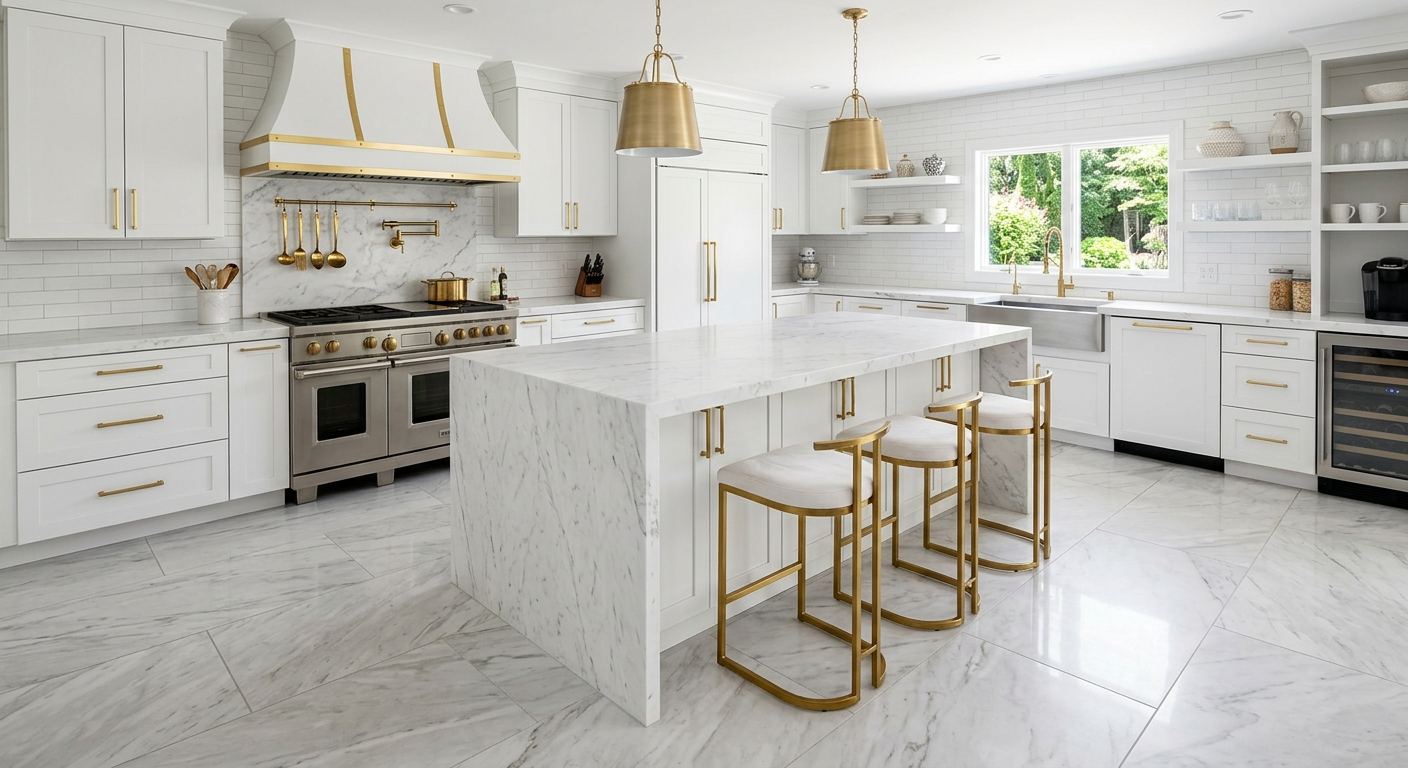
Kitchen renovation options and costs in Lougheed
Lougheed is a growing community in the Lower Mainland–Southwest, and kitchen renovations here often start with a practical question: do you want a light refresh, or a full rebuild? In 2021, Lougheed’s population was 15,300 (Statistics Canada, 2021 Census), and local buying decisions tend to track the broader region’s affordability and resale expectations. In higher-value Lower Mainland–Southwest pockets, homeowners more frequently upgrade finishes—especially semi-custom cabinetry and quartz/stone counters—because they’re easier to justify at resale. In Lougheed-area homes where budgets can’t stretch to full custom, many owners still choose a mid-range scope to balance longevity with cost.
Cost drivers in this region are less about coastal climate and more about market positioning. That said, British Columbia’s damp, changeable shoulder seasons can accelerate wear on poorly sealed counter seams, grouted tile lines, and under-sink areas—so “small” details like caulking, ventilation, and waterproofing tolerances matter. Contractor availability also matters locally: when projects ramp up across nearby Burnaby-style higher demand zones, scheduling can tighten, which affects labour allocation and how quickly trades can mobilize.
Kitchen work is especially in demand around the Lougheed corridor where many homeowners plan upgrades to match modern buyer expectations while keeping daily routines manageable. From there, the easiest way to compare options is to look at typical tiers and timelines—see the table below.
| Renovation Tier |
What's Included |
Typical Duration |
Price Range |
| Cosmetic refresh (paint, hardware, new appliances only) |
Cabinet paint/finish touch-up, new pulls/knobs, appliance swap (dishwasher/range/hood where permitted), minor caulking, basic cleaning and reinstallation |
1–2 weeks |
$8,000–$18,000 |
| Mid-range full renovation (new cabinets, counters, sink, tile) |
New cabinet installation, countertop replacement (often quartz), sink and faucet replacement, backsplash tile, labour for demo and reassembly, standard plumbing reconnection |
3–6 weeks |
$40,000–$85,000 |
| High-end full renovation (custom cabinets, stone counters, island) |
Custom or fully custom millwork, higher-end stone counters, island build with upgraded hardware, enhanced backsplash (stone or full-height treatment), improved lighting/electrical integration |
6–12 weeks |
$85,000–$120,000 |
| Cabinet refacing only (new doors + drawer fronts, same boxes) |
Refacing with new door/drawer fronts, re-foiling or new panels, new hardware, alignment adjustments; counters typically not replaced unless specified |
1–3 weeks |
$8,000–$30,000 |
| Countertop swap only (laminate to quartz or stone) |
Remove existing top, install new countertop (template + install), cut-outs for sink and cooktop, sealant/finishing |
1–2 weeks |
$3,000–$12,000 |
| Backsplash tile installation only |
Surface prep, tile layout and installation, grout and sealing where required, caulking at edges |
3–7 days |
$1,500–$6,000 |
Prices are estimates only and vary by project scope, site access and material selection.
What affects the price of kitchen renovation in Lougheed
Homeowners in Lougheed often get different quotes for the “same” kitchen because the Lower Mainland–Southwest market pricing is driven more by local home value, expected finish level, and the contractor’s labour scheduling than by weather alone. It’s common to see quote swings of 30–50% across British Columbia when cabinetry type, countertop material, and layout complexity change, even if the kitchen size is similar. In higher-value areas of the Lower Mainland–Southwest, owners often choose quartz or stone counters and semi-custom cabinetry because the upgrade is more easily recovered at resale; in more modest scopes, laminate surfaces and stock cabinets keep the return stronger.
Concrete examples in Lougheed: first, if your kitchen has older tiled walls with out-of-plumb surfaces, tile work and backsplash prep can add time and materials quickly, especially when correcting substrate issues before new grout lines are installed. Second, if the job requires bringing plumbing runs up to modern fit and finish (new shut-offs, improved sealing at the under-sink area), labour can jump even if the visible scope looks unchanged. Third, kitchens with gas ranges or older venting often require more coordination and inspection steps; that can push timeline and cost when trades are booked back-to-back.
Budget band context helps set expectations: a mid-range full renovation often sits around the $40,000–$85,000 range, while a full custom rebuild with an island and stone can move into the $85,000–$120,000 band. Layout changes—wall removal, adding an island, or moving a gas line—are where unpredictability spikes, regardless of whether you choose stock or semi-custom cabinetry.
| Price Factor |
Why It Matters |
Cost Impact |
| Cabinet tier — stock vs. semi-custom vs. fully custom millwork |
Custom fit, door styles, internal storage options, and installation complexity change labour hours and material costs |
Can shift overall budgets by roughly 20–40% within the same kitchen size |
| Countertop material — laminate vs. quartz vs. granite vs. stone |
Material pricing, edge profiles, and cut-out complexity (sink, cooktop) drive install time and risk |
Typically moves countertop portions by several thousand dollars |
| Layout change — wall removal, island add, plumbing/gas move |
More demolition, engineering/permit steps, and trade coordination (plumbing, gas, electrical) are required |
Usually the largest swing factor even when finishes stay mid-range |
| Appliance package tier — builder vs. mid-range vs. pro-grade |
Power requirements, venting demands, and trim kits (especially for built-ins) affect install time |
Can add or subtract several thousand depending on product line |
| Flooring — refinish existing vs. full replacement |
Kitchen renos often uncover subfloor issues; matching existing flooring can be costly or impossible |
Replacement adds labour and material; refinish-only keeps cost down |
| Backsplash — ceramic tile vs. marble vs. full-height slab |
Higher-end materials increase cutting precision, sealing needs, and labour time |
Tile-only work ranges widely but can land in the $1,500–$6,000 band |
| Electrical — new circuits for island, under-cabinet lighting |
Electrical rework requires licensed work and inspection coordination |
Often adds cost quickly with island and task lighting upgrades |
| Permit fees and licensed trade requirements |
Permits and licensed trade scheduling can affect both direct fees and labour sequencing |
Raises project friction and can add time even when scope is unchanged |
Permits & regulations in British Columbia
In British Columbia, homeowners can usually swap cabinets and countertops without pulling permits, provided you’re not moving the plumbing, electrical, or gas services that serve the kitchen. Cabinet replacement and countertop installation are typically considered “like-for-like” finish work—so no permit is generally required for the cabinet/counter materials themselves. However, once your plan touches the infrastructure, permits and licensed trades come into play.
Work that typically does require a permit in a Lougheed kitchen reno includes: relocating plumbing supply or drain lines (for example, moving a sink to an island or changing the dishwasher hookup location); relocating or adding gas connections (stove/range, and any gas range hood change); removing a load-bearing wall; adding new electrical circuits such as power runs to an island or new receptacles for countertop work; and any electrical modifications beyond simple like-for-like replacement.
How to verify before signing (step-by-step): first, ask the contractor for their contractor licence details where applicable and request a certificate of liability insurance. Next, for electrical, confirm the electrician’s licence and proof of coverage (workers’ compensation clearance letter and insurance certificate). For gas work, confirm the gas fitter is licensed and insured before any line is capped or moved. Finally, review the contract for who is pulling permits, who schedules inspections, and whether documentation is provided after the work.
Always confirm permit responsibility in writing—this is where kitchen projects most often get misaligned.
Cabinets, countertops and layout decisions in Lougheed
The three biggest “call your builder” decisions in a Lougheed kitchen renovation are cabinet tier, countertop material, and whether you change the layout. Cabinet tier determines how fast the job moves: stock cabinets are typically the quickest and cheapest, semi-custom is the most popular mid-range option for modern storage and better fit, and fully custom millwork is the costliest but delivers the tightest, most integrated result. In Lougheed’s Lower Mainland–Southwest market, buyers generally expect a clean, contemporary look, so the semi-custom tier often hits the sweet spot between speed and impact.
Countertops should be chosen for daily use and realistic maintenance. Laminate keeps budgets down but can be less forgiving around seams and heat; quartz engineered surfaces resist staining and require less day-to-day care, which helps in a climate with damp mornings and quick temperature swings. Natural stone like granite or other stone looks premium and performs well, but sealing and careful installation matter. For layout, open-concept wall removal and island additions can add major value if your space truly improves flow, not just aesthetics. But plumbing or gas relocation is where costs can jump quickly—so it’s usually justified only when the space gain solves a real problem (traffic flow, storage, or better work zones).
Example: if you keep plumbing where it is and stay mid-range, many homeowners land in the $40,000–$85,000 band with new cabinets, quartz counters, sink, and tile. If you add an island and relocate services, the project can move toward the $85,000–$120,000 band even when cabinetry choices are similar—because trade coordination and the infrastructure work dominate the budget.
| Option |
Durability |
Maintenance |
Best For |
Price Range |
| Stock cabinets (big-box) |
Good durability with standard hardware; fit may be less tailored around off-square walls |
Low maintenance; minor adjustments may be needed for alignment |
Fast timelines and tighter budgets |
$8,000–$25,000 |
| Semi-custom cabinets (local dealer) |
Very durable; better internal storage options and wider selection of styles |
Low; hinges and drawers hold up well with quality installation |
Most Lougheed renos aiming for a modern look without full custom pricing |
$25,000–$55,000 |
| Custom cabinets (local millwork shop) |
Highest durability and best fit; maximizes use of awkward corners |
Low to moderate; craftsmanship supports long service life |
Homes needing built-ins, unique layouts, or premium design integration |
$55,000–$90,000 |
| Laminate countertop |
Decent surface wear; can be vulnerable at seams and to heat |
Wipe clean; avoid prolonged standing water at seams |
Budget-conscious refreshes where you keep the layout |
$3,000–$6,500 |
| Quartz engineered countertop |
Excellent stain and scratch resistance; consistent performance |
Low—routine cleaning only; protect cut edges at install |
Families who want a durable, modern surface with minimal fuss |
$6,500–$10,500 |
| Granite / natural stone countertop |
Very durable with proper sealing and correct support |
Periodic sealing; wipe spills promptly |
Premium look with long-term wear |
$8,000–$12,000 |
| Butcher block countertop |
Strong but susceptible to nicks and water exposure if not cared for |
Oil/condition regularly; keep it dry at seams |
Warm, traditional or farmhouse styles |
$5,000–$9,000 |
| Marble countertop |
Beautiful but softer; more prone to etching and staining than quartz |
Higher care—seal and clean carefully |
High-end finishes where homeowners are willing to maintain |
$10,000–$15,000 |
How to choose a kitchen renovation contractor in Lougheed
Choosing the right kitchen renovation contractor in Lougheed is mostly about verification and clarity. Start with British Columbia licensing and insurance checks: request proof of the contractor’s liability insurance and ask for the certificate of insurance for your project. For trade work, confirm the electrician is licensed and insured, and that gas work is performed by a licensed gas fitter with appropriate coverage. Next, confirm workers’ compensation compliance: you should receive documentation that shows coverage or a clearance letter, so you’re not exposed if a worker is injured on site. In practice, reputable firms provide these items quickly—while weaker bids stall.
Then get 2–3 itemised, written quotes. You want a labour-and-materials breakdown, not just a single lump sum: demo, disposal, cabinet installation, countertop fabrication and template time, plumbing/electrical allowances, and allowances for tile and backsplash prep should be visible. Read the scope line-by-line: what’s included for permit pull, which trades handle inspections, and whether disposal/recycling is included. Warranty matters too—ask for the workmanship warranty length and whether product warranties from the manufacturer transfer to you. Finally, protect your cash flow: never agree to more than about 10–15% upfront, and hold back a portion until key milestones are complete. Get a start date and completion estimate in writing so your timeline doesn’t drift.
- Confirm licensing and insurance for relevant trades (electrician and gas fitter where applicable).
- Ask for WSIB/WCB clearance or proof of coverage before work starts.
- Request a detailed written scope: demo, rough-in, finishes, and what’s excluded.
- Ensure permit responsibility is stated in the contract (who pulls permits and who schedules inspections).
- Get an itemised labour/materials quote, including allowances and assumptions.
- Check if countertop template and install dates are included or left as allowances.
- Verify backsplash inclusions: surface prep, waterproofing/treatment, grout type, and sealing.
- Ask about subfloor condition handling and who pays if repairs are needed.
- Confirm disposal is included (dump fees, recycling and haul-away).
- Review warranty: workmanship length, exclusions, and how claims are handled.
- Use a milestone-based payment schedule; limit upfront deposit to 10–15%.
- Get a written schedule with completion targets and cure periods for countertop/stone lead times.
Red flags I see in Lougheed kitchens include: quotes with no line items (no clear breakdown), contractors refusing to provide insurance/WCB documentation, “permit included” but no written responsibility, long gaps between deposit and site start without a written schedule, and vague warranty language that doesn’t specify workmanship coverage.
Frequently asked questions — kitchen renovation in Lougheed
Can I live at home during a kitchen renovation in Lougheed?
Often, yes—especially for cosmetic refreshes, backsplash work, or countertop/cabinet-only scopes where the kitchen remains usable in phases. In Lougheed, most homeowners plan around the “no-cook” days when demo is happening and the countertop is being templated/installed. For a mid-range full renovation (commonly $40,000–$85,000), expect temporary kitchen downtime for the rough-ins and final cabinet/counter install. If you’re moving plumbing or electrical for an island or relocating a gas range, living-in becomes more disrupted due to trade sequencing and inspections. A good contractor sets up a practical plan: protected paths, temporary sink access where possible, and clear daily work windows so you can still manage meals.
Should I renovate my kitchen before selling in Lougheed?
In many Lougheed sales, a refreshed kitchen can help you compete—buyers look for clean finishes, modern storage, and durable surfaces. If your goal is resale, focus on high-impact areas first: cabinet condition (or upgrade), countertop material, and a tidy backsplash. Quartz/stone-style durability is a common expectation in the Lower Mainland–Southwest market, and it tends to feel “buyer-ready” compared with heavily worn laminate. If you’re working within the mid-range band (often $40,000–$85,000), you can achieve a noticeable upgrade without overbuilding the home. If you’re contemplating a high-end rebuild (typically $85,000–$120,000), confirm the neighbourhood’s buyer profile and your home’s current value—over-improving can be hard to recoup.
What's the most popular kitchen style in Lougheed right now?
Right now, the most common direction in Lougheed is a bright, modern look with practical storage—often semi-custom cabinetry, clean hardware lines, and light-to-medium coloured quartz counters. Many homeowners pick a layout that feels open and functional, while still keeping a defined cooking zone. The Lower Mainland–Southwest pricing reality is that many renovations land between refresh and full rebuild, so design choices skew toward timeless finishes rather than highly custom one-off features. That’s why you’ll see lots of white, off-white, and warm neutral cabinet palettes paired with durable counters that handle everyday use—especially when households can’t tolerate high-maintenance surfaces.
How do I know if I need to update my kitchen plumbing in Lougheed?
You usually don’t replace plumbing “because it looks old”—you replace it because it’s failing, undersized for modern usage, or cannot be reconfigured cleanly. Signs include leaks under the sink, slow drainage, frequent dishwasher problems, inconsistent hot water, or corrosion at shut-offs. If you’re moving a sink, dishwasher, or adding an island, you’ll need plumbing work regardless of current condition, which is where permits and licensed plumbing steps typically become necessary. In Lougheed’s older housing stock, it’s also common to find shut-offs that are hard to access or supplies that don’t allow a clean connection. A contractor should inspect before demo, and then document what needs upgrading and what can be reused safely.
What is the difference between a galley and open-concept kitchen?
A galley kitchen is a narrow, corridor-style layout with counters on two facing walls; it’s efficient for workflow but can feel closed off. An open-concept kitchen combines the kitchen with living/dining space, typically by removing barriers such as partial walls or repositioning openings, so sightlines and traffic flow improve. In Lougheed, many homeowners choose open-concept when they want a more social living area and better resale appeal, but it’s also where layout changes can increase cost—especially if the plan affects electrical, plumbing, or even load-bearing elements. Galley remodels often stay closer to straightforward scope (cabinets/counters) and can fit many budgets in the $40,000–$85,000 range, while open-concept projects frequently push higher once infrastructure and approvals are involved.
How do I get accurate kitchen renovation quotes in Lougheed?
To get accurate quotes in Lougheed, start by providing the same information to each contractor: your kitchen measurements, photos, what you want to keep (layout vs. moving plumbing/gas), and your finish targets. Request 2–3 itemised written quotes with a labour-and-materials breakdown, including allowances for tile prep, countertop templating, and disposal. Ask explicitly whether permits are included and who is responsible for the permit pull if electrical circuits, gas connections, or plumbing line relocation are required. Also confirm warranty terms and the payment schedule—reputable contractors won’t push high upfront deposits. If you’re comparing bids for the same scope, use the price bands as a reality check: for example, a mid-range full renovation often sits around $40,000–$85,000, while a countertop-only swap is commonly $3,000–$12,000, depending on material.