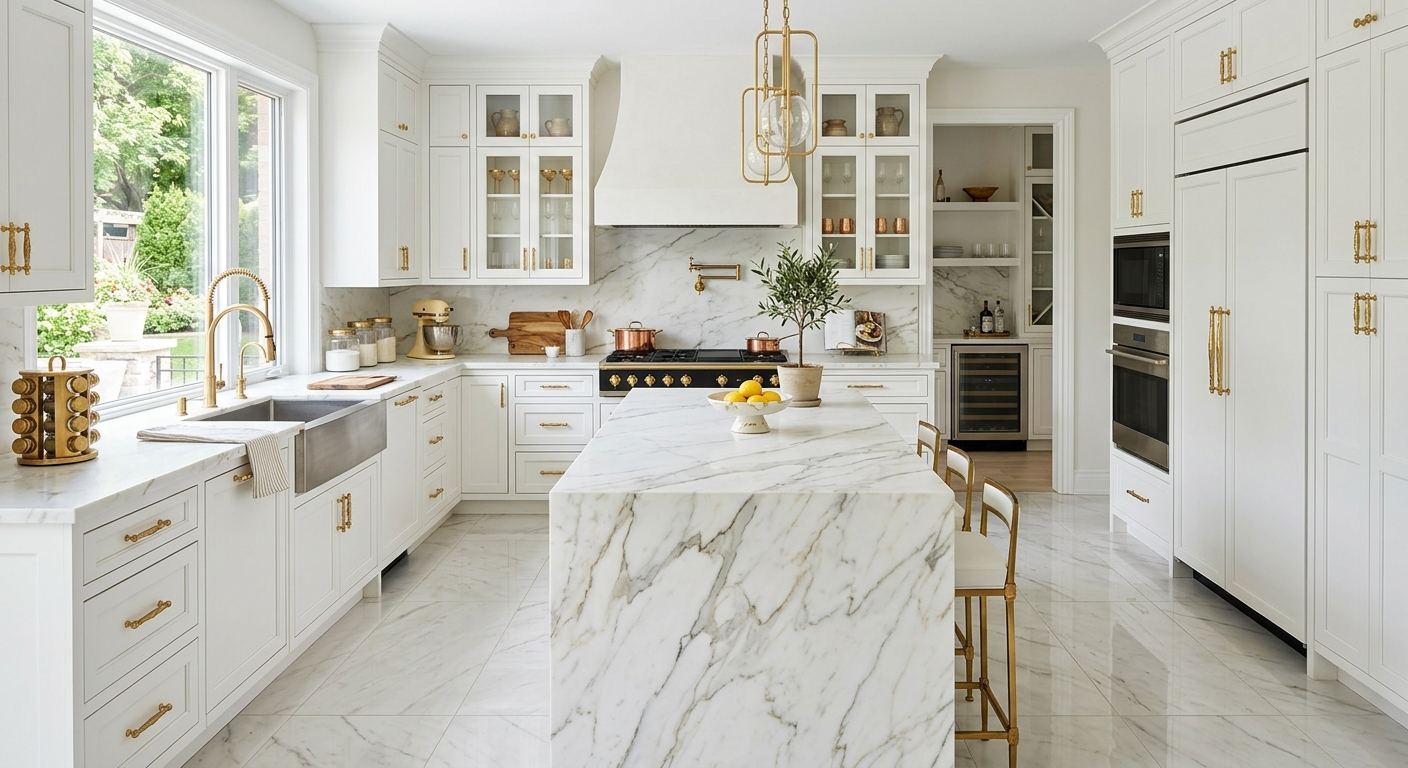
Kitchen renovation options and costs in Cariboo
Cariboo homeowners typically choose a kitchen renovation path based on lifestyle needs and resale expectations. With a local population of 22,780 (Statistics Canada, 2021 Census), the market is steady, but projects are strongly influenced by buyer expectations shaped across the Lower Mainland–Southwest. In practice, many Cariboo buyers also compare notes on finishes they’ve seen in the Lower Mainland, and that “finish ceiling” is where costs start to climb.
In the Lower Mainland–Southwest, pricing is driven more by home values, household income, and the expected finish level than by climate. British Columbia’s coastal-to-interior swing matters for humidity and material stability, but it doesn’t usually justify large price gaps the way cabinetry complexity and countertop selection do. That said, you still feel the impact locally: older homes and seasonal occupancy patterns can affect scheduling, demolition logistics, and drying times for finishes.
Contractor availability can also be a factor. When a project needs coordinated trades (cabinet install, plumbing adjustments, electrical for under-cabinet lighting), timelines tighten around peak renovation months, especially in high-demand areas where homeowners want a modern, durable kitchen. In Cariboo, trade demand is especially noticeable around Williams Lake and nearby communities where many kitchens are in the same housing age band and are due for updates.
If you’re comparing options, the fastest way is to match your goal to the right renovation tier—then decide whether the “nice-to-have” upgrades belong in your scope. Use the table below to benchmark typical costs, and you’ll be better prepared to evaluate quotes fairly.
| Renovation Tier |
What's Included |
Typical Duration |
Price Range |
| Cosmetic refresh (paint, hardware, new appliances only) |
Cabinet paint or refinishing, new cabinet hardware, new appliances (no cabinet reconfiguration), minor touch-ups |
1–2 weeks |
$8,000–$22,000 |
| Mid-range full renovation (new cabinets, counters, sink, tile) |
New semi-custom or stock cabinets, countertop replacement, new sink/faucet, backsplash tile, basic layout refresh, flooring spot-repair or partial replacement |
3–6 weeks |
$40,000–$85,000 |
| High-end full renovation (custom cabinets, stone counters, island) |
Fully custom cabinetry/millwork, quartz or stone counters, island with enhanced hardware, upgraded backsplash, higher-end appliances, more complex trim and finishing |
6–12 weeks |
$85,000–$120,000 |
| Cabinet refacing only (new doors + drawer fronts, same boxes) |
Replace doors/drawer fronts, reface panels, new hardware; countertops may or may not be replaced depending on how existing surfaces are evaluated |
2–4 weeks |
$8,000–$35,000 |
| Countertop swap only (laminate to quartz or stone) |
Remove existing counters, install new quartz/stone, sink cut-out/adjustments, basic edge work |
3–7 days |
$3,000–$12,000 |
| Backsplash tile installation only |
Tile removal (if needed), surface prep, tile install, grout/seal where required, caulking to countertop and corners |
3–7 days |
$1,500–$6,000 |
Prices are estimates only and vary by project scope, site access and material selection.
What affects the price of kitchen renovation in Cariboo
In Cariboo and across the Lower Mainland–Southwest, you can see the same kitchen renovation quoted 30–50% apart depending on finish expectations and how complex the changes are. Even though climate affects materials over time, the biggest day-to-day drivers are local housing economics and the finish tier homeowners choose. In higher-value Lower Mainland–Southwest neighbourhoods, owners often default to quartz or stone counters and semi-custom cabinetry because the upgrade cost is more easily recovered on resale. In more modest markets, laminate surfaces and stock cabinets are common because they deliver a better ROI for the dollar.
Still, the unpredictable costs are usually layout and service changes—not the counter finish. Moving a wall, adding an island, or relocating a gas line can trigger plumbing/electrical rework, subfloor adjustments, and scheduling delays between trades. That’s why a job that “looks like the same kitchen” can swing massively once demolition reveals the existing conditions behind cabinets, around venting, or under older flooring.
In Cariboo specifically, older housing stock often means you may pay extra for underlying fixes before the new cabinets go in. For example, if you’re upgrading from older laminate counters to stone, the countertop swap budget (often in the $3,000–$12,000 range) can rise if the existing substrate isn’t flat or needs reinforcement. Likewise, a backsplash tile line item ($1,500–$6,000) can cost more if the wall needs patching and moisture-resistant backer boards in the area that gets the most splash. When the project also shifts from mid-range full renovation ($40,000–$85,000) toward a stone/island scope, the cabinetry and coordination time are typically what push the number upward, not the climate itself.
| Price Factor |
Why It Matters |
Cost Impact |
| Cabinet tier — stock vs. semi-custom vs. fully custom millwork |
Custom sizing, internal layouts, and finishing detail determine material and labour time |
Can swing the project by roughly $10,000–$40,000 depending on scope |
| Countertop material — laminate vs. quartz vs. granite vs. stone |
Material cost and installation complexity vary; heavier stone may require extra support and careful templating |
Typical countertop-only ranges move from about $3,000 up to $12,000+ before extras |
| Layout change — wall removal, island add, plumbing/gas move |
Service relocation drives trade coordination, permits, and demolition/restoration |
Often the largest unpredictable jump; commonly $5,000–$25,000+ |
| Appliance package tier — builder vs. mid-range vs. pro-grade |
Cut-outs, venting needs, and power requirements can change installation steps |
Can vary $2,000–$15,000+ depending on brand and spec |
| Flooring — refinish existing vs. full replacement |
Matching around cabinet bases and protecting floors during demolition affects material and labour |
Typically $1,500–$10,000+ depending on what’s being replaced |
| Backsplash — ceramic tile vs. marble vs. full-height slab |
Surface prep, patterning, and specialized sealing/finishing change labour intensity |
Can move a tile-only install around $1,500–$6,000 |
| Electrical — new circuits for island, under-cabinet lighting |
New circuits and fixture wiring require licensed work and testing |
Commonly adds $800–$3,500+ depending on how many changes are made |
| Permit fees and licensed trade requirements |
Permits and inspections add administrative steps; licensed trades must be scheduled |
Often $500–$2,000+ plus the trade-time coordination cost |
Permits & regulations in British Columbia
In British Columbia, cabinet and countertop swaps generally do not require permits if you’re keeping the existing plumbing and gas locations the same and you’re not changing the electrical scope. That means replacing cabinets in place, installing new laminate, quartz, or stone counters, and updating a backsplash typically fall under normal renovation work (no permit submission required).
Permits and licensed trades are usually required when you move or add services or modify structural elements. That includes relocating plumbing supply or drain lines, changing gas locations (including stove/range hookups and range hood venting when gas is involved), removing a load-bearing wall, or adding electrical circuits (for example, new receptacles on an island or new under-cabinet lighting circuits). Gas work must be performed by a licensed gas fitter, and electrical work must be performed by a licensed electrician—both with required inspections.
For Cariboo homeowners, the simplest way to verify your contractor in writing is this: (1) ask for their current licensing/registration details and confirmation they’ll use licensed trades for gas/electrical; (2) request a certificate of insurance naming you as an additional insured where appropriate; and (3) confirm Workers’ Compensation coverage (WCB/WorkSafeBC) so you’re not taking on liability if something happens on site. Where to look: check the relevant public licence registry for the contractor and trades, review the certificate of insurance and insurance clearance letter, and require the WCB account clearance/coverage confirmation as part of your job file before work starts.
Cabinets, countertops and layout decisions in Cariboo
The three most consequential decisions in a Cariboo kitchen renovation are: (1) cabinet tier (stock vs. semi-custom vs. custom), (2) countertop material (laminate, quartz, granite, butcher block, or marble), and (3) whether you change the layout (open-concept wall removal, island addition, or plumbing/gas relocation). In the Lower Mainland–Southwest resale market, buyers often expect a clean, durable surface and cabinetry that looks “built-in,” even when the home itself is older. That expectation influences what you get most value from at different price points.
Cabinet tier drives both look and fit. Stock cabinets are fastest and usually cheapest, but they can leave awkward gaps that may cost more to trim later. Semi-custom is the most popular mid-range choice because you can adjust widths and internal configurations while keeping schedule and budget under control. Custom cabinets cost more, but they shine when you need to work around unusual angles, ceiling heights, or create a true island statement. For counters, laminate is budget-friendly, quartz is the workhorse, granite/stone adds premium character, butcher block brings warmth (but needs maintenance), and marble is beautiful yet more sensitive to etching and staining.
Layout changes are where costs jump unpredictably. Removing a wall or adding an island increases material and labour, but it’s justified when it creates a functional traffic flow buyers will pay for. If your goal is simply better storage without service relocation, you may keep plumbing where it is and avoid the largest cost drivers.
Concrete example: if you’re comparing a mid-range full renovation ($40,000–$85,000) to the same scope but with stone counters and a small island, the difference is often not the cabinet boxes—it’s the extra trim, the island base structure, and the added trade coordination. That’s why “upgrading counters” can be relatively controlled (a countertop swap band is often $3,000–$12,000), while “upgrading into a new island layout” can push the total budget far higher.
| Option |
Durability |
Maintenance |
Best For |
Price Range |
| Stock cabinets (big-box) |
Good for daily use; durability depends on door/drawer construction |
Low; keep hinges aligned and touch up chips quickly |
Fast refreshes and tight budgets |
$10,000–$25,000 |
| Semi-custom cabinets (local dealer) |
Very durable; better internal configurations and stronger hardware options |
Low; occasional hardware tightening and cleaning |
Most Cariboo homeowners aiming for a balanced upgrade |
$20,000–$45,000 |
| Custom cabinets (local millwork shop) |
Excellent; tailored fit and often higher craftsmanship |
Low; treat like cabinetry that’s built to last (minor refinishing as needed) |
Complex layouts, premium finishes, and statement islands |
$40,000–$70,000+ |
| Laminate countertop |
Moderate; can chip at edges with heavy impacts |
Low to moderate; avoid cutting directly on surface; replace if severely damaged |
Budget-focused renovations and rentals |
$3,000–$6,000 |
| Quartz engineered countertop |
High; very resistant to staining and everyday wear |
Low; wipe-clean and no sealing required for most quartz |
Busy households that want low-maintenance durability |
$6,500–$10,500 |
| Granite / natural stone countertop |
High; durable with proper sealing and care |
Moderate; periodic sealing and care for spills |
Premium look with real stone character |
$8,000–$12,000 |
| Butcher block countertop |
Moderate to high; can be worn but repairs are possible |
Higher; needs oiling and careful moisture management |
Home cooks wanting warmth and a “prep” surface |
$5,000–$9,000 |
| Marble countertop |
High beauty; lower scratch/etch resistance compared to quartz for daily use |
Moderate to higher; requires careful cleaning and sealing |
Design-led kitchens where the surface is treated gently |
$9,000–$14,000+ |
How to choose a kitchen renovation contractor in Cariboo
When you hire a kitchen contractor in Cariboo, verify British Columbia licensing and coverage before you sign. Confirm the company’s legitimate registration (where applicable) and request proof of liability insurance, plus confirmation of Workers’ Compensation coverage (WCB/WorkSafeBC) so the risk stays with the contractor—not you. For gas and electrical portions, make sure licensed trades are included and that the job schedule accounts for inspections. How to check each: (1) look up the contractor/trade on the appropriate public registry; (2) review their certificate of insurance and, ideally, an insurance clearance letter; (3) request WCB/WorkSafeBC clearance or coverage documentation, then keep copies with your contract.
Next, ask for 2–3 itemised written quotes. You want a breakdown that separates labour and materials (cabinet supply, countertop supply, install, tile labour, electrical scope, plumbing scope) rather than a single lump sum. Read the scope line by line: what’s excluded? Is permit pulling included if needed? Is demolition and debris disposal included, and where will waste be hauled? A clear warranty matters too: confirm workmanship warranty length, what the manufacturer covers for product defects, and whether coverage is transferable if you sell your home.
Finally, be careful with payment schedules. Avoid paying more than 10–15% upfront, and use a holdback until key milestones are complete (for example, cabinets installed and counters templated/installed, then final touch-ups). Insist on a written timeline: start date, estimated completion, and how delays for cabinet/counter lead times are handled.
- Ask whether cabinets are set on levelled bases and how the installer deals with out-of-square walls.
- Confirm countertop templating timing and who measures (not “we’ll measure later”).
- Require a written demolition plan: what gets removed, what gets protected, dust control expectations.
- Check whether under-cabinet lighting is included (and whether wiring is part of scope).
- Verify who purchases tile backer board and waterproofing membrane where needed.
- Ensure disposal/recycling is explicitly included or excluded.
- Confirm flooring adjustments and toe-kick finishing details are listed.
- Request proof of insurance naming you as additional insured where appropriate.
- Make sure gas/electrical work is by licensed trades with inspection responsibility specified.
- Check warranty wording in plain language (workmanship vs product warranty).
- Use milestone payments tied to inspections and deliverables, not just “progress”.
- Get start date, finish estimate, and a communication plan for change orders.
In Cariboo, a few red flags show up repeatedly: quotes with no itemised breakdown, promises of “all-in” pricing without listing permits/disposal, vague warranty terms (“best effort” language), contractors who won’t provide insurance/WCB proof, and schedules that don’t account for cabinet/counter lead times or inspection windows.
Frequently asked questions — kitchen renovation in Cariboo
What order do kitchen renovation steps happen in?
In Cariboo and across British Columbia, the typical order is: planning and measurements, demolition, rough trades, cabinet install, countertop templating and install, then finishing details like backsplash, trim, paint touch-ups, and final appliance connections. Rough-ins (plumbing/drains/supplies and electrical circuits) must be done before cabinets go in, because cabinets hide much of the work and any rework after install is costly. Countertops come after cabinets are set and level, since even small out-of-plane issues can affect fit and seams. If you’re budgeting for a full renovation, the work tends to align with the full renovation bands—often starting around the $40,000–$85,000 range for mid-range scopes—because the sequence requires multiple coordinated trades. Your contractor should give you a written schedule with trade lockouts and inspection points.
Can I live at home during a kitchen renovation in Cariboo?
Often, yes—especially for cosmetic refreshes or targeted work like a backsplash tile installation. For many Cariboo homeowners, full renovations can still be possible if you set up a temporary kitchen in another room (microwave, kettle, small fridge) and protect pathways from dust and debris. If you’re doing cabinet and countertop work plus electrical/plumbing changes, you’ll usually have a period where normal cooking is inconvenient, but you can still stay in the home when there’s a clear staging plan. The bigger question is whether the scope includes demolition and service relocation; those scopes can create longer disruption. For example, a countertop swap only (commonly in the $3,000–$12,000 band) may be manageable with minimal disruption, while a high-end full renovation with an island and custom cabinetry takes longer—often aligning with the top end of the $40,000–$120,000 full renovation range—and may require more time without a functional cooking area. Discuss dust control and meal-plan logistics early with your contractor.
Should I renovate my kitchen before selling in Cariboo?
It depends on your resale timeline and the condition of the kitchen. In Cariboo, many kitchens are in older housing stock, so buyers often respond well to visible improvements like cleaner cabinet fronts, updated counters, and a modern backsplash. If you have dated finishes but the layout is functional, a refresh can improve perceived value without the full cost of a rebuild—often starting around the lower end of renovation tiers. If you plan to sell soon, prioritize the upgrades that photograph well and reduce buyer concerns: durable countertops, good lighting, and cabinets that close smoothly. Upgrades like quartz or stone can be a smart resale signal compared to older laminate. If your scope is moving from a basic approach into a mid-range full renovation ($40,000–$85,000), make sure it matches buyer expectations rather than overspending on features you won’t recover.
What's the most popular kitchen style in Cariboo right now?
Right now in Cariboo and across British Columbia, the most common homeowner preference blends practical modern lines with warm finishes: shaker-style or simple slab-front cabinetry, brighter lighting, and countertops that look clean and consistent (often quartz). Because Cariboo buyers are influenced by what they’ve seen in higher-activity markets in the Lower Mainland–Southwest, the “high-end look without extreme complexity” is popular—semi-custom cabinets and quartz counters are frequently chosen as a balanced option. If you’re doing a high-end full renovation (often $85,000–$120,000 depending on scope), an island with a more dramatic countertop and upgraded hardware becomes a feature buyers notice. Homes with functional layouts also benefit from an open, easier-to-move-through feel, but wall removal should only be pursued when the space gains are worth the added coordination and permitting work (when applicable) in British Columbia.
How do I know if I need to update my kitchen plumbing in Cariboo?
You typically need plumbing updates when you’re changing the layout or when the existing system shows signs of wear—slow drains, recurring leaks under/behind the sink, corroded shutoffs, or supply lines that don’t match modern shutoff/connection standards. In British Columbia, plumbing supply/drain changes are the kind of work that often triggers the need for permits and inspections, and it must be completed by appropriate licensed trades as required. If you’re only swapping cabinets and countertops and keeping the sink location the same, you may avoid that complexity. But once you open walls and cabinets, hidden issues can appear—particularly in older kitchens where the substructure or connections aren’t ideal. A simple diagnostic step: ask your contractor to review shutoff condition and drain slope during the site visit and include plumbing scope in the written quote, rather than assuming “everything is fine.”
What is the difference between a galley and open-concept kitchen?
A galley kitchen is a corridor-style layout with counters on two opposing sides, often common in older homes and smaller spaces in Cariboo. It can be efficient for workflow but may feel closed off. An open-concept kitchen combines the kitchen with dining or living areas, usually by removing or altering a wall (when structurally and permit-appropriate). Open-concept layouts are popular because they improve sightlines and make the home feel larger, which can align with what buyers expect across British Columbia’s active resale markets. However, it’s also where costs can rise: open-concept changes often require more coordination for electrical, venting, and, depending on the services, potential permitting. If you’re staying in a galley layout and focusing on cabinets, counters, and lighting, you can usually keep pricing closer to renovation tiers like cabinet refacing or mid-range full renovations. If you’re aiming to open walls, budget for the layout and service implications more than for the finish materials alone.