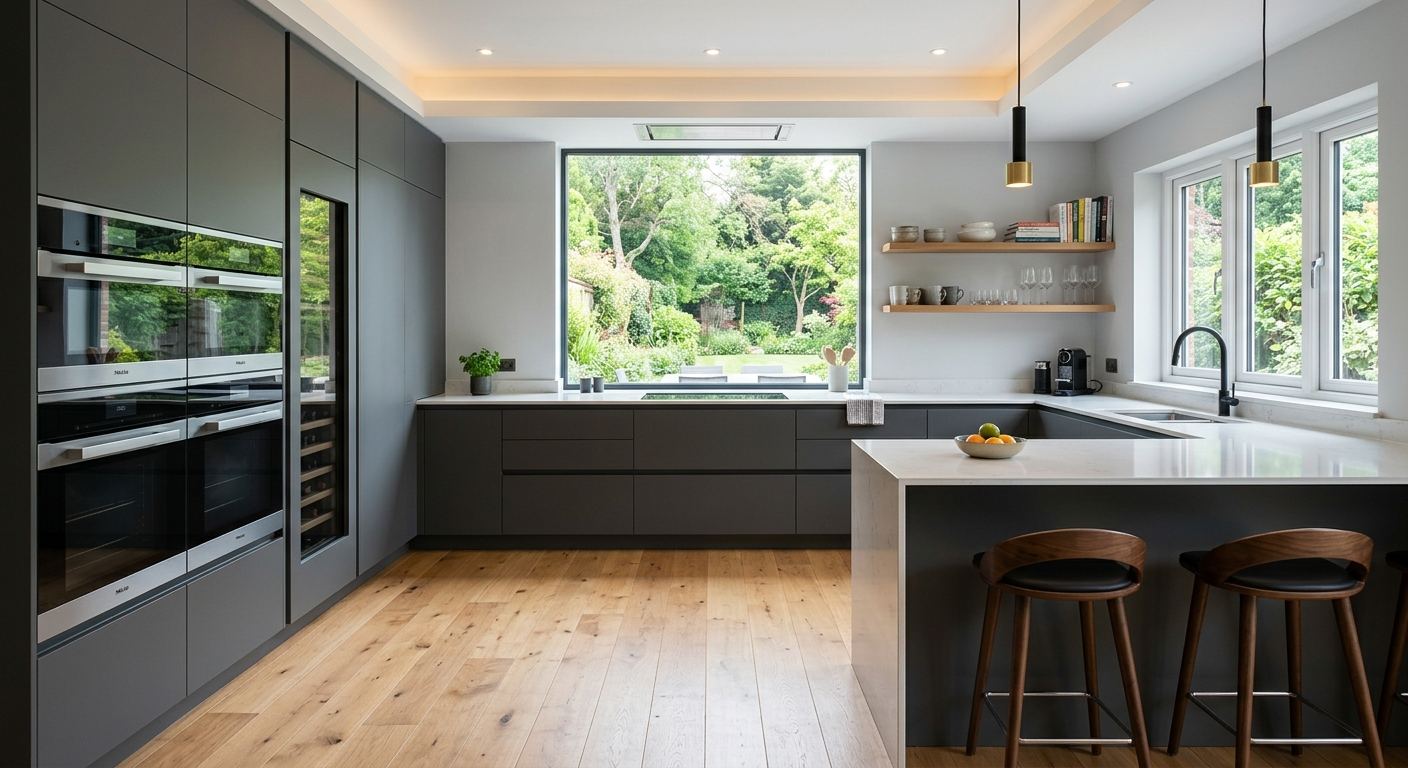
Kitchen renovation options and costs in Woodstock
Woodstock homeowners usually choose a kitchen renovation path based on how long they plan to stay in their home and how closely they want the finished kitchen to match nearby London-area resale expectations. With a median household income of $82,000 (Statistics Canada, 2021 Census), many projects land in the mid-range finishes—particularly where buyers can see the difference between stock cabinetry, quartz counters, and upgraded tile right away. At the same time, about 65.2% of households own their homes (Statistics Canada, 2021 Census), which supports the “invest-and-enjoy” approach: owners are more willing to put money into cabinetry and counter surfaces that hold up for years.
Even though kitchen budgets in the London economic region are influenced more by the local housing market than by climate, Ontario’s freeze–thaw season still matters indirectly. If your kitchen shares a wall with exterior plumbing or is near a cold zone, contractors often plan extra subfloor attention and ventilation detailing before installing new cabinets and tile. Availability can also tighten in the spring and early summer when established neighbourhoods see higher renovation activity.
In Woodstock’s popular North Woodstock area (near the schools-and-amenities core), contractors often see strong demand for semi-custom cabinetry and quartz counters because many homes built before 1981 want updated layouts while staying within a resale-friendly budget. From there, the next step is picking the right renovation tier—then matching scope to a realistic budget.
| Renovation Tier |
What's Included |
Typical Duration |
Price Range |
| Cosmetic refresh (paint, hardware, new appliances only) |
Cabinet painting or repainting (no cabinet box changes), new hardware, new appliances, touch-up finishes, basic caulking and trim work |
1–2 weeks |
$18,000–$30,000 |
| Mid-range full renovation (new cabinets, counters, sink, tile) |
New semi-custom or quality stock cabinets, new countertop (quartz or laminate), new sink and faucet, backsplash tile, floor prep/underlayment as needed |
4–8 weeks |
$30,000–$55,000 |
| High-end full renovation (custom cabinets, stone counters, island) |
Custom cabinetry, stone countertops (granite/stone), island build (may include electrical/plumbing), upgraded backsplash, enhanced lighting and finishes |
8–14 weeks |
$55,000–$65,000+ |
| Cabinet refacing only (new doors + drawer fronts, same boxes) |
New doors/drawer fronts, veneer/laminate refinishing of box faces if appropriate, new hardware, re-sealing and trim adjustments |
1–3 weeks |
$3,500–$25,000 |
| Countertop swap only (laminate to quartz or stone) |
Remove existing tops, template and install new countertop, new sink cut-out as required, sealing and finishing trims |
3–7 days (plus templating time) |
$2,500–$12,000 |
| Backsplash tile installation only |
Surface prep, tile supply/installation (material selection varies), grout/sealant, caulking at edges |
3–7 days |
$1,500–$8,000 |
Prices are estimates only and vary by project scope, site access and material selection.
What affects the price of kitchen renovation in Woodstock
In Woodstock and the wider London economic region, two homeowners can receive quotes for “the same kitchen” that differ by 30–50%—even before you account for different tastes. The difference usually comes from finish tier and scope visibility: what’s included in demolition, how the floor is prepared for tile, whether the contractor is replacing subflooring or only patching, and how many trades are needed for electrical and plumbing changes. Labour and material costs move in step with Ontario demand, but your cabinet and countertop selections typically drive the biggest swing.
Local home values and median income matter more than climate. In higher-value neighbourhood pockets around London and Woodstock, homeowners commonly prioritize quartz or higher-end stone counters and semi-custom cabinetry because the upgrade is easier to justify at resale; the kitchen presents well in comparable listings. In more entry-level or rental-oriented stock, laminate countertops and stock cabinets dominate since buyers and owners expect a controlled budget (and the ROI needs to stay realistic). If you’re working in a kitchen in a home built before 1981 (a common profile in the area), expect some extra patching—especially around older plumbing rough-ins and uneven walls—which can nudge labour.
Layout changes create the most unpredictable costs regardless of finish tier. Removing a wall for open concept, adding an island, or moving a gas line can quickly push your project beyond a simple refresh. For example, a countertop swap only can sit in the $2,500–$12,000 band, but if that change forces you to modify plumbing and add under-cabinet electrical, you’ll usually need to budget closer to a broader mid-range renovation band like $30,000–$55,000.
| Price Factor |
Why It Matters |
Cost Impact |
| Cabinet tier — stock vs. semi-custom vs. fully custom millwork |
Higher tiers cost more due to better materials, hardware, finishing quality, and tighter fit to your room’s dimensions |
Often the #1 driver of total cost; can swing budgets by tens of thousands |
| Countertop material — laminate vs. quartz vs. granite vs. stone |
Material pricing and fabrication complexity (templates, edges, seams, and thickness) affect labour and install time |
Typically shifts the project several thousand dollars upward as you move from laminate to stone |
| Layout change — wall removal, island add, plumbing/gas move |
Changes require structural review, rerouting services, drywall/patching, and sometimes permitting |
Can be the biggest “surprise” cost; often responsible for major quote gaps |
| Appliance package tier — builder vs. mid-range vs. pro-grade |
Electrical and ventilation requirements differ; pro-grade units may need more custom trim and installation time |
Usually adds thousands depending on whether ventilation upgrades are required |
| Flooring — refinish existing vs. full replacement |
Tile prep, subfloor repairs, and matching transitions can expand scope quickly |
Small patch jobs stay lower; full replacement is usually a meaningful add-on |
| Backsplash — ceramic tile vs. marble vs. full-height slab |
Higher-end materials increase cutting complexity and require more careful substrate prep |
Can range from modest upgrades to a major labour-and-material line item |
| Electrical — new circuits for island, under-cabinet lighting |
Additional lighting and receptacles require licensed work and may trigger permit needs |
Commonly adds several thousand where circuits and panel work are needed |
| Permit fees and licensed trade requirements |
Permits and inspections add cost and schedule time; licensed trades must be scheduled |
Usually moderate in cost, but can materially impact total timeline and sequencing |
Permits & regulations in Ontario
For most Woodstock kitchen updates, many parts of the job don’t need permits. In general, cabinet swaps/refacing and countertop replacements typically do not require a permit because you’re not changing the building’s core systems. However, permits and licensed trades commonly come into play when you move plumbing supply or drain lines, relocate gas lines (stove and certain range hood installations), remove a load-bearing wall, or add new electrical circuits—especially if you’re building an island with additional receptacles and new lighting.
Here’s the practical, step-by-step way to verify the work before you sign in Woodstock or anywhere in Ontario. First, confirm responsibility in writing: ask your contractor “Who is pulling permits, if required, and who will schedule inspections?” Next, verify the gas fitter and electrician credentials for any gas or electrical scope. Gas work must be done by a licensed gas fitter, and electrical work must be done by a licensed electrician; both require inspections before you close up walls.
Then, check documentation. Request a certificate of insurance (liability coverage) and proof of clearance/coverage for workers (WSIB/WCB coverage where applicable). Finally, verify any Ontario licensing details using the contractor’s Ontario standing and the applicable licensed trades’ registration. Don’t rely on verbal assurances—these items should appear on the contract or as attachments to your quote package.
Cabinets, countertops and layout decisions in Woodstock
When you renovate a kitchen in Woodstock, three decisions shape your cost and how the space “fits” for resale: (1) cabinet tier, (2) countertop material, and (3) whether you change the layout. In the London-area resale market, buyers often expect a clean, contemporary look at specific price points—so your choices should align with what’s typical for neighbourhoods and comparable listings.
Cabinet tier: stock cabinets are usually the fastest and most budget-friendly, but you may see more compromises in storage layout and finishing details. Semi-custom (the most popular mid-range choice) balances speed and fit—common where homeowners want reliable storage and better door styles without going fully custom. Custom cabinets deliver the tightest fit and best storage planning, but they’re where budgets climb quickly, especially if you’re adding a tall pantry wall or custom hood surround.
Countertop material: laminate is budget-friendly and durable for daily cooking, but it can show wear at seams and edges over time. Quartz brings consistent appearance and good stain resistance; granite and other natural stones add premium look and unique veining, but require proper sealing practices. Butcher block can warm a kitchen visually, yet it demands more maintenance than quartz or stone.
Layout changes: open-concept wall removal or adding an island is where costs spike—roughly because of electrical and plumbing reroutes and the drywall/finishing work that follows. A countertop-focused plan might sit in the $2,500–$12,000 band, but if you add an island and move plumbing/gas, the same kitchen can move into a broader renovation budget like $30,000–$55,000. In Ontario’s older housing stock (including homes built before 1981), expect added patching and adjustments around older rough-ins, even if the layout change is “small.”
| Option |
Durability |
Maintenance |
Best For |
Price Range |
| Stock cabinets (big-box) |
Solid for everyday use; durability depends on door finish and hardware quality |
Low; occasional tightening and hardware replacements as needed |
Cost-controlled refreshes and quick turnarounds |
$10,000–$18,000 |
| Semi-custom cabinets (local dealer) |
Good long-term performance with better options for storage and finish |
Low to moderate; keep up with cleaning and gentle care around edges |
Most Woodstock renovations aiming for a resale-friendly look |
$18,000–$28,000 |
| Custom cabinets (local millwork shop) |
Very durable with best fit and premium joinery and hardware choices |
Low; higher-quality finishes typically age well |
Unique layouts, pantry walls, and high-end finishes |
$28,000–$45,000+ |
| Laminate countertop |
Good scratch resistance; can be vulnerable at seams and heat exposure depending on product |
Low; avoid cutting directly and use trivets near hot cookware |
Entry-level budgets and fast upgrades |
$2,500–$6,000 |
| Quartz engineered countertop |
High durability and consistent look; resists staining and everyday impacts well |
Low; clean with non-abrasive products and handle heat with care |
Busy households that want a premium, low-maintenance surface |
$5,500–$10,000 |
| Granite / natural stone countertop |
Very durable; unique patterning adds premium value |
Moderate; sealing schedules depending on the stone type |
Homeowners seeking upscale appearance and natural variation |
$7,000–$12,000 |
| Butcher block countertop |
Durable but susceptible to dents if abused; edges and seams need careful care |
Moderate; periodic oiling and immediate wipe-down of liquids |
Warm, traditional styles where you’re willing to maintain |
$4,000–$8,500 |
| Marble countertop |
Beautiful but softer; can etch or stain if not maintained |
High; protect from acids and seal regularly |
Low-to-moderate traffic kitchens and design-focused renovations |
$9,000–$14,000+ |
How to choose a kitchen renovation contractor in Woodstock
Choosing the right kitchen renovation contractor in Woodstock comes down to verifying credentials, demanding clean scope documentation, and making sure trades are properly scheduled. Start with licensing checks: request evidence of Ontario licensing for the company and for any licensed trades involved. For liability, ask for a certificate of insurance and confirm the coverage is active for the renovation period. For worker coverage, request proof of WSIB/WCB coverage where applicable—this helps protect you if something goes wrong on-site.
Next, get 2–3 itemised written quotes that break labour and materials into line items (not one lump sum). Look for clarity on demolition, drywall patching, cabinet install, countertop templating, tile prep, electrical/plumbing scope, and disposal. A quality quote should specify whether permits are included (and who pulls them), whether old materials disposal is covered, and whether floor underlayment or leveling is included or treated as a separate allowance.
Warranty matters. Ask for the workmanship warranty length (how long the installer stands behind labour) and the product manufacturer warranty details. Confirm whether warranties are transferable if you sell the home, and keep all documentation in a binder for your resale package. For payment schedules, avoid large upfront payments; a common safeguard is never paying more than 10–15% upfront, with the remaining balance tied to milestones. Finally, insist on a written timeline with a start date target and completion estimate, including lead times for cabinets and countertops.
- Verify insurance: certificate of liability insurance, correct named insured, and active coverage dates.
- Confirm worker coverage: WSIB/WCB proof where applicable.
- Ensure licensed trades: electrician/gas fitter involvement when required.
- Get itemised quotes: labour, demolition, materials, and allowances separated.
- Ask “What’s excluded?” in writing (flooring changes, subfloor repairs, structural work).
- Confirm permit responsibility and inspection handling before you sign.
- Require disposal/haul-away clarification for cabinets, tile, and old countertops.
- Check cabinet spec details: door style, hinge type, finish warranty, and lead times.
- Clarify countertop process: templating date window, seam/edge details, and cut-outs.
- Confirm schedule sequencing: when electrical/plumbing rough-in happens relative to drywall.
- Review warranty terms: workmanship duration, exclusions, and transferability.
- Use a milestone payment plan: small deposit, then holdback until complete punch list.
Common red flags in Woodstock include: quotes with vague scope (“allowance for tile” with no quantities), missing insurance/coverage paperwork, no permit-plan language when services are moved, refusal to put timeline and warranty in writing, and change orders that aren’t pre-approved with documented pricing.
Frequently asked questions — kitchen renovation in Woodstock
Should I renovate my kitchen before selling in Woodstock?
If you plan to sell your Woodstock home soon, focus on updates that buyers can see instantly and that restore function. A cosmetic refresh (paint, hardware, appliance-only) can help presentation, but it won’t always address the main value drivers like cabinetry layout and countertop quality. If your counters are dated, moving to quartz or a new countertop can be a strong “first impression” upgrade; many swaps land in the $2,500–$12,000 range depending on size and sink cut-outs. For homes that need more than a surface update, a mid-range full renovation often targets the items that affect walk-through decisions—new cabinets, counters, sink, and tile—commonly $30,000–$55,000. Also consider housing age: in stock built before 1981, older plumbing rough-ins may already be a limiting factor, so budgeting for repairs can protect you from last-minute delays.
What's the most popular kitchen style in Woodstock right now?
Across Woodstock and the broader London market, the most consistently requested look is a clean, modern transitional style: flat-panel or shaker-style cabinetry, warm neutrals (white/cream/greige), and quartz countertops paired with a simple, well-aligned backsplash. Homeowners often like semi-custom cabinets because they can tune storage—deeper drawers, better pantry layouts, and improved corner solutions—without waiting as long or paying as much as fully custom millwork. The choice also fits common resale expectations in the area: kitchens that feel bright, durable, and organized typically show well in listing photos. Given that the region’s typical homeowner household income is around $82,000 (Statistics Canada, 2021 Census), contractors frequently steer projects toward mid-range full renovations with quartz and upgraded tile, rather than high-end stone-only builds.
How do I know if I need to update my kitchen plumbing in Woodstock?
Consider updating plumbing when you’re changing layout, replacing the sink, or you notice early warning signs. If you have persistent leaks under the sink, frequent drain clogs that come back quickly, corrosion at supply lines, low hot water performance, or water hammer when taps are turned on, it’s smart to inspect before installing new cabinets or tile. Layout changes are especially important: moving a sink or adding an island can require rerouting drain and supply lines, which also triggers additional coordination and sometimes permits depending on the work involved. If you’re renovating a home built before 1981, older rough-ins can be less flexible—meaning what looks “minor” can become an install delay after demolition. A thorough contractor will confirm rough-in condition as part of demolition planning, so you aren’t surprised when walls open.
What is the difference between a galley and open-concept kitchen?
A galley kitchen is a narrow, efficient layout with counters on two parallel walls, often with a walkway in between. It prioritizes workflow but can feel enclosed and limits seating and social space. An open-concept kitchen removes or replaces a wall line-of-sight barrier to blend the kitchen with adjacent living space, which usually improves how the home feels and how people gather. In Woodstock, open-concept renovations are popular, but they’re also where budgets can rise quickly because wall removal often affects structure, electrical routes, and sometimes plumbing ventilation. If you keep the existing footprint (a countertop swap or backsplash-only update), costs stay closer to the $1,500–$8,000 backsplash band or the $2,500–$12,000 countertop band. If you’re changing the layout, you should expect the scope to widen beyond those narrower categories.
How do I get accurate kitchen renovation quotes in Woodstock?
To get accurate quotes in Woodstock, avoid “ballpark only” discussions and insist on itemised scope details. Provide your contractor with photos plus approximate dimensions, and be clear about whether you’re doing cosmetic-only work, a mid-range full renovation, or a high-end custom build. Ask for an itemized labour-and-materials breakdown, including cabinet supply tier, countertop material choice, backsplash scope, demolition, floor prep, and disposal. If you want changes like moving plumbing, relocating gas appliances, adding island receptacles, or new under-cabinet lighting, make sure those are written into the scope—those items are what create the biggest quote variations. Confirm whether permits are included or pulled by the contractor. Finally, compare like-for-like: a “countertop change” quote should specify template timing, cut-out changes, and sink/faucet assumptions, not just the slab price.
What's the best countertop material for a busy Woodstock kitchen?
For most busy Woodstock households, quartz is a top pick because it offers a balance of durability, appearance consistency, and low maintenance. It resists staining better than many softer natural materials and typically requires less day-to-day care than marble or butcher block. If you’re cooking often and want a surface that cleans quickly, quartz usually performs well for everyday life—especially in family kitchens where spills happen. That said, laminate can still be a practical choice for tighter budgets, and it can land in the $2,500–$6,000 portion of the countertop band depending on size and edge choices. Granite and other stones are also strong options for a premium look, but they’re often less hands-off due to sealing requirements. If your kitchen sits next to colder exterior areas (common in older homes built before 1981), keep the surface install and sealing details tight—any material will look better when the substrate and edges are done properly.