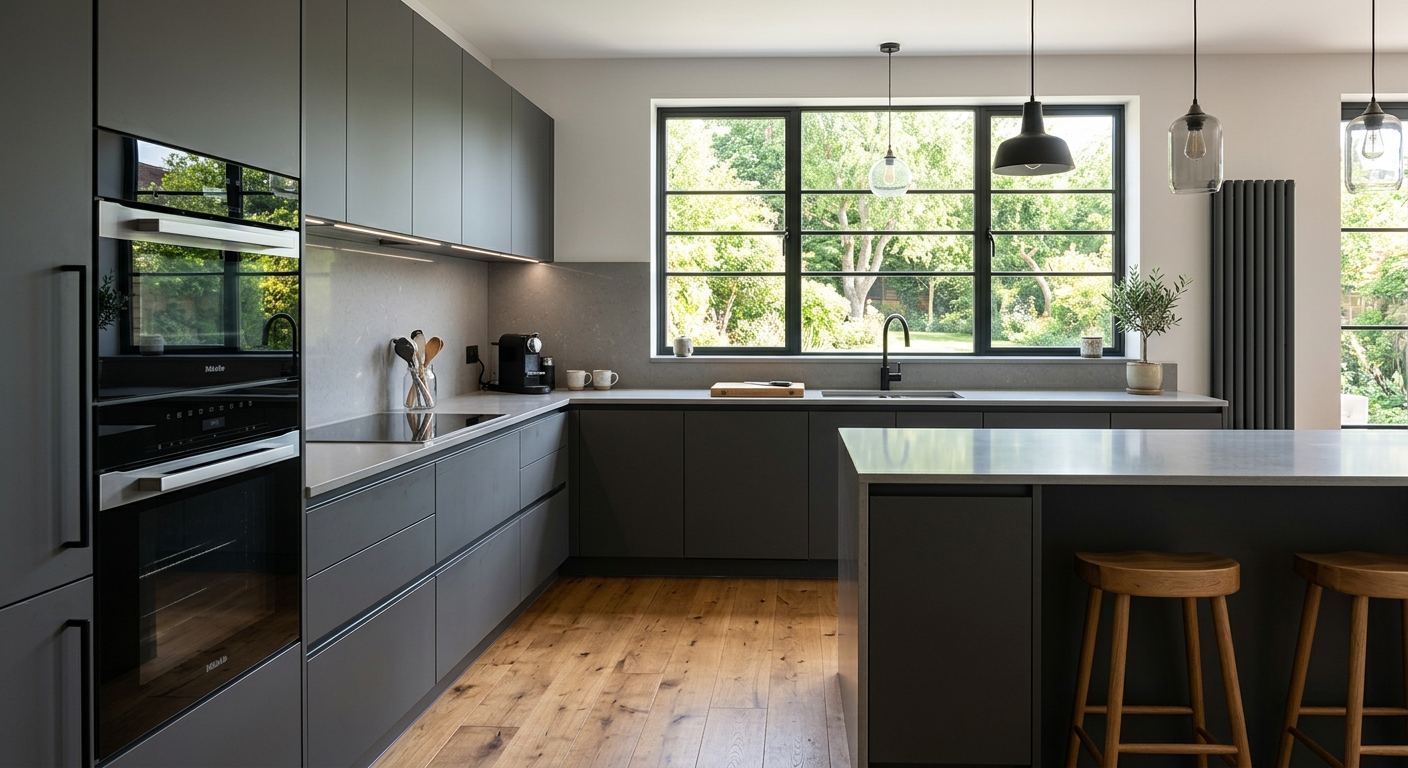
Kitchen renovation options and costs in Petawawa
Petawawa homeowners often compare options by price, but the real starting point is your target finish level and how long you plan to stay in your home. With a median household income of $102,000 (Statistics Canada, 2021 Census), many families can comfortably move into a mid-range kitchen upgrade, especially in neighbourhoods like Pembroke Street West and the older parts of town where kitchens are routinely updated to match modern lighting, flooring and storage. At the same time, Petawawa’s housing mix includes a lot of older dwellings—46.4% were built before 1981 (Statistics Canada, 2021 Census)—so you’ll frequently see renovations that address dated electrical capacity, awkward layouts and wear-and-tear cabinetry.
In the Kingston–Pembroke economic region, pricing is driven more by market expectations than by climate. Contractors here plan around typical seasonal swings, but labour and scheduling availability are the bigger variables year-to-year. Inventory and installation lead times for cabinetry and quartz also matter, particularly because many projects are timed around when families can tolerate kitchen downtime. For many homeowners, cabinets are the main cost driver (often 30–40% of the overall budget), and that’s where “resale-minded” choices show up first—semi-custom or custom millwork becomes more common when buyers expect a more finished look.
Below is a practical way to compare renovation tiers—from a fast cosmetic refresh to a full high-end project—then you can decide which scope fits your timeline and budget before you start collecting quotes.
| Renovation Tier |
What's Included |
Typical Duration |
Price Range |
| Cosmetic refresh (paint, hardware, new appliances only) |
Cabinet paint (or touch-up where applicable), hardware swaps, backsplash refresh (if light work only), new fridge/range/dishwasher, basic plumbing hookups for appliances |
3–7 days |
$8,000–$18,000 |
| Mid-range full renovation (new cabinets, counters, sink, tile) |
New semi-custom or mid-range cabinets, new countertops (often quartz), sink + faucet, backsplash tile, drywall/trim patching as needed, flooring repair or partial replacement, disposal connection, basic lighting updates |
3–6 weeks |
$25,000–$55,000 |
| High-end full renovation (custom cabinets, stone counters, island) |
Fully custom cabinetry, premium stone countertops (often granite/stone), island with electrical outlets, upgraded backsplash (sometimes full-height), upgraded sinks/faucets, enhanced trim, more extensive electrical/plumbing scope |
6–12 weeks |
$55,000–$65,000 |
| Cabinet refacing only (new doors + drawer fronts, same boxes) |
New door/drawer fronts, new hardware, re-laminating or re-surfacing where boxes are sound, labour to prep existing surfaces, optional interior refit for storage |
1–2 weeks |
$6,000–$18,000 |
| Countertop swap only (laminate to quartz or stone) |
Remove old counters and dispose, new quartz/stone install, sink cut-out and reseal, backsplash caulk/trim touch-ups, minor cabinet top prep |
3–7 days |
$2,500–$12,000 |
| Backsplash tile installation only |
Surface prep, tile install, grout, sealing where needed, caulk at edges, electrical outlet cover adjustments for minor fit issues |
2–5 days |
$1,500–$8,000 |
Prices are estimates only and vary by project scope, site access and material selection.
What affects the price of kitchen renovation in Petawawa
In Petawawa and across the Kingston–Pembroke economic region, the same “kitchen renovation” can produce quotes that land 30–50% apart. The biggest reason isn’t usually the weather—it’s finish tier, material lead times and how much work is needed to make an older kitchen work with modern loads (dishwashers, range hoods, under-cabinet lighting and often new circuits). Because many homeowners sit on different resale strategies, contractors price for different buyer expectations: mid-range upgrades typically sit in the $25,000–$55,000 band, while premium projects can approach the top of the region’s $25,000–$65,000 range when custom details and stone move into the plan.
Local home values and median income shape the finish tier far more than climate. In higher-value Ontario pockets, homeowners more readily choose quartz or natural stone and semi-custom cabinetry because the renovation cost is easier to recover at resale. In more modest setups, laminate or stock cabinets dominate because they deliver a cleaner look without overspending. Petawawa is also shaped by housing age: with 46.4% of homes built before 1981 (Statistics Canada, 2021 Census), it’s common to find older rough-in plumbing or electrical runs that require corrective work before counters can be installed and appliances can be safely connected.
Here are a few practical examples of local conditions raising or lowering cost in Petawawa: (1) older cabinets may have damaged box tops that require replacement patches before countertop install, adding material and labour; (2) if your kitchen layout already has limited wall space, adding an island often forces a plumbing/gas/electrical coordination step that changes the price more than countertop choice; (3) kitchens in established neighbourhoods sometimes have tighter access for staging, dust control and waste removal—small site constraints can add crew time even when finishes are mid-range.
| Price Factor |
Why It Matters |
Cost Impact |
| Cabinet tier — stock vs. semi-custom vs. fully custom millwork |
Pricing scales with material quality, door profiles, internal storage, adjustability and fit tolerance |
Often the largest swing; can shift a project by $10,000+ within the full renovation bands |
| Countertop material — laminate vs. quartz vs. granite vs. stone |
Material cost plus templating/installation time; natural stone can require additional fabrication steps |
Can add several thousand dollars; a move to premium stone commonly increases the countertop line item |
| Layout change — wall removal, island add, plumbing/gas move |
Layout work drives trades coordination, demolition and the need for permits and inspections |
Typically the most unpredictable; often pushes budgets toward the upper end of $25,000–$65,000 |
| Appliance package tier — builder vs. mid-range vs. pro-grade |
Electrical demands, ventilation requirements and installation complexity vary by model |
May shift the total by $2,000–$6,000 depending on range hood, ventilation and appliance selection |
| Flooring — refinish existing vs. full replacement |
Older subfloors can require patching, and removing cabinets can damage surrounding finishes |
Can be low-cost touchups or a full replacement that meaningfully increases labour and materials |
| Backsplash — ceramic tile vs. marble vs. full-height slab |
Surface prep and complexity go up with larger formats, specialty stone and full-height coverage |
Often swings $1,500–$8,000 depending on material and height |
| Electrical — new circuits for island, under-cabinet lighting |
Modern kitchens commonly need additional outlets and lighting runs beyond older wiring |
Frequently adds several hundred to a few thousand dollars depending on circuit count |
| Permit fees and licensed trade requirements |
Permits and inspections are triggered by specific work types; they also affect scheduling |
Can add administrative cost and time; layout + services often increases overall budget most |
Permits & regulations in Ontario
For most Petawawa homeowners, cabinet and countertop swaps are straightforward from a permitting standpoint: replacing cabinets, changing countertop surfaces, and setting a new backsplash usually do not require a building permit by themselves. However, the permit line in Ontario is crossed when you change services or structural elements. That means moving plumbing supply or drain lines, relocating gas (for a gas stove and certain range hood configurations), removing a load-bearing wall, or adding electrical circuits are the common kitchen tasks that typically require permits and licensed trades.
To keep your renovation process smooth, verify responsibility before you sign. Step one: ask your contractor, in writing, which permit(s) will be pulled (and who is pulling them). Step two: confirm licensing—gas work must be completed by a licensed gas fitter, and electrical work must be done by a licensed electrician. Step three: request documentation before work starts. For electrical and gas contractors, ask for proof of licence (licence number), liability insurance and WSIB/WCB coverage where applicable to their trade. You can also request a clearance letter or official documentation that shows their WSIB status.
Finally, confirm that the contractor’s agreement states inspection responsibility and costs. In practice, the best-run projects in Petawawa include permit handling, inspection scheduling and disposal/cleanup expectations spelled out in the contract.
Cabinets, countertops and layout decisions in Petawawa
In a Petawawa kitchen renovation, three decisions determine most of your satisfaction: (1) cabinet tier, (2) countertop material, and (3) whether you change the layout. Start with cabinets: stock units are typically the fastest and cheapest, semi-custom is the most popular middle ground because you can tune storage and fit, and custom millwork is best when you need unusual dimensions or a perfect architectural look. Next, pick countertops. Laminate can be a practical, lower-cost option, but it’s less resilient to heavy impacts; quartz is the common “busy kitchen” upgrade because it’s durable and low maintenance. Granite/stone adds a premium look and heat tolerance, while butcher block brings warmth (but needs more careful maintenance). Marble is beautiful and upscale, but it’s more maintenance-forward for busy households.
Layout changes are where value gets earned or lost. Removing an open-concept wall or adding an island can be worth the spend when it improves circulation, seating and storage. But in older homes (46.4% built before 1981), rough-in plumbing and limited electrical capacity can add surprises—so budget for coordination if you’re moving plumbing or gas lines. Kingston–Pembroke buyers often respond to “clean lines” and functional upgrades: at the mid-range level ($25,000–$55,000), semi-custom cabinets plus quartz and sensible lighting changes tend to feel modern without overbuilding. At the higher end (up toward $55,000–$65,000), custom cabinetry and stone counters with an island are what push the project into premium territory.
Dollar example: if you compare quartz vs. granite on the same layout, the quartz option can keep you nearer the $25,000–$55,000 band by avoiding some premium fabrication and sink cut-out complexity. If you’re already leaning toward an island and electrical upgrades, the extra countertop cost is often easier to justify because the buyer sees the whole kitchen’s improved function—not just the surface.
| Option |
Durability |
Maintenance |
Best For |
Price Range |
| Stock cabinets (big-box) |
Good day-to-day durability; depends on construction quality and hardware |
Low; wipe-clean surfaces, periodic hardware tightening |
Fast timelines and budget-conscious renos where layout is already workable |
$8,000–$18,000 (typical cabinet portion within a full project) |
| Semi-custom cabinets (local dealer) |
Very good durability; better adjustments and internal storage options |
Low; regular cleaning and gentle care on finishes |
Most Petawawa families seeking stronger value without custom lead times |
$15,000–$30,000 (typical cabinet portion within a full project) |
| Custom cabinets (local millwork shop) |
Excellent durability; tailored construction for long-term fit and stability |
Low; still benefits from thoughtful cleaning and correct product care |
Unusual room dimensions, high-end finishes and island or specialty storage |
$25,000–$45,000 (typical cabinet portion within a full project) |
| Laminate countertop |
Moderate; sensitive to heat and can chip if impacts are frequent |
Easy day-to-day cleaning; use trivets and avoid harsh abrasives |
Lower budgets and “good look for less” projects |
$2,500–$6,500 |
| Quartz engineered countertop |
High; very resistant to staining and everyday wear |
Low—wipe clean; no sealing required |
Busy households wanting a modern look with minimal upkeep |
$5,500–$12,000 |
| Granite / natural stone countertop |
High; strong against heat and impacts (with proper sealing practice) |
Medium—periodic sealing depending on stone and installation |
Premium kitchens and buyers who value natural variation |
$7,500–$14,000 |
| Butcher block countertop |
Medium to high; durable but can show cuts if not maintained |
Medium to high—needs oiling and protective care |
Warm, family-centred kitchens where maintenance is acceptable |
$4,000–$10,000 |
| Marble countertop |
Moderate; can be more susceptible to etching and staining |
Higher maintenance—careful cleaning and sealing |
Showpiece kitchens with lighter daily wear |
$9,000–$16,000 |
How to choose a kitchen renovation contractor in Petawawa
Choosing the right contractor in Petawawa is mostly about proof and process. Start with Ontario licensing and coverage. Ask for licence numbers for trades involved (not just the contractor’s general information), then verify liability insurance—you should receive a certificate of insurance showing coverage amount and effective dates. For worker protections, request proof of WSIB/WCB status (or clearance letter where applicable). Don’t rely on verbal reassurance; you want documents provided before work begins.
Next, get 2–3 itemised written quotes with a clear breakdown of labour and materials (cabinets, countertops, tile, demo, electrical/plumbing allowances, disposal). Avoid “all-in” numbers without scope details, because kitchen renovations routinely change once you open walls and measure for counters. Read the scope line-by-line: what’s excluded (appliance hookup, drywall patch depth, waste hauling, lighting upgrades), whether the permit pull is included, and who pays for rework if something is discovered behind old cabinets.
Warranty matters too. Confirm the workmanship warranty length, whether it covers cabinet install and countertop setting, and whether the product/manufacturer warranty is included and transferable. Finally, keep payment fair: never pay more than 10–15% upfront; use progress payments and hold back until the job is complete and punch-list items are addressed. For timing, request a start date and a completion estimate in writing, including lead-time assumptions for cabinetry and stone.
- Ask for licence numbers and trade-specific documentation before scheduling.
- Confirm liability insurance and request a current certificate of insurance.
- Request WSIB/WCB clearance or proof of coverage for workers.
- Require itemised quotes (labour vs materials) instead of lump sums.
- Clarify who pulls permits and who pays permit and inspection fees.
- Confirm disposal/waste removal is included or priced separately.
- Check warranty: workmanship term, coverage scope, and exclusions.
- Confirm product warranties and whether they transfer to you as homeowner.
- Ask how changes are priced (written change orders every time).
- Set the payment schedule in writing; hold a completion retainage.
- Get a detailed timeline including cabinet/countertop lead times.
- Make sure measurements, templates and site conditions are addressed in writing.
Red flags: (1) they won’t provide WSIB/WCB or insurance documents, (2) they won’t itemise a quote or refuse to list what’s excluded, (3) they ask for large upfront payments beyond 10–15%, (4) they can’t explain who handles permits for plumbing/electrical changes, and (5) they pressure you to pick stone/cabinets without confirming templating and scheduling realities in Petawawa.
Frequently asked questions — kitchen renovation in Petawawa
What's the best countertop material for a busy Petawawa kitchen?
For most busy kitchens in Petawawa, quartz is the safest all-rounder: it holds up well to everyday wear, resists staining, and doesn’t require sealing like many natural stones. If your household cooks frequently and wants a low-maintenance surface, quartz usually makes it easy to stay within a realistic renovation budget (often keeping you toward the $25,000–$55,000 mid-range band when paired with semi-custom cabinets). Granite can be excellent too—especially if heat tolerance matters—just remember it may need periodic sealing depending on the stone. Laminate can work in budget-focused projects, but it’s typically less forgiving with heat and impacts. Whatever you choose, match the countertop to your cabinet tier and layout so seams, sink cut-outs and overhangs are planned correctly from day one.
How do I add an island to my Petawawa kitchen?
Adding an island usually starts with layout planning, not demolition. First, measure traffic flow (so you can open drawers and still walk comfortably), then decide whether the island is purely seating/storage or if it will include a sink or range. If you want plumbing or gas moved, or electrical outlets/lighting added, that’s where Ontario permitting and licensed trades come into play—permits and inspections are typically required for those service changes. In Petawawa’s older housing stock (many homes built before 1981), you may also encounter rough-in limitations that affect how cheaply the island can be supported. Budget planning should assume the island option can push you toward the higher end of the region’s full kitchen bands, especially if it requires relocating plumbing/gas and adding electrical circuits. A good contractor will provide a written plan and allowances before the cabinet demo starts.
How much does a kitchen renovation cost in Petawawa?
In Petawawa, a typical full kitchen renovation commonly falls within about $25,000–$65,000 depending on scope and finish tier. A mid-range refresh with new semi-custom cabinets, quartz counters, a new sink and tile often lands around $25,000–$55,000. If you’re going premium—custom cabinetry, stone counters, and an island with added electrical and upgraded backsplash—projects can move toward $55,000–$65,000. Your quote can vary widely because cabinetry and countertop choices often represent the biggest cost drivers, and layout changes (wall removal, moving plumbing/gas lines) add unpredictability even when finishes stay mid-range. Also keep in mind that lead times for cabinets and stone can affect scheduling and costs. For reference, kitchen contractors in Ontario commonly align full kitchen budgets with a percentage of home value and household income expectations, which is why finish expectations vary so much from one neighbourhood to another in Kingston–Pembroke.
How long does a kitchen renovation take in Petawawa?
Timelines in Petawawa depend heavily on whether you’re doing a cosmetic refresh or a full tear-out and reconfiguration. A cosmetic refresh (paint, hardware and new appliances only) is often about 3–7 days. A mid-range full renovation (new cabinets, countertops, sink and tile) usually takes about 3–6 weeks. If you’re doing a high-end project—custom cabinetry, stone counters and an island—it’s commonly 6–12 weeks due to templating, fabrication and more extensive electrical/plumbing coordination. Layout changes can also extend schedules because demolition, rough-ins, permits and inspections add time. Weather typically matters less than contractor scheduling and material lead times. The best way to keep your timeline realistic is to get a written start date and completion estimate that includes cabinet/countertop lead-time assumptions.
Quartz vs granite countertops — which is better?
Quartz is usually the “best for most people” choice in Ontario because it’s low maintenance and highly consistent in appearance. It resists staining and doesn’t need sealing, which is convenient for busy Petawawa households. Granite is a strong option if you value natural variation and want excellent heat tolerance; however, many granite slabs require periodic sealing and careful cleaning to protect the surface. In practical terms for budgeting, both can fit within the broader kitchen renovation bands, but granite often trends higher once you factor in premium fabrication, sink cut-outs and the overall stone install scope. If you want to prioritize ROI and day-to-day durability without additional care, quartz is typically the better everyday pick. If you’re drawn to a high-end natural look and you’re willing to maintain it, granite can feel like the premium upgrade.
Should I reface or replace my cabinets?
Reface is a great option when your existing cabinet boxes are still solid and square, and when you want a faster, lower-cost upgrade that keeps your kitchen workable. It typically suits homeowners who are updating the look—new doors/drawer fronts and new hardware—without triggering major demolition and re-plumbing/electrical changes. Replacement is usually the better choice when boxes are damaged by moisture, the layout feels inefficient, or you want to address storage solutions with a major internal redesign (pull-outs, pantry units, redesigned corner access). In Petawawa, many kitchens in older homes can hide issues behind existing cabinetry, so it’s important to inspect the box condition before deciding. Budget-wise, refacing often lands in the lower portion of full renovation costs (while a full cabinet-and-counter refresh typically sits in the $25,000–$55,000 range for mid-range projects). A contractor should be able to explain what’s achievable with refacing and what requires replacement to get a reliable countertop fit and long-term performance.