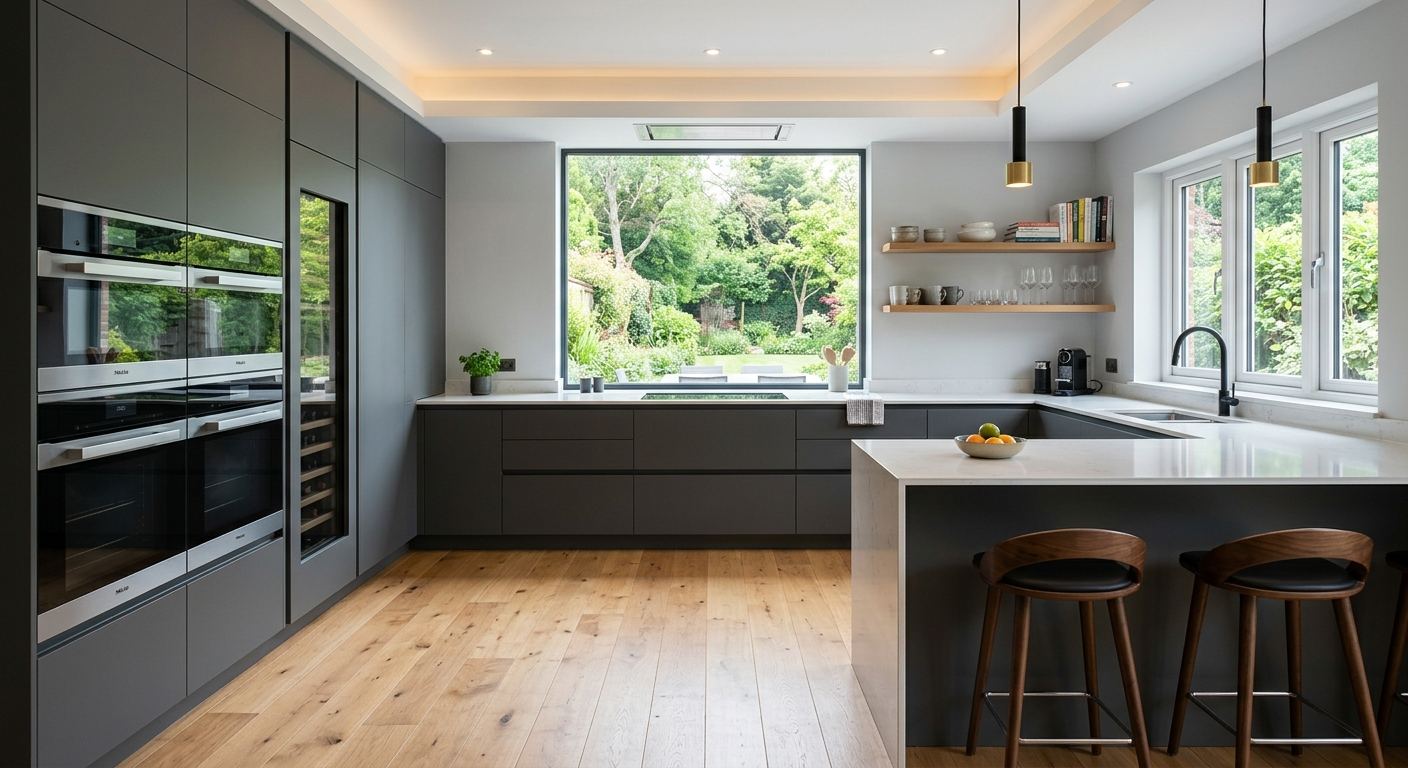
Kitchen renovation options and costs in The Glebe
The Glebe is where I see kitchens renovated for both daily comfort and resale value—often within a tight footprint of older homes and laneway-adjacent setbacks. With a population of 13,055 (Statistics Canada, 2021 Census), the neighbourhood’s demand is steady, and most homeowners are competing for the same limited pool of skilled trades during peak months. In the Toronto economic region, kitchen budgets also tend to track with housing values and household income expectations, which is why higher-finish choices become common sooner than people assume. In practice, many owners plan for renovations to sit in the mid-range of the Toronto market, while others push higher when they’re aiming for premium appeal.
Toronto’s weather affects kitchens indirectly: winter temperature swings and humidity changes can loosen older cabinet joins, stress aging caulking at backsplashes, and reveal water-damage around sinks faster than in milder climates. However, compared with materials and labour, climate is rarely the primary driver of budget—finish tier and scope are. Availability is more of a factor: when contractors are busy, schedules compress, which can increase labour costs for protected work windows and material handling. Trade demand is especially strong around the Glebe’s older housing stock near Bank Street and the broader central Toronto shopping corridor, where homeowners frequently renovate as part of spring-to-fall maintenance cycles.
If you’re deciding between tiers, the table below gives a practical way to compare typical inclusions, timelines, and realistic price ranges for The Glebe projects.
| Renovation Tier |
What's Included |
Typical Duration |
Price Range |
| Cosmetic refresh (paint, hardware, new appliances only) |
Cabinet paint/finish or touch-ups, new hardware/pulls, paint walls/trim, replace appliances only (no plumbing/electrical changes), light cleaning and basic caulking/trim work |
5–10 business days |
$10,000–$25,000 |
| Mid-range full renovation (new cabinets, counters, sink, tile) |
Demolition and disposal, new semi-custom cabinets, countertop install, new sink & faucet (typical minor plumbing adjustment), backsplash tile, flooring patching/underlay as needed, basic electrical hookups for appliances |
3–5 weeks |
$25,000–$55,000 |
| High-end full renovation (custom cabinets, stone counters, island) |
Custom millwork, premium stone/quartz counters, island (often with electrical and possibly plumbing planning), upgraded appliance package, full backsplash scope including specialty detailing, more extensive framing/finishing and higher-end trim |
6–10 weeks |
$60,000–$90,000 |
| Cabinet refacing only (new doors + drawer fronts, same boxes) |
Refacing of existing cabinet boxes, new doors/drawer fronts, updated trim profiles, new hardware, selective sanding/repairs, optional lighting rough-in only if already planned |
1–3 weeks |
$8,000–$25,000 |
| Countertop swap only (laminate to quartz or stone) |
Remove existing countertop, prepare substrate, install new quartz/stone (or laminate-to-quartz), cut-outs for sink/cooktop (if like-for-like), reseal edges, basic caulking at backsplash line |
3–7 business days |
$15,000–$35,000 |
| Backsplash tile installation only |
Surface prep, tile layout and install, grout, sealing where required, tie-in to countertop edges, caulking at corners and outlet transitions |
3–6 business days |
$2,000–$10,000 |
Prices are estimates only and vary by project scope, site access and material selection.
What affects the price of kitchen renovation in The Glebe
In The Glebe and across the wider Toronto economic region, two quotes for the “same kitchen” can still land 30–50% apart because contractors price risk and complexity differently—especially in older homes where hidden conditions are common. While Ontario labour and material pricing are relatively consistent across the GTA, homeowners’ default finish tier changes with local resale expectations. In higher-value pockets, owners more often go to quartz or natural stone and semi-custom cabinetry because the renovation is easier to justify when it supports resale price. In more price-sensitive areas of the region, many projects stay mid-range with stock or refaced cabinets and laminate or good quartz to balance ROI. In The Glebe, you’ll see the split: some renovations stay closer to the low–mid band (often near $25,000–$55,000 for a full renovation), while others climb quickly toward premium scope.
Layout changes are the most unpredictable driver regardless of finish. Removing a wall, adding an island, or moving a gas line/plumbing rough-in can trigger framing, venting, subfloor work, and additional inspections that labour-only estimates rarely capture. A typical example I see in The Glebe: older drain lines running close to subfloor—when we demo, we often find one-off repairs required before new cabinetry can sit properly. Another example: when upgrading to under-cabinet lighting, we may need to open more wall than expected to add proper junctions and lighting runs cleanly. Finally, stone installations can raise costs because template work, edge profiles, and crane/handling logistics matter—especially when doorways or hallways constrain delivery routes during winter scheduling.
The practical takeaway for Toronto homeowners: choose finish tier intentionally, but treat layout and services moves as “budget-flex” items. Even with the same cabinet line, scope differences are where budgets expand from mid-range into $60,000–$90,000 high-end territory.
| Price Factor |
Why It Matters |
Cost Impact |
| Cabinet tier — stock vs. semi-custom vs. fully custom millwork |
Custom sizing, interior options, and stronger build quality change both material and installation time |
Often shifts the project by $5,000–$30,000 |
| Countertop material — laminate vs. quartz vs. granite vs. stone |
Material cost and fabrication complexity (thickness, edges, seam placement) drive price more than colour does |
Typically $3,000–$15,000+ |
| Layout change — wall removal, island add, plumbing/gas move |
Framing, subfloor repair, service reroutes, and inspections increase labour and risk |
Commonly $8,000–$25,000+ |
| Appliance package tier — builder vs. mid-range vs. pro-grade |
Ventilation compatibility, electrical draw, and premium finish/accessories change both hardware and install time |
Roughly $2,000–$12,000 |
| Flooring — refinish existing vs. full replacement |
If you keep existing flooring, you reduce demo and re-lay costs; full replacement adds materials and install time |
Usually $1,500–$10,000 |
| Backsplash — ceramic tile vs. marble vs. full-height slab |
Higher-end materials require precision, fasteridious prep, and sometimes heavier installation methods |
Typically $2,000–$10,000 |
| Electrical — new circuits for island, under-cabinet lighting |
Electrical scope can require added wiring paths, switches, and sometimes service panel adjustments |
Often $1,000–$8,000 |
| Permit fees and licensed trade requirements |
Work involving plumbing/gas/electrical or structural modifications adds administrative steps and licensed labour |
Can add $500–$4,000+ |
Permits & regulations in Ontario
In Ontario, the rule of thumb is simple: replacing finishes is usually permit-free, but changing how services run or how your structure holds loads typically triggers permitting and licensed trades. Cabinet and countertop swaps generally do not require permits. That means removing existing cabinets or replacing them with new ones (without relocating plumbing/gas lines and without moving structural elements) is typically handled as a finishing project. Likewise, countertop installation alone—especially when it’s a like-for-like cut-out situation—usually doesn’t require a permit.
Permits and licensed trade work are typically required when you move plumbing supply/drain lines, relocate a gas stove or modify gas venting, remove a load-bearing wall, or add new electrical circuits (for example, dedicated island receptacles, under-cabinet lighting upgrades with new wiring paths, or additional kitchen circuits). Gas work must be done by a licensed gas fitter, and electrical work must be done by a licensed electrician. Both require appropriate inspections before you close walls and countertops.
For a homeowner in The Glebe, I recommend this verification flow before you sign: (1) ask for the contractor’s Ontario licence references for the trades they’re coordinating; (2) request a current certificate of liability insurance and confirm coverage limits match a renovation scope; (3) request proof of WSIB/WCB clearance or coverage for workers; and (4) confirm in writing who pulls permits and when. If the scope includes gas, plumbing reroutes, or electrical circuits, make sure the contractor’s contract clearly assigns permit responsibility and lists inspection milestones.
Cabinets, countertops and layout decisions in The Glebe
When you renovate a kitchen in The Glebe, three decisions matter more than everything else: cabinet tier, countertop material, and whether to change the layout. First, cabinet tier sets the baseline for fit, longevity, and installation speed. Stock cabinets are the fastest and cheapest; semi-custom is the most popular mid-range option for Toronto homeowners because it balances design flexibility with cost control; custom millwork is the highest cost but can solve awkward older-home wall angles and niche dimensions. Second, countertops drive both durability and day-to-day maintenance. Laminate is budget-friendly but more sensitive to heat and impact. Quartz offers a strong middle ground—low maintenance with excellent stain resistance. Granite/natural stone looks premium, but it can require sealing and extra care depending on the slab. Third, layout changes—open-concept wall removal, adding an island, or relocating plumbing/gas—are the decisions that justify (or destroy) your budget.
Toronto’s housing stock is often older, so bathrooms and kitchens can share older service runs and unusual clearances. That’s why I stress a staged decision process. Example: if you’re choosing between $25,000–$55,000 and $60,000–$90,000, the most common “justification” move is adding an island only when the kitchen can truly support it—walk paths, door swings, and appliance access. If your space already has a natural work triangle and storage is the main issue, upgrading to quartz counters and semi-custom cabinets can deliver a big visual leap without the risk of a full services move. In contrast, moving a gas line to accommodate a new layout usually adds cost and complexity quickly, even when the cabinetry choice is otherwise moderate.
| Option |
Durability |
Maintenance |
Best For |
Price Range |
| Stock cabinets (big-box) |
Good for standard dimensions; hinges and finishes vary by line |
Low ongoing care; avoid water exposure at base |
Fast, budget-conscious refreshes in existing layouts |
$8,000–$18,000 |
| Semi-custom cabinets (local dealer) |
Better component options and improved fit; handles common Toronto irregularities better |
Low care; ensure good caulking around sinks in winter |
The “most popular” mid-range renovation where storage and finish matter |
$18,000–$35,000 |
| Custom cabinets (local millwork shop) |
Highest fit/finish and build quality; ideal for unique wall lines and premium hardware |
Low care, but requires accurate installation and proper ventilation |
Owners targeting a premium resale look and perfect measurements |
$35,000–$70,000+ |
| Laminate countertop |
Decent for day-to-day use; seams can be more vulnerable than stone |
Wipe clean; avoid hot pans directly on the surface |
Budget-friendly kitchens where ROI matters |
$3,000–$6,000 |
| Quartz engineered countertop |
High durability and consistent surface performance |
Very low maintenance; routine cleaner only |
Most Toronto buyers seeking “looks like stone” with easy care |
$6,000–$12,000 |
| Granite / natural stone countertop |
Very durable; variation makes each kitchen unique |
May require periodic sealing; clean spills quickly |
Premium aesthetics when you want authentic stone character |
$8,000–$15,000+ |
| Butcher block countertop |
Strong but can scratch; sensitive to long-term standing water |
Oil conditioning and careful drying near sinks |
Warm, traditional styles and homeowners who maintain surfaces |
$5,000–$10,000 |
| Marble countertop |
Beautiful but softer; can etch with acids |
Requires more careful cleaning and protection |
High-end kitchens where the look is the priority |
$10,000–$20,000+ |
How to choose a kitchen renovation contractor in The Glebe
Choosing a contractor the right way matters in The Glebe because kitchens here often sit in older homes with tighter access routes, established plumbing runs, and varied insulation and vapour control details behind walls. Start with licensing and coverage. In Ontario, you want to verify the appropriate provincial licences for any licensed trades involved (electrical and gas work in particular) and confirm general contractor coverage. For insurance, ask for a current certificate of liability insurance—make sure the renovation scope is covered and the limits are reasonable for a full kitchen. For workplace coverage, request proof of WSIB/WCB clearance or coverage for workers on site.
Then, get 2–3 itemised written quotes rather than a single lump sum. The quote should separate labour and materials, list allowances clearly, and state what’s included for demolition, disposal, patching, countertop templating, and any rework allowances for older walls. Scope clarity is where savings often hide—or losses happen. Ask whether the contractor pulls permits (when required), whether licensed trades are subbed or included, and whether drywall repairs and paint touch-ups are part of the base price.
For warranty, confirm workmanship coverage (how many months/years, and what defects are covered), plus manufacturer warranties for cabinets, countertops, and appliances. Also ask whether warranties are transferable if you sell the home. Payment schedule should protect you: never pay more than 10–15% upfront, and use a holdback until the job is complete and any punch-list items are corrected. Finally, demand a start date and completion estimate in writing, including allowances for material lead times common in Toronto.
- Ask for certificate of liability insurance and confirm coverage limits
- Request WSIB/WCB clearance or proof of coverage for workers
- Confirm which tasks require permits and who is responsible for pulling them
- Get licence proof for electrical and gas trades if those scopes are included
- Use itemised quotes: labour vs. materials vs. allowances
- Ask what demolition and disposal are included (dump fees, appliance haul-away)
- Confirm who handles countertop templating and measurement revisions
- Check flooring scope: underlayment patching vs. full replacement
- Require a written timeline with lead-time assumptions for cabinets and stone/quartz
- Clarify warranty length for workmanship and product warranties
- Set payment milestones tied to milestones, not vague “progress”
- Ensure the contract specifies inclusions/exclusions for electrical, plumbing, and ventilation
Red flags I see in The Glebe: (1) quotes that don’t itemise labour and materials, (2) refusal to provide insurance/WSIB evidence, (3) “permit included” claims without specifying responsibility for gas/electrical/plumbing scope, (4) long delays to start without a written schedule and material lead-time plan, and (5) no clear warranty terms or unclear payment protections.
Frequently asked questions — kitchen renovation in The Glebe
Can I live at home during a kitchen renovation in The Glebe?
Yes, many homeowners in The Glebe live in the home during a kitchen renovation, especially for cosmetic refreshes or cabinet/backsplash scopes. The practical limit is dust and access: if demolition is involved and you’re switching cabinets and countertops, plan for a workable living zone and dust control (plastic containment and floor protection). For mid-range full renovations, many clients do “stay-in-place” living while the kitchen is under construction and one bathroom remains fully usable; schedules often run 3–5 weeks, with countertop fabrication and install acting like a key milestone. If your scope includes layout changes, plumbing reroutes, or new electrical circuits, it can require temporary shutdowns of parts of the kitchen for short windows.
Should I renovate my kitchen before selling in The Glebe?
Often, yes—but it depends on your target buyer and the condition of the existing kitchen. If your current layout is functional and you’re mostly updating surfaces, you can usually capture value with a refresh or mid-range renovation that lands in the $25,000–$55,000 band. If the kitchen has dated finishes, damaged cabinet boxes, or an awkward work triangle, a more complete renovation may be justified, particularly if your upgrades align with buyer expectations for central Toronto: quartz-style durability, clean lines, and modern lighting. In higher-value neighbourhoods, homeowners are more comfortable investing a larger share of property value into the kitchen, often leaning toward premium materials like quartz or stone. The best approach is to match finish tier to your resale ceiling—not the maximum you can spend.
What's the most popular kitchen style in The Glebe right now?
Right now, the most requested look in The Glebe is a clean, contemporary “warm modern” style: shaker or slab-front cabinets in soft neutrals (white, greige, or warm greys), quartz countertops, and simple hardware. Many homeowners choose an island for social layout and easier entertaining, but they’re careful about maintaining clear walkways in older home footprints. Backsplashes are commonly full-height to the window sill or to a tidy stopping point above countertop, using large-format ceramic or subtle stone-look tile. Appliance packages often trend stainless with integrated-looking panels. If your budget is closer to the mid-range, a semi-custom cabinet line plus quartz typically gives the strongest resale appeal for the dollars; if you’re pushing high-end, custom millwork and natural stone become the differentiator.
How do I know if I need to update my kitchen plumbing in The Glebe?
You might need plumbing updates if inspections or day-to-day signs point to age or leaks, especially in Ontario homes where winter temperature swings can reveal slow moisture issues around sinks. Common triggers: recurring under-sink odours, slow drains, frequent faucet repair, corrosion at supply lines, or a history of shutoffs and “temporary” fixes. If you’re moving the sink location, adding a dishwasher, or changing the countertop height with new cabinetry, plumbing lines usually need adjustment—this is one of the biggest scope changers. In those cases, permits may be required, and licensed work is typically involved. Before demolition, ask your contractor to assess shutoff valves, drain slopes, and the condition of accessible pipe runs; a quick walkthrough can often prevent surprises later.
What is the difference between a galley and open-concept kitchen?
A galley kitchen is a long, narrow layout with counters on two parallel walls, usually limiting seating but making the work triangle efficient. An open-concept kitchen removes barriers so the kitchen flows into the living/dining area—usually improving sightlines for entertaining and often increasing the need for layout engineering if you’re changing walls or adding an island. In The Glebe, many older homes have structural constraints and existing service runs, so open-concept remodels require careful planning around load-bearing walls and ducting/ventilation. If you’re staying with a galley layout, you can still modernize with better cabinet storage and countertop upgrades without major service moves. If you want open-concept, expect more variable costs—especially when plumbing, gas, or electrical routing changes.
How do I get accurate kitchen renovation quotes in The Glebe?
To get accurate quotes in Ontario, the key is providing a detailed scope and comparing itemised estimates. Start by requesting 2–3 written quotes with labour and material breakdowns and allowances for cabinets, countertops, tile, and disposal. Make sure you clarify whether the quote includes permit pulling when required (for example, if electrical circuits or plumbing/gas moves are part of the plan), and whether disposal and patch-and-paint are included after demolition. Ask for a timeline with start date, countertop templating schedule, and estimated completion. If you’re aiming for realistic budgeting, use the local Toronto banding: for many full kitchen projects, estimates commonly land between $25,000–$90,000 depending on finish tier and whether services/layout change. Finally, confirm warranty terms and payment schedule (no more than 10–15% upfront, with holdback until completion).