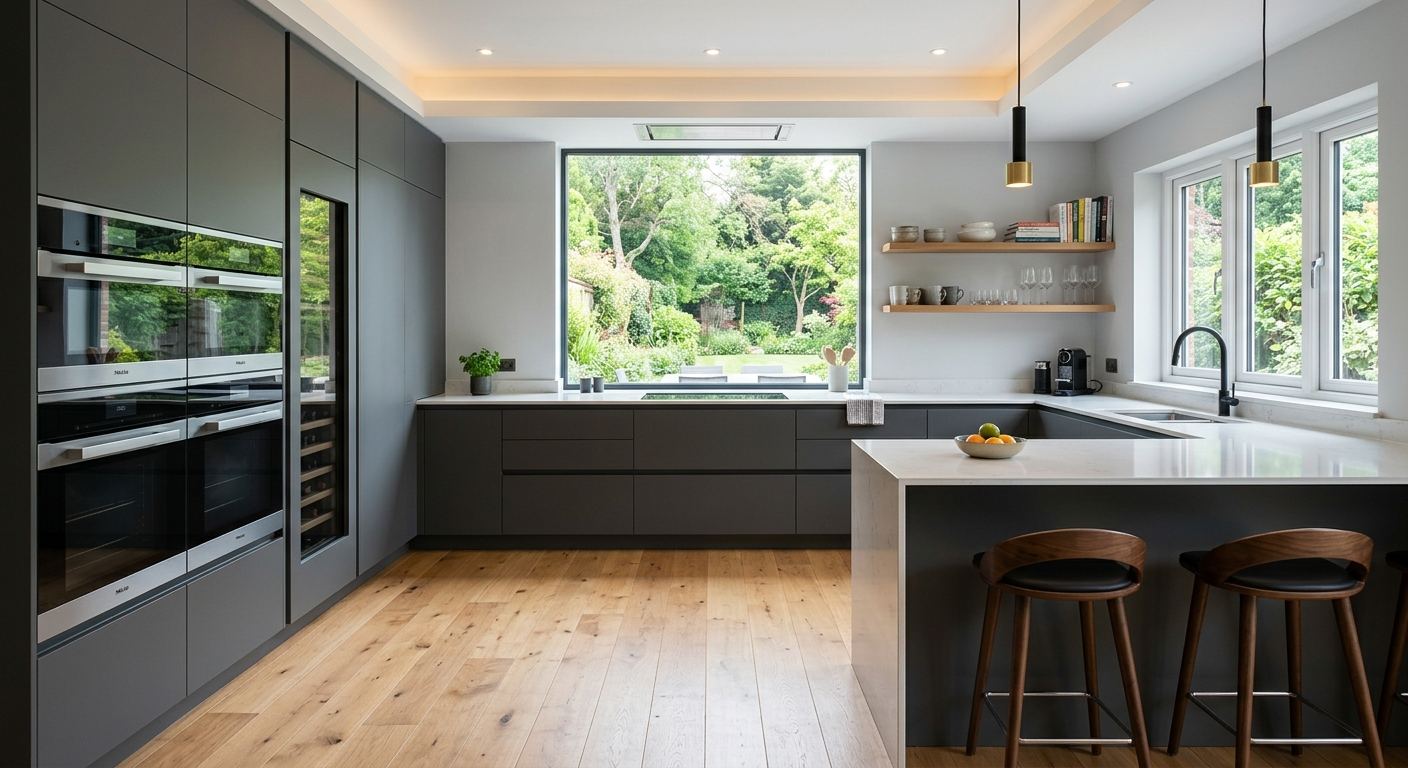
Kitchen renovation options and costs in Bayview Village
Bayview Village homeowners usually start their planning with one question: how much a kitchen will cost in today’s GTA market. With a local population of 21,396 (Statistics Canada, 2021 Census), the area draws steady demand from established homeowners and growing families—so contractors often book quickly once spring scheduling opens. In Bayview Village’s Toronto economic orbit, pricing expectations are strongly tied to where you sit in the neighbourhood value spectrum; in practice, higher-value pockets tend to push buyers toward upgraded finishes, and renovations often track a larger share of home value as part of resale strategy rather than purely for comfort.
Toronto’s climate doesn’t usually drive the headline labour costs the way it does in flood-prone regions, but it does affect material and logistics timing: winters slow exterior deliveries, and humidity swings can be harder on wood when trades are sequencing cabinetry installs, caulking, and countertop setting. More importantly, contractor availability and project sequencing are shaped by year-round demand across the Toronto economic region, which can influence turnaround times for cabinetry and slab appointments. That’s especially noticeable in high-turnover areas near Bayview Village Plaza and the Bayview Avenue corridor, where many renos align with listings and buyer viewings.
Because the finish tier is the biggest lever in this market, the fastest projects are cosmetic, while full renovations swing widely—from a modest refresh in the mid range to custom builds that reach the upper end of the local $25,000–$90,000 band. Use the options below as a starting point, then align the scope with your cabinet tier, countertop choice, and whether you’re changing plumbing or gas.
| Renovation Tier |
What's Included |
Typical Duration |
Price Range |
| Cosmetic refresh (paint, hardware, new appliances only) |
Cabinet paint or stain touch-up, new pulls/knobs, paint ceilings/walls as needed, replace appliances, minor caulking/adjustments, basic cleaning and trim touch-ups. |
3–7 days |
$5,000–$15,000 |
| Mid-range full renovation (new cabinets, counters, sink, tile) |
New semi-custom or stock cabinetry, new countertops, new undermount sink and faucet, backsplash tile, under-cabinet sealants, ventilation tie-in, flooring patch/replace at transitions. |
3–5 weeks |
$25,000–$55,000 |
| High-end full renovation (custom cabinets, stone counters, island) |
Fully custom millwork, premium stone counters, island build-out, upgraded appliance package, expanded backsplash, upgraded electrical plan (lighting/outlets), refined trim and detailing. |
5–10 weeks |
$65,000–$90,000 |
| Cabinet refacing only (new doors + drawer fronts, same boxes) |
Remove/replace doors and drawer fronts, new end panels, new hardware, rework existing crown/trim as needed, prep and refinishing; optional under-cabinet lighting. |
2–4 weeks |
$8,000–$35,000 |
| Countertop swap only (laminate to quartz or stone) |
Template and install new tops, cutouts for sink/cooktop, new backsplash edging as needed, disposal of old material, sealing and alignment. |
1–2 weeks |
$3,000–$15,000 |
| Backsplash tile installation only |
Tile removal where needed, wall prep, install ceramic tile to a defined height, grout/seal, caulk at edges, finishing around outlets. |
5–10 days |
$2,000–$10,000 |
Prices are estimates only and vary by project scope, site access and material selection.
What affects the price of kitchen renovation in Bayview Village
In Bayview Village and across the Toronto economic region, it’s common to see quotes for the same “new kitchen” concept vary by 30–50%. The reason isn’t that the crew charge rate swings wildly—labour and trade pricing are relatively uniform in the GTA—but that homeowners often land on different finish tiers and different numbers of hidden work items (especially when layout, plumbing, or electrical changes get involved). Local home values and household income levels influence what buyers choose to recover at resale: in higher-value pockets, homeowners more often default to quartz or natural stone and semi-custom cabinetry because the kitchen sits closer to the “showcase” category. In more price-sensitive pockets, laminate tops and stock cabinetry still deliver a strong refresh without stretching budgets. In both cases, the biggest unpredictability comes from layout changes, not from the countertop colour.
Concrete examples from Bayview Village: (1) Moving a sink 600–1,200 mm to improve workflow typically adds plumbing labour and sometimes wall opening, which can push a kitchen from the lower end of the $25,000–$90,000 band toward the mid or upper range. (2) Adding a centre island often triggers a new countertop cut, extra electrical for outlets and lighting, and revised ventilation requirements—cost that doesn’t look “optional” once the island is in place. (3) Older homes sometimes have out-of-plumb boxes or original base cabinets that make refacing straightforward on paper, but require more prep and patching for a truly tight finish.
Finish selection also moves the needle. A countertop swap only can stay in the $3,000–$15,000 range when the template is simple and cutouts align; it climbs when the job includes a new cooktop configuration, edge profiles, or additional stone returns. Meanwhile, cabinetry decisions drive the rhythm of the schedule—stock installs faster, while semi-custom and fully custom millwork can extend lead times and coordination.
| Price Factor |
Why It Matters |
Cost Impact |
| Cabinet tier — stock vs. semi-custom vs. fully custom millwork |
Materials, construction method, and how well boxes fit your existing walls/ceiling affect both material cost and install time. |
Low to high (commonly the largest swing within a full renovation) |
| Countertop material — laminate vs. quartz vs. granite vs. stone |
Price per square foot, edge/finish complexity, and tolerances for templating vary significantly between materials. |
Moderate to high (stone and premium quartz often add the most) |
| Layout change — wall removal, island add, plumbing/gas move |
Opening walls, relocating supply/drain, and structural or ventilation impacts introduce trades and inspection steps. |
High and unpredictable |
| Appliance package tier — builder vs. mid-range vs. pro-grade |
Electrical requirements, dimensions, venting needs, and installation complexity increase with higher-end models. |
Moderate (can become high if ventilation or electrical changes are required) |
| Flooring — refinish existing vs. full replacement |
Kitchen renos often require patching under cabinets; full replacement adds demo, subfloor prep, and underlayment. |
Moderate |
| Backsplash — ceramic tile vs. marble vs. full-height slab |
Tile layout, wall straightness prep, and slab fabrication/handling change labour and material costs. |
Moderate (full-height or stone backsplashes can become high) |
| Electrical — new circuits for island, under-cabinet lighting |
New circuits and lighting integrations require licensed electrical work and coordination with cabinet installation. |
Low to high depending on how many circuits are added |
| Permit fees and licensed trade requirements |
Work that touches plumbing, gas, load-bearing structures, or electrical triggers permitting and inspection scheduling. |
Low to high (often small on paper, but can add meaningful schedule cost) |
Permits & regulations in Ontario
In Ontario, a typical cabinet and countertop swap usually does not require a permit—because you’re replacing finishes without changing the building’s plumbing, gas, structure, or electrical system. That said, kitchen renovations in Bayview Village often cross into permit territory when homeowners want “just a better layout.” The specific work that commonly does require permits includes: moving plumbing supply or drain lines (sink, dishwasher, or wet-bar rework), relocating or modifying gas connections for a cooktop/range or associated venting, removing a load-bearing wall, and adding new electrical circuits (for islands, additional outlets, or under-cabinet lighting when it requires new circuit work). Gas work must be performed by a licensed gas fitter, and electrical work must be performed by a licensed electrician; both typically require inspections after rough-in and completion.
To verify a contractor in Bayview Village before you sign, treat it as a homeowner due diligence checklist:
- Ask for their Ontario licence details (where applicable) and confirm the trades involved are licensed for the scope.
- Request a current certificate of insurance (liability). Verify the named insured matches the company doing the work.
- Confirm WSIB/WCB coverage for workers (and ask for clearance or proof documents your contractor can provide).
- Before booking, confirm in writing who is pulling permits, scheduling inspections, and covering permit costs.
- Keep a copy of the signed contract that states permit responsibility and inspection expectations.
If a quote is vague on “plumbing tie-ins” or “gas adjustments,” that’s a warning sign—scope clarity is where permitting risk lives.
Cabinets, countertops and layout decisions in Bayview Village
When you’re renovating a Bayview Village kitchen, three decisions determine most of your outcome: cabinet tier, countertop material, and whether you change the layout. (1) Cabinet tier sets how quickly the project installs and how custom the fit looks: stock cabinets are fastest and generally cheapest, semi-custom is the most popular middle ground, and custom millwork costs more but offers the tightest match to older walls and unusual ceiling heights common in parts of the GTA. (2) Countertops affect daily maintenance and buyer appeal: laminate is budget-friendly, quartz is durable and low-maintenance, and granite/stone bring natural variation and a premium look. (3) Layout changes are where you earn the “wow,” but also where budgets jump unpredictably—open-concept wall removal, island additions, and plumbing or gas relocation are the typical triggers.
In Toronto’s resale market, buyers often expect bright, modern finishes and clean sightlines at higher price points. That usually means quartz or natural stone paired with semi-custom or custom cabinetry in kitchens closer to the $55,000–$90,000 range. In lower mid-range refreshes, you’ll still see buyers satisfied with stock or refaced cabinetry and laminate counters, especially when the goal is staying in the lower end of the $25,000–$55,000 band without sacrificing functionality.
A practical dollar example: upgrading from laminate to quartz as part of a mid-range full renovation might add enough to push you toward the upper side of the $25,000–$55,000 band, but it’s often justified if your household uses the counters daily and you want fewer repairs and sealing concerns. Conversely, spending heavily on marble or granite in a layout that doesn’t change may not be ROI-friendly if the rest of the kitchen (lighting, ventilation, and storage) isn’t upgraded at the same time.
| Option |
Durability |
Maintenance |
Best For |
Price Range |
| Stock cabinets (big-box) |
Solid for day-to-day use, with limited flexibility if walls aren’t square. |
Low—typical cleaning and hardware upkeep. |
Fast timelines and budget-first renovations. |
$12,000–$22,000 |
| Semi-custom cabinets (local dealer) |
Good strength with better options for sizes and finishes. |
Low—treat like standard wood/cabinet finish care. |
Most Bayview Village renovators aiming for resale appeal. |
$18,000–$35,000 |
| Custom cabinets (local millwork shop) |
Highest fit and finish; best for irregular spaces and premium detailing. |
Low to moderate—depends on door finish and hardware. |
Long-term use and kitchens where every inch matters. |
$30,000–$55,000 |
| Laminate countertop |
Resists stains well, but can be more vulnerable to chipping at edges. |
Easy—no sealing, but avoid heavy impact. |
Budget control and quick upgrades with good ROI. |
$3,000–$6,000 |
| Quartz engineered countertop |
Very durable against everyday wear; holds up well for busy families. |
Low—typical cleaning; generally no sealing required. |
Busy households wanting a premium look without high upkeep. |
$6,000–$12,000 |
| Granite / natural stone countertop |
High durability; natural variation is part of the look. |
Moderate—may require periodic sealing depending on stone. |
Premium aesthetics and a unique, natural finish. |
$8,000–$15,000 |
| Butcher block countertop |
Durable for cutting when cared for; sensitive to prolonged moisture. |
Higher—regular oiling and wiping to prevent drying/cracking. |
Warm, traditional style and households willing to maintain. |
$5,000–$10,000 |
| Marble countertop |
Premium and beautiful, but more susceptible to etching/staining. |
Moderate to high—requires careful cleaning and sealing. |
Low to moderate cooking households or statement kitchens. |
$10,000–$15,000 |
How to choose a kitchen renovation contractor in Bayview Village
Choosing the right contractor in Bayview Village comes down to verification and clarity. Start with licensing and coverage: in Ontario, ensure the contractor is set up to manage licensed trades for gas and electrical work, and that they carry liability insurance. Ask for proof of WSIB/WCB coverage for their workers (or a clearance document where available). If a company won’t provide current insurance and coverage paperwork, treat that as a stop sign—kitchen renovations involve plumbing tie-ins, electrical connections, and heavy materials delivery.
Next, get 2–3 itemised written quotes instead of one lump sum. A good quote breaks out labour and materials clearly (demolition, cabinet install, countertop template/install, tile, electrical/plumbing allowances, disposal, and any permit-related items). Read the scope for what’s excluded: drywall patching, moving appliances, fridge/freezer disconnects, furniture protection, countertop edge profiles, and whether demolition includes hauling away cabinets and tile. Also confirm permit pull responsibility and whether disposal is included or billed separately.
Warranty should be specific: workmanship warranty length, what it covers, and whether it’s transferable if you sell. Product warranties for cabinets and countertops should be provided by the manufacturer/supplier—workmanship is the contractor’s responsibility. On payment terms, avoid big deposits; a common best practice is no more than 10–15% upfront, with the balance tied to milestones. Finally, insist on a written timeline with a start date and realistic completion estimate; in the GTA, cabinet and stone lead times can shift, so sequencing matters.
- Request evidence of liability insurance and verify the company name matches your contract.
- Confirm WSIB/WCB coverage and ask for clearance documentation.
- Get the quote in writing with an itemised labour and materials breakdown.
- Ask who pulls permits (and confirm inspection scheduling if required).
- Confirm disposal and protection (floor protection, dust control) are included.
- Ensure exclusions are listed (e.g., moving appliances, patching drywall beyond a defined limit).
- Verify countertop template and install dates are included, not just “to be scheduled.”
- Review warranty terms separately for labour vs. products (cabinets, countertops, tile).
- Ask if warranty is transferable if you sell your home.
- Use a payment schedule tied to milestones, with limited upfront payment (10–15%).
- Confirm what happens if materials arrive late (impact on completion date and costs).
- Get a detailed start date and completion estimate in the contract.
Red flags in Bayview Village include: (1) quotes that omit electrical/plumbing allowances while implying a “turnkey” kitchen, (2) no written scope for demo, disposal, and drywall patching, (3) reluctance to confirm insurance/WSIB/WCB, (4) demanding a large deposit well beyond 10–15% upfront, and (5) a timeline that ignores cabinet/stone lead times.
Frequently asked questions — kitchen renovation in Bayview Village
What's the most popular kitchen style in Bayview Village right now?
In Bayview Village and the broader Toronto market, the most common request I see is a bright, modern transitional look: flat or shaker-style doors, warm whites or greige finishes, and quartz countertops that read clean and consistent under daylight and evening lighting. Homeowners typically pair this with a more practical layout—better storage near the fridge and a more open flow between prep and dining areas. In pricing terms, many projects land in the mid range, such as $25,000–$55,000 for a full renovation with semi-custom cabinetry and new counters. Higher-value finishes that push toward $65,000–$90,000 often add an island, upgraded lighting, and custom millwork details. Even in Ontario’s seasons, this style holds up because quartz and modern sealants stay stable through humidity swings compared with older countertop materials.
How do I know if I need to update my kitchen plumbing in Bayview Village?
You may need plumbing updates in Bayview Village if you notice slow drains, frequent clogs, water hammer, under-sink leaks, or corrosion at shutoffs—especially in older homes where supply lines may be dated. If you’re planning any layout change (like moving the sink, dishwasher, or adding a wet bar), plumbing work becomes part of the project and should be reviewed by your contractor before finalising cabinet measurements. Also consider the “hidden” factor: when cabinets come out, you can inspect the shutoffs, P-trap condition, and drain alignment; many renovators schedule plumbing checks during demo to avoid after-install surprises. In Ontario, moving supply/drain lines often triggers permits and licensed trade requirements, so confirm responsibility in your contract. A kitchen refresh with no plumbing moves can stay in tighter budgets, while relocating plumbing typically pushes you toward the higher end of your renovation tier.
What is the difference between a galley and open-concept kitchen?
A galley kitchen is a narrow layout with counters along two parallel walls, creating an efficient work triangle but limited seating and sightlines. An open-concept kitchen removes or replaces walls so the kitchen blends into the living/dining area, which usually improves visibility and entertaining flow. In Bayview Village, the choice often depends on your home’s age and how much structural work is feasible. Open-concept renovations are more likely to require permits if you’re removing a load-bearing wall, and they typically add schedule complexity (engineering, dust control, and new electrical/ventilation coordination). Cost-wise, a galley refresh—new counters and upgraded cabinet fronts—can be closer to a countertop swap or mid-range full renovation, while an open-concept change can quickly move budgets upward toward custom or high-end territory. The good news: even without a wall removal, you can make a galley feel more modern with lighting, cabinetry storage, and consistent counter materials.
How do I get accurate kitchen renovation quotes in Bayview Village?
To get accurate quotes in Bayview Village, insist on itemised, written estimates and bring a clear scope. Ask for a labour-and-materials breakdown (demo, cabinet install, countertop template and install, backsplash tile, disposal, and any allowances for electrical/plumbing). Make sure the quote specifies what’s included versus excluded: drywall patching limits, whether appliances are disconnected/reconnected, and whether permit fees and licensed trade work are included when needed. For the best comparability, give contractors the same cabinet tier, countertop material, backsplash height, and appliance package. Also, schedule a site measurement visit for accurate template and layout—kitchen walls in older GTA homes are often out of square, which changes install time. If a contractor quotes a range without addressing layout changes, that’s often where surprises happen. Use local bands as a reality check: for example, full renos commonly fall within $25,000–$90,000 depending on finishes and whether you’re moving plumbing or gas.
What's the best countertop material for a busy Bayview Village kitchen?
For busy day-to-day use in Bayview Village, quartz is often the best balance of durability, appearance, and low maintenance—especially when you want consistent colour and edge detail across a modern kitchen. Quartz typically handles everyday cleaning well and is less fussy than natural marble, which can etch or stain if you’re careless with acidic spills. If you’re cost-sensitive, laminate can still be a smart choice, staying closer to the lower end of countertop swaps (often within the $3,000–$15,000 overall countertop installation band depending on complexity). If you want a natural premium look, granite or stone can be beautiful, but you may need periodic sealing depending on the specific product. The “best” choice also depends on whether you’re changing the layout: a busy household that’s moving a sink or cooktop will benefit from a resilient material like quartz because installation sequencing and cutouts need to be right the first time.
How do I add an island to my Bayview Village kitchen?
Adding an island in Bayview Village is usually worth it when it improves prep space, storage, and traffic flow—not just aesthetics. First, measure clearance distances for your galley or open area and confirm whether you’re altering the layout enough to require engineering or permits. If the island includes plumbing (a sink) or gas (a cooktop), expect licensed trade involvement and potential permitting—moving plumbing supply/drain lines or relocating gas triggers regulatory steps in Ontario. Even without plumbing, islands commonly need electrical for outlets and under-cabinet or pendant lighting, which may require new circuits. From a budget perspective, island additions can move you toward the mid-to-high range of full kitchen renovations, especially when paired with custom cabinets and stone counters. A good contractor will model the workflow (fridge-to-cook-to-sink) and align cabinet base sizes so countertop templates land cleanly.